
How could such sweet and wholesome hours
Be reckoned but with herbs and flowers?
~Andrew Marvel
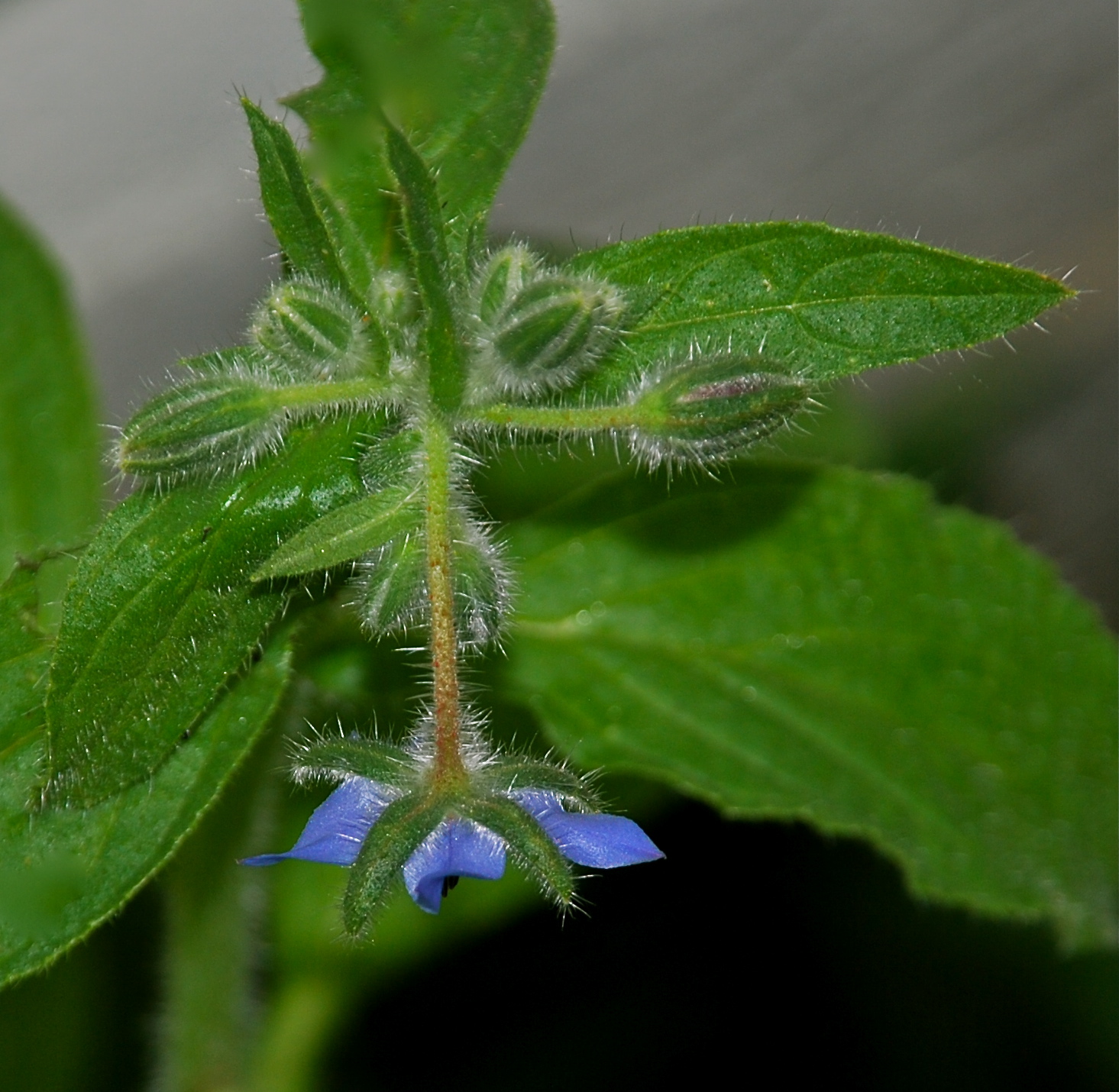
Because they touch us not only with visual beauty but also often with a fragrant vitality, over the centuries many if not most gardens have had an herb or two or more in them. Herbs have long been valued for flavor, scent, and other properties and so continue to be used in cooking, as medicines, and for spiritual purposes. The herb mustard was praised by Hippocrates, the ancient Greek physician, and it is one that Shakespeare referred to as a desirable condiment in several of his plays. Chamomile has long been used in teas, and nasturtium flowers have frequently been added to salads. Fennel is yet another long-in-use desirable culinary herb as is borage herb (photo above) which has been used for both culinary and medicinal purposes. Mints had their beginnings early on in history. For example, the leaves were bruised by ancient Greek athletes and used as an after-bath lotion. Then in the Middle Ages mint was important as a cleansing agent as well as being used to purify drinking water that turned stale on long ocean voyages. For a time mint was also given mystical powers used to neutralize the “evil-eye” and to produce aggressive behavior. Lavender, a member of the mint family, is one of the holy herbs used in the biblical Temple to prepare the holy essence. Nard which is what the ancient Greeks called lavender is also mentioned in the Song of Solomon. In the Bible herbs were actually prized by many as can be seen in Matthew and Luke where one finds references to tithes being paid with herbs like cumin, mint, and other valuable herbs. Herbs like all else in the circle of life are a gift from God, and as Timaeus of Locris said, “God is a circle whose centre is everywhere and circumference nowhere.”
He (Jesus) told them another parable: “The kingdom of heaven is like a mustard seed, which a man took and planted in his field. Though it is the smallest of all your seeds, yet when it grows, it is the largest of garden plants and becomes a tree, so that the birds of the air come and perch in its branches.” -Matthew 13:31-32

 Sacred Touches
Pingback: 79. The air was fragrant with a thousand trodden aromatic herbs. . . ~William Cullen Bryant | Sacred Touches