
There’s a song in the air!
There’s a star in the sky!
~Joseph G. Holland
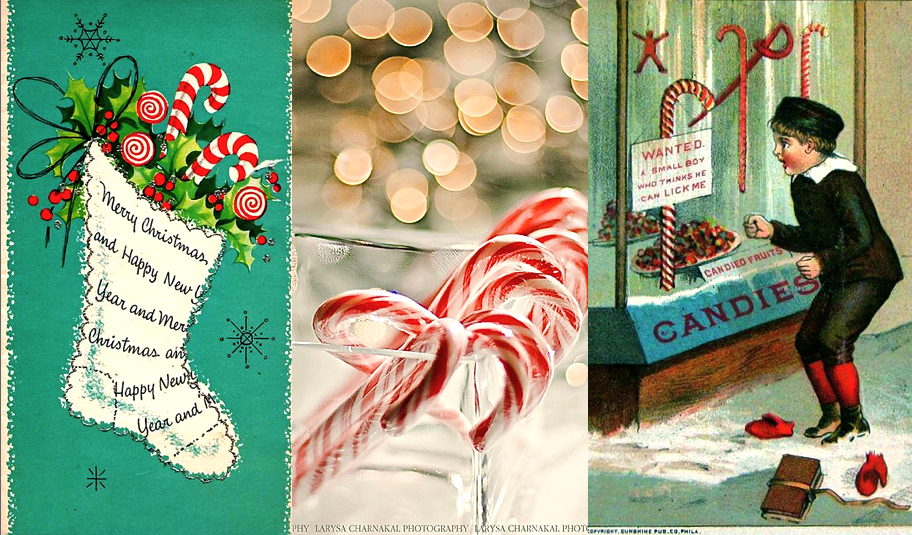
The strongest connection one might make between the origins of the candy cane and any intentional Christian association is to guess that possibly some unknown person, at some indefinite time, took a long-existing form of sweet (i.e., straight white sticks of sugar candy) that was already associated with Christmas and produced bent versions of it to represent a shepherd’s crook and/or make it easier to hang on Christmas trees, but even that general association is nothing more than mere supposition with no supporting evidence behind it. This is charming folklore, but one should not lose sight of the fact that such stories of the candy cane’s origins are, like Santa Claus, myths and not “true stories.”
There is one verifiable (albeit indirect) religious connection associated with the modern candy cane, however.
In 1919 Bob McCormack began making candy canes for local use and sales in Albany, Georgia, and by the middle of the century his company (originally the Famous Candy Company, then the Mills-McCormack Candy Company, and later Bob’s Candies) had become one of the world’s leading candy cane producers. But candy cane manufacturing initially required a fair bit of labor that limited production quantities (the canes had to be bent manually as they came off the assembly line in order to create their ‘J’ shape,) and it was McCormack’s brother-in-law, a Catholic priest named Gregory Harding Keller, who came up with the solution: Father Keller invented the Keller Machine that automated the process of shaping straight candy sticks into candy canes. ~Barbara Mikkelson
The woman said to him, “I know Messiah is coming” (who is called Christ). “When he comes, he will proclaim all things to us.” ~John 4:25 ✝

 Sacred Touches
Pingback: 225. Stripes that are red like the blood shed for me. ~Author Unknown | Sacred Touches
Interesting candy cane lore. Even though not true, I still like to think they were made to hang on the tree. Have a very Merry Christmas Natalie.
LikeLike
I’d like to believe they might have been made that way to hang on a tree too. There’s always an element of truth in folklore anyway. Have yourself a merry little Christmas too, Donna. Blessings, Natalie 🙂
LikeLike
Love those Bob’s peppermints –as a true southerner I am a bit partial 🙂
And I love the story—
It is those very myths, legends and generational stories which is what helps to make an already magical time so much more special!!!
Hugs Natalie—cookie
LikeLike
I agree, and sometimes I think there’s more truth than fiction in them. Hugs to you too, Cookie. Blessings, Natalie 🙂
LikeLike
Natalie, I’ve never given much thought to the reason candy canes were made before tonight! Thank you for sharing this. Not sure though if the shepherds used striped ! lol
LikeLike
That made me chuckle, Andy. I, too, doubt if their staffs were striped. Merry Christmas, Andy!
LikeLike
🙂
LikeLike
I forgot to wish you a very Merry Christmas! Than you for so many wonderful post and photos this year! God bell you Natalie!
LikeLike
You are very welcome. Thank you for your lovely posts as well. Blessings, Natalie 🙂
LikeLike
:))
LikeLike
Candy canes are not common around here, thanks for sharing the information – have a merry christmas, Natalie 🙂
LikeLike
Merry Christmas, Annette! 🙂
LikeLike