
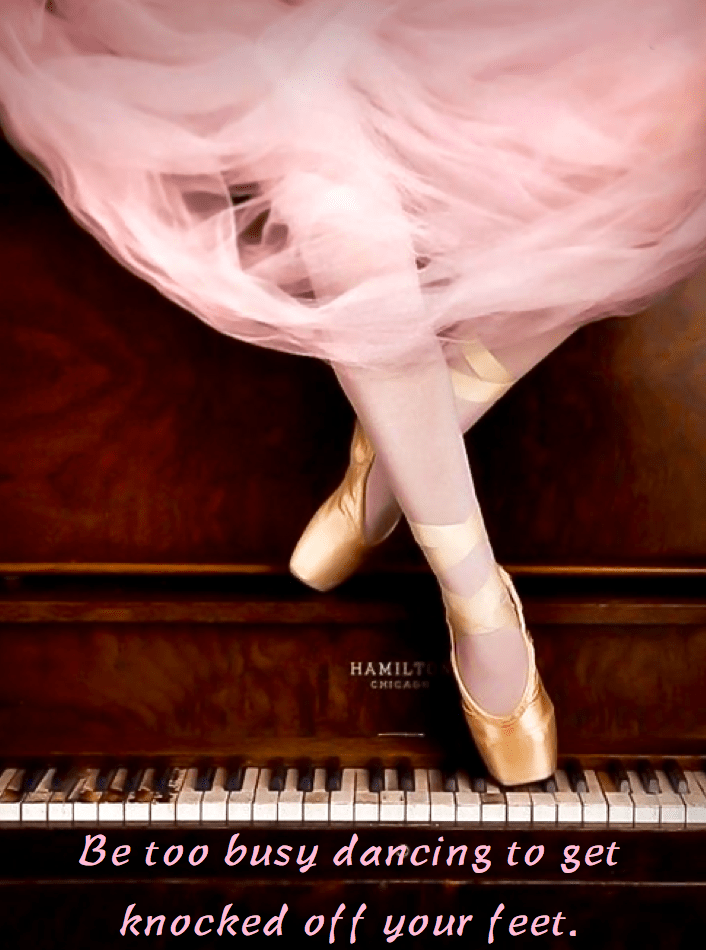
 We ought to dance with rapture that we might be alive…and part of the living, incarnate cosmos. ~D.H. Lawrence
Monthly Archives: February 2016
Torrents Of The Heart (Shadorma)
Why him?

Me:
“Why did you send him?”
God:
“You needed someone to help propel you to the next phase of your life.”
Me:
“But why him? Why not someone else? Someone I wouldn’t care for; someone I could easily dismiss; someone I would never love!”
God:
“I did send others, many others, but you ignored EVERY SINGLE ONE!
Remember the guy with the wife? You told him off! Remember the guy with the dog? He made you uncomfortable? Remember the guy with the fancy car? He brought back really bad memories. You hung up on him then blocked his number! Remember all the others you politely told you weren’t interested?”
Me:
“Yeah, I see what you mean…”
God:
“So do you understand now why I had to send him?
Me:
“Yeah…
I’m such in idiot…
I didn’t get it.
I wasn’t paying attention. (Sigh…)”
God:
“No need to be…
View original post 399 more words
1074. It is good to be alone in a garden at dawn or at dark so that all its shy presences may haunt you and possess you in a reverie of suspended thought. ~James Douglas
The stories of childhood leave an indelible impression,
and their author always has a niche
in the temple of memory
from which the image is never cast out
to be thrown on the rubbish heap
of things that are outgrown or outlived.
~Howard Pyle
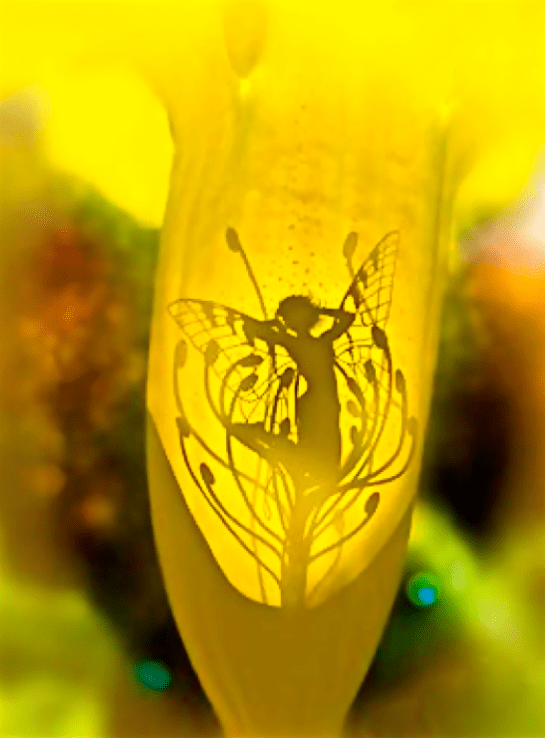
The “shy presences” of which Douglas spoke can be very real ones, like toads or snails or garden snakes and such; however, the “shy presences” for an imaginative child are often both real as well as make believe. For them the real ones might be shadow dancers, enlivened dollops of light, or glistening drops of dew whereas their make-believe ones might be the fabled “wee folk” found in stories they’ve heard or read. Gardens in and of themselves are naturally enchanting places, and tales of “fairies, elves, and leprechauns” can’t help but add an irresistible dimension to that enchantment, at least in the mind of a child or in someone with a very healthy inner child. And as Mr. Pyle so aptly put it, childhood images are never cast out onto rubbish heaps but instead leave “indelible impressions in the temples of our memories.” That’s why in early spring findings such as grape hyacinth, daffodils, crocus, snowdrops, and tulips can open doors in revered temples of memory and thus release cherished phrases such as “fairy woods where the wild bee wings,” or “tiny trees for tiny dames,” or “tiny woods below whose bough shady fairies weave a house,” or “tiny tree tops, rose or thyme, where the braver fairies climb” as found in poems by Robert Louis Stevenson and others. Or maybe they come from a poem like this one below:
THERE are fairies at the bottom of our garden!
It’s not so very, very far away;
You pass the gardner’s shed and you
just keep straight ahead —
I do so hope they’ve really come to stay.
There are fairies at the bottom of our garden!
They often have a dance on summer nights;
The butterflies and bees make a lovely little breeze,
And the rabbits stand about and hold the lights.
Did you know that they could sit upon the moonbeams
And pick a little star to make a fan,
And dance away up there in the middle of the air?
Well, they can.
There are fairies at the bottom of our garden!
Now you can guess who that could be
(She’s a little girl all day, but at night she steals away)?
Well — it’s Me!
~Excerpted lines from a poem
by Rose Fyleman
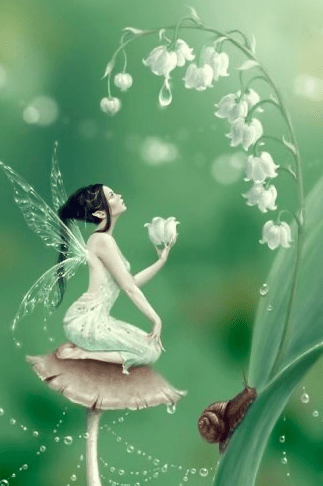
**Image via Pinterest
The best way…
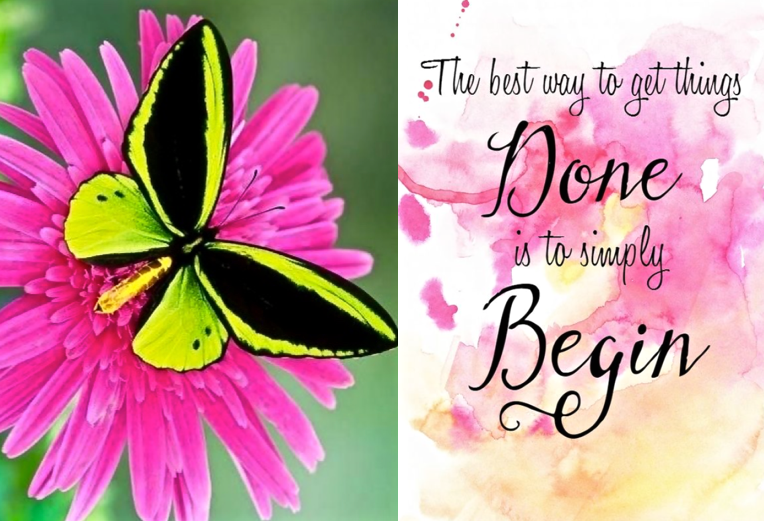
Love this…

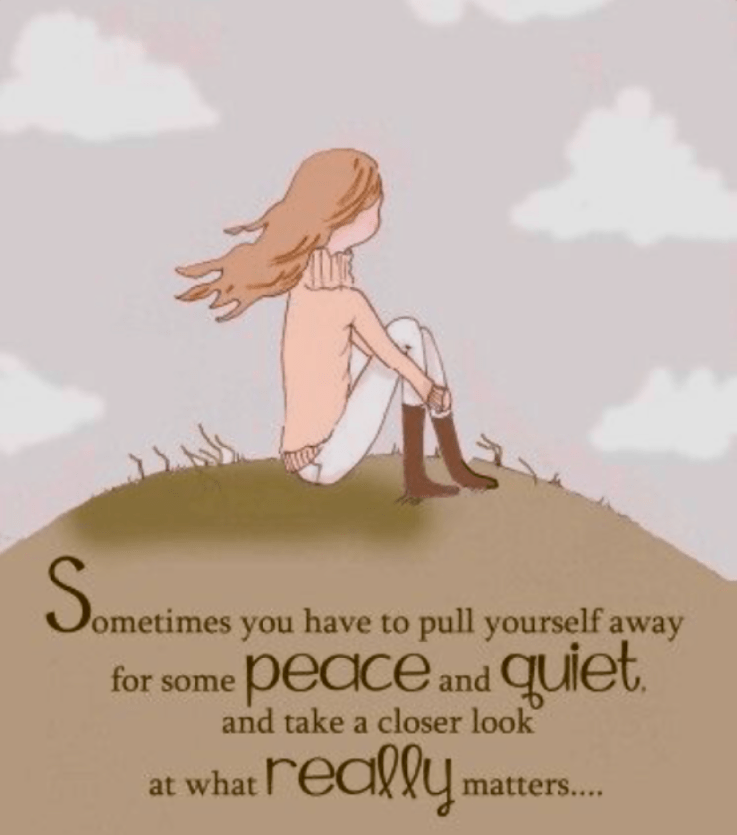
Sometimes you have…
1073. Hand in hand, with fairy grace, will we sing, and bless this place. ~William Shakespeare
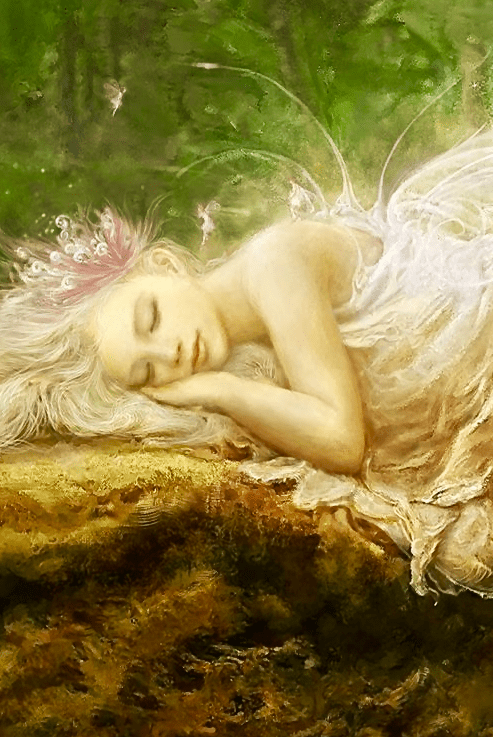
Soft moss a downy pillow makes, and green leaves spread a tent,
Where Faerie fold may rest and sleep until their night is spent.
The bluebird sings a lullaby, the firefly gives a light,
The twinkling stars are candles bright, Sleep, Faeries all, Good Night.
~Elizabeth T. Dillingham
The belief in spiritual beings is almost universal to human culture, be it an accurate understanding of such or not. As children, we often believe in imaginary spirits like faeries, elves, and leprechauns, but as we mature, we begin to sense the existence of a very real and holy Spiritual Being. We learn from Scripture that this Divine Creator can and does send angelic spirits as messengers or protectors. Since all that exists is part of a Grand Design by a benevolent Creator, one can assume then that there’s a sacred reason for imagination and belief in spiritual beings. Creative urges keep us mindful of our Creative God and of our own purposeful, creative abilities. Playfulness as well serves an ordained purpose because it teaches us how to be joyful. We are, after all, implored to be joyful daily for the Lord’s blessings and gifts, and it is through play that children begin to gain wisdom and knowledge of Yahweh’s miraculous abilities and His forgiving and provisionary nature.

A little fairy comes at night,
Her eyes are blue, her hair is brown,
With silver spots upon her wings,
And from the moon she flutters down.
She has a little silver wand,
And when a child goes to bed
She waves her hand from right to left,
And makes a circle round its head.
And then it dreams of pleasant things,
Of fountains filled with fairy fish,
And trees that bear delicious fruit,
And bow their branches at a wish:
Of arbors filled with dainty scents
From lovely flowers that never fade;
Bright flies that glitter in the sun,
And glow-worms shining in the shade:
And talking birds with gifted tongues,
For singing songs and telling tales,
And pretty dwarfs to show the way
Through fairy hills and fairy dales.
~Excerpted lines from the poem,
Queen Mab, by Thomas Hood
For He will command His angels concerning you to guard you in all your ways… ~Psalm 91:11 ✝
**Images via Pinterest
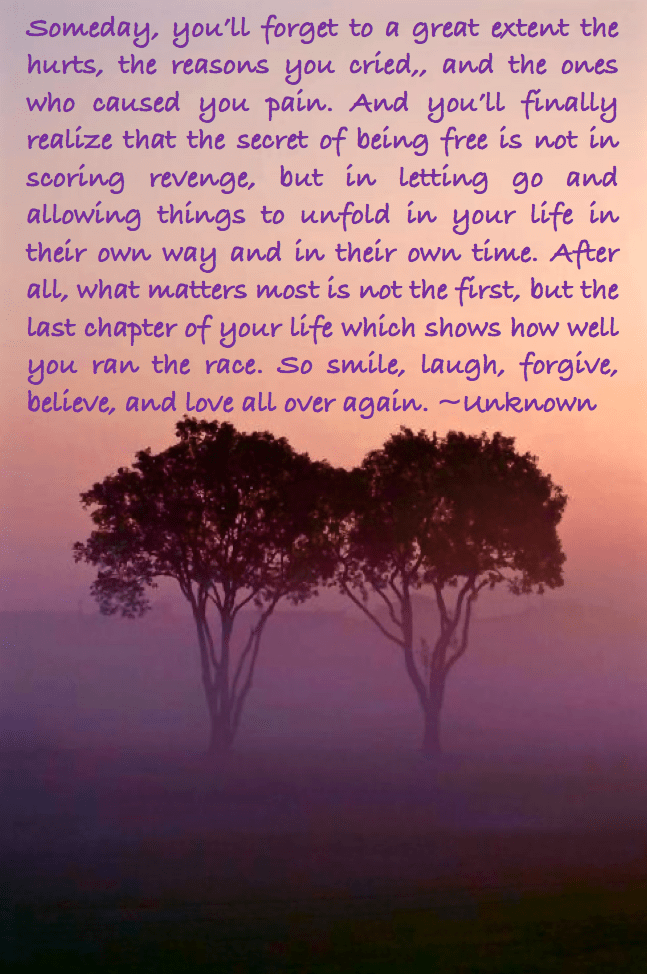
Someday, you’ll…
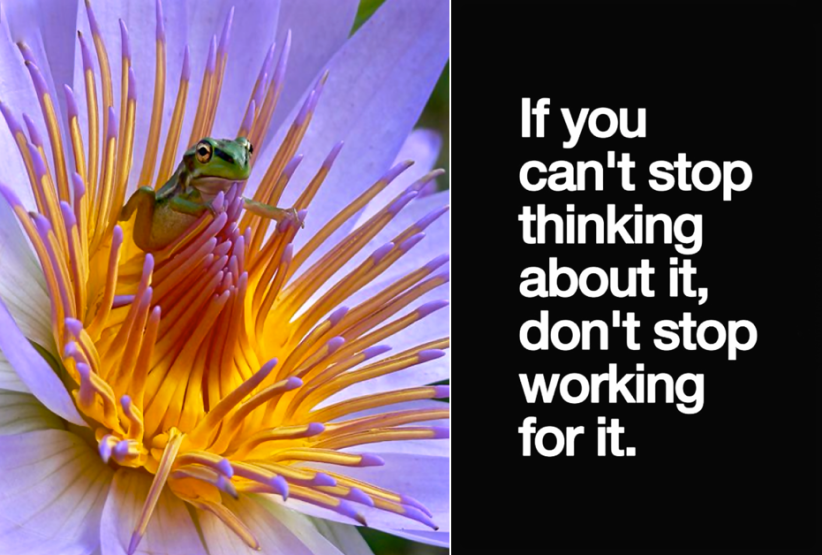
If you…
 Sacred Touches