138. My riches consist not in the extent of my possessions, but in the fewness of my wants. ~J. Brotherton, a reforming British politician and non-conformist minister

Image

May the God of your days and the dawn awaken you.
May the God of the rising sun stir you up.
May the God of the morning bless the work of your hands.
May the God of noontime renew your strength and energy.
May the God of the sunset bring you safely back home.
May the God of the dusk soothe your flesh and soul.
May the God of the night bring you peaceful rest.

~Edited adaptation of a blessing for the day by Andrew Greeley

Blessed are those You choose and bring near to live in Your courts!  We are filled with the good things of Your house, of Your holy temple.  ~Psalm 65:4 ✝

137. Silence is the universal refuge…a balm to our every chagrin. ~Henry David Thoreau

Soon silence will have passed into legend.
Man has turned his back on silence.
Day after day he invents machines and devices
that increase noise and distract humanity
from the essence of life. . .
~Jean Arp, French sculptor, painter, and poet
Image

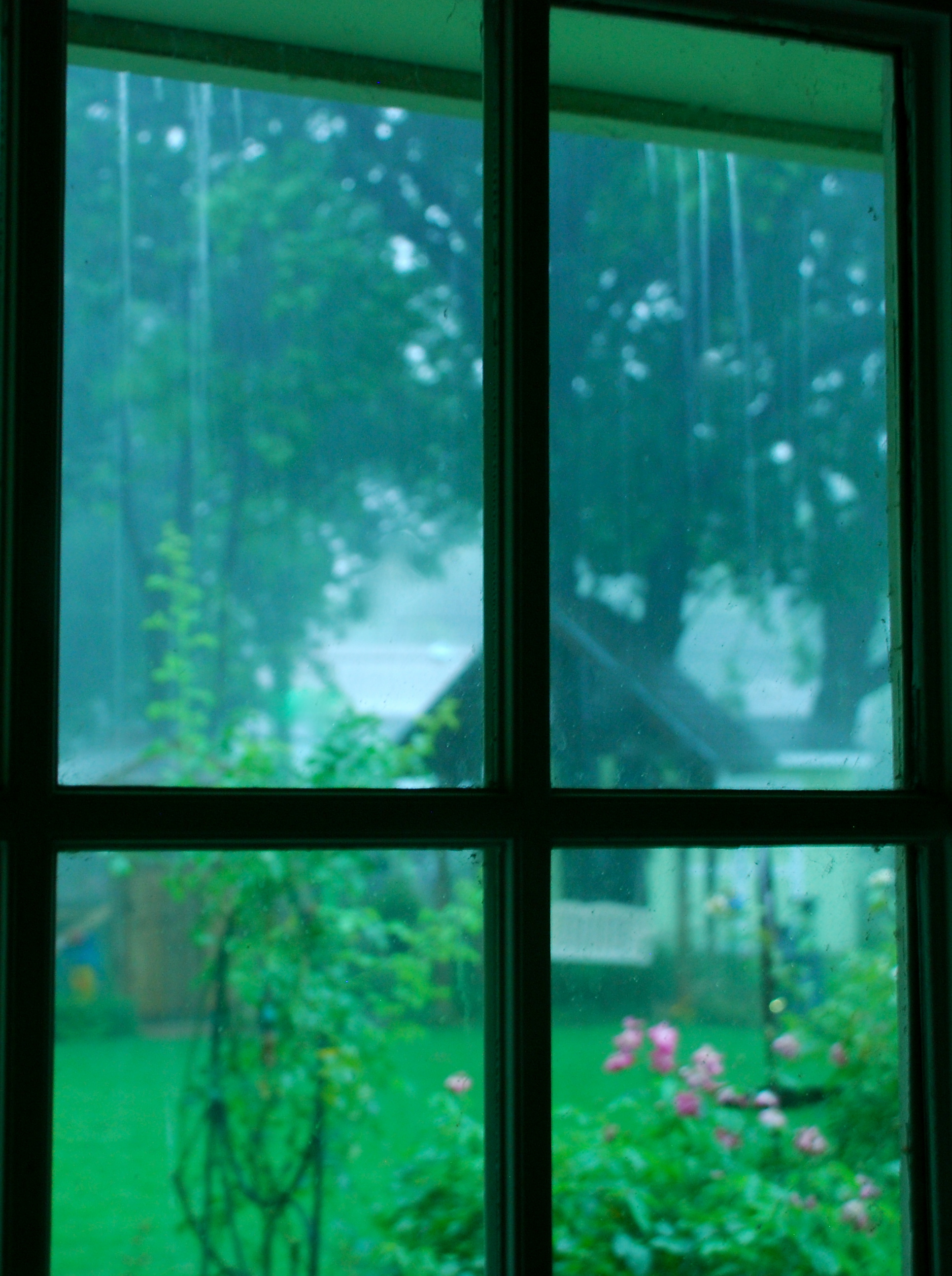
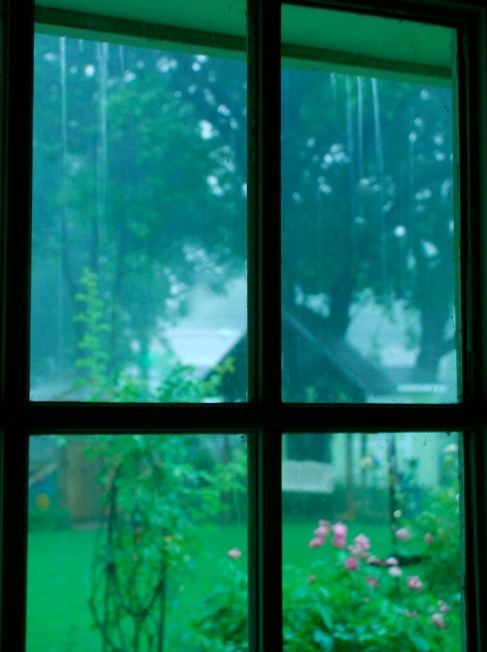
We see patterns of stillness and silence in the natural world.  Day gives way to night, fruitfulness gives way to fallowness, bodies give way to fatigue.  However, in today’s noisy culture, there exists an almost obsessive tendency toward unending busyness.  Rest and yielding to silence has for many become a forgotten art or at best difficult.  But on days like today, in the midst of the noise a profound silence can be found in rain, and in that silence some seem still to be able to hear the slowing voice of quietude.  And I find that if one takes time to sit, listen, and watch the rain, an ancient holy voice has a way of pulling him/her into a deep peacefulness.  What’s more if the listener seeks a way to come back again and again to that quiet place, an intimate relationship begins to form.  Mother Teresa once said, “We need to find God, and he cannot be found in noise and restlessness.  God is the friend of silence.  See how nature – trees, flowers, grass – grows in silence; see the stars, the moon and the sun, how they move in silence. . .We need silence to be able to touch souls.”

“Be still, and know that I am God; I will be exalted among the nations, I will be exalted in the earth.”  -Psalm 46:10    ✝

136. The bee is more honored than other animals, not because she labors, but because she labors for others. ~Saint John Chrysostom

His Labor is a Chant–
his idleness–a Tune–
oh, for a Bee’s experience
of Clovers, and of Noon!
~Emily Dickinson

Image

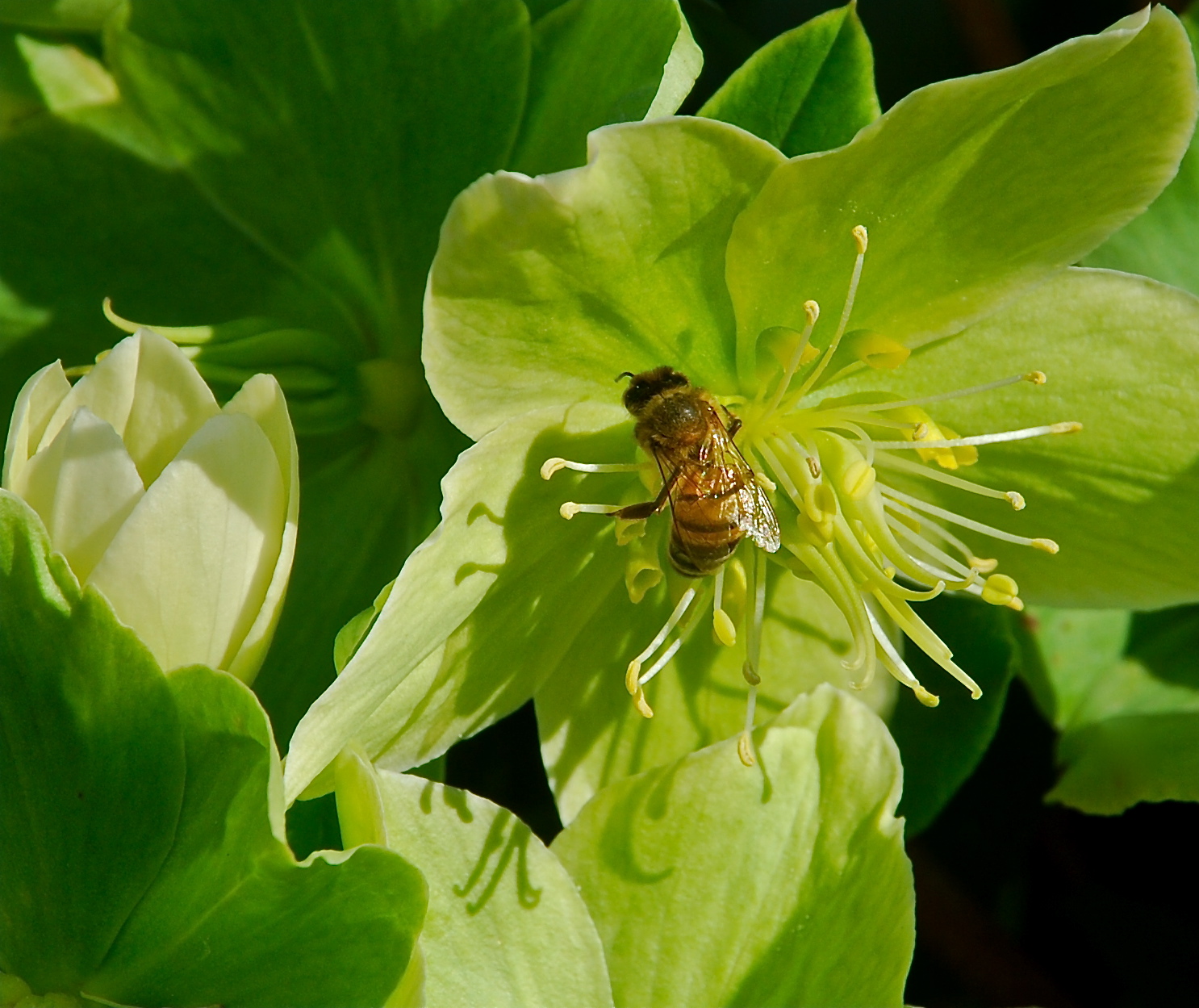
Honey bees and bumblebees, it seems, find a flower’s countenance as irresistible as I, and that “irresistibility” is of holy intent.  In the passage of Scripture that follows, we see that the Lord’s plan involved an interconnectedness of all life as well as a dependency, one on the other.  The poet, Kahlil Gibran, explains that connectedness in this way: “a flower is a fountain of life” for the bee, and to the bee and flower “the giving and receiving is a need and an ecstasy.”  But wait, how is any of this relevant in the 21st century?  In the age of incredible and still advancing technology should anyone care about flowers and bees?  Indeed all of us should care because bees are absolutely essential pollinators, and sadly there are now alarming reports which indicate that one fourth of the northern hemisphere’s honeybee population mysteriously vanished by the spring of 2007.  Then by the end of 2008, one in three hives was left lifeless.  Simply put, the honeybee is disappearing at an alarming rate across the entire globe.  The worst part is that those in the know are not sure why this is happening, but they do know that should the increasing catastrophe not be addressed and solutions to the problem not found, the complete loss of honeybees as pollinators would mean the end of agriculture as we know it.  Since much of what we wear and one third of what we eat depends on the pollinating activity of honeybees, our way of life and civilization would be threatened.  In fact one report said the situation is so dire that mankind would survive only 4 years after the complete collapse of the honeybee population.

Then God said, “I give you every seed-bearing plant on the face of the whole earth and every tree that has fruit with seed in it. They will be yours for food.  And to all the beasts of the earth and all the birds of the air and all the creatures that move on the ground—everything that has the breath of life in it—I give every green plant for food.”  And it was so.  ~Genesis 1:29-30   ✝

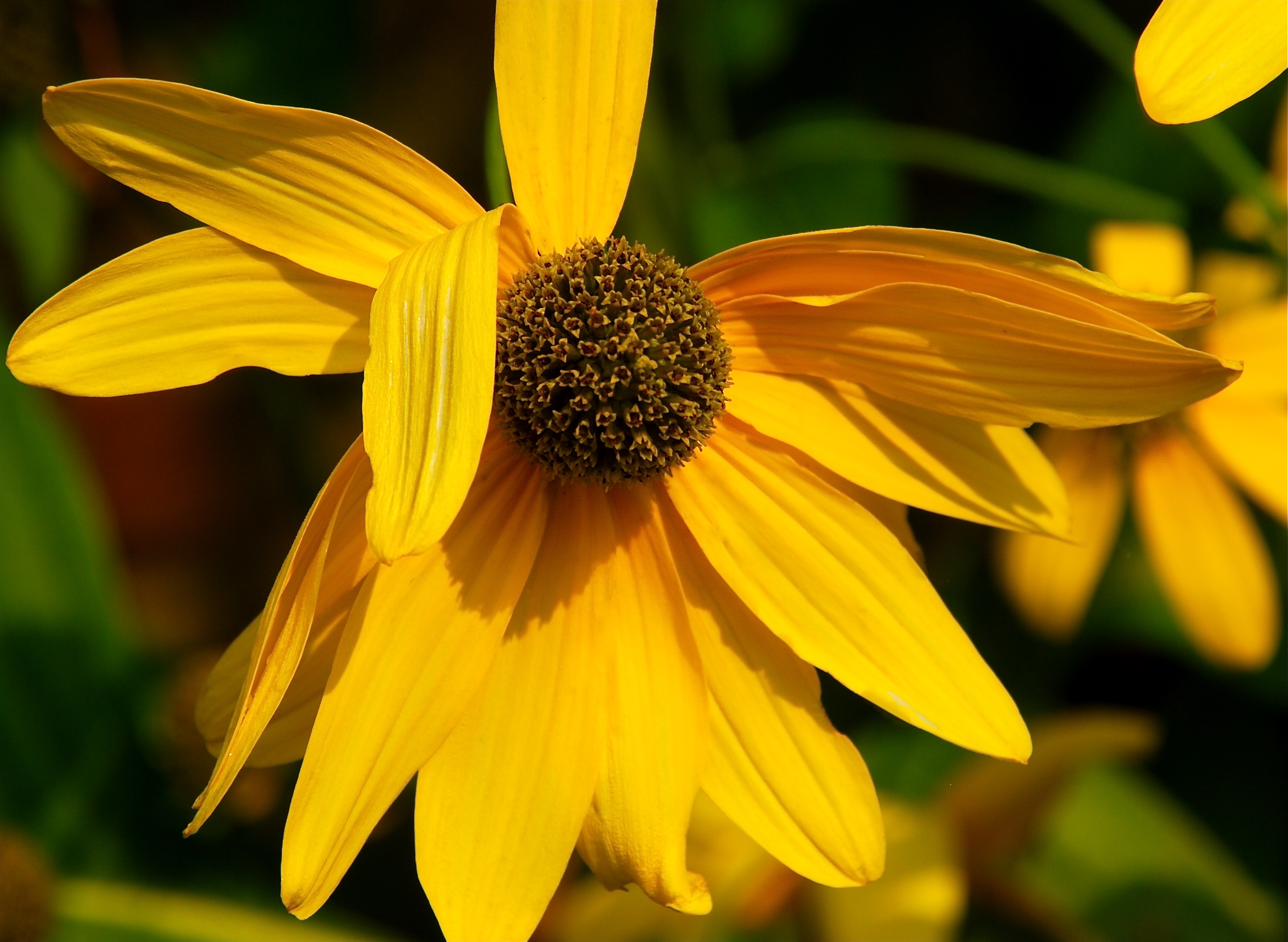
135. As for marigolds, poppies, hollyhocks, and valorous sunflowers, we shall never have a garden without them… ~Henry Ward Beecher

Eagle of flowers! I see thee stand
And on the sun’s noon-glory gaze;
With eye like his, thy lids expand,
And fringe their disk with golden rays:
Though fix’d on earth, in darkness rooted there
Light is thy element, thy dwelling air
Thy prospect heaven.
~The Sunflower by James Montgomery, British editor and poet

Image

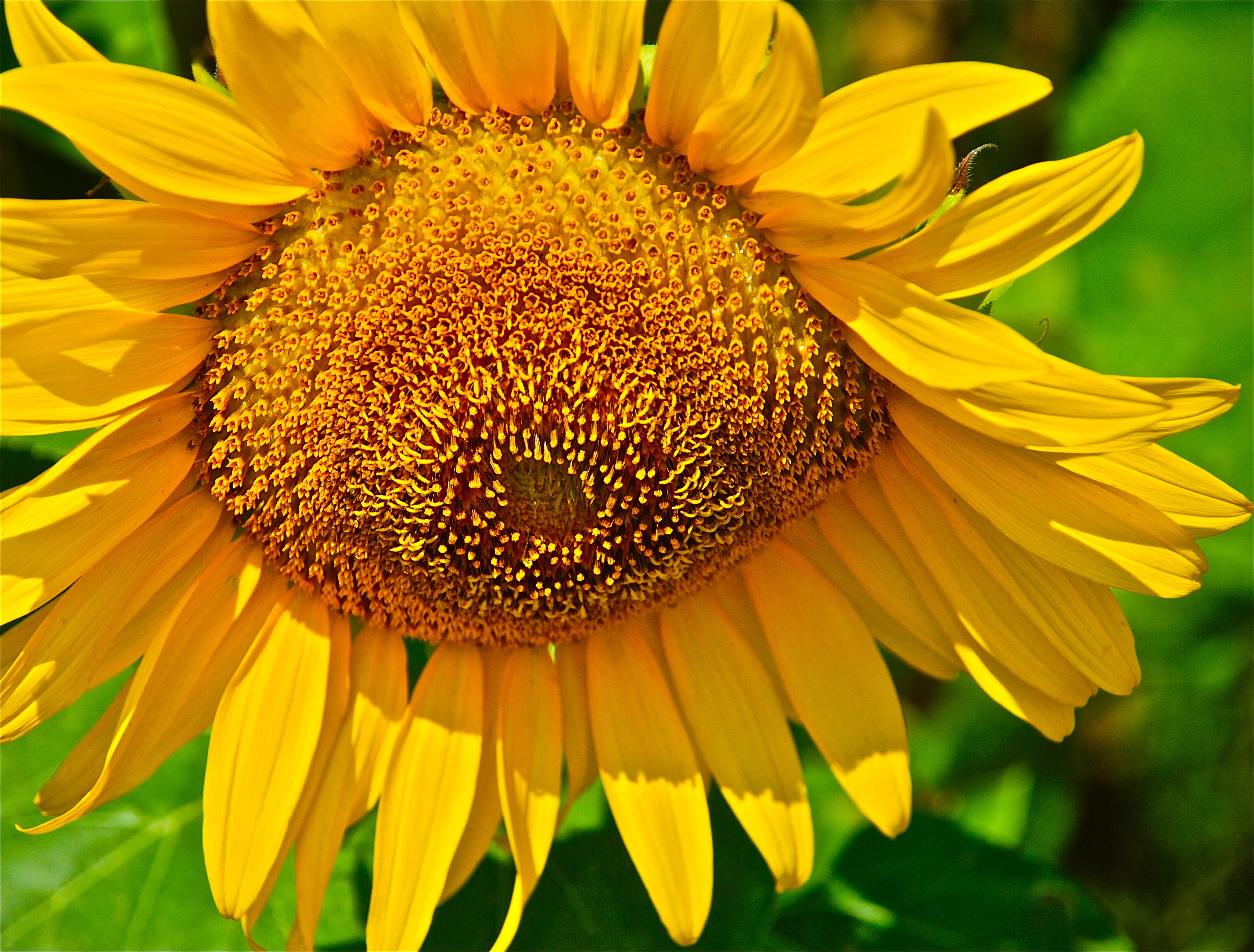
The sunflower with its “gaudy crown of gold” courts the heavenly expanse in search of the sun.  But is that iconic golden spectacle seeking to be prospered by the sun a single flower?  No, each sunflower is actually a cluster of sometimes more than 2,000 small flowers all growing together to mimic the sun and harvest its light.  Amazingly, at maturity some flower heads of the sunflower measure 2 feet across while the plants that hold them up sometimes grow as high as 18 feet.  Henry Ward Beecher additionally said all flowers “have an expression of countenance as much as men or animals.  Some of them seem to smile; some have a sad expression; some are pensive and diffident; others again are plain, honest, and upright, like the broad-faced sunflower. . .”  I agree and adore the plain honesty and uprightness of the sunflower, but in them I also see a touch of elegance in their statuesque stance in the landscape.

This is what the Lord says to me: “I will remain quiet and will look on from my dwelling place, like shimmering heat in the sunshine, like a cloud of dew in the heat of harvest.”  ~Isaiah 18:4   ✝

134. When Love first came to Earth, the Spring spread rose-beds to receive Him. ~Thomas Campbell

A Rose-bud by my early walk,
Adown a corn-enclosed bawk,
Sae gently bent its thorny stalk,
All on a dewy morning. . .
~Robert Burns

Image

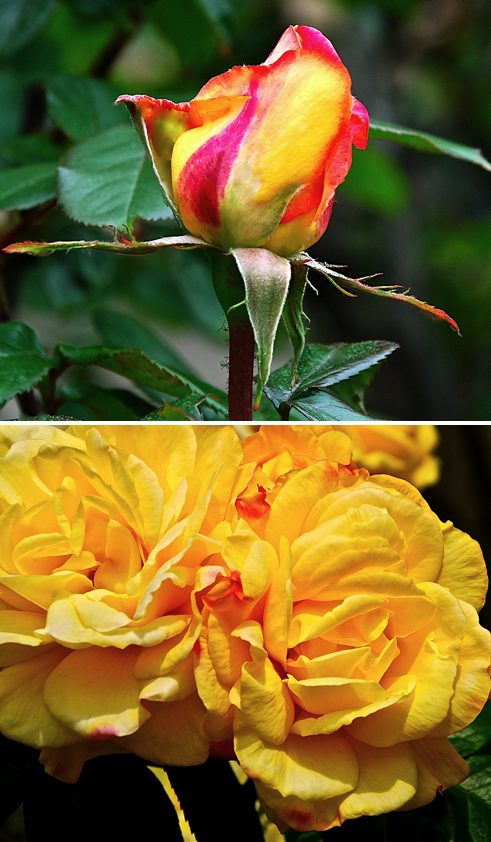
In a recent visit to the UK and Paris I came across some amazing roses.  They were not only beautiful but immense, larger than any I’ve ever seen.  Sadly these photos don’t show how truly gorgeous and huge they were.  Nevertheless for me they will serve as a lovely reminder of lands and flowery faces that captivated and captured my heart.

Every day I will praise you and extol your name for ever and ever.  ~Psalm 145:2  ✝

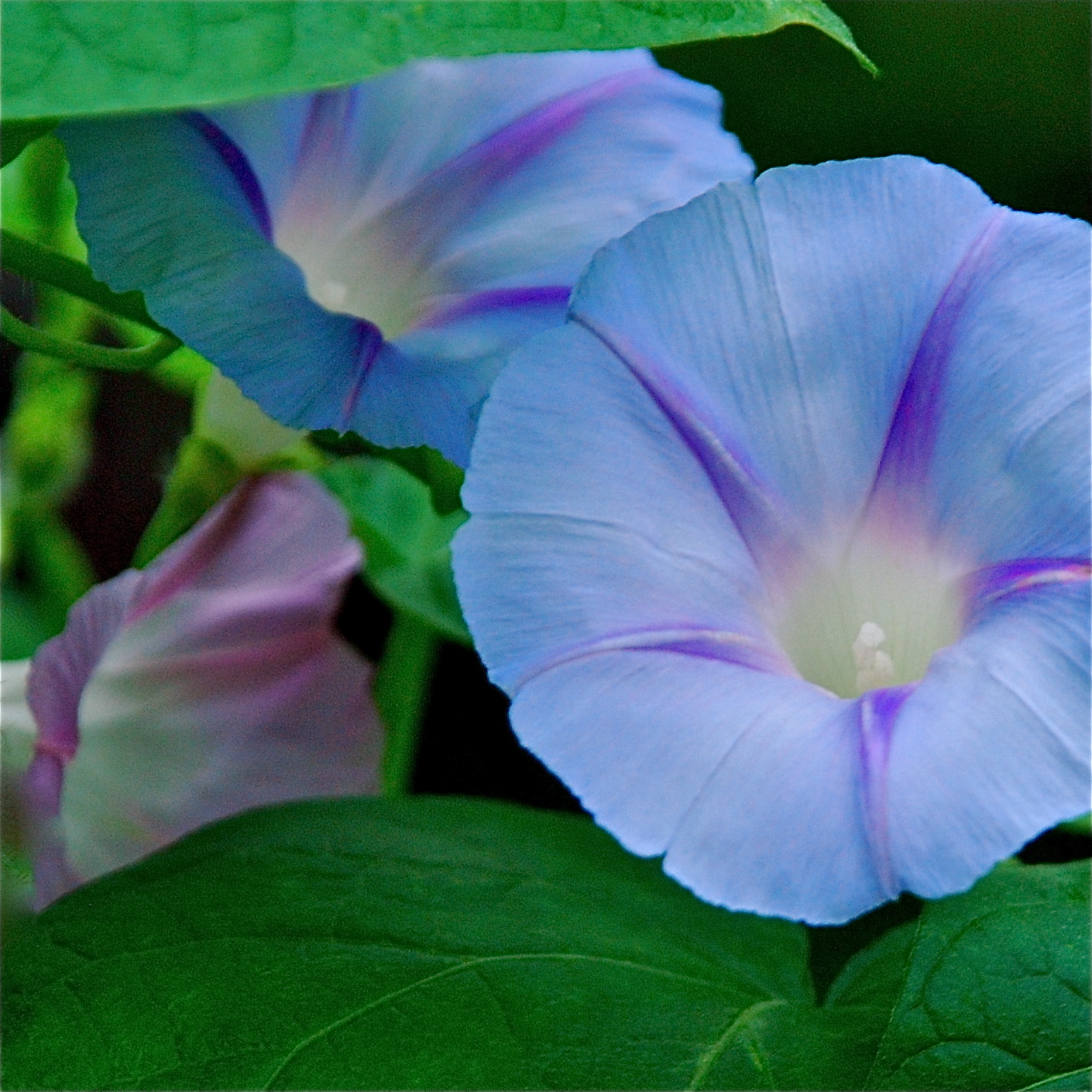
133. My little hut is newly thatched, I see, with blue morning glories. ~Kobayashi Issa

A morning glory at my window
satisfies me more
than the metaphysics of books.
~Walt Whitman

Image

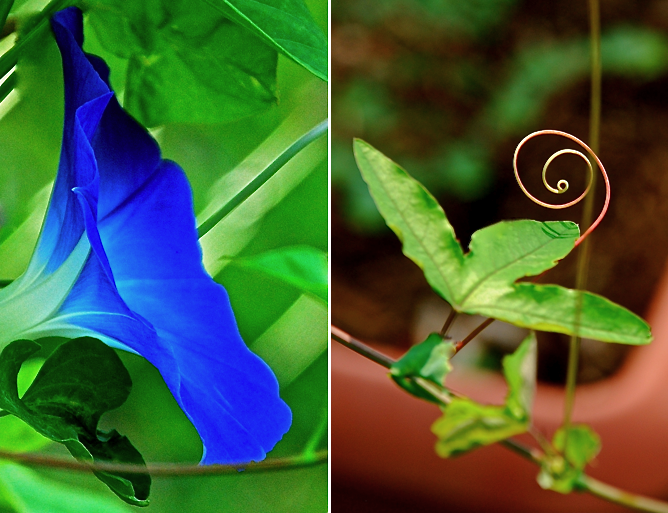
I love the tendrils vines use to climb as well as the vertical interest the vines themselves add in a garden.  Scrambling upwards enables the twining plants to reach sunlight with a minimum investment of energy rather than investing their energy in a lot of supportive tissue, and many of them can be easily started from seed or even better some easily reseed themselves from year to year.  Vines are not fussy plants that require special care, and as long as they are watered regularly, some of them even thrive through the hottest parts of summer growing strong in the garden’s web of life until the first freeze finishes them off.  For me one of the best reasons for adding vines in a garden is that some of them are hummingbird magnets.

The whole earth is filled with awe at your wonders; where morning dawns, where evening fades, you call forth songs of joy.  ~Psalm 65:8  ✝

132. For summer here, bear in mind, is a loitering gossip, that only begins to talk of leaving when September rises to go. ~George W. Cable

Take thy spade,
It is thy pencil;
Take thy seeds, thy plants,
They are your colours.
~William Mason, English poet, editor, and cleric

Image

The level of sand in summer’s hour glass may be low, but, and in spite of August’s  lingering heat, there is yet to come a fair measure of glory in the garden.  The cycle of earth’s fruiting isn’t completely over here in north central Texas until Jack Frost’s frigid touch rings the death knell in mid-November or early December.  So the remaining modicum of flowers will be joined in the coming days and weeks with substantially more blossoms.  Moreover, squirrels aren’t finished gathering nuts, birds have songs yet unsung, pollinators have more rounds to make, and roses have a second flush of blooms to proffer.  But most of all autumn is the time for we who “dwell in gardens” to plant, sow seeds, and raise our voices in gratitude for what the Lord has already graciously given us.

You who dwell in the gardens with friends in attendance, let me hear your voice.  ~Song of Songs 8:13  ✝

131. All gardens are a form of autobiography. ~Robert Dash

In his garden every man may be his own artist without apology or explanation. Each within his green enclosure is a creator, and no two shall reach the same conclusion; nor shall we, any more than other creative workers, be ever wholly satisfied with our accomplishment. Ever a season ahead of us floats the vision of perfection and herein lies its perennial charm.  ~Louise Beebe Wilder

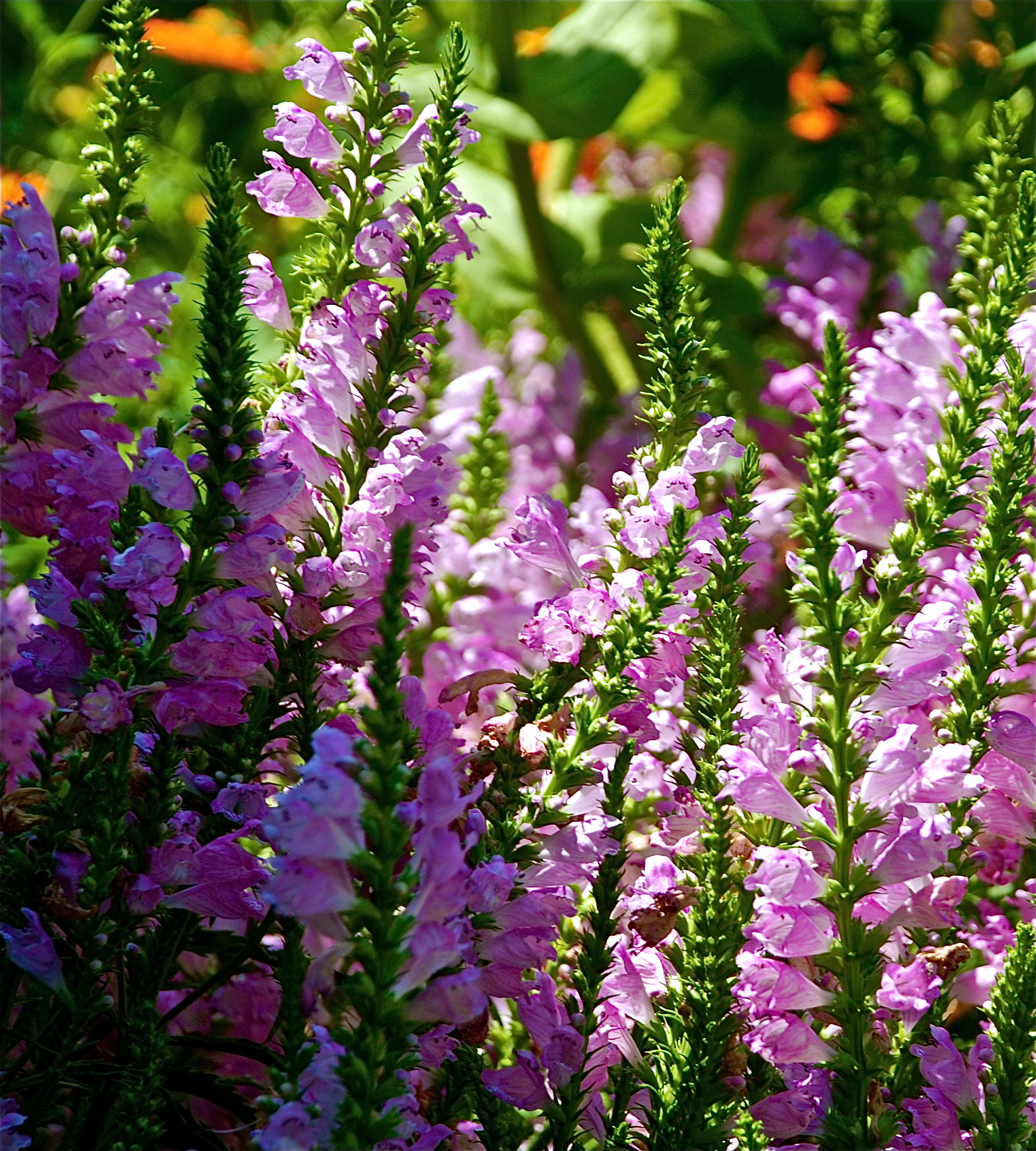
**(blooming currently in several places in my yard is Physostegia virginiana)

Image

Where does imagination come from?  It was spawned in the mind of God, and it is the conduit that connects us to our Maker.  I can think of no better place than a garden to let one’s imagination run wild.  It can be loosed over and over again in the ever-changing shapes of the beds and paths, in the kinds of plants that are introduced, and in the garden’s supports and structures.  My imagination has also led me over the years to include pieces of yard art into my garden.  For me it adds whimsical levels of interest that feed my inner child and would-love-to-have-been- an-artist self.

The LORD God placed man in the Garden of Eden to tend and watch over it.  ~Genesis 2:15

130. The fact that I can plant a seed and it becomes a flower, share a bit of knowledge and it becomes another’s, smile at someone and receive a smile in return, are to me continual spiritual exercises. ~Leo Buscaglia

I saw an act of faith today.
A man was on his knees–
not in a pew in a church
but in a garden planting seeds.
~Author Unknown

Image

How awesome it is that living works of flowering art grow out of the dirt under our feet and from something as small and seemingly insignificant as a seed!  Also amazing is the fact that the Holy One planted seeds of greatness with a purpose within each of us.  Then He anointed our words, hands, and actions with the creative power to bring them to fruition.   But the real genius is that what flowers in us drops seeds of increased possibility into the lives of others just like a flower drops seeds in the garden where it grows.

For as the soil makes the sprout come up and a garden causes seeds to grow, so the Sovereign LORD will make righteousness and praise spring up before all nations.  ~Isaiah 61:11    ✝

129. To be surprised, to wonder, is to begin to understand. ~José Ortega y Gasset

But the sower going forth
to sow seeds sets foot in time to come,
the seeds, falling on his own place.
He has prepared a way for his life
to come to him, if it will.
~Wendell Berry

Image

Like master gardener and writer, June Santon, “When I see that first, minuscule, curled, pale green wisp of a sprout poking up between a couple of grains of vermiculite, I hear God speaking.”  But then again, it’s really more than just hearing Him speak.  It is connecting with Him in a way unlike anything else because when sowing a seed, like Him, it is creating life.  After all we are made in the image of our Creator God, and so we too have the ability to create.  My particular palette is made up of photographs and words and seeds and plants whereas someone else’s may be notes of music, globs of paint, utensils in a kitchen, pieces of metal, blocks of wood.  The possibilities go on and on because we are not only capable of creating with objects but also with the very essence of who and what we are, as with teachers and ministers and parents.

I praise you because I am fearfully and wonderfully made; your works are wonderful, I know that full well.  ~Psalm 139:13-15  ✝