190. Listen! the wind is rising, and the air is wild with leaves… ~Humbert Wolfe

Yet one smile more, departing, distant sun!
One mellow smile through the soft vapory air. . .
Yet a few sunny days, in which the bee
Shall murmur by the hedge that skirts the way,
The cricket chirp upon the russet lea,
And man delight to linger in thy ray.
Yet one rich smile, and we will try to bear
The piercing winter frost, and winds, and darkened air.
~William Cullen Bryant
Image

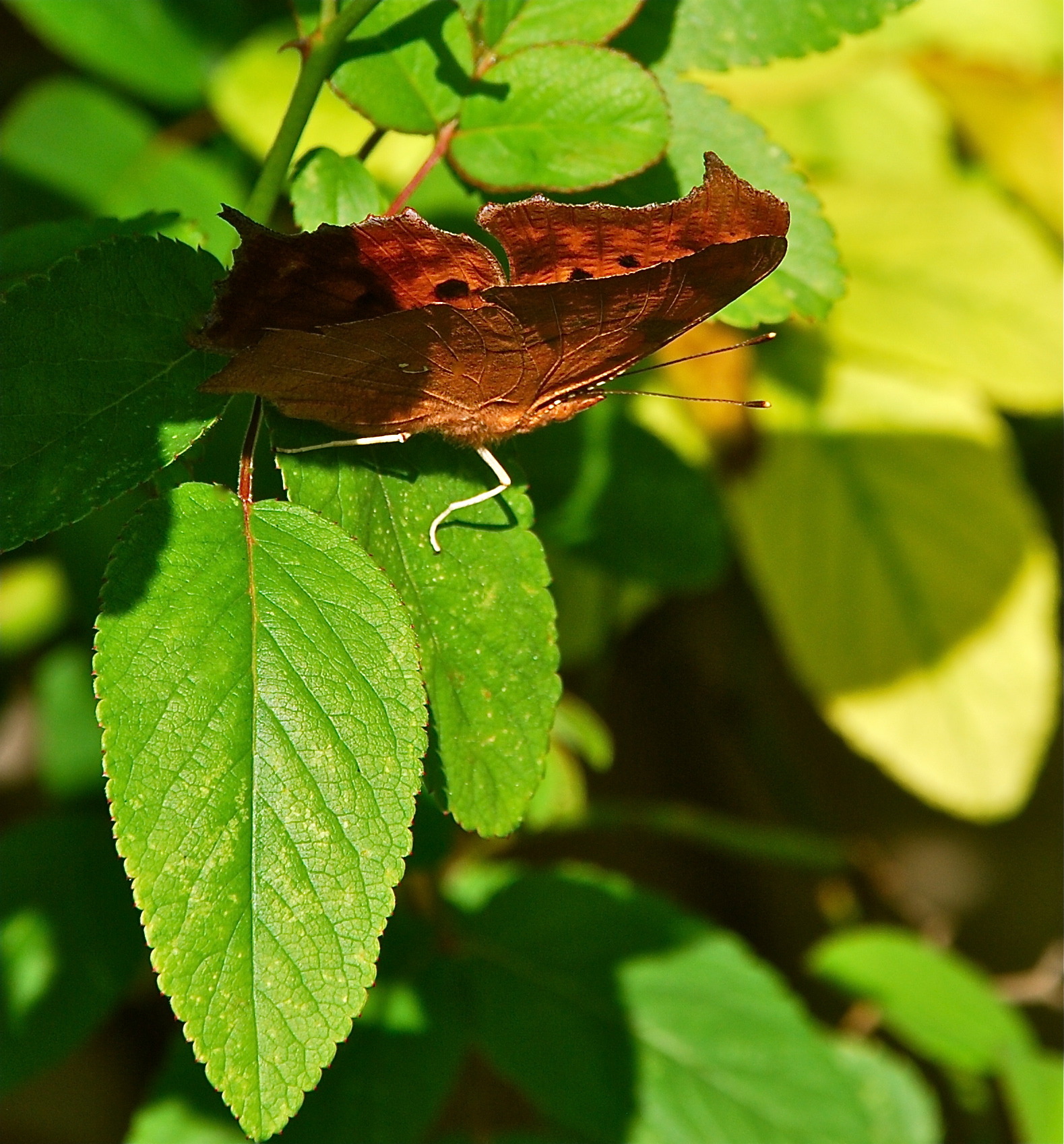
What a season of contrasts autumn is!  Many of its striking contradistinctions and “mellow smiles” can be seen on a single day, and yesterday was a fascinating example of Fall’s many faces.  Early in the morning the sky was a clear, brilliant blue, and as I wandered the yard I found a butterfly prettily perched on the leaves of a climbing rose.  Then the winds picked up and threatening clouds blew in.  About 30 minutes later, a narrow band of rain clouds passed over us leaving not a single drop, however, in their wake.  Afterwards the sun sat smiling again in the sapphire sky, but it was streaked with a few bands of Cirrus clouds.  Not too long after that the stormy/clear scenario repeated itself.  Finally late in the afternoon a blustery wind blew down like rain more of the yellow leaves off the willow tree as it chased the sun away for good.  What had been an almost balmy day in the mid-70‘s had rapidly changed, and the bite of the chilling north wind stung my unsuitably-clad body when I went out to unplug the fountain and close up the greenhouse.

He(God) wraps us the waters in his clouds, yet the clouds do not burst under their weight.  ~Job 26:8  ✝
188. We have not wings; we cannot soar; but, we have feet to scale and climb, by slow degrees, by more and more, the cloudy summits of our time. ~Henry Wadsworth Longfellow

You raise me up, so I can stand on mountains;
You raise me up, to walk on stormy seas;
I am strong, when I am on your shoulders;
You raise me up…to more than I can be.
~Josh Groban, American singer and songwriter

Image

There is a peacefulness in a gray, cloudy day.  The air, normally charged with energy from the sun, loses its intensity and floats lightly on the gentle wings of tranquil contentment.  Noises are quieter and more mellow under lowering, billowy clouds not angry with the fury of storms.  My steps are slower, less urgent, as I move on the footpaths of the routine daily tasks before me.  Pushing up from deep within a still, small voice, often neglected, is more audible in the day’s silences.  It speaks of matters of the heart and the spirit, never of worldly affairs, nor greed, nor lust, nor gain in this world of men and madness.  Instead the voice nudges me to be in active pursuit of His plans for my life, not in the grand designs of my own folly.  It tries to keep me from complacency hiding under the guise of ignorance and brings light into dark places where I’m to face bigger issues that I often would rather ignore because it’s so much easier to do so.  The voice is not, however, a judgmental one; it is instead an encouraging, affirming agent that lifts me up on high, sacred ground.

“And after the earthquake, a fire, but the Lord was not in the fire: and after the fire a still small voice.”  1 Kings 19:12  ✝

165. Some praise the Lord for Light, the living spark; I thank God for the Night, the healing dark. ~Robert William Service, “Weary”

Night, the beloved.
Night, when words fade and things come alive.
When the destructive analysis of day is done,
and all that is truly important becomes whole and sound again.
When man reassembles his fragmentary self
and grows with the calm of a tree.
~Antoine de Saint-Exupéry

Image

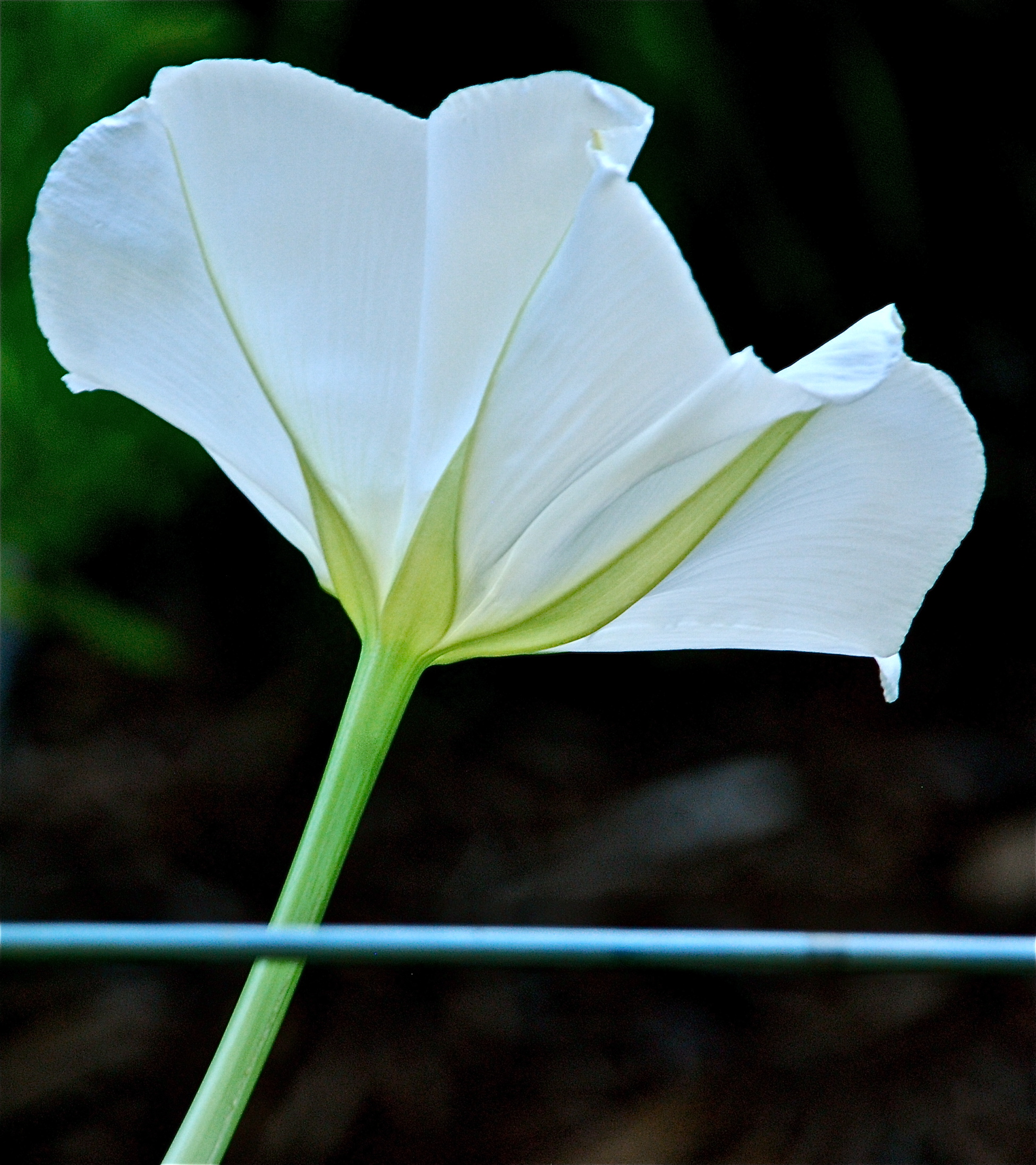
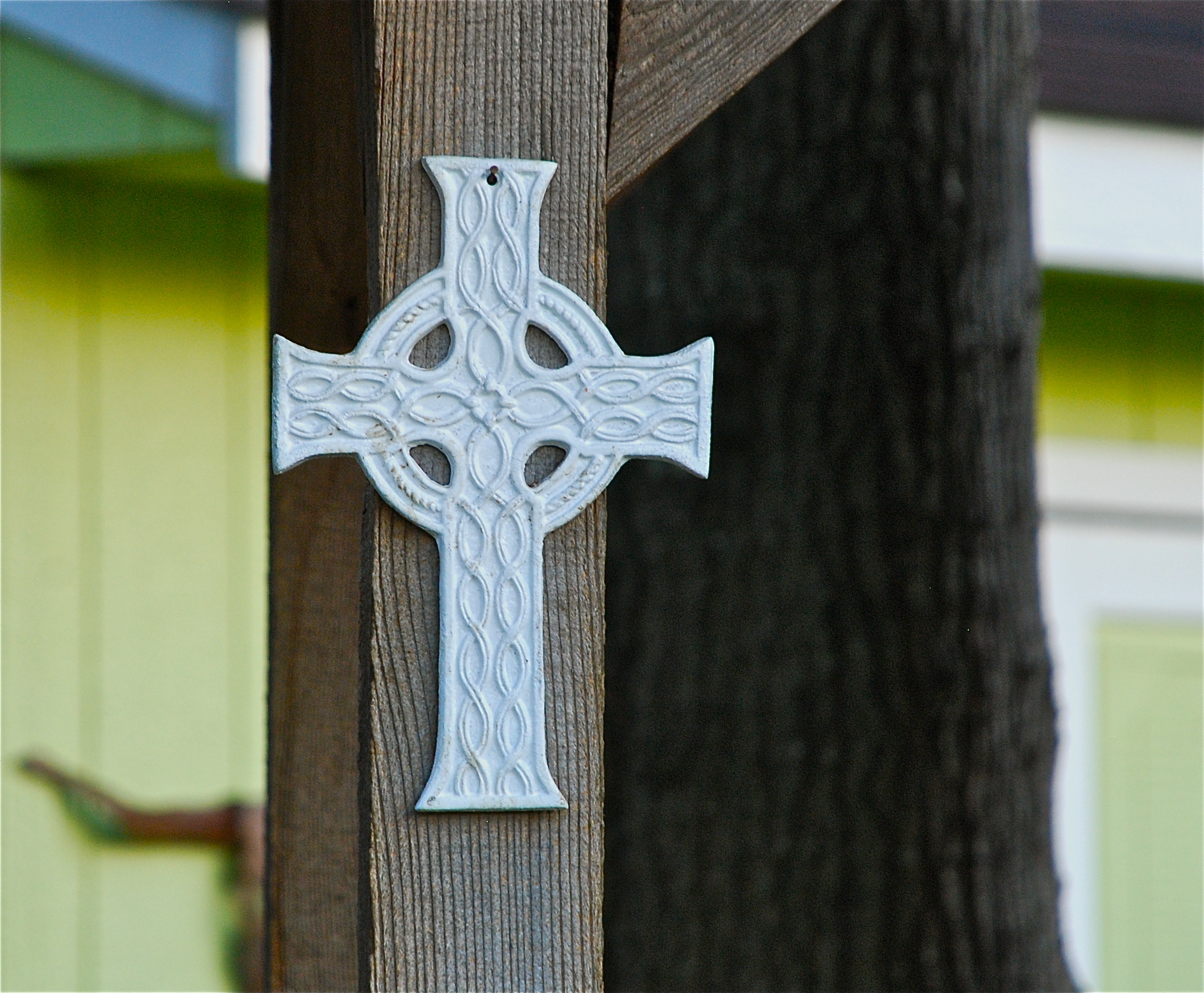
The air was crisp and cool; day’s light had just slipped away.  Wet blades of grass sparkled in a kind of diamond-dusted majesty under the glow of a rising harvest moon.  As if to punctuate my scattered thoughts, tiny aircraft lights glided from time to time through the darkening indigo sky.  When I began glancing around the yard, the images that confronted me seemed to be popping up like photos in a slowly advancing slide show.  The first one I saw was of the red turk’s caps underneath the rose arch, then the white moonflowers on the neighbor’s fence, fattening seed pods under the oak, a Celtic cross, a flying moth, an intermittently  shrouded moon.  The spell was broken only for a short while when the fragrance from my potted herbs temporarily seduced my nose.  Then the slide show started up again with a flash of yellow and white lights, followed by a rustling noise, leafy branches hanging low, a sculpted monk, stone rabbits, and a fleeting little lizard.  Music in the distance floated down the alley, and when I turned to follow the sound, I was startled by ghostly shadows dancing on the shed in the deepening darkness.  However the fear was fleeting and not enough to alleviate my growing sleepiness.  It wasn’t until water tapped noisily in the nearly drained fountain and a pair of feral cats came meowing at my feet that I was jolted out of my reverie.  And it had been such a lovely respite for a weary soul, always is when under the holy hosts of heaven that light the night.

And God said, “Let there be lights in the vault of the sky to separate the day from the night, and let them serve as signs to mark sacred times, and days and year…   ~Genesis 1:14  ✝

143. The sky is the daily bread of the eyes.  ~Ralph Waldo Emerson

The earth has received the embrace of the sun
and we shall see the result of that love.
~Hunkesni (Sitting Bull, Lakota Sioux holy man)

Image

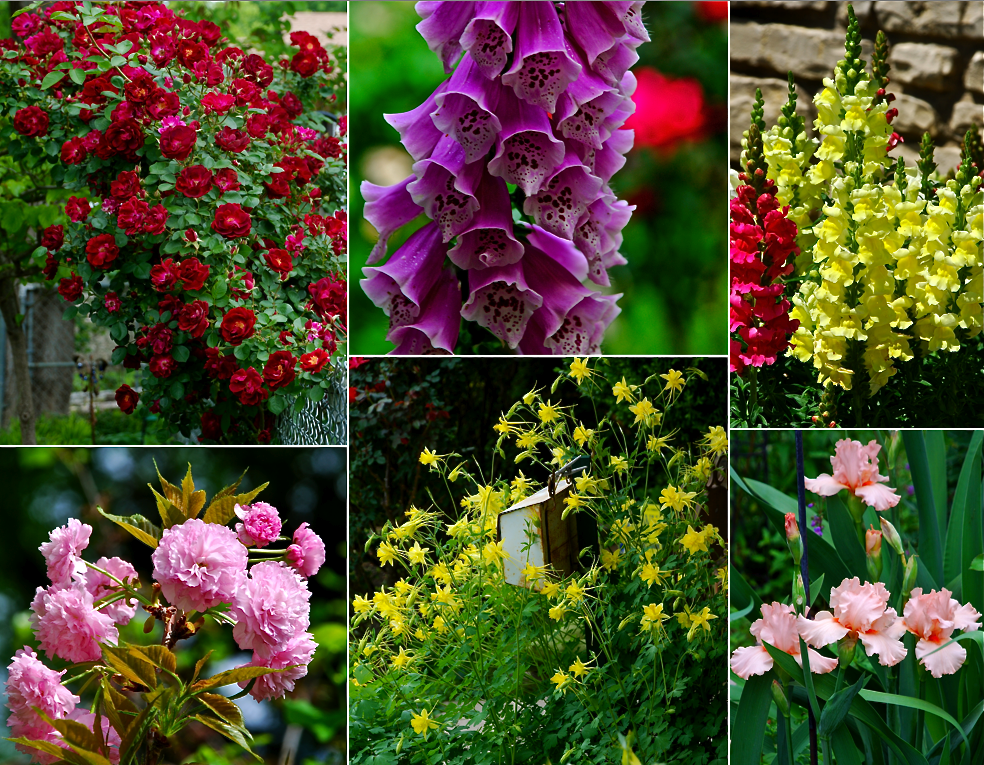
The flowers in these photos are the result of another year’s embrace of the sun.  It will be the remembrance of them and the haunting song of their colors, separately and collectively, that will lift my spirits when in the months to come I traverse winter’s “vale of grief.”  If my memory of the colors should grow dim, I’ll have but to look heavenward and watch for them in the rising and the setting of the sun on days when a window in the gloom has been opened.  In those moments when they streak the eastern or western horizon in a blaze of glory I’ll remember that as the earth tilts back toward the sun, the sun’s embrace will bring the flowers, their lovely colors, and their songs back.  When they return and the air is filled with the music of many melodies, my prayer for all of us will be. . .

 That the morning sun stirs us with gladness from our beds,
That the winds of March move us happily along the new year’s road,
That the rains of April renew our strength,
That the flowers and colors of May captivate our sight,
That the summer inflame our zeal,
That autumn’s colors stimulate our dreams,
That the silver moon make us wiser yet,
That the Lord keep us young at heart so that
we are full of life, laughter, song, and gratitude
for the holiness and goodness in all that the sun and His love embraces.
~Edited and adapted from a blessing by Fr. Andrew Greeley

The heavens declare the glory of God; the skies proclaim the work of his hands.  Day after day they pour forth speech; night after night they display knowledge.  There is no speech or language where their voice is not heard. Their voice goes out into all the earth, their words to the ends of the world.  In the heavens He has pitched a tent for the sun, which is like a bridegroom coming forth from his pavilion, like a champion rejoicing to run his course.  ~Psalm 19:1-5   ✝

140. All nature sings, and round me rings the music of the spheres. ~Maltbie D. Babcock

This is my Father’s world
He shines in all that’s fair,
In the rustling grass I hear Him pass,
He speaks to me everywhere.
~Lyrics from This is My Father’s World by Maltbie D. Babcock

Image

What a glorious morning!  When I raised the shade, my eyes were met with a delicious light pouring down on a corner of the garden.  And it was light not born of the intense heat of past months but instead of the crisp coolness of a 59 degree autumnal equinox morn.  Zephyrs were ruffling leaves, and they were shouting hallelujahs in praise of the Lord’s Sabbath and yesterday’s rain.  Ancient Eden’s unmistakable holy voice reverberated in the air, and all of us, creature and man alike, recognized it and rejoiced.  The “special air of melancholy and magic” typical of September’s opus rose louder and louder as the light moved southward across the yard frosting everything in its wake.  Yahweh’s glory breathed new life into wilted leaves, faded blossoms, and weary bones as the light moved as sweetly as a bow across the strings of a Stradivarius in slanted increments across the yard.

“Arise, shine, for your light has come, and the glory of the Lord rises upon you.”  ~Isaiah 60:1  ✝

*Thanks to Annette Lepple for the great description of September that I quoted above. 

136. The bee is more honored than other animals, not because she labors, but because she labors for others. ~Saint John Chrysostom

His Labor is a Chant–
his idleness–a Tune–
oh, for a Bee’s experience
of Clovers, and of Noon!
~Emily Dickinson

Image

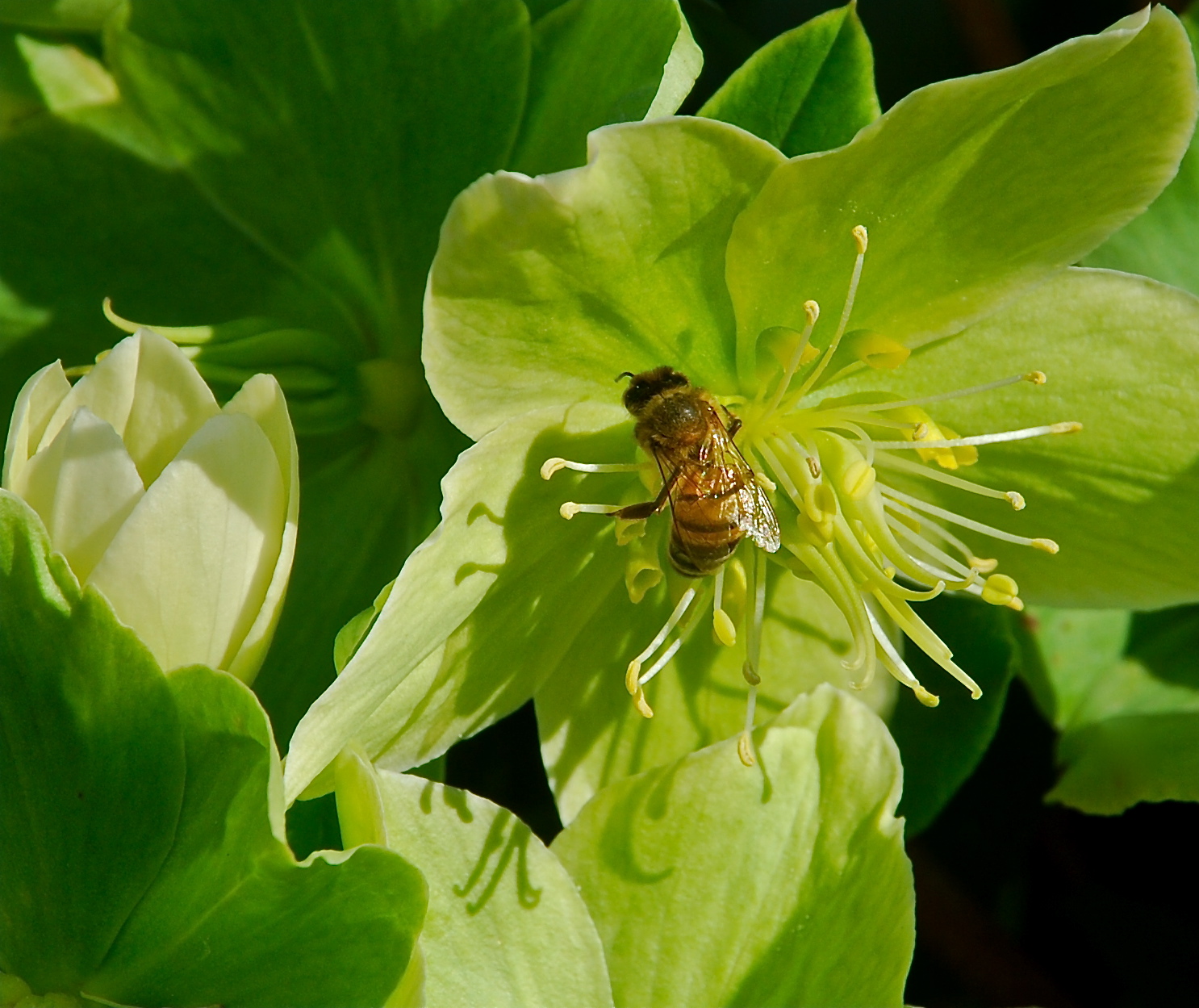
Honey bees and bumblebees, it seems, find a flower’s countenance as irresistible as I, and that “irresistibility” is of holy intent.  In the passage of Scripture that follows, we see that the Lord’s plan involved an interconnectedness of all life as well as a dependency, one on the other.  The poet, Kahlil Gibran, explains that connectedness in this way: “a flower is a fountain of life” for the bee, and to the bee and flower “the giving and receiving is a need and an ecstasy.”  But wait, how is any of this relevant in the 21st century?  In the age of incredible and still advancing technology should anyone care about flowers and bees?  Indeed all of us should care because bees are absolutely essential pollinators, and sadly there are now alarming reports which indicate that one fourth of the northern hemisphere’s honeybee population mysteriously vanished by the spring of 2007.  Then by the end of 2008, one in three hives was left lifeless.  Simply put, the honeybee is disappearing at an alarming rate across the entire globe.  The worst part is that those in the know are not sure why this is happening, but they do know that should the increasing catastrophe not be addressed and solutions to the problem not found, the complete loss of honeybees as pollinators would mean the end of agriculture as we know it.  Since much of what we wear and one third of what we eat depends on the pollinating activity of honeybees, our way of life and civilization would be threatened.  In fact one report said the situation is so dire that mankind would survive only 4 years after the complete collapse of the honeybee population.

Then God said, “I give you every seed-bearing plant on the face of the whole earth and every tree that has fruit with seed in it. They will be yours for food.  And to all the beasts of the earth and all the birds of the air and all the creatures that move on the ground—everything that has the breath of life in it—I give every green plant for food.”  And it was so.  ~Genesis 1:29-30   ✝

135. As for marigolds, poppies, hollyhocks, and valorous sunflowers, we shall never have a garden without them… ~Henry Ward Beecher

Eagle of flowers! I see thee stand
And on the sun’s noon-glory gaze;
With eye like his, thy lids expand,
And fringe their disk with golden rays:
Though fix’d on earth, in darkness rooted there
Light is thy element, thy dwelling air
Thy prospect heaven.
~The Sunflower by James Montgomery, British editor and poet

Image

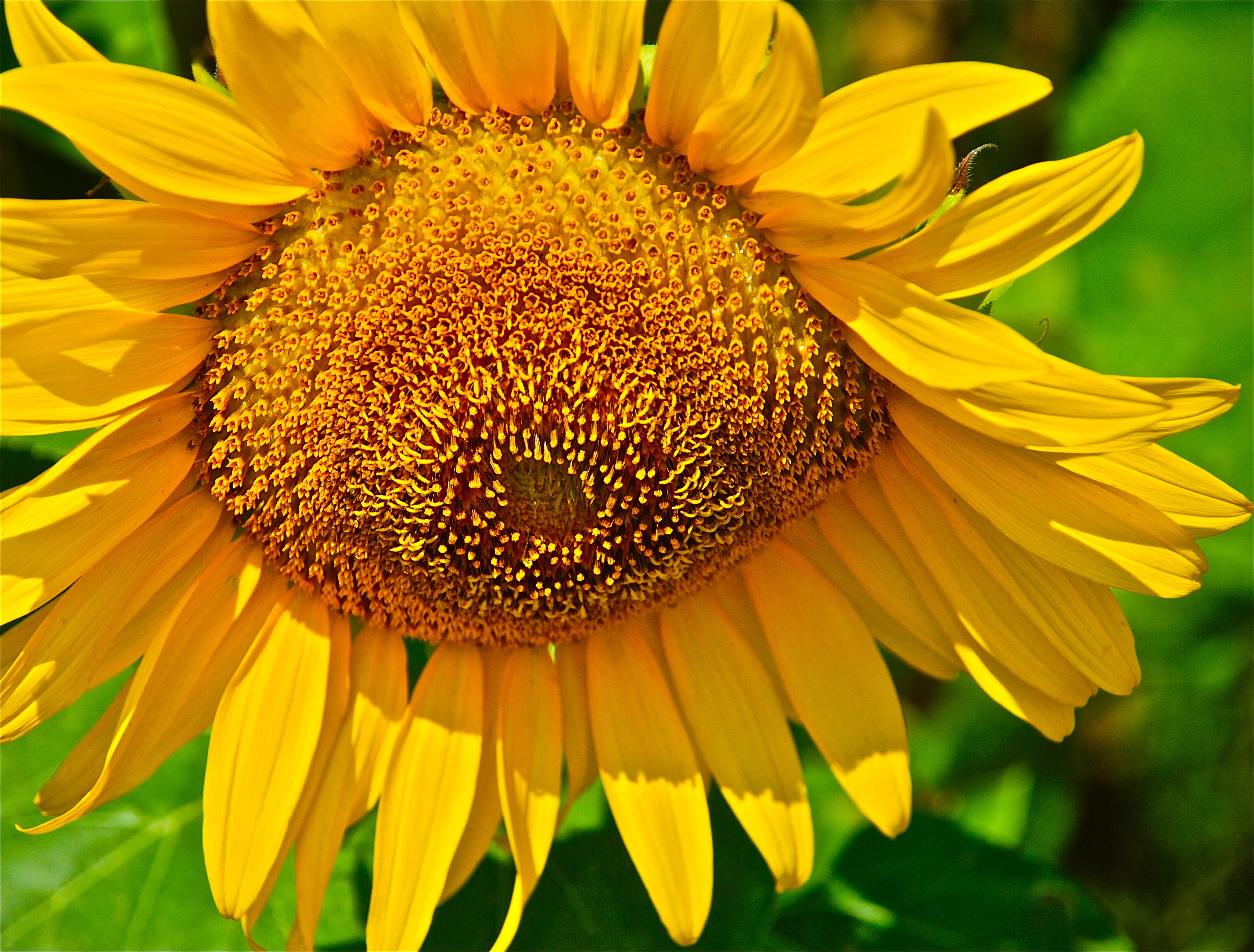
The sunflower with its “gaudy crown of gold” courts the heavenly expanse in search of the sun.  But is that iconic golden spectacle seeking to be prospered by the sun a single flower?  No, each sunflower is actually a cluster of sometimes more than 2,000 small flowers all growing together to mimic the sun and harvest its light.  Amazingly, at maturity some flower heads of the sunflower measure 2 feet across while the plants that hold them up sometimes grow as high as 18 feet.  Henry Ward Beecher additionally said all flowers “have an expression of countenance as much as men or animals.  Some of them seem to smile; some have a sad expression; some are pensive and diffident; others again are plain, honest, and upright, like the broad-faced sunflower. . .”  I agree and adore the plain honesty and uprightness of the sunflower, but in them I also see a touch of elegance in their statuesque stance in the landscape.

This is what the Lord says to me: “I will remain quiet and will look on from my dwelling place, like shimmering heat in the sunshine, like a cloud of dew in the heat of harvest.”  ~Isaiah 18:4   ✝

46. A Robin Redbreast in a cage puts all Heaven in a rage. ~William Blake, English poet, painter and printmaker

When father takes his spade to dig
then Robin comes along;
And sits upon a little twig
And sings a little song.
~Laurence Alma-Tadema

Image

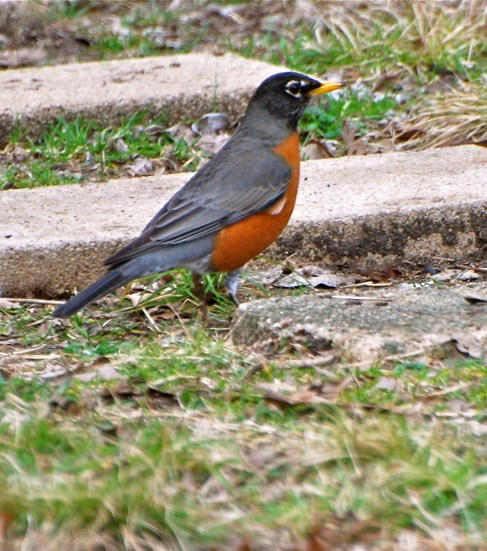
The introductory line is from Blake’s “Auguries of Innocence,” a somewhat lengthy poem consisting of a series of paradoxes in which Blake juxtaposes innocence with evil and corruption. The word augury in the title means omen or token, and the robin is the poem’s first noted “augury of innocence.”  The robin’s song, personality, and countenance are such that it’s obvious why the poet saw the act of putting one in a cage as not only an enraging violation but also as a profound perversion of holiness.  The sweet song and colorful markings of a robin make the bird a delightful harbinger of spring’s infancy and innocence.  Looking forward to its coming is one of my favorite rites in spring’s passage, and like “all heaven” I’d be incensed if the bird’s freedom were taken away and its song silenced.  Below is a legend about the robin that again ties the bird to the blameless and sacred.  Although the truthfulness of legends is questionable, I’m fascinated that somehow, somewhere, and in some way the robin was connected to the Messiah.

The Legend of the First Robin

One day, long ago, a little bird in Jerusalem saw a large crowd gathered around a man carrying a heavy wooden cross.  On the man’s head was a crown made from a thorn branch.  The thorns were long and sharp.  The little bird saw that the thorns were hurting the man.  It wanted to help Him, so it flew down and took the longest, sharpest thorn in its tiny beak.  The bird tugged and pulled until the thorn snapped from the branch.  Then a strange thing happened.  A drop of blood fell onto the bird’s breast, staining it bright red.  The stain never went away.  And so today the robin proudly wears a red-breast, because it helped a man named Jesus.  

“But ask the animals, and they will teach you, or the birds of the air, and they will tell you; or speak to the earth, and it will teach you, or let the fish of the sea inform you.  Which of all these does not know that the hand of the LORD has done this?  In His hand is the life of every creature and the breath of all mankind. . .”  ~Job 12:7-10   ✝

18. The first fall of snow is not only an event, it is a magical event. ~J. B. Priestley

Out of the bosom of the Air,
Out of the cloud-folds of her garments shaken,
Over the woodlands brown and bare,
Over the harvest-fields forsaken,
Silent, and soft, and slow
Descends the snow.
~Henry Wadsworth Longfellow

Image

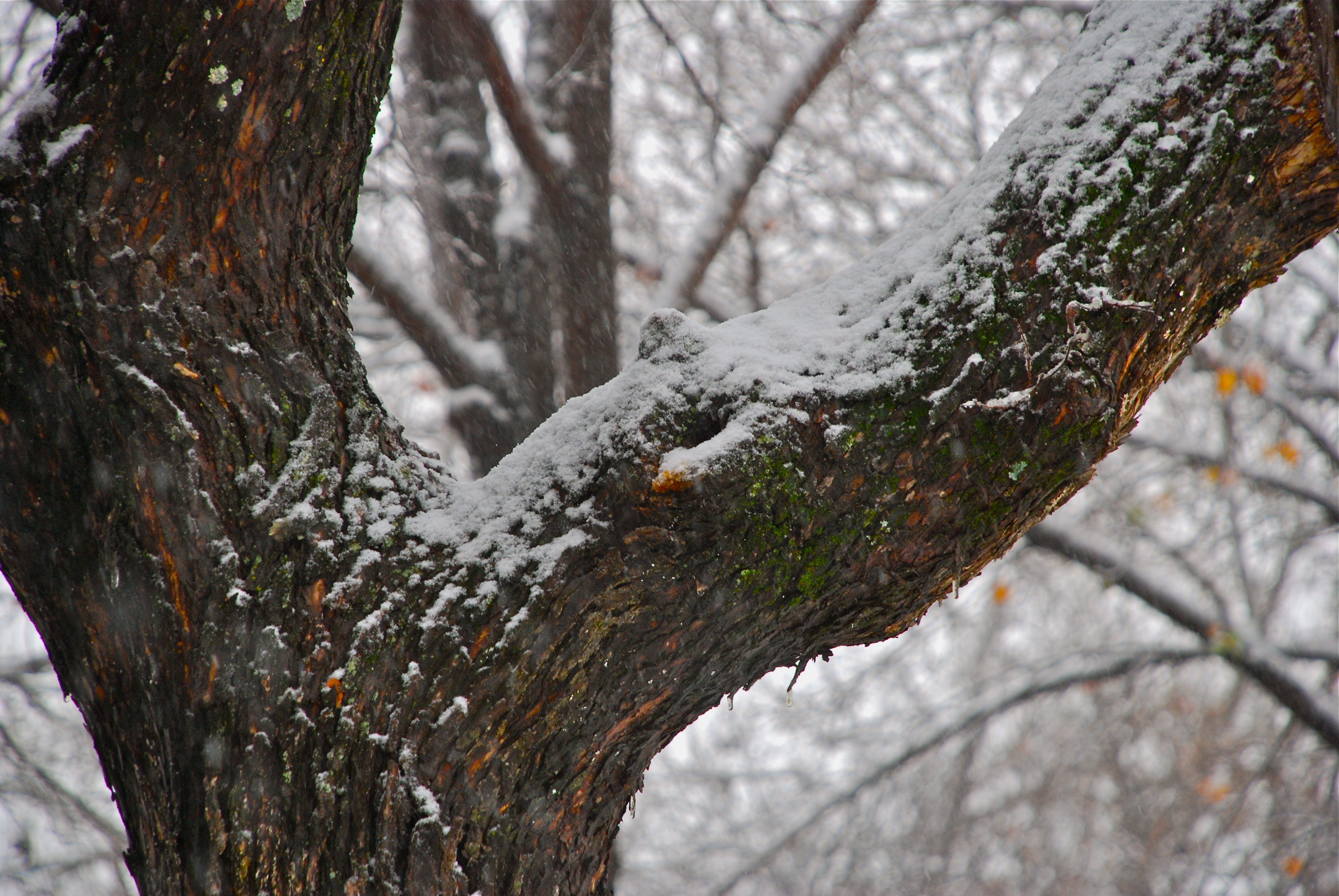
Our area, that had been desperately in need of rain, was the beneficiary of fortuitous events on Christmas Eve.  Could it be that the celebration of the Messiah’s coming the night before was what prompted the blessing of rain as well as the magical, miracle of snow.  So many voices were lifted up in praise and worship of Him that our petitions for rain might have been heard as well. Occasionally on cold, crisp wintry days or nights layers of snow blanket God’s creation even here in north central Texas, but this time we received a strange mixture of “wet” goodness.  At eventide sparkling stars punctuated the ancient moon in heaven’s blackened dome, but during the course of the Messiah’s birthday, clouds laden with moistures moved in, flashes of lightning lit up the sky, a good amount of rain was garnered, hail fell, and finally snow covered the landscape.  If this is not an assortment of  Divine providence mixed with earthly “enchantment,” then as Priestley says, “where is such to be found?”

Praise His Holy Name!

8. the sky has broken and the earth sea-washed is all diamond ~Kenneth White

Grace comes into the soul, as the morning sun into the world;
first a dawning, then a light,
and at last the sun in his full and excellent brightness.
~Thomas Adams

Image

There is a sort of pregnant pause at the exact moment light splits the darkness.  It’s a brief moment in which all creation seems to bow in a great and reverent silence.  It’s as if all those who witness the light’s return praise the Holy Feet on which it comes.  From my window I see this gladsome response as birds lift up and take to wing and as the squirrels leap high in the trees before the deliberate busyness of their respective days begin.  Could it be then that our first response should be to celebrate the gift of the new day and thank its Holy Giver before ere we begin anew.  It was certainly so with the Celts who believed creation was not simply just a gift, but also “a self-giving of God whose image was to be found deep within all living things.”  Why then isn’t that the order of the day in our world?  Perhaps it’s because modern man lives so far away from the natural world that he feels little to no reverence for Creation and therefore has become alienated from God’s living presence.  J. Philip Newell put it this way, “divorced from the brilliance of the first day man lives in a type of exile from his true self and what is deepest in creation.”  He explains further that in this exile, he chooses to ignore the yearning for the light that stirs within himself and chooses instead to follow life’s superficial distractions.

But ask the animals, and they will teach you, or the birds of the air, and they will tell you. . .  ~Job 12:7   ✝