140. All nature sings, and round me rings the music of the spheres. ~Maltbie D. Babcock

This is my Father’s world
He shines in all that’s fair,
In the rustling grass I hear Him pass,
He speaks to me everywhere.
~Lyrics from This is My Father’s World by Maltbie D. Babcock

Image

What a glorious morning!  When I raised the shade, my eyes were met with a delicious light pouring down on a corner of the garden.  And it was light not born of the intense heat of past months but instead of the crisp coolness of a 59 degree autumnal equinox morn.  Zephyrs were ruffling leaves, and they were shouting hallelujahs in praise of the Lord’s Sabbath and yesterday’s rain.  Ancient Eden’s unmistakable holy voice reverberated in the air, and all of us, creature and man alike, recognized it and rejoiced.  The “special air of melancholy and magic” typical of September’s opus rose louder and louder as the light moved southward across the yard frosting everything in its wake.  Yahweh’s glory breathed new life into wilted leaves, faded blossoms, and weary bones as the light moved as sweetly as a bow across the strings of a Stradivarius in slanted increments across the yard.

“Arise, shine, for your light has come, and the glory of the Lord rises upon you.”  ~Isaiah 60:1  ✝

*Thanks to Annette Lepple for the great description of September that I quoted above. 

132. For summer here, bear in mind, is a loitering gossip, that only begins to talk of leaving when September rises to go. ~George W. Cable

Take thy spade,
It is thy pencil;
Take thy seeds, thy plants,
They are your colours.
~William Mason, English poet, editor, and cleric

Image

The level of sand in summer’s hour glass may be low, but, and in spite of August’s  lingering heat, there is yet to come a fair measure of glory in the garden.  The cycle of earth’s fruiting isn’t completely over here in north central Texas until Jack Frost’s frigid touch rings the death knell in mid-November or early December.  So the remaining modicum of flowers will be joined in the coming days and weeks with substantially more blossoms.  Moreover, squirrels aren’t finished gathering nuts, birds have songs yet unsung, pollinators have more rounds to make, and roses have a second flush of blooms to proffer.  But most of all autumn is the time for we who “dwell in gardens” to plant, sow seeds, and raise our voices in gratitude for what the Lord has already graciously given us.

You who dwell in the gardens with friends in attendance, let me hear your voice.  ~Song of Songs 8:13  ✝

128. The very act of planting a seed in the earth has in it something beautiful. I always do it with a joy that is largely mixed with awe. ~Celia Thaxter

Every friend is to the other a sun,
and a sunflower also.
He attracts and follows.
~Jean Paul Richter

Image

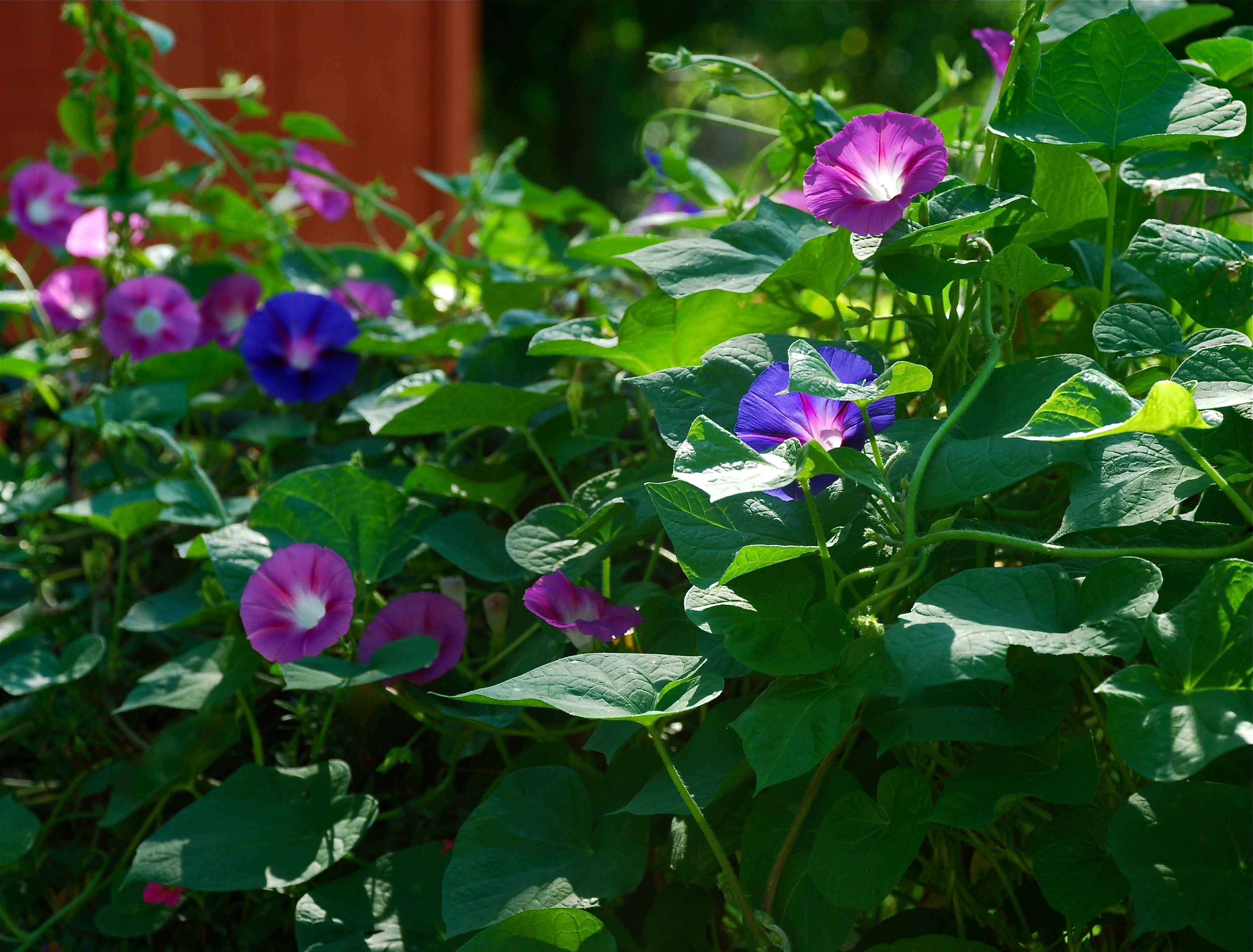
Over the years, I tried starting a few things from seed but never on a large scale.  Then a year or so back after I pulled up and out two poorly producing raised beds, I claimed the space beneath them that fall as seed beds.  In one I sowed poppies and in the other I sowed larkspur and was thrilled at the success of both the following spring.  After the poppies and larkspur were spent that spring, I sowed several types sunflowers in their stead so that I’d have homegrown food for my birds during the winter months.  Again I had great success, and so now, though not on as large a scale, I have several places around the yard where I reserve space for sowing morning glories, poppies, larkspur, and sunflowers.  And I have to say that the process still affects me in the same way as Celia Thaxter.  There is just something so terribly awesome about putting a tiny, almost nondescript seed in the ground and then after a period of watering and waiting discovering the tiniest of green shoots emerging from the blank soil.

The land produced vegetation: plants bearing seed according to their kinds and trees bearing fruit with seed in it according to their kinds. And God saw that it was good.  ~Genesis 1:12  ✝

76. Through the dancing poppies stole a breeze most softly lulling to my soul. ~John Keats

Of all the wonderful things in the wonderful universe of God,
nothing seems to me more surprising than the planting of a seed
in the blank earth and the result thereof.
Take the Poppy seed, for instance: it lies in your palm,
the merest atom of matter, hardly visible, a speck, a pin’s point in bulk,
but within it is imprisoned a spirit of beauty ineffable,
which will break its bonds and emerge from the dark ground
and blossom in a splendor so dazzling as to baffle all powers of description.
~Celia Thaxter

Image

I love poppies, not just the flowers but also the lovely, fat pods that contain the future of the species.  The plants that put on silky, paper-thin blossoms can grow to be 3 or 4 feet tall here if the “hardly visible” seeds are sown in the fall.  So it is that in late October I toss out seeds from the ones I harvested from last’s years pods, and then all winter long I wait for the beauties which “baffle description” to make their appearance in my garden.  As winter moves along, I keep myself reassured by going out to check on them after especially frigid days or after occasional snowfalls to make sure the burgeoning “babies” have not succumbed to the elements.  And each time I go out, I almost squeal with delight when I discover that most of them, if not all, are still slowly but surely growing bigger and stronger.  Then sometime in the early spring the day comes when the waiting is over and standing before me are the first fruits of my labors and watchfulness.  Like dainty chalices, the cup-like flowers open up and drink in the day’s light while penning God’s autograph on the “scenes” of yet another springtime.  Day by day after each individual flower’s petals fall to the ground, the intriguing seed pods take their place, and as temperatures climb, they begin to ripen.  Some of these I eventually let fall to the ground to self sow; the remainder I gather and keep safe and dry until autumn comes and it is again time for me to partner with Creation and scatter abroad the “merest atoms” of such beautiful matter.

For as the soil makes the sprout come up and a garden causes seeds to grow, so the Sovereign Lord will make righteousness and praise spring up before all nations.  ~Isaiah 61:11

18. The first fall of snow is not only an event, it is a magical event. ~J. B. Priestley

Out of the bosom of the Air,
Out of the cloud-folds of her garments shaken,
Over the woodlands brown and bare,
Over the harvest-fields forsaken,
Silent, and soft, and slow
Descends the snow.
~Henry Wadsworth Longfellow

Image

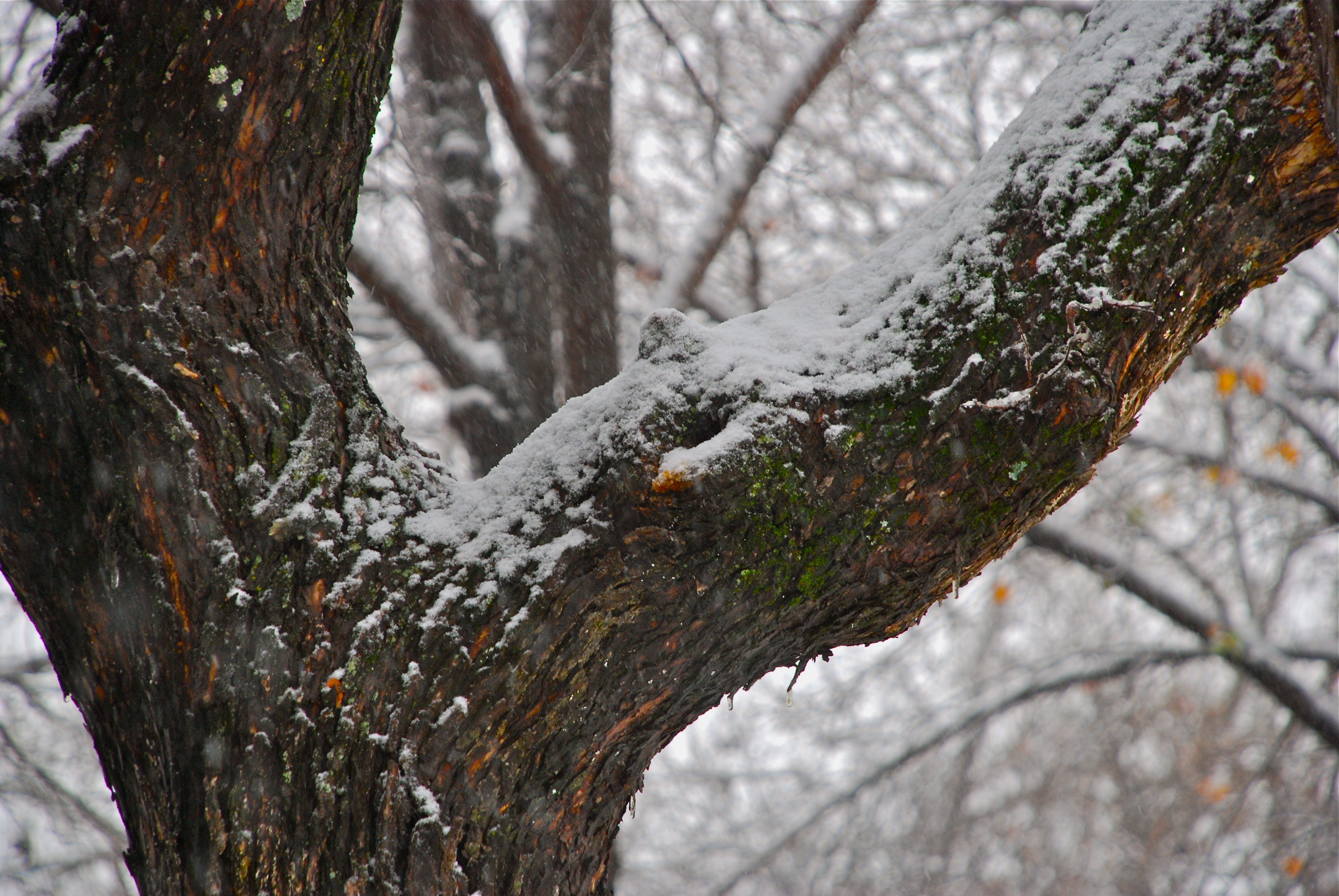
Our area, that had been desperately in need of rain, was the beneficiary of fortuitous events on Christmas Eve.  Could it be that the celebration of the Messiah’s coming the night before was what prompted the blessing of rain as well as the magical, miracle of snow.  So many voices were lifted up in praise and worship of Him that our petitions for rain might have been heard as well. Occasionally on cold, crisp wintry days or nights layers of snow blanket God’s creation even here in north central Texas, but this time we received a strange mixture of “wet” goodness.  At eventide sparkling stars punctuated the ancient moon in heaven’s blackened dome, but during the course of the Messiah’s birthday, clouds laden with moistures moved in, flashes of lightning lit up the sky, a good amount of rain was garnered, hail fell, and finally snow covered the landscape.  If this is not an assortment of  Divine providence mixed with earthly “enchantment,” then as Priestley says, “where is such to be found?”

Praise His Holy Name!

13. As this year draws to its end we give thanks for the gifts it brought and how they came inlaid within where neither time nor tide can touch them. ~John O’Donohoe

Image

So I like best of all autumn, because its tone is mellower,
its colors are richer, and it is tinged with a little sorrow.
Its golden richness speaks not of the innocence of spring,
nor the power of summer, but of the mellowness
and kindly wisdom of approaching  age.
It knows the limitations of life and its content.
~Lin Yutang

12. Ring out, wild bells, to the wild sky, the flying cloud, the frosty light. . . ~Alfred Lord Tennyson

Yet a few sunny days, in which the bee
Shall murmur by the hedge that skirts the way,
The cricket chirp upon the russet lea,
And man delight to linger in thy ray.
Yet one rich smile, and we’ll try to bear
The piercing winter frost, and winds, and darkened air.
~William Cullen Bryant

Image

With every north wind that blows the landscape unravels more and more; after each assault the downed foliage leaves in its wake mounting numbers of skeletons bracing themselves for winter’s icy blasts.  In addition the ornamental grasses are drying out and taking on their a wild and tattered look, and yet a few touches of color remain in the leaves and flowers that have yet to be exiled.  Still audible in the “honey’d leavings” of warm afternoons are their faint renditions of the lusty songs of life, but regardless of how sweet the sound of that is, the sands in autumn’s hourglass are running out.  Like all things, it too will come at last to its Sabbath and therein rest until its next appointed hour upon life’s stage.

11. The moment one gives close attention to anything,
even a blade of grass, it becomes a mysterious, awesome,
indescribably magnificent world in itself. ~Henry Miller

Each blade of grass has its spot on earth whence it draws its life,
its strength; and so man is rooted to the land
from which he draws his faith together with his life.
~Joseph Conrad
DSC_0026

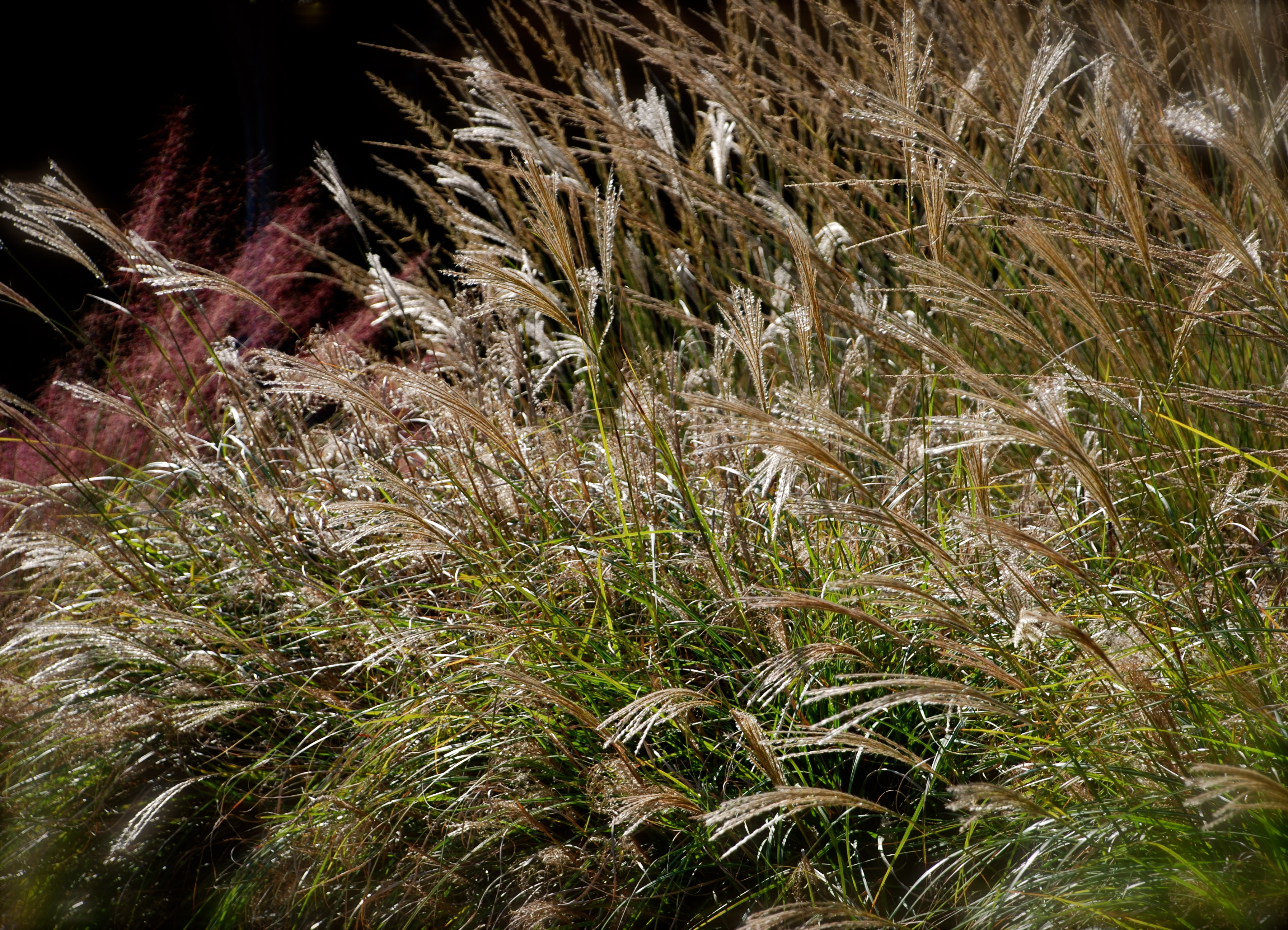
Against the backdrop of autumn’s falling leaves ornamental grasses shift and sigh adding an ethereal element to the landscape.  With airy flower panicles, fluffy seed plumes, and striking seed heads ornamental grasses provide charming “fringe accents” in yards and gardens. Even after the onslaughts of freezing temperatures, grasses continue to grace the landscape with beauty.  They add subtle colors, assorted textures, and the dimensions of motion and sound.  Throughout winter’s “vale of grief,” they capture and play with whatever light is available and in so doing speak of life and give us something “that glimmers in the sleep of things.” The “music” of their swishing and swaying reminds us that what’s happening isn’t an ending but merely a transition for the next beginning.

In a poetic conversation with the Lord, Edna St. Vincent Millay said, “God, I can push the grass apart and lay my finger on Thy heart.”  A Quaker and itinerant preacher named Elias Hicks wrote that “the fullness of the godhead dwelt in every blade of grass.”  And Thomas Carlyle, a Scottish writer, asked, “To us also, through every star, through every blade of grass, is not God made visible if we will open our minds and our eyes.”  These writers, like me, realize that man was meant to be “rooted to the land and therefore to God.”  But, the “umbilical cord” that connects all humanity to Creation and God seems, for many, to have been severed.

The Lord, however, refuses to remain separated or removed from that which He has made.  In an effort to reconnect people to the land and to provide healthier food, many neighborhoods are finding places to build community gardens.  More and more people are getting involved in caring for the land in these communal plots.  Also many schools across the nation are incorporating habitat gardens into the learning experiences of their students, and we are seeing a rise in “hobby farms” where retired professionals have started a second career as a hobby farmer or others who are still working are spending their spare time on their own small farm.

You care for the land and water it; You enrich it abundantly.  The streams of God are filled with water to provide the people with grain, for so You have ordained it.   You drench its furrows and level its ridges; You soften it with showers and bless its crops. You crown the year with Your bounty, and Your carts overflow with abundance.  The grasslands of the wilderness overflow; the hills are clothed with gladness.  The meadows are covered with flocks and the valleys are mantled with grain; they shout for joy and sing.  ~Psalm 65:9-13   ✝

10. For in the true nature of things, if we rightly consider, every green tree is far more glorious than if it were made of gold and silver. ~Martin Luther

For man, autumn is a time of harvest, of gathering together.
For nature, it is a time of sowing,of scattering abroad.
~Edwin Way Teale

Image

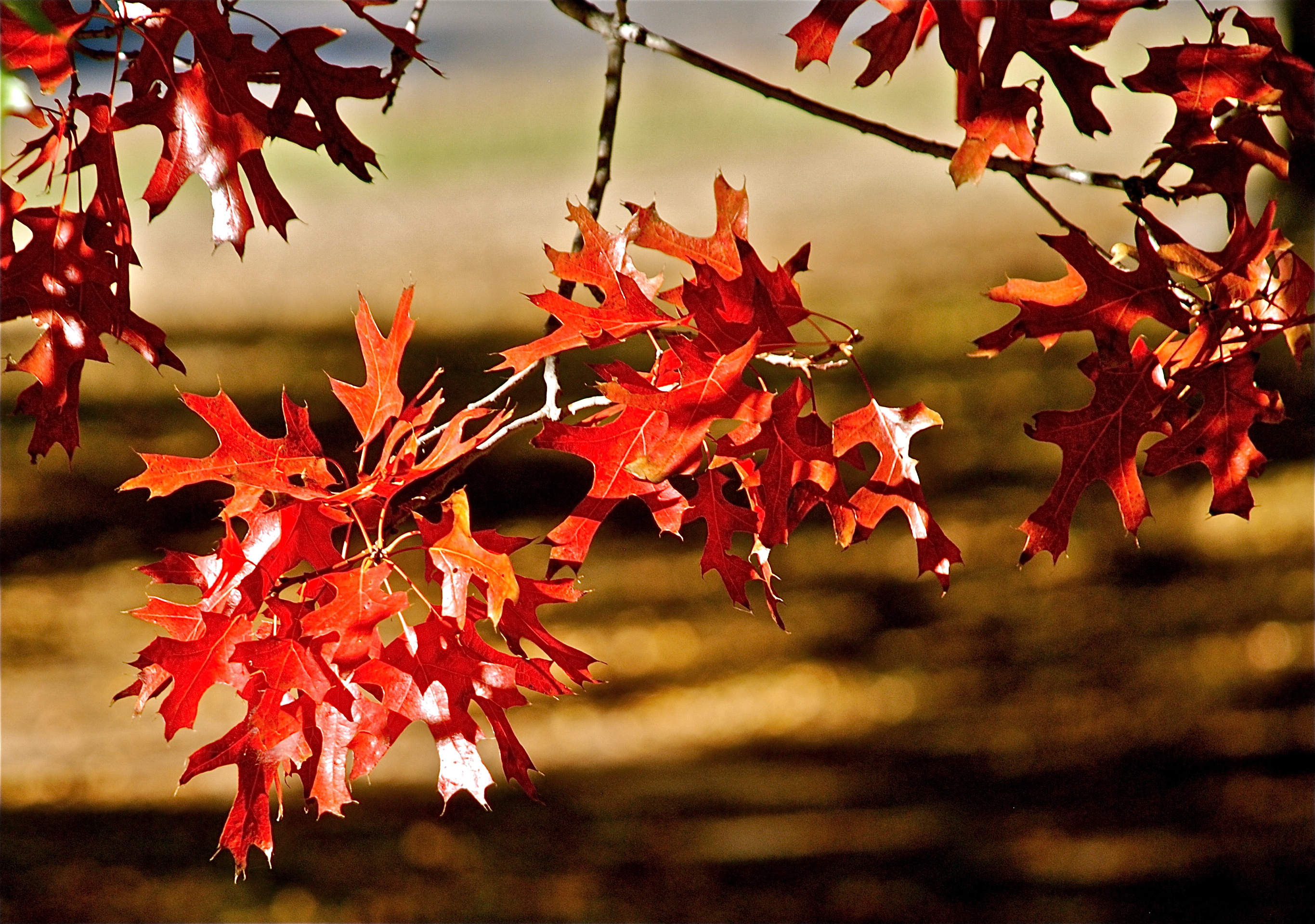
Like Teale I knew that autumn’s winds were scatterers and sowers, but until I did some research, I didn’t realize how much the autumnal shedding of leaves accomplishes.  For the sake of the sod, the fallen leaves cover the ground like a protective blanket.  It’s also easier for leafless trees to conserve much needed moisture in their branches and trunks, and since cold, dry winter winds strip moisture from trees through their leaves, losing their leaves is self-protective mechanism.  It would also be very costly energy wise for trees to keep their little leafy food factories up and running with less light and heat.   Because the transport of water from the ground into the trunk and leaves would be a damaging drain on a trees’ limited resources, the loss of leaves puts trees into a state of dormancy thereby reducing the amount of energy they need to live.  When leaves “come to rest upon the ground,” their work is far from over.  As they lie there, they become food for soil organisms which are vital to the overall health of ecosystems.  In addition the decomposing leaves restock the soil with nutrients and make up a part of the spongy humus that absorbs and holds rainfall.  And finally with the arrival of spring and warmer temps, bacteria, fungi, and insects come into play because the fallen leaves are chewed and rotted which in turn releases nutrients for plant growth.

“For the wisdom that fashioned the universe and can be read in earth’s dark depths and in heaven’s infinity of lights thanks be to you, O God.”  ~John Philip Newell

9. O Autumn…pass not, but sit…and tune thy jolly voice…and all the daughters of the year shall dance! ~William Blake

In the garden, Autumn is, indeed the crowning glory of the year,
bringing us the fruition of months of thought, and care, and toil.
~Rose G. Kingsley, British Gardener and Writer

Image

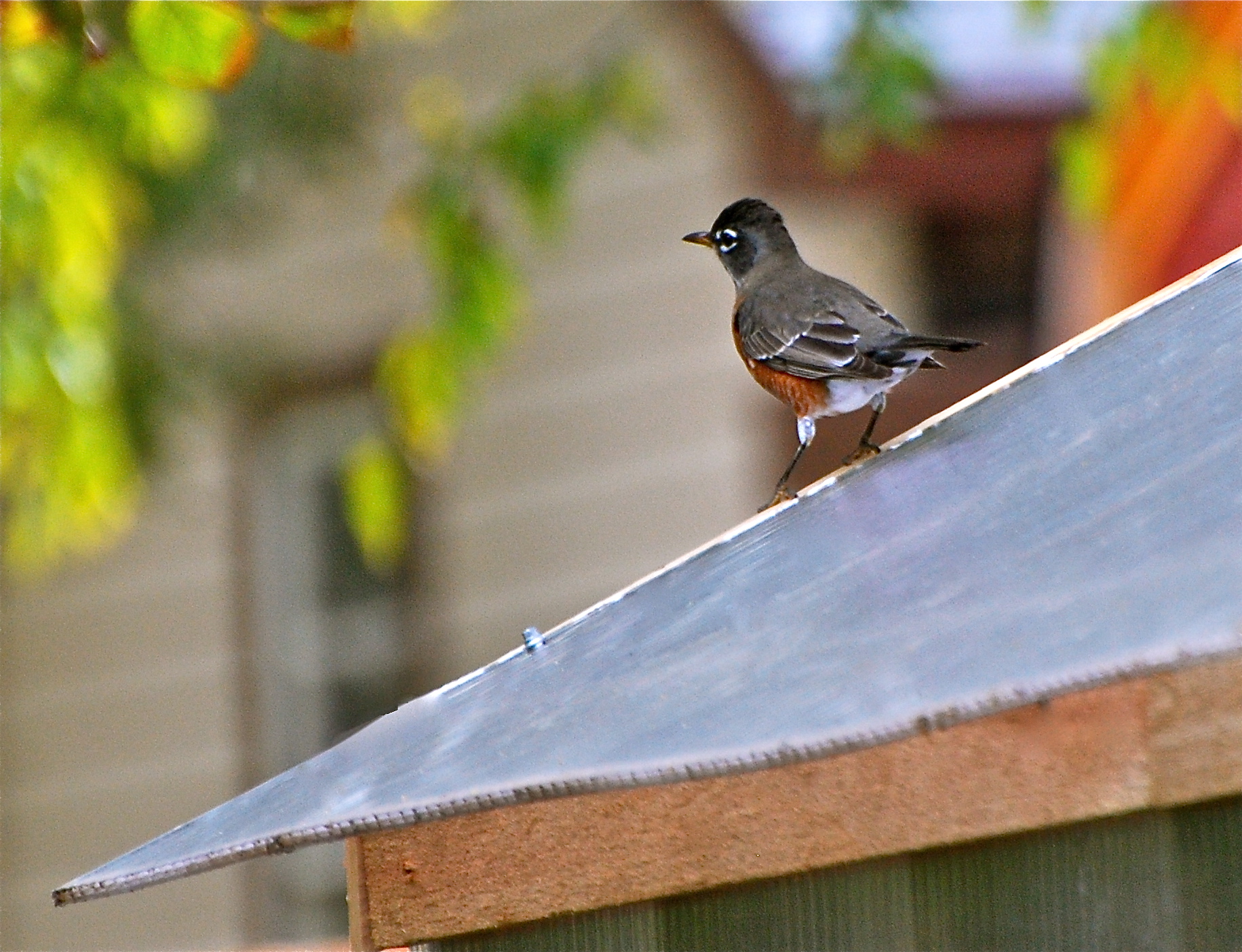
Now that the year has grown long in the tooth, the migratory birds have moved on to warmer lands.  But the birds who overwinter here are still very visible and busy.  However, on the chillier days they, like me, “remain perched” early in the morning and later when the sun is well over the rooftops.  Nevertheless, in spite of our periodic and combined lethargy, we still manage to be out and working during the warmer parts of the day.  The “common feast for all” the garden spreads may be nearly gone and the bird’s tired wings along with my tired feet may drag somewhat, but autumn’s remaining golden glory continues to quicken our spirits.  In fact even after winter ravages the land, we, man and beast alike, who live close to the soil will venture out on the occasional warm day to search with hungry eyes for any signs of what we know lies waiting to emerge from beneath the surface of things.

Autumn’s song is indeed “a rich and lusty melody.”  It induces a healthy renewal in bodies wilted by summer’s long siege of torrid heat, and it creates a restful peacefulness that washes away the “fret and fever of life.”  “It’s jolly voice” sings a comforting song of promise that speaks of God’s circadian rhythms of life–the rhythm of changing seasons, busyness followed by stillness, “youth’s energy followed by age’s measured pace.”

There is a time for everything, and a season for every activity under the heavens. . .  ~Ecclesiastes 3:1   ✝