253. Blue color is everlastingly appointed by the Deity to be a source of delight. ~John Ruskin

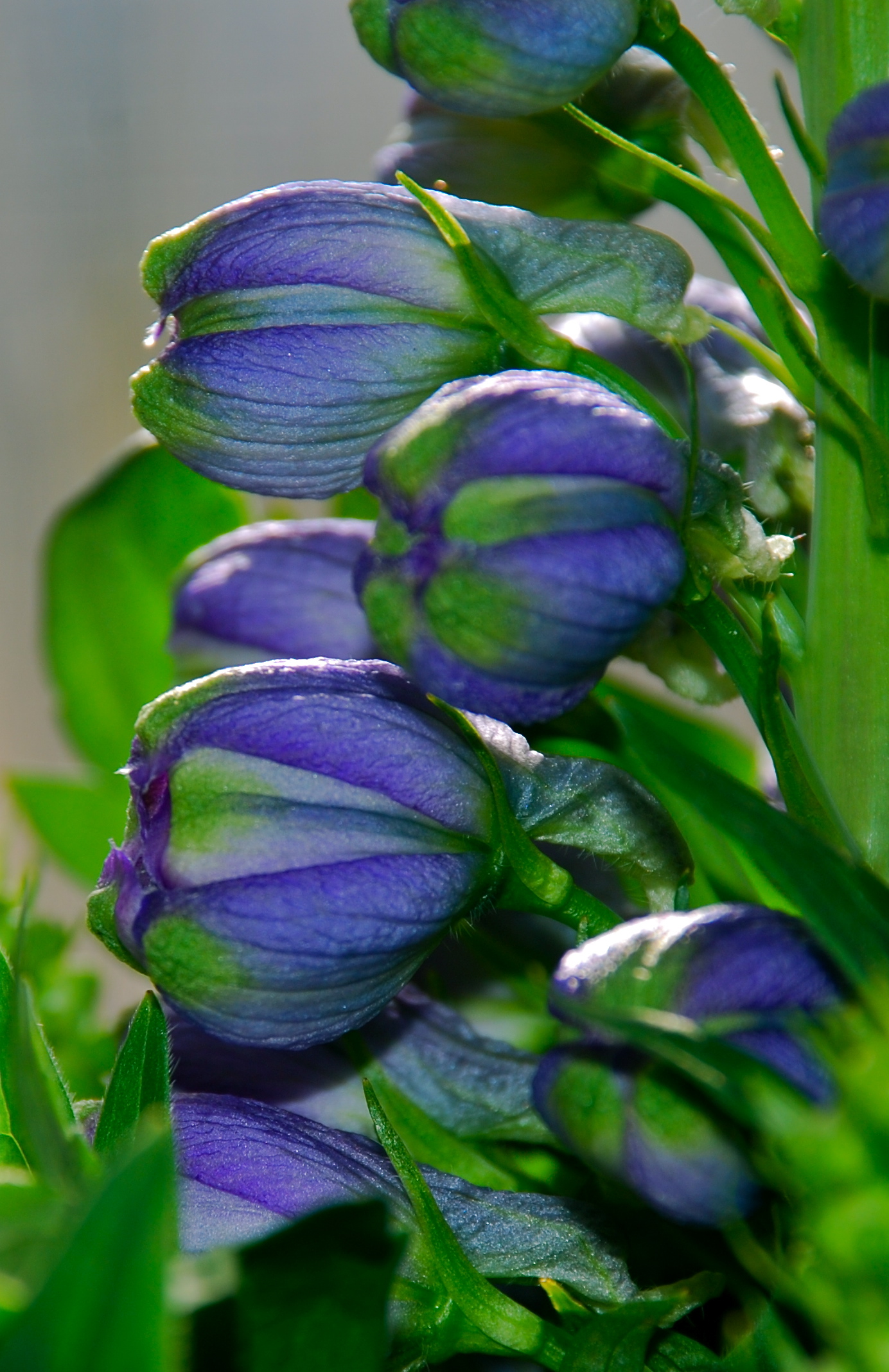
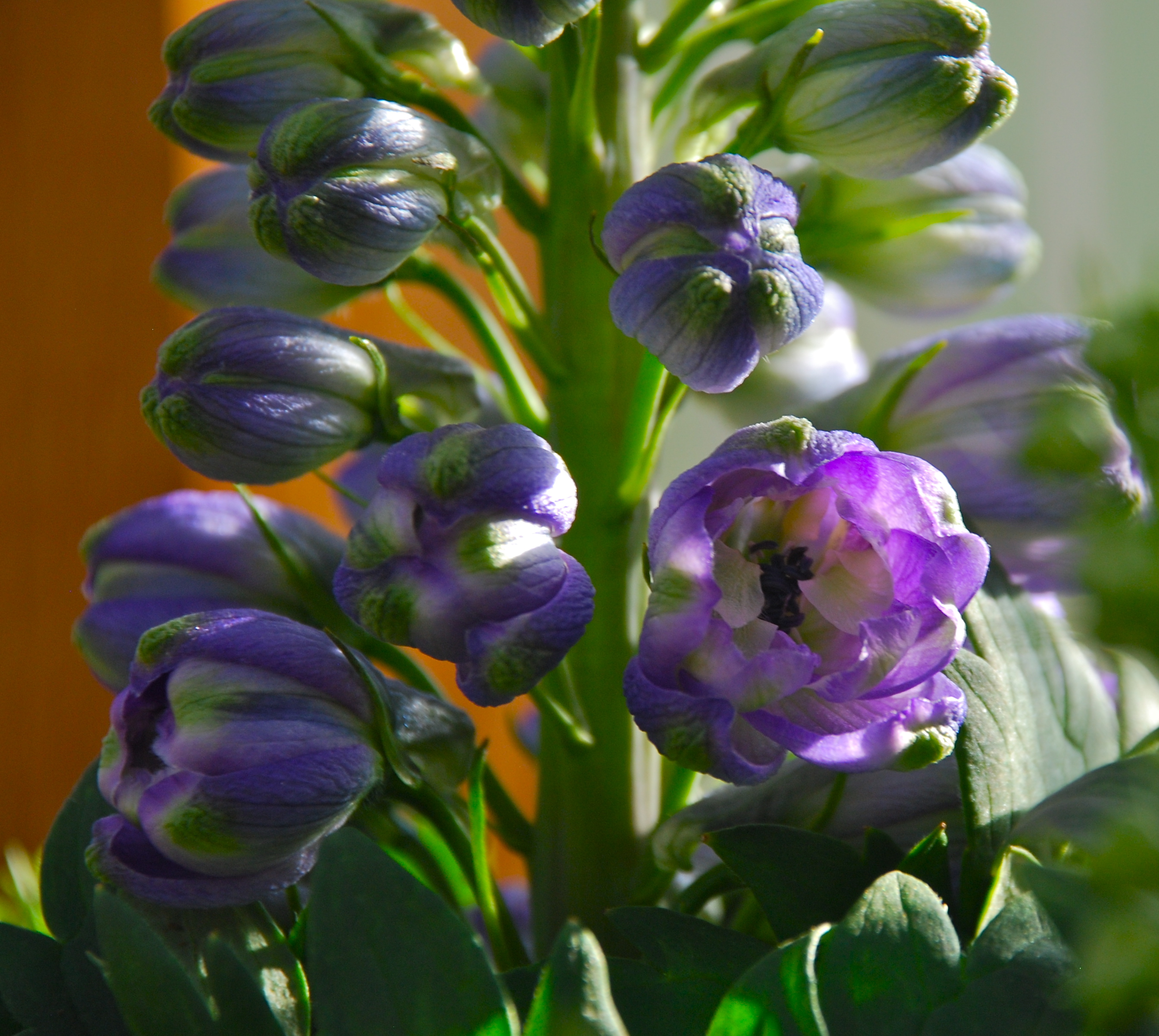
I’m a native of Europe and Siberia.
My name comes from the Greek word meaning “Dolphin.”
My dried flowers were used to dress wounds at the Battle of Waterloo.
European settlers made ink from my dried flowers.
I was used by West Coast Native Americans to make blue dye.
I’ve been said to represent the tears of the Virgin Mary.
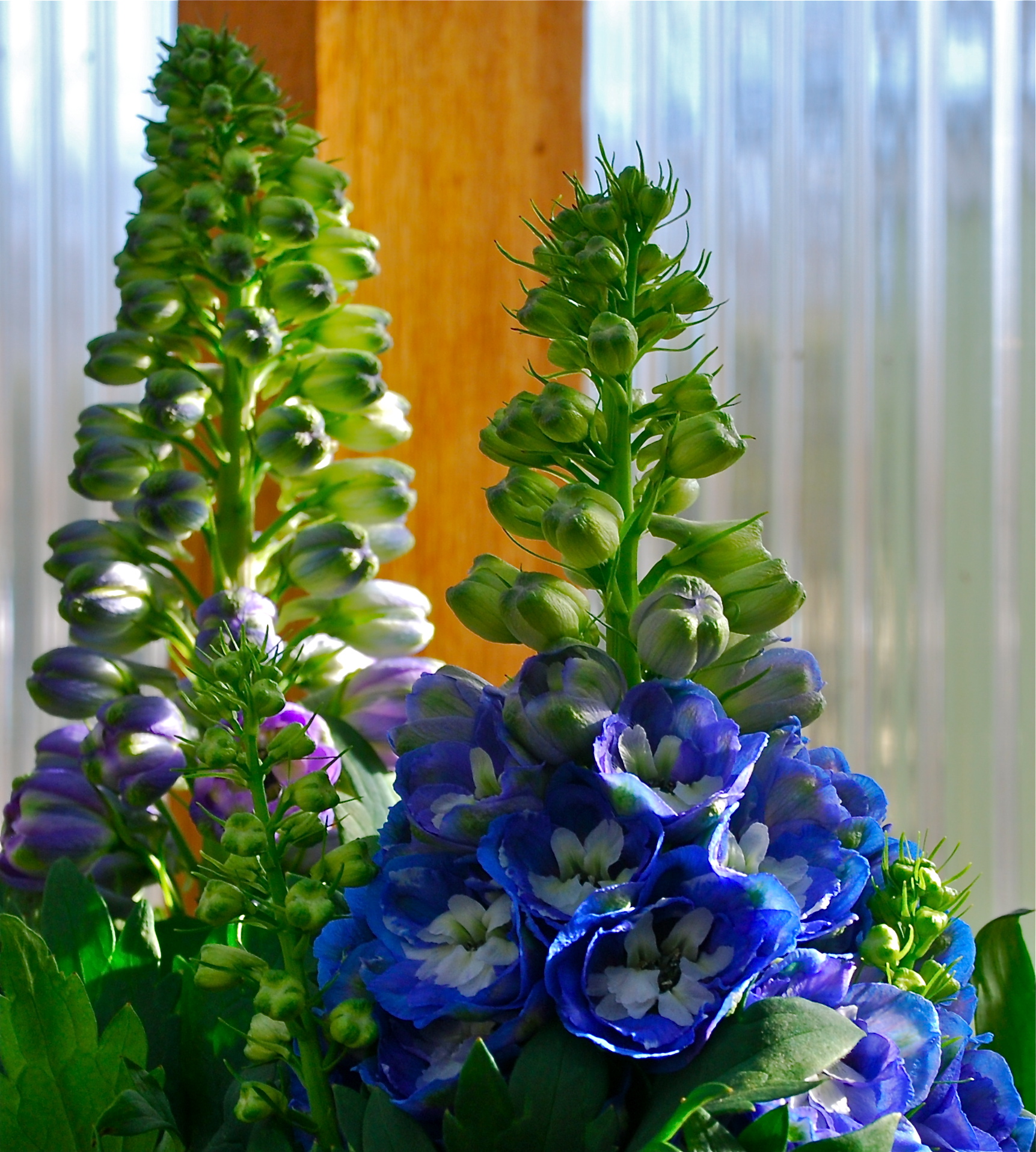
Who am I? My name is Delphinium.
I can be blue and I’m beautiful.
Image

Image

Image

Blue is a popular color in the garden perhaps because it is relatively rare one in the plant world.   In fact, blue is said to be the most rare of colors amongst flowers.  Thus I am blessed to live in a place whose state flower is blue and whose landscape in places becomes covered in seas of bluebonnets for several weeks every spring.  Also, though Delphinium is not a staple in our landscape, they appear in pots in the nurseries this time of year before much, if anything, is blooming outside.  So I can, like I did last week, buy some to brighten the drab days of winter.  Both of the ones I got this year were marked as blue, but now that the second one is opening, I see that it’s going to be purple.  But hey, who am I to complain since purple is another of my favorite colors, and it too is often hard to come by in the garden.  Regardless of the color, now that I know that at one time delphiniums represented Mary’s tears, I’ll have yet another way of remembering what my salvation cost Mary and her precious son, the Christ.

May those who sow in tears reap with shouts of joy.  ~Psalm 126:5  ✝
242. For last year’s words belong to last year’s language. And next year’s words await another voice and to make an end is to make a new beginning. ~T. S. Eliot

In my garden there is a large place for sentiment.
My garden of flowers is also my garden of thoughts and dreams.
The thoughts grow as freely and the flowers,
and the dreams are as beautiful.
~Abram L. Urban

Image

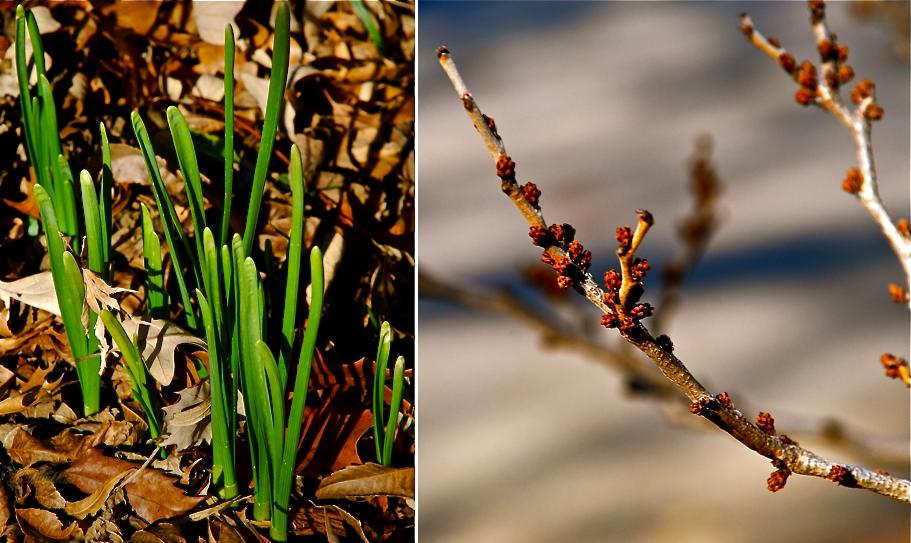
One of the fascinating things about a garden is that it’s never quite the same from year to year even if nothing is lost or nothing new is planted.  Depending on the variable nature of the weather and the seasons, there is always a difference from one year to the next in the way things grow and perform.  Since a garden is a living, breathing entity, it is always in a state of flux, a continuous inconstancy of gain and loss, rise and fall.  For example one never knows how many seeds will germinate and flourish or when they or something established will perish for one inexplicable reason or another.  So, like people, a garden awaits another “voice” each year, and every ending in it and us yields a new and somewhat different beginning.  Whatever was said and done last year is just that for both nature and humanity, and I’ve found it best to leave what was said and done in the past where it belongs.  Neither do I spend time thinking about new year’s resolutions because I know that the seasons in my life are always different and therefore evoke different feelings within me and different responses from me.

Time and time again life rises from death, and when it does, one can feel the beating heart of heaven and hear the hushed voice of grace–that unchanging holy voice of grace, that sacred in-and-out breath of life, the Presence that captures me again and again and again.  For me that is the only constancy, and I simply cannot live without it or the Ancient of Days by whose grace I live.

“The sounds, the aromas, the speech of life that infiltrates and seduces in heard and unheard melodies echoing from every life form to cocoon, to feed us, to excite us, to give solace, to renew, to cry in joy and sorrow, to create, to birth, to laugh at the sheer exuberance of feeling, I love.”    ~Patricia at: http://theenglishprofessor.net/qualifications.php

Obey the Lord and serve Him faithfully with all your heart; consider all the great things He has done for you.  ~1 Samuel 12:24  ✝

57. Joy–A child’s world is fresh and new and beautiful, full of wonder and excitement.  It is our misfortune that for most of us that clear-eyed vision, that true instinct for what is beautiful and awe-inspiring, is dimmed and even lost before we reach adulthood. ~Rachel Carson

Image

He will yet fill your mouth with laughter and your lips with shouts of joy.  ~Job 8:21

19. Let us love winter, for it is the spring of genius. ~Pietro Aretino

We need a renaissance of wonder.
We need to renew, in our hearts and in our souls,
the deathless dream, the eternal poetry, the perennial sense
that life is miracle and magic.
~E. Merrill Root

Image

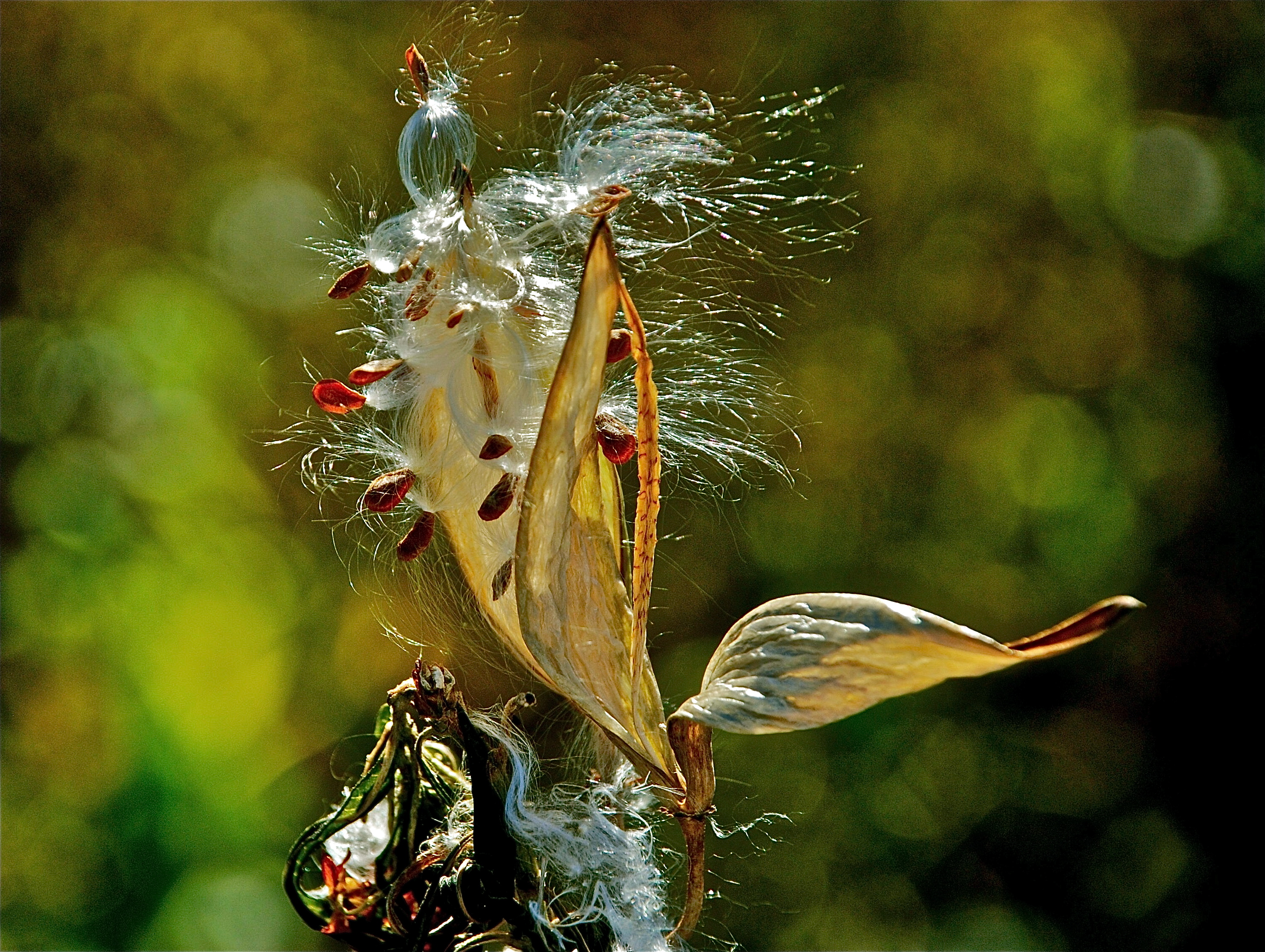
Since it is year’s end, we have entered the season of somber gardens, short days, low temperatures, and more-gray-than-blue skies.  The reckless abandon of the growing seasons has yielded to deepening winter’s, unadventurous restraint.  But, while looking out a window brings into view only the barrenness of winter, an actual venture out into its domain can expose wondrous sights like the seed pod in the photograph.  What a treat to see wondrous silken filaments that look like angel hair releasing seeds that are proof of a continuously running thread in Creation’s tapestry.  Such finds are tangible fragments of God’s imagination buried deep in the mystery of nature, and the aura of holiness that surrounds them often leaves onlookers amazed and awestruck.  These miraculous strands are the same kind of threads that govern the ceaseless ebbing and flowing of oceanic waves, the waxing and waning of the moon, the rising and setting of the sun, the birth and death of life forms, and the endless repetition of the seasons.

The most beautiful thing we can experience is the mysterious.
It is the source of all true art and all science.
He to whom this emotion is a stranger, who can no longer pause to wonder
and stand rapt in awe, is as good as dead: his eyes are closed.
~Albert Einstein

Rediscovering awe helps us appreciate the vast wonders of what the Creator’s mind imagined, what His words spoke, and what His hands created.  It bring us closer to God and restores our childlike joy and zeal for life.  The unfathomable mysteries of life are sacred benedictions; their blessings encourage us to stay in the Lord’s keeping and continue searching for His intent for our lives.

Who among the gods is like you, LORD?  Who is like you—majestic in holiness, awesome in glory, working wonders?  ~Exodus 15:11   ✝

**”if an object or expression can bring about, within us, a sense of serene melancholy and a spiritual longing, then that object could be said to be wabi-sabi.” “Wabi-sabi nurtures all that is authentic by acknowledging three simple realities: nothing lasts, nothing is finished, and nothing is perfect.”  The photo of the seed pod is a excellent example of Wabi Sabi.

16. The trees reflected in the river– they are unconscious of a spiritual world so near to them. So are we. ~Nathaniel Hawthorne

A Ming vase can be well-designed
and well-made and is beautiful for that reason alone.
I don’t think this can be true for photography.
Unless there’s is something a little
incomplete and a little strange,
it will simply look like a copy of something pretty.
~John Loengard

Image

The annual beauty in a garden once spent is gone forever, except in memory, if not captured in some way.  A camera is one of the ways we who love nature’s fleeting glory take it captive.  Unlike Loengard, I believe photos can be more than just an uninteresting copy of a beautiful thing.  For example part of what you see in the photograph above started out as that of a single rose.  However, as an experiment with some computer technology, I turned the image into something “a little strange,” as Leongard suggests, and it added another level of interest.  If one looks carefully at the altered image, fragmented pieces of what used to be negative spaces in the original photograph now have merged into engaging patterns, and so what can be seen raises questions about how much one really sees.  “While there is perhaps a province in which the photograph can tell us nothing more than what we see with our own eyes, there is another in which it proves to us how little our eyes permit us to see,” claimed documentary photographer and photojournalist, Dorothea Lange. So it is that Hawthorne’s idea could be applied to my rose or his trees or to the reflection of anything, and it would speak a profound truth. We often don’t see what is right under our proverbial noses.  The eternal underlies everything mankind sees, tastes, hears, touches, and smells, so much so that all things seem to quiver from the Divine energy emitted from them.  But it’s only when the Lord’s demure presence is acknowledged that it becomes more and more keenly perceptible.

So we fix our eyes not on what is seen, but on what is unseen. For what is seen is temporary, but what is unseen is eternal.  ~2 Corinthians 4:18   ✝

14. In every man’s heart there is a secret nerve that answers to the vibrations of beauty. ~Christopher Morley

A man should hear a little music,
read a little poetry, and
see a fine picture every day of his life,
in order that worldly cares
may not obliterate the sense of the
beautiful implanted in the human soul.
~Johann Wolfgang Goethe

Image

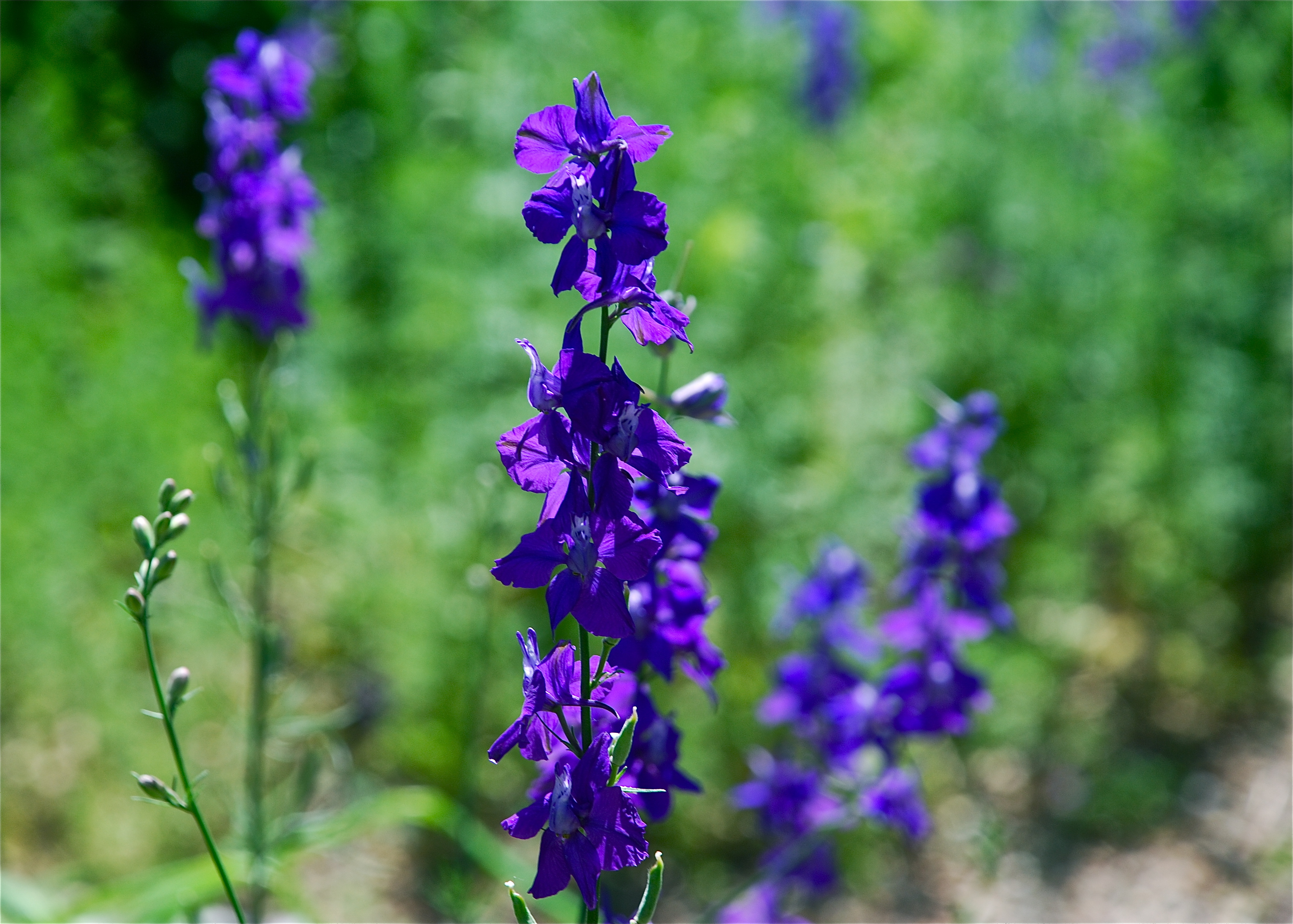
In her novel, THE COLOR PURPLE, Alice Walker says she thinks God gets angry if a person walks by the color purple and doesn’t notice it.  At one point in her story the main character, Celie is told to look at the purple flowers and to embrace their beauty in spite of all the pain and suffering in her world.  She is urged to see the good in them because it was God who placed them on earth.  As she comes to this realization for herself, she begins to understands the magnitude of God’s grace, and like the purple flowers, blossoms as she gains a respect for God and life.

It’s obvious that God puts a premium on beauty, not only for His own sake but also for ours.  Since we are made in His image, our souls cannot help but be implanted by a “sense of the beautiful” as Goethe suggests.  As a highway sign points us in the right direction, in the same way loveliness points to God’s heavenly realm and His goodness.   If we can find beauty, then we can find God. Beauty is meant to feed us spiritually, and the Lord uses what’s beautiful to speak to our hearts for His divine purposes.  For example notice all the richness and beauty involved in the scriptural telling of the birth of the Christ child.  It starts with a beautiful star that leads the way to a manger.  For Celie her beautiful flowers led her to God’s grace, and the Christ child brings all who follow the star and Him the same gift of redeeming grace.