Music’s Mystery

Image

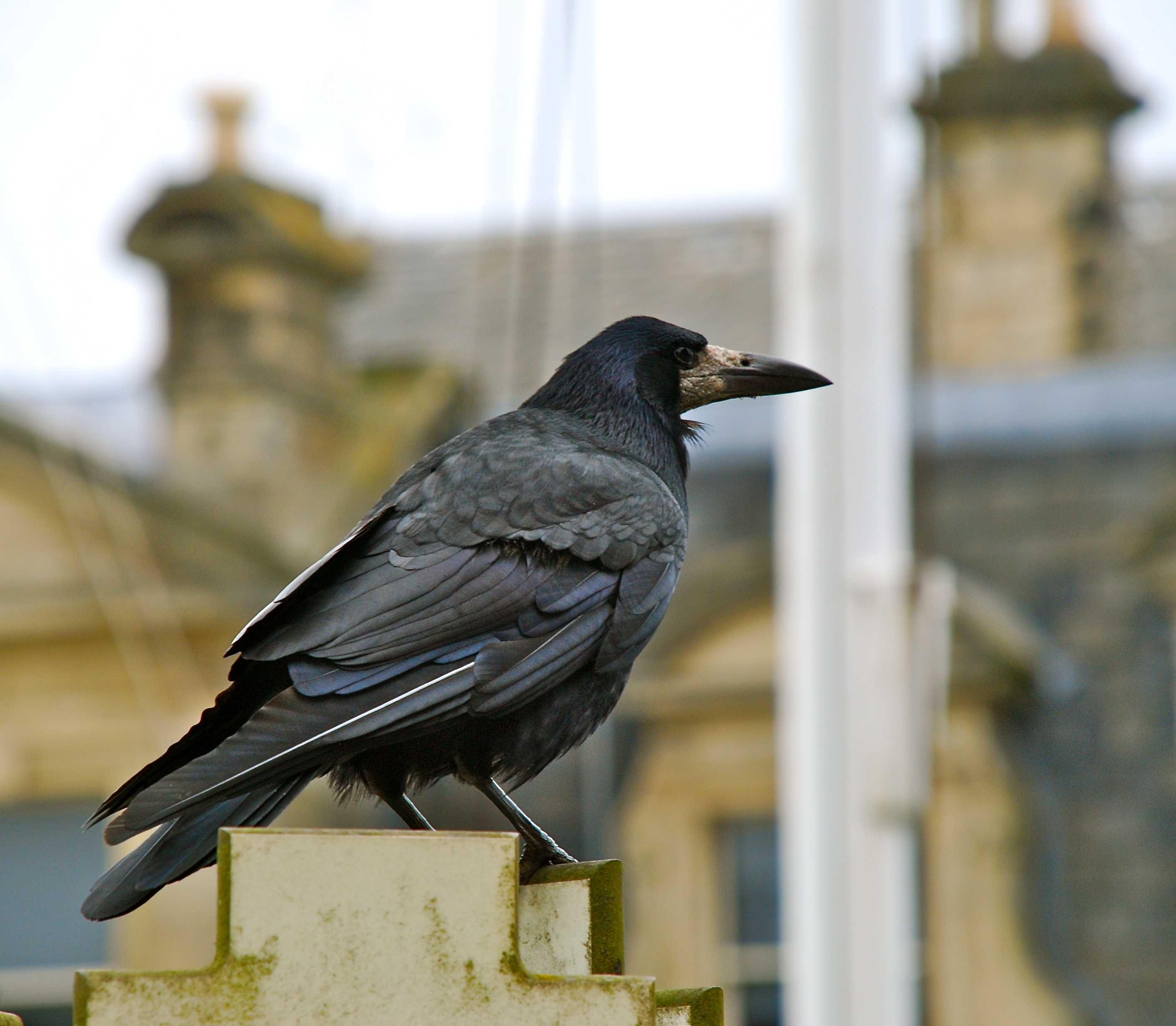
I’ve heard it said that only human beings have been given the gift of music; that only people create songs, sing and serenade their souls with this most magical and uplifting form of communication and communion. Yet, should we not consider the song of the lark? The haunting ballads of the whales? The mournful call of the wolf? The robin’s lyrical laugh at dawn and dusk? The crickets that serenade the nighttide? The burbles of monkeys swaying in the trees? The laughing of the hyena?

Who is to say that in their melodic tunes, caterwauls, howls, wails, and other worldly vocalizations there is not some measure of music. Why should we be the only ones to sing praise, to croon our love, and to bewail our distress? How can we know, in truth, in honesty, that the deliberate scree of the hawk, the piercing bugle of the elk, the chattering of raccoon and ferret, and the murmurings of infrasonic elephant calls is not music to their ears?

Music is a form of communication that lifts the soul, expresses emotion, and brings one being into contact with another being. If this is, indeed, the definition of music (of which it is a form) then can that being not be one other than human? Does not one wolf join another when it sings? Does not the whale song change season to season and year to year, picked up by another whale to be carried on? Does not one roaring lion inspire the entire pride by its lusty cry?

Consider what the morning would sound like without the sweet music of the birds. Contemplate what the summer night might be when not a single chirrup, trill, drone or buzz lilted through the air. Ponder how deep and lonely the oceans would be without the drifting, breathtaking songs of the whales. Can you even imagine a mountain landscape without hearing the echoing howl of a wolf or the bubbling laugh of the loon?

If these sounds, that can captivate us and uplift our thoughts, our hearts and even our souls, are not music and do not do the same for all those who hear them, regardless of race, than perhaps, we must follow that course of logic and say that cave paintings are not art, tap is not dance, improvisation is not acting and free verse is not poetry.

Or perhaps, Music Teaches the Soul what the Heart Feels and Guides the Heart with what only the Soul can Truly Know.

Music’s Mystery is by Morgan at:  http://booknvolume.com
189. Every single story nature tells is gorgeous. ~Natalie Angier

How little note is taken of the deeds of Nature!
What paper publishes her reports?
Who publishes the sheet music of the winds,
or the written music of water written in river lines?
Who reports the works and ways or the clouds,
those wondrous creations coming into being
every day like freshly upheaved mountains?
And what record is kept of nature’s colors – the clothes she wears
– of her birds, her beasts – of her livestock?
~John Muir

Image

When life is lived close to nature, one sups at banquets the earth lays upon sacred plains and holy, high altars.  These moving, kaleidoscopic feasts are found in or on waters, woods, hills, mountains, meadows, fields, deserts, even rocky, jagged cliffs.  Therein or on the planet’s vistas and colors bedazzle the eyes; her shapes and textures fascinate the hands; her scents and fragrances thrill the nose; her rhythms and symphonies seduce the ears while through it all and all the while the human heart is comforted by God’s faithfulness and His divinely appointed seasons.  Simply put, under the sun, moon, and stars and in haunts where breezes blow, grasses grow, and waters flow the human spirit and the soul are nurtured while his life is sustained by the Creator’s grace and lavish spreads.

He (God) performs wonders that cannot be fathomed, miracles that cannot be counted.  ~Job 5:9  ✝

187. The gardener’s feet drag a bit on the dusty path and the hinge in the back is full of creaks. ~Louise Seymour Jones

Pleasures lie thickest where no pleasures seem:
There’s not a leaf that falls upon the ground
But holds some joy of silence or of sound,
Some spirits begotten of spring and summer dreams.
~Adapted excerpt from Laman Blanchard

Image

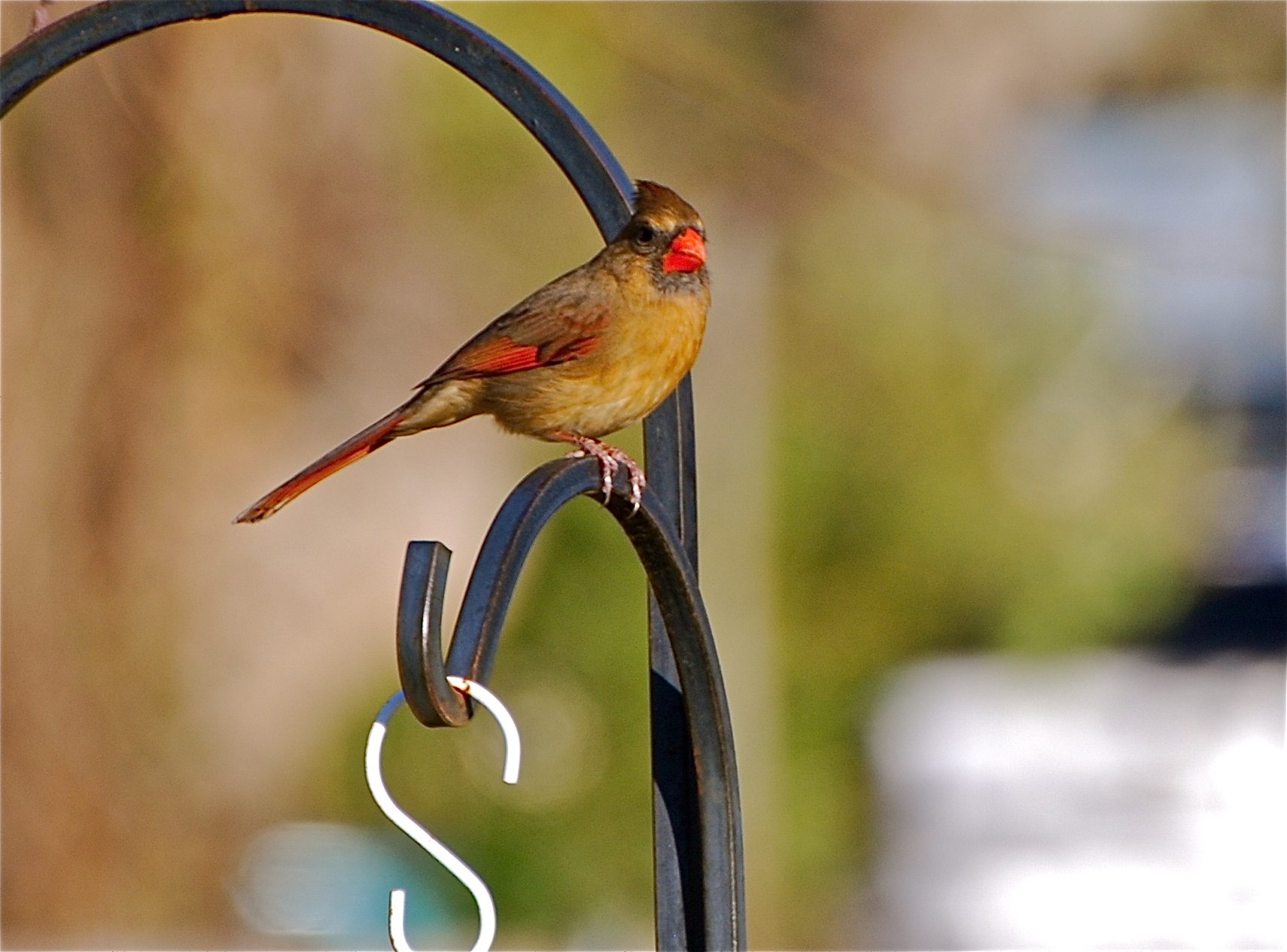
Birds that annually flee our area before winter arrives have already headed out on their migratory treks to warmer havens.  Thus, the number of avian guests in my yard is considerably smaller, and those that are still here have let up on their frantically busy doings in the garden.  The remainder of my “flock,” like me, are sometimes content to just perch a bit in idle watchfulness.  But despite our combined and periodic lethargy, the birds and I continue to greet our days with delight and a kind of expectancy even though we know old man Winter has left his arctic haunts and is headed down our way.

But now the LORD my God has given me rest on every side, and there is no adversary or disaster.  -1 Kings 5:4   ✝

182. Even if something is left undone, everyone must take time to sit still and watch the leaves turn. ~Elizabeth Lawrence

In the garden, Autumn is,
indeed the crowning glory of the year,
bringing us the fruition of months
of thought and care and toil.
And at no season, safe perhaps in Daffodil time,
do we get such superb color effects
as from August to November.
~Rose G. Kingsley

Image

Autumn, a time when magnificent days are often set ablaze under crystalline, sapphire skies or leaves are made to glisten on gloomy, rainy days.  Then there are the chilly eves with their rising moons on star-speckled, indigo nights that add more drama to the sensational spectacle.  What’s more lingering in sylvan settings observing flights of migrating birds or monarch butterflies, or watching busying squirrels gather acorns, or gazing at confetti-colored leaves fluttering gracefully to the ground under broad expanses bathed in the bluest of blues are rich, restorative times of hushed mellowness.  And what about the frosts that adorn grasslands and hills or  the fallen leaves that are the color of reddish, ripened persimmons?  All of it, simply all that autumn has to offer, is in fact “the crowning glory of the year.”

Be exalted, O God, above the heavens; let your glory be over all the earth.  ~Psalm 57:5  ✝

181. How could such sweet and wholesome hours be reckoned but with herbs and flowers. ~Andrew Marvel

Natural object themselves
even when they make no claim to beauty,
excite the feelings, and occupy the imagination.
Nature pleases, attracts, delights,
merely because it’s nature.
~Karl Wilhelm Humboldt

Image

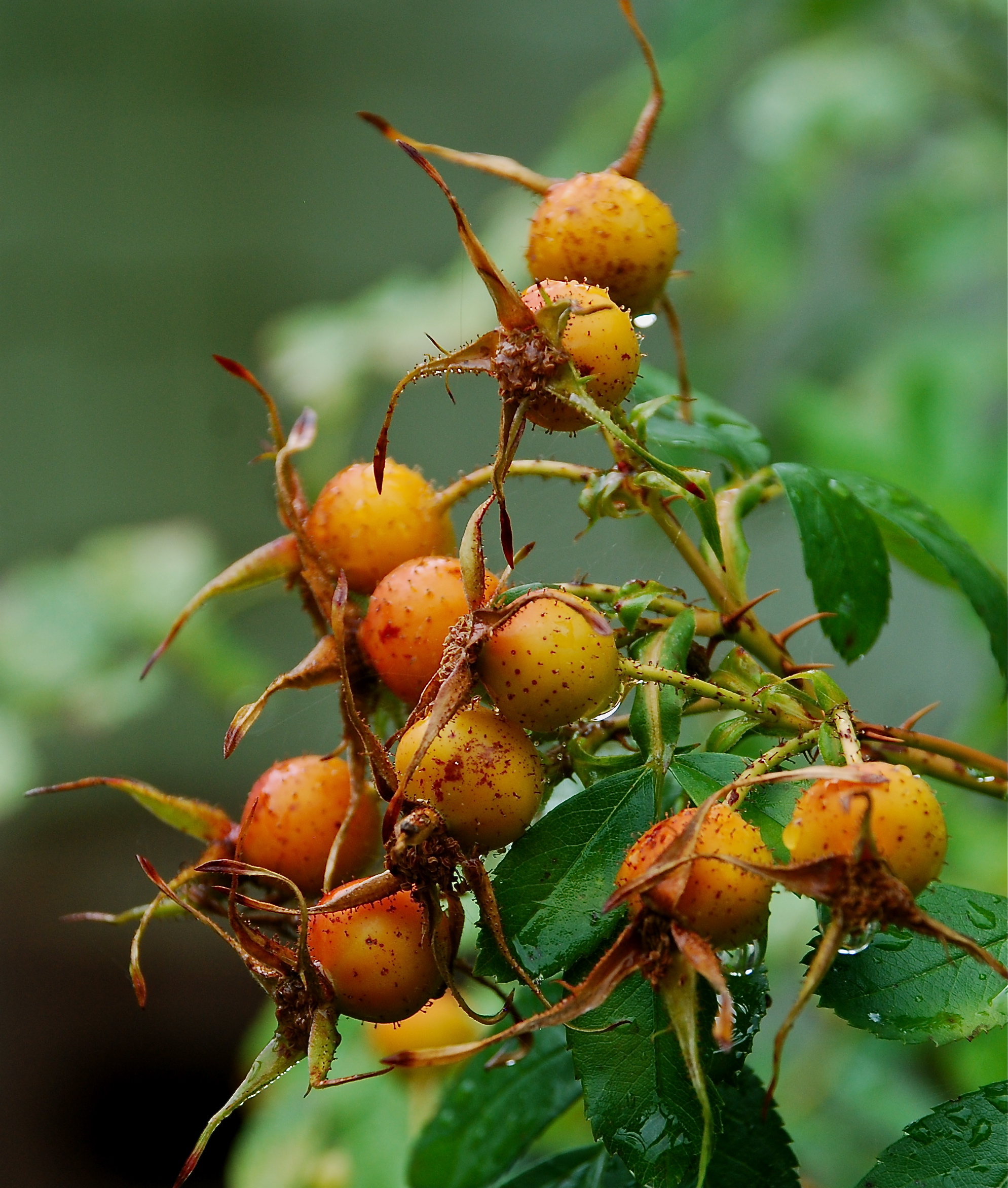
The most common attractions of the rose are the prettily colored flowers and the sweet to spicy fragrances.  On some roses there are also brightly colored hips that not only decorate bare canes in winter but also provide feasts for overwintering birds.  These hips are the pomaceous fruits of the rose, and they vary in size and shape and color.  Some of the first rosary beads were fashioned out of dried rose hips, and they have been used as well to make jellies, jam, marmalade, teas, soup, and medicinal compounds.  They also played an important role during World War II because they are very rich in Vitamin C.  It seems the people of Great Britain were encouraged to gather wild-grown rose hips to make a syrup for their children since German submarines were sinking commercial ships making it very difficult to import citrus fruits from the tropics.

Looking with expectancy for things that excite, I venture out into my gardens almost daily, weather permitting.  To that end I am seldom disappointed even on drippy days like this one.  Today’s find were some gold-orange-reddiish rose hips, and though they make no claim to great beauty, I was thrilled to see them once again.  After photographing them and beginning this post I began pondering what a difference for the better it might make if I greeted every new day’s living with the same attitude.  What an impact might it have on those around me if I met them filled with joy and expected the best from the encounter.  Once again I see how God’s Eden is not only a great sustainer but also an excellent teacher.

The seed will grow well, the vine will yield its fruit, the ground will produce crops, and the heavens will drop their dew.  ~Zechariah 8:12  ✝

179. November’s sky is chill and drear, November’s leaf is red and sear. ~Sir Walter Scott

Pleasures lie thickest where no pleasures seem:
There’s not a leaf that falls upon the ground
But holds some joy of silence of sound,
Some spirits begotten of a summer dream.
~Laman Blanchard

Image

The first Sunday of November had been running out like slow, thick molasses as deepening autumn’s shades of gray hung on it like a shroud.  Even the flocks of busying birds and the foraging squirrels succumbed, as did I, to the hypnotic laziness of the day’s dark, engulfing gloom.  However, things became a little livelier for a time late in the day when the cement on the patio became a dance floor filled with tiny rain-drop dancers jitterbugging to the short-lived “drippy” rhythms.  After the rainy spell light broke briefly through the clouds, and it was enough to highlight a few colorful leaves and a potted petunia.  Together those two sights interjected a touch of color while the wrought-iron furniture that glistened in the light added a bit of beaded elegance to the drab scene.  How sweetly even a token display of earth’s delights can thrill this observer!

Surely then you will find delight in the Almighty and will lift up your face to God.  ~Job 22:26  ✝

176. For the mind disturbed, the still beauty of dawn is nature’s finest balm. ~Edwin Way Teale

Slow buds the pink dawn like a rose
from out night’s gray and cloudy sheath;
softly and still it grows and grows,
petal by petal, leaf by leaf.
~Susan Coolidge

Image

Tired of tossing and turning, I got up out of bed and went in to rock in my favorite chair.  Not wanting to miss the “slow budding” of dawn’s light, however, I first raised the bamboo shade in front of the glass, patio-doors.  After a short wait a faint pinkish glow appeared low on the horizon in the eastward sky, and as the sun inched up and up and up, a ray of golden light poured through an opening centered in the heart of a tall tree framed against it just above a neighboring housetop.  The branches of the tree then took on a hallowed appearance so much so that a bird atop the roof and two squirrels sitting very still in nearby branches looked like parishioners in pews awaiting the high priest.  Later, as the sun climbed high enough for night’s curtain to be lifted completely off earth’s stage, it was apparent that all who’d seen this amazing “salutation of the dawn” were summoned to make ready for the new day.  The first to respond was a flock of birds darting willy nilly across the pastel blue sky in search of food, but beneath them as more and more drops of light appeared like jewels aloft in the bamboo I knew that despite a restless night the time for me to rise had come as well.

If I rise on the wings of dawn, if I settle on the far side of the sea, even there Your hand will guide me, Your right hand will hold me fast.  ~Psalm 139:9-10  ✝

174. The greatness of a nation and its moral progress can be judged by the way its animals are treated. ~Mahatma Ghandi

If all the beasts were gone,
men would die from a great loneliness of spirit,
for whatever happens to the beasts
also happens to the man.
All things are connected.
Whatever befalls the Earth befalls the sons of Earth.
~Chief Seattle of the Suquamish Tribe

Image

The creatures of earth, sea and sky came forth “out of the waters of God’s life.”   And their arrival was yet another manifestation of the visible from the invisible–another disclosure of the mystery of God.  In addition, “with the birth of the creatures there is the emergence of seeing, hearing, smelling, tasting, and touching.  The light of the sun and the whiteness of the moon can now be seen.  The wind blowing through the leaves of trees and the crashing of ocean waves can be heard.  The early morning fragrance of the earth can be smelled.  Its fruit can be tasted, and its textures touched,” writes J. Philip Newell.  It has even been said that if one wants to know the Creator, one of the ways to gain insight is to know His creatures, and I think that’s especially true when it comes to examining the sensory aspect of their coming.  For does not the ability to see, that the creatures brought, teach mankind to see with the eyes of the heart?  In the silences of humanity’s reality does not the ability to hear teach men to listen for the “echo of the spheres” and the still, small voice of God?  Do not the abilities to smell, taste, and touch help mortals meet their Savior, Jesus, through the holy sacrament of the Eucharist (Communion)?

And to all the beasts of the earth and all the birds in the sky and all the creatures that move along the ground–everything that has the breath of life in it–I give every green plant for food.”  And it was so.  ~Genesis 1:30

167. God gave us memory so that we might have roses in December. ~James M. Barrie

I arise today
blessed by all things.
~John O’Donohue

Image

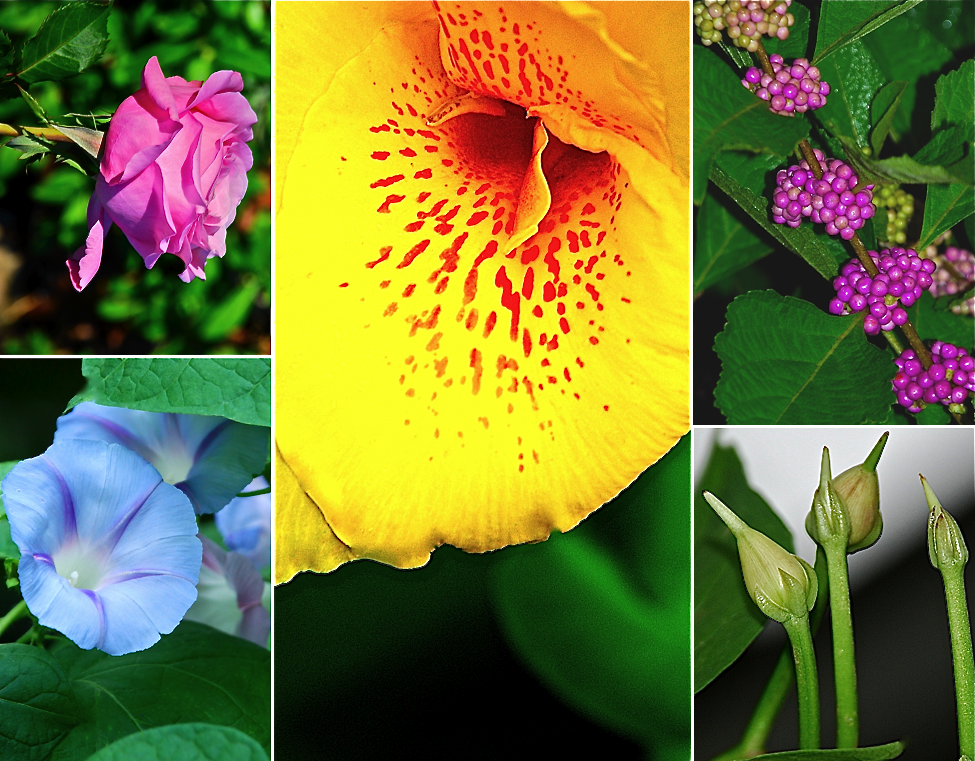
The English poet, William Blake, once penned that all “the daughters of the year shall dance” in autumn and “sing the lusty song of fruit and flowers.”  I think it might be hard to find a much lustier song or livelier a dance than what the beauties above are lending to October’s opus.  As a part of the process of summer’s “slow disrobing” and the “summing up” before year’s end, their ordained and impassioned performances are undeniably spreading a magnificent and long lasting “common feast for all that live.”  From this rich banquet, the berries will remain on winter’s menu for birds who fly not elsewhere for warmer refuge.  The seeds in the lower right corner produced from flowers like the pink and blue morning glories will foster faith and hope for we mortals as they carry the promise of spring through winter’s cold and dark dominion.  The scarlet spots in the throat of the yellow Canna will bleed thoughts of Christ into our awareness as we look forward to celebrating His birth in deep December.  And the scent and sight of the inimitable rose will take its usual place in memory whilst not in bloom.

I will perpetuate Your memory through all generations; therefore the nations will praise You for ever and ever.  ~Psalm 9:6  ✝

147. If you wish to know the Creator, come to know His creatures. ~Columbanus, 6th century Irish monk

A flash of harmless lightning,
A mist of rainbow dyes,
The burnished sunbeams brightening
From flower to flower he flies.
~John Banister Tabb, Roman Catholic priest,
poet and professor of English

Image

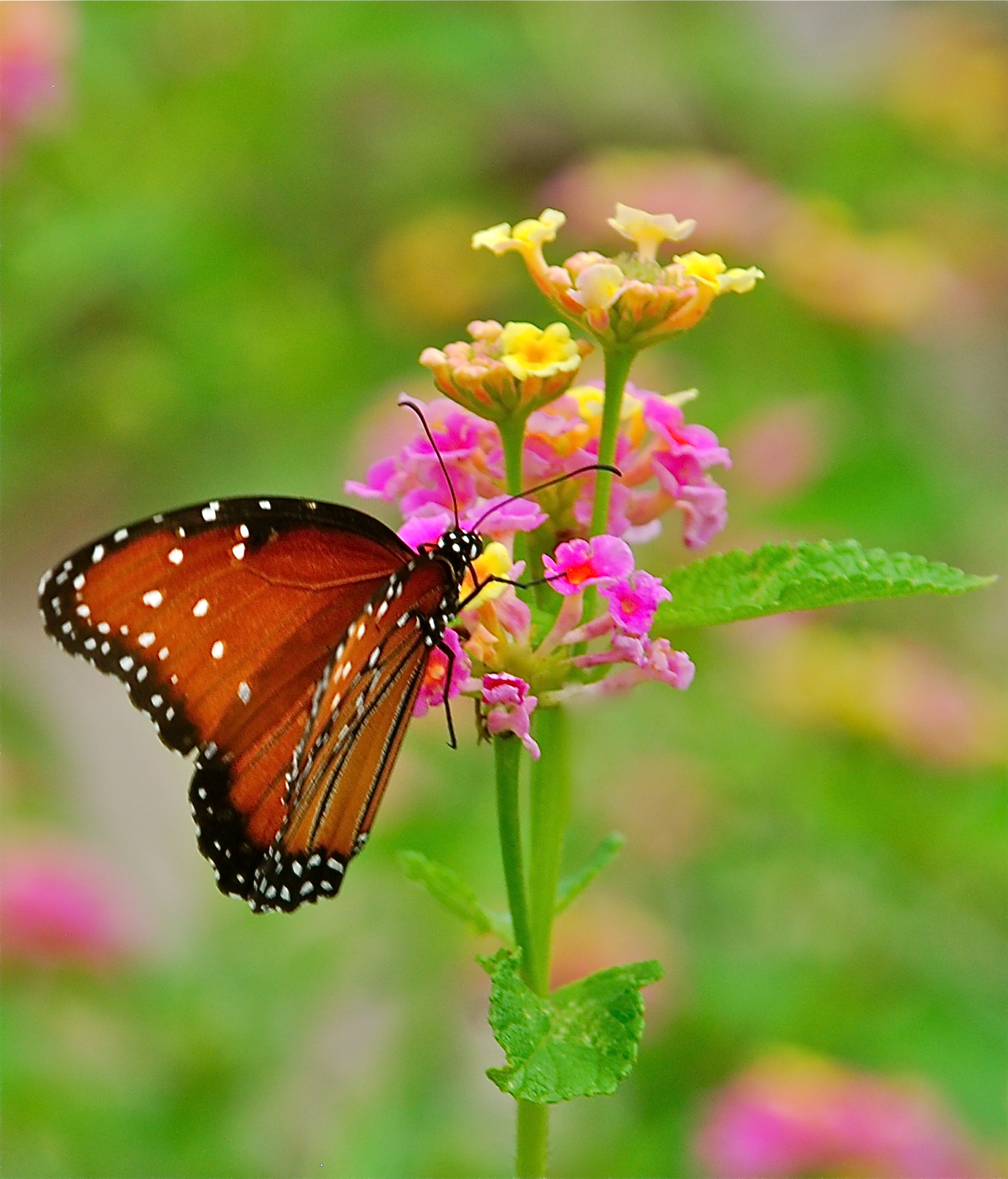
Tabb’s description is of a hummingbird, but it could be said as well of bees, butterflies, and dragonflies, hordes of which I’ve seen of late.   Gulf fritillaries and an assortment of swallowtails have been flitting around the garden for weeks.  Then today I spotted the first monarchs which means their migration from Canada to overwintering grounds in Mexico has begun.  I’m guessing the reappearance of the dragonflies is because recent rains have filled their breeding grounds again with enough water for their nymphs.  The bees are back in greater numbers because the cooler temperatures are encouraging more and more blooms, and as for the hummers, two or three at a time have been coming to our feeder since early August.

John Philip Newell says, “the inclusion of creatures in the garden of God in Genesis is pointing not simply to the outward dimension of the creaturely realm.  It is also showing something of the way of God’s seeing or sensing. . .”  That’s why I I love my garden.  It’s not just about the flowers.  Spending time therein lets me be near all God created and keeps me wanting to know more of the Lord and that which is important to Him.

“But ask the animals, and they will teach you, or the birds of the sky, and they will tell you; or speak to the earth, and it will teach you, or let the fish of the sea inform you. . .”  ~Job 12:7-8  ✝