176. For the mind disturbed, the still beauty of dawn is nature’s finest balm. ~Edwin Way Teale

Slow buds the pink dawn like a rose
from out night’s gray and cloudy sheath;
softly and still it grows and grows,
petal by petal, leaf by leaf.
~Susan Coolidge

Image

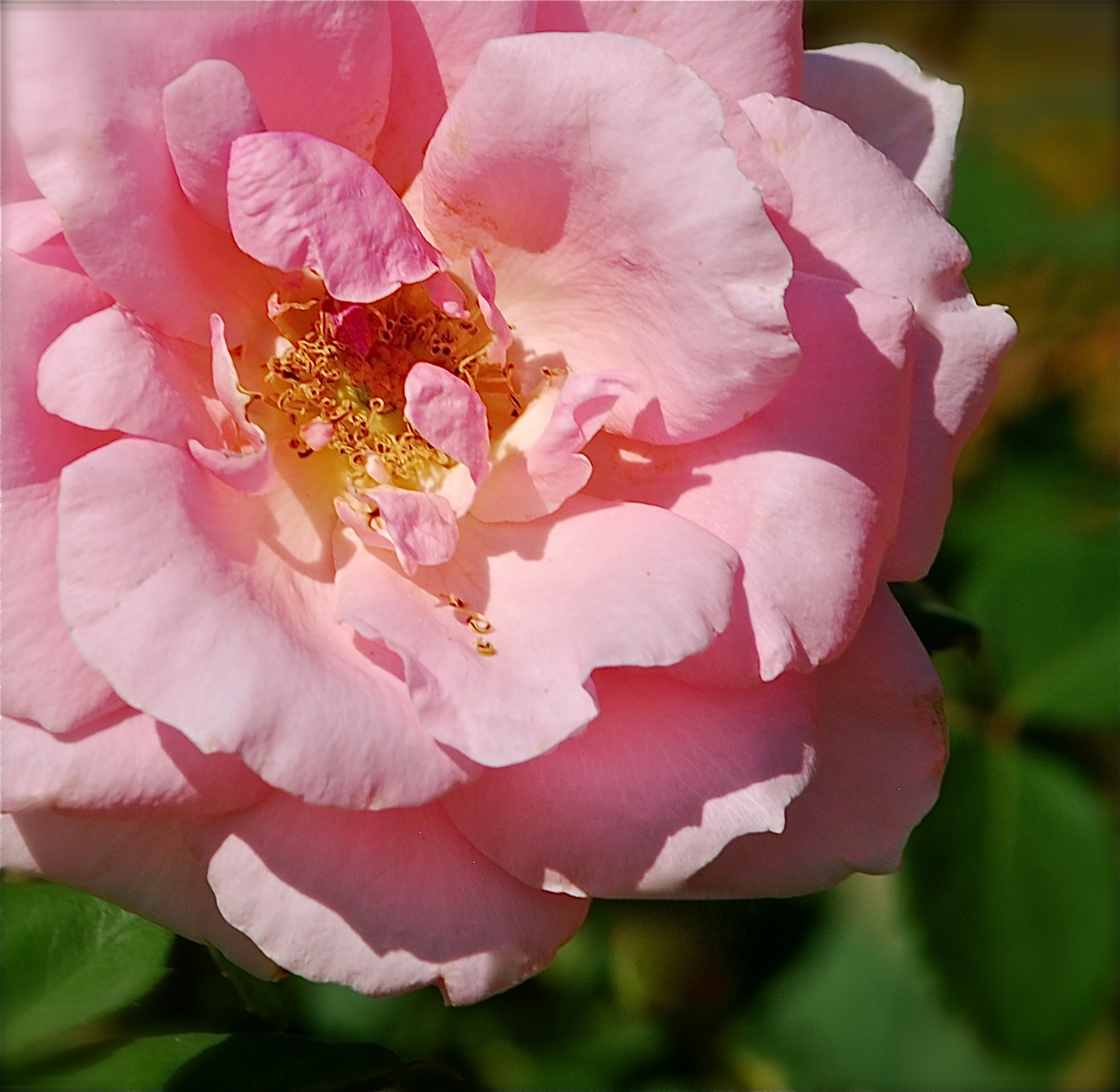
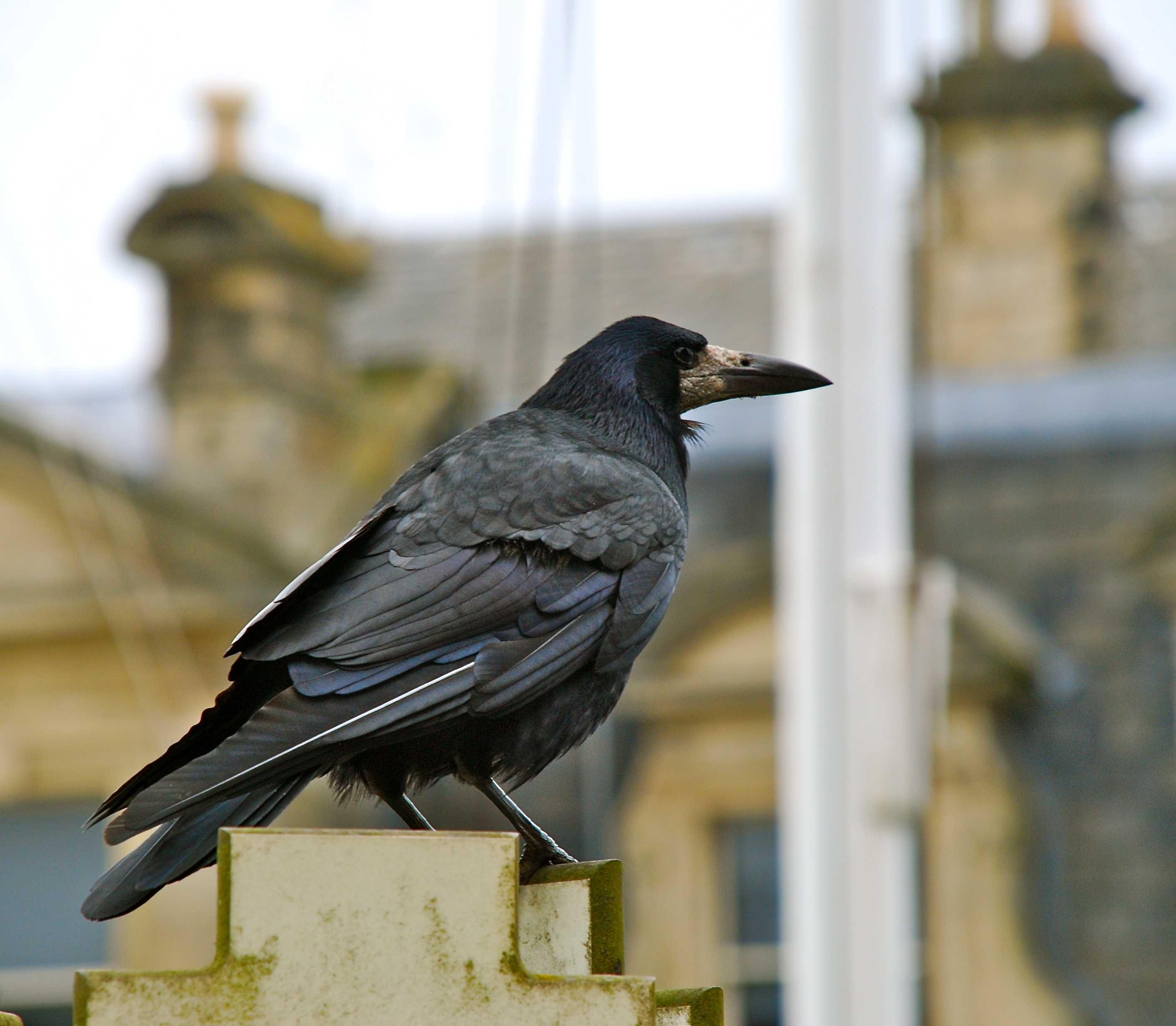
Tired of tossing and turning, I got up out of bed and went in to rock in my favorite chair.  Not wanting to miss the “slow budding” of dawn’s light, however, I first raised the bamboo shade in front of the glass, patio-doors.  After a short wait a faint pinkish glow appeared low on the horizon in the eastward sky, and as the sun inched up and up and up, a ray of golden light poured through an opening centered in the heart of a tall tree framed against it just above a neighboring housetop.  The branches of the tree then took on a hallowed appearance so much so that a bird atop the roof and two squirrels sitting very still in nearby branches looked like parishioners in pews awaiting the high priest.  Later, as the sun climbed high enough for night’s curtain to be lifted completely off earth’s stage, it was apparent that all who’d seen this amazing “salutation of the dawn” were summoned to make ready for the new day.  The first to respond was a flock of birds darting willy nilly across the pastel blue sky in search of food, but beneath them as more and more drops of light appeared like jewels aloft in the bamboo I knew that despite a restless night the time for me to rise had come as well.

If I rise on the wings of dawn, if I settle on the far side of the sea, even there Your hand will guide me, Your right hand will hold me fast.  ~Psalm 139:9-10  ✝
174. The greatness of a nation and its moral progress can be judged by the way its animals are treated. ~Mahatma Ghandi

If all the beasts were gone,
men would die from a great loneliness of spirit,
for whatever happens to the beasts
also happens to the man.
All things are connected.
Whatever befalls the Earth befalls the sons of Earth.
~Chief Seattle of the Suquamish Tribe

Image

The creatures of earth, sea and sky came forth “out of the waters of God’s life.”   And their arrival was yet another manifestation of the visible from the invisible–another disclosure of the mystery of God.  In addition, “with the birth of the creatures there is the emergence of seeing, hearing, smelling, tasting, and touching.  The light of the sun and the whiteness of the moon can now be seen.  The wind blowing through the leaves of trees and the crashing of ocean waves can be heard.  The early morning fragrance of the earth can be smelled.  Its fruit can be tasted, and its textures touched,” writes J. Philip Newell.  It has even been said that if one wants to know the Creator, one of the ways to gain insight is to know His creatures, and I think that’s especially true when it comes to examining the sensory aspect of their coming.  For does not the ability to see, that the creatures brought, teach mankind to see with the eyes of the heart?  In the silences of humanity’s reality does not the ability to hear teach men to listen for the “echo of the spheres” and the still, small voice of God?  Do not the abilities to smell, taste, and touch help mortals meet their Savior, Jesus, through the holy sacrament of the Eucharist (Communion)?

And to all the beasts of the earth and all the birds in the sky and all the creatures that move along the ground–everything that has the breath of life in it–I give every green plant for food.”  And it was so.  ~Genesis 1:30

169. Everything is mended by the soil. ~Andrew Crofts

The best things in life are nearest:
Breath in your nostrils,
light in your eyes,
flowers at your feet, duties at your hand,
the path of light just before you.
Then do not grasp at the stars, but do life’s plain,
common work as it comes, certain that daily duties and
daily bread are the sweetest things in life.
~Robert Louis Stevenson

Image

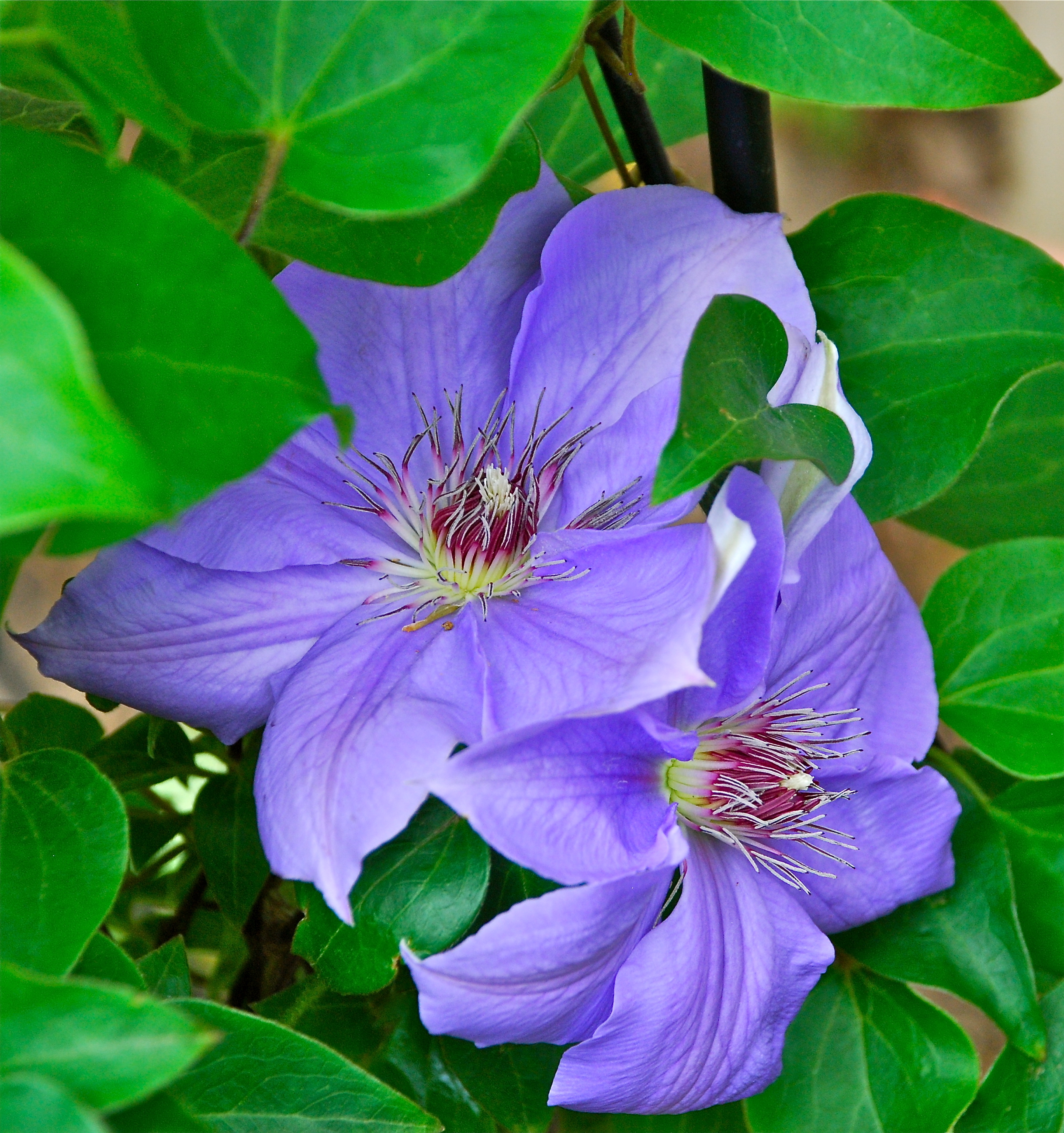
What a picture perfect day it has been!  After several very coolish, gray days, the sun regained control of the eastern horizon at dawn today, and it has remained the sole ruler of a deeply blue, autumnal sky the rest of the day.  The temperature has been in the 60’s and 70‘s making it this gardener’s idea of a perfect day.  The “breath in my nostrils” has been scented with attar of roses, the “light in my eyes” has brought me wondrous sights, the “flowers at my feet” have fed my hungry soul, the “duties at hand” have energized my aging body, and the “path of light” before me has once again led to God’s amazing throne of Grace.  It just doesn’t get any better than that, at least in my book.

May the light of your soul guide you.
May the light of your soul bless the work that you do
with the secret love and warmth of your heart.
May you see in what you do the beauty of your own soul
.May the sacredness of your work bring healing, light,
and renewal to those who work with you
and to those who see and receive your work.
May your work never weary you.
May it release within you wellsprings of
refreshment, inspiration, and excitement.
May you be present in what you do.
May you never become lost in bland absences.
May the day never burden.
May dawn find you awake and alert,
approaching your new day with
dreams, possibilities, and promises.
May evening find you gracious and fulfilled.
May you go into the night blessed,
sheltered, and protected.
May your soul calm, console, and renew you.
~Author unknown

From the fruit of his lips a man is filled with good things as surely as the work of his hands rewards him.  ~Proverbs 12:14   ✝

168. A garden without its statue is like a sentence without its verb. ~Joseph W. Beach

Man becomes aware of the sacred because it manifests itself, shows itself,
as something wholly different from the profane.
In each case we are confronted by the same mysterious act–
the manifestation of something of a wholly different order,
a reality that does not belong to our world,
in objects that are an integral part of our natural “profane” world.
~Mircea Eliade, Romanian historian, writer, and professor

Image

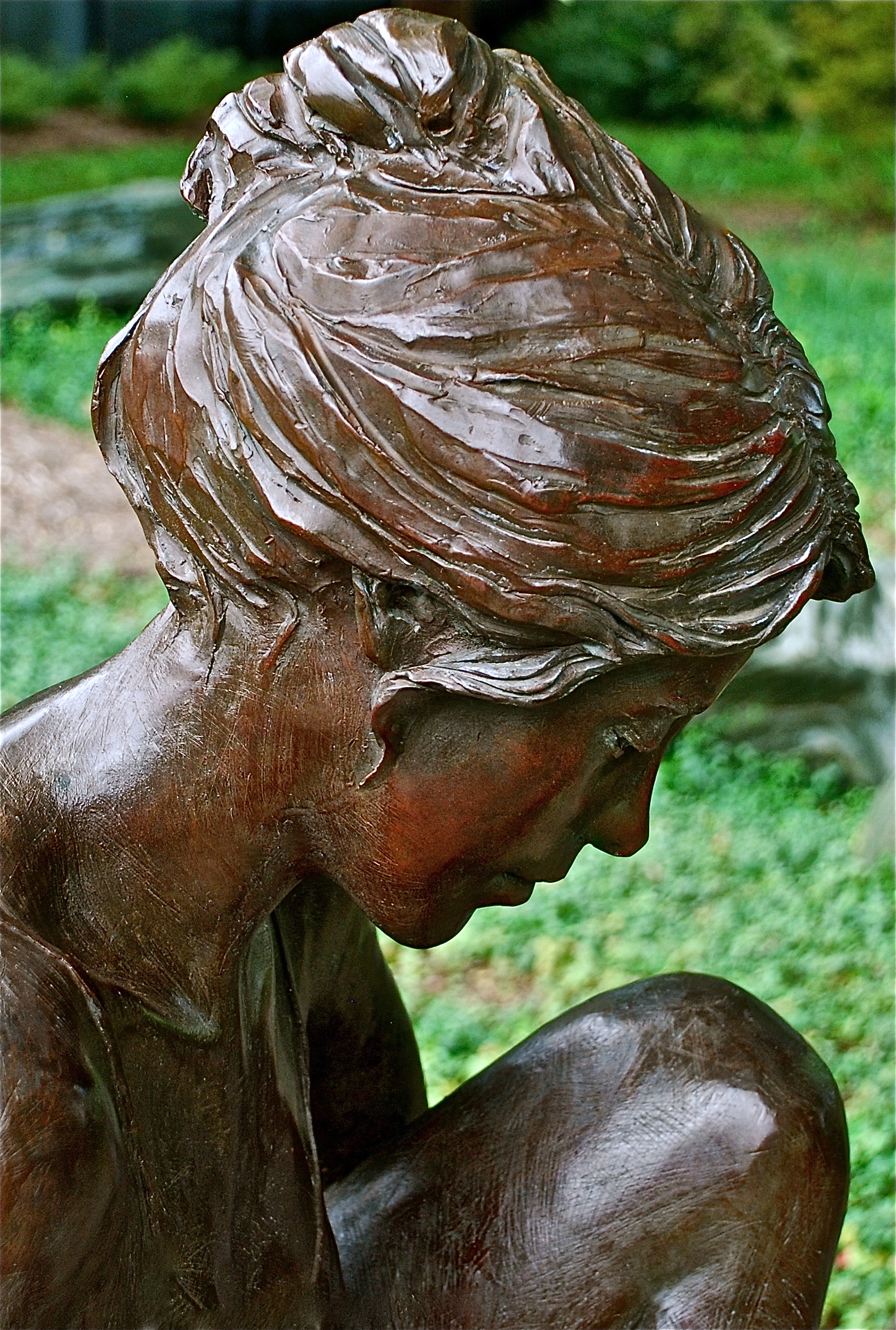
Although I dearly wish it were, the statue in the photo is not in my garden.  She is one of several scattered around our city’s Botanical Gardens.  The captivating sculpture in her quiet reverie and reverence is not unlike a “be” verb in that she expresses a state of being, and I think she does it ever so engagingly.  In fact, when I look at her, especially her bowed head, I get the feeling I’m observing someone deep in contemplative prayer.  Given that, I’m always a little reluctant at first to move in too close for fear of disturbing her petitions.  William Faulkner said that “the aim of every artist is to arrest motion, which is life, by artificial means and hold it fixed so that a hundred years later, when a stranger looks at it, it moves again since it is life.”  How successful then was the artist who crafted this bronze “lady of the garden!”  I’ve always sensed life and movement in her, and as an admiring observer, I am moved inwardly in her presence.  Her movement is not flamboyant; instead it is more of a faint in and our movement of breath.  Another thing that fascinates me about the statue is that there is a warmth in her presence even on bitterly cold, wintry days.  It’s a kind of glowing warmth that speaks of life, holy and not in the least profane.

Sing to Him, sing praise to Him; tell of all His wonderful acts.  Glory in His holy name; let the hearts of those who seek the Lord rejoice.  Look to the Lord and His strength; seek His face always.  ~1 Chronicles 16:9-11  ✝

72. Come, fill the Cup, . . . the Bird of time has but a little way to fly–and Lo! the Bird is on the wing. ~Omar Khayyám

The Moving Finger writes; and having writ,
Moves on: nor all your Piety nor Wit
Shall lure it back to cancel half a Line,
Nor all your Tears wash out a Word of it.
~Rubaiyat, Omar Khayyám, 11th century Persian poet

Image

In my twenties, I came face to face with the reality of what this Persian poet articulated in the Rubaiyat, but thankfully in my thirties I also realized that every spring all that God created begins again.  So even though I have no a chance to do anything about the past, in the season of restoration and rebirth God built into the fabric of Creation, I can forge on with writing new stories and/or penning different endings to ones not yet finished.  However, lest I get too comfortable in dalliances a long the way and to show how quickly what the poem’s author revealed can come about, I must remember that a new year’s garden progeny and its days come and go quickly, and when done they are never, as Khayyám said, to be lured back nor washed away by tears.  So with every spending of my time coins, I must seize opportunities opening to blushes of newness.  Scripture may tell the world that the “birthing and restoring” of new years will go on “as long as earth endures,” but last November’s brush with death taught me to make the most of each day and not rely on what I, myself, may not be given.

The best things in life are nearest:
Breath in your nostrils, light in your eyes, flowers at your feet,
duties at your hand, the path of right just before you.
Then do not grasp at the stars, but do life’s plain, common work as it comes,
certain that daily duties and daily bread are the sweetest things in life.
~Robert Louis Stevenson, Scottish poet

“As long as the earth endures, seedtime and harvest, cold and heat, summer and winter, day and night will never cease.”  ~Genesis 8:22   ✝

46. A Robin Redbreast in a cage puts all Heaven in a rage. ~William Blake, English poet, painter and printmaker

When father takes his spade to dig
then Robin comes along;
And sits upon a little twig
And sings a little song.
~Laurence Alma-Tadema

Image

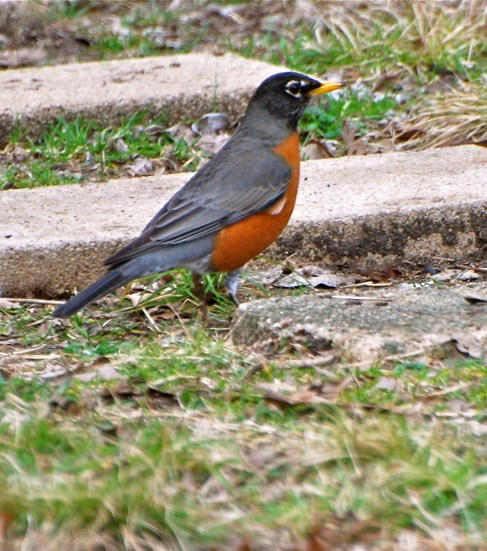
The introductory line is from Blake’s “Auguries of Innocence,” a somewhat lengthy poem consisting of a series of paradoxes in which Blake juxtaposes innocence with evil and corruption. The word augury in the title means omen or token, and the robin is the poem’s first noted “augury of innocence.”  The robin’s song, personality, and countenance are such that it’s obvious why the poet saw the act of putting one in a cage as not only an enraging violation but also as a profound perversion of holiness.  The sweet song and colorful markings of a robin make the bird a delightful harbinger of spring’s infancy and innocence.  Looking forward to its coming is one of my favorite rites in spring’s passage, and like “all heaven” I’d be incensed if the bird’s freedom were taken away and its song silenced.  Below is a legend about the robin that again ties the bird to the blameless and sacred.  Although the truthfulness of legends is questionable, I’m fascinated that somehow, somewhere, and in some way the robin was connected to the Messiah.

The Legend of the First Robin

One day, long ago, a little bird in Jerusalem saw a large crowd gathered around a man carrying a heavy wooden cross.  On the man’s head was a crown made from a thorn branch.  The thorns were long and sharp.  The little bird saw that the thorns were hurting the man.  It wanted to help Him, so it flew down and took the longest, sharpest thorn in its tiny beak.  The bird tugged and pulled until the thorn snapped from the branch.  Then a strange thing happened.  A drop of blood fell onto the bird’s breast, staining it bright red.  The stain never went away.  And so today the robin proudly wears a red-breast, because it helped a man named Jesus.  

“But ask the animals, and they will teach you, or the birds of the air, and they will tell you; or speak to the earth, and it will teach you, or let the fish of the sea inform you.  Which of all these does not know that the hand of the LORD has done this?  In His hand is the life of every creature and the breath of all mankind. . .”  ~Job 12:7-10   ✝