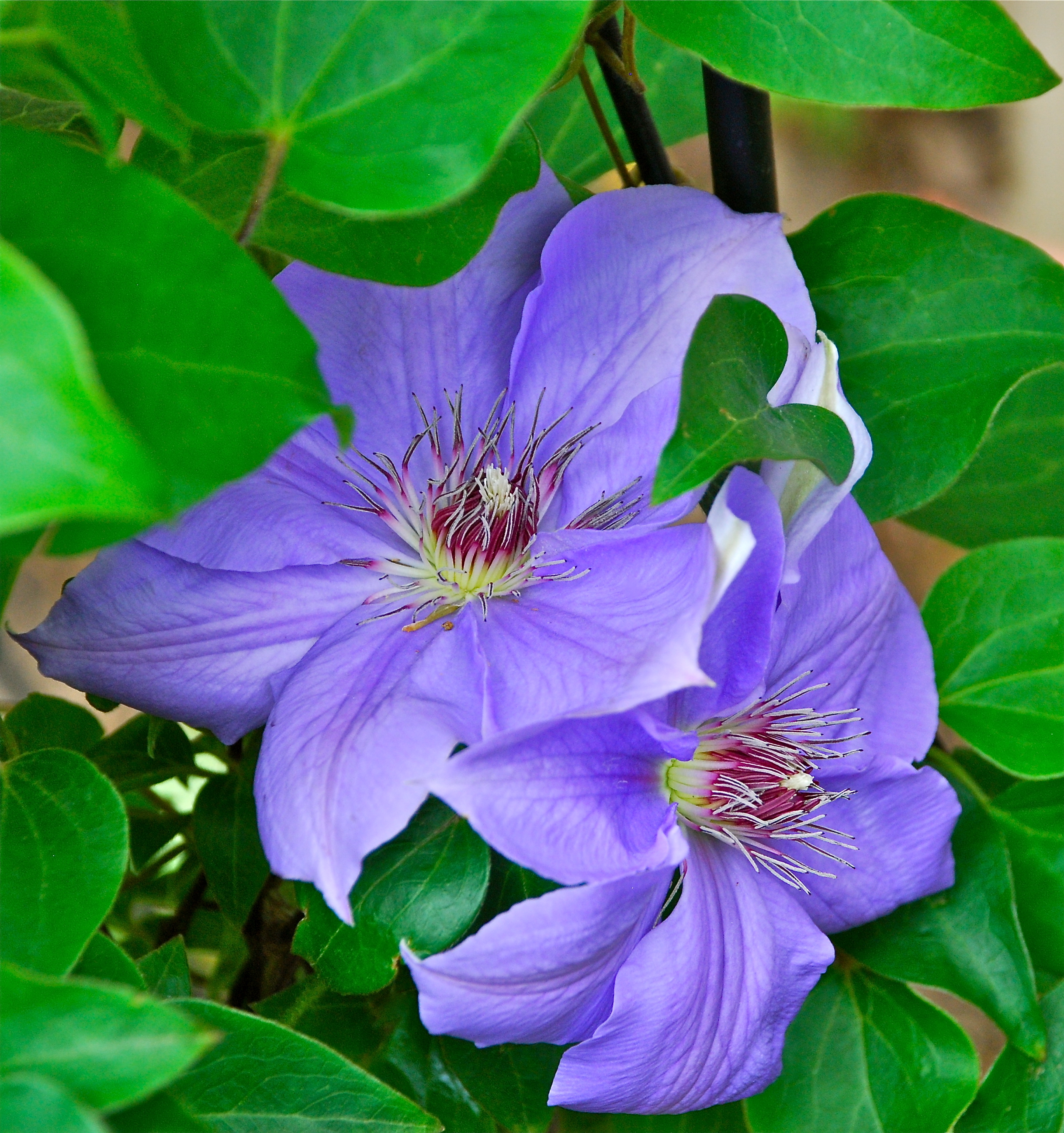
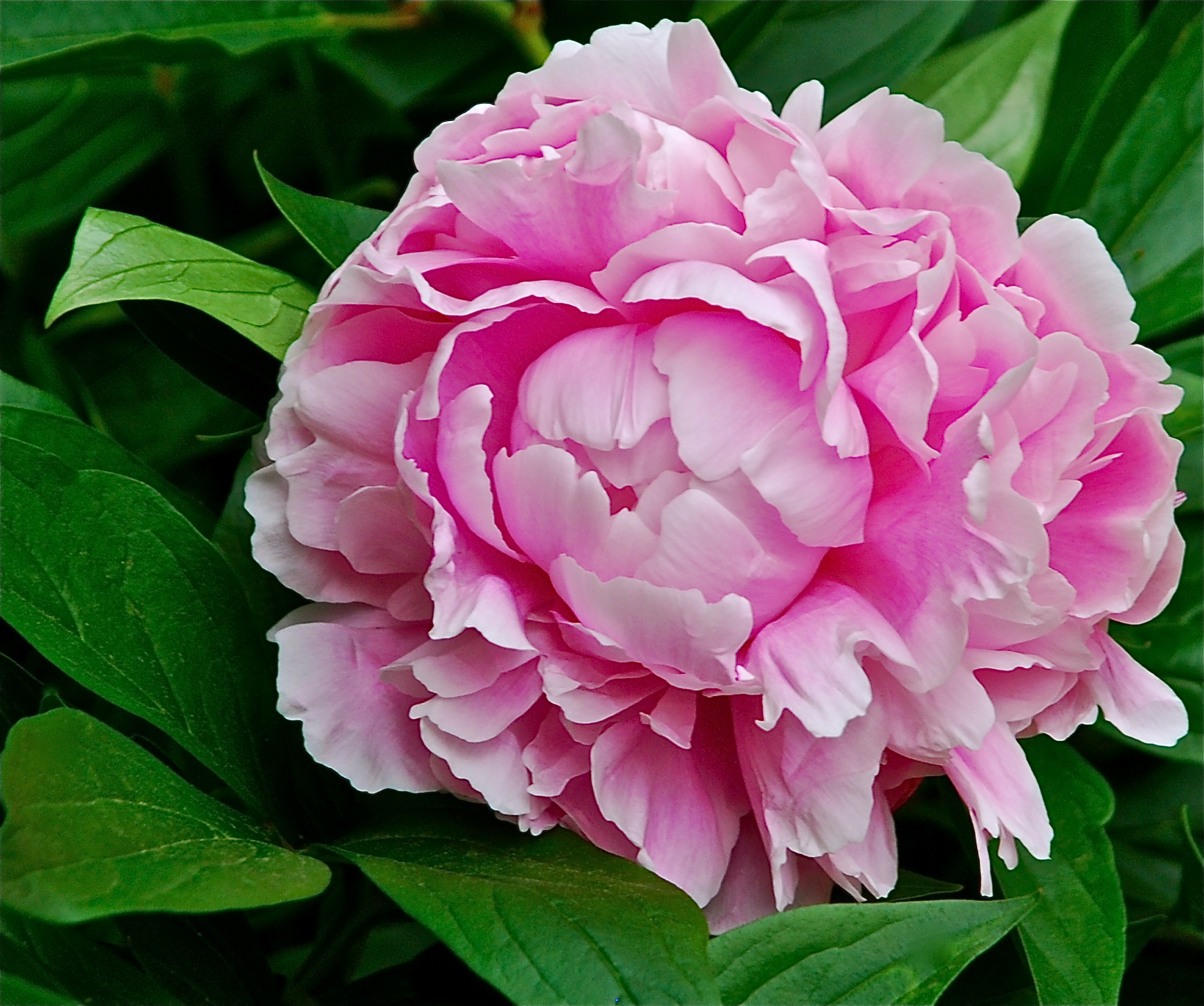
159. Our knowledge of God is not an external deposit of truth…rather, it is an experience of God that comes to us in the use of our inner senses, whether that be through the scriptures and sacraments or through Creation and one another. ~John Philip Newell

Remember God’s bounty in the year.
String the pearls of His favor.
Hide the dark parts,
except so far as they are breaking out in light!
Give this one day to thanks, to joy, to gratitude!
~Henry Ward Beecher
Image

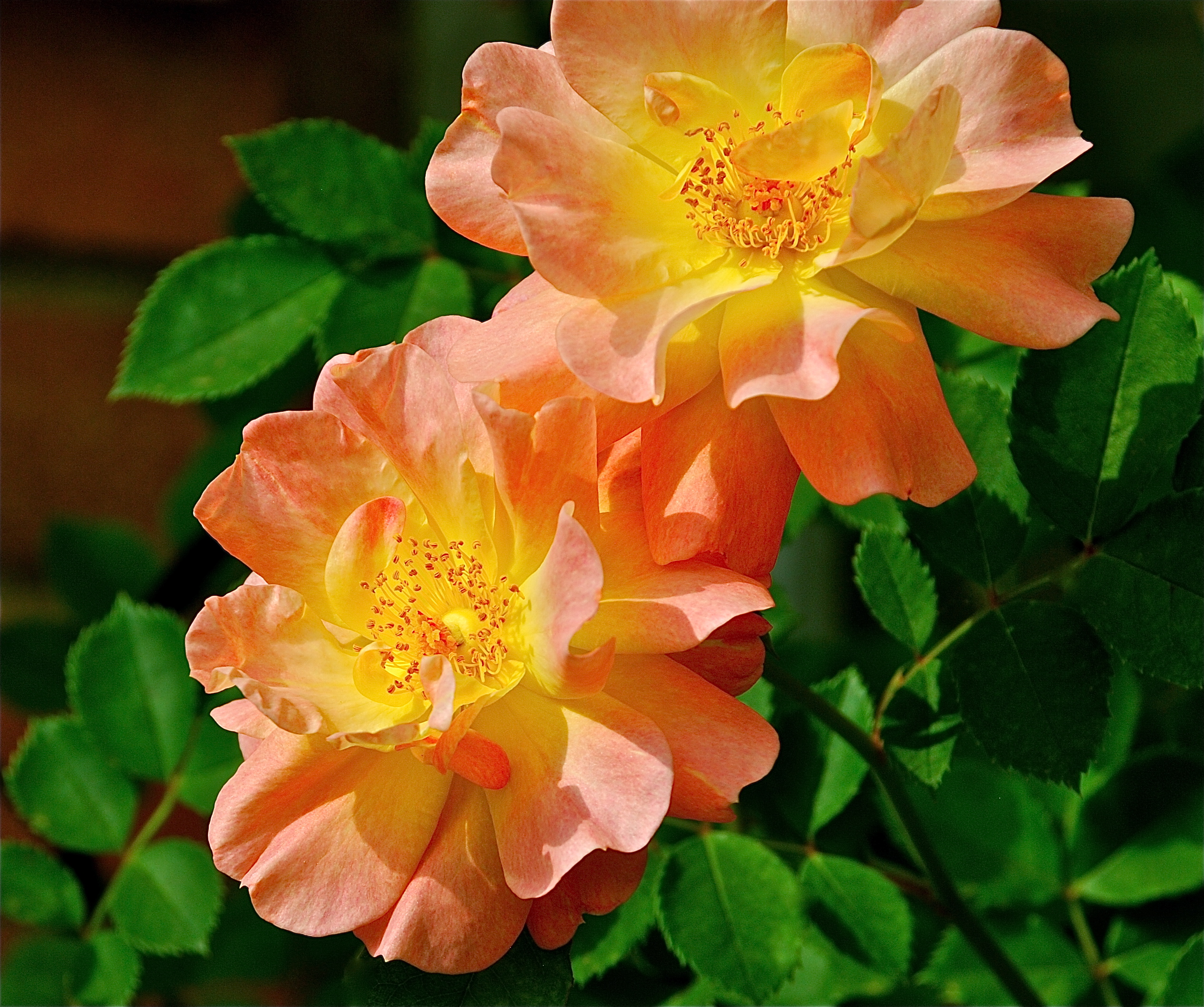
Just in case I haven’t declared lately how much I love autumn, let me say it one more time.  My, oh my, oh my, but what stunning “pearls” the Lord gives us to string together in autumn.  The colors in these roses are so absolutely scrumptious that when I came upon them in the yard a couple of days ago, I wanted to go back in the house and immediately start baking something “pumpkiny” or “lemony.”  I imagined a dessert of some kind with cinnamon and/or cloves that when finished would be slathered with butter or icing.  Then, as if she had read my thoughts, my friend Liz cooked something similar to what I imagined for our luncheon yesterday, and what a delicious pumpkin bread-pudding topped with caramel and pecans she made!  It was as delicious for the tongue as these roses were beautiful for the eyes.

Taste and see that the Lord is good; blessed is the one who takes refuge in Him.  ~Psalm 34:8
156. I have always been delighted at the prospect of a new day, a fresh try, one more start, with perhaps a bit of magic waiting somewhere behind the morning. ~J. B. Priestley

I do believe in an everyday sort of magic–
the inexplicable connectedness we sometimes experience
with places, people, works of art and the like;
the eerie appropriateness of moments of synchronicity;
the whispered voice, the hidden presence,
when we think we’re alone.
~Charles de Lint

Image

Rose Fyleman (1877-1957) was an English writer and poet of exceptional talent who was best known for her works on the “fairy folk” for children.  She also translated many rare children’s books from French and German into their first English translations.  She eventually became the editor of one of the first children’s magazines called The Merry Go Round.  Rose was born in Nottingham, England, and there is speculation that it could have been the magical setting of Nottingham which led her to believe in fairies.  Whatever the reason, she blessed generations of readers with her lovely fairy poems.

It was one of Rose’s poem, Fairies at the Bottom of the Garden, which prompted my post last night about toadstools.  I loved her poetry as a child and I love it still.  I am passionate about gardening and its lore, and when I see creatures like the one in my photo I see how easy it would be to invent stories about “fairies.”  Besides what he said above, Charles de Lint, explained childhood this way:  “It is easy to believe in magic when you’re young.  Anything you couldn’t explain was magic then.  It didn’t matter if it was science or a fairy tale.  Electricity and elves were both infinitely mysterious and equally possible — elves probably more so.”  I believe Creation is both miracle and magic, and the more we try to explain it the more we see how miraculous and magical it is.  R. A. Salvatore said “a world without mystery is a world without faith,” and so it is because it is our faith that tells us what magic is “waiting somewhere behind the morning” and whose is the “whispered voice, the hidden presence, when we think we’re alone.”

There are fairies at the bottom of the garden!
It’s not so very, very far away;
You pass the gardener’s shed and you just keep straight ahead.
I do so hope they’ve really come to stay. . .
~for more of Fyleman’s work go to:  http://www.fairyamber.com/rfyleman.html

By faith he left Egypt, not fearing the king’s anger: he persevered because he saw Him who is invisible.  ~Hebrews 11:27

151. The human spirit needs places where nature has not been rearranged by the hand of man. ~Author Unknown

We need the tonic of wildness. . .
We can never have enough nature. . .
We need to witness our own limits transgressed,
and some life pasturing freely
where we never wander.
~Henry David Thoreau

Image

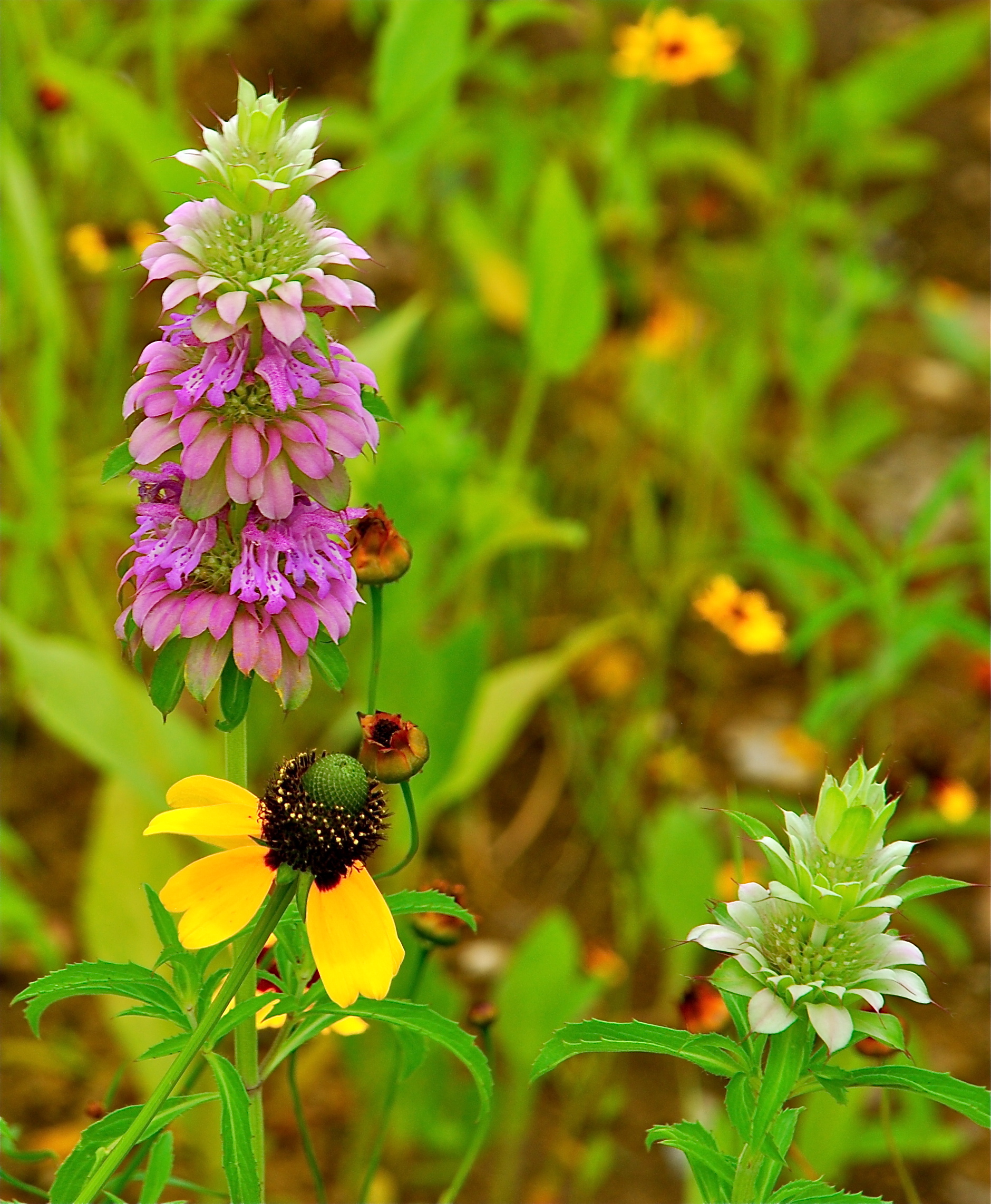
The flowers in these photos are not refined nor polished like the ones often planted and sown in garden plots, but in their wildness and in spite of their neglect they possess a kind of rough elegance.  The fact that they are abused by the elements and thrive in poor terrain increases their charms even more.  In their unbridled wildness they refuse to pass into nothingness and continue to attract, please, and delight mortals as well as wildlife. They may “make no claim to beauty;” but nevertheless, elements of beauty are inherently present in their countenance.  And their presence speaks as loudly of their Maker as anything else in Creation.

You crown the year with Your bounty, and Your carts overflow with abundance.  The grasslands of the wilderness overflow; the hills are clothed with gladness.  ~Psalm 65:11-12

150. He made you a part of Creation, and you praise Him in glorious celebration. ~Katherine R. Lane

Bring to me then the plant
that points to those bright Lucidites
swirling up from the earth,
and life itself exhaling that central breath!
Bring me the sunflower crazed with the love of light.
~Eugenio Montale

Image

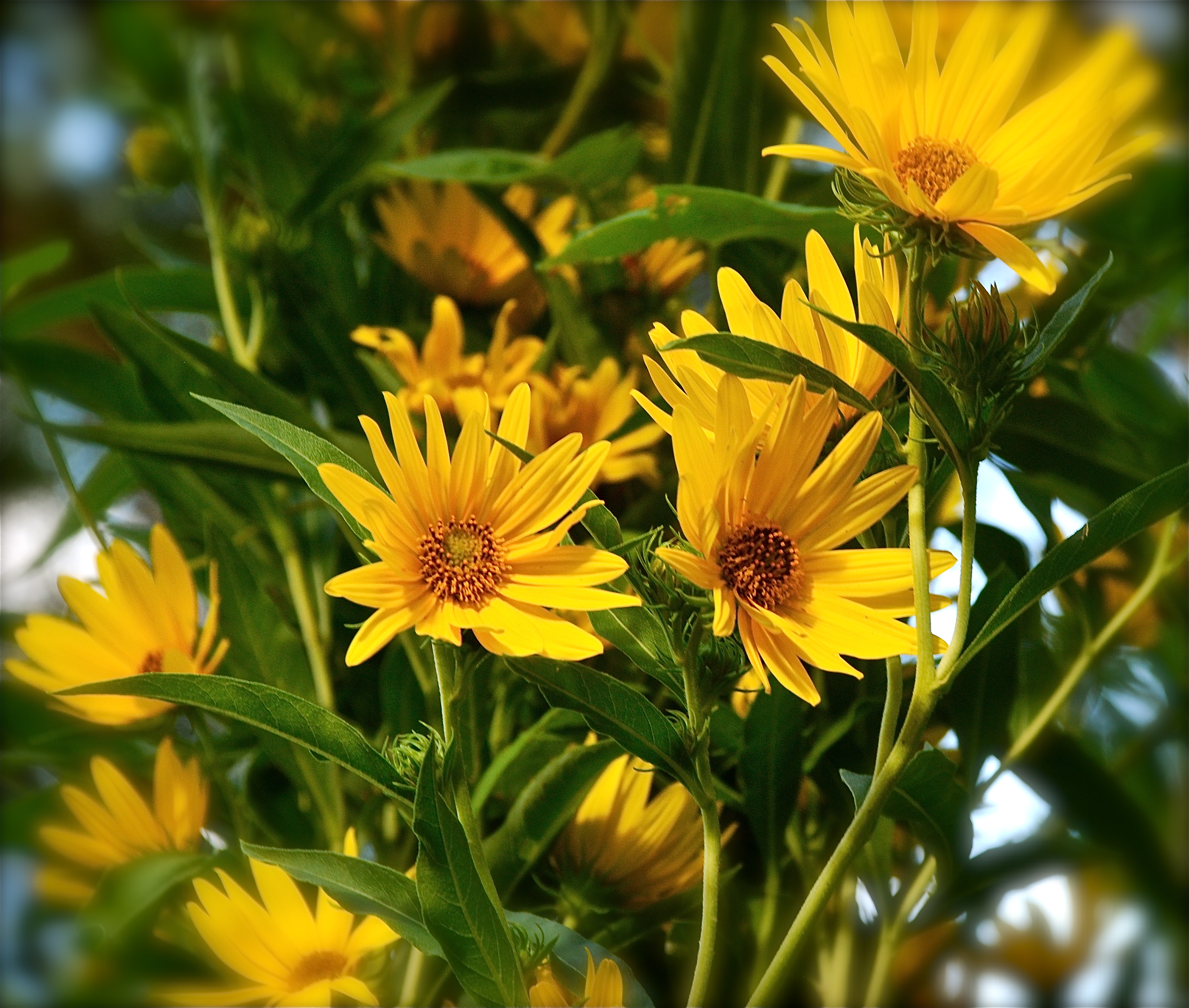
The Maximilian sunflowers in the photo are natives to Texas, but they extend north throughout the tall-grass prairies of the central plains where they were discovered in the 19th century by a German botanist named Prince Maxmilian Alexander Philip von-Wied-Neuwied, thus their rather lofty sounding name.  When I planted 2 of them several years ago, I knew that like their name, they would reach lofty heights before beginning to bloom in September, and that first summer they grew to about 7 feet.  However, by the second year these perennials herbs were reaching heights of 12-16 feet or more, and although I know people like to claim that things are always bigger in Texas, I’m not buying that.  So I did some research and come to find out the more one waters them the taller they grow.  Okay, so now what to do?  Well, before digging them up and moving them or admitting to my husband that I do, in fact, water too much, I’ve decided to give them one more year where they are and try a trick I recently read about; a plantsman in one article said if I pinch off the growing tips when the plants are 3-4 tall I will get shorter plants with more flowers.  More flowers, did he say more flowers?  Now that’s sweet music to my ears!

They are like a well-watered plant in the sunshine, spreading its shoots over the garden. . .  ~Job 8:16  ✝

148. If the sight of blue skies fills you with joy, if a blade of grass springing up in the fields has the power to move you, if the simple things in nature have a message you understand, rejoice, for your soul is alive. ~Eleanora Duse

Every vine climbing and blossoming
tells of love and joy.
~Robert G. Ingersoll

Image

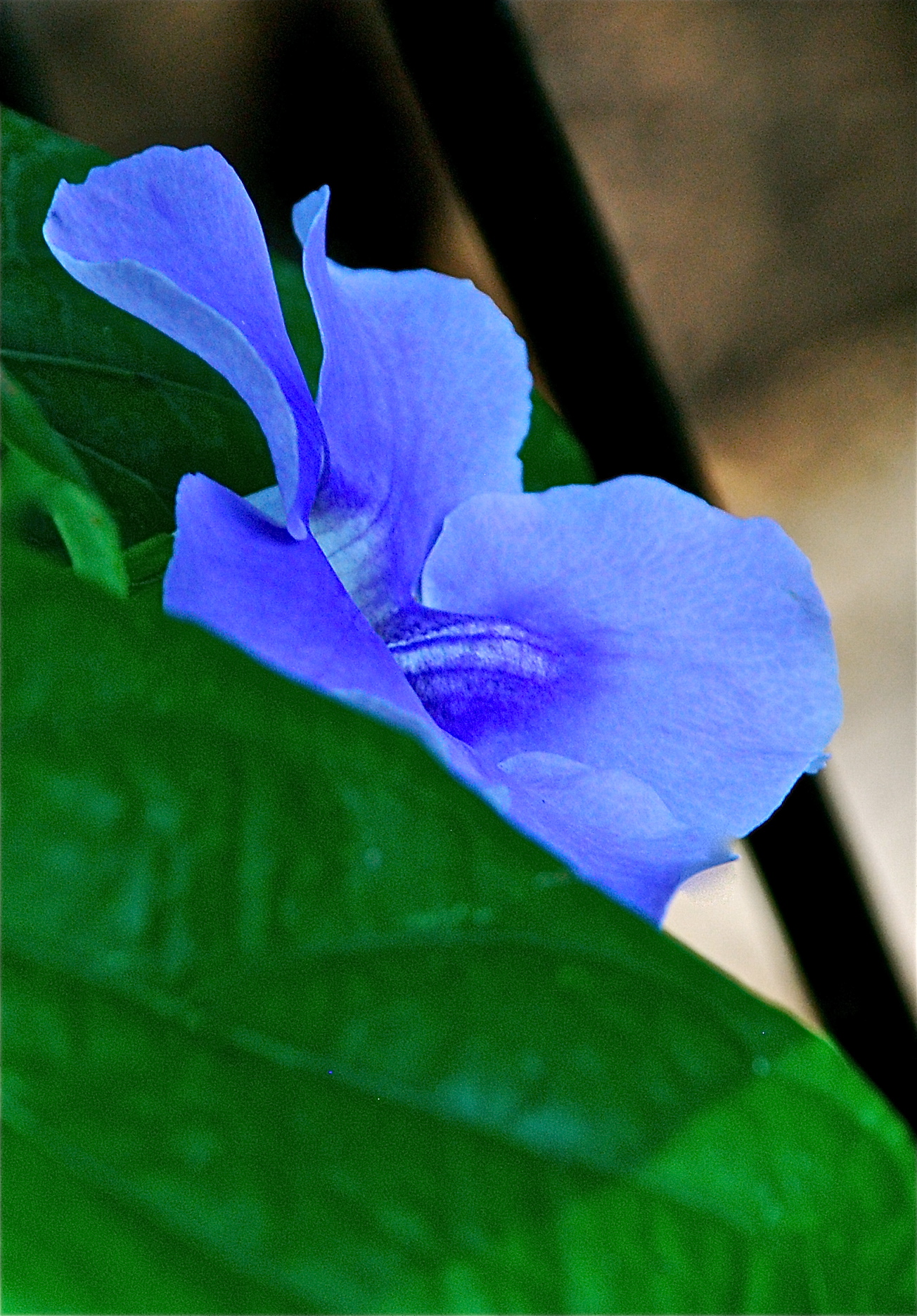
If your soul is indeed alive, you come to realize that like all else in Creation, vines tell also of the nearness of God and the way that He wraps His arms around His children in order to keep them close to Him.  Simply put, whether acknowledged by all or not, mankind is inextricably linked to the Maker of heaven and earth, and because of His supporting and sustaining provisions our souls are eventually drawn into His holy web of life and the Light.  C. S. Lewis said that “Jesus was either a liar, a lunatic, or who He said He was.”  Mr. Lewis’ soul and mine have trusted Jesus to be who He said He was.   Thus I rejoice when He, the Messiah,  tells me:

“I am the bread of life.”
“I am the light of the world.”
“I am the gate for the sheep.”
“I am the good shepherd; the good shepherd gives his life for the sheep.”
“I am the resurrection, and the life.”
“I am the way, the truth, and the life.”
“I am the true vine.”

Return to us, O God Almighty!  Look down from heaven and see!  Watch over this vine, the root your right hand has planted, the son you have raised up for yourself.  ~Psalm 80:14-15  ✝

*The flower in the photo is Thunbergia Grandiflora (commonly called Bengal Clock vine or Sky Flower vine)

122. Has the luster of the infinite holiness of God ever shone upon your heart and drawn your heart to him? ~Jeremiah Burroughs

The world is holy.
We are holy.
All life is holy.
Daily prayers are delivered
on the lips of breaking waves,
the whisperings of grasses,
the shimmering of leaves.
~Terry Tempest Williams,
American author and naturalist

Image

I’ve even seen what seems like daily prayers being offered up from the nodding heads of birthing flowers in the garden.  It’s as if they know to reverence life and its Giver.  For we humans reverence for life sometimes comes through the senses for with them we are able to see, hear, smell, touch, and taste Creation’s pervasive holiness.  Moreover, from a power of perception seemingly independent of the five senses we are able to discern the holiness that exists within the human heart.  And why not?  The human heart is, after all, the Divine’s sanctuary, and as such it is the mystical core from which God operates in our lives. To come into that inner place of holiness is to come “home” in a way for therein croons the voice, soft and sweet, of a loving Father.  If we strive to listen to and obey His still, small Voice, a well within is filled with the mercy, forgiveness, and love needed for us to blossom into a purposeful anointing.  Surely even the angels stand in awe of such as this.

. . . by the power of God, who has saved us and called us to a holy life—not because of anything we have done but because of His own purpose and grace.   ~2 Timothy 1:9   ✝

120. Every happening, great and small, is a parable whereby God speaks to us, and the art of life is to get the message. ~Malcolm Muggeridge

The world has different owners at sunrise. . .
Even your own garden does not belong to you.
Rabbits and blackbirds have the lawns;
a tortoise-shell cat who never appears in daytime
patrols the brick walls,
and a golden-tailed pheasant
glints his way through the iris spears.
~Anne Morrow Lindbergh,
pioneering American aviator and author

Image

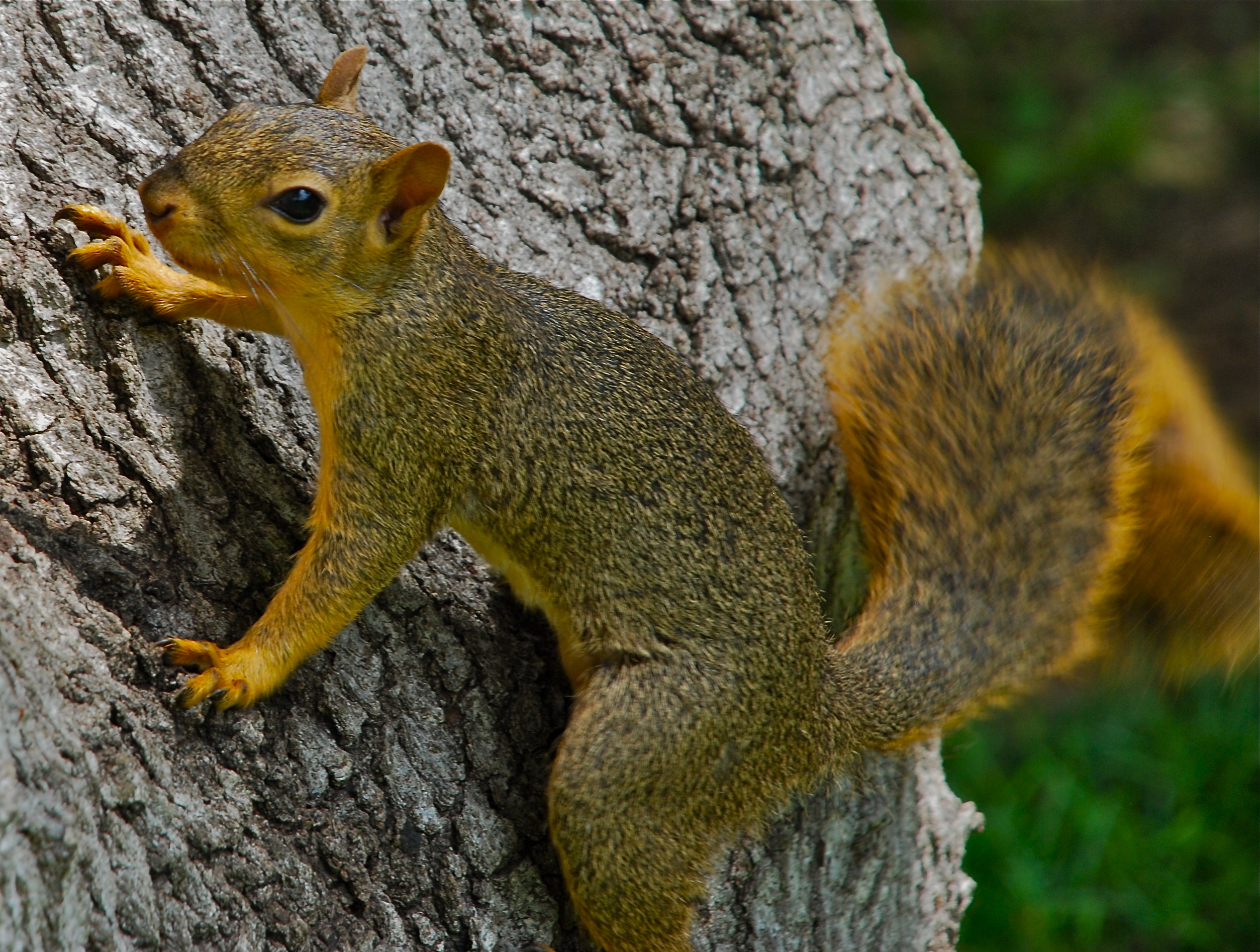
In my yard are squirrels instead of rabbits, mockingbirds instead of blackbirds, an assortment of stray cats instead of one tortoise-shell cat, and garter snakes that slither through the grass instead of a pheasant that glints his way through the iris spear.  So it is that my yard has as Lindbergh penned “different owners at sunrise.”  But since I planted everything for the wildlife as much as for me, why shouldn’t they come and sometimes in large numbers all through the day and night.

J. Philip Newell says that God’s glory glows “in the glistening of a creature’s eyes” as well as in “every emanation of creation’s life,” and that we can reverence God “in all that has life.”  My guess is that’s why some people garden in the first place.  We are fascinated by and delighted with the flowers and the wildlife, but we long for the presence of God into our green temples–that Presence that we feel and see in tiny buds breaking the soil, in pinkish purply glows in the eastern sky, in a silver slivers of the moon in the darkness of night, or in the delicious stillnesses in the garden as day passes into night.

For since the creation of the world God’s invisible qualities—his eternal power and divine nature—have been clearly seen, being understood from what has been made. . .  ~Romans 1:20   ✝

76. Through the dancing poppies stole a breeze most softly lulling to my soul. ~John Keats

Of all the wonderful things in the wonderful universe of God,
nothing seems to me more surprising than the planting of a seed
in the blank earth and the result thereof.
Take the Poppy seed, for instance: it lies in your palm,
the merest atom of matter, hardly visible, a speck, a pin’s point in bulk,
but within it is imprisoned a spirit of beauty ineffable,
which will break its bonds and emerge from the dark ground
and blossom in a splendor so dazzling as to baffle all powers of description.
~Celia Thaxter

Image

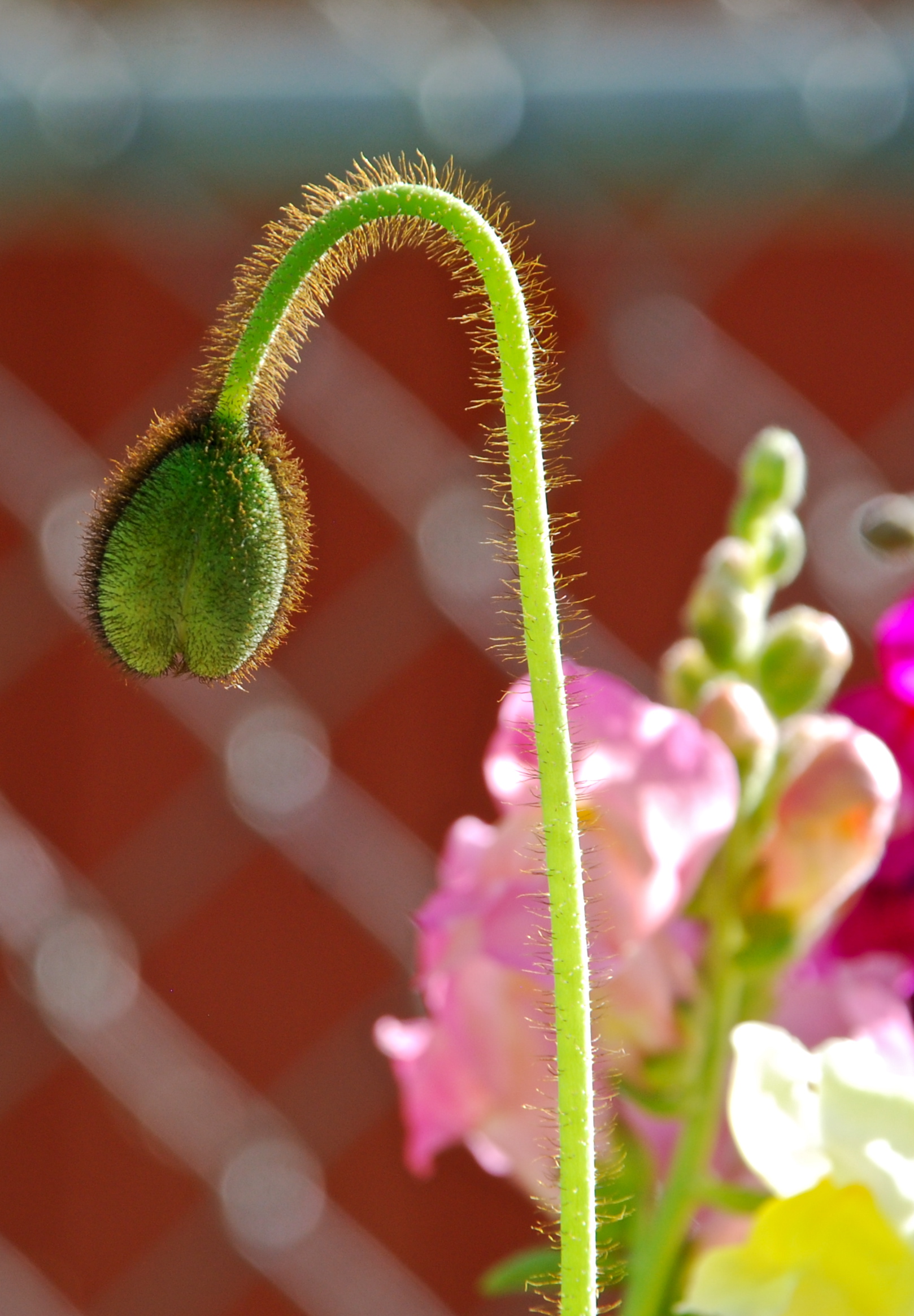
I love poppies, not just the flowers but also the lovely, fat pods that contain the future of the species.  The plants that put on silky, paper-thin blossoms can grow to be 3 or 4 feet tall here if the “hardly visible” seeds are sown in the fall.  So it is that in late October I toss out seeds from the ones I harvested from last’s years pods, and then all winter long I wait for the beauties which “baffle description” to make their appearance in my garden.  As winter moves along, I keep myself reassured by going out to check on them after especially frigid days or after occasional snowfalls to make sure the burgeoning “babies” have not succumbed to the elements.  And each time I go out, I almost squeal with delight when I discover that most of them, if not all, are still slowly but surely growing bigger and stronger.  Then sometime in the early spring the day comes when the waiting is over and standing before me are the first fruits of my labors and watchfulness.  Like dainty chalices, the cup-like flowers open up and drink in the day’s light while penning God’s autograph on the “scenes” of yet another springtime.  Day by day after each individual flower’s petals fall to the ground, the intriguing seed pods take their place, and as temperatures climb, they begin to ripen.  Some of these I eventually let fall to the ground to self sow; the remainder I gather and keep safe and dry until autumn comes and it is again time for me to partner with Creation and scatter abroad the “merest atoms” of such beautiful matter.

For as the soil makes the sprout come up and a garden causes seeds to grow, so the Sovereign Lord will make righteousness and praise spring up before all nations.  ~Isaiah 61:11

72. Come, fill the Cup, . . . the Bird of time has but a little way to fly–and Lo! the Bird is on the wing. ~Omar Khayyám

The Moving Finger writes; and having writ,
Moves on: nor all your Piety nor Wit
Shall lure it back to cancel half a Line,
Nor all your Tears wash out a Word of it.
~Rubaiyat, Omar Khayyám, 11th century Persian poet

Image

In my twenties, I came face to face with the reality of what this Persian poet articulated in the Rubaiyat, but thankfully in my thirties I also realized that every spring all that God created begins again.  So even though I have no a chance to do anything about the past, in the season of restoration and rebirth God built into the fabric of Creation, I can forge on with writing new stories and/or penning different endings to ones not yet finished.  However, lest I get too comfortable in dalliances a long the way and to show how quickly what the poem’s author revealed can come about, I must remember that a new year’s garden progeny and its days come and go quickly, and when done they are never, as Khayyám said, to be lured back nor washed away by tears.  So with every spending of my time coins, I must seize opportunities opening to blushes of newness.  Scripture may tell the world that the “birthing and restoring” of new years will go on “as long as earth endures,” but last November’s brush with death taught me to make the most of each day and not rely on what I, myself, may not be given.

The best things in life are nearest:
Breath in your nostrils, light in your eyes, flowers at your feet,
duties at your hand, the path of right just before you.
Then do not grasp at the stars, but do life’s plain, common work as it comes,
certain that daily duties and daily bread are the sweetest things in life.
~Robert Louis Stevenson, Scottish poet

“As long as the earth endures, seedtime and harvest, cold and heat, summer and winter, day and night will never cease.”  ~Genesis 8:22   ✝

60. That God once loved a garden we learn in Holy writ. And seeing gardens in the Spring I well can credit it. ~Winifred Mary Letts

With the birth of the creatures there is
the emergence of seeing, hearing,
smelling, tasting, and touching.
The light of the sun and the whiteness
of the moon can now be seen.
The wind blowing through the leaves
of the trees and the crashing
of ocean waves can be heard.
The early morning fragrance of
the earth can be smelled.
Its fruits can be tasted and
its textures touched.
~Excerpted lines by J. Philip Newell

Image

Springtime is so much “a showing forth of the mystery of God” that if one wants to know more of the Creator, all he/she needs do is pull up a chair in a garden and watch the year’s first season unfold.  Seeking the goodness of God and what He made by being still therein and listening to the Holy Spirit as well as Creation’s rhythms is a way of bringing the Heavenly Father closer.  In that nearness one is then able to look through eyes that recognize the depth of His and Creation’s  goodness.

And the LORD said, “I will cause all my goodness to pass in front of you, and I will proclaim my name, the LORD, in your presence. I will have mercy on whom I will have mercy, and I will have compassion on whom I will have compassion.  ~Exodus 33:19   ✝