352. Meditation is the tongue of the soul and the language of our spirit. ~Jeremy Taylor

Image

What I Have Learned So Far

~Mary Oliver

Meditation is old and honorable, so why should I
not sit, every morning of my life, on the hillside,
looking into the shining world? Because, properly
attended to, delight, as well as havoc, is suggestion.
Can one be passionate about the just, the
ideal, the sublime, and the holy, and yet commit
to no labor in its cause? I don’t think so.

All summations have a beginning, all effect has a
story, all kindness begins with the sown seed.
Thought buds toward radiance. The gospel of
light is the crossroads of — indolence, or action.

Be ignited, or be gone.

May my meditation be pleasing to Him, as I rejoice in the Lord. Psalm 104:34  ✝

Thank you, Jesus, that you save, you heal, you restore, and you reveal Your Father’s heart to us! You have captured me with grace and I’m caught in Your infinite embrace!

333. By a garden is meant mystically a place of spiritual repose, stillness, peace, refreshment, delight. ~John Henry Cardinal Newman

Image

What is the magic of old gardens?
Can it be in part that those who designed them
had another object in mind besides pleasing the eye,
which tends to be our only criterion?

Image

Perhaps plants had more personality,
more dignity, more mystery,
when they were held in respect, even in awe,
because of the wonderful powers they were supposed to possess.
~Bridget Boland

Image

And the Lord God planted a garden eastward in Eden; and there He put the man whom He had formed. And out of the ground made the Lord God to grow every tree that is pleasant to the sight, and good for food… Genesis 2:8-9 ✝

Image

Thank you, Lord Jesus, that you save, you heal, you restore, and you reveal Your Father’s heart to us! You have captured me with grace and I’m caught in Your infinite embrace!

297. Hand in hand, with fairy grace, will we sing, and bless this place. ~William Shakespeare, English poet and playwright

No child but must remember laying his head in the grass,
staring into the infinitesimal forest
and seeing it grow populous with fairy armies.
~Robert Louis Stevenson, Scottish poet
Image

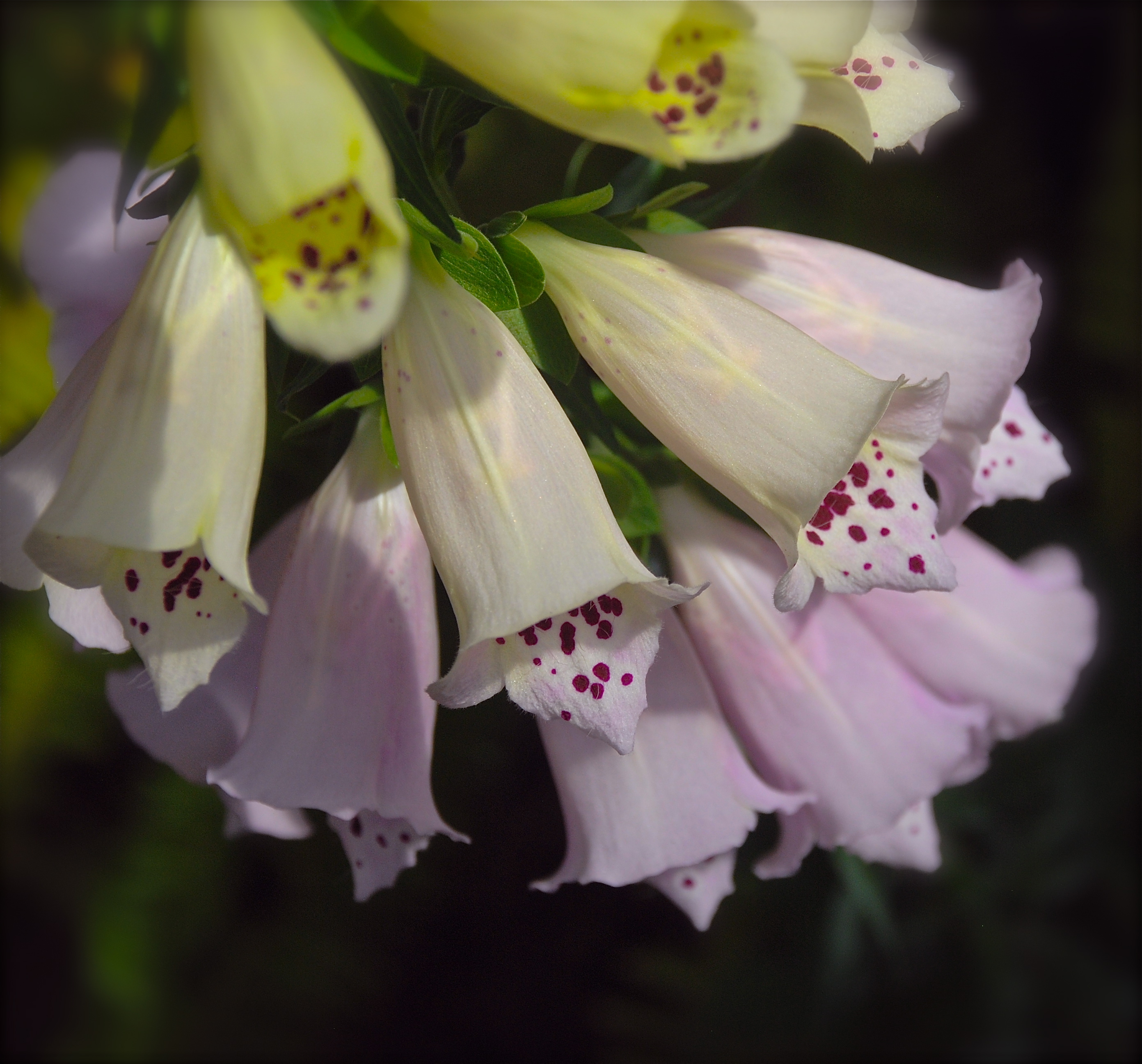
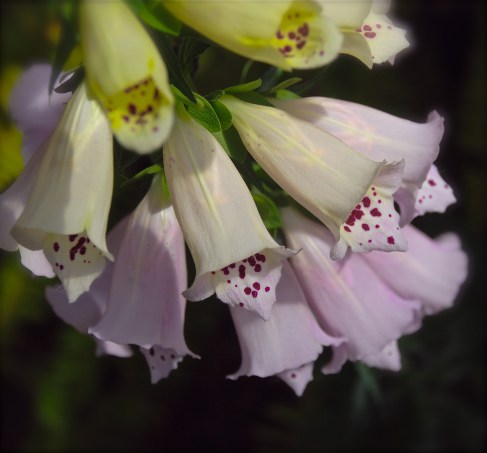
Digitalis, from the Latin Digitabulum, a thimble, derives its common name from the shape of its flowers that resemble the finger of a glove.  It’s a flower we call Foxglove, which delights to grow in deep hollows and woody dells.  However, it was originally called Folksglove because that’s where they, fairies or “good folk,” were thought to live.  Folksglove is one of the oldest names for Digitalis (Foxglove) and is mentioned in a list of plants as old as the time of Edward III.  The earliest known form of the word is the Anglo-Saxon foxes glofa (the glove of the fox, and the Norwegian name Revbielde that translates to Foxbell alludes to the Fox.  It is a name which may have come about from a northern legend about bad fairies who supposedly gave the blossoms of Digitalis to foxes to be put upon their toes so as to soften their tread when prowling amongst the roosts.

I adore Foxglove and believe no other flower in the garden lends itself better to stories of fairies and elves than it does.  Its dangling thimbles or gloves or bells or fingers or whatever one might call them look like enchanted, magical places where children would naturally look for the “wee folk” to lurk.  Nor is it surprising that there have been suppositions claiming the mottling in the flowers mark, like the spots on butterfly wings and on the tails of peacocks and pheasants, where elves have placed their fingers.  Though no longer a child, I have to agree in part with the writer Charles de Lint who penned, “We call them faerie.  We don’t believe in them.  Our loss.”  Sometimes, it does one a world of good to remember what it was like to be an imaginative child, full of awe and wonder and given to flights of fantasy.

Happy is he who still loves
something he loved in the nursery:
He has not been broken in two by time;
he is not two men, but one,
and he has saved not only his soul but his life.
~G. K. Chesterton, English writer, poet,
and lay theologian

If we opened our mind with enjoyment, we might
find tranquil pleasures spread about us on every side.
We might live with the angels that visit us on every sunbeam,
and sit with the fairies who wait on every flower.
~Samuel Smiles, Scottish author

May the Lord give you increase, both you and your children.  May you be blessed by the Lord, who made heaven and earth.  ~Psalm 115:14-15   ✝

283. Man’s heart grows hard away from nature. ~Standing Bear, Ponca Chief

Image

For myself, I am grateful to nature,
not so much when I see her on the side
that is open to the world,
as when I’m permitted to enter her shrine.
Then one may seek
to know of what stuff the universe is made,
who is its author or guardian,
what is the nature of God…
Life would have been a useless gift,
were I not admitted to the study of such themes.
~Seneca, 4 BC-AD 65

Take delight in the Lord, and He will give you the desires of your heart.  ~Psalm 37:4   ✝

**Edited photo via Pinterest

278. Winter is the time for comfort – it is the time for home. ~Edith Sitwell

Image

He knows no winter, he who loves the soil,
For, stormy days, when he is free from toil,
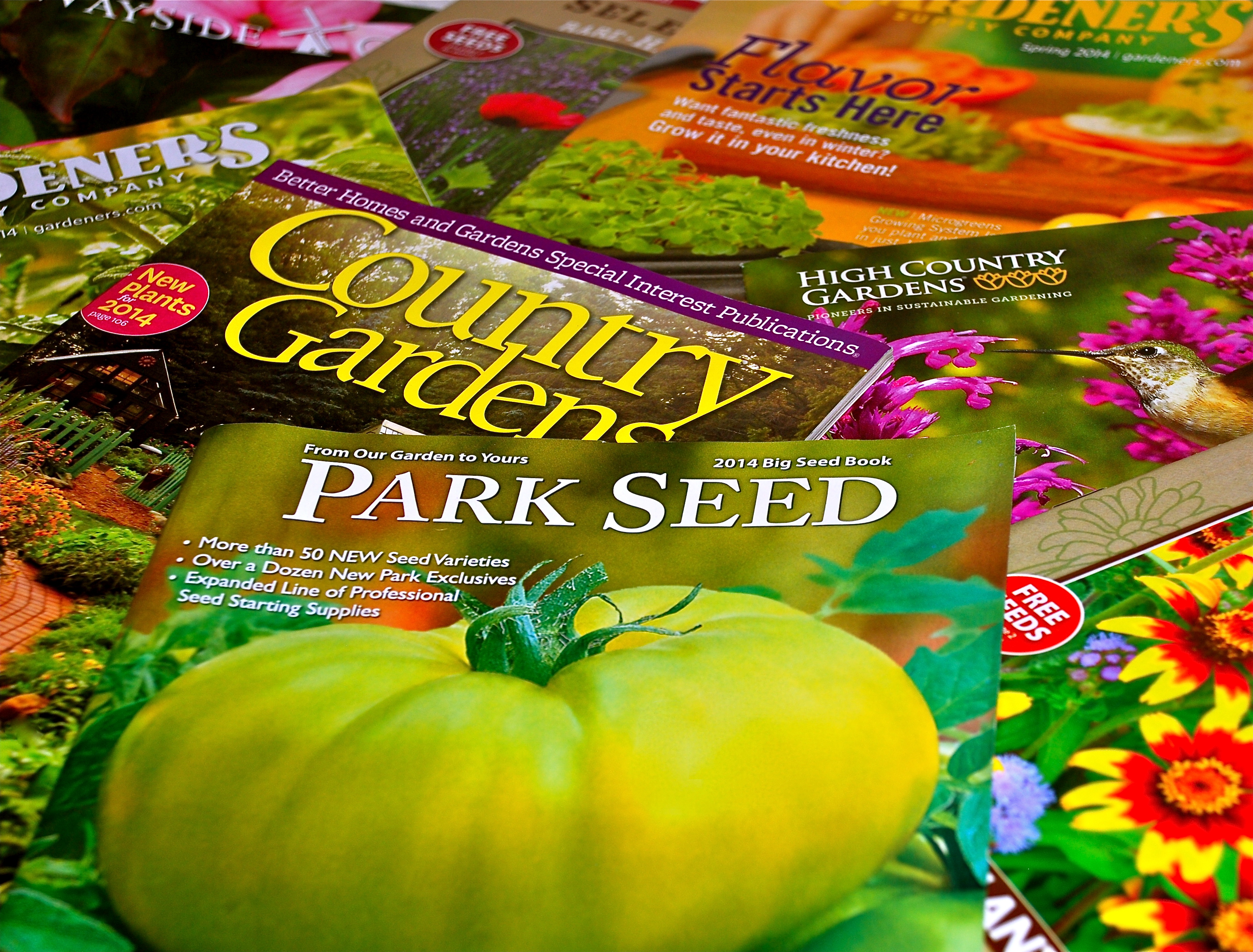
He plans his summer crops, selects his seeds
From bright-paged catalogues for garden needs.
When looking out upon frost-silvered fields,
He visualizes autumn’s golden yields;
He sees in snow and sleet and icy rain
Precious moisture for his early grain;
He hears spring heralds in the storm’s turmoil.
He knows no winter, he who loves the soil.
~Sudie Stuart Hager

…and the Lord your God will make you abundantly prosperous in all your undertakings, in the fruit of your body, in the fruit of your livestock, and in the fruit of your soil.  For the Lord will again take delight in prospering you, just as He delighted in prospering your ancestors…  ~Deuteronomy 30:9  ✝

255. Joy is the holy fire that keeps our purpose warm and our intelligence aglow. ~Helen Keller, American author and educator

Who is the happiest of men? He who values the merits of others,
and in their pleasure takes joy, even as though t’were his own.
~Johann Wolfgang von Goethe, German writer and Politician

Image

One of my fellow bloggers commented today about the beauty in one of my posts and said she needed the joy.  It was such a blessing to know that I had spread some joy in the life of another.  So tonight I thought I would share some thoughts about joy.  And since this week is A.A. Milne’s birthday I decided to use some illustrations from his book to help do that.  Milne was the English author who brought so much joy not only to children but also to those of us fortunate enough to have read the Winnie the Pooh stories to our children.

Joy is not in things; it is in us.  ~Richard Wagner, German composer

Image

The sun does not shine for a few trees and flowers, but for the wide world’s joy.  ~Henry Ward Beecher, Congregational minister

Image

Sometimes your joy is the source of your smile, but sometimes your smile can be the source of your joy.  ~Thich Nhat Hanh, Vietnamese Monk and Writer

Image

He who has never looked on sorrow will never see joy.  ~Kahlil Gibran, Lebanese born American philosophical Essayist, Novelist, Poet

Image

Joy is the net of love by which you can catch souls.  ~Mother Teresa, Missionary

Image

Joy delights in joy.  ~William Shakespeare, English Dramatist, Playwright, Poet

But let all who take refuge in you(God) rejoice; let them ever sing for joy.  Spread your protection over them, so that those who love your name may exult you.  ~Psalm 5:10-12  ✝

253. Blue color is everlastingly appointed by the Deity to be a source of delight. ~John Ruskin

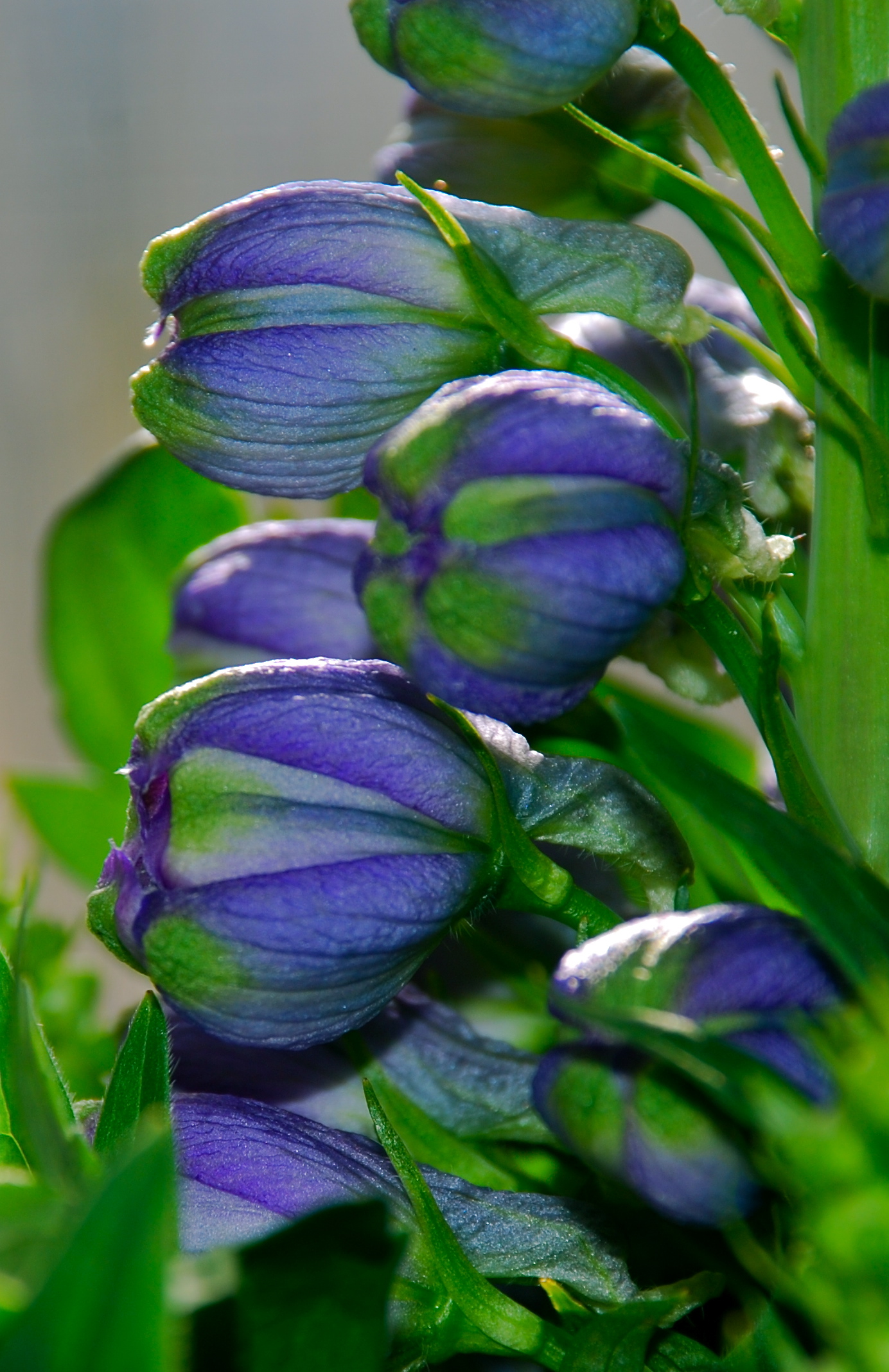
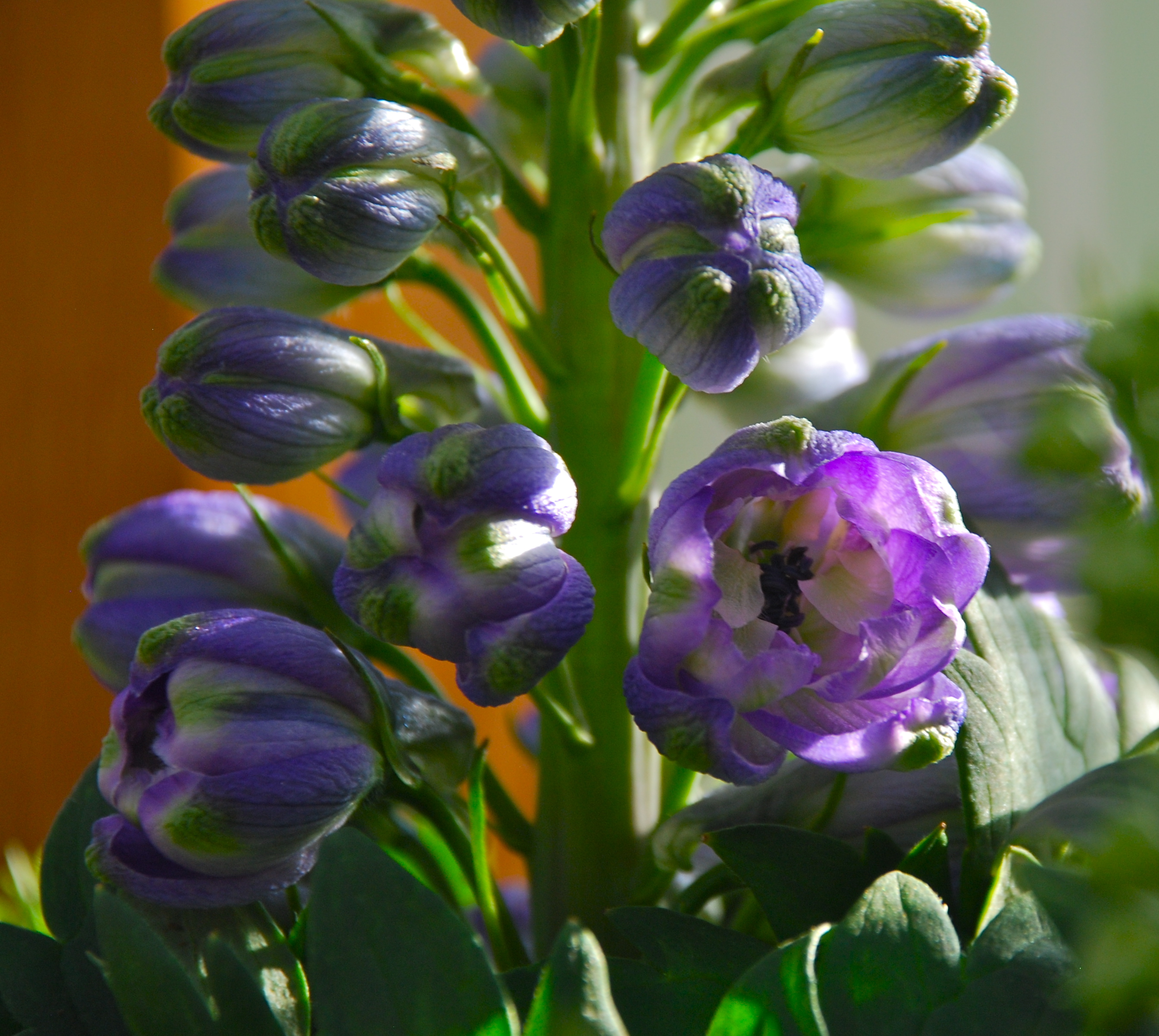
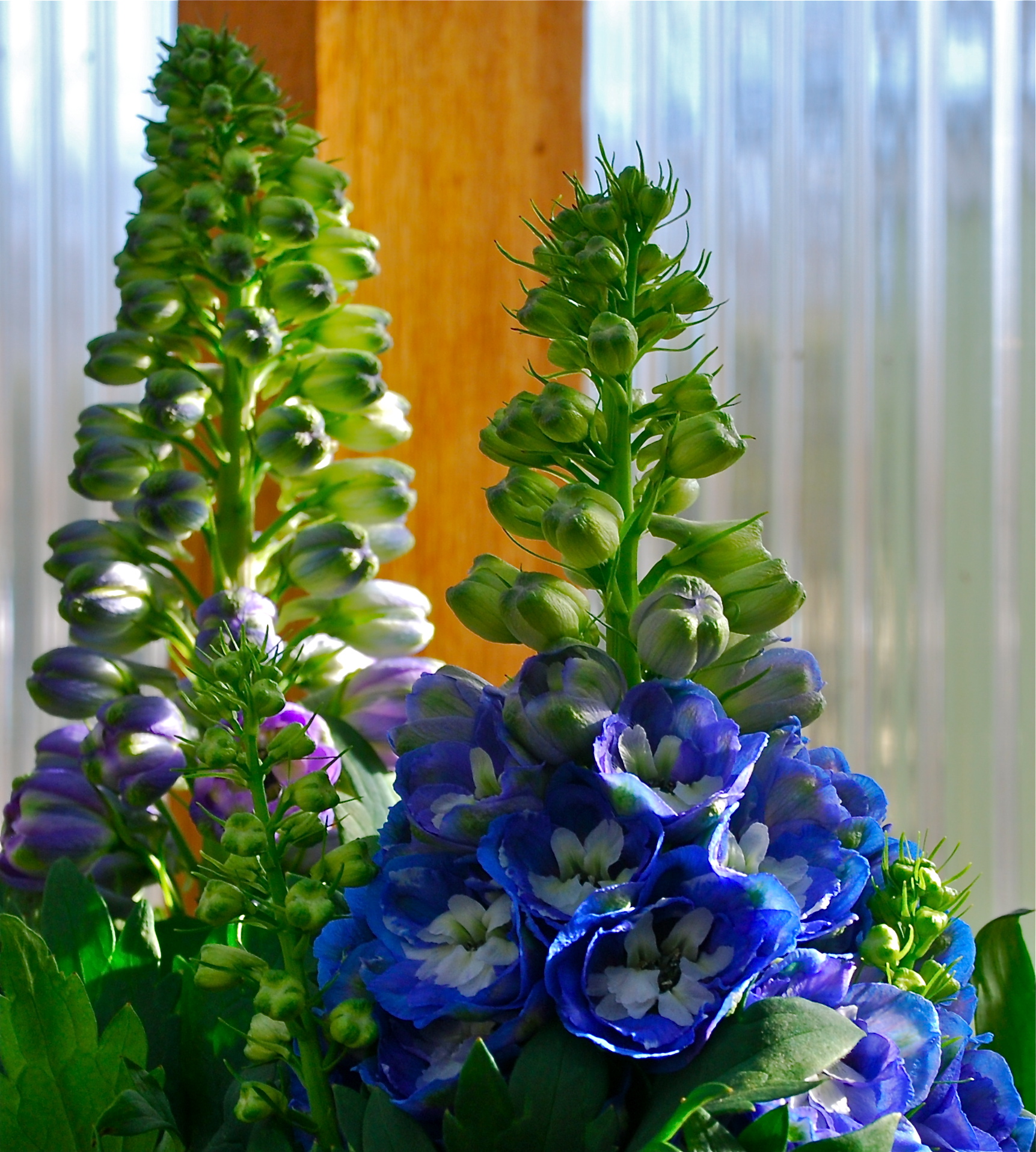
I’m a native of Europe and Siberia.
My name comes from the Greek word meaning “Dolphin.”
My dried flowers were used to dress wounds at the Battle of Waterloo.
European settlers made ink from my dried flowers.
I was used by West Coast Native Americans to make blue dye.
I’ve been said to represent the tears of the Virgin Mary.
Who am I? My name is Delphinium.
I can be blue and I’m beautiful.

Image

Image

Image

Blue is a popular color in the garden perhaps because it is relatively rare one in the plant world.   In fact, blue is said to be the most rare of colors amongst flowers.  Thus I am blessed to live in a place whose state flower is blue and whose landscape in places becomes covered in seas of bluebonnets for several weeks every spring.  Also, though Delphinium is not a staple in our landscape, they appear in pots in the nurseries this time of year before much, if anything, is blooming outside.  So I can, like I did last week, buy some to brighten the drab days of winter.  Both of the ones I got this year were marked as blue, but now that the second one is opening, I see that it’s going to be purple.  But hey, who am I to complain since purple is another of my favorite colors, and it too is often hard to come by in the garden.  Regardless of the color, now that I know that at one time delphiniums represented Mary’s tears, I’ll have yet another way of remembering what my salvation cost Mary and her precious son, the Christ.

May those who sow in tears reap with shouts of joy.  ~Psalm 126:5  ✝

249. The greatest gift of the garden is the restoration of the five senses. ~Hanna Rion

What pure delight a garden brings!
What joy in watching growing things.
Up springing from the sodden mold
Their wealth of beauty to unfold–
‘Tis here my spirit soars and sings!

Image

To note the flash of painted wings,
And hark the bees soft murmurings
In quests of sweets the blossoms hold;
Where all gray days are days of gold,
Strolling its paths bright wanderings,
What pure delight!
~Louella C. Poole

Image

My beloved has gone down to his garden, to the beds of spices, to pasture his flock in the gardens, and to gather lilies.  ~Song of Solomon 6:2  ✝

229. So, like a forgotten fire, a childhood can always flare up again within us. ~Gaston Bachelard

To speak truly, few adult persons can see nature.
Most persons do not see the sun.
At least they have a very superficial way of seeing.
The sun illuminates only the eye of the man
but shines into the eye and heart of the child.
The lover of nature is he whose inward and outward senses
are still truly adjusted to each other;
who has retained the spirit of infancy even into the era of manhood.
~Ralph Waldo Emerson

Image

God sometimes reaches out at the most unexpected times to capture our hearts and attention, and not infrequently does He do that by using one of Creation’s eye-catching spectacles.  When a moment like that happens, it’s much like when a lover surprises his beloved by pulling a handful of flowers from behind his back.   And every time I’m delighted by the Holy One in such a way, I fall in love with Him all over again.  A friend of mine recently shared a moment like that with me, and as I read her description, I realized that understanding God’s parables can occur when the innocence of childhood floats up back up in our present realities.

On this cool, crisp morning, I arose before the sun and
went out my front door to look for the newspaper.
But that’s not what caused me to stop in my driveway, paper forgotten.
Overhead, Ursa Major and other stars twinkled brightly,
framed only by a few thin, wind-shaped clouds.
And at a time of the year when children take center stage,
I thought of the innocence in all of us.
For it was not my intellect that held me spellbound
but my own innocence, untarnished by age.
In that moment, caught by the wonder of nature,
blessed with its beauty, I felt magical.
~Emily Seate

Who is this that appears like the dawn, fair as the moon, bright as the sun, majestic as the stars in procession?  ~Song of Solomon 6:10  ✝

206. The more I wonder, the more I love. ~Alice Walker, author of THE COLOR PURPLE

It seemed to my friend
that the creation of a landscape-garden
offered to the proper muse
the most magnificent of opportunities.
Here indeed was the fairest field
for the display of the imagination,
in the endless combining of forms of novel beauty.
~Edgar Allan Poe

Image

Image

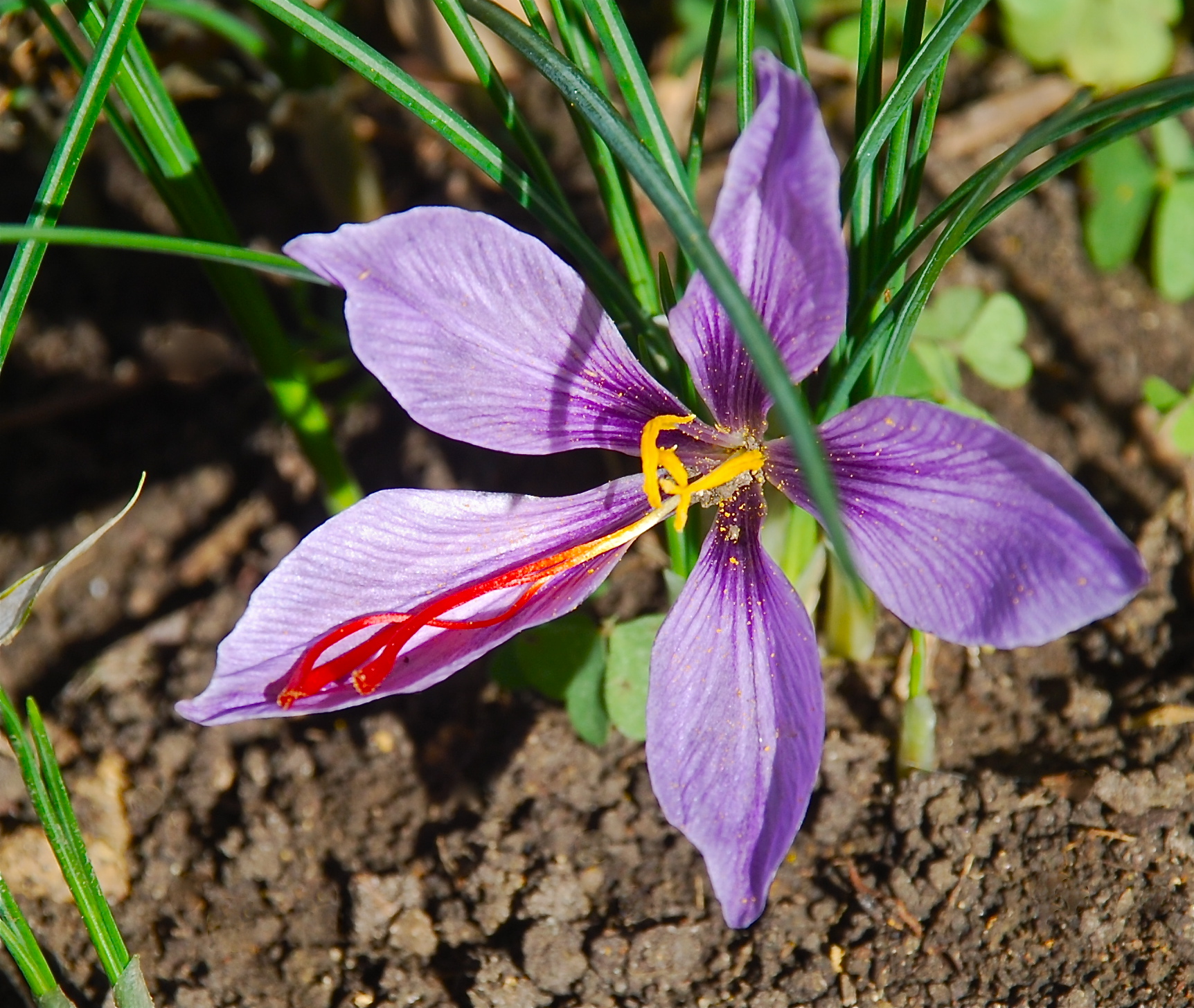
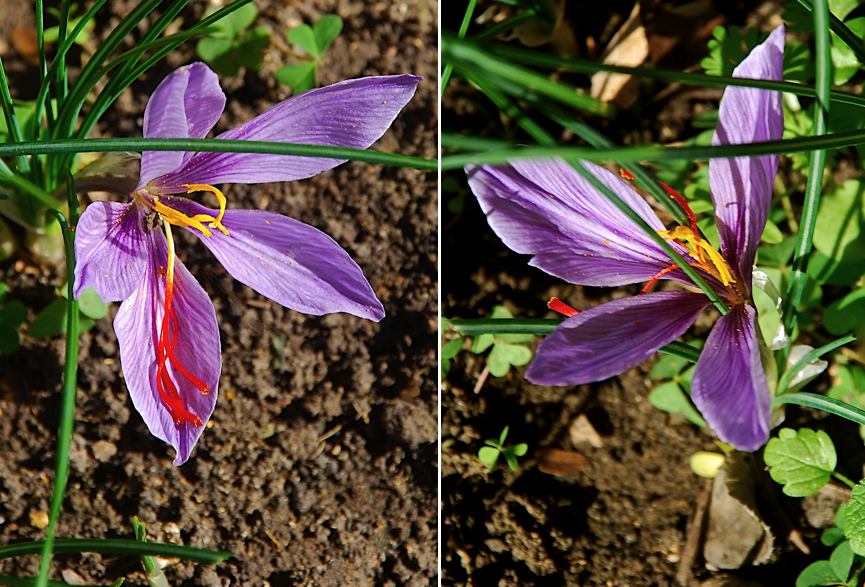
Purple, the most powerful wavelength of the rainbow, can be seen sometimes simply streaking the heavens, and it is mentioned at least 25 times in the Bible.  Over the ages the color’s “novel beauty” has symbolized magic, mystery, spirituality, the sub-conscious, creativity, dignity, and royalty; statistics show that it has evoked all of those meanings more so than any other color.  And yet the color purple is a rarity in nature so much so that its earliest dyes could be made only at great expense rendering it a color to be worn solely by kings, emperors, nobility, and priests. So when I find samplings of purple in my yard as I did yesterday, it feels as if honored guests have arrived at my “table.”  Add to that the fact that pigments from these particular guests have been found in prehistoric depictions dating back 50,000 years and that those depictions were found where the Garden of Eden could have been, then the honored guests become not only venerable ones but also sacred ones.  I sent out the invitations to these purple invitees last August after happening upon Crocus Sativus corms at a local nursery.  Since I had long wanted to try growing the plants from which the spice saffron is obtained, I came home and immediately planted my 6 little corms and then came the watching and waiting for signs of life.  But as the leaves began to fall and collect in the beds and I was spending less time outside, I’d almost forgotten about them until yesterday when I went out to get the mail.  To my surprise I spied two of the beauties with their three crimson stigmas (saffron threads) pushing up from under a layer of leaves.  Like a child I literally squealed with delight; it was as if I’d stepped into the Lord’s holy presence as He walked in His garden.

They put a purple robe on Him(Jesus), then twisted together a crown of thorns and set it on Him.  ~ Mark 15:17  ✝