246. The flower is the poetry of reproduction. It is an example of the eternal seductiveness of life. ~Jean Giraudoux

I am a symbol of love and immortality.
I have been around since the time of Confucius.
My name came from a Persian word.
At one time I was more expensive than precious metals.
I can be used in the place of an onion in cooking.
I am in the same family as a lily.
Image

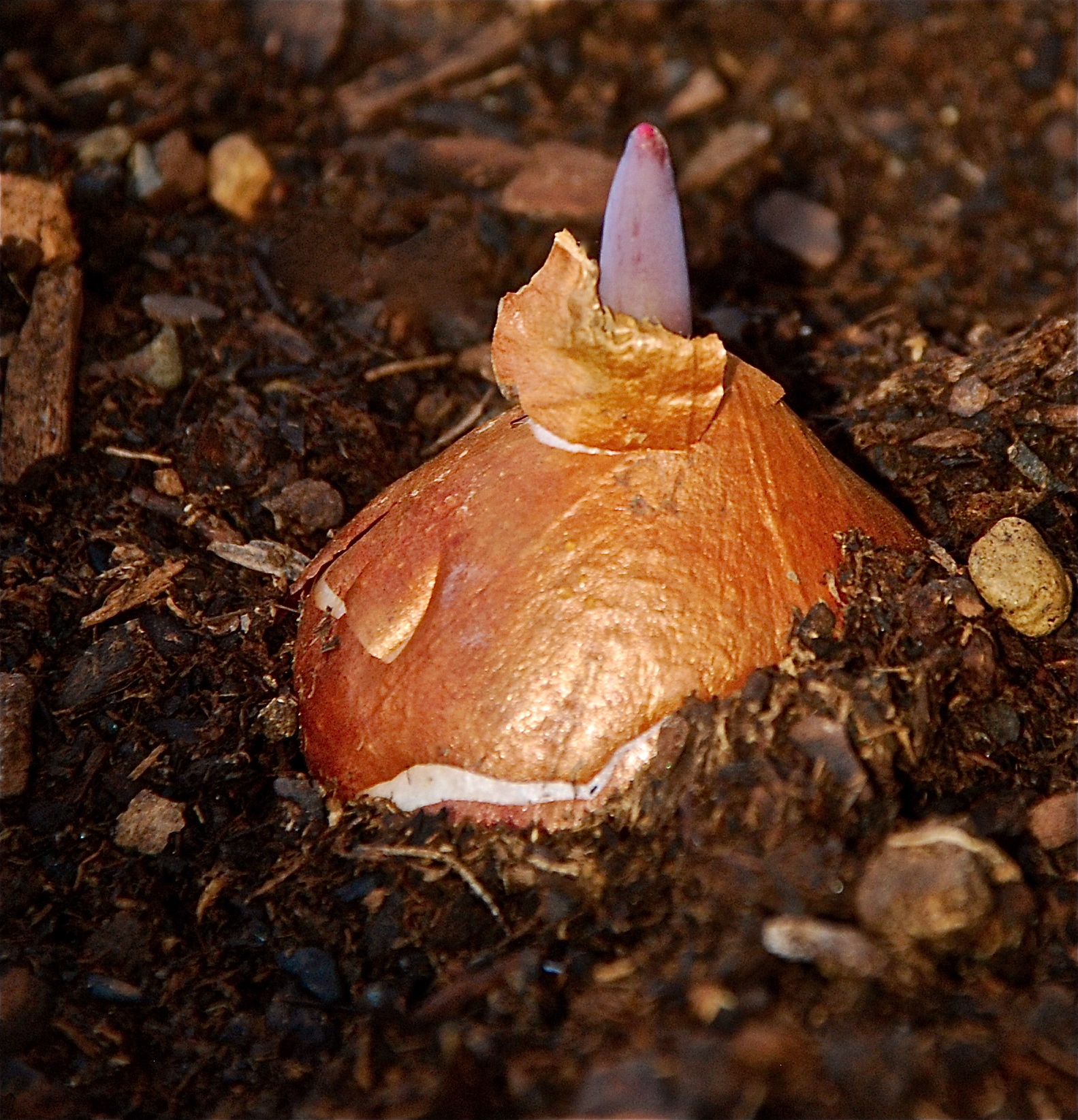
Do you know who I am?  I am a native of Central Asia, and I am the world’s most planted flower.  When I arrived from Turkey in the mid-16th century, I was a gift from the Ottoman Empire that took Western Europe by storm.  But I did not come to the United States until the 1800’s.  There are about 3,000 varieties of me grown around the world, some that originated in the seventeenth century.  My petals come in every shade of the rainbow as well as black, but my most popular color is red.  And I can be forced into blooming after I have been stored in a refrigerator for 12-16 weeks.

A tulip doesn’t strive to impress anyone.
It doesn’t struggle to be different than a rose.
It doesn’t have to.
It is different.
And there’s room in the garden for every flower.
~Marianne Williamson
Image

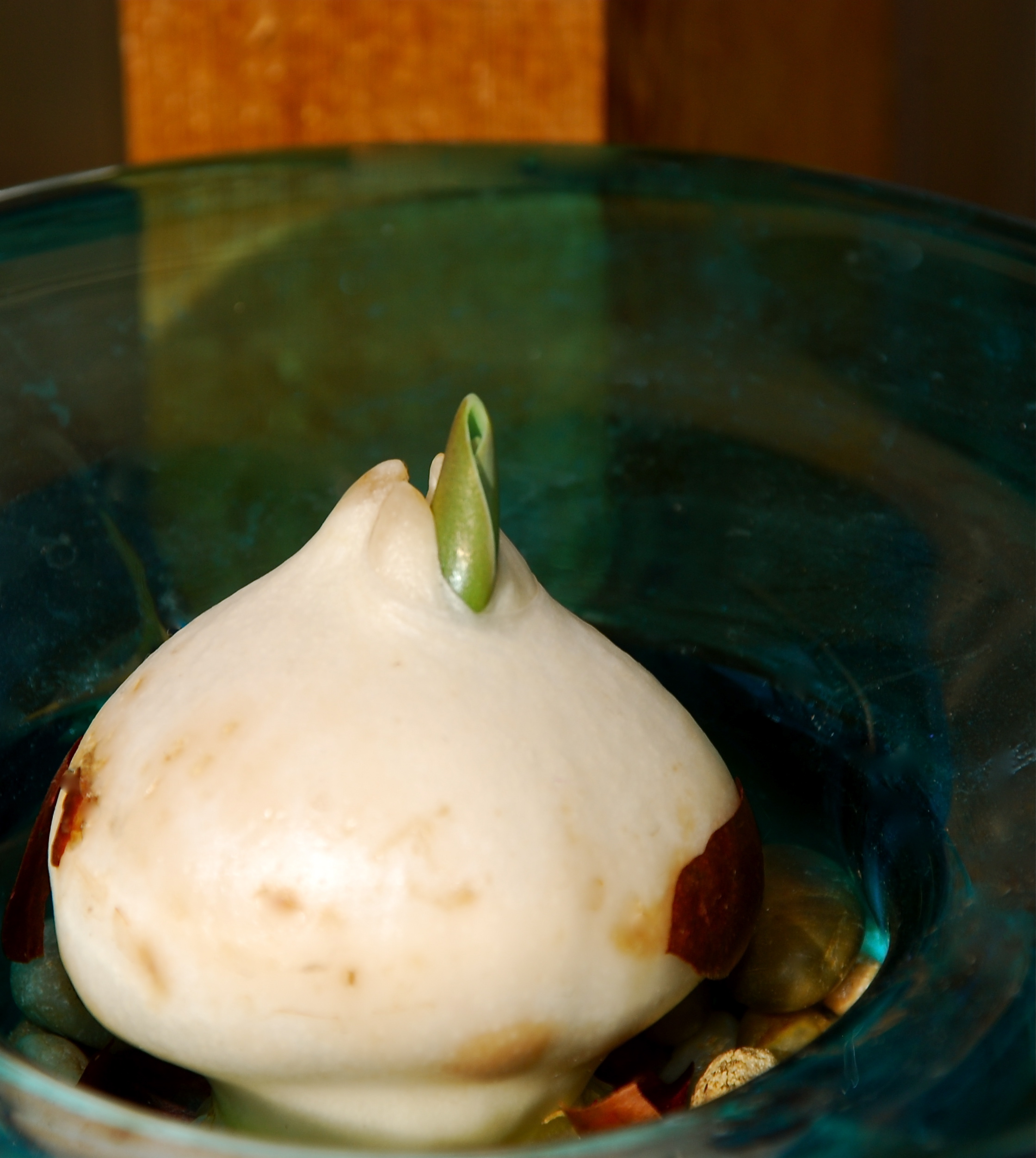
I’ve never had much luck with growing tulips in the ground.  So this year I decided to try forcing them in containers.  Two weeks ago after the bulbs had spent the required amount of time in my refrigerator, I planted some in soil and some in glass containers partially filled with pebbles and water.  As of today I’m proud to report that I have tulips sprouting in both types of containers.  Though it be only the 12th of January, springtime has sprung at least in my greenhouse.  One of the most seductive things in life I know is the thrill of the first spark of life in a garden.  Every time I experience it I feel as if a time machine has transported me back to Eden on the third day when creation was “born of the Spirit in the womb of the universe.”  On that day the first seeds were planted in the earth and their roots reached down for the waters that would sustain them.  Then and now such as this is clearly a manifestation of the goodness of God.

I believe that I shall see the goodness of the Lord in the land of the living.  ~Psalm 27:13  ✝
232. Adopt the pace of nature:  her secret is patience.  ~Ralph Waldo Emerson

Image

How good it is to center down!  To sit quietly and see one’s self pass by!  The streets of our mind seethe with endless traffic; our spirits resound with clashings, with noisy silences, while something deep within hungers and thirsts for the still moment and the resting lull.  We look at ourselves in this waiting moment–the kinds of people we are.  The questions persist; what are we doing with our lives? What is the end of our doings?  Where is my treasure?  As we listen, floating up through all the jangling echoes of our turbulence, there is a sound of another kind–a deeper note which only the stillness of the heart makes clear.  It moves directly to the core of our being.  Our questions are answered, our spirits are refreshed, and we move back into the traffic of our daily rounds with the peace of the Eternal in our step.  How good it is to center down!  ~Excerpt from For the Inward Journey by Howard Thurman, American author, philosopher, theologian, educator

Happy is the one who listens to me, watching daily at my gates, waiting beside my doors.  ~Proverbs 8:34  ✝

220. In the temple of my inner being, in the temple of my body, in the temple of earth, sea, and sky, in the great temple of the universe I look for the light that was in the beginning… ~J. Philip Newell

For me, a landscape does not exist in its own right,
since its appearance changes at every moment;
but the surrounding atmosphere brings it to life – the
light and the air which vary continually.
~Claude Monet

Image

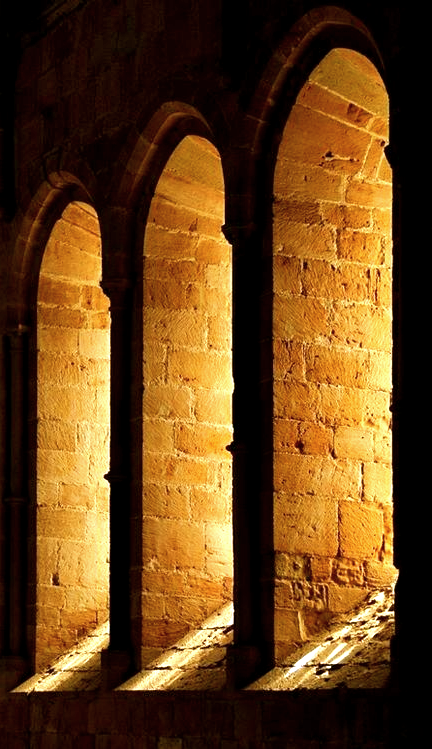
All things in the natural world drink in sunlight, and they are affected by it a number of ways.  When the sun’s warmth touches skin, it creates a pleasant sensation on cold days.  That pleasurable feeling seems to sink down into the depths of human flesh; deeper and deeper it settles until it reaches places normally untouched by sunlight.  Flesh and spirit drink in other light too.  They take in “the light of God and energy itself” so that in an often cold and lonely, dark world the inner flame of our sacred origin keeps the hope filled glow of the eternal alive.

And light begets light, radiating outwards,
unable to be harnessed by any or all,
only a vessel that pours forth affirmation to its origins.
~Scottishmomus, (http://scottishmomus.wordpress.com)

God saw that the light was good, and He separated the light from the darkness.  ~Genesis 1:4   ✝

202. There is a communion with God, and there is a communion with earth, and there is a communion with God through the earth. ~Pierre Teilhard de Chardin, French philosopher and Jesuit priest

Grass is the forgiveness of nature-
her constant benediction.
Forests decay, harvests perish, flowers vanish,
but grass is immortal.
~Brian Ingalls

Image

Maiden grass, purple fountain grass, blood grass, little bluestem, pink muhly–what’s not to love about such names.  Not only are they alluring monikers for gardeners, but their visual charms provide great cover for  wildlife and their seeds are good food sources for birds.  Few pests bother them, and given a bit of wind their airy, flower panicles, feathery plumes, or striking seed heads resemble fairy wands as they capture and play with available light.  What I like best about them is that in their swishing and swaying the echoes of the eternal and murmurs of sacred benedictions can be heard.  A garden and all its plantings, be they grasses or trees or shrubs or ferns or herbs or mosses, always speak of earth’s primeval and venerable origins as well as man’s connection to the Holy Voice that spoke everything into being.  But it is in the movement of the grasses that I most feel the in and out movement of God’s ruach, His life-giving breath.  Chardin whom I quoted above contended that the more he devoted himself in some way to the interests of the earth the more he belonged to God.  It is the same for me because being close to and working the earth is like being attached to an umbilical cord that keeps me forever connected to and sustained by Him, the loving Source of all life.

Sing to the LORD with thanksgiving; make music to our God on the harp.  He covers the sky with clouds; he supplies the earth with rain and makes grass grow on the hills.  ~Psalm 147:7-8  ✝

19. Let us love winter, for it is the spring of genius. ~Pietro Aretino

We need a renaissance of wonder.
We need to renew, in our hearts and in our souls,
the deathless dream, the eternal poetry, the perennial sense
that life is miracle and magic.
~E. Merrill Root

Image

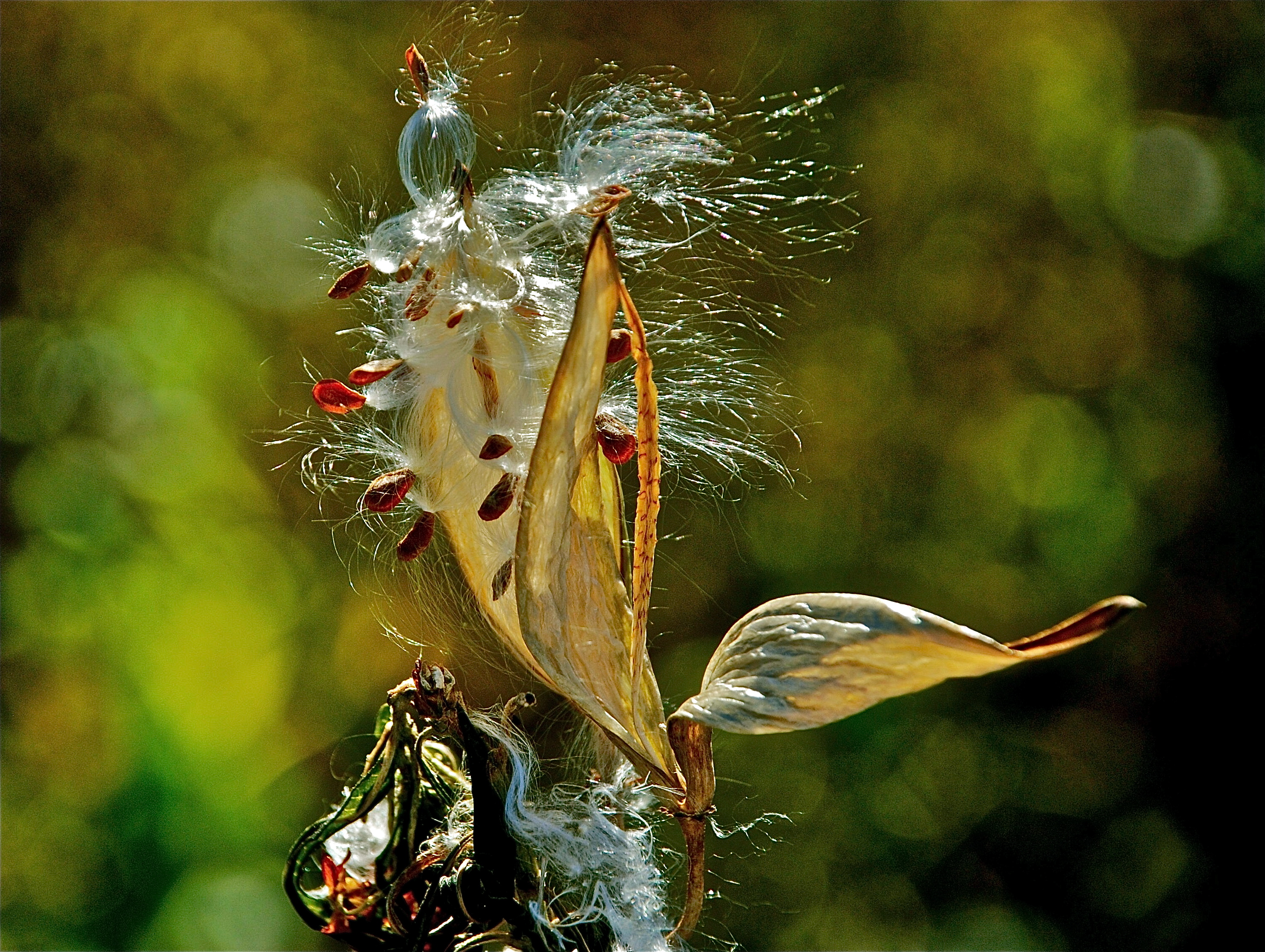
Since it is year’s end, we have entered the season of somber gardens, short days, low temperatures, and more-gray-than-blue skies.  The reckless abandon of the growing seasons has yielded to deepening winter’s, unadventurous restraint.  But, while looking out a window brings into view only the barrenness of winter, an actual venture out into its domain can expose wondrous sights like the seed pod in the photograph.  What a treat to see wondrous silken filaments that look like angel hair releasing seeds that are proof of a continuously running thread in Creation’s tapestry.  Such finds are tangible fragments of God’s imagination buried deep in the mystery of nature, and the aura of holiness that surrounds them often leaves onlookers amazed and awestruck.  These miraculous strands are the same kind of threads that govern the ceaseless ebbing and flowing of oceanic waves, the waxing and waning of the moon, the rising and setting of the sun, the birth and death of life forms, and the endless repetition of the seasons.

The most beautiful thing we can experience is the mysterious.
It is the source of all true art and all science.
He to whom this emotion is a stranger, who can no longer pause to wonder
and stand rapt in awe, is as good as dead: his eyes are closed.
~Albert Einstein

Rediscovering awe helps us appreciate the vast wonders of what the Creator’s mind imagined, what His words spoke, and what His hands created.  It bring us closer to God and restores our childlike joy and zeal for life.  The unfathomable mysteries of life are sacred benedictions; their blessings encourage us to stay in the Lord’s keeping and continue searching for His intent for our lives.

Who among the gods is like you, LORD?  Who is like you—majestic in holiness, awesome in glory, working wonders?  ~Exodus 15:11   ✝

**”if an object or expression can bring about, within us, a sense of serene melancholy and a spiritual longing, then that object could be said to be wabi-sabi.” “Wabi-sabi nurtures all that is authentic by acknowledging three simple realities: nothing lasts, nothing is finished, and nothing is perfect.”  The photo of the seed pod is a excellent example of Wabi Sabi.

16. The trees reflected in the river– they are unconscious of a spiritual world so near to them. So are we. ~Nathaniel Hawthorne

A Ming vase can be well-designed
and well-made and is beautiful for that reason alone.
I don’t think this can be true for photography.
Unless there’s is something a little
incomplete and a little strange,
it will simply look like a copy of something pretty.
~John Loengard

Image

The annual beauty in a garden once spent is gone forever, except in memory, if not captured in some way.  A camera is one of the ways we who love nature’s fleeting glory take it captive.  Unlike Loengard, I believe photos can be more than just an uninteresting copy of a beautiful thing.  For example part of what you see in the photograph above started out as that of a single rose.  However, as an experiment with some computer technology, I turned the image into something “a little strange,” as Leongard suggests, and it added another level of interest.  If one looks carefully at the altered image, fragmented pieces of what used to be negative spaces in the original photograph now have merged into engaging patterns, and so what can be seen raises questions about how much one really sees.  “While there is perhaps a province in which the photograph can tell us nothing more than what we see with our own eyes, there is another in which it proves to us how little our eyes permit us to see,” claimed documentary photographer and photojournalist, Dorothea Lange. So it is that Hawthorne’s idea could be applied to my rose or his trees or to the reflection of anything, and it would speak a profound truth. We often don’t see what is right under our proverbial noses.  The eternal underlies everything mankind sees, tastes, hears, touches, and smells, so much so that all things seem to quiver from the Divine energy emitted from them.  But it’s only when the Lord’s demure presence is acknowledged that it becomes more and more keenly perceptible.

So we fix our eyes not on what is seen, but on what is unseen. For what is seen is temporary, but what is unseen is eternal.  ~2 Corinthians 4:18   ✝