203. Surely a man needs a closed place where in he may strike root and, like the seed become. ~Antoine de St. Exupéry

But he also needs the Great Milky Way
above him and the vast sea spaces,
though neither stars nor ocean serve his daily needs.
~Antoine de St. Exupéry

Image

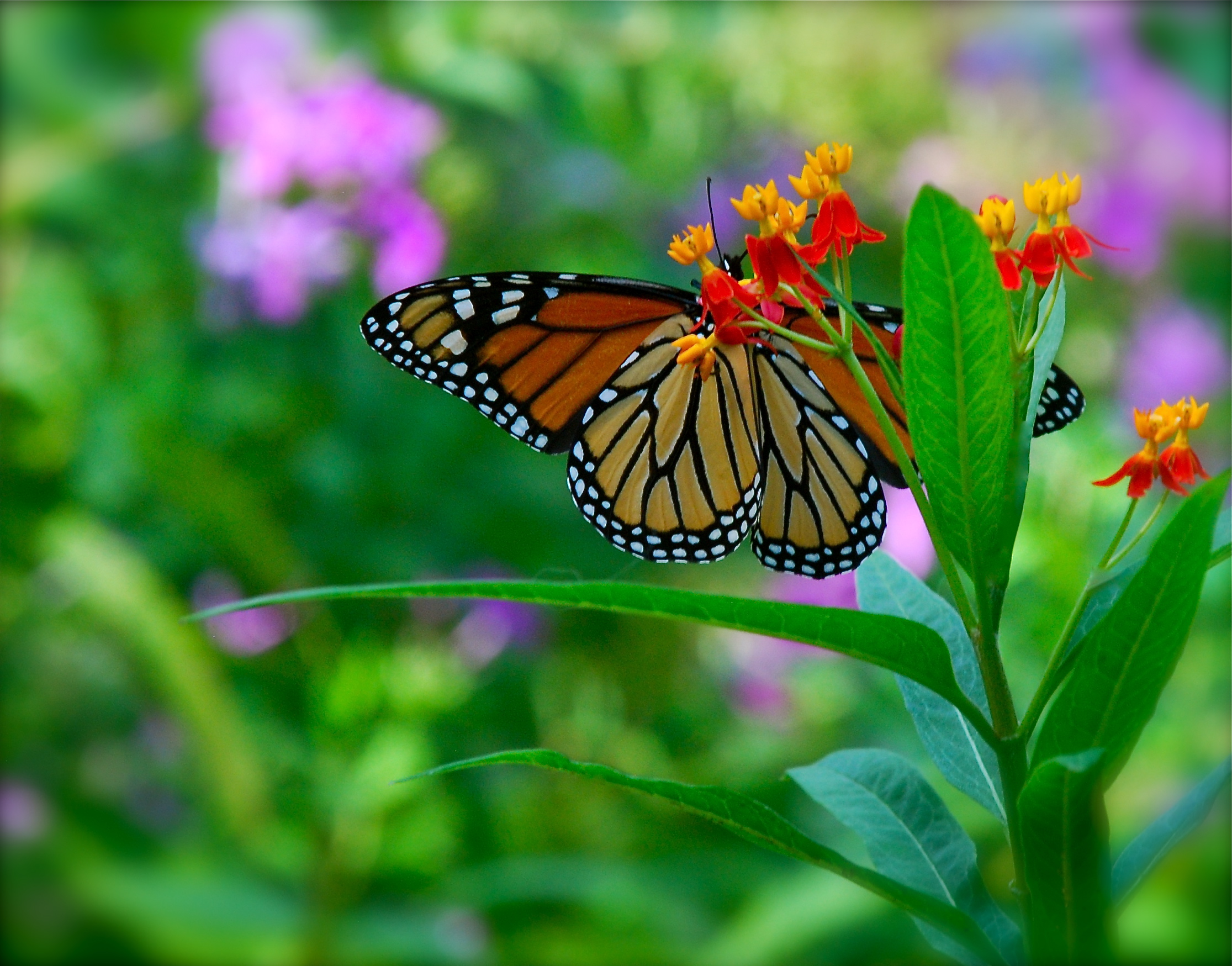
For me, autumn, especially late autumn, is a time for reflection, contemplation, and soul searching–a time for ruminating on the things that move me and make me who and what I am.  And so as I worked out in the yard on this sunny last day of November, the windmills in my mind started churning up memories of the events that led to its door.  Rather than covering every step of the journey, I decided to start when I found my “closed place” in this house with its spacious yards where I began to “strike roots.”  In the beginning, though the home and its conveniences served my physical needs and provided me with creature comforts, relief from old emotional wounds and peaceful contentment remained elusive long afterwards.  Years passed with little change in the status quo until one summer while recalling the beautiful flowers surrounding my childhood home (above) in California, I decided it was time to try growing my own flowers right here in hot old Texas.  Since I wasn’t sure I’d inherited the proverbial “green thumb” of my ancestors, I resolved to begin on a small scale.  So I cleaned off a corner of the patio, bought some bags of potting soil and an assortment of pots and seeds, and thus commenced what I know now to have been a pivotal moment in my life.  From the minute the first seeds germinated, a soul-saving passion for gardening was being birthed in me.  Despite the summer’s miserable heat, I faithfully watered and fussed over my thriving “little flock,” and it was those familiar flowery scents that were the catalysts which sparked my spiritual reawakening.  The next summer with the success of the previous year under my belt and a renewed recognition of Ruach Elohim (the Spirit of God), I decided to branch out and actually sow  seeds in the ground and dig a few holes for bedding plants.  Success came again and with it the quickening in my spirit intensified so much so that I decided to take my recently commissioned mentor’s advice to attend church once more.  This was the first step in righting the derailment of my faith journey that had begun after the early death of my father.

Scripture tells us that Christ is the vine, and we are the branches.  Until those first two growing summers the branch that was Natalie had been withering, not because the Lord had been doing less but because I had been turning a deaf ear and  blaming Him for the loss of my father as well as for painful, emotional wounds and the awful, unrelenting migraines that had started in my mid-twenties.  Since then I have spent season after glorious season planting, replanting, listening, seeking His presence, and marveling at the wonders of heaven and earth.  This pilgrimage that was involved in becoming the Natalie I am today has taught me that He, His Church, and His Creation, which includes the Great Milky Way, the vast sea spaces, and a garden, are the “holy foods” I must have to survive and live in peace and harmony.  Now minute by minute in this place where I have deeply “rooted” myself, the hungering need for “more” has been forever silenced by miracles great and small, blessing upon blessing, and the amazing grace He continues to bestow upon me.

I am the vine, and my Father is the gardener… Remain in me, as I also remain in you.  No branch can bear fruit by itself; it must remain in the vine.  Neither can you bear fruit unless you remain in me.  I am the vine;  you are the branches.  If you remain in me and I in you, you will bear much fruit; apart from me you can do nothing.  John 15:1 and 4-5
167. God gave us memory so that we might have roses in December. ~James M. Barrie

I arise today
blessed by all things.
~John O’Donohue

Image

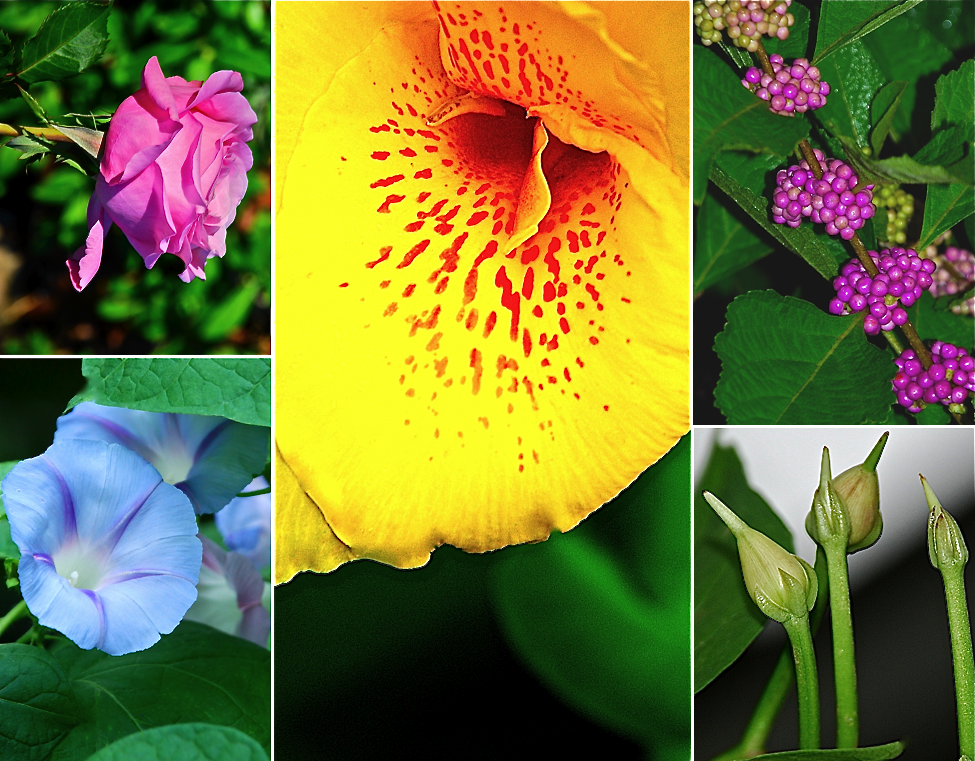
The English poet, William Blake, once penned that all “the daughters of the year shall dance” in autumn and “sing the lusty song of fruit and flowers.”  I think it might be hard to find a much lustier song or livelier a dance than what the beauties above are lending to October’s opus.  As a part of the process of summer’s “slow disrobing” and the “summing up” before year’s end, their ordained and impassioned performances are undeniably spreading a magnificent and long lasting “common feast for all that live.”  From this rich banquet, the berries will remain on winter’s menu for birds who fly not elsewhere for warmer refuge.  The seeds in the lower right corner produced from flowers like the pink and blue morning glories will foster faith and hope for we mortals as they carry the promise of spring through winter’s cold and dark dominion.  The scarlet spots in the throat of the yellow Canna will bleed thoughts of Christ into our awareness as we look forward to celebrating His birth in deep December.  And the scent and sight of the inimitable rose will take its usual place in memory whilst not in bloom.

I will perpetuate Your memory through all generations; therefore the nations will praise You for ever and ever.  ~Psalm 9:6  ✝

156. I have always been delighted at the prospect of a new day, a fresh try, one more start, with perhaps a bit of magic waiting somewhere behind the morning. ~J. B. Priestley

I do believe in an everyday sort of magic–
the inexplicable connectedness we sometimes experience
with places, people, works of art and the like;
the eerie appropriateness of moments of synchronicity;
the whispered voice, the hidden presence,
when we think we’re alone.
~Charles de Lint

Image

Rose Fyleman (1877-1957) was an English writer and poet of exceptional talent who was best known for her works on the “fairy folk” for children.  She also translated many rare children’s books from French and German into their first English translations.  She eventually became the editor of one of the first children’s magazines called The Merry Go Round.  Rose was born in Nottingham, England, and there is speculation that it could have been the magical setting of Nottingham which led her to believe in fairies.  Whatever the reason, she blessed generations of readers with her lovely fairy poems.

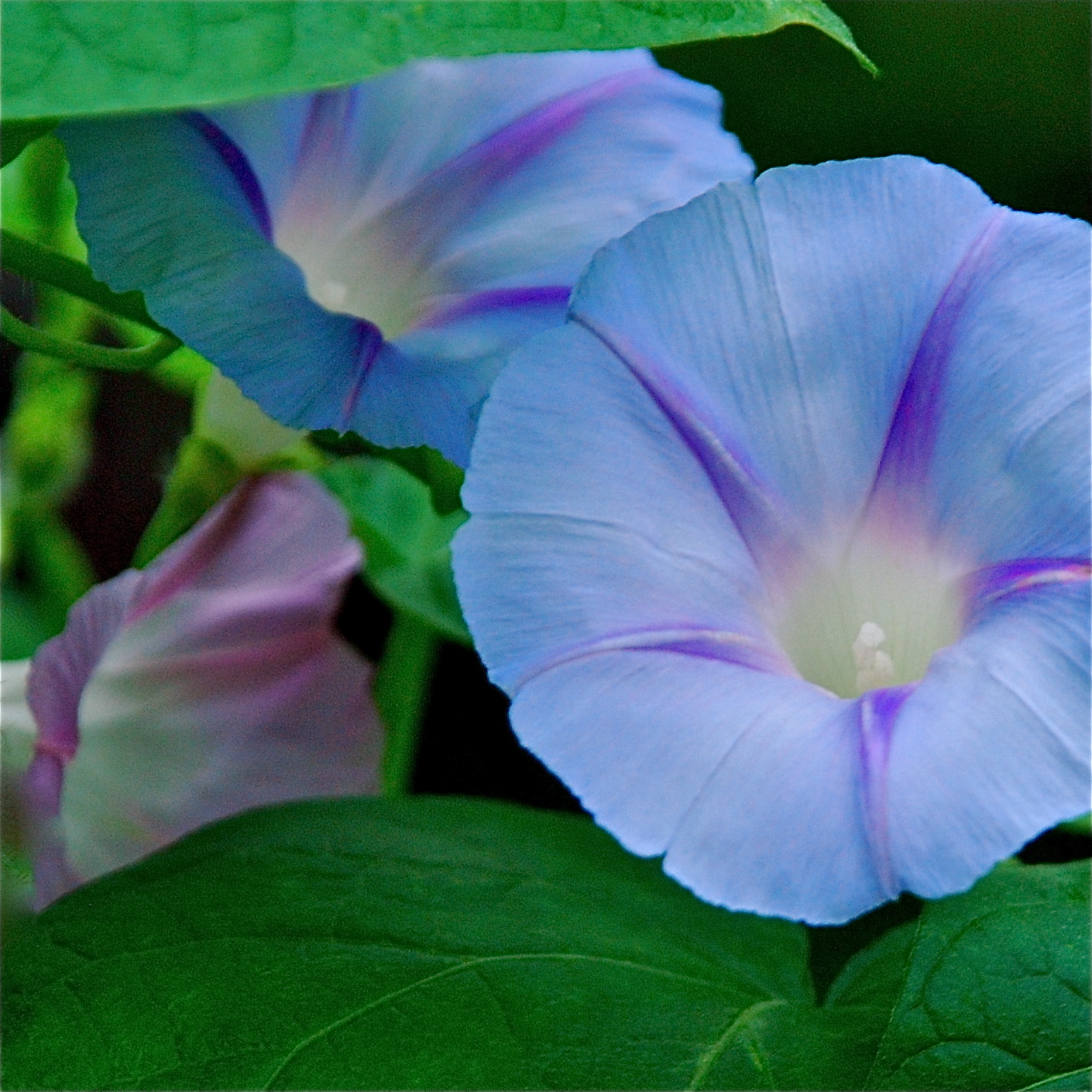
It was one of Rose’s poem, Fairies at the Bottom of the Garden, which prompted my post last night about toadstools.  I loved her poetry as a child and I love it still.  I am passionate about gardening and its lore, and when I see creatures like the one in my photo I see how easy it would be to invent stories about “fairies.”  Besides what he said above, Charles de Lint, explained childhood this way:  “It is easy to believe in magic when you’re young.  Anything you couldn’t explain was magic then.  It didn’t matter if it was science or a fairy tale.  Electricity and elves were both infinitely mysterious and equally possible — elves probably more so.”  I believe Creation is both miracle and magic, and the more we try to explain it the more we see how miraculous and magical it is.  R. A. Salvatore said “a world without mystery is a world without faith,” and so it is because it is our faith that tells us what magic is “waiting somewhere behind the morning” and whose is the “whispered voice, the hidden presence, when we think we’re alone.”

There are fairies at the bottom of the garden!
It’s not so very, very far away;
You pass the gardener’s shed and you just keep straight ahead.
I do so hope they’ve really come to stay. . .
~for more of Fyleman’s work go to:  http://www.fairyamber.com/rfyleman.html

By faith he left Egypt, not fearing the king’s anger: he persevered because he saw Him who is invisible.  ~Hebrews 11:27

130. The fact that I can plant a seed and it becomes a flower, share a bit of knowledge and it becomes another’s, smile at someone and receive a smile in return, are to me continual spiritual exercises. ~Leo Buscaglia

I saw an act of faith today.
A man was on his knees–
not in a pew in a church
but in a garden planting seeds.
~Author Unknown

Image

How awesome it is that living works of flowering art grow out of the dirt under our feet and from something as small and seemingly insignificant as a seed!  Also amazing is the fact that the Holy One planted seeds of greatness with a purpose within each of us.  Then He anointed our words, hands, and actions with the creative power to bring them to fruition.   But the real genius is that what flowers in us drops seeds of increased possibility into the lives of others just like a flower drops seeds in the garden where it grows.

For as the soil makes the sprout come up and a garden causes seeds to grow, so the Sovereign LORD will make righteousness and praise spring up before all nations.  ~Isaiah 61:11    ✝

11. The moment one gives close attention to anything,
even a blade of grass, it becomes a mysterious, awesome,
indescribably magnificent world in itself. ~Henry Miller

Each blade of grass has its spot on earth whence it draws its life,
its strength; and so man is rooted to the land
from which he draws his faith together with his life.
~Joseph Conrad

DSC_0026

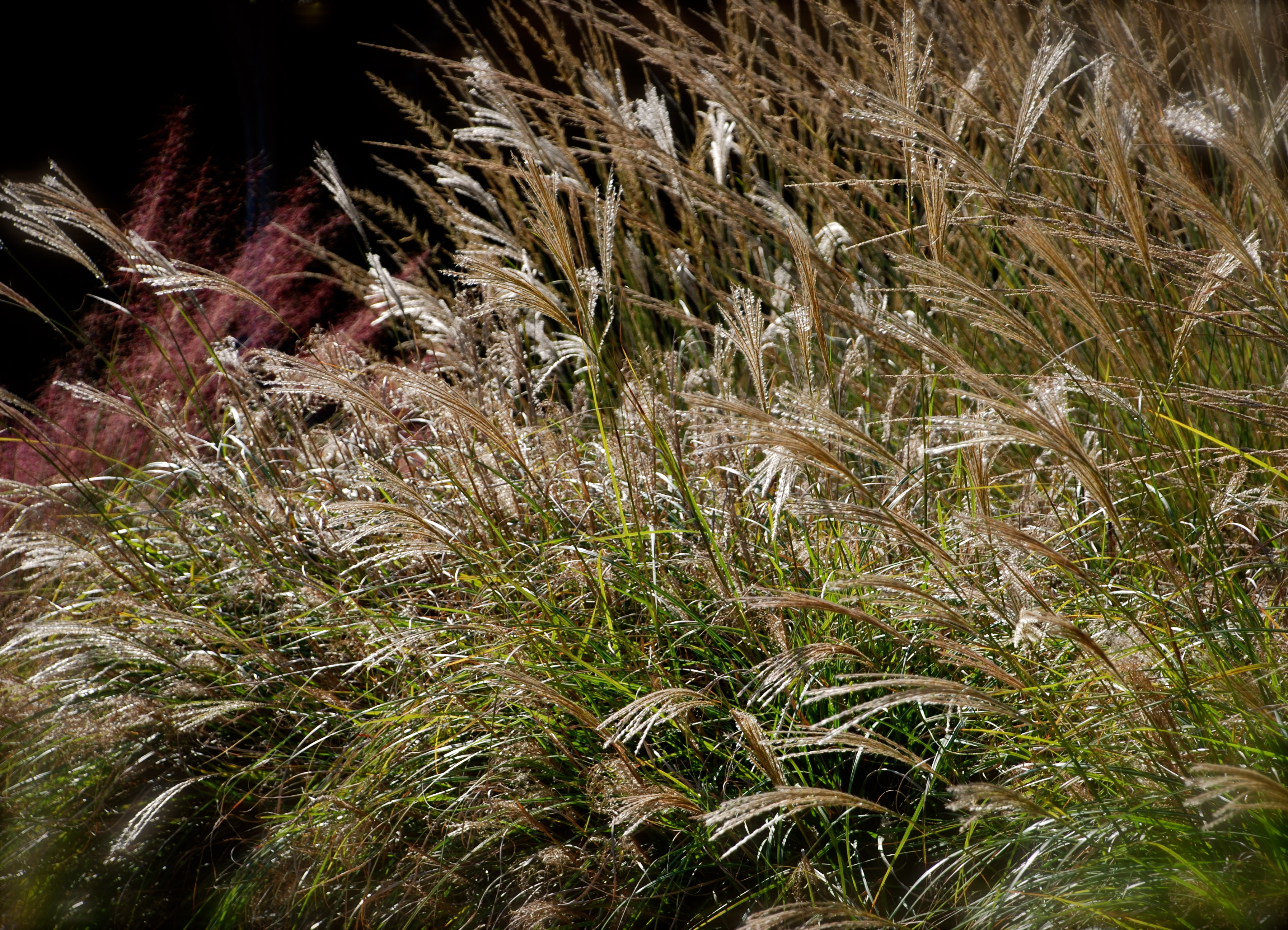
Against the backdrop of autumn’s falling leaves ornamental grasses shift and sigh adding an ethereal element to the landscape.  With airy flower panicles, fluffy seed plumes, and striking seed heads ornamental grasses provide charming “fringe accents” in yards and gardens. Even after the onslaughts of freezing temperatures, grasses continue to grace the landscape with beauty.  They add subtle colors, assorted textures, and the dimensions of motion and sound.  Throughout winter’s “vale of grief,” they capture and play with whatever light is available and in so doing speak of life and give us something “that glimmers in the sleep of things.” The “music” of their swishing and swaying reminds us that what’s happening isn’t an ending but merely a transition for the next beginning.

In a poetic conversation with the Lord, Edna St. Vincent Millay said, “God, I can push the grass apart and lay my finger on Thy heart.”  A Quaker and itinerant preacher named Elias Hicks wrote that “the fullness of the godhead dwelt in every blade of grass.”  And Thomas Carlyle, a Scottish writer, asked, “To us also, through every star, through every blade of grass, is not God made visible if we will open our minds and our eyes.”  These writers, like me, realize that man was meant to be “rooted to the land and therefore to God.”  But, the “umbilical cord” that connects all humanity to Creation and God seems, for many, to have been severed.

The Lord, however, refuses to remain separated or removed from that which He has made.  In an effort to reconnect people to the land and to provide healthier food, many neighborhoods are finding places to build community gardens.  More and more people are getting involved in caring for the land in these communal plots.  Also many schools across the nation are incorporating habitat gardens into the learning experiences of their students, and we are seeing a rise in “hobby farms” where retired professionals have started a second career as a hobby farmer or others who are still working are spending their spare time on their own small farm.

You care for the land and water it; You enrich it abundantly.  The streams of God are filled with water to provide the people with grain, for so You have ordained it.   You drench its furrows and level its ridges; You soften it with showers and bless its crops. You crown the year with Your bounty, and Your carts overflow with abundance.  The grasslands of the wilderness overflow; the hills are clothed with gladness.  The meadows are covered with flocks and the valleys are mantled with grain; they shout for joy and sing.  ~Psalm 65:9-13   ✝