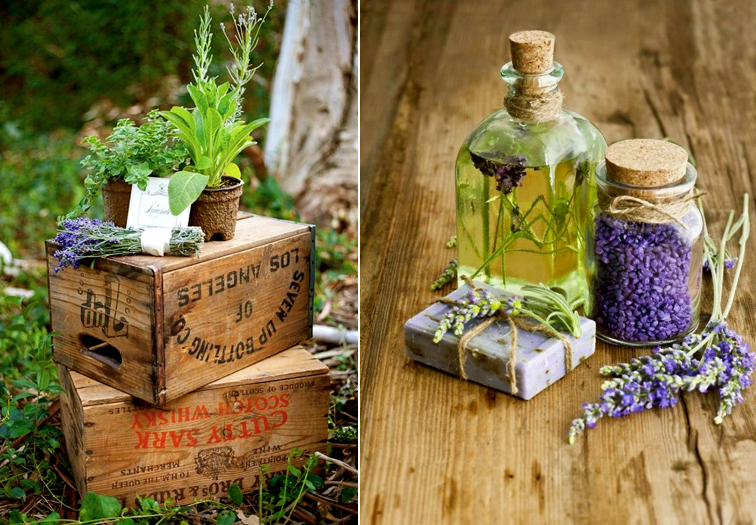
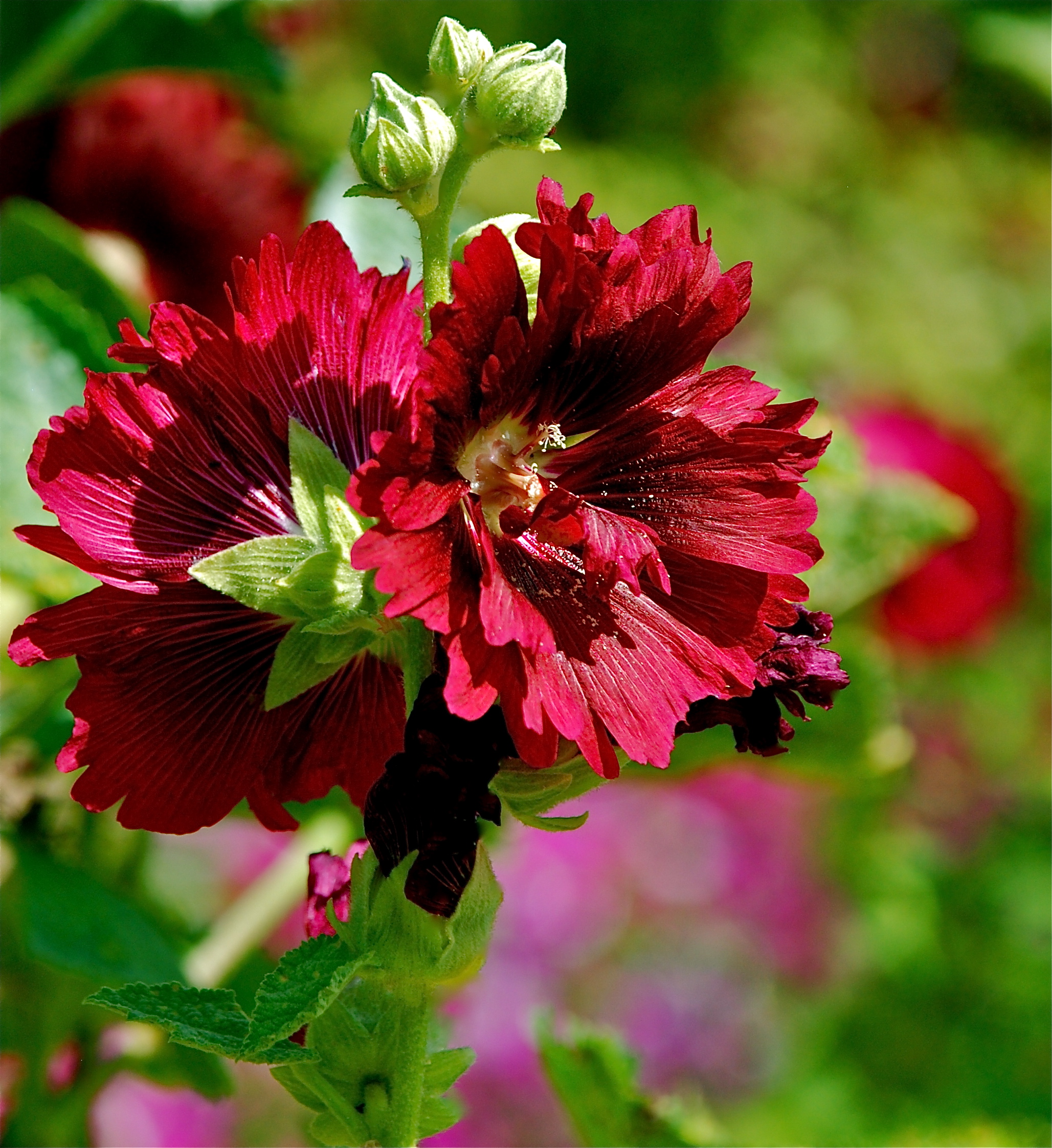
301. Fingers now scented with sage and rosemary, a kneeling gardener is lost in savory memories. ~Dr. Sun Wolf

Image

I know a garden with a loveliness
Deeper than eye can see or indrawn breath
Can measure rightly. Ancient centuries press
Against its walls till time is gone and death
Is lost in fragrance of the lavender
That grows serenely by a lichened stile.
Basil, rosemary, marjoram are there,
And savory, whose blossoms lift a smile
Beside a dripping pool. There silver sage
And lads-love, that all our mothers knew
And pressed for us in many a yellow-page.
Woodruff is there, mint, caraway, and rue.
Old flowers are lovely, lovelier still are these
Sweet scented herbs near box and cedar trees.
~Catherine Coblentz

Awake, O north wind, and come, O south wind!  Blow upon my garden that is fragrances may be wafted abroad.  Let my beloved come to his garden, and eat its choicest fruits.   ~Song of Solomon 4:16   ✝

 **photos via Pinterest

298. All the flowers of all the tomorrows are in the seeds of today. ~Author Unknown

Image

The Seed-Shop

Here in a quiet and dusty room they lie,
Faded as crumbled stone or shifting sand,
Forlorn as ashes, shriveled, scentless, dry-
Meadows and gardens running through my hand.

In this brown husk a dale of hawthorn dreams;
A cedar in this narrow cell is thrust
That will drink deeply of a century’s streams;
These lilies shall make summer on my dust.

Here in their safe and simple house of death,
Sealed in their shells, a million roses leap;
Here I can blow a garden with my breath,
And in my hand a forest lies asleep.

~Muriel Stuart, English poet

He put before them another parable: “The kingdom of heaven is like a mustard seed that someone took and sowed in his field; it is the smallest of all the seeds, but when it has grown it is the greatest of shrubs and becomes a tree, so that the birds of the air come and make nests in its branches.”  ~Matthew 13:31-32   ✝

297. Hand in hand, with fairy grace, will we sing, and bless this place. ~William Shakespeare, English poet and playwright

No child but must remember laying his head in the grass,
staring into the infinitesimal forest
and seeing it grow populous with fairy armies.
~Robert Louis Stevenson, Scottish poet
Image

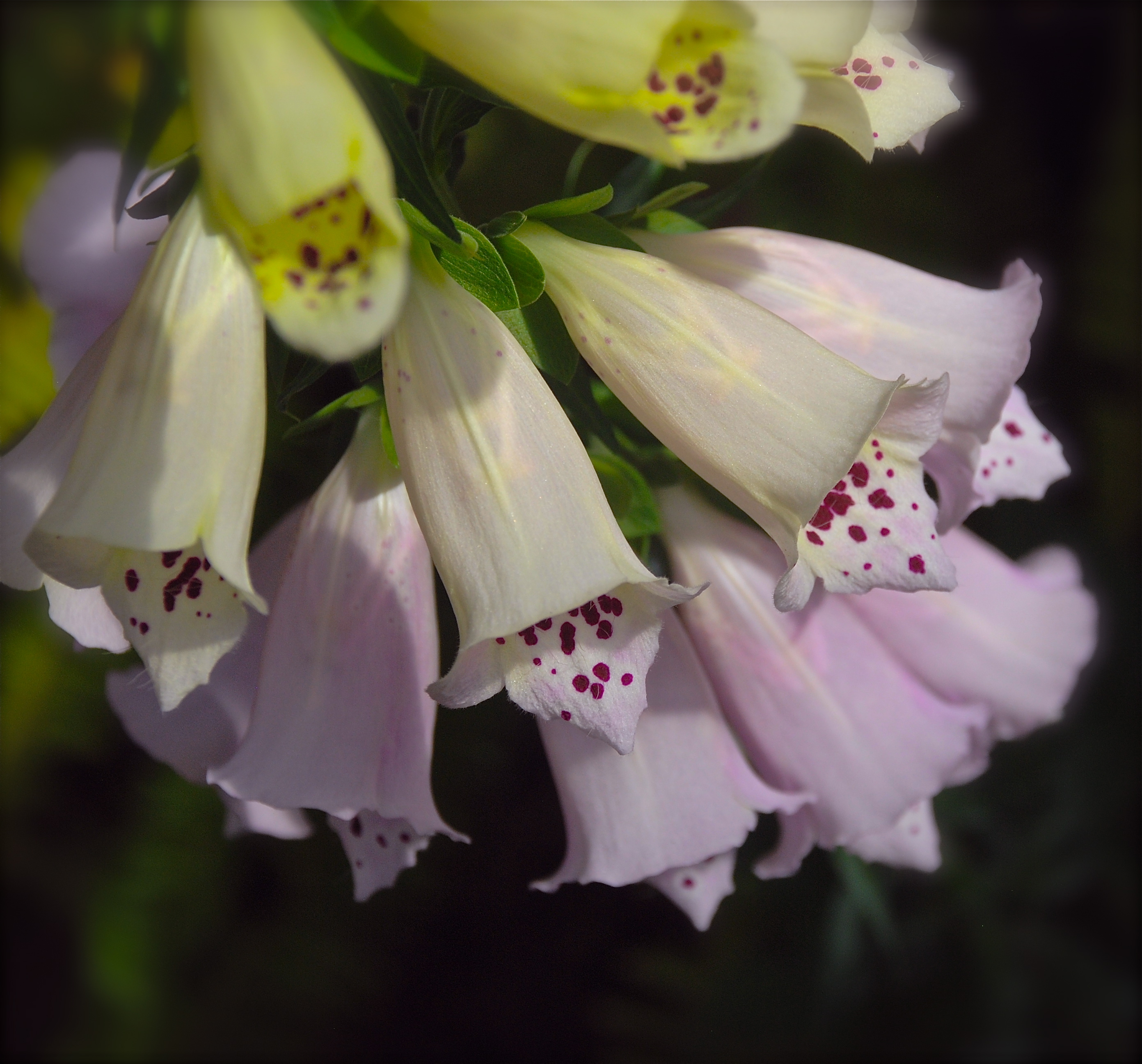
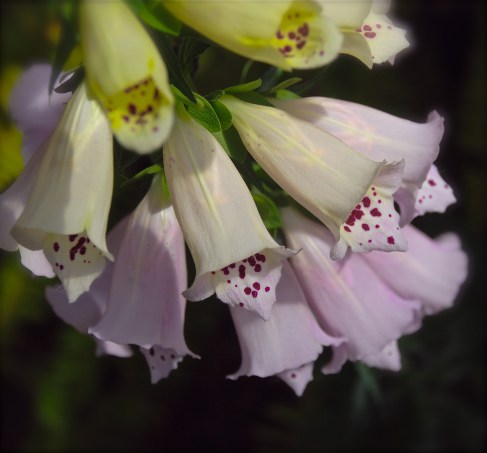
Digitalis, from the Latin Digitabulum, a thimble, derives its common name from the shape of its flowers that resemble the finger of a glove.  It’s a flower we call Foxglove, which delights to grow in deep hollows and woody dells.  However, it was originally called Folksglove because that’s where they, fairies or “good folk,” were thought to live.  Folksglove is one of the oldest names for Digitalis (Foxglove) and is mentioned in a list of plants as old as the time of Edward III.  The earliest known form of the word is the Anglo-Saxon foxes glofa (the glove of the fox, and the Norwegian name Revbielde that translates to Foxbell alludes to the Fox.  It is a name which may have come about from a northern legend about bad fairies who supposedly gave the blossoms of Digitalis to foxes to be put upon their toes so as to soften their tread when prowling amongst the roosts.

I adore Foxglove and believe no other flower in the garden lends itself better to stories of fairies and elves than it does.  Its dangling thimbles or gloves or bells or fingers or whatever one might call them look like enchanted, magical places where children would naturally look for the “wee folk” to lurk.  Nor is it surprising that there have been suppositions claiming the mottling in the flowers mark, like the spots on butterfly wings and on the tails of peacocks and pheasants, where elves have placed their fingers.  Though no longer a child, I have to agree in part with the writer Charles de Lint who penned, “We call them faerie.  We don’t believe in them.  Our loss.”  Sometimes, it does one a world of good to remember what it was like to be an imaginative child, full of awe and wonder and given to flights of fantasy.

Happy is he who still loves
something he loved in the nursery:
He has not been broken in two by time;
he is not two men, but one,
and he has saved not only his soul but his life.
~G. K. Chesterton, English writer, poet,
and lay theologian

If we opened our mind with enjoyment, we might
find tranquil pleasures spread about us on every side.
We might live with the angels that visit us on every sunbeam,
and sit with the fairies who wait on every flower.
~Samuel Smiles, Scottish author

May the Lord give you increase, both you and your children.  May you be blessed by the Lord, who made heaven and earth.  ~Psalm 115:14-15   ✝

294. March is a month of expectation… ~Emily Dickinson

Image

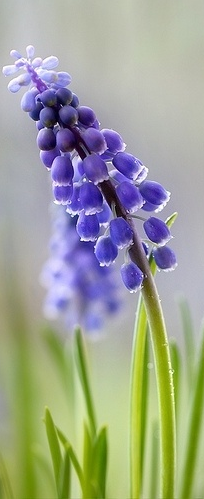
O such a commotion under the ground
When March called,”Ho there! ho!”
Such spreading of rootlets far and wide,
Such whisperings to and fro!
“Are you ready?” the Snowdrop asked,
” ‘Tis time to start , you know.”
“Almost, my dear! the Scilla replied,
“I’ll follow as soon as you go.”
Then “Ha! ha! ha!” a chorus came
Of laughter sweet and low,
From millions of flowers under the ground,
Yes, millions beginning to grow.

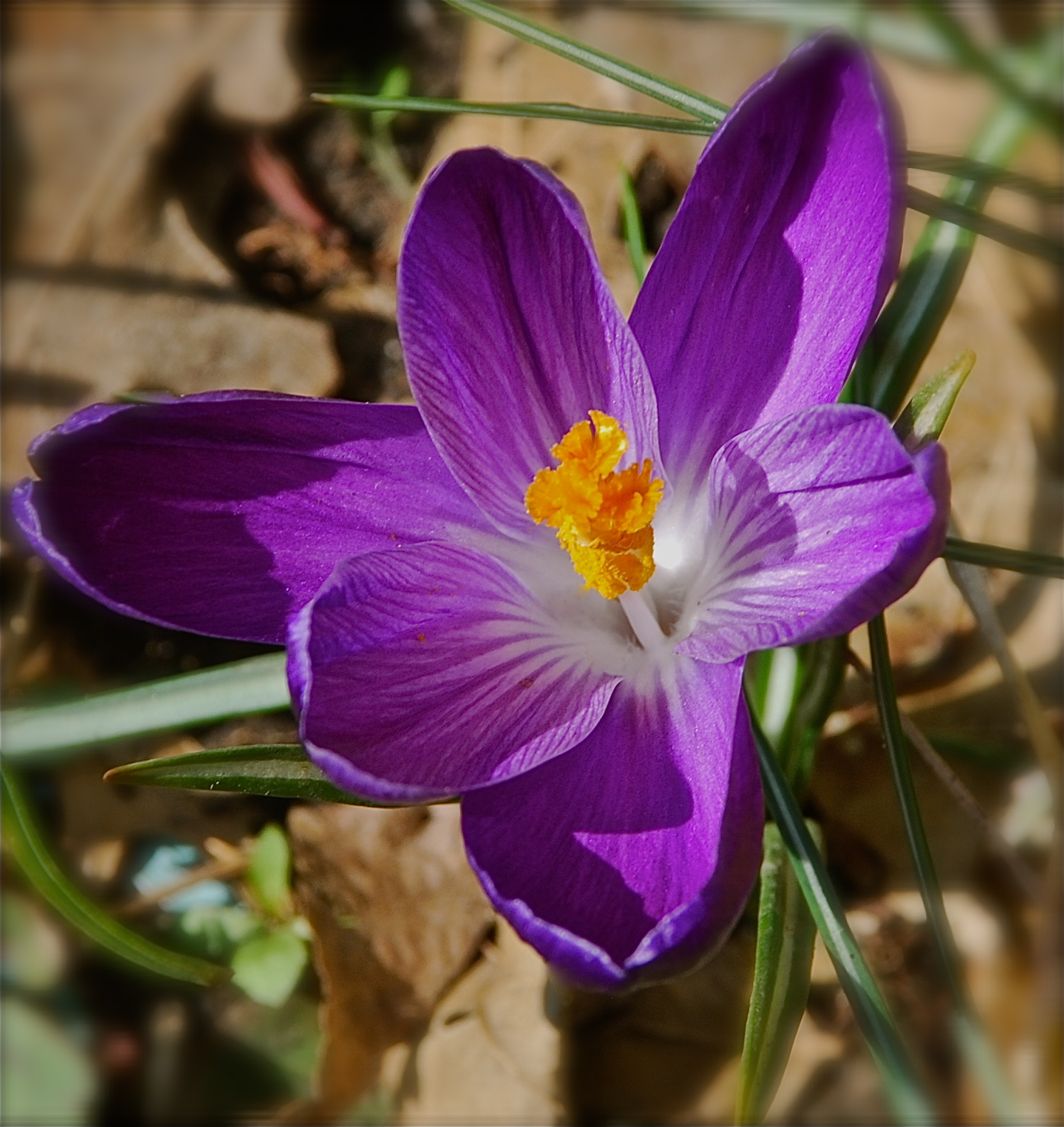
“I’ll promise my blossoms,” the Crocus said,
“When I hear the blackbird sing.”
And straight thereafter Narcissus cried,
“My silver and gold I’ll bring.”
“And ere they are dulled,” another spoke,
“The Hyacinth bells shall ring.”
But the Violet only murmured , “I’m here,”
And sweet grew the air of Spring.

O the pretty brave things, thro’ the coldest days
Imprisoned in the walls of brown,
They never lost heart tho’ the blast shrieked loud,
And the sleet and the hail came down;
But patiently each wrought her wonderful dress,
Or fashioned her beautiful crown,
And now they are coming to lighten the world
Still shadowed by winter’s frown.
And well may they cheerily laugh “Ha! ha!”
In laughter sweet and low,
The millions of flowers under the ground,
Yes, millions beginning to grow.
~Ralph Waldo Emerson

The promise of the Lord are promises that are pure, silver refined in a furnace in the ground, purified seven times.  ~Psalm 12:6   ✝

293. I think that no matter how old or infirm I may become, I will always plant a large garden in the spring.  Who can resist the feelings of hope and joy that one gets from participating in nature’s rebirth? ~Edward Giobbi 

The flowers of late winter and spring
occupy places in our hearts
well out of proportion to their size.
~Gertrude S. Wister

Image

Small for sure on earth’s vast stage are the first flowers of late winter and early spring, but large is their scope.  They, like the day’s first sunlight fractures darkness in the physical world, shatter darkness int the spiritual world.  And when any light breaks spiritual darkness, joy and hope can be sparked and subsequently release from any imposed bondage the light of God which is at the heart of all He created.  Thus I believe it is by Divine intent and for sacred purposes that these flowers occupy places of disproportionate size in the human heart.  Humanity lives with dreadful darknesses in this fallen world, and it could be that the Lord purposely built into Creation’s fabric the repetition of such sparks to keep igniting anew the glow of His Light.  J. Philip Newell proclaims that the light of God “dapples through the whole of creation.”  He declares that it can be seen “within the brilliance of the morning sun and the whiteness of the moon at night and that it issues forth in all that grows from the ground and the life that shines from the eyes of any living creature.”  Thus like cracks in a dam weaken the structure so that flood waters at some point may no longer be able to be contained, crack after crack in spiritual darkness eventually lets in more and more of God’s holy light.  Hence when the fullness of His Light breaks through into the world and the human heart, there is the potential for amazing floods of grace and healing as well as salvation.

You, O LORD, keep my lamp burning; my God turns my darkness into light.  Psalm 18:28   ✝

286. Where flowers bloom so does hope. ~Lady Bird Johnson

Live each season as it passes
breathe the air, drink the drink,
taste the fruit, and resign yourself
to the influences of each.
~Henry David Thoreau

Image

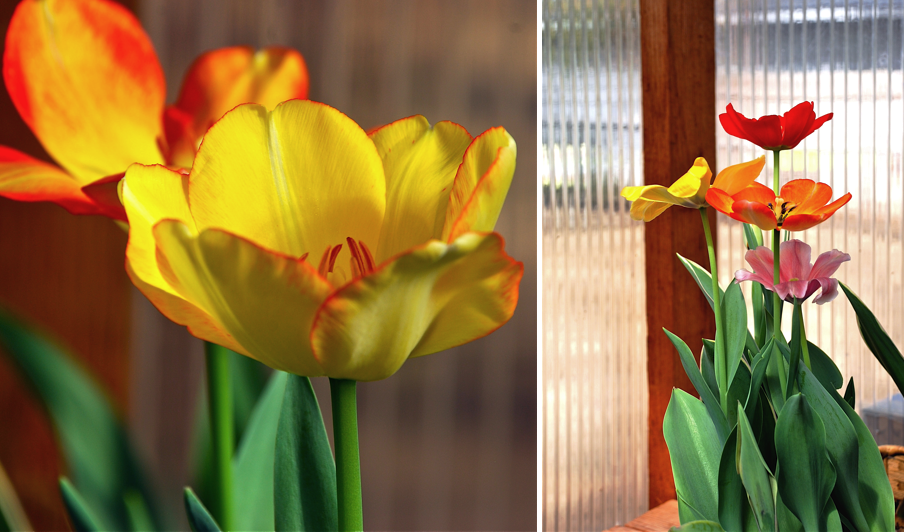
Smitten (v.) – affected suddenly and strongly with a specified feeling; affected mentally or morally with a sudden pang; impressed favorably; charmed; enamored.  I love the word smitten, I love being smitten, I look forward to being smitten, and on days like today I’m in desperate need of being smitten.  And what might the source of my “smittenness” be today?  It’s tulips and daffodils and hyacinths and crocus.  After years of planting bulbs in the ground to little or no avail, I’d resigned myself to being able to admire them until now only in books, magazines, and yards where others somehow have success with them.

Image

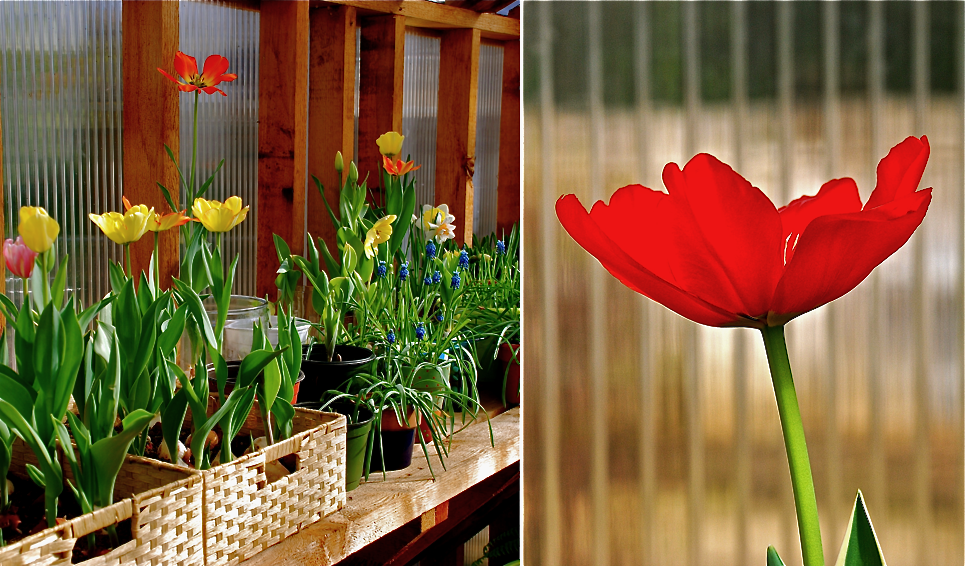
Nothing speaks of springtime louder or more clearly than flowering bulbs.  They are the epitome of spring’s opening opus, and now that my greenhouse is abloom with many of them, it feels like spring is close enough to reach out and touch.  Ah, spring, the season of increased sunlight, warmer temperatures, and the rebirth of fauna and flora, the season when the tilt of the earth relative to the sun is zero, the season which begins one month from today.

Image

For me drinking the drink, tasting the fruit, and resigning myself to the influence of each season as it passes is a way of life that inevitably brings me face to face with Yahweh and Son, the Holy One with whom I am beyond smitten.  Like Tennyson, I’m convinced that if one can understand what a flower is “root and all, and all in all, one should know what God and man is.”

O taste and see that the Lord is good; happy are those who take refuge in Him.  ~Psalm 34:8   ✝

281. There are defeats more triumphant than victories. ~Michel de Montaigne

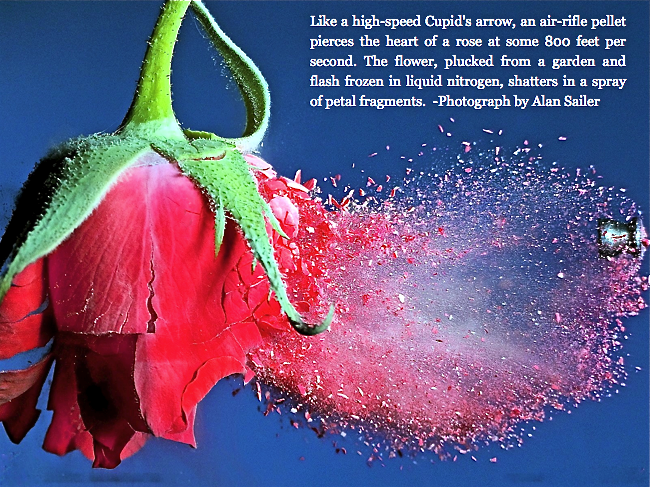
I found this image on the internet, and I’m not sure why I’m so fascinated with it, but I am.  Perhaps it’s because the rose, though now damaged, remains exquisite in color and form or because the spraying bits of freeze-dried petals create a stunning scene.  Or maybe I’m intrigued by the photo because it somehow reassures me that human brokenness touched by God’s grace can produce valuable and worthwhile fruit.  Whatever the case may be, all this pondering about the fragmented rose triggered the memory of the profound story below the photo.

Image

A water bearer in India had two large pots, each hung on each end of a pole which he carried across his neck.  One of the pots had a crack in it, and while the other pot was perfect and always delivered a full portion of water at the end of the long walk from the stream to the master’s house, the cracked pot arrived only half full.  For a full two years this went on daily, with the bearer delivering only one and a half pots full of water in his master’s house.  Of course, the perfect pot was proud of its accomplishments.  But the poor cracked pot was ashamed of its own imperfections, and miserable that it was able to accomplish only half of what it had been made to do. After two years of what it perceived to be a bitter failure, it spoke to the water bearer one day by the stream.  “I am ashamed of myself, and I want to apologize to you.”  “Why?” asked the bearer.  “What are you ashamed of?”  I have been able, for these past two years, to deliver only half my load because this crack in my side causes water to leak out all the way back to your master’s house.  Because of my flaws, you have to do all of this work and you don’t get full value for your efforts,” the pot said. The water bearer felt sorry for the old cracked pot and in his compassion he said, “As we return to the master’s house I want you to notice the beautiful flowers along the path.” Indeed, as they went up the hill, the old cracked pot took notice of the sun warming the beautiful wild flowers on the side of the path, and this cheered it some.  But at the end of the trail, it still felt bad because it had leaked out half its load, and so again it apologized to the bearer for its failure. The bearer said to the pot, “Did you notice that there were flowers only on your side of the path but not on the other pot’s side?  That’s because I have always known about your flaw, and I took advantage of it.  I planted flower seeds on your side of the path, and every day while we walk back from the stream, you’ve watered them.  For two years I have been able to pick these beautiful flowers to decorate my master’s table.  Without you being just the way you are, he would not have this beauty to grace his house.”  ~Author Unknown

Every human “pot” becomes “cracked” in some way, but that does not render the flawed man or woman ugly or useless.  The Creation story in Genesis tells us that each day God looked back at what He had made and saw that it was good.  So, although we humans are imperfect, we started from a place of goodness that is still in us.

Do not remember the sins of my youth and my rebellious ways; according to your love remember me, for you, LORD, are good.  ~Psalm 25:7  ✝

277. In the depths of winter I finally learned that within me there lay an invincible summer. ~Albert Camus

Image

A warm and cheery fire roars merrily
And shadows dance about the darkened room.
Beside the hearth a gardener sits and dreams
Of sunny days, of flowers in full bloom.
Some hollyhocks should tower near the fence,
Bright red ones that the bees can’t help but find.
The trellis at the gate again must wear
Blue morning glories, or the rosy kind.
To lend a bit of distance to the scene,
Close to the rear I’ll plant in shades of blue:
The tall and stately larkspur, double ones­
Of course I’ll put in scabiosa, too.
I couldn’t do without a pansy bed­
Snapdragons make such beautiful bouquets­.
Frilled zinnias and yellow marigolds
Add just the proper touch to autumn days.
The flowers grow and bloom with loveliness
Until a sound destroys the fantasy­
A burning ember falls and I must leave
My garden and my charming reverie.
~Helen Bath Swanson

I will sing to my God a new song: O Lord, you are great and glorious, wonderful in strength, invincible.  ~Judith (Apocrypha) 16:13  ✝

275. Adopt the pace of nature; her secret is patience. ~Ralph Waldo Emerson

Image

This the garden’s magic,
That through the sunny hours
The gardener who tends it,
Himself outgrows his flowers.

He grows by gift of patience,
Since he who sows must know
That only in the Lord’s good time
Does any seedling grow.

He learns from buds unfolding,
From each tight leaf unfurled,
That his own heart, expanding,
Is one with all the world.

He bares his head to sunshine,
His bending back a sign
Of grace, and ev’ry shower becomes
His sacramental wine.

And when at last his labors
Bring forth the very stuff
And substance of all beauty
This is reward enough.
~Marie Nettleton Carroll

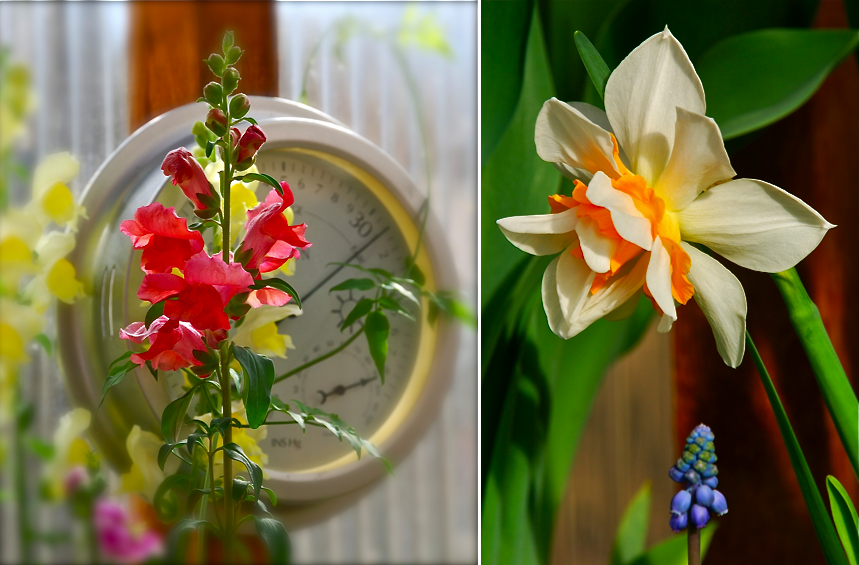
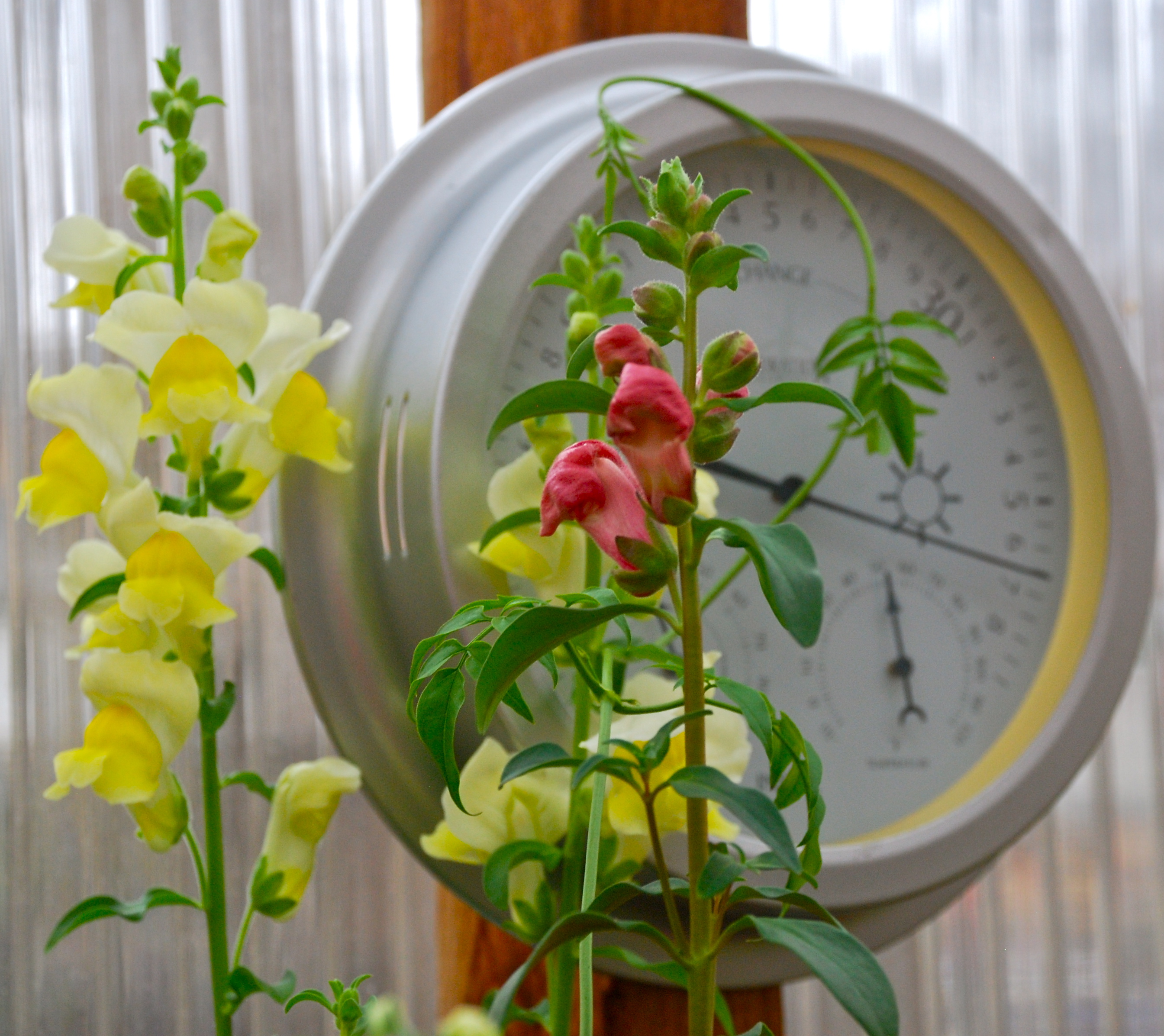
Patience, what a difficult thing to master!  At least it has been and still is for me at times.  But as Emerson and Carroll assert, part of a garden’s magic is the gift of patience.   So among other things I am learning that the anticipation of what unfolds from within the bud is almost as sweet as the blossom itself.  Emory Austen said, “Some days there won’t be a song in your heart.  Sing anyway.”  With that in mind I’m gonna be patient this week, be glad my snapdragons are blooming, believe that rain will come, and sing away as I continue to wait for my tulips to unfurl and this decade-long drought to end.

But if we hope for what we do not see, we wait for it with patience.  ~Romans 8:25  ✝

274. When bright flowers bloom parchment crumbles, my words fade, the pen has dropped… ~Morpheus

He who is born with a silver spoon in his mouth
is generally considered a fortunate person,
but his good fortune is small
compared to that of the happy mortal
who enters the world
with a passion for flowers in his soul.
~Celia Thaxter

Image

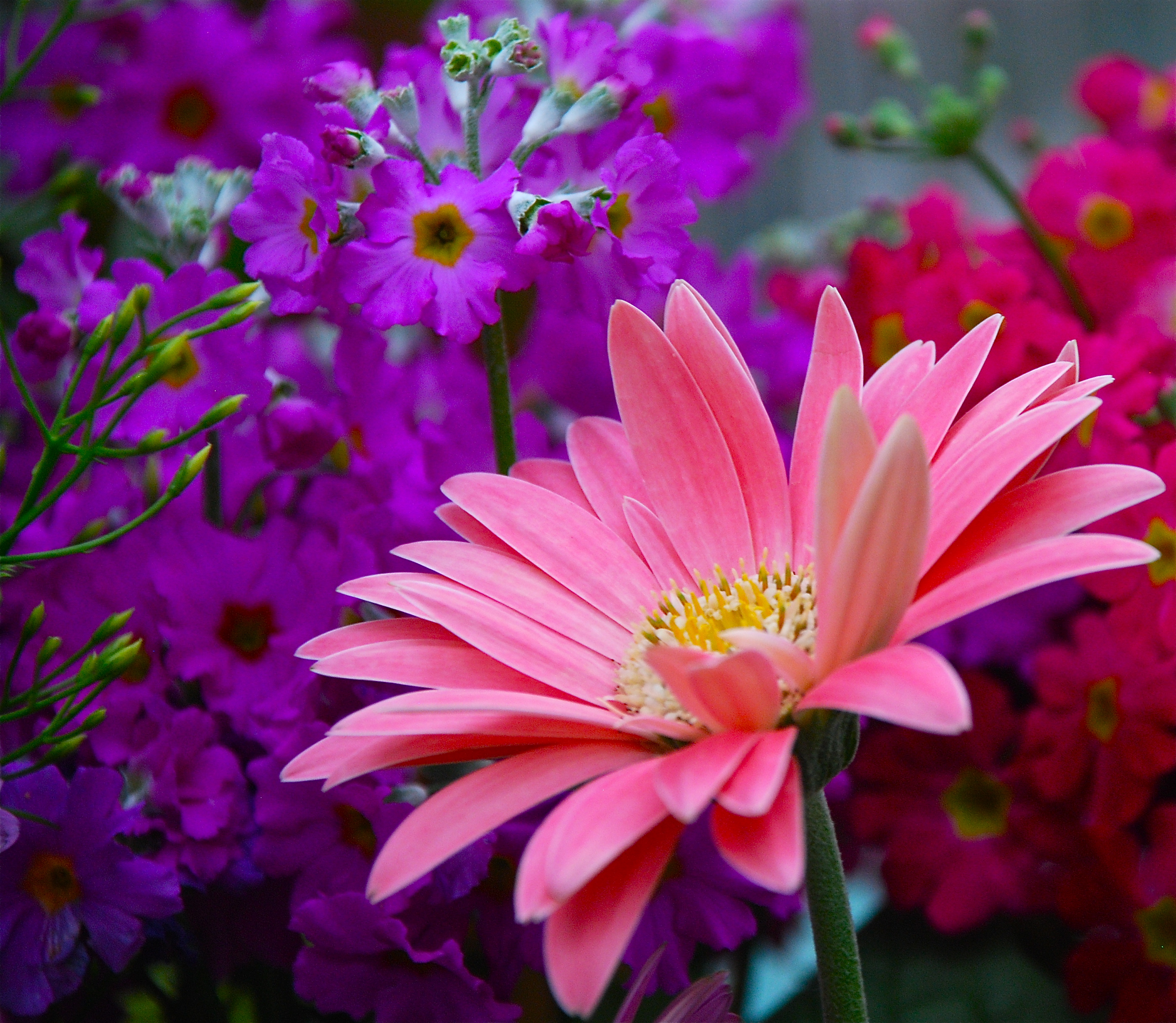
Ambrosia, food or drink of the gods in Greek mythology, brought to Olympus by doves and thought to be a kind of divine exhalation of the Earth–oh how tasty is ambrosia–mouthwatering, yummy ambrosia!  Leastways that’s the first word that comes to my mind when I see flower and color combinations like these is my photo.  But wait, some would say such things can’t be ambrosial because they aren’t food or drink.  And I would have to argue that they are, at least metaphorically speaking, because they are part of earth’s “divine exhalation” that satiates thirst in the spirit and hunger in the soul.   All of Creation shouts to the world that there is a Creator, and such is just one of its many compelling cries–sacred touches, as it were, of a loving God who wants to be found.

Ever since the creation of the world His eternal power and divine nature, invisible though they are, have been understood and seen through the things He has made.  ~Romans 1:20  ✝

**Photo taken in my greenhouse today.