140. All nature sings, and round me rings the music of the spheres. ~Maltbie D. Babcock

This is my Father’s world
He shines in all that’s fair,
In the rustling grass I hear Him pass,
He speaks to me everywhere.
~Lyrics from This is My Father’s World by Maltbie D. Babcock

Image

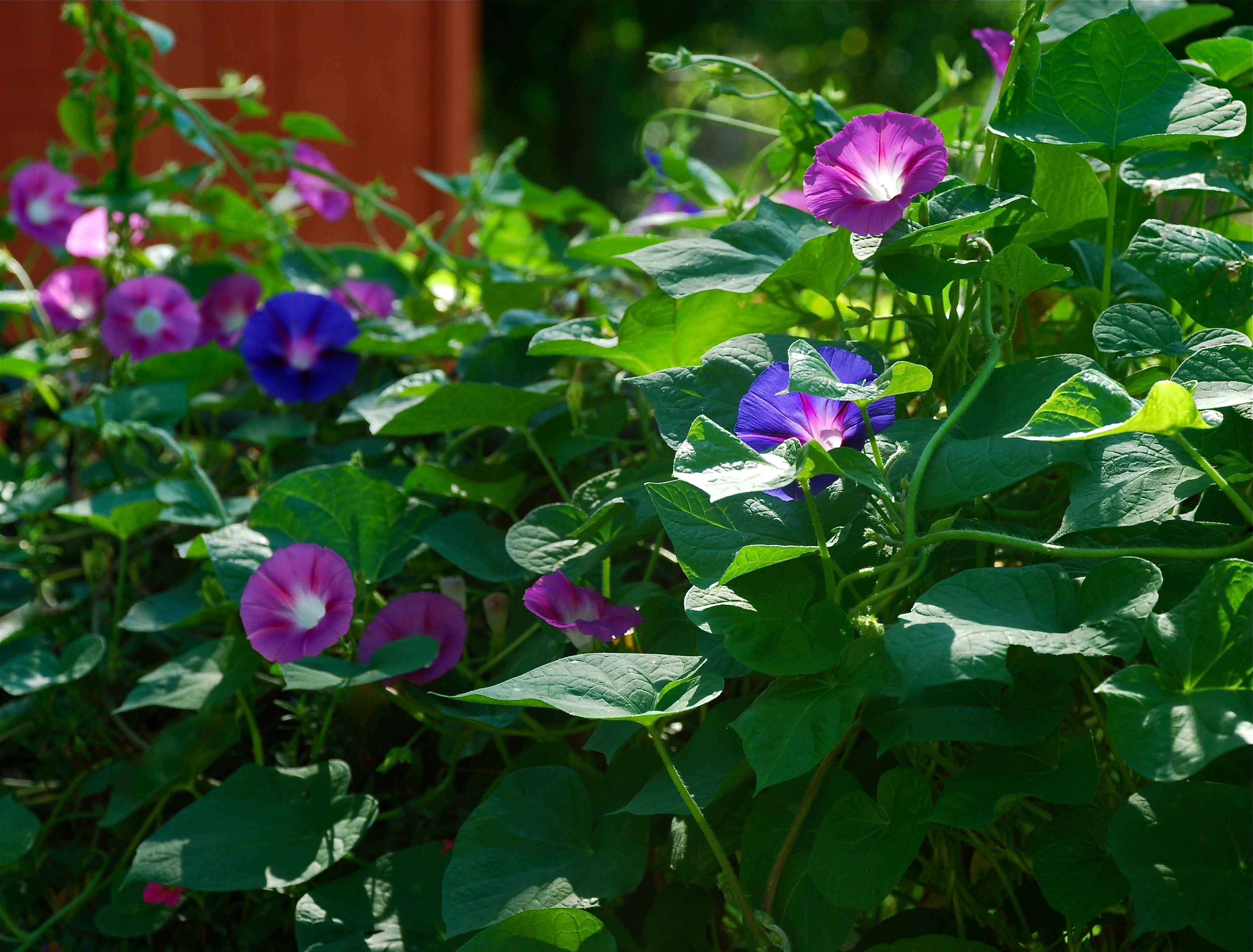
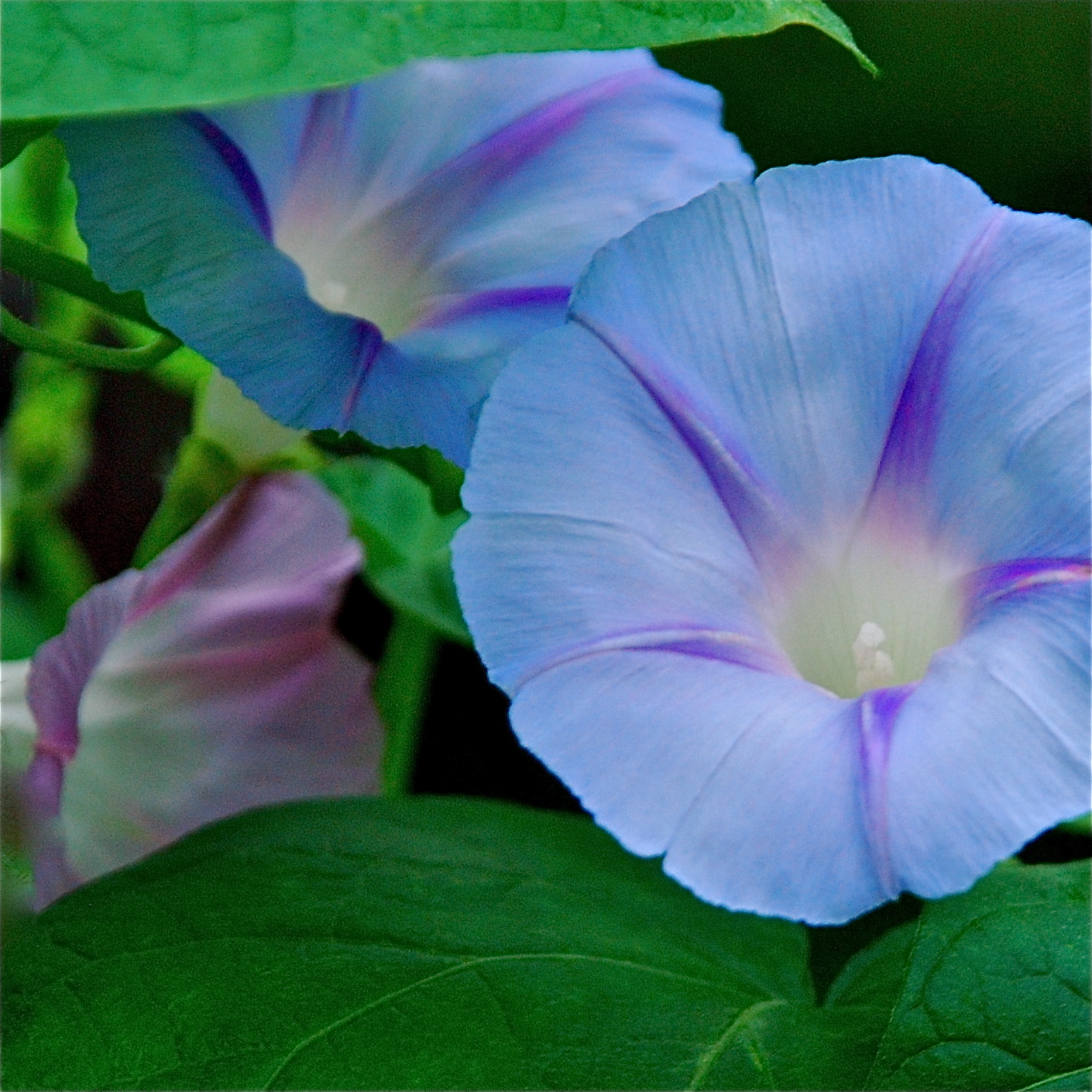
What a glorious morning!  When I raised the shade, my eyes were met with a delicious light pouring down on a corner of the garden.  And it was light not born of the intense heat of past months but instead of the crisp coolness of a 59 degree autumnal equinox morn.  Zephyrs were ruffling leaves, and they were shouting hallelujahs in praise of the Lord’s Sabbath and yesterday’s rain.  Ancient Eden’s unmistakable holy voice reverberated in the air, and all of us, creature and man alike, recognized it and rejoiced.  The “special air of melancholy and magic” typical of September’s opus rose louder and louder as the light moved southward across the yard frosting everything in its wake.  Yahweh’s glory breathed new life into wilted leaves, faded blossoms, and weary bones as the light moved as sweetly as a bow across the strings of a Stradivarius in slanted increments across the yard.

“Arise, shine, for your light has come, and the glory of the Lord rises upon you.”  ~Isaiah 60:1  ✝

*Thanks to Annette Lepple for the great description of September that I quoted above. 

135. As for marigolds, poppies, hollyhocks, and valorous sunflowers, we shall never have a garden without them… ~Henry Ward Beecher

Eagle of flowers! I see thee stand
And on the sun’s noon-glory gaze;
With eye like his, thy lids expand,
And fringe their disk with golden rays:
Though fix’d on earth, in darkness rooted there
Light is thy element, thy dwelling air
Thy prospect heaven.
~The Sunflower by James Montgomery, British editor and poet

Image

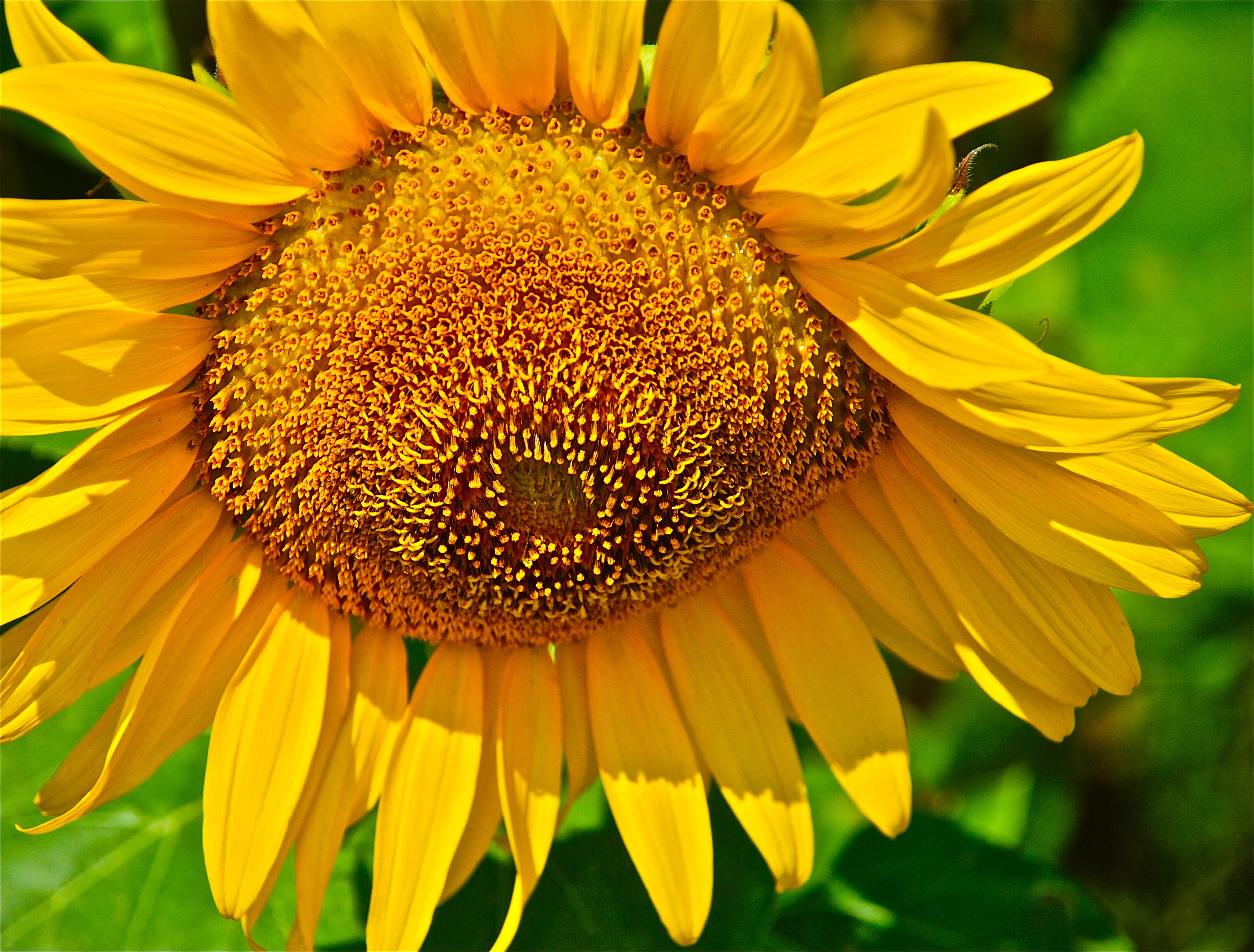
The sunflower with its “gaudy crown of gold” courts the heavenly expanse in search of the sun.  But is that iconic golden spectacle seeking to be prospered by the sun a single flower?  No, each sunflower is actually a cluster of sometimes more than 2,000 small flowers all growing together to mimic the sun and harvest its light.  Amazingly, at maturity some flower heads of the sunflower measure 2 feet across while the plants that hold them up sometimes grow as high as 18 feet.  Henry Ward Beecher additionally said all flowers “have an expression of countenance as much as men or animals.  Some of them seem to smile; some have a sad expression; some are pensive and diffident; others again are plain, honest, and upright, like the broad-faced sunflower. . .”  I agree and adore the plain honesty and uprightness of the sunflower, but in them I also see a touch of elegance in their statuesque stance in the landscape.

This is what the Lord says to me: “I will remain quiet and will look on from my dwelling place, like shimmering heat in the sunshine, like a cloud of dew in the heat of harvest.”  ~Isaiah 18:4   ✝

132. For summer here, bear in mind, is a loitering gossip, that only begins to talk of leaving when September rises to go. ~George W. Cable

Take thy spade,
It is thy pencil;
Take thy seeds, thy plants,
They are your colours.
~William Mason, English poet, editor, and cleric

Image

The level of sand in summer’s hour glass may be low, but, and in spite of August’s  lingering heat, there is yet to come a fair measure of glory in the garden.  The cycle of earth’s fruiting isn’t completely over here in north central Texas until Jack Frost’s frigid touch rings the death knell in mid-November or early December.  So the remaining modicum of flowers will be joined in the coming days and weeks with substantially more blossoms.  Moreover, squirrels aren’t finished gathering nuts, birds have songs yet unsung, pollinators have more rounds to make, and roses have a second flush of blooms to proffer.  But most of all autumn is the time for we who “dwell in gardens” to plant, sow seeds, and raise our voices in gratitude for what the Lord has already graciously given us.

You who dwell in the gardens with friends in attendance, let me hear your voice.  ~Song of Songs 8:13  ✝

130. The fact that I can plant a seed and it becomes a flower, share a bit of knowledge and it becomes another’s, smile at someone and receive a smile in return, are to me continual spiritual exercises. ~Leo Buscaglia

I saw an act of faith today.
A man was on his knees–
not in a pew in a church
but in a garden planting seeds.
~Author Unknown

Image

How awesome it is that living works of flowering art grow out of the dirt under our feet and from something as small and seemingly insignificant as a seed!  Also amazing is the fact that the Holy One planted seeds of greatness with a purpose within each of us.  Then He anointed our words, hands, and actions with the creative power to bring them to fruition.   But the real genius is that what flowers in us drops seeds of increased possibility into the lives of others just like a flower drops seeds in the garden where it grows.

For as the soil makes the sprout come up and a garden causes seeds to grow, so the Sovereign LORD will make righteousness and praise spring up before all nations.  ~Isaiah 61:11    ✝

122. Has the luster of the infinite holiness of God ever shone upon your heart and drawn your heart to him? ~Jeremiah Burroughs

The world is holy.
We are holy.
All life is holy.
Daily prayers are delivered
on the lips of breaking waves,
the whisperings of grasses,
the shimmering of leaves.
~Terry Tempest Williams,
American author and naturalist

Image

I’ve even seen what seems like daily prayers being offered up from the nodding heads of birthing flowers in the garden.  It’s as if they know to reverence life and its Giver.  For we humans reverence for life sometimes comes through the senses for with them we are able to see, hear, smell, touch, and taste Creation’s pervasive holiness.  Moreover, from a power of perception seemingly independent of the five senses we are able to discern the holiness that exists within the human heart.  And why not?  The human heart is, after all, the Divine’s sanctuary, and as such it is the mystical core from which God operates in our lives. To come into that inner place of holiness is to come “home” in a way for therein croons the voice, soft and sweet, of a loving Father.  If we strive to listen to and obey His still, small Voice, a well within is filled with the mercy, forgiveness, and love needed for us to blossom into a purposeful anointing.  Surely even the angels stand in awe of such as this.

. . . by the power of God, who has saved us and called us to a holy life—not because of anything we have done but because of His own purpose and grace.   ~2 Timothy 1:9   ✝

120. Every happening, great and small, is a parable whereby God speaks to us, and the art of life is to get the message. ~Malcolm Muggeridge

The world has different owners at sunrise. . .
Even your own garden does not belong to you.
Rabbits and blackbirds have the lawns;
a tortoise-shell cat who never appears in daytime
patrols the brick walls,
and a golden-tailed pheasant
glints his way through the iris spears.
~Anne Morrow Lindbergh,
pioneering American aviator and author

Image

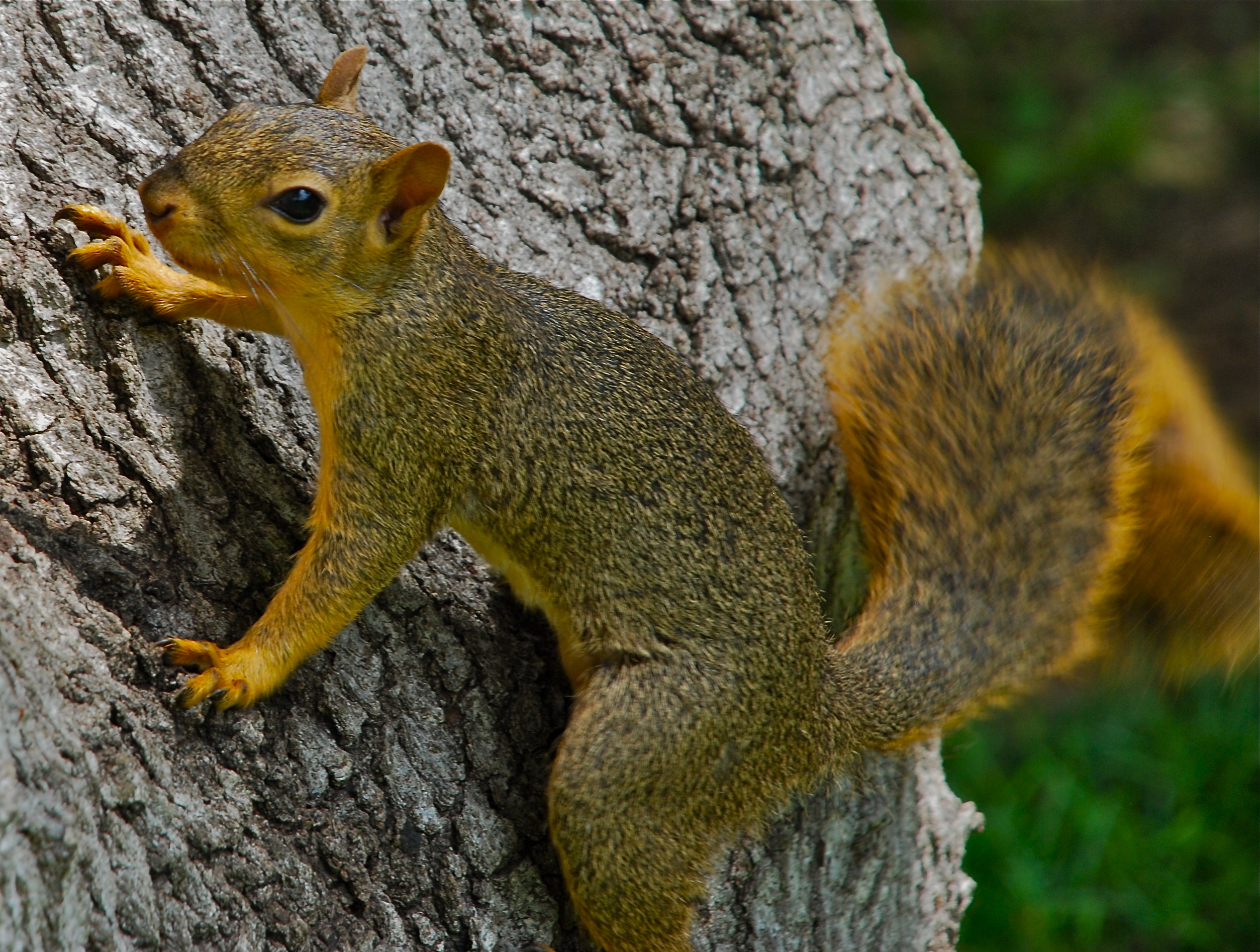
In my yard are squirrels instead of rabbits, mockingbirds instead of blackbirds, an assortment of stray cats instead of one tortoise-shell cat, and garter snakes that slither through the grass instead of a pheasant that glints his way through the iris spear.  So it is that my yard has as Lindbergh penned “different owners at sunrise.”  But since I planted everything for the wildlife as much as for me, why shouldn’t they come and sometimes in large numbers all through the day and night.

J. Philip Newell says that God’s glory glows “in the glistening of a creature’s eyes” as well as in “every emanation of creation’s life,” and that we can reverence God “in all that has life.”  My guess is that’s why some people garden in the first place.  We are fascinated by and delighted with the flowers and the wildlife, but we long for the presence of God into our green temples–that Presence that we feel and see in tiny buds breaking the soil, in pinkish purply glows in the eastern sky, in a silver slivers of the moon in the darkness of night, or in the delicious stillnesses in the garden as day passes into night.

For since the creation of the world God’s invisible qualities—his eternal power and divine nature—have been clearly seen, being understood from what has been made. . .  ~Romans 1:20   ✝

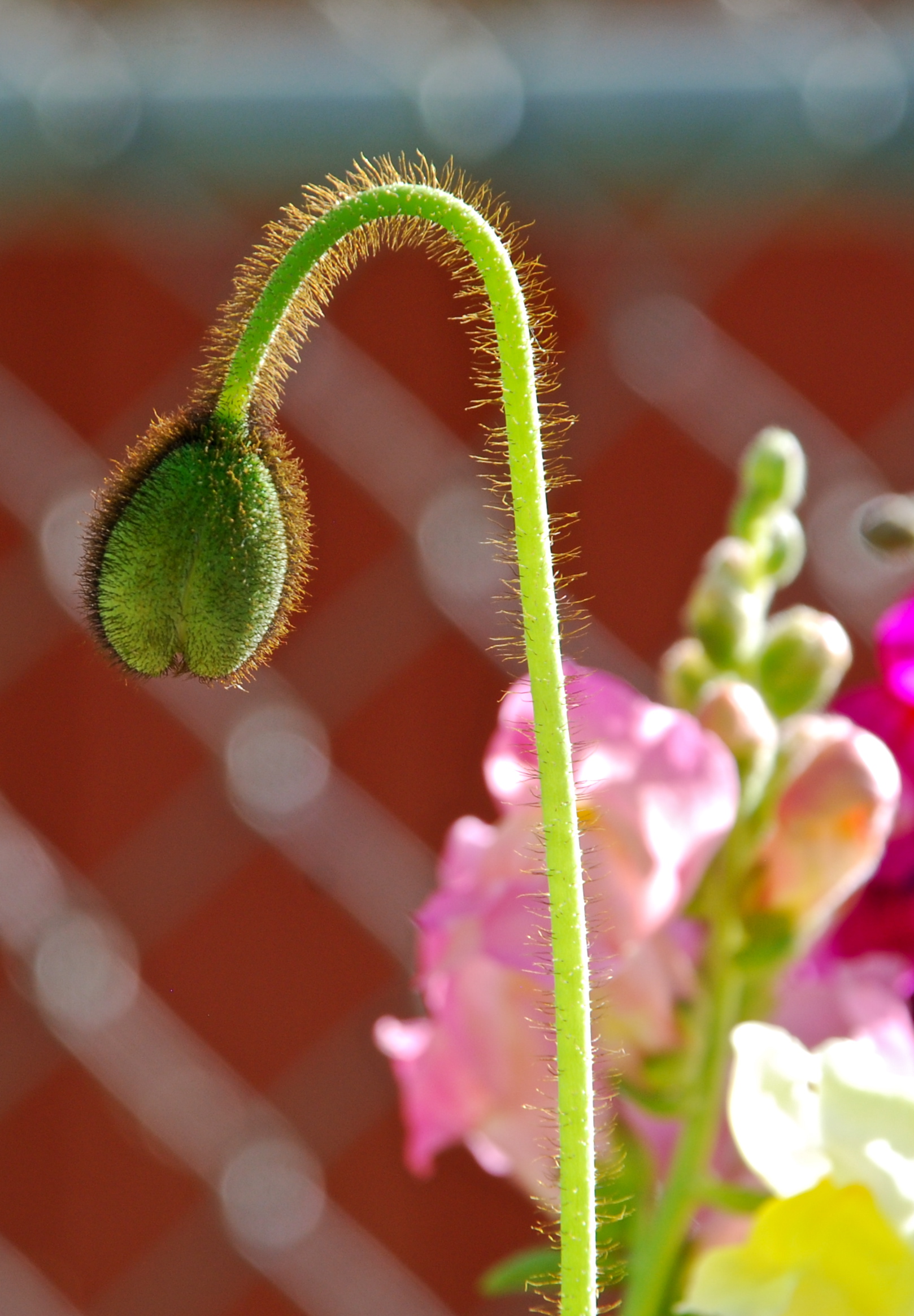
76. Through the dancing poppies stole a breeze most softly lulling to my soul. ~John Keats

Of all the wonderful things in the wonderful universe of God,
nothing seems to me more surprising than the planting of a seed
in the blank earth and the result thereof.
Take the Poppy seed, for instance: it lies in your palm,
the merest atom of matter, hardly visible, a speck, a pin’s point in bulk,
but within it is imprisoned a spirit of beauty ineffable,
which will break its bonds and emerge from the dark ground
and blossom in a splendor so dazzling as to baffle all powers of description.
~Celia Thaxter

Image

I love poppies, not just the flowers but also the lovely, fat pods that contain the future of the species.  The plants that put on silky, paper-thin blossoms can grow to be 3 or 4 feet tall here if the “hardly visible” seeds are sown in the fall.  So it is that in late October I toss out seeds from the ones I harvested from last’s years pods, and then all winter long I wait for the beauties which “baffle description” to make their appearance in my garden.  As winter moves along, I keep myself reassured by going out to check on them after especially frigid days or after occasional snowfalls to make sure the burgeoning “babies” have not succumbed to the elements.  And each time I go out, I almost squeal with delight when I discover that most of them, if not all, are still slowly but surely growing bigger and stronger.  Then sometime in the early spring the day comes when the waiting is over and standing before me are the first fruits of my labors and watchfulness.  Like dainty chalices, the cup-like flowers open up and drink in the day’s light while penning God’s autograph on the “scenes” of yet another springtime.  Day by day after each individual flower’s petals fall to the ground, the intriguing seed pods take their place, and as temperatures climb, they begin to ripen.  Some of these I eventually let fall to the ground to self sow; the remainder I gather and keep safe and dry until autumn comes and it is again time for me to partner with Creation and scatter abroad the “merest atoms” of such beautiful matter.

For as the soil makes the sprout come up and a garden causes seeds to grow, so the Sovereign Lord will make righteousness and praise spring up before all nations.  ~Isaiah 61:11

72. Come, fill the Cup, . . . the Bird of time has but a little way to fly–and Lo! the Bird is on the wing. ~Omar Khayyám

The Moving Finger writes; and having writ,
Moves on: nor all your Piety nor Wit
Shall lure it back to cancel half a Line,
Nor all your Tears wash out a Word of it.
~Rubaiyat, Omar Khayyám, 11th century Persian poet

Image

In my twenties, I came face to face with the reality of what this Persian poet articulated in the Rubaiyat, but thankfully in my thirties I also realized that every spring all that God created begins again.  So even though I have no a chance to do anything about the past, in the season of restoration and rebirth God built into the fabric of Creation, I can forge on with writing new stories and/or penning different endings to ones not yet finished.  However, lest I get too comfortable in dalliances a long the way and to show how quickly what the poem’s author revealed can come about, I must remember that a new year’s garden progeny and its days come and go quickly, and when done they are never, as Khayyám said, to be lured back nor washed away by tears.  So with every spending of my time coins, I must seize opportunities opening to blushes of newness.  Scripture may tell the world that the “birthing and restoring” of new years will go on “as long as earth endures,” but last November’s brush with death taught me to make the most of each day and not rely on what I, myself, may not be given.

The best things in life are nearest:
Breath in your nostrils, light in your eyes, flowers at your feet,
duties at your hand, the path of right just before you.
Then do not grasp at the stars, but do life’s plain, common work as it comes,
certain that daily duties and daily bread are the sweetest things in life.
~Robert Louis Stevenson, Scottish poet

“As long as the earth endures, seedtime and harvest, cold and heat, summer and winter, day and night will never cease.”  ~Genesis 8:22   ✝

60. That God once loved a garden we learn in Holy writ. And seeing gardens in the Spring I well can credit it. ~Winifred Mary Letts

With the birth of the creatures there is
the emergence of seeing, hearing,
smelling, tasting, and touching.
The light of the sun and the whiteness
of the moon can now be seen.
The wind blowing through the leaves
of the trees and the crashing
of ocean waves can be heard.
The early morning fragrance of
the earth can be smelled.
Its fruits can be tasted and
its textures touched.
~Excerpted lines by J. Philip Newell

Image

Springtime is so much “a showing forth of the mystery of God” that if one wants to know more of the Creator, all he/she needs do is pull up a chair in a garden and watch the year’s first season unfold.  Seeking the goodness of God and what He made by being still therein and listening to the Holy Spirit as well as Creation’s rhythms is a way of bringing the Heavenly Father closer.  In that nearness one is then able to look through eyes that recognize the depth of His and Creation’s  goodness.

And the LORD said, “I will cause all my goodness to pass in front of you, and I will proclaim my name, the LORD, in your presence. I will have mercy on whom I will have mercy, and I will have compassion on whom I will have compassion.  ~Exodus 33:19   ✝

22. Until one has loved an animal, a part of one’s soul remains unawakened. ~Anatole France

Most cats do not approach humans recklessly.
The possibility of weapons, clods, or sticks
tend to make them reserved. . .
Much ceremony must be observed,
and a number of diplomatic feelers put out,
before establishing a state of truce.
~Lloyd Alexander
Image

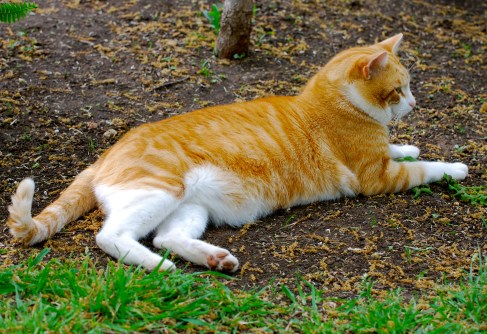
A beautiful stray cat came into our world some time back, and slowly but surely we managed to earn some of his trust.  From his size at the time he started coming into our yard we decided he was about a year old, and from his behavior it was apparent he had had some unfriendly encounters with humans.  However, as time went on he seemed to take more and more of a liking to us, and eventually he chose to stay in our yard most of the time.  As he became more accustomed to our presence, he started letting us get close enough to pet him.  Then one day he began loving us back in the way that feral cats do, but the exchanges were always done with that predictable element of guarded caution.  For example when I’d be out working in the yard, he’d follow me wherever I went and throw himself down to nap while I worked, but he never fell so fast asleep or got so close that he couldn’t make a fast get away if need be.  As the months passed he became more accepting of us, so much so that he followed me into my studio one afternoon and napped there.  Subsequently that became a daily thing, and he would even remain there on cold, cold nights.  After that winter, we were so in hopes he would one day let us pick him up and get him in a carrier to go to the vet’s for his shots and neutering.  Sadly though his trust fell just short of that.

The cat clawed its way into my heart
and wouldn’t let go. . .
When you’re used to hearing purring
and suddenly it’s gone, it’s hard to silence
the blaring sound of sadness.
~Missy Altijd

For a short period of time this yellow cat we named Beastie called our yard his home. We had managed to establish “a state of truce” with him, but as it turned out it was never going to be a complete surrender.   One day the call of the wild became much stronger than the call of the safe and secure.  The first time he left us, he was only gone for 6 days, but then he left again the next day for another 5 days.  After the third departure we never saw him again.  What became of our little feline friend we’ll never know.

Give sorrow words;
the grief that does not speak
whispers the o’er fraught heart
and bids it break.
~William Shakespeare

When Beastie disappeared for good, he took pieces of my heart with him, and if I hadn’t given my grief to words, as Shakespeare suggests, I fear my “fraught” heart would have broken and all its chambers flooded with tears.  Jean Burden was right when she said, “Prowling his own quiet backyard or asleep by the fire, a cat is still only a whisker away from the wilds.”  The Beast Man was never far from his feral beginnings, and when the wild called, he could do naught but answer.  Agnes Repplier summed it up best when she said, “it’s impossible to banish these alert, gentle, and discriminating little friends, who give us just enough of their regard and complaisance to make us hunger for more.”  Indeed, I have hungered for more ever since; in fact I’m still hungering and hurting because there’s no more of his sweet life to be shared.  My big backyard that I love so much seems like an empty and lonely place without that “silly” yellow cat to keep me company.  He was a confidant and consultant in my garden dreams and schemes, and I was his protector from pesky mockingbirds wanting to keep him from their nests and from any and all suspicious human interlopers.  I know I need to put this behind me and move on, but it has been a long time since grief has had so heavy a hold on my heart.  There was just something compelling and charming about that sweet boy, and he, a cherished presence too soon lost, will be forever missed.