337. We could never have loved the earth so well if we had had no childhood in it. ~George Eliot

I’d give all the wealth that years have piled,
The slow result of Life’s decay,
To be once more a little child
For one bright summer day.
~Lewis Carroll
Image

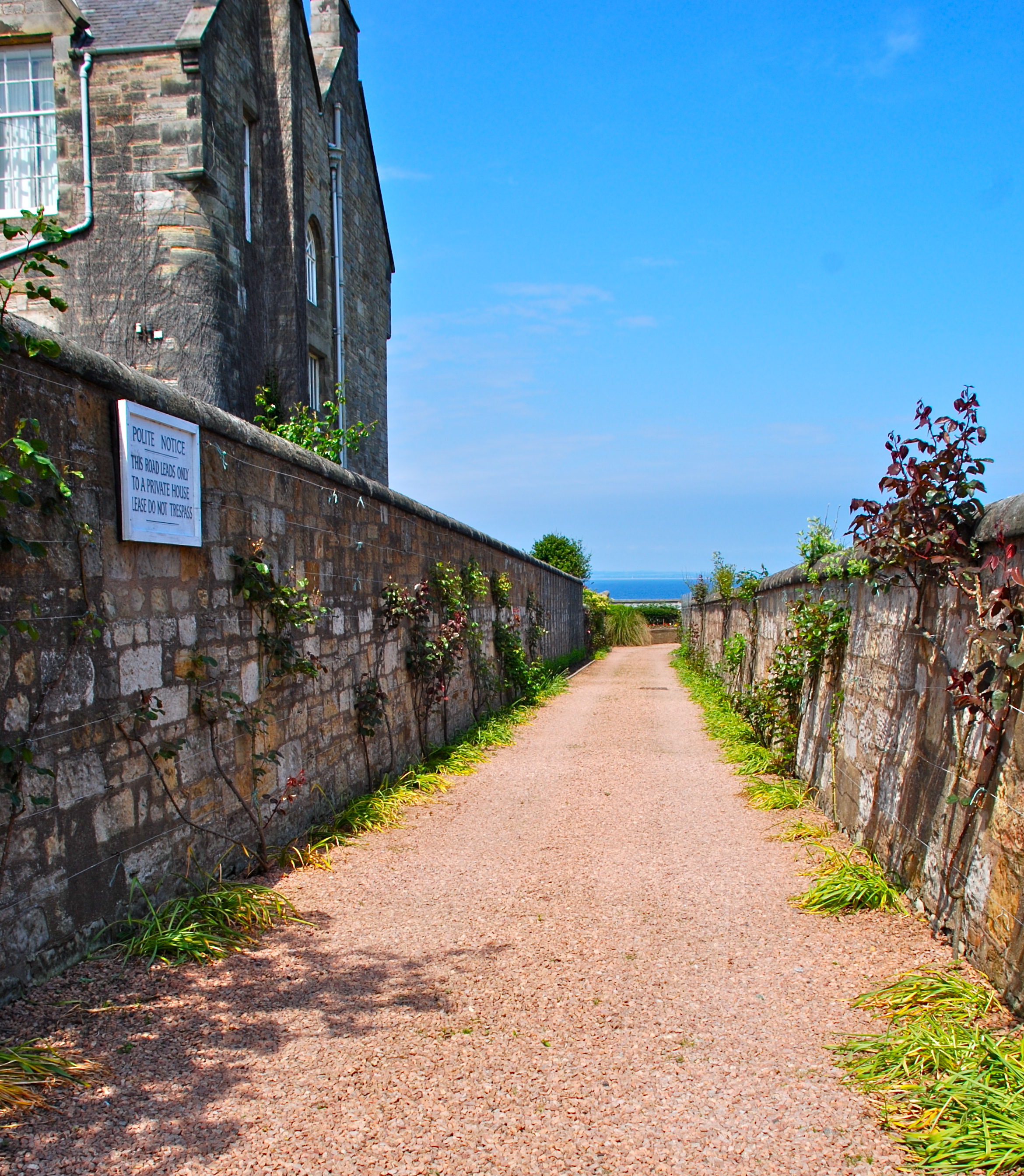
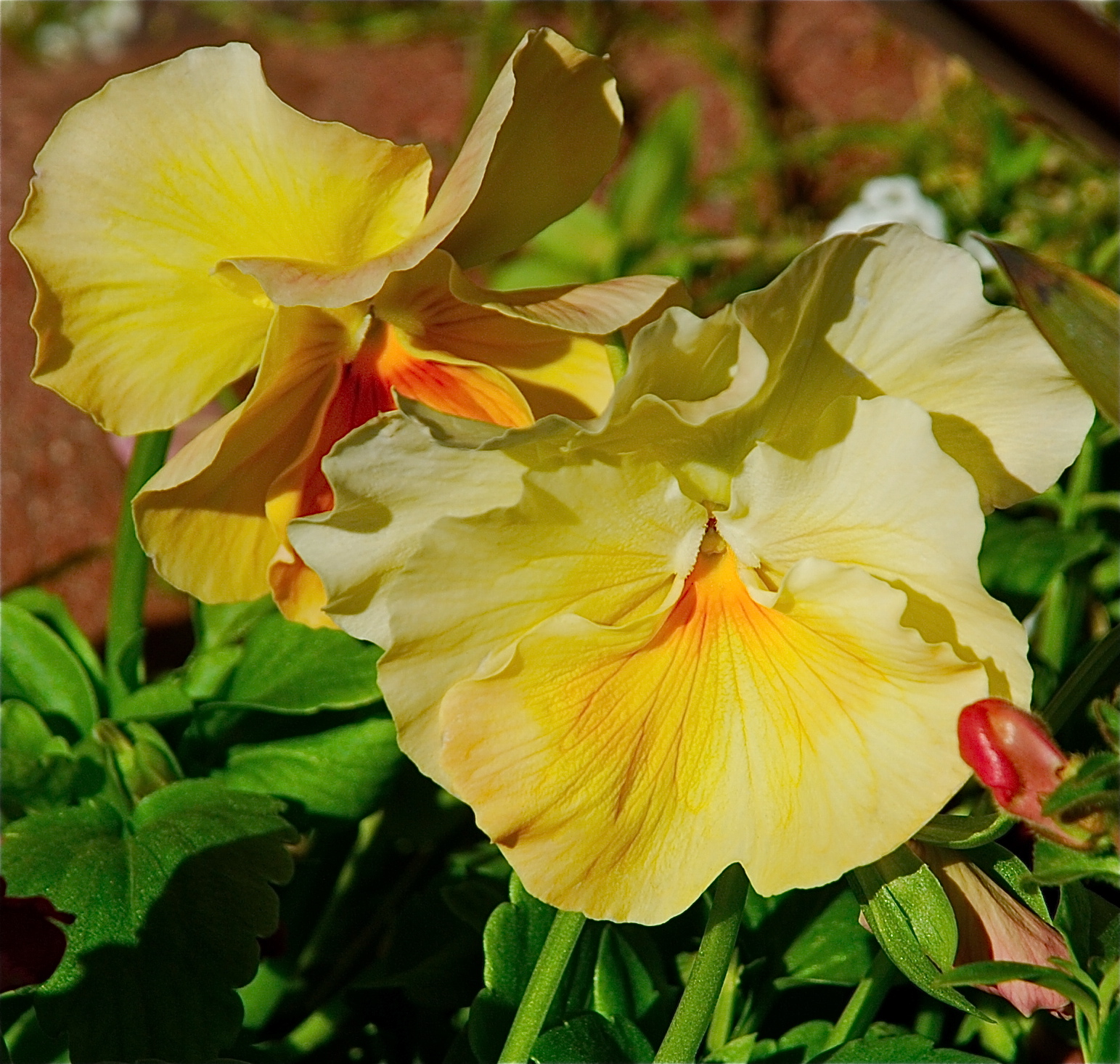
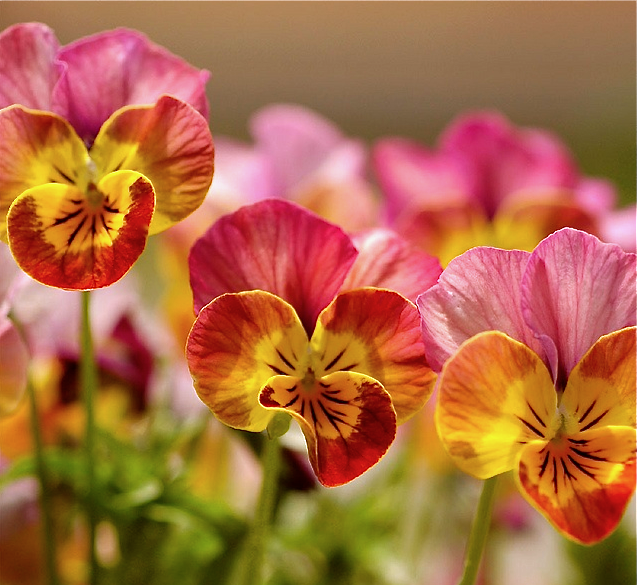
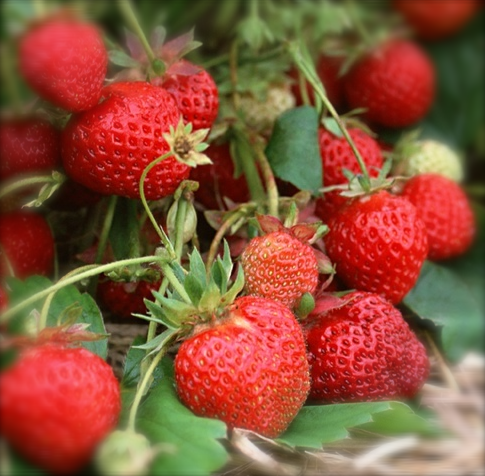
The sidewalks were long and narrow that ran between the stucco houses, and high was the exterior wall of the two-story duplex two doors down from us on the seaward end of the block. At the base of that duplex’s stucco wall was an elongated flower bed filled with pansies and strawberries, and about halfway down the wall was a door that separated the flower bed into two sections. Behind the door was a storage area, a closet of sorts, filled with all kinds of fascinating objects. Because the closet was under the front stairwell of the two story structure, it was one of those odd-shaped little niches with a downward sloping ceiling on one end. In the closet’s mysterious, deeper recesses were all kinds of tools. When the door to the closet was ajar, it meant Uncle was inside sitting on his stool and working on a yard or household task Auntie had commissioned. The “doghouse” as he called it, was a rich and irresistible den of curiosities for a young child, and in it with Uncle as tutor-in-residence I not only learned but also fell in love with a myriad of things. The closet with its earthy smells and assorted contraptions was a magical place, and the gardening tools were as provocative a sight for young eyes as the images of the storybook gardens they conjured up. Decades later when a friend commented that I live close to nature, I thought of that closet again and realized the lasting impression that it and Uncle had made on my life. Then and there in a place that smelled of soil and sea I came to love and respect the earth for its charming and sometimes “shy presences”–the visible ones, the audible ones, the tangible ones, even the ones that dwelt in dim obscurity. Uncle’s closet and his tales gave birth to “stirrings” that ultimately led me to believe that all Creation is a gift to be cherished and that its Maker is to be adored and praised.
Image

The LORD is my strength and my song; He has become my salvation. He is my God, and I will praise Him, my father’s God, and I will exalt Him. ~Exodus 15:2  ✝
Image

Thank you, Lord Jesus, that you save, you heal, you restore, and you reveal Your Father’s heart to us! You have captured me with grace and I’m caught in Your infinite embrace!

**Images via Pinterest
269. Will not a tiny speck very close to our vision blot out the glory of the world and leave only a margin by which we see the blot. ~George Eliot

You shall see them
on a beautiful quarto page,
where a neat rivulet of text shall meander
through a meadow of margin.
~Excerpt from “School for Scandal” by
Richard Brinsley Sheridan

Image

Image

Margins–our lives are lived within all kinds of marginal edges.  In botany and entomology scientists talk of margins when they cite data about borders around leaves or the borders of insect wings.  The earth itself has what I think of as margins.  For example, phenomena like mountains, rivers, forests, or oceans hold things within or without; walled constructs built by the sea are held by nature and man.  Even our written documents and texts are kept inside a border of blank space called a margin.  In literary works poets and novelists speak of garden walls as the margins around growing spaces.  The margins around my backyard gardening spaces as well as the ones in public gardens I visit are fences.  Interestingly, at one time the margins around my yard were solely the fence lines, but now it is contained within its confines in places by an assortment of trees, some planted by human hands, others that sprang up by their own devices.

In the scriptural passage below God is telling the people of Jerusalem that although they are in a city without walls, He will protect them by being the barrier between them and their enemies.  The Lord does that for His children even when they misuse the reins of free will to wander poorly chosen worldly paths. Fortunately for us we never get so far down those potentially dangerous paths that we are out from under the spread of Yahweh’s mighty wings of grace.  When asked, He will pull us into a walled sanctuary where His forgiveness is an ever-standing offer for contrite hearts.  And as a fellow blogger noted, He walls our hearts with His love.

“And I myself will be a wall of fire around it,” declares the Lord, “and I will be its glory within.  ~Zechariah 2:5  ✝

260. The shortest day has passed, and whatever nastiness of weather we may look forward to in January and February, at least we notice that the days are getting longer. ~Vita Sackville-West

January is the quietest month in the garden.
. . .But just because is looks quiet
doesn’t mean that nothing is happening.
The soil, open to the sky, absorbs the pure rainfall
while microorganisms convert tilled-under fodder
into usable nutrients for the next crop of plants.
The feasting earthworms tunnel along,
aerating the soil and preparing it to welcome
the seeds and bare roots to come.
~Rosalie Muller Wright

Image

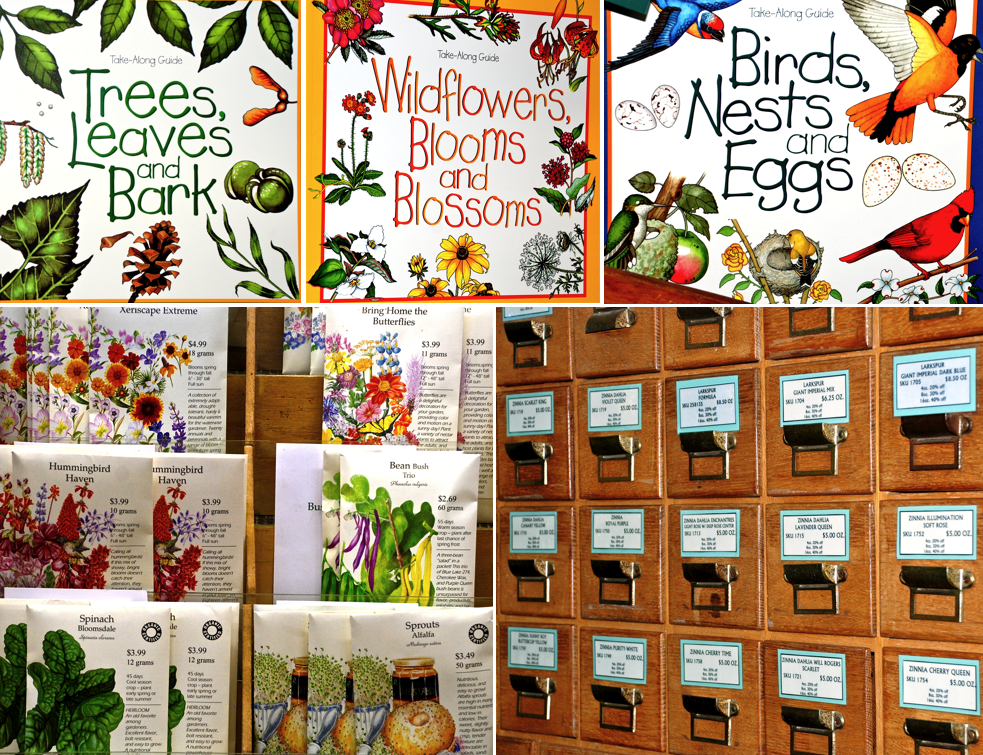
I’ve heard it said that “the color of springtime is in the flowers” whereas “the color of winter is in the imagination.”  Thankfully I’ve got a good imagination, and when that fails, I have a large collection of photos to look back on because by the end of January my spirit is in dire need of a boost.  A place I like to frequent also helps to keep my imagination alive and well.  It’s a nursery, and this particular Dallas nursery not only has a great selection of flowers during the growing seasons, but year round it has all sorts of indoor plants too.  In addition  to the plants it has an oak cabinet with drawers full of fascinating seeds, racks of seed packets, shelves filled with gardening books, and an array of tools.  So between the plant and seed catalogs that start arriving in the mail after Christmas and my visits to Nicholson-Hardie’s nursery, the “dream” is kept alive even when the under-the-surface busy but ravaged-atop January garden appears to be completely shut down.  And it is this “stuff” of which gardener’s dreams are made that keeps my imagination churning and my head full of schemes, schemes that are the spice of a gardener’s life.  What a blessing is our memory, our imagination, and our ability to dream; God is so good.

I will praise the name of God with a song; I will magnify Him with thanksgiving.  ~Psalm 69:30  ✝

259. If you look the right way, you can see that the whole world is a garden. ~From THE SECRET GARDEN by Frances Hodgson Burnett

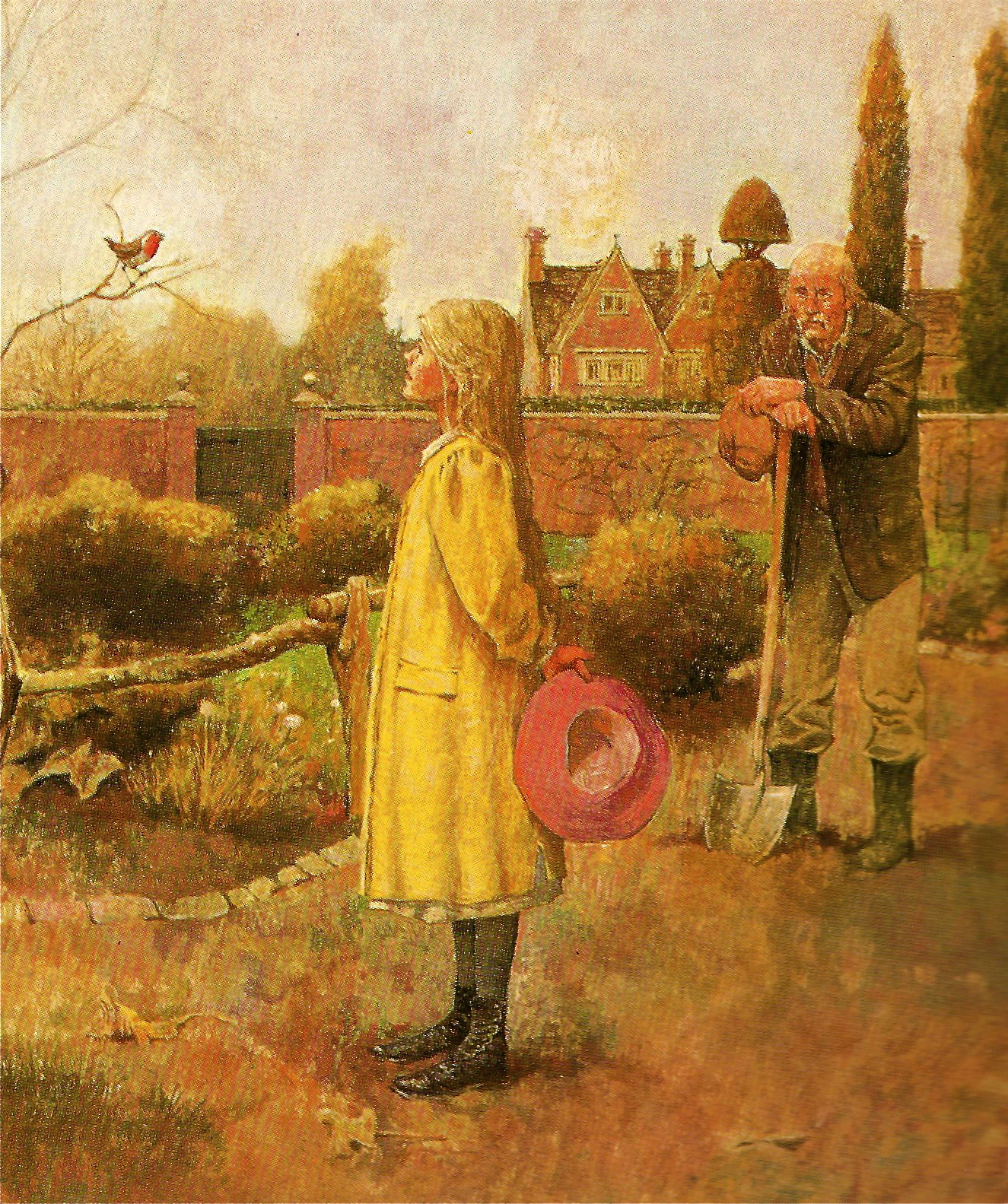
At that moment a very good thing was happening to her. Four good things had happened to her, in fact, since she came to Misselthwaite Manor. She had felt as if she had understood a robin and that he had understood her; she had run in the wind until her blood had grown warm; she had been healthily hungry for the first time in her life; and she had found out what it was to be sorry for someone.  ~Excerpted from THE SECRET GARDEN by Frances Hodgson Burnett

Image

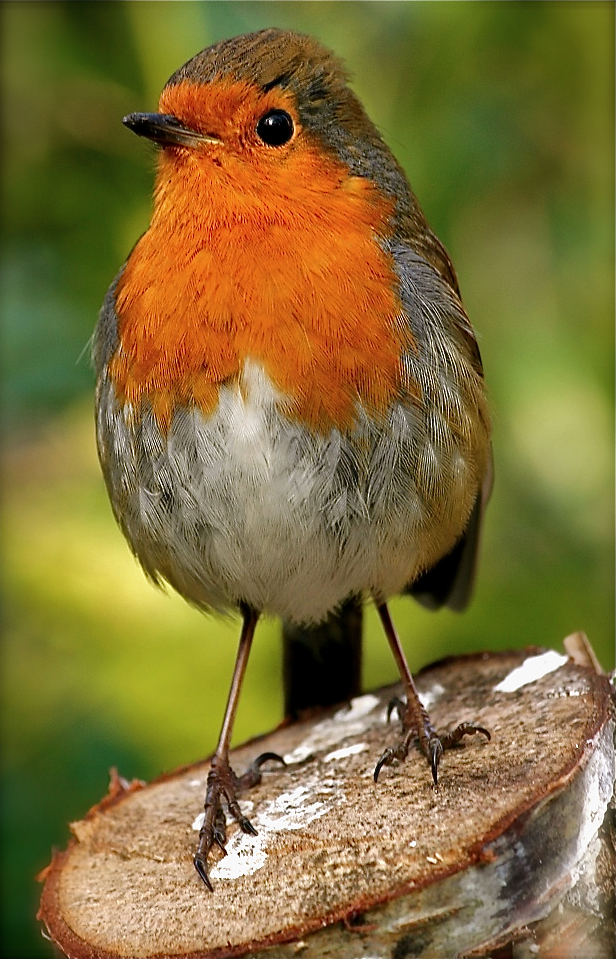
My first move of the day is from the bed to my recliner so I can sit a while and enjoy whatever is going on out in the yard.  I’ve still not seen any robins, but as I kept watching the Cardinals come today to my feeders, their flashes of red were enough to bring thoughts of Burnett’s novel, The SECRET GARDEN. Her inspirational tale of transformation and empowerment for two children with very dim outlooks and prospects touches my heart on several different levels.  When Mary finds the key to the secret garden, the “magical” powers of transformation come within her reach, and eventually she and Colin are “saved” and offered the prospects of present and future goodness and happiness.  I didn’t begin gardening until much later in life than they, but my discovery of the healing power inherent in all living things and God’s abiding presence in Creation was a pivotal moment of transformation in my life as well.  So I decided to post some lines from the novel tonight along with photographs (via Pinterest) in hopes of relaying the Divine’s “magic” that captured Mary, Colin, and me.

“Nothing in the world is quite as adorably lovely as a robin when he shows off and they are nearly always doing it.”

Image

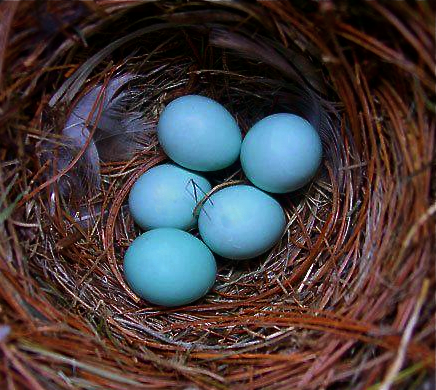
“…the immense, tender, terrible, heart-breaking beauty and solemnity of Eggs.”

Image

“Never thee stop believin’ in th’ Big Good Thing an’ knowin’ th’ world’s full of it – and call it what tha’ likes. Tha’ wert singin’ to it when I come into t’ garden.”

Image

“There’s naught as nice as th’ smell o’ good clean earth, except th’ smell o’ fresh growin’ things when th’ rain falls on ’em.”

Image

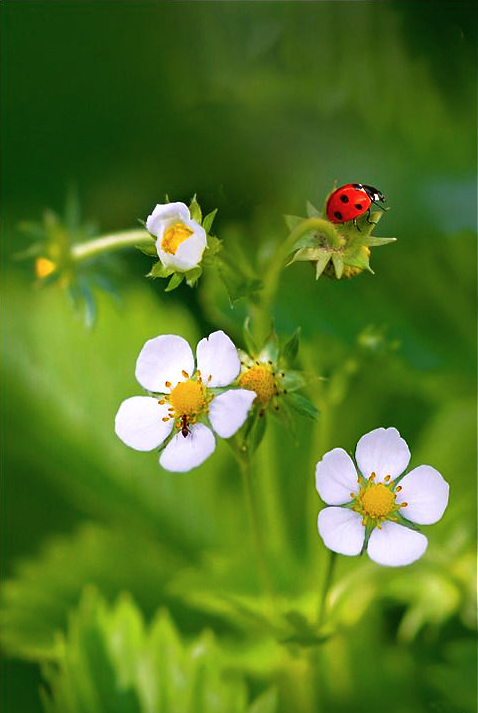
“And the secret garden bloomed and bloomed and every morning revealed new miracles.”

Image

“However many years she lived, Mary always felt that ‘she should never forget that first morning when her garden began to grow.”

Image

The Lord is my strength and my might, and He has become my salvation; this is my God, and I will praise Him, my father’s God, and I will exalt him.  ~Exodus 15:2  ✝

211. I go to nature to be soothed and healed, and to have my senses put in order. ~John Burroughs

Experience has taught me this,
that we undo ourselves by impatience.
Misfortunes have their life and their limits,
their sickness and their health.
~Michel de Montaigne, an influential writer of the French Renaissance

Image

Since I began gardening each season of the year has sent my senses reeling.  Seasonal beginnings bewitch me beyond measure with their new colors, their new shapes, and their new textures.  And in the maelstrom of those first sensory delights before any sort of rhythmic repetitiveness sets in, there is something soothing and therapeutic for  the healing of spiritual or physical wounds.  It’s as if there’s an ointment or a medicinal elixir in the uptake of each particular season’s magic and mystery that boosts endorphins and spurs on the healing process.  Or maybe the analgesic lies simply in the process of moving from one season to the next, each one proclaiming that everything is limited, even the worst of things, and that eventually everything passes into something new and fresh.

He changes times and seasons; He deposes kings and raises up others.  He gives wisdom to the wise and knowledge to the discerning.  ~Daniel 2:21  ✝

161. The glory of gardening: hands in the dirt, head in the sun, heart with nature. ~Alfred Austin

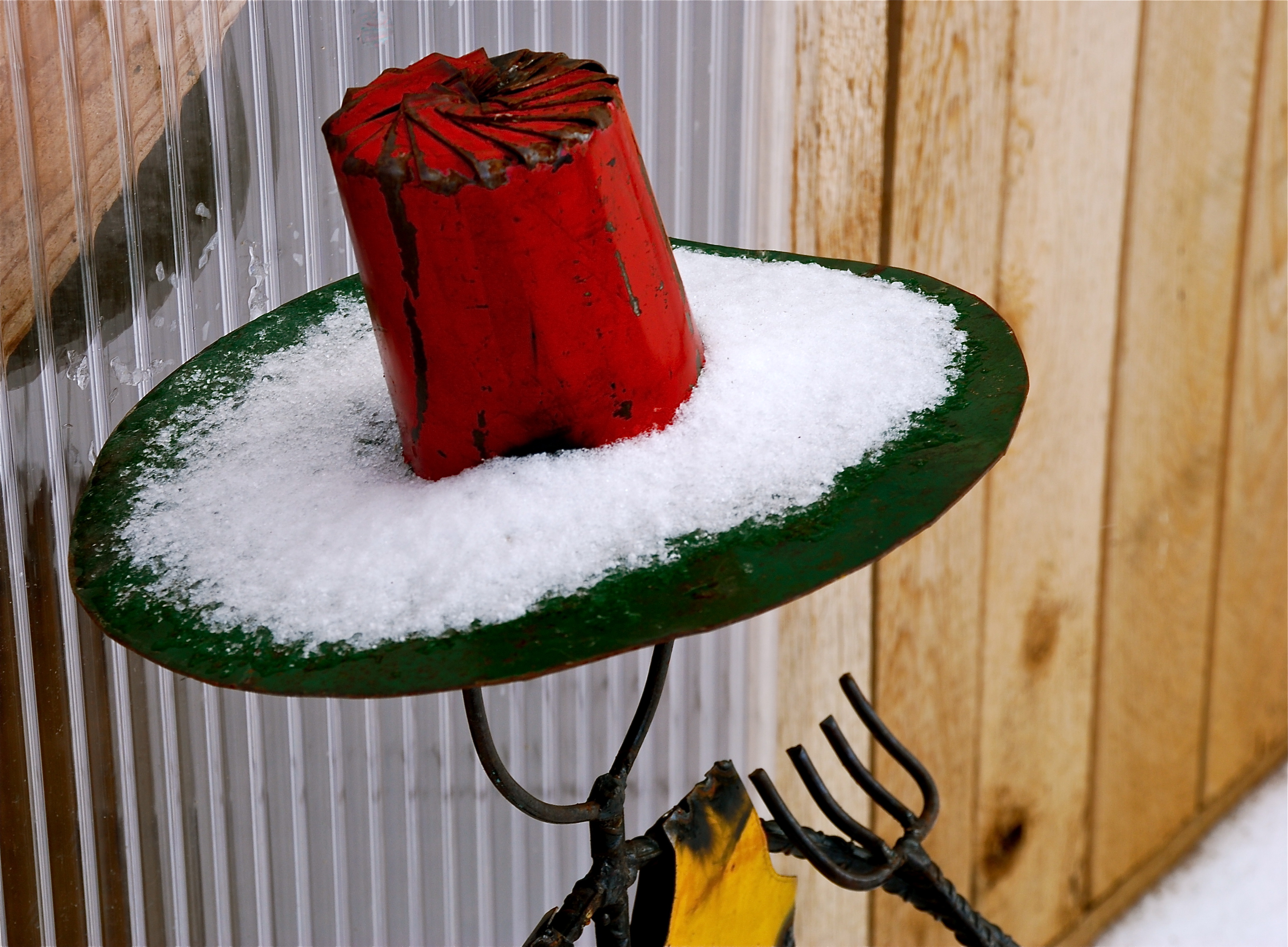
So deeply is the gardener’s instinct implanted in my soul
that I really love the tools with which I work –
the iron fork, the spade, the hoe, the rake, the trowel,
and the watering pots are pleasant objects in my eyes.
~Celia Thaxter

Image

The sidewalks were long and narrow that ran between the stucco houses, and high was the exterior wall of the two-story duplex two doors down from us on the seaward end of the block.  At the base of that duplex’s stucco wall was a shallow flower bed filled with pansies and strawberries, and about halfway down the wall was a door that separated the flower bed into two sections.  Behind the door was a storage area, a closet of sorts, and because the closet was under the front stairwell of the two story structure, it was one of those odd-shaped little niches with a downward sloping ceiling on one end.  In the closet’s mysterious, deeper recesses were all kinds of fascinating tools.  When the door to the closet was ajar, it meant Uncle was inside sitting on his stool, working on a yard or household project Auntie had commissioned.  The “doghouse” as he called it, was a rich and irresistible den of curiosities for a child, and in it with Uncle as tutor-in-residence I not only learned a great deal but also fell in love with a myriad of things.  The closet with its earthy smells and assorted contraptions was a magical place, and the gardening tools were as provocative a sight for young eyes as the images of the storybook gardens they conjured up.  Decades later when a friend commented that I live close to nature, I thought of that closet again and realized the lasting impression that it and Uncle had had on my life.  Then and there in a place that smelled of soil and sea I came to love and respect the earth for its charming and sometimes “shy presences”–the visible ones, the audible ones, the tangible ones, even the ones that dwell in dim obscurity.  Uncle’s closet and his tales gave birth to “stirrings” in me that ultimately led me to believe that all Creation is a holy gift to be cherished and that its Maker is to be adored and praised.

The LORD is my strength and my song; He has become my salvation.  He is my God, and I will praise Him and I will exalt Him.  ~Exodus 15:2   ✝

Image

This is the duplex I’ve written about above, and in front of it are Auntie and Uncle as well as me and my two sisters, circa 1952.  We were dressed up for Easter Sunday in clothes made, starched, and ironed by our mother’s loving hands.  Since our grandparents lived in Texas and Illinois,  Aunt Stella and Uncle Walter were for all intents and purposes our “surrogate” grandparents.  (Uncle was actually the brother of my maternal grandfather.)

156. I have always been delighted at the prospect of a new day, a fresh try, one more start, with perhaps a bit of magic waiting somewhere behind the morning. ~J. B. Priestley

I do believe in an everyday sort of magic–
the inexplicable connectedness we sometimes experience
with places, people, works of art and the like;
the eerie appropriateness of moments of synchronicity;
the whispered voice, the hidden presence,
when we think we’re alone.
~Charles de Lint

Image

Rose Fyleman (1877-1957) was an English writer and poet of exceptional talent who was best known for her works on the “fairy folk” for children.  She also translated many rare children’s books from French and German into their first English translations.  She eventually became the editor of one of the first children’s magazines called The Merry Go Round.  Rose was born in Nottingham, England, and there is speculation that it could have been the magical setting of Nottingham which led her to believe in fairies.  Whatever the reason, she blessed generations of readers with her lovely fairy poems.

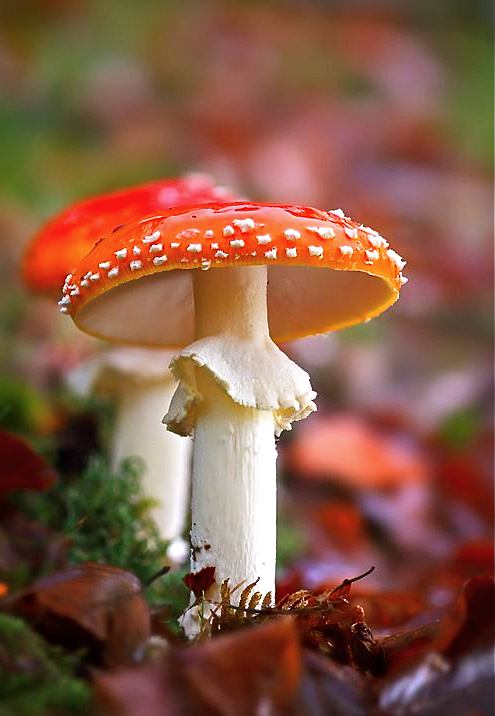
It was one of Rose’s poem, Fairies at the Bottom of the Garden, which prompted my post last night about toadstools.  I loved her poetry as a child and I love it still.  I am passionate about gardening and its lore, and when I see creatures like the one in my photo I see how easy it would be to invent stories about “fairies.”  Besides what he said above, Charles de Lint, explained childhood this way:  “It is easy to believe in magic when you’re young.  Anything you couldn’t explain was magic then.  It didn’t matter if it was science or a fairy tale.  Electricity and elves were both infinitely mysterious and equally possible — elves probably more so.”  I believe Creation is both miracle and magic, and the more we try to explain it the more we see how miraculous and magical it is.  R. A. Salvatore said “a world without mystery is a world without faith,” and so it is because it is our faith that tells us what magic is “waiting somewhere behind the morning” and whose is the “whispered voice, the hidden presence, when we think we’re alone.”

There are fairies at the bottom of the garden!
It’s not so very, very far away;
You pass the gardener’s shed and you just keep straight ahead.
I do so hope they’ve really come to stay. . .
~for more of Fyleman’s work go to:  http://www.fairyamber.com/rfyleman.html

By faith he left Egypt, not fearing the king’s anger: he persevered because he saw Him who is invisible.  ~Hebrews 11:27

152. A bit of fragrance always clings to the hand that gives roses. ~Chinese Proverb

Under a lawn, than skies more clear,
Some ruffled Roses nestling were,
And snuggling there, they seem’d to lie
As in a flowery nunnery;
They blush’d, and looked more fresh than flowers
Quickened of late by pearly showers. . .
~Robert Herrick, 17th century English poet

Image

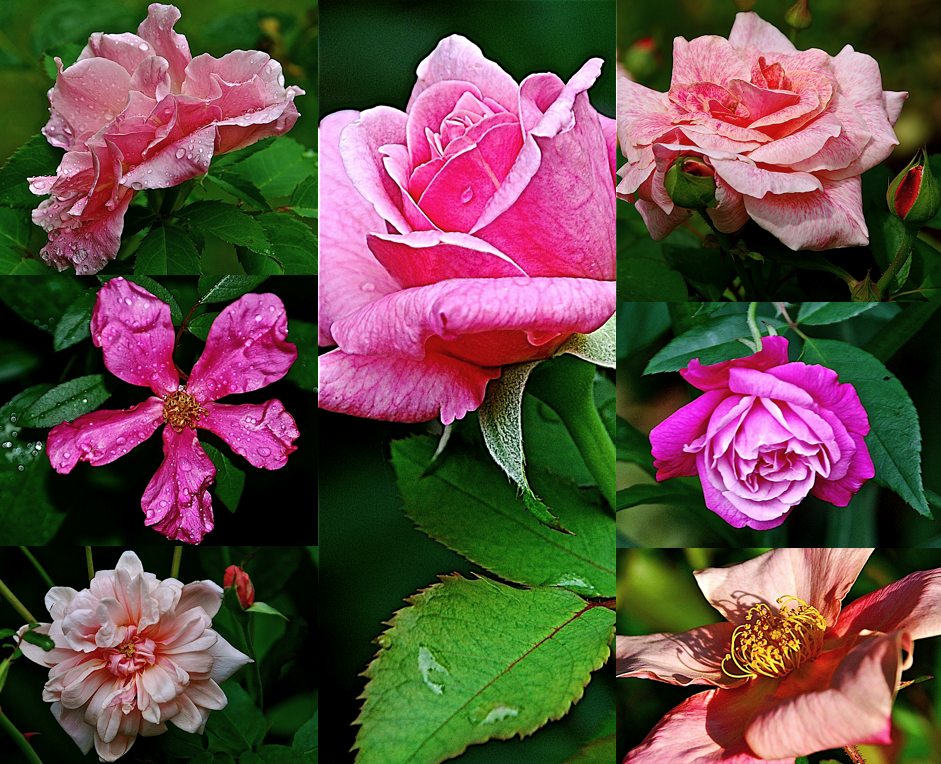
As you can see in my photographic “nunnery,” the “sisters” are all roses, but all are not wearing the same “habit.”  They all have petals, but the number of petals is not the same.  They’re all pink, but it is not the same shade of pink.  They all start out as not-so-different buds, but when open they do not all look alike.  Even the scents are not all the same.  However, there are those who been known to say, like I did at one time, that all roses are more or less the same.  But “a rose is a rose is a rose” is simply not the case.  When I fell in love with gardening, I started learning about the many varieties of roses, and after growing them I realized that each species has its own unique personality and appearance.  What surprised me the most was that according to fossil findings the roses we see today are the descendants of ones that have been growing for over 35,000,000 years.  It wasn’t until after prehistoric times, though, that treks of one kind or another began to spread them all around the world.  These early migrations are reported to have originated in places like Persia, Egypt, Mesopotamia, and China.  Then later on many of them traveled along with the spread of Christianity because monks would move them from one monastery garden to another during the Crusades, and it was some of those early Christians who identified the five petals of the single rose (lower right photo) with the five wounds of  the Messiah.

For we are to God the pleasing aroma of Christ among those who are being saved. . .  ~2 Corinthians 2:15