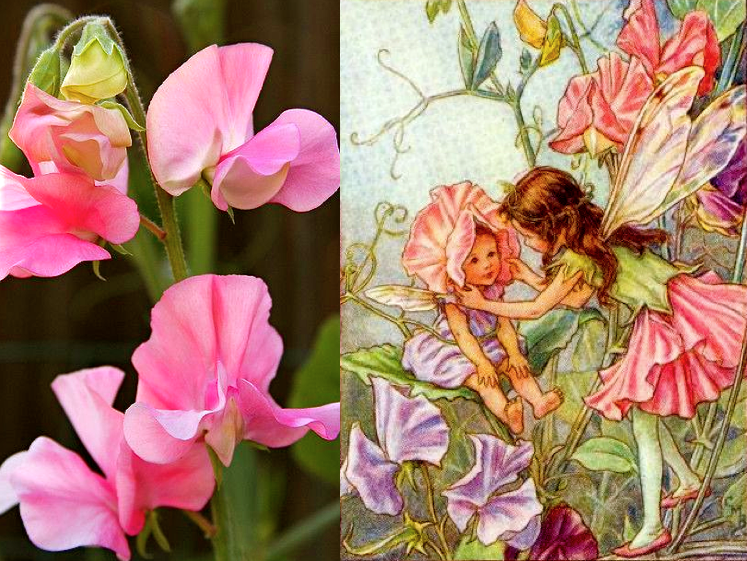
335. Here are the sweet peas, on tip-toe for a flight: with wings of gentle flush o’er delicate white, and taper fingers catching at all things, to bind them all about. ~John Keats

By helpful fingers taught to twine
Around its trellis, grew
A delicate and dainty vine;
The bursting bud, its blossom sign,
Inlaid with honeyed-dew.
~Hattie Howard
Image

Between each row of houses in Belmont Shore, California, where I grew up ran an alley which was the way to get in and out of the rear facing garages; it was also a favorite place to ride my bike or skates as well as being a frequented path to the homes of neighboring friends. Besides the garages the alley skirted the back yards of the houses and on many of the fences grew Sweet Pea vines. Not only were the flowers of these vines lovely and fragrant, but for a curious and imaginative child born in and of and wedded to one of the few remaining years of innocence the world would ever know they were the home of enchanted and magical fairy creatures.

Hauntingly unforgettable indeed have been the gardens in my childhood, but it was more than just the colors, the beautiful flowers and the lovely fragrances. Along with being mesmerized by all that splendor, I was courted by the Holy One, Yahweh, whose sole intent was to capture my heart and reveal His own. Though the world and its deceptions fought long and hard to turn me away from Jesus, He would not and did not give up on what had always been His.

The world is very old;
But every Spring
It groweth young again,
And fairies sing.
~Author Unknown
Image

With their richly colored, yet small, delicate flowers, the sweet pea’s history can be traced back to 17th century Italy when a Sicilian monk, Franciscus Cupani, sent its seeds to England. Then Henry Eckford, a Scottish nurseryman, cross-bred the original flower and created the colorful and intensely sweet scented blossom that became the floral sensation of the late Victorian era.
Image

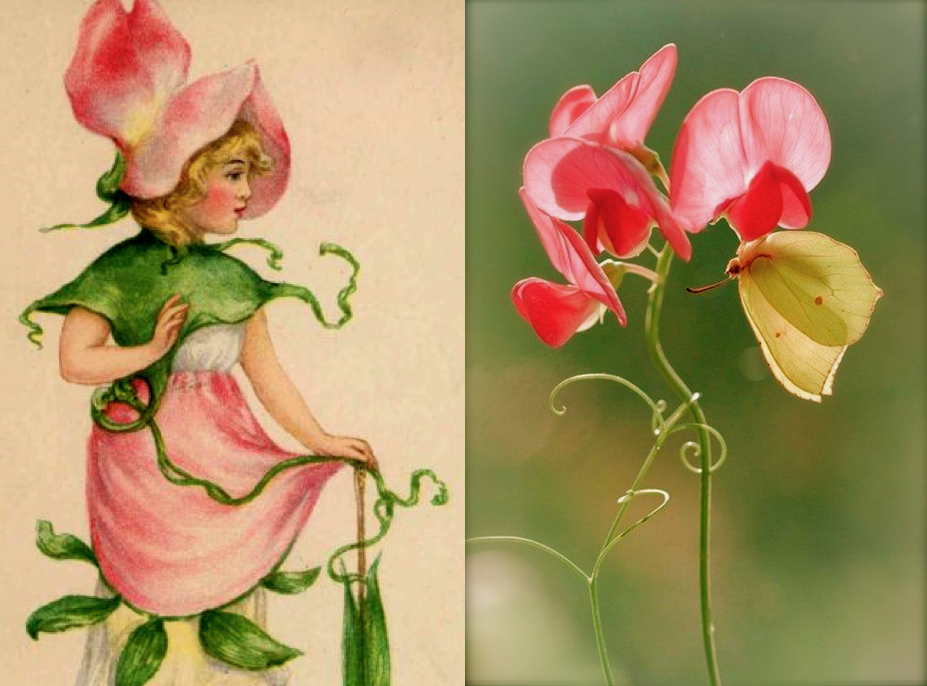
The Song of the “Sweet Pea Fairies”

Here Sweet Peas are climbing,
(Here’s the Sweet Pea rhyme!)
Here are little tendrils,
Helping them to climb.

Here are sweetest colours,
Fragrance very sweet;
Here are silky pods of peas,
None for us to eat!

Here’s a fairy sister,
Trying on with care.
Such a grand new bonnet
For the baby there.

Does it suit you Baby?
Yes, I really think
Nothing’s more becoming
Than this pretty pink!

~Cicely Mary Barker
Image

My frame was not hidden from you when I was made in the secret place, when I was woven together in the depths of the earth. Your eyes saw my unformed body; all the days ordained for me were written in your book before one of them came to be. Psalm 139:15-16 ✝

Thank you, Lord Jesus, that you save, you heal, you restore, and you reveal Your Father’s heart to us! You have captured me with grace and I’m caught in Your infinite embrace!

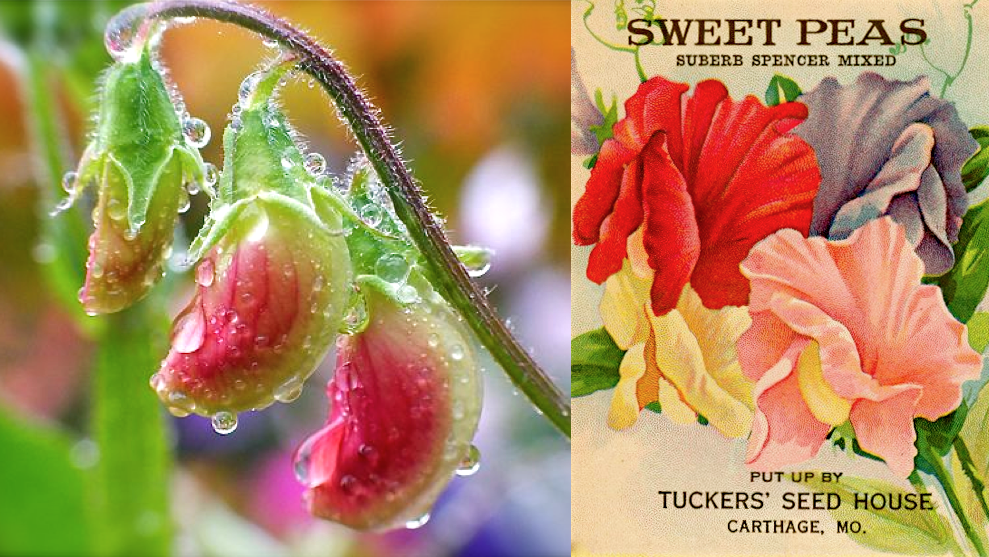
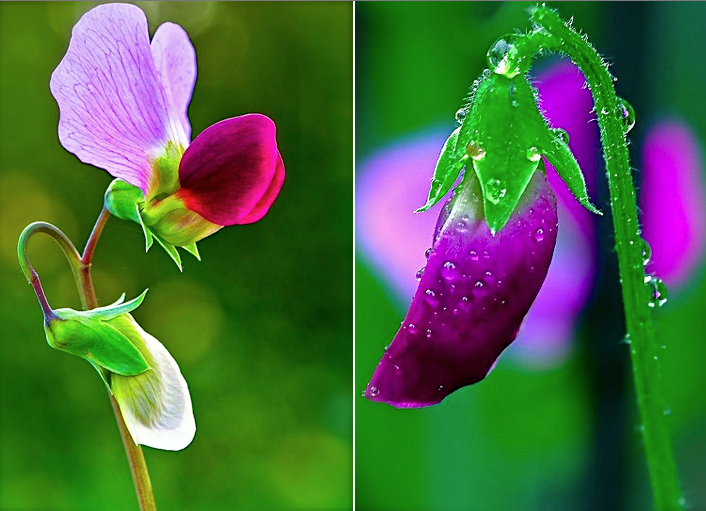
**My sweet pea vines are climbing but not blooming yet so I’m using images here that I found on Pinterest.
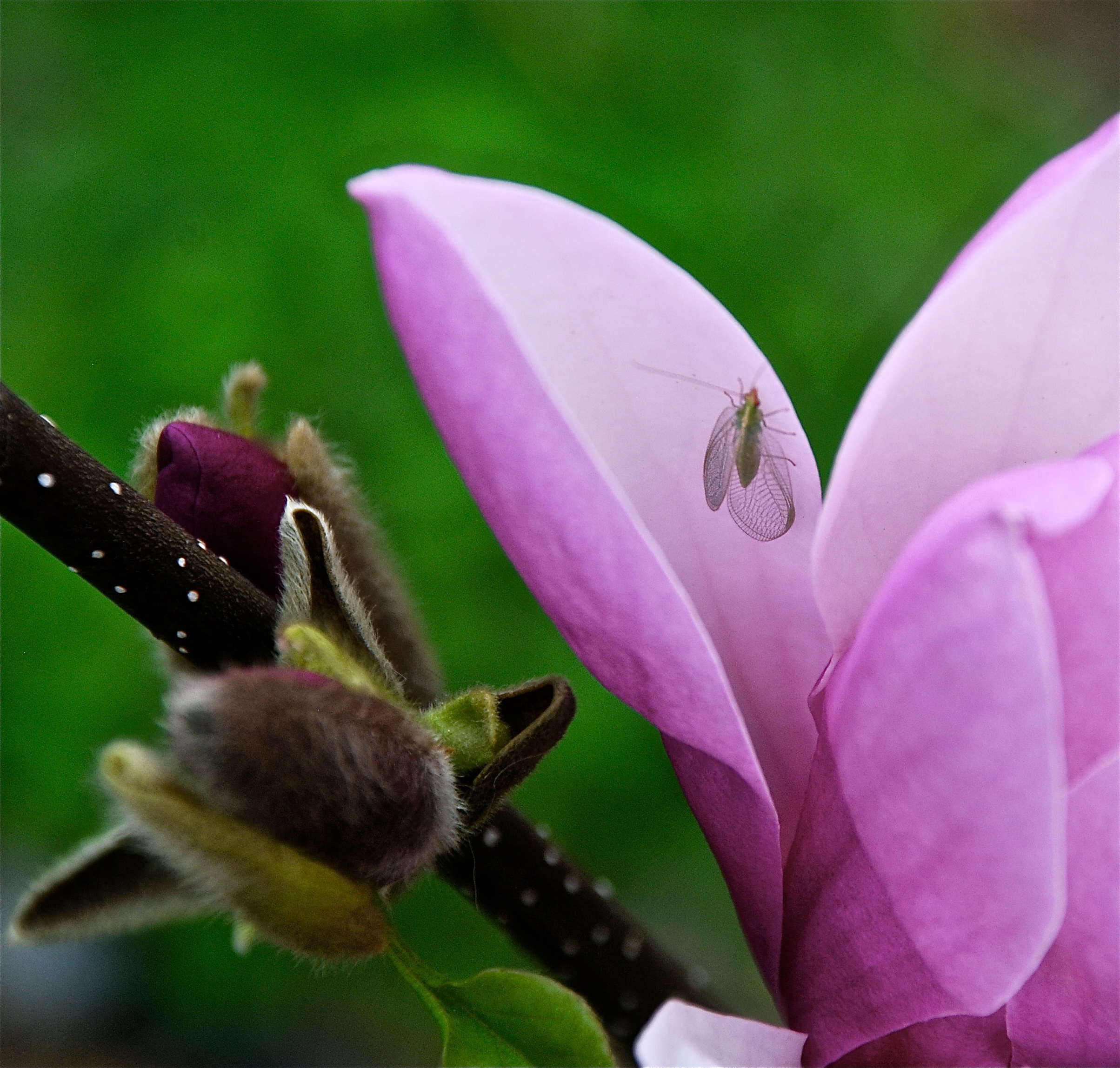
321. Hurt no living thing: ladybird, nor butterfly, nor moth with dusty wing. ~Christina Georgina Rossetti

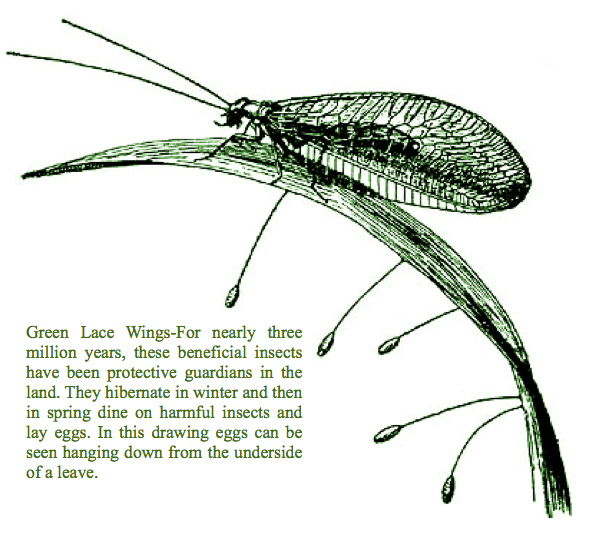
Winged insect feeding
for eons on nectar or
pollen and aphids

Image

Wake you at twilight
In the greening of the year
To hunt and lay eggs

Image

In gardens galore
and parks, meadows, or elsewhere
rid you plants from harm

Image

Found you I at dusk
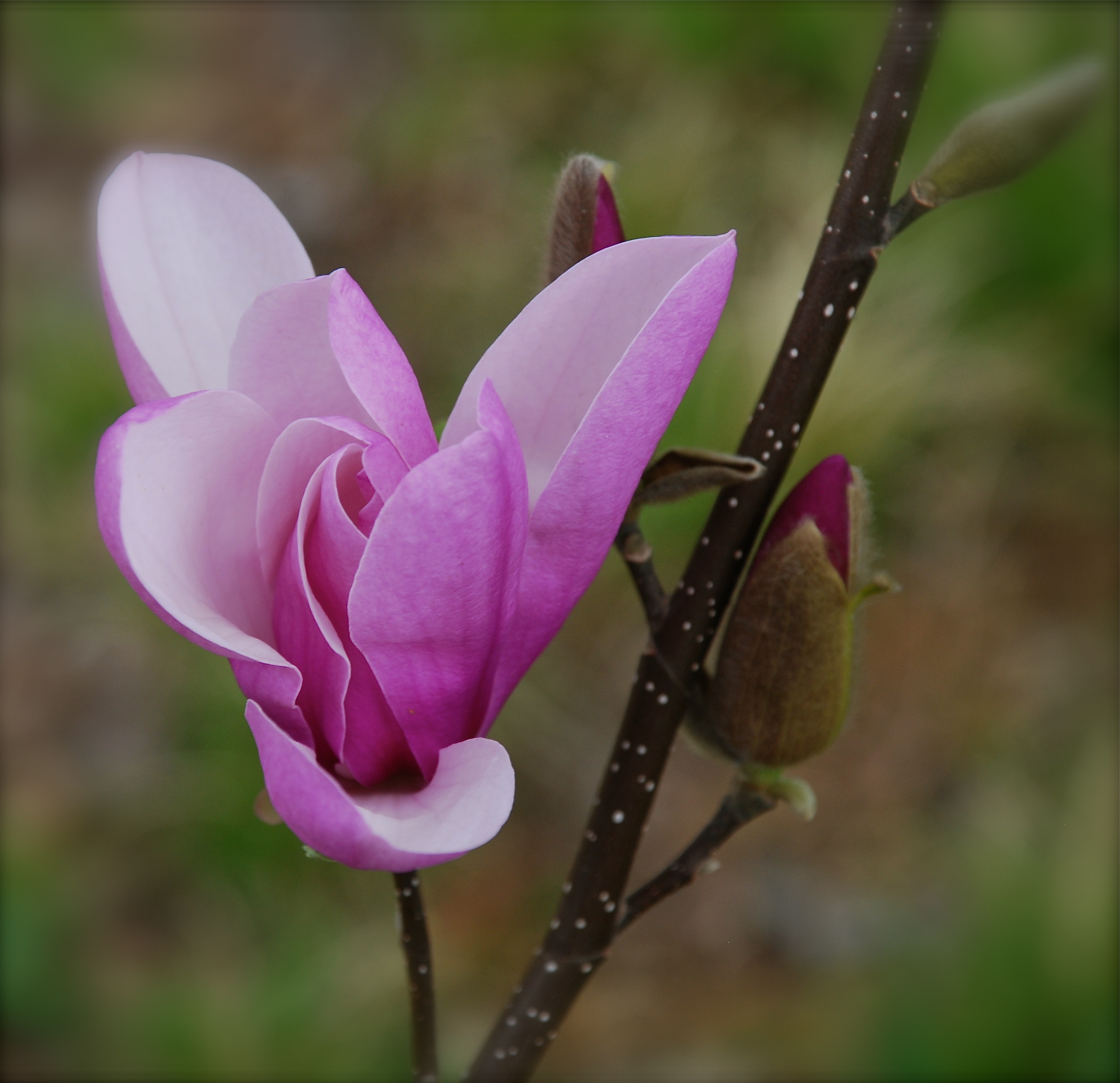
sheltered in magnolia’s bloom
resting from a feast

For as the soil makes the sprout come up and a garden causes seeds to grow, so the Sovereign Lord will make righteousness and praise spring up before the nations. ~Isaiah 61:11 ✝

Thank you, Jesus, that you save, you heal, you restore, and you reveal Your Father’s heart to us!

300. Gardens are a form of autobiography. ~Sydney Eddison

Image

My Garden is a pleasant place
Of sun glory and leaf grace.
My lilac trees are old and tall;
They send their perfume over trees
And roofs and streets, to find the bees.

I wish some power would touch my ear
With magic touch, and make me hear
What all the blossoms say, and so
I might know what the winged things know.
And I would sing them all for you!

My garden is a pleasant place
Of moon glory and wind grace.
O friend, wherever you may be,
Will you not come to visit me?

Over fields and streams and hills,
I’ll pipe like yellow daffodils,
And every little wind that blows
Shall take my message as it goes.

A heart may travel very far
To come where its desires are,
Oh, may some power touch my ear,
And grant me grace, and make you hear!

~Excerpts from a poem by Louise Driscoll

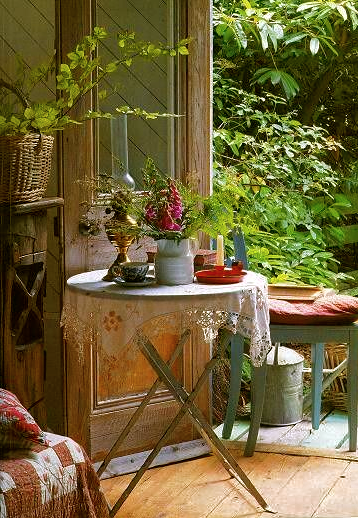
I made myself gardens and parks, and planted in them all kinds of fruit trees.  ~Ecclesiastes 2:5   ✝

**photo via Pinterest

298. All the flowers of all the tomorrows are in the seeds of today. ~Author Unknown

Image

The Seed-Shop

Here in a quiet and dusty room they lie,
Faded as crumbled stone or shifting sand,
Forlorn as ashes, shriveled, scentless, dry-
Meadows and gardens running through my hand.

In this brown husk a dale of hawthorn dreams;
A cedar in this narrow cell is thrust
That will drink deeply of a century’s streams;
These lilies shall make summer on my dust.

Here in their safe and simple house of death,
Sealed in their shells, a million roses leap;
Here I can blow a garden with my breath,
And in my hand a forest lies asleep.

~Muriel Stuart, English poet

He put before them another parable: “The kingdom of heaven is like a mustard seed that someone took and sowed in his field; it is the smallest of all the seeds, but when it has grown it is the greatest of shrubs and becomes a tree, so that the birds of the air come and make nests in its branches.”  ~Matthew 13:31-32   ✝

287. Hope is some extraordinary spiritual grace that God gives us… ~Vincent McNabb

Sit by the edge of the dawn / and the sun will rise for you.
Sit by the edge of the night / and the stars will shine for you.
Sit by the edge of the stream / and the nightingale will sing for you.
Sit by the edge of silence / and God will speak to you.
~from an ancient Hindu text

Image

“The semi-colon tells you that there is still some question about the preceding full sentence; something needs to be added…It is almost a greater pleasure to come across a semicolon than a period.  The period tells you that that is that; if you didn’t get all the meaning you wanted or expected, you got all the writer intended to parcel our and now you have to move along.  But with a semicolon there you get a pleasant little feeling of expectancy there is more to come; read on; it will get clearer.”  ~Lewis Thomas, American doctor and essayist

I think of nature’s seasons as junctures followed by divinely positioned, albeit invisible, semi-colons because they impart “a pleasant little feeling of expectancy.”  There are always more of them to be had, and it is that expectancy of “more” that keeps me hopeful not only in nature’s seasons but also in the seasons of my life when what I see tries to delude me into thinking things won’t ever change or this is the end.  In the passage above from the old Hindu text the use of “slashes” and “ands” could instead have been replaced with semi-colons because there is something more that comes after each of the suggested occasions to sit and wait.  In the same way, the fact that gardens keep an unfaltering “punctuation of continuance” right in front of me is one of the reasons I’m so drawn to spend time in them.  I need endless expectancy that breeds hopefulness.

And you will have confidence, because there is hope; you will be protected and take your rest in safety.  ~Job 11:18   ✝

**Even the two mauve hellebores in the photo look a bit like a semi-colon if one uses his/her imagination.

269. Will not a tiny speck very close to our vision blot out the glory of the world and leave only a margin by which we see the blot. ~George Eliot

You shall see them
on a beautiful quarto page,
where a neat rivulet of text shall meander
through a meadow of margin.
~Excerpt from “School for Scandal” by
Richard Brinsley Sheridan

Image

Image

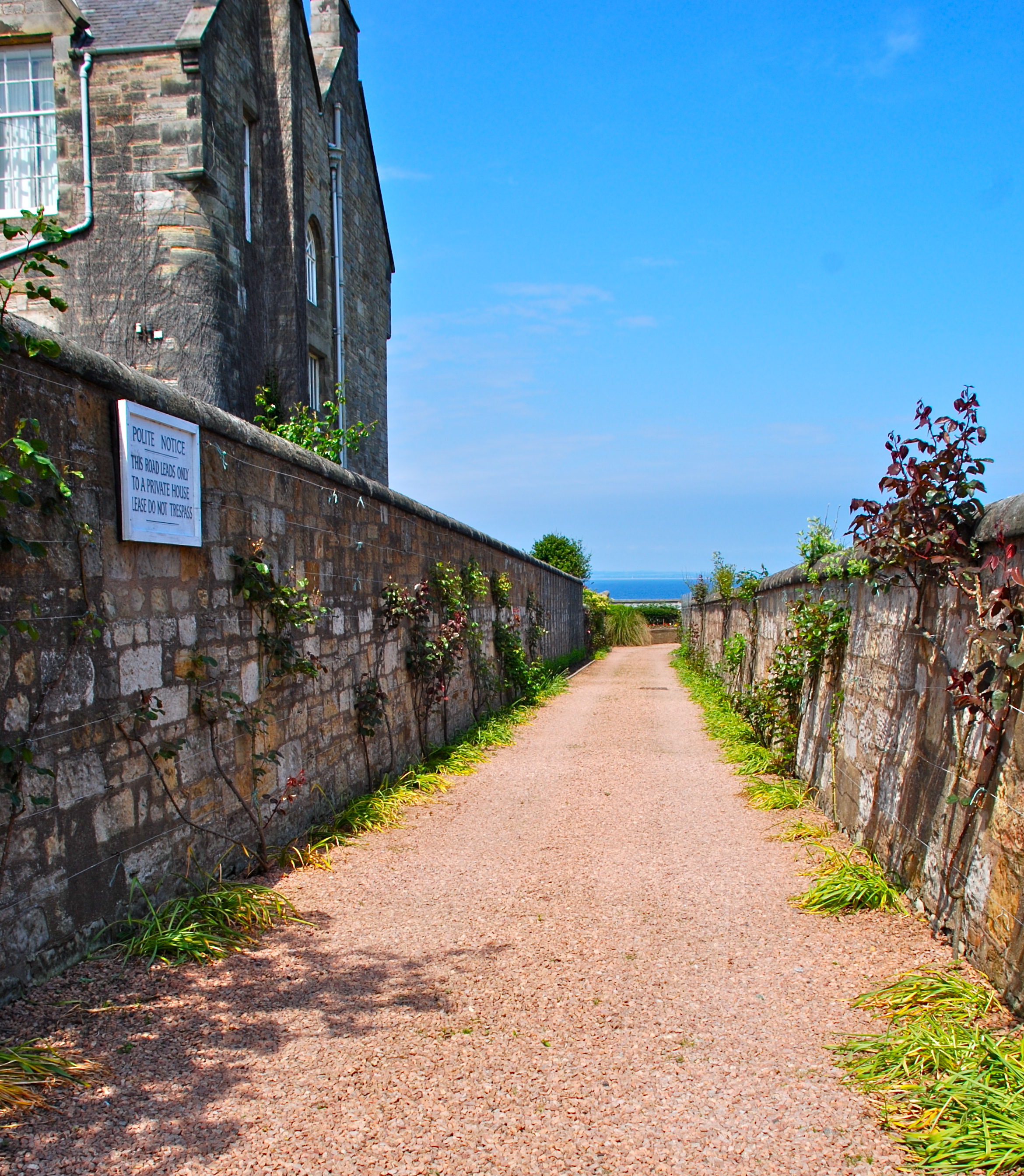
Margins–our lives are lived within all kinds of marginal edges.  In botany and entomology scientists talk of margins when they cite data about borders around leaves or the borders of insect wings.  The earth itself has what I think of as margins.  For example, phenomena like mountains, rivers, forests, or oceans hold things within or without; walled constructs built by the sea are held by nature and man.  Even our written documents and texts are kept inside a border of blank space called a margin.  In literary works poets and novelists speak of garden walls as the margins around growing spaces.  The margins around my backyard gardening spaces as well as the ones in public gardens I visit are fences.  Interestingly, at one time the margins around my yard were solely the fence lines, but now it is contained within its confines in places by an assortment of trees, some planted by human hands, others that sprang up by their own devices.

In the scriptural passage below God is telling the people of Jerusalem that although they are in a city without walls, He will protect them by being the barrier between them and their enemies.  The Lord does that for His children even when they misuse the reins of free will to wander poorly chosen worldly paths. Fortunately for us we never get so far down those potentially dangerous paths that we are out from under the spread of Yahweh’s mighty wings of grace.  When asked, He will pull us into a walled sanctuary where His forgiveness is an ever-standing offer for contrite hearts.  And as a fellow blogger noted, He walls our hearts with His love.

“And I myself will be a wall of fire around it,” declares the Lord, “and I will be its glory within.  ~Zechariah 2:5  ✝

181. How could such sweet and wholesome hours be reckoned but with herbs and flowers. ~Andrew Marvel

Natural object themselves
even when they make no claim to beauty,
excite the feelings, and occupy the imagination.
Nature pleases, attracts, delights,
merely because it’s nature.
~Karl Wilhelm Humboldt

Image

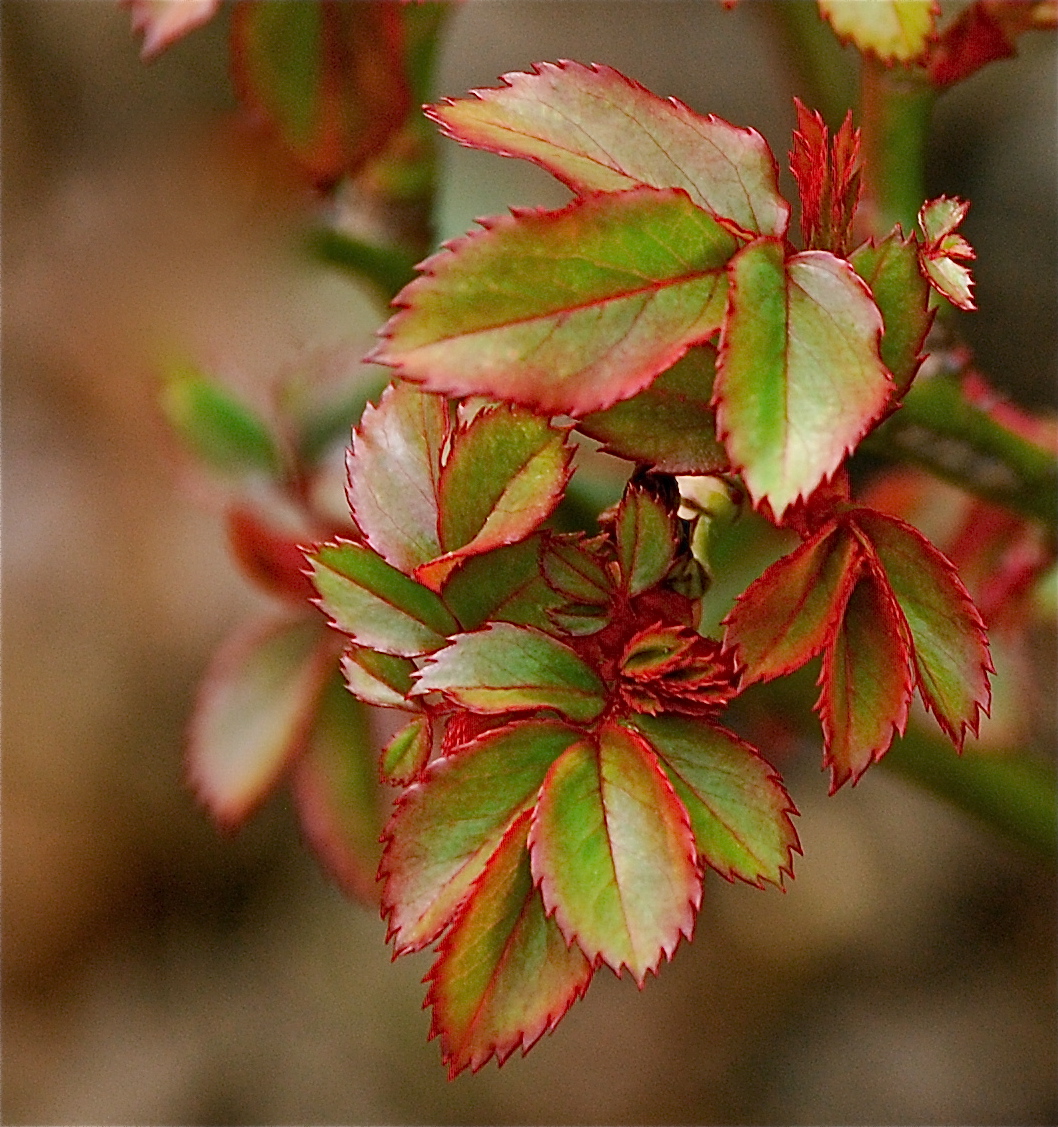
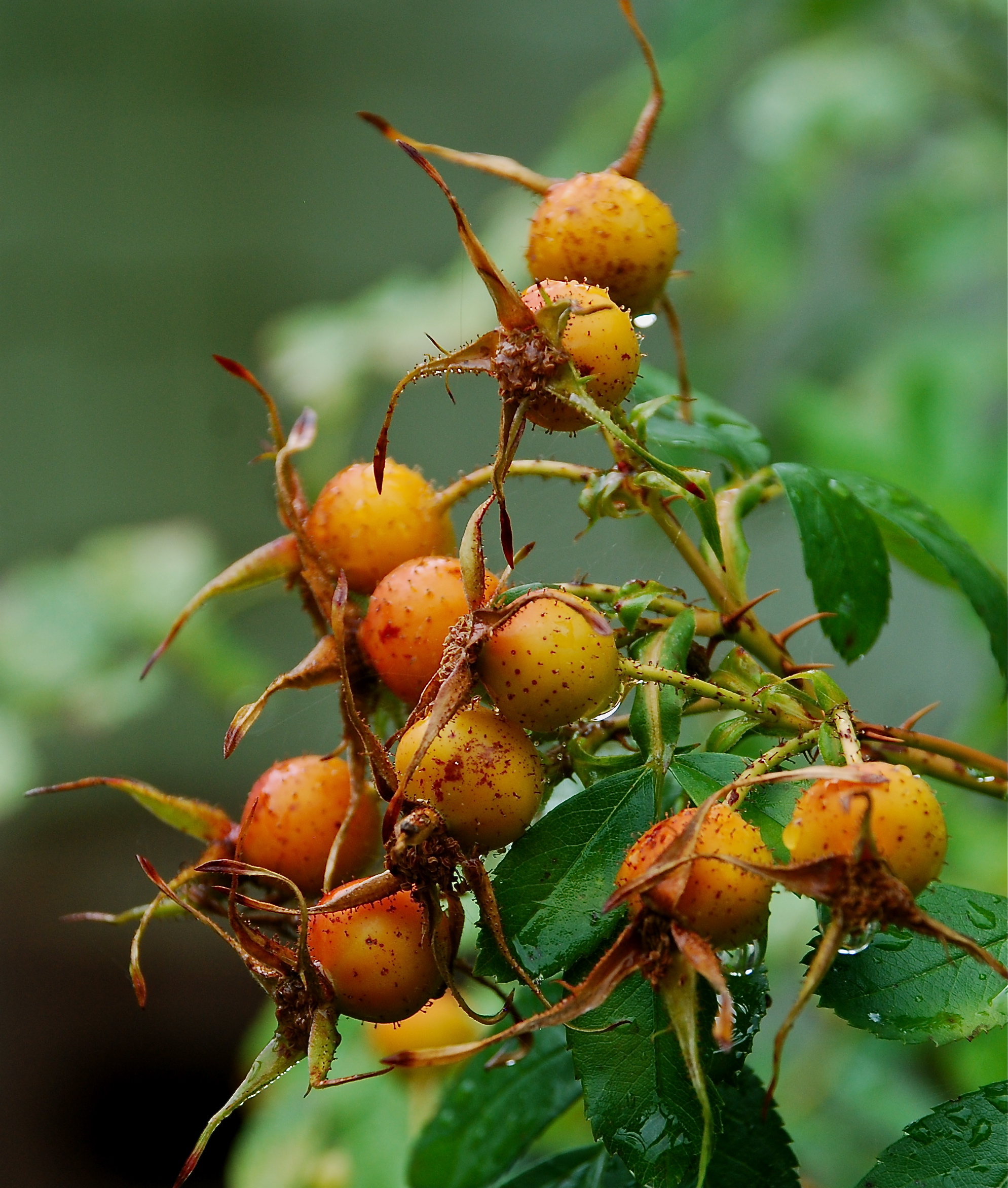
The most common attractions of the rose are the prettily colored flowers and the sweet to spicy fragrances.  On some roses there are also brightly colored hips that not only decorate bare canes in winter but also provide feasts for overwintering birds.  These hips are the pomaceous fruits of the rose, and they vary in size and shape and color.  Some of the first rosary beads were fashioned out of dried rose hips, and they have been used as well to make jellies, jam, marmalade, teas, soup, and medicinal compounds.  They also played an important role during World War II because they are very rich in Vitamin C.  It seems the people of Great Britain were encouraged to gather wild-grown rose hips to make a syrup for their children since German submarines were sinking commercial ships making it very difficult to import citrus fruits from the tropics.

Looking with expectancy for things that excite, I venture out into my gardens almost daily, weather permitting.  To that end I am seldom disappointed even on drippy days like this one.  Today’s find were some gold-orange-reddiish rose hips, and though they make no claim to great beauty, I was thrilled to see them once again.  After photographing them and beginning this post I began pondering what a difference for the better it might make if I greeted every new day’s living with the same attitude.  What an impact might it have on those around me if I met them filled with joy and expected the best from the encounter.  Once again I see how God’s Eden is not only a great sustainer but also an excellent teacher.

The seed will grow well, the vine will yield its fruit, the ground will produce crops, and the heavens will drop their dew.  ~Zechariah 8:12  ✝

172. Over everything connected with autumn there lingers some golden spell–some unseen influence that penetrates the soul with its mysterious power. ~Northern Advocate

O Autumn, laden with fruit, and stain’d
With the blood of the grape, pass not, but sit
Beneath my shady roof; there thou may’st rest,
And tune they jolly voice to my fresh pipe,
And all the daughters of the year shall dance!
Sing now the lusty song of fruits and flowers.
~William Blake, English poet

Image

*Photo courtesy Mike Bizeau

Lusty indeed is the dance of the year’s 4th child!  Escalating as she goes, she regales herself in glorious colors, and whilst strutting her hour upon earth’s stage, she reigns in majesty.  As she prepares the land for its Sabbath, her chariot enters the eastern sky at dawn with pink and purple banners flying high or she comes veiled in gray from a fog or torrents of rain.  Then after day is done she exits on the western horizon in mellow twilight, or in a blaze of red and gold, or swallowed up in the wetness of massive clouds.  When not thundering “mournful melodies” for all to hear, she’s belting out songs of joyfulness until she perishes in deep December softly playing “the harps of leafless trees.”

There is pleasure in the pathless woods,
There is rapture in the lonely shore,
There is society where none intrudes,
By the deep sea, and music in its roar;
I love not man less, but Nature more,
~Lord Byron, English poet

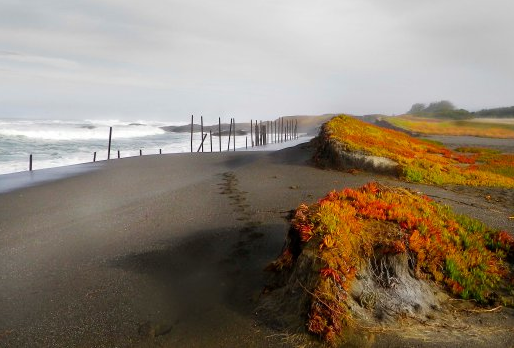
It wasn’t until Mike Bizeau posted this photo of fall-colored succulents along a beach north of Mendocino, California, that I realized lusty autumn not only sings in forests and gardens but also in places on the “lonely shore.”  What a splendid artist is the holy Yahweh!

Sing to Him, sing praise to Him; tell all of His wonderful acts.  ~1 Chronicles 16:9  ✝

160. There is a harmony in autumn, and a lustre in its sky, which through the summer is not heard or seen as if it could not be, as if it had not been. ~Percy Bysshe Shelley

Thy bounty shines
in autumn unconfined
and spreads a common feast
for all that live.
~James Thomson, Scottish poet and playwright

Image

What a striking, bright orange butterfly this one is that’s feasting on the Creator’s festive autumnal altar!  The Gulf Fritillary, a medium to large butterfly, is a long-wing species that’s an attention grabber wherever it graces the air.  It’s commonly seen in open country as well as in parks and gardens where it flutters joyfully from flower to flower.  Back and forth over perfumed beds, it comes and goes, kissing blossoms and drinking their sweet.  Though October is almost half gone, the days are yet warm enough for this and other winged children of the sun, to roam and sup on nature’s choicest flowers.  And how fair is the air filled with their glory!

Sing to God, sing in praise of His name, extol Him who rides on the clouds; rejoice before Him–His name is the Lord.  ~Psalm 68:4  ✝

133. My little hut is newly thatched, I see, with blue morning glories. ~Kobayashi Issa

A morning glory at my window
satisfies me more
than the metaphysics of books.
~Walt Whitman

Image

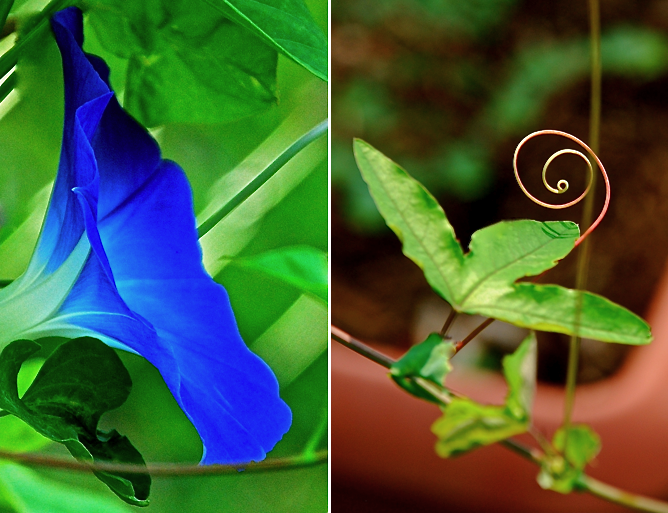
I love the tendrils vines use to climb as well as the vertical interest the vines themselves add in a garden.  Scrambling upwards enables the twining plants to reach sunlight with a minimum investment of energy rather than investing their energy in a lot of supportive tissue, and many of them can be easily started from seed or even better some easily reseed themselves from year to year.  Vines are not fussy plants that require special care, and as long as they are watered regularly, some of them even thrive through the hottest parts of summer growing strong in the garden’s web of life until the first freeze finishes them off.  For me one of the best reasons for adding vines in a garden is that some of them are hummingbird magnets.

The whole earth is filled with awe at your wonders; where morning dawns, where evening fades, you call forth songs of joy.  ~Psalm 65:8  ✝