329. Every April, God rewrites the Book of Genesis. ~Author Unknown

That God once loved a garden
we learn in holy writ.
And seeing gardens in the Spring
I well can credit it.
~Winifred Mary Letts
Image

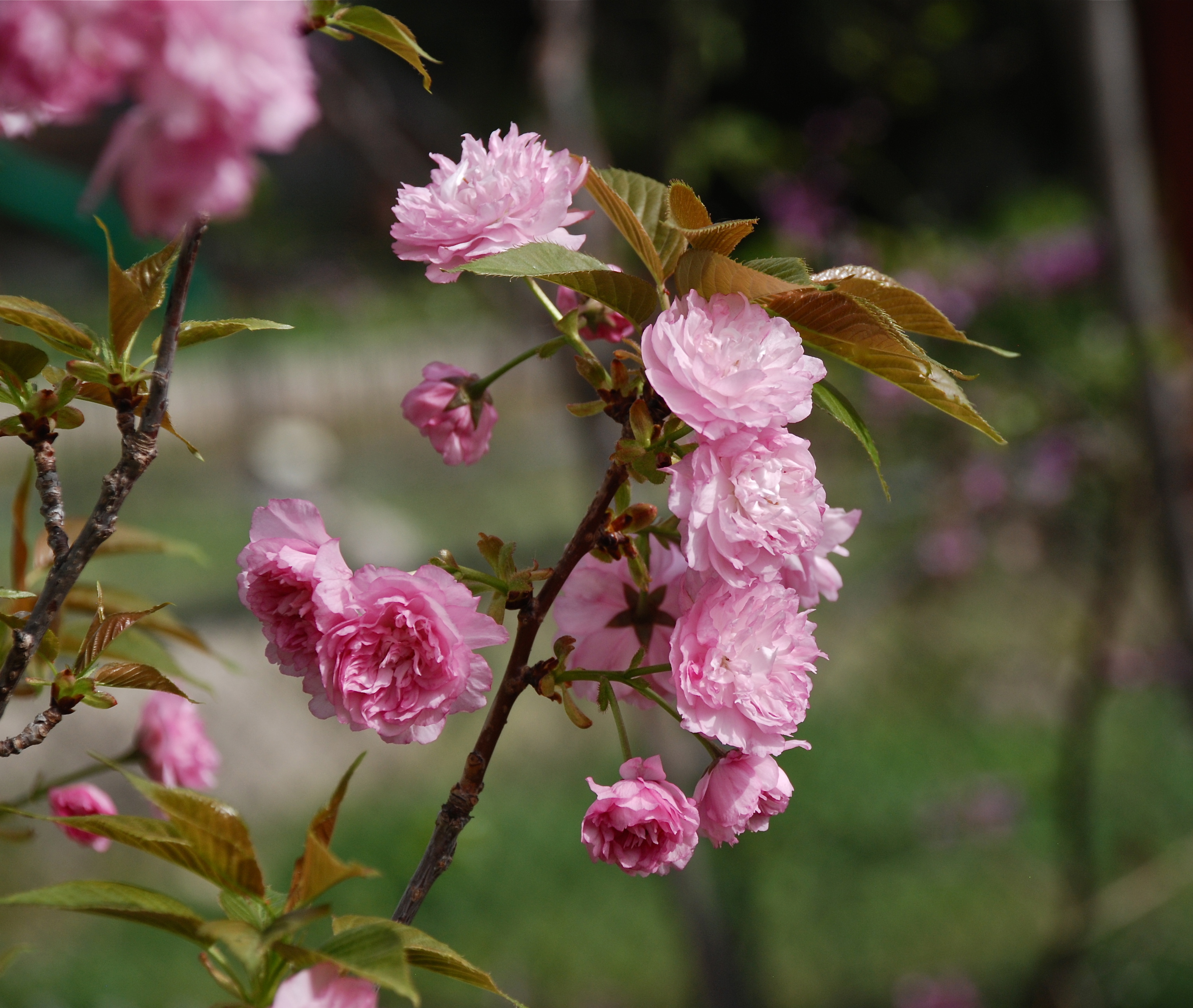
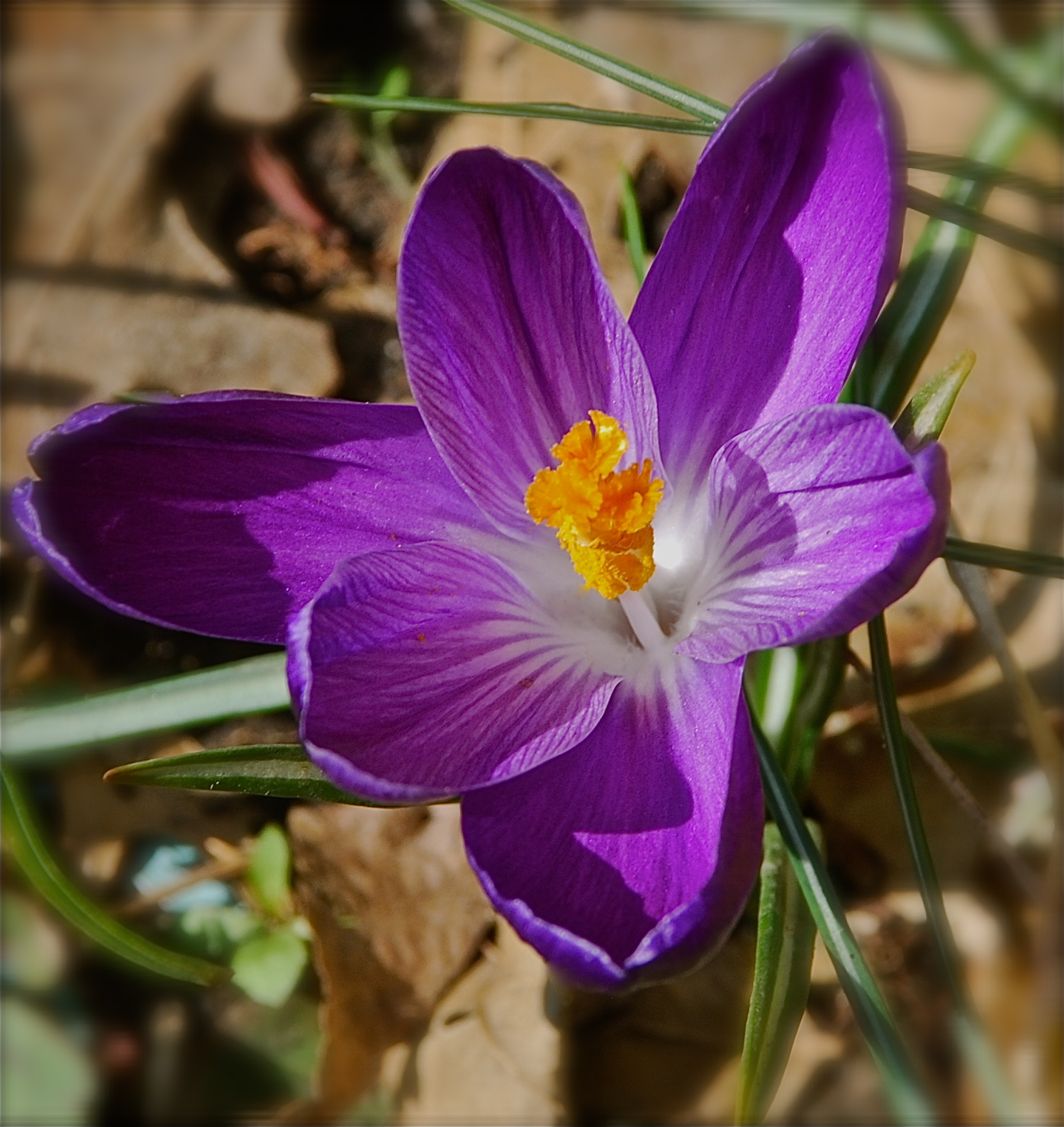
There’s just something very reassuring about springtime, isn’t there? It tells us that what God put in place is still in place and that renewal is as much a part of life as anything else.  Death may be undeniable, but so is life.

Come rain and speak of rivers and seas and holy healing waters.
Rise sun and speak of nurturing warmth and holy grace.
Blossom flower and speak of beauty and holy mysteries.
Hum bee and speak of faithful and ordained holy purpose.
Sing bird and speak of joy and grateful thanksgiving.
Beat heart and speak of pulsing rhythms and coursing holiness.
Move breath and speak of God within and holy beginnings.
Walk feet and speak of the road to Emmaus and holy encounters.
Twinkle stars and speak of the void filled by God’s holy, life-giving hands.
Speak silence of the Ancient of Days who’s waiting to be heard.
Shine light, drive darkness away, and speak of Christ’s redemptive work.
Come love and speak of peace and sacred surrender.

Truth shall spring out of the earth; and righteousness shall look down from heaven. ~Psalm 85:11 ✝

Thank you, Lord Jesus, that you save, you heal, you restore, and you reveal Your Father’s heart to us! You have captured me with grace and I’m caught in Your infinite embrace!

**Photo via Pinterest.
328. Fill your paper with the breathings of your heart. ~William Wordsworth

We are mosaics–
pieces of light,
love,
history,
stars–
glued together
with
magic
and music
and words.
~Anita Krizzan

Image

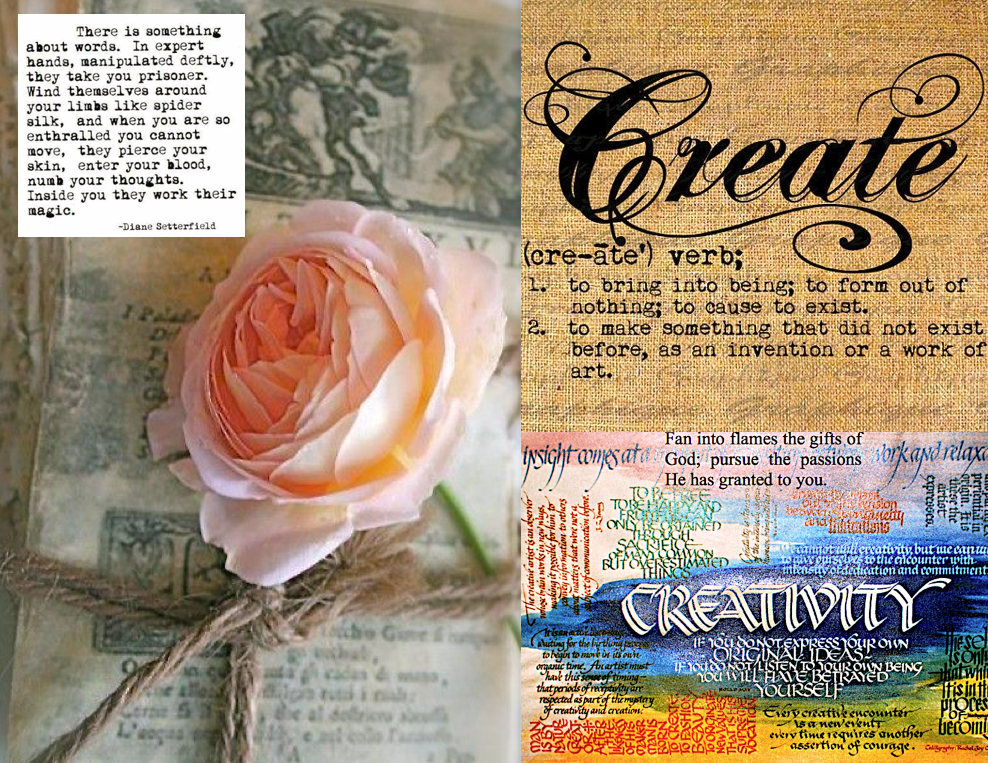
Wordsmiths we are, we who pen our thoughts and feelings upon the page, scribes who search the depths of our hearts to share the terrors in our “dark nights of the soul” and the heights of ecstasy in our glad times and victories for if we touch such things in others, we connect in our vulnerable sameness, grief is halved and joys doubled. The artist who paints upon a canvas or sketches on paper does the same with the images he/she creates as does the musician who marks notes upon a staff. The creative urge is deeply rooted in the human soul, and our yearning to bring what’s inside to the surface is a way of getting to know God, our Creator, for we are, after all, made in His image.

This is what God the Lord says–the Creator of the heavens, who stretches them out, who spreads out the earth with all that springs from it, who gives breath to its people, and life to those who walk on it… Isaiah 42:5  ✝

Thank you, Lord Jesus, that you save, you heal, you restore, and you reveal Your Father’s heart to us! You have captured me with grace and I’m caught in Your infinite embrace!

326. And this, our life, exempt from public haunt, finds tongues in trees, books in the running brooks, sermons in stones, and good in everything.
~William Shakespeare 

Image

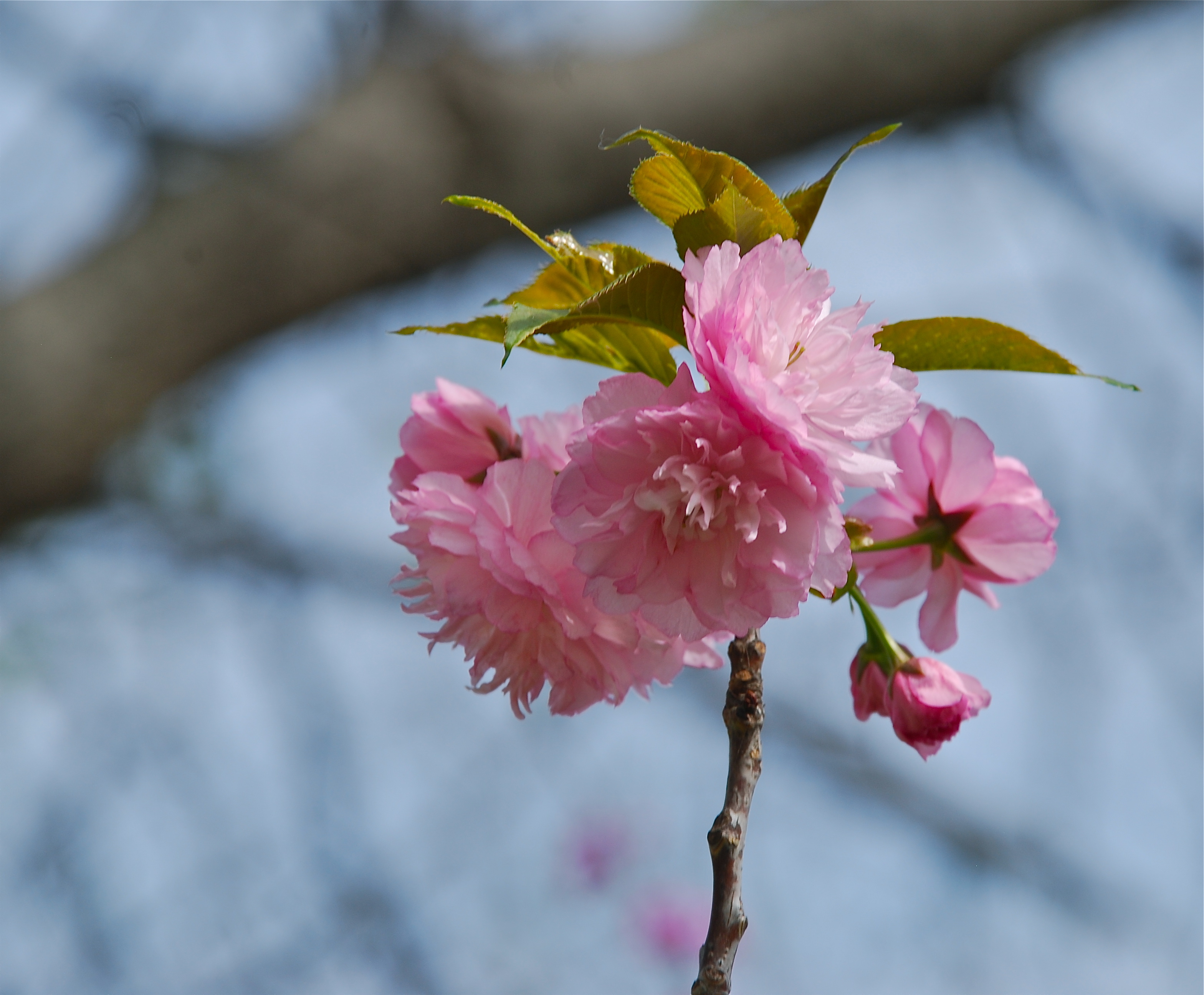
CHERRY BLOSSOMS ADRIFT

Pink petals passing
Scents above so high
Painted porcelain perfection
Blossoms caress the sky

Swaying silent shroud
Suitors strolling by
Pink petals passing
Lover’s gentle sigh


Pastel hues falling
Slow fluttering grace
Pink petals passing
Lining streams in lace

Pink petals passing
Smoothest transit by
Soft essence floating
In most subtle lullaby


Inducing springtime slumber
Upon a satin shore
Sailing with the current
Pink petals pass before
~Mary Fumento

Image

The sun shines down.
Pink flowers glow softly.
A gentle breeze rustles the leaves.
Birds flutter about the branches.
A young girl sits below it.
Relaxing in the shade.
The sweet smell of cherry blossoms fills the air.
And I know
I am home.
~Kylee Bartz

Let the heavens rejoice, let the earth be glad; let the sea resound, and all that is in it. Let the fields be jubilant, and everything in them; let all the trees of the forest sing for joy. Let all creation rejoice before the Lord… ~Psalm 96:11-13 ✝

Jesus, I am captured by Your grace and caught in Your imfinite embrace!

300. Gardens are a form of autobiography. ~Sydney Eddison

Image

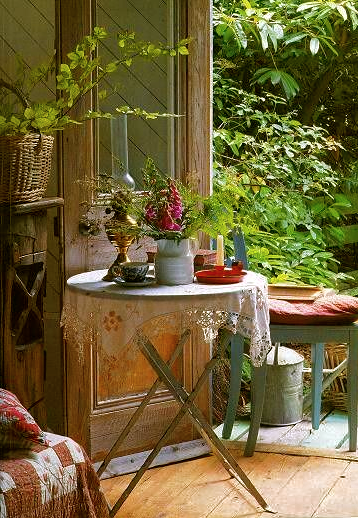
My Garden is a pleasant place
Of sun glory and leaf grace.
My lilac trees are old and tall;
They send their perfume over trees
And roofs and streets, to find the bees.

I wish some power would touch my ear
With magic touch, and make me hear
What all the blossoms say, and so
I might know what the winged things know.
And I would sing them all for you!

My garden is a pleasant place
Of moon glory and wind grace.
O friend, wherever you may be,
Will you not come to visit me?

Over fields and streams and hills,
I’ll pipe like yellow daffodils,
And every little wind that blows
Shall take my message as it goes.

A heart may travel very far
To come where its desires are,
Oh, may some power touch my ear,
And grant me grace, and make you hear!

~Excerpts from a poem by Louise Driscoll

I made myself gardens and parks, and planted in them all kinds of fruit trees.  ~Ecclesiastes 2:5   ✝

**photo via Pinterest

297. Hand in hand, with fairy grace, will we sing, and bless this place. ~William Shakespeare, English poet and playwright

No child but must remember laying his head in the grass,
staring into the infinitesimal forest
and seeing it grow populous with fairy armies.
~Robert Louis Stevenson, Scottish poet

Image

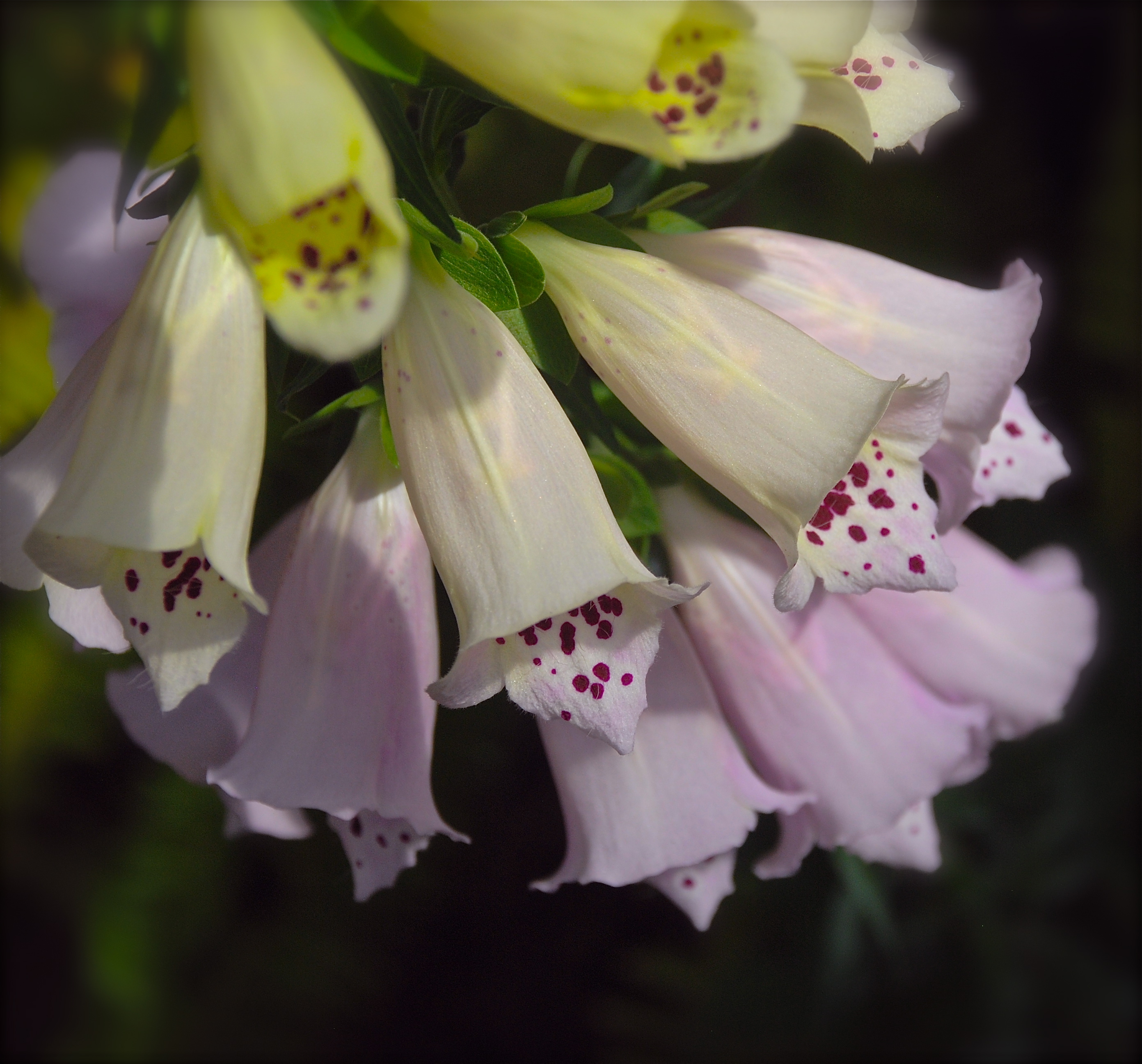
Digitalis, from the Latin Digitabulum, a thimble, derives its common name from the shape of its flowers that resemble the finger of a glove.  It’s a flower we call Foxglove, which delights to grow in deep hollows and woody dells.  However, it was originally called Folksglove because that’s where they, fairies or “good folk,” were thought to live.  Folksglove is one of the oldest names for Digitalis (Foxglove) and is mentioned in a list of plants as old as the time of Edward III.  The earliest known form of the word is the Anglo-Saxon foxes glofa (the glove of the fox, and the Norwegian name Revbielde that translates to Foxbell alludes to the Fox.  It is a name which may have come about from a northern legend about bad fairies who supposedly gave the blossoms of Digitalis to foxes to be put upon their toes so as to soften their tread when prowling amongst the roosts.

I adore Foxglove and believe no other flower in the garden lends itself better to stories of fairies and elves than it does.  Its dangling thimbles or gloves or bells or fingers or whatever one might call them look like enchanted, magical places where children would naturally look for the “wee folk” to lurk.  Nor is it surprising that there have been suppositions claiming the mottling in the flowers mark, like the spots on butterfly wings and on the tails of peacocks and pheasants, where elves have placed their fingers.  Though no longer a child, I have to agree in part with the writer Charles de Lint who penned, “We call them faerie.  We don’t believe in them.  Our loss.”  Sometimes, it does one a world of good to remember what it was like to be an imaginative child, full of awe and wonder and given to flights of fantasy.

Happy is he who still loves
something he loved in the nursery:
He has not been broken in two by time;
he is not two men, but one,
and he has saved not only his soul but his life.
~G. K. Chesterton, English writer, poet,
and lay theologian

If we opened our mind with enjoyment, we might
find tranquil pleasures spread about us on every side.
We might live with the angels that visit us on every sunbeam,
and sit with the fairies who wait on every flower.
~Samuel Smiles, Scottish author

May the Lord give you increase, both you and your children.  May you be blessed by the Lord, who made heaven and earth.  ~Psalm 115:14-15   ✝

293. I think that no matter how old or infirm I may become, I will always plant a large garden in the spring.  Who can resist the feelings of hope and joy that one gets from participating in nature’s rebirth? ~Edward Giobbi 

The flowers of late winter and spring
occupy places in our hearts
well out of proportion to their size.
~Gertrude S. Wister

Image

Small for sure on earth’s vast stage are the first flowers of late winter and early spring, but large is their scope.  They, like the day’s first sunlight fractures darkness in the physical world, shatter darkness int the spiritual world.  And when any light breaks spiritual darkness, joy and hope can be sparked and subsequently release from any imposed bondage the light of God which is at the heart of all He created.  Thus I believe it is by Divine intent and for sacred purposes that these flowers occupy places of disproportionate size in the human heart.  Humanity lives with dreadful darknesses in this fallen world, and it could be that the Lord purposely built into Creation’s fabric the repetition of such sparks to keep igniting anew the glow of His Light.  J. Philip Newell proclaims that the light of God “dapples through the whole of creation.”  He declares that it can be seen “within the brilliance of the morning sun and the whiteness of the moon at night and that it issues forth in all that grows from the ground and the life that shines from the eyes of any living creature.”  Thus like cracks in a dam weaken the structure so that flood waters at some point may no longer be able to be contained, crack after crack in spiritual darkness eventually lets in more and more of God’s holy light.  Hence when the fullness of His Light breaks through into the world and the human heart, there is the potential for amazing floods of grace and healing as well as salvation.

You, O LORD, keep my lamp burning; my God turns my darkness into light.  Psalm 18:28   ✝

292. The force of Spring – mysterious, fecund, powerful beyond measure. ~Michael Garofalo

Come, fill the cup, and in the fire of Spring
The Winter garment of repentance fling;
The bird of time has but a little way
To fly — and Lo! the bird is on the wing.
~Omar Khayyám

Image

In the rising of the morning sun God speaks to us of grace and new beginnings, and the fertility of the earth is a sign of how life wells up from within, from the dark unknown place of God.  ~J. Philip Newell

Come and see what God has done: He is awesome in his deeds among mortals.  ~Psalm 65:5   ✝

287. Hope is some extraordinary spiritual grace that God gives us… ~Vincent McNabb

Sit by the edge of the dawn / and the sun will rise for you.
Sit by the edge of the night / and the stars will shine for you.
Sit by the edge of the stream / and the nightingale will sing for you.
Sit by the edge of silence / and God will speak to you.
~from an ancient Hindu text

Image

“The semi-colon tells you that there is still some question about the preceding full sentence; something needs to be added…It is almost a greater pleasure to come across a semicolon than a period.  The period tells you that that is that; if you didn’t get all the meaning you wanted or expected, you got all the writer intended to parcel our and now you have to move along.  But with a semicolon there you get a pleasant little feeling of expectancy there is more to come; read on; it will get clearer.”  ~Lewis Thomas, American doctor and essayist

I think of nature’s seasons as junctures followed by divinely positioned, albeit invisible, semi-colons because they impart “a pleasant little feeling of expectancy.”  There are always more of them to be had, and it is that expectancy of “more” that keeps me hopeful not only in nature’s seasons but also in the seasons of my life when what I see tries to delude me into thinking things won’t ever change or this is the end.  In the passage above from the old Hindu text the use of “slashes” and “ands” could instead have been replaced with semi-colons because there is something more that comes after each of the suggested occasions to sit and wait.  In the same way, the fact that gardens keep an unfaltering “punctuation of continuance” right in front of me is one of the reasons I’m so drawn to spend time in them.  I need endless expectancy that breeds hopefulness.

And you will have confidence, because there is hope; you will be protected and take your rest in safety.  ~Job 11:18   ✝

**Even the two mauve hellebores in the photo look a bit like a semi-colon if one uses his/her imagination.

281. There are defeats more triumphant than victories. ~Michel de Montaigne

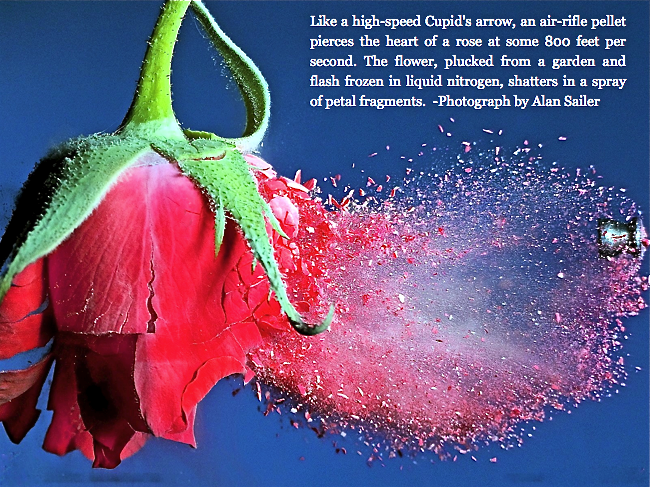
I found this image on the internet, and I’m not sure why I’m so fascinated with it, but I am.  Perhaps it’s because the rose, though now damaged, remains exquisite in color and form or because the spraying bits of freeze-dried petals create a stunning scene.  Or maybe I’m intrigued by the photo because it somehow reassures me that human brokenness touched by God’s grace can produce valuable and worthwhile fruit.  Whatever the case may be, all this pondering about the fragmented rose triggered the memory of the profound story below the photo.

Image

A water bearer in India had two large pots, each hung on each end of a pole which he carried across his neck.  One of the pots had a crack in it, and while the other pot was perfect and always delivered a full portion of water at the end of the long walk from the stream to the master’s house, the cracked pot arrived only half full.  For a full two years this went on daily, with the bearer delivering only one and a half pots full of water in his master’s house.  Of course, the perfect pot was proud of its accomplishments.  But the poor cracked pot was ashamed of its own imperfections, and miserable that it was able to accomplish only half of what it had been made to do. After two years of what it perceived to be a bitter failure, it spoke to the water bearer one day by the stream.  “I am ashamed of myself, and I want to apologize to you.”  “Why?” asked the bearer.  “What are you ashamed of?”  I have been able, for these past two years, to deliver only half my load because this crack in my side causes water to leak out all the way back to your master’s house.  Because of my flaws, you have to do all of this work and you don’t get full value for your efforts,” the pot said. The water bearer felt sorry for the old cracked pot and in his compassion he said, “As we return to the master’s house I want you to notice the beautiful flowers along the path.” Indeed, as they went up the hill, the old cracked pot took notice of the sun warming the beautiful wild flowers on the side of the path, and this cheered it some.  But at the end of the trail, it still felt bad because it had leaked out half its load, and so again it apologized to the bearer for its failure. The bearer said to the pot, “Did you notice that there were flowers only on your side of the path but not on the other pot’s side?  That’s because I have always known about your flaw, and I took advantage of it.  I planted flower seeds on your side of the path, and every day while we walk back from the stream, you’ve watered them.  For two years I have been able to pick these beautiful flowers to decorate my master’s table.  Without you being just the way you are, he would not have this beauty to grace his house.”  ~Author Unknown

Every human “pot” becomes “cracked” in some way, but that does not render the flawed man or woman ugly or useless.  The Creation story in Genesis tells us that each day God looked back at what He had made and saw that it was good.  So, although we humans are imperfect, we started from a place of goodness that is still in us.

Do not remember the sins of my youth and my rebellious ways; according to your love remember me, for you, LORD, are good.  ~Psalm 25:7  ✝

280. Spring, you put a spell on me and you make me feel like dancing… ~Edited and adapted excerpt of lyrics by Vincent, Poncia Jr./Leo Sayer

Happy days are here again!
The skies above are clear again!
So let’s sing a song of cheer again!
Happy days are here again!
~Excerpted lyrics by Milton Ager/Jack Yellen

Image

Image

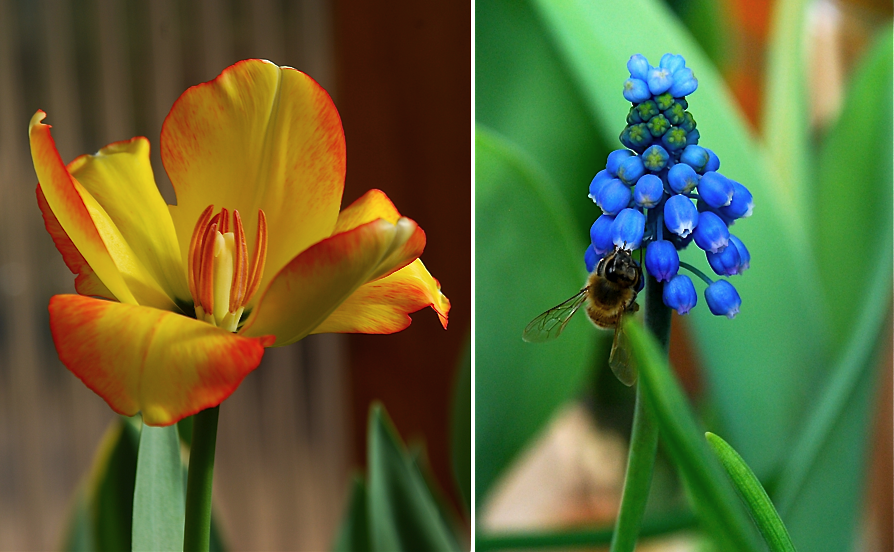
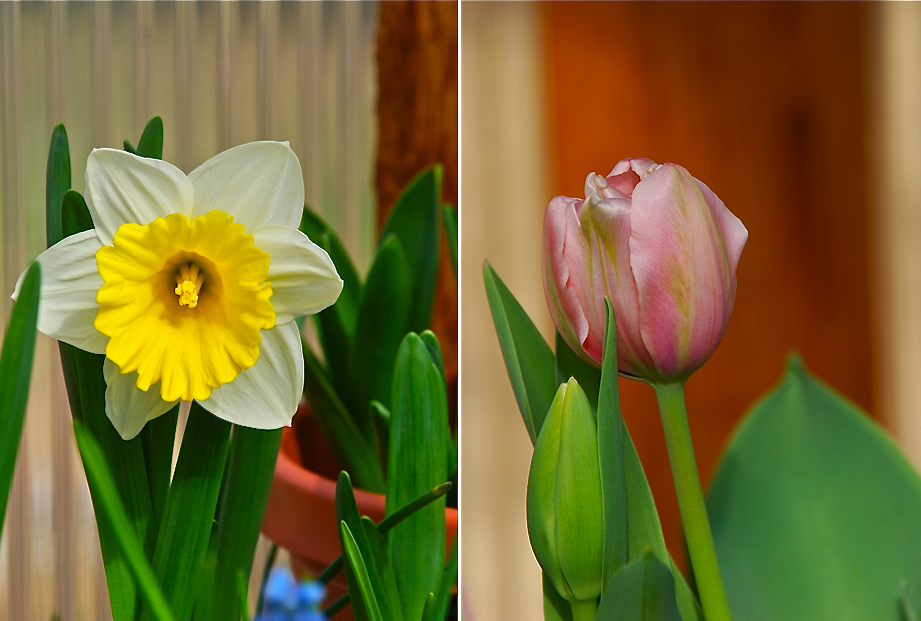
Okay, so it’s not really spring yet, at least not according the the calendar, but springy things sprang up in my greenhouse yesterday.  As a result melodies, not just from the birds, filled the air, and indeed it was an occasion for dancing.  I didn’t care what the neighbors might think about an old lady jumpin’ around like a madwoman, it was definitely time for some singin’ and a little jig.  Why?  Well after weeks of waiting tulips were blooming, a daffodil had opened up, and the first bee of the season had found its way inside to sup on the nectar in my little grape hyacinths.  I don’t know about you, but that’s a formula for springtime in my book.  And every time beauty and miracles like that emerge from seemingly nothingness, I fall in love all over again with the Creator of the Universe.  What amazing things He has made and given to us, we creatures who are often so undeserving of His gifts and His grace!  Now that’s love, is it not?!

He said, “O Lord, God of Israel, there is no God like you, in heaven or on earth, keeping covenant in steadfast love with your servants who walk before you with all their heart.  ~2 Chronicles 6:14  ✝