248. I look back with gladness to the day when I found the path to the land of heart’s desire… ~Mrs. George Cran

Earth, thou great footstool of our God,
who reigns on high;
thou fruitful source of all our
raiment, life, and food;
our house, our parent, our nurse,
and our teacher.
~Edited and adapted excerpt from Isaac Watts
Image

What’s that whisper in the wind?  Do you hear it?  Listen, there it is again!  Oh, I know.  It’s that ancient and seductive call that tempts the gardener to come and play in the dirt?  And it doesn’t take much bidding before this one can do naught but hearken to the bewitching pleas.

For days now I’ve heard the “call” because even though winter is still quite young,  January has obliged the “voice” by bringing some warmer days.  So several days ago I began clearing my flower beds of autumn’s dead, leafy debris, cutting off seed heads to be scattered elsewhere, and pruning weak, leggy growth off shrubs and roses.  Working close to the soil let me, as usual, hear earth’s heartbeat, and that sweet sound in turn spread a soothing balm over the spiritual doldrums.

Ironically, however, it occurred to me as I worked today that I was blessing the warmth of the same sun that only a few months ago I’d been cursing for its relentless waves of miserable heat.  That brought me face to face afresh with the truth that too much of anything spoils even the very best of things, that there is a purpose, if not understanding, in all things, and that gratitude, when in comfort or lack, is the only appropriate response to a day’s gifts.  So, you see, it was more than an ordinary call or faint heartbeat that I’d heard; I’d encountered the Teacher and He, leading me in and out of flesh and spirit, had shown me, again, wisdom growing in the garden’s “soil.”

…and the Lord your God will make you abundantly prosperous in all your undertakings, in the fruit of your body, in the fruit of your livestock, and in the fruit of your soil.  ~Deuteronomy 30:9a  ✝

238. Winter must be cold for those with no warm memories. ~From the movie AN AFFAIR TO REMEMBER

To look backward for a while
is to refresh the eye,
to restore it, and to render it
the more fit for its prime function
of looking forward.
~Margaret Fairless Barber

Image

Events come and go weaving the threads of life and love into the fabric our beings.   A heartbreak here, a miracle there–layer upon layer of growing that alters the fibers of our realities and renders us, slightly or appreciably, different than before.  Even though swallowed up “patterns” of the past continue to be seen in the weave as we move into each new arena, memories of them tend to ebb and flow in mists of forgetfulness.

Bless the Lord, winter cold and summer heat; sing praise to Him and highly exalt Him forever.  ~Prayer of Azariah 1:45  ✝

203. Surely a man needs a closed place where in he may strike root and, like the seed become. ~Antoine de St. Exupéry

But he also needs the Great Milky Way
above him and the vast sea spaces,
though neither stars nor ocean serve his daily needs.
~Antoine de St. Exupéry

Image

For me, autumn, especially late autumn, is a time for reflection, contemplation, and soul searching–a time for ruminating on the things that move me and make me who and what I am.  And so as I worked out in the yard on this sunny last day of November, the windmills in my mind started churning up memories of the events that led to its door.  Rather than covering every step of the journey, I decided to start when I found my “closed place” in this house with its spacious yards where I began to “strike roots.”  In the beginning, though the home and its conveniences served my physical needs and provided me with creature comforts, relief from old emotional wounds and peaceful contentment remained elusive long afterwards.  Years passed with little change in the status quo until one summer while recalling the beautiful flowers surrounding my childhood home (above) in California, I decided it was time to try growing my own flowers right here in hot old Texas.  Since I wasn’t sure I’d inherited the proverbial “green thumb” of my ancestors, I resolved to begin on a small scale.  So I cleaned off a corner of the patio, bought some bags of potting soil and an assortment of pots and seeds, and thus commenced what I know now to have been a pivotal moment in my life.  From the minute the first seeds germinated, a soul-saving passion for gardening was being birthed in me.  Despite the summer’s miserable heat, I faithfully watered and fussed over my thriving “little flock,” and it was those familiar flowery scents that were the catalysts which sparked my spiritual reawakening.  The next summer with the success of the previous year under my belt and a renewed recognition of Ruach Elohim (the Spirit of God), I decided to branch out and actually sow  seeds in the ground and dig a few holes for bedding plants.  Success came again and with it the quickening in my spirit intensified so much so that I decided to take my recently commissioned mentor’s advice to attend church once more.  This was the first step in righting the derailment of my faith journey that had begun after the early death of my father.

Scripture tells us that Christ is the vine, and we are the branches.  Until those first two growing summers the branch that was Natalie had been withering, not because the Lord had been doing less but because I had been turning a deaf ear and  blaming Him for the loss of my father as well as for painful, emotional wounds and the awful, unrelenting migraines that had started in my mid-twenties.  Since then I have spent season after glorious season planting, replanting, listening, seeking His presence, and marveling at the wonders of heaven and earth.  This pilgrimage that was involved in becoming the Natalie I am today has taught me that He, His Church, and His Creation, which includes the Great Milky Way, the vast sea spaces, and a garden, are the “holy foods” I must have to survive and live in peace and harmony.  Now minute by minute in this place where I have deeply “rooted” myself, the hungering need for “more” has been forever silenced by miracles great and small, blessing upon blessing, and the amazing grace He continues to bestow upon me.

I am the vine, and my Father is the gardener… Remain in me, as I also remain in you.  No branch can bear fruit by itself; it must remain in the vine.  Neither can you bear fruit unless you remain in me.  I am the vine;  you are the branches.  If you remain in me and I in you, you will bear much fruit; apart from me you can do nothing.  John 15:1 and 4-5

166. Another fall, another turned page: there was something of jubilee in that annual autumnal beginning…. ~Wallace Stegner

The foliage had been losing its freshness through the month of August,
and here and there a yellow leaf showed itself like a first gray hair…
September dressed herself in showy dahlias and
splendid marigolds and starry zinnias.
October, the extravagant sister, ordered an immense amount of
the most gorgeous forest tapestry to make glorious her grand spectacle.
~Edited and adapted excerpt from Oliver Wendell Holmes

Image

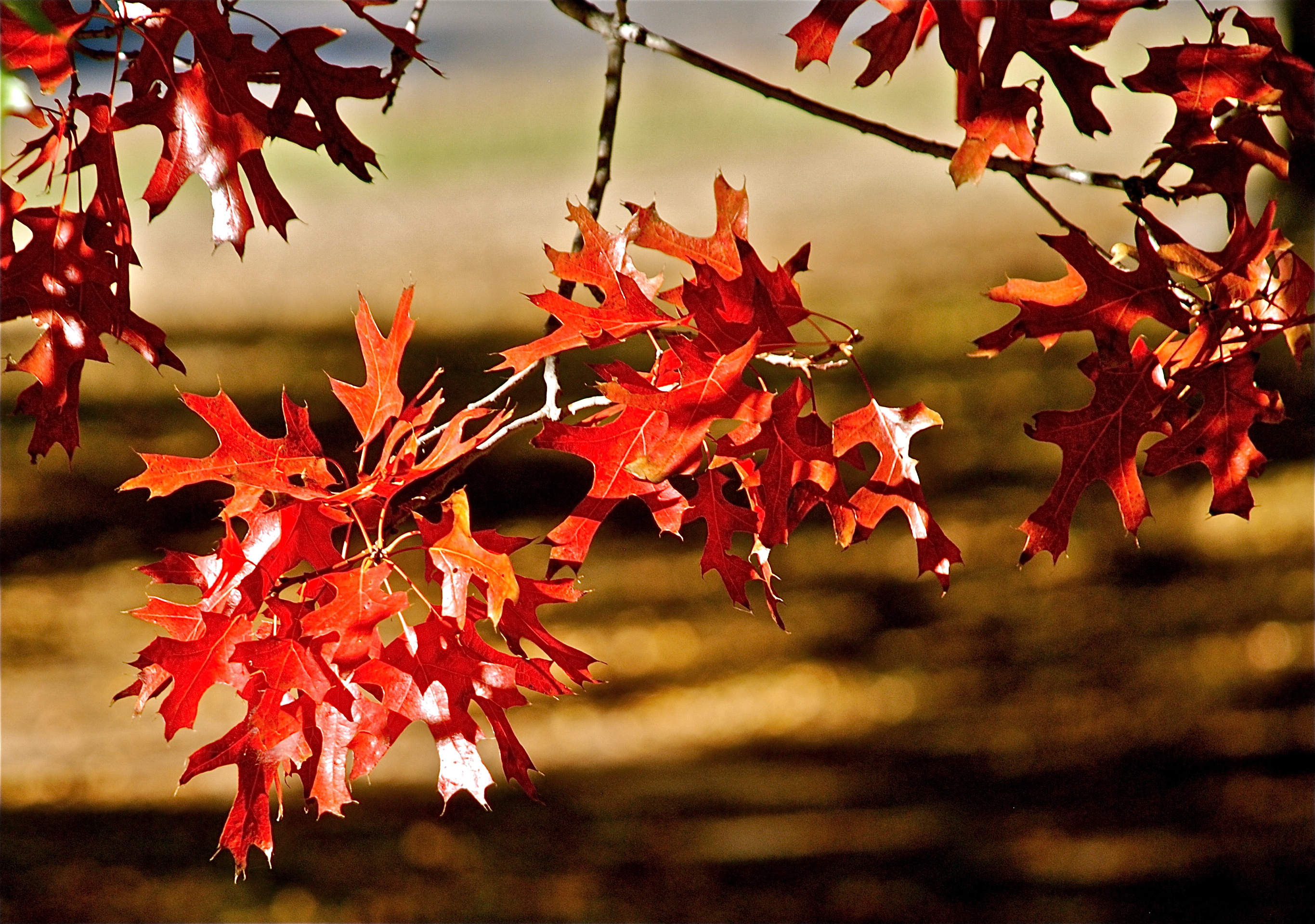
The first leafy sign of autumn appeared on the Dogwood today, and it triggered a flood of “color” musings in my mind.  Chestnut and chocolate!  What’s not to love about a season that clears off summer’s calamities, piles delectable hues back on nature’s palette, and calls for a pot of hot chocolate?  Lemon and lime!  Grasses, flowers, fruits, berries, and even a beastie or two weave fabulous garlands in the sacred temple bound by earth and sky.  Maroon and mahogany!  Chilling winds induce chemical changes in leaves that conjure up magic shows on woody altars in earth’s forests.  Mauve and mulberry!  The leaves on maples, oaks, dogwoods, pears, persimmons, and other trees give birth to colorful, parchment-like jewels that will one day snap off, swirl in little eddies, and play like children upon the ground.  Orange and ochre!  Pumpkins made to squat on porches or bales of hay tickle the fancy of mortal tongues anxiously awaiting fall feasts and winter banquets.  Red and russet!  Roses, asters, and Maximilian sunflowers invoke a breath of spring not stifled by summer’s heat to keep the year’s last child in colorful array.  Sable and sapphire!  Skies often shrouded by gauzy, gray clouds are swept clear by northerly winds as cold fronts advance.  On such days a spectacular brilliance can be seen on the brows of morn followed by daylight hours drenched in deep, dreamy shades of blue.  Sterling and pewter!  Plumed grasses shift and sigh in authorship of haunting, autumnal hymns.  Ah, how lovely are the many colors of autumn and the Holy One who made them!

As long as earth endures, seedtime and harvest (spring and autumn), cold and heat, summer and winter, day and night will never cease.  ~Genesis 8:22  ✝

135. As for marigolds, poppies, hollyhocks, and valorous sunflowers, we shall never have a garden without them… ~Henry Ward Beecher

Eagle of flowers! I see thee stand
And on the sun’s noon-glory gaze;
With eye like his, thy lids expand,
And fringe their disk with golden rays:
Though fix’d on earth, in darkness rooted there
Light is thy element, thy dwelling air
Thy prospect heaven.
~The Sunflower by James Montgomery, British editor and poet

Image

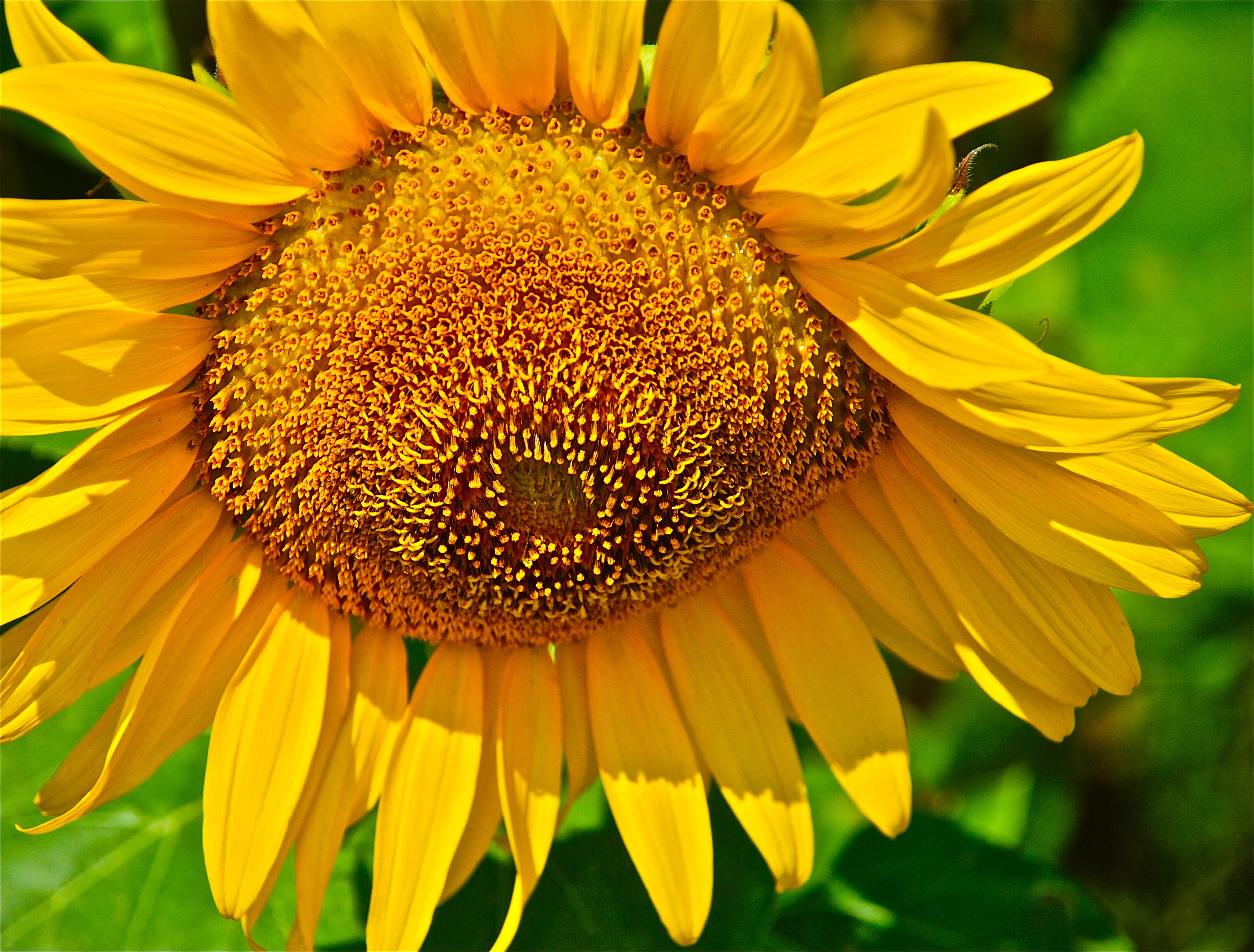
The sunflower with its “gaudy crown of gold” courts the heavenly expanse in search of the sun.  But is that iconic golden spectacle seeking to be prospered by the sun a single flower?  No, each sunflower is actually a cluster of sometimes more than 2,000 small flowers all growing together to mimic the sun and harvest its light.  Amazingly, at maturity some flower heads of the sunflower measure 2 feet across while the plants that hold them up sometimes grow as high as 18 feet.  Henry Ward Beecher additionally said all flowers “have an expression of countenance as much as men or animals.  Some of them seem to smile; some have a sad expression; some are pensive and diffident; others again are plain, honest, and upright, like the broad-faced sunflower. . .”  I agree and adore the plain honesty and uprightness of the sunflower, but in them I also see a touch of elegance in their statuesque stance in the landscape.

This is what the Lord says to me: “I will remain quiet and will look on from my dwelling place, like shimmering heat in the sunshine, like a cloud of dew in the heat of harvest.”  ~Isaiah 18:4   ✝

121. Come forth into the light of things, let nature be your teacher. ~William Wordsworth

In the midst of darkness, light;
In the midst of death, life;
In the midst of chaos, order.
Thus has it ever been,
Thus it is now, and
Thus it shall always be.
~Edited excerpt by Orlog, in the Norn’s Chant

Image

You will be secure, because there is hope; you will look about and take your rest in safety.  ~Job 11:18  ✝

10. For in the true nature of things, if we rightly consider, every green tree is far more glorious than if it were made of gold and silver. ~Martin Luther

For man, autumn is a time of harvest, of gathering together.
For nature, it is a time of sowing,of scattering abroad.
~Edwin Way Teale

Image

Like Teale I knew that autumn’s winds were scatterers and sowers, but until I did some research, I didn’t realize how much the autumnal shedding of leaves accomplishes.  For the sake of the sod, the fallen leaves cover the ground like a protective blanket.  It’s also easier for leafless trees to conserve much needed moisture in their branches and trunks, and since cold, dry winter winds strip moisture from trees through their leaves, losing their leaves is self-protective mechanism.  It would also be very costly energy wise for trees to keep their little leafy food factories up and running with less light and heat.   Because the transport of water from the ground into the trunk and leaves would be a damaging drain on a trees’ limited resources, the loss of leaves puts trees into a state of dormancy thereby reducing the amount of energy they need to live.  When leaves “come to rest upon the ground,” their work is far from over.  As they lie there, they become food for soil organisms which are vital to the overall health of ecosystems.  In addition the decomposing leaves restock the soil with nutrients and make up a part of the spongy humus that absorbs and holds rainfall.  And finally with the arrival of spring and warmer temps, bacteria, fungi, and insects come into play because the fallen leaves are chewed and rotted which in turn releases nutrients for plant growth.

“For the wisdom that fashioned the universe and can be read in earth’s dark depths and in heaven’s infinity of lights thanks be to you, O God.”  ~John Philip Newell

9. O Autumn…pass not, but sit…and tune thy jolly voice…and all the daughters of the year shall dance! ~William Blake

In the garden, Autumn is, indeed the crowning glory of the year,
bringing us the fruition of months of thought, and care, and toil.
~Rose G. Kingsley, British Gardener and Writer

Image

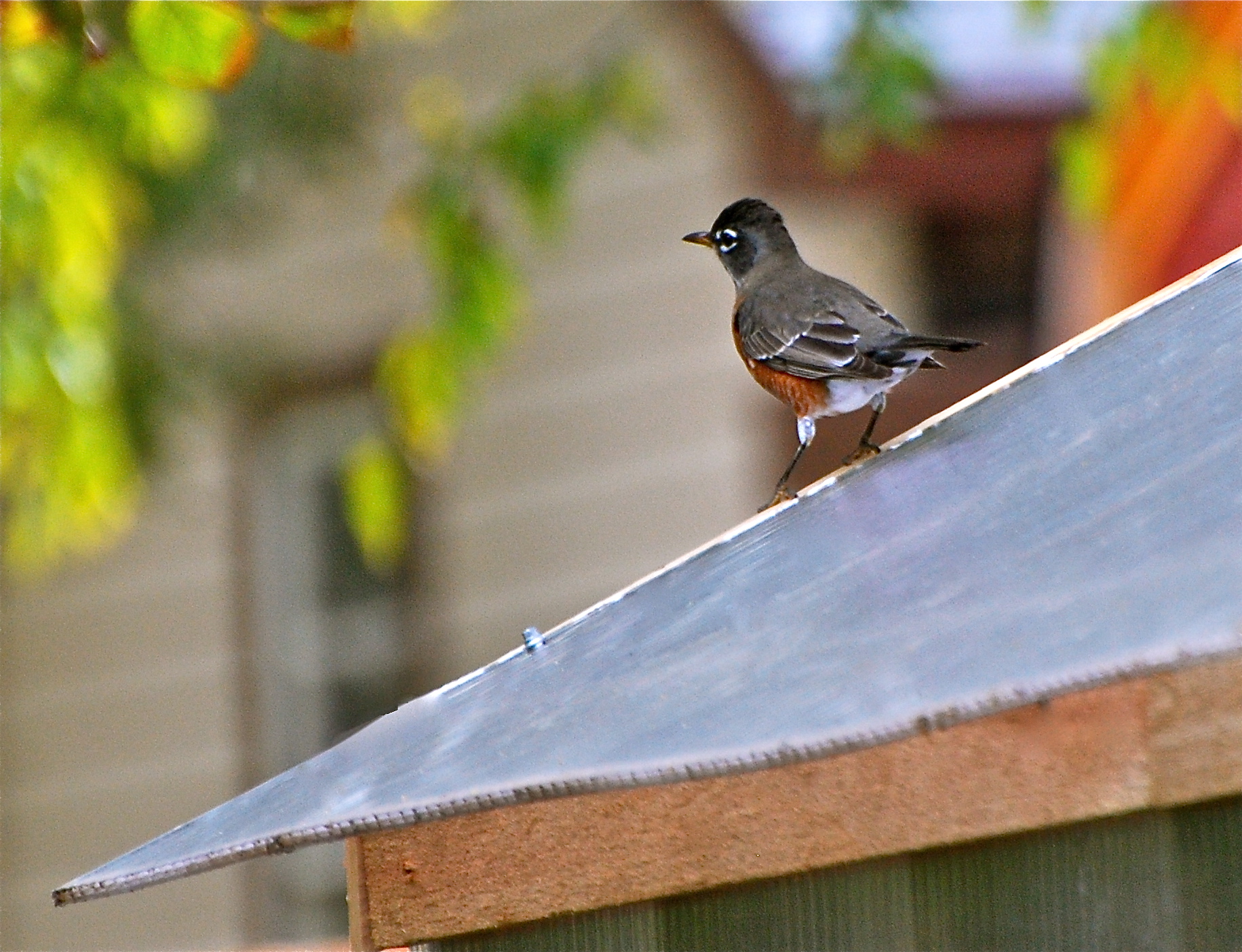
Now that the year has grown long in the tooth, the migratory birds have moved on to warmer lands.  But the birds who overwinter here are still very visible and busy.  However, on the chillier days they, like me, “remain perched” early in the morning and later when the sun is well over the rooftops.  Nevertheless, in spite of our periodic and combined lethargy, we still manage to be out and working during the warmer parts of the day.  The “common feast for all” the garden spreads may be nearly gone and the bird’s tired wings along with my tired feet may drag somewhat, but autumn’s remaining golden glory continues to quicken our spirits.  In fact even after winter ravages the land, we, man and beast alike, who live close to the soil will venture out on the occasional warm day to search with hungry eyes for any signs of what we know lies waiting to emerge from beneath the surface of things.

Autumn’s song is indeed “a rich and lusty melody.”  It induces a healthy renewal in bodies wilted by summer’s long siege of torrid heat, and it creates a restful peacefulness that washes away the “fret and fever of life.”  “It’s jolly voice” sings a comforting song of promise that speaks of God’s circadian rhythms of life–the rhythm of changing seasons, busyness followed by stillness, “youth’s energy followed by age’s measured pace.”

There is a time for everything, and a season for every activity under the heavens. . .  ~Ecclesiastes 3:1   ✝