293. I think that no matter how old or infirm I may become, I will always plant a large garden in the spring.  Who can resist the feelings of hope and joy that one gets from participating in nature’s rebirth? ~Edward Giobbi 

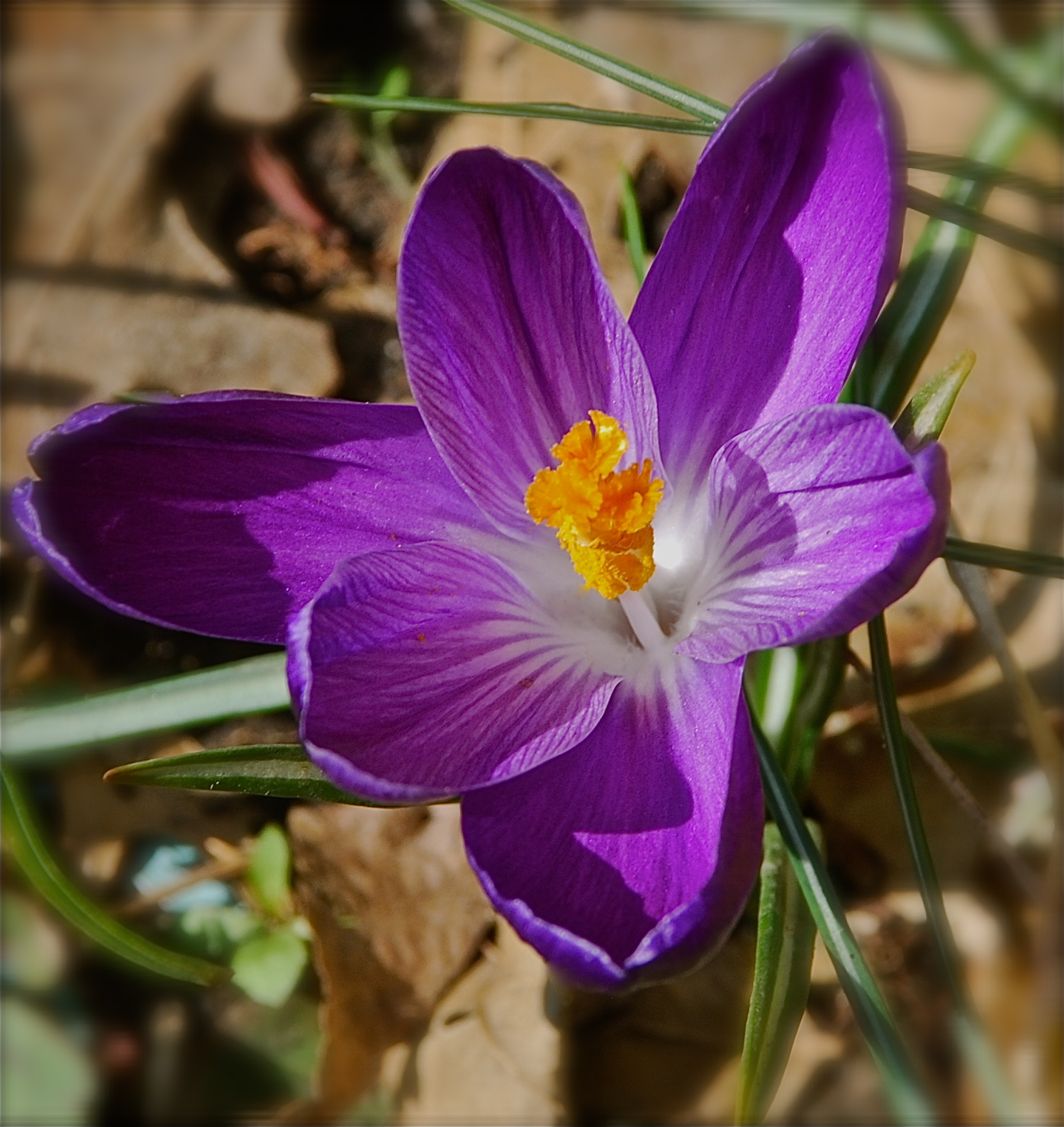
The flowers of late winter and spring
occupy places in our hearts
well out of proportion to their size.
~Gertrude S. Wister
Image

Small for sure on earth’s vast stage are the first flowers of late winter and early spring, but large is their scope.  They, like the day’s first sunlight fractures darkness in the physical world, shatter darkness int the spiritual world.  And when any light breaks spiritual darkness, joy and hope can be sparked and subsequently release from any imposed bondage the light of God which is at the heart of all He created.  Thus I believe it is by Divine intent and for sacred purposes that these flowers occupy places of disproportionate size in the human heart.  Humanity lives with dreadful darknesses in this fallen world, and it could be that the Lord purposely built into Creation’s fabric the repetition of such sparks to keep igniting anew the glow of His Light.  J. Philip Newell proclaims that the light of God “dapples through the whole of creation.”  He declares that it can be seen “within the brilliance of the morning sun and the whiteness of the moon at night and that it issues forth in all that grows from the ground and the life that shines from the eyes of any living creature.”  Thus like cracks in a dam weaken the structure so that flood waters at some point may no longer be able to be contained, crack after crack in spiritual darkness eventually lets in more and more of God’s holy light.  Hence when the fullness of His Light breaks through into the world and the human heart, there is the potential for amazing floods of grace and healing as well as salvation.

You, O LORD, keep my lamp burning; my God turns my darkness into light.  Psalm 18:28   ✝
291. The more I see you, the more I find you, the more I find you, the more I love you. ~Kari Jobe

Come, gentle Spring!
Ethereal mildness!
Come.
~James Thomson

Image

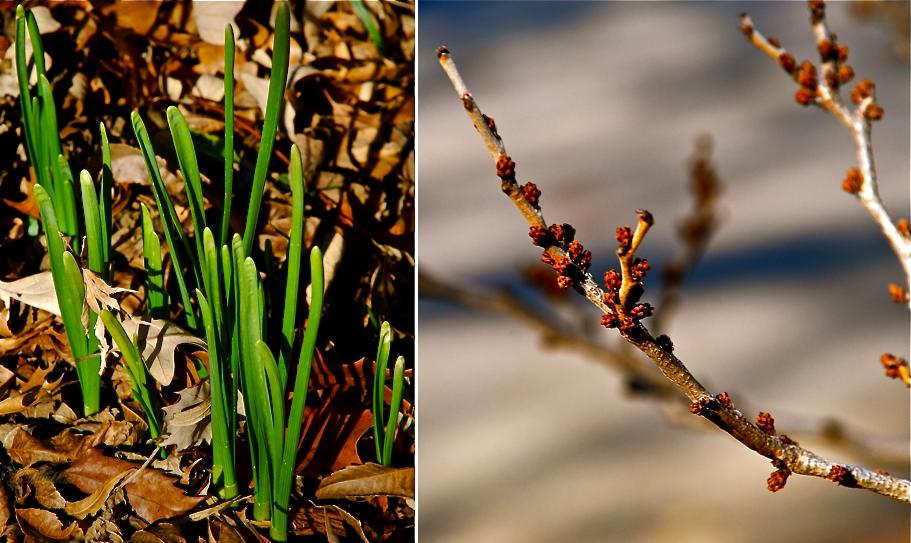
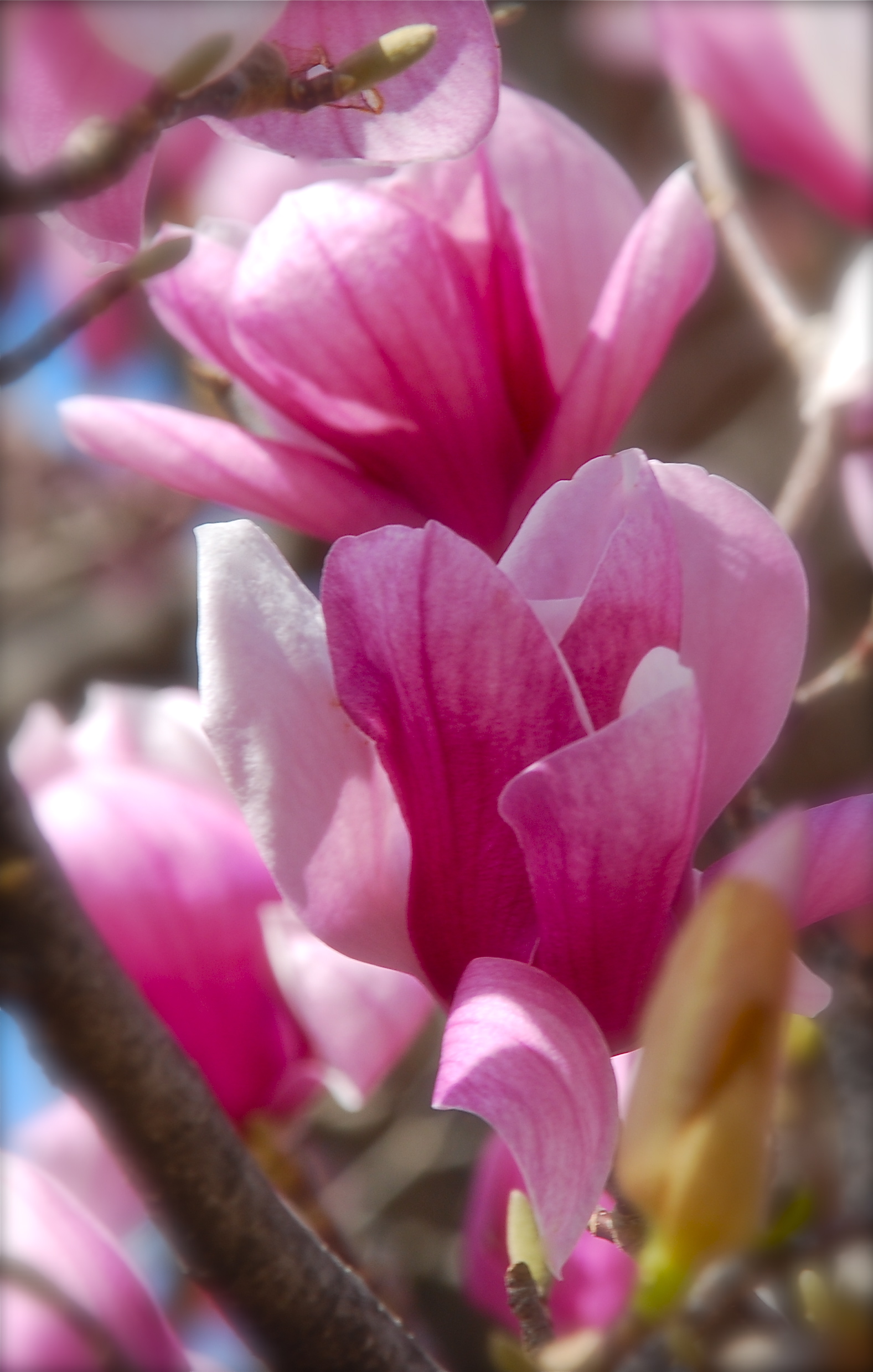
Spring is coming!  Its earliest harbingers have arrived to tell me so.  And with it, as always, comes a heightened sense of awe and wonder, a sense of such that I acquired at a very early age.  Thus I look not outside Creation nor separate from it, to find God.  The words of Romans 1:20 in Scripture intimates that “the world is a place of revelation and the whole of life is sacramental.”  So it is that Creation is enough to reveal God to humanity, but it is not enough for its salvation.  For that we need Jesus, the Messiah; He is the only one who has the ability to offer us salvation.  Thankfully, with a profession of faith that He is Lord and a penitent heart, it is ours for the asking.

“Come to me, all you that are weary and are carrying heavy burdens, and I(Jesus) will give you rest.  Take my yoke upon you, and learn from me; for I am gentle and humble in heart, and you will find rest for your souls. For my yoke is easy, and my burden is light.”  ~Matthew  11:28-30   ✝

245. Novelty is an essential attribute of the beautiful. ~Benjamin Disraeli

What was any art but a mould
in which to imprison for a moment
the shining elusive element
which is life itself.
~Willa Cather

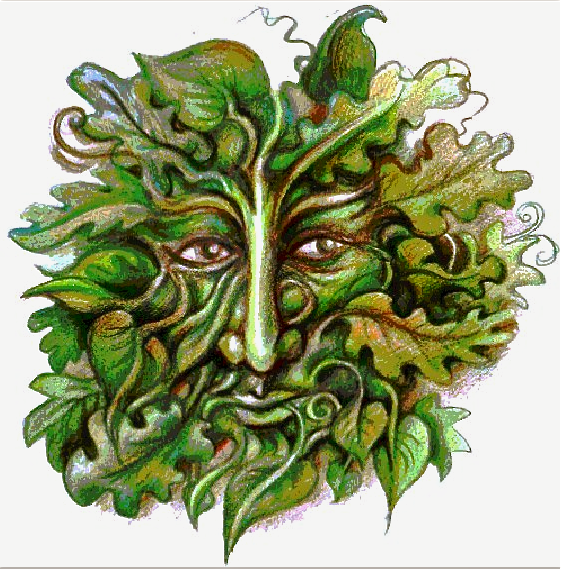
The foliate head and the Green Man are sculptures or drawings in which almost always a man’s face is surrounded by or made from leaves; it is a face that merges nature with humanity.

Image

The Green Man is “a mythic figure that appears in art and legend throughout the centuries and independently in diverse cultures.”  Purportedly the images of these leafy men represent life irrepressible.

Image

Countless numbers of the leafy faces can be seen on medieval castles, abbeys, and churches.  In fact it was the Europeans who are said to have spread the Green Man’s image and lore to the parts of the world they colonized.

Image

For some the Green Man’s image symbolized the triumph of green life over death and winter.  Others considered him the protector of nature; parallels have even been drawn between the Green Man and Jesus Christ.

Image

I see the foliate face as a mould, as Cather suggests, in which can be seen the artistic quintessence of vegetative and human life.  And as Disraeli proposes, it is the novelty of its beauty, unconventional as it may be, that is most appealing.  On days when I can’t or don’t get out into my garden, I see my semi-human, foliate-faced “friend” on the ground at the end of the stone path out my back door.  He is a reminder of the strong connection I feel to the natural world and God, its holy Maker. His eyes seem to peer longingly from behind his verdant leafiness in the same way I perceive that the Lord peers down at the world wanting to know, protect, and love His children.  His countenance evokes thoughts of man’s need to create as the made-in-the-image-heir of a creative God, of man’s desire to feel connected to the whole of Creation, and of man’s hope that new seasons will arise again and again as promised.  The man in the stone may seem to be locked in perpetual silence, but he speaks to me and I often talk to him.

…the Lord make His face to shine upon you, and be gracious to you; the Lord lift up His countenance upon you, and give you peace.  ~Numbers 6:25-26  ✝

242. For last year’s words belong to last year’s language. And next year’s words await another voice and to make an end is to make a new beginning. ~T. S. Eliot

In my garden there is a large place for sentiment.
My garden of flowers is also my garden of thoughts and dreams.
The thoughts grow as freely and the flowers,
and the dreams are as beautiful.
~Abram L. Urban

Image

One of the fascinating things about a garden is that it’s never quite the same from year to year even if nothing is lost or nothing new is planted.  Depending on the variable nature of the weather and the seasons, there is always a difference from one year to the next in the way things grow and perform.  Since a garden is a living, breathing entity, it is always in a state of flux, a continuous inconstancy of gain and loss, rise and fall.  For example one never knows how many seeds will germinate and flourish or when they or something established will perish for one inexplicable reason or another.  So, like people, a garden awaits another “voice” each year, and every ending in it and us yields a new and somewhat different beginning.  Whatever was said and done last year is just that for both nature and humanity, and I’ve found it best to leave what was said and done in the past where it belongs.  Neither do I spend time thinking about new year’s resolutions because I know that the seasons in my life are always different and therefore evoke different feelings within me and different responses from me.

Time and time again life rises from death, and when it does, one can feel the beating heart of heaven and hear the hushed voice of grace–that unchanging holy voice of grace, that sacred in-and-out breath of life, the Presence that captures me again and again and again.  For me that is the only constancy, and I simply cannot live without it or the Ancient of Days by whose grace I live.

“The sounds, the aromas, the speech of life that infiltrates and seduces in heard and unheard melodies echoing from every life form to cocoon, to feed us, to excite us, to give solace, to renew, to cry in joy and sorrow, to create, to birth, to laugh at the sheer exuberance of feeling, I love.”    ~Patricia at: http://theenglishprofessor.net/qualifications.php

Obey the Lord and serve Him faithfully with all your heart; consider all the great things He has done for you.  ~1 Samuel 12:24  ✝

18. The first fall of snow is not only an event, it is a magical event. ~J. B. Priestley

Out of the bosom of the Air,
Out of the cloud-folds of her garments shaken,
Over the woodlands brown and bare,
Over the harvest-fields forsaken,
Silent, and soft, and slow
Descends the snow.
~Henry Wadsworth Longfellow

Image

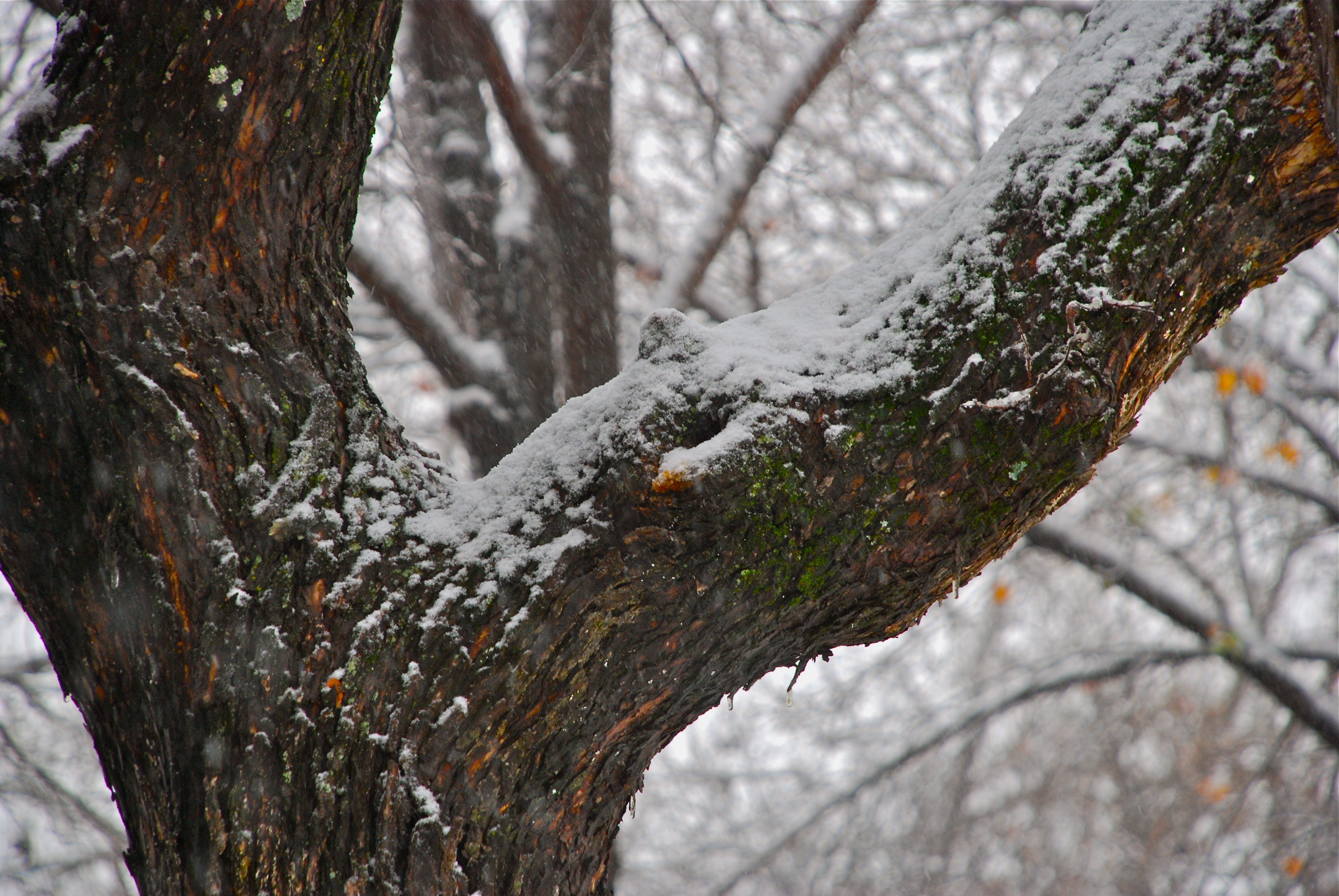
Our area, that had been desperately in need of rain, was the beneficiary of fortuitous events on Christmas Eve.  Could it be that the celebration of the Messiah’s coming the night before was what prompted the blessing of rain as well as the magical, miracle of snow.  So many voices were lifted up in praise and worship of Him that our petitions for rain might have been heard as well. Occasionally on cold, crisp wintry days or nights layers of snow blanket God’s creation even here in north central Texas, but this time we received a strange mixture of “wet” goodness.  At eventide sparkling stars punctuated the ancient moon in heaven’s blackened dome, but during the course of the Messiah’s birthday, clouds laden with moistures moved in, flashes of lightning lit up the sky, a good amount of rain was garnered, hail fell, and finally snow covered the landscape.  If this is not an assortment of  Divine providence mixed with earthly “enchantment,” then as Priestley says, “where is such to be found?”

Praise His Holy Name!

11. The moment one gives close attention to anything,
even a blade of grass, it becomes a mysterious, awesome,
indescribably magnificent world in itself. ~Henry Miller

Each blade of grass has its spot on earth whence it draws its life,
its strength; and so man is rooted to the land
from which he draws his faith together with his life.
~Joseph Conrad

DSC_0026

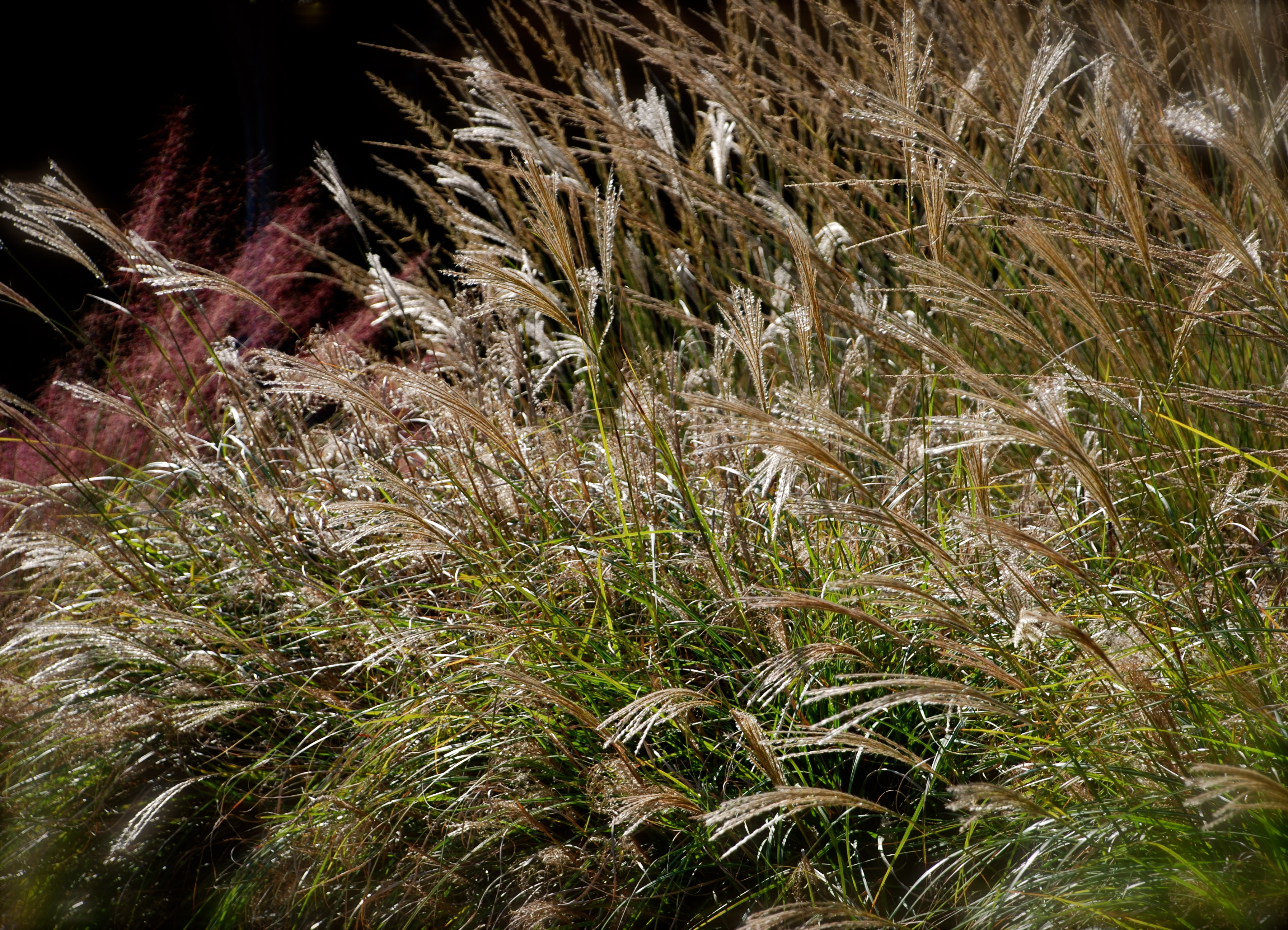
Against the backdrop of autumn’s falling leaves ornamental grasses shift and sigh adding an ethereal element to the landscape.  With airy flower panicles, fluffy seed plumes, and striking seed heads ornamental grasses provide charming “fringe accents” in yards and gardens. Even after the onslaughts of freezing temperatures, grasses continue to grace the landscape with beauty.  They add subtle colors, assorted textures, and the dimensions of motion and sound.  Throughout winter’s “vale of grief,” they capture and play with whatever light is available and in so doing speak of life and give us something “that glimmers in the sleep of things.” The “music” of their swishing and swaying reminds us that what’s happening isn’t an ending but merely a transition for the next beginning.

In a poetic conversation with the Lord, Edna St. Vincent Millay said, “God, I can push the grass apart and lay my finger on Thy heart.”  A Quaker and itinerant preacher named Elias Hicks wrote that “the fullness of the godhead dwelt in every blade of grass.”  And Thomas Carlyle, a Scottish writer, asked, “To us also, through every star, through every blade of grass, is not God made visible if we will open our minds and our eyes.”  These writers, like me, realize that man was meant to be “rooted to the land and therefore to God.”  But, the “umbilical cord” that connects all humanity to Creation and God seems, for many, to have been severed.

The Lord, however, refuses to remain separated or removed from that which He has made.  In an effort to reconnect people to the land and to provide healthier food, many neighborhoods are finding places to build community gardens.  More and more people are getting involved in caring for the land in these communal plots.  Also many schools across the nation are incorporating habitat gardens into the learning experiences of their students, and we are seeing a rise in “hobby farms” where retired professionals have started a second career as a hobby farmer or others who are still working are spending their spare time on their own small farm.

You care for the land and water it; You enrich it abundantly.  The streams of God are filled with water to provide the people with grain, for so You have ordained it.   You drench its furrows and level its ridges; You soften it with showers and bless its crops. You crown the year with Your bounty, and Your carts overflow with abundance.  The grasslands of the wilderness overflow; the hills are clothed with gladness.  The meadows are covered with flocks and the valleys are mantled with grain; they shout for joy and sing.  ~Psalm 65:9-13   ✝