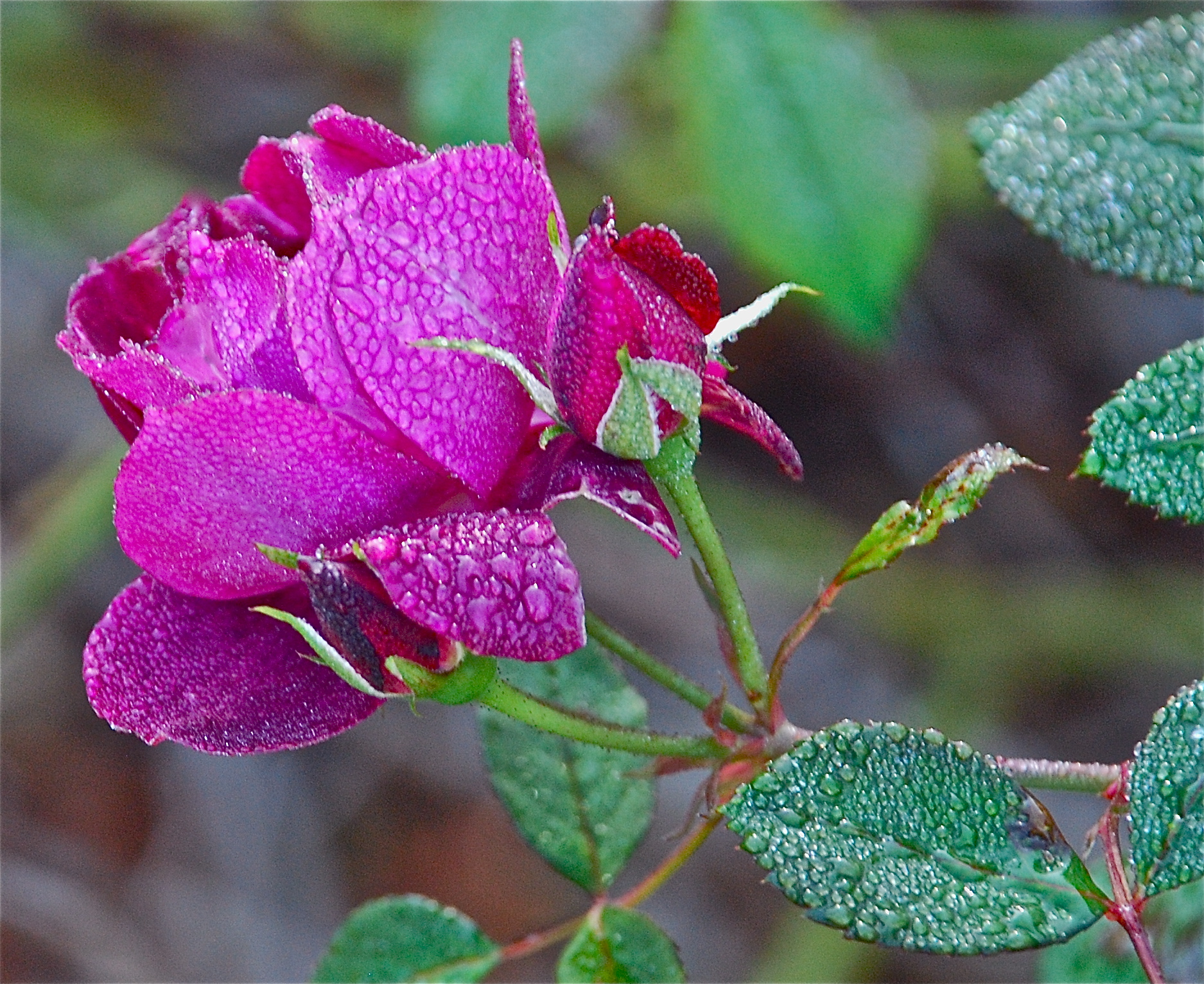
229. So, like a forgotten fire, a childhood can always flare up again within us. ~Gaston Bachelard

To speak truly, few adult persons can see nature.
Most persons do not see the sun.
At least they have a very superficial way of seeing.
The sun illuminates only the eye of the man
but shines into the eye and heart of the child.
The lover of nature is he whose inward and outward senses
are still truly adjusted to each other;
who has retained the spirit of infancy even into the era of manhood.
~Ralph Waldo Emerson

Image

God sometimes reaches out at the most unexpected times to capture our hearts and attention, and not infrequently does He do that by using one of Creation’s eye-catching spectacles.  When a moment like that happens, it’s much like when a lover surprises his beloved by pulling a handful of flowers from behind his back.   And every time I’m delighted by the Holy One in such a way, I fall in love with Him all over again.  A friend of mine recently shared a moment like that with me, and as I read her description, I realized that understanding God’s parables can occur when the innocence of childhood floats up back up in our present realities.

On this cool, crisp morning, I arose before the sun and
went out my front door to look for the newspaper.
But that’s not what caused me to stop in my driveway, paper forgotten.
Overhead, Ursa Major and other stars twinkled brightly,
framed only by a few thin, wind-shaped clouds.
And at a time of the year when children take center stage,
I thought of the innocence in all of us.
For it was not my intellect that held me spellbound
but my own innocence, untarnished by age.
In that moment, caught by the wonder of nature,
blessed with its beauty, I felt magical.
~Emily Seate

Who is this that appears like the dawn, fair as the moon, bright as the sun, majestic as the stars in procession?  ~Song of Solomon 6:10  ✝
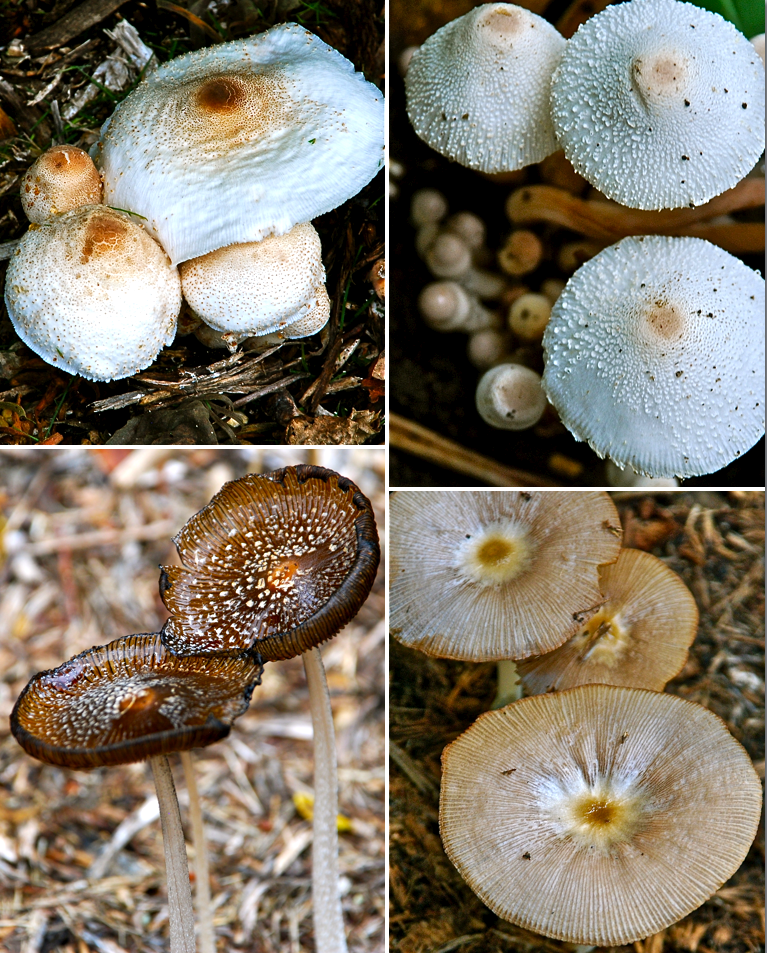
155. Observe the cautious toadstools…Pale and proper and rootless, they righteously extort their living from the living. ~W. D. Snodgrass

What did I see today?
I saw a fairies’ gypsy camp.
The tents were toadstools, brown and gray,
Among the bracken, soiled and damp.
~An excerpt from “The Fairy Camp” by Danske Dandridge,
Danish poet and garden muse

Image

In tales of yore fairies were depicted as pixie-like creatures with gossamer wings, colorful clothing, and magic wands.  Do you believe in them?  The child in me did, and my adult self has had a hard time convincing her otherwise.  It was an especially hard sell when I’d come across toadstools like the ones above.  Such as they never failed to prompt thoughts of fairies that lived in enchanted realms and oftentimes were sighted among flowers, hills, streams, and woodlands.  The storytellers of such tales claimed that the elfish beauties rode on fairy steeds or took to wing in order to flit from flower to flower.  They also said that when a host of fairies gathered together to sing and dance, they were often found in a “fairy ring of toadstools.”  When that was so, we, the readers, were admonished to step lightly around the toadstools or to tip-toe gingerly past them.  Ah, what sweet childhood days were those!  Now the innocence of my youth and my belief in fairy tales may be gone, but not unlike a toadstool that extorts its “living from the living,” I secure my salvation from living in Christ.

For we did not follow cleverly devised stories when we told you about the coming of our Lord Jesus Christ in power, but we were eyewitnesses of His majesty.  ~2 Peter 1:16  ✝

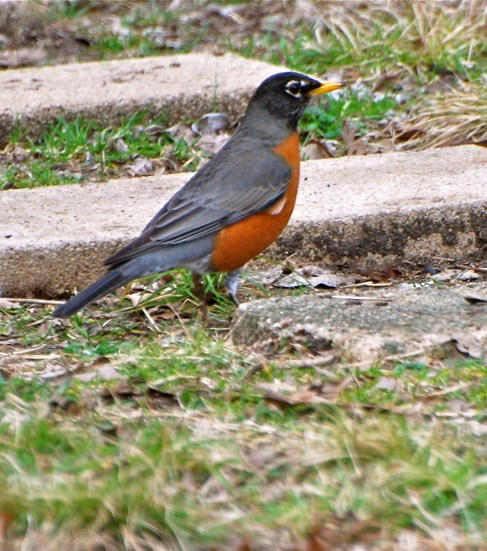
46. A Robin Redbreast in a cage puts all Heaven in a rage. ~William Blake, English poet, painter and printmaker

When father takes his spade to dig
then Robin comes along;
And sits upon a little twig
And sings a little song.
~Laurence Alma-Tadema

Image

The introductory line is from Blake’s “Auguries of Innocence,” a somewhat lengthy poem consisting of a series of paradoxes in which Blake juxtaposes innocence with evil and corruption. The word augury in the title means omen or token, and the robin is the poem’s first noted “augury of innocence.”  The robin’s song, personality, and countenance are such that it’s obvious why the poet saw the act of putting one in a cage as not only an enraging violation but also as a profound perversion of holiness.  The sweet song and colorful markings of a robin make the bird a delightful harbinger of spring’s infancy and innocence.  Looking forward to its coming is one of my favorite rites in spring’s passage, and like “all heaven” I’d be incensed if the bird’s freedom were taken away and its song silenced.  Below is a legend about the robin that again ties the bird to the blameless and sacred.  Although the truthfulness of legends is questionable, I’m fascinated that somehow, somewhere, and in some way the robin was connected to the Messiah.

The Legend of the First Robin

One day, long ago, a little bird in Jerusalem saw a large crowd gathered around a man carrying a heavy wooden cross.  On the man’s head was a crown made from a thorn branch.  The thorns were long and sharp.  The little bird saw that the thorns were hurting the man.  It wanted to help Him, so it flew down and took the longest, sharpest thorn in its tiny beak.  The bird tugged and pulled until the thorn snapped from the branch.  Then a strange thing happened.  A drop of blood fell onto the bird’s breast, staining it bright red.  The stain never went away.  And so today the robin proudly wears a red-breast, because it helped a man named Jesus.  

“But ask the animals, and they will teach you, or the birds of the air, and they will tell you; or speak to the earth, and it will teach you, or let the fish of the sea inform you.  Which of all these does not know that the hand of the LORD has done this?  In His hand is the life of every creature and the breath of all mankind. . .”  ~Job 12:7-10   ✝

13. As this year draws to its end we give thanks for the gifts it brought and how they came inlaid within where neither time nor tide can touch them. ~John O’Donohoe

Image

So I like best of all autumn, because its tone is mellower,
its colors are richer, and it is tinged with a little sorrow.
Its golden richness speaks not of the innocence of spring,
nor the power of summer, but of the mellowness
and kindly wisdom of approaching  age.
It knows the limitations of life and its content.
~Lin Yutang