195. Dull November brings the blast, then the leaves are whirling fast. ~Sara Coleridge

Every landscape is, as it were,
a state of the soul,
and whoever penetrates into both
is astonished to find how much likeness
there is in each detail.
~Henri Frederic Amiel
Image

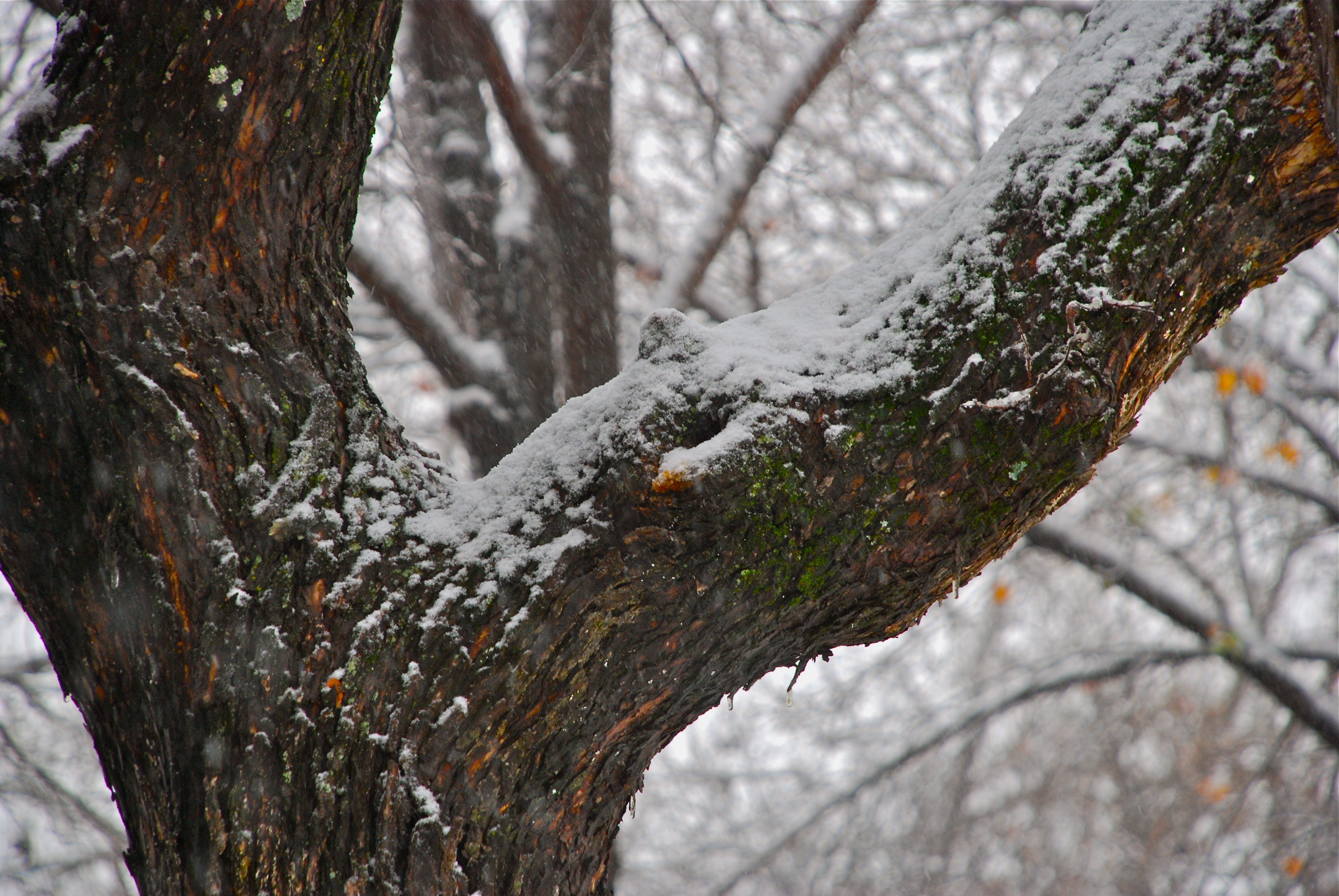
It blew and it blew and it blew all day long yesterday.  Then in the night the lightning lit up our north Texas skies and the thunder growled its mighty roars while rain pelted the house and brought down masses of Autumn’s colored leaves.  The serious rain had ended by midnight, but the clouds never left and today their gentle, mists have made blurry our November sky off and on all day.  The temperature dropped to almost freezing over night, and the winds, though not as strong as yesterday’s, have continued as well so that it has been very cold, very wet and very blustery.  It seems the ancient, arctic curmudgeon wanted to give us a taste of wintry stuff before his appointed reign on winter’s throne begins.  But seasons are like that, aren’t they?  There’s always a beginning, a middle, and an end, and everything but the middles is really a overlapping of the before and after so to speak.  One season doesn’t just slam the door on the other or keep the next one locked out according to some appointed date on the calendar.  The new one just sort of oozes in a little at a time and then after a while slowly, but surely lets the next one start taking hold making of the seasons an ongoing continuum rather than a series of separate entities.  And nature’s patterns have played themselves out like that for over 4 billion years!  Amazing!  Nature is simply amazing!  As is her Creator!  Something else to consider is that the seasons of our lives come and go in much the same way, do they not?

The wind blows to the south and turns to the north; round and round it goes, ever returning on its course.  ~Ecclesiastes 1:6  ✝
193. I know by autumn’s wizardry on such a day the world can be only a great glad dream for me… ~Eleanor Myers Jewett

The autumn comes, a maiden fair
In slenderness and grace…
In flowers of grasses she is clad;
And as she moves along,
Birds greet her with their cooing glad
Like bracelets’ tinkling song.
~Kalidasa, 5th century Sanskrit poet and dramatist

Image

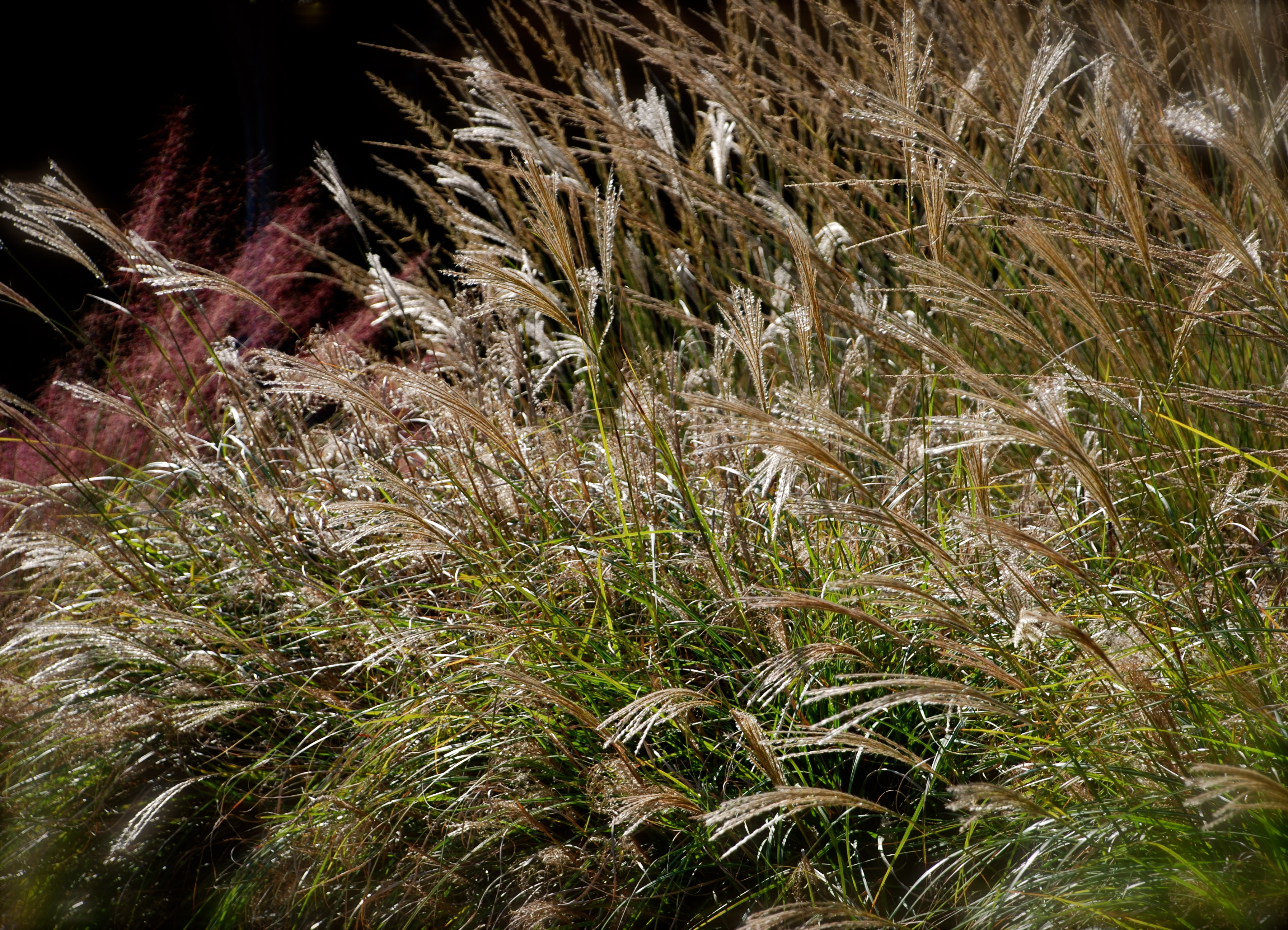
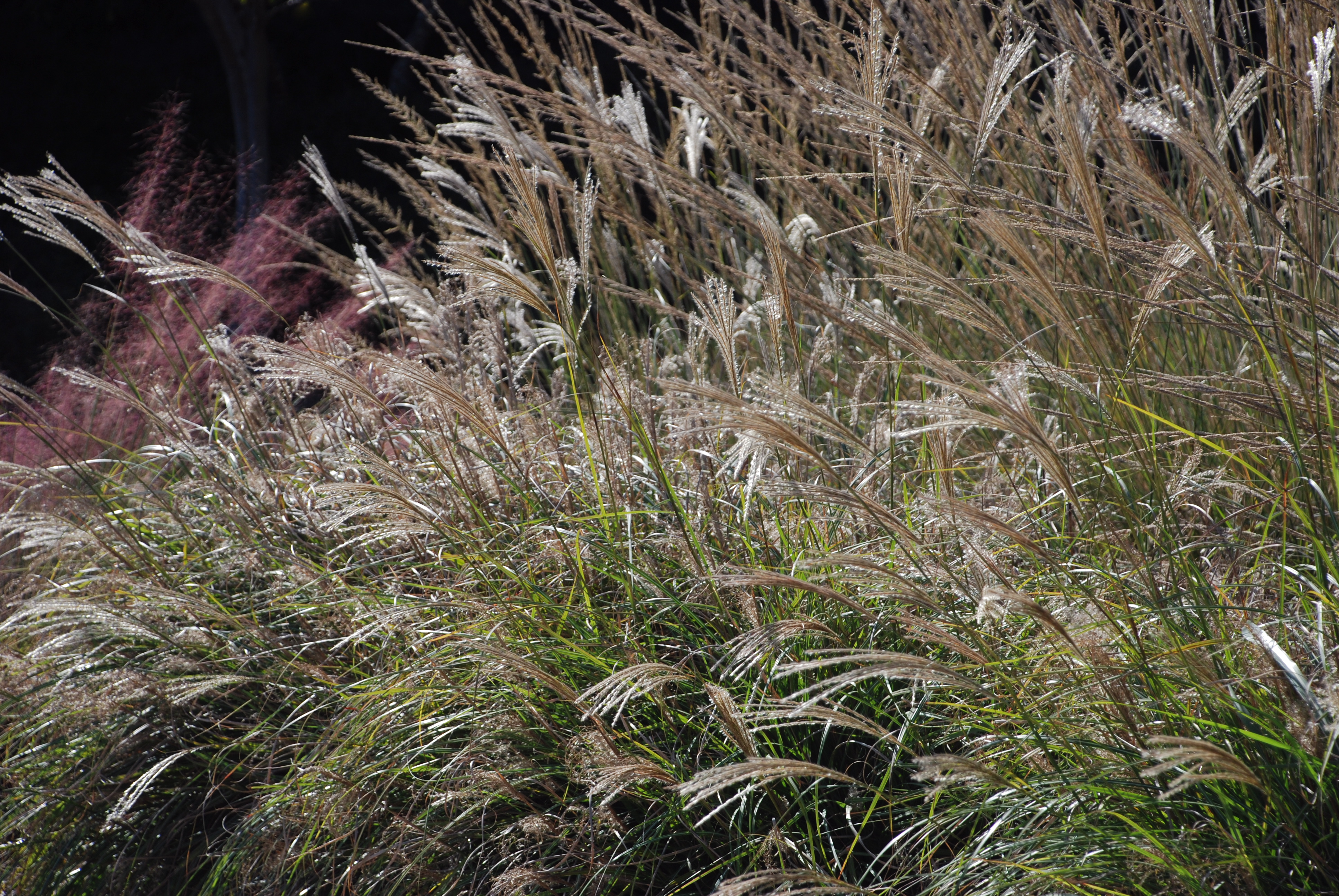
A “maiden fair” has autumn most certainly been, but now the gusty, cooler winds of advancing November fray her youthful garments more and more.  The season is growing long in the tooth, and the once slender, grace filled maiden has metamorphosed into a more roughly-hewn grown woman.  Deepening autumn’s brisk caresses and shivering moments continue to take their toll on the landscape, and the growing wildness in her tattered countenance is changing her refined glory into a bewitching, reckless abandon.  Until all her days are gone, however, the saving grace of her now tattered remnants will be the native and ornamental grasses that shift and sigh giving her a new song and her aging visage a pretty, ethereal appearance.

The grass withers and the flowers fall, but the word of our God endures forever.  ~Isaiah 40:8  ✝

Music’s Mystery

Image

I’ve heard it said that only human beings have been given the gift of music; that only people create songs, sing and serenade their souls with this most magical and uplifting form of communication and communion. Yet, should we not consider the song of the lark? The haunting ballads of the whales? The mournful call of the wolf? The robin’s lyrical laugh at dawn and dusk? The crickets that serenade the nighttide? The burbles of monkeys swaying in the trees? The laughing of the hyena?

Who is to say that in their melodic tunes, caterwauls, howls, wails, and other worldly vocalizations there is not some measure of music. Why should we be the only ones to sing praise, to croon our love, and to bewail our distress? How can we know, in truth, in honesty, that the deliberate scree of the hawk, the piercing bugle of the elk, the chattering of raccoon and ferret, and the murmurings of infrasonic elephant calls is not music to their ears?

Music is a form of communication that lifts the soul, expresses emotion, and brings one being into contact with another being. If this is, indeed, the definition of music (of which it is a form) then can that being not be one other than human? Does not one wolf join another when it sings? Does not the whale song change season to season and year to year, picked up by another whale to be carried on? Does not one roaring lion inspire the entire pride by its lusty cry?

Consider what the morning would sound like without the sweet music of the birds. Contemplate what the summer night might be when not a single chirrup, trill, drone or buzz lilted through the air. Ponder how deep and lonely the oceans would be without the drifting, breathtaking songs of the whales. Can you even imagine a mountain landscape without hearing the echoing howl of a wolf or the bubbling laugh of the loon?

If these sounds, that can captivate us and uplift our thoughts, our hearts and even our souls, are not music and do not do the same for all those who hear them, regardless of race, than perhaps, we must follow that course of logic and say that cave paintings are not art, tap is not dance, improvisation is not acting and free verse is not poetry.

Or perhaps, Music Teaches the Soul what the Heart Feels and Guides the Heart with what only the Soul can Truly Know.

Music’s Mystery is by Morgan at:  http://booknvolume.com

173. I’m so glad I live in a world where there are Octobers. ~Lucy Maud Montgomery

Autumn, that season of peculiar and inexhaustible influence
on the mind of taste and tenderness,
that season which has drawn from every poet,
worthy of being read,
some attempt at description, or some lines of feeling.
~Jane Austen

Image

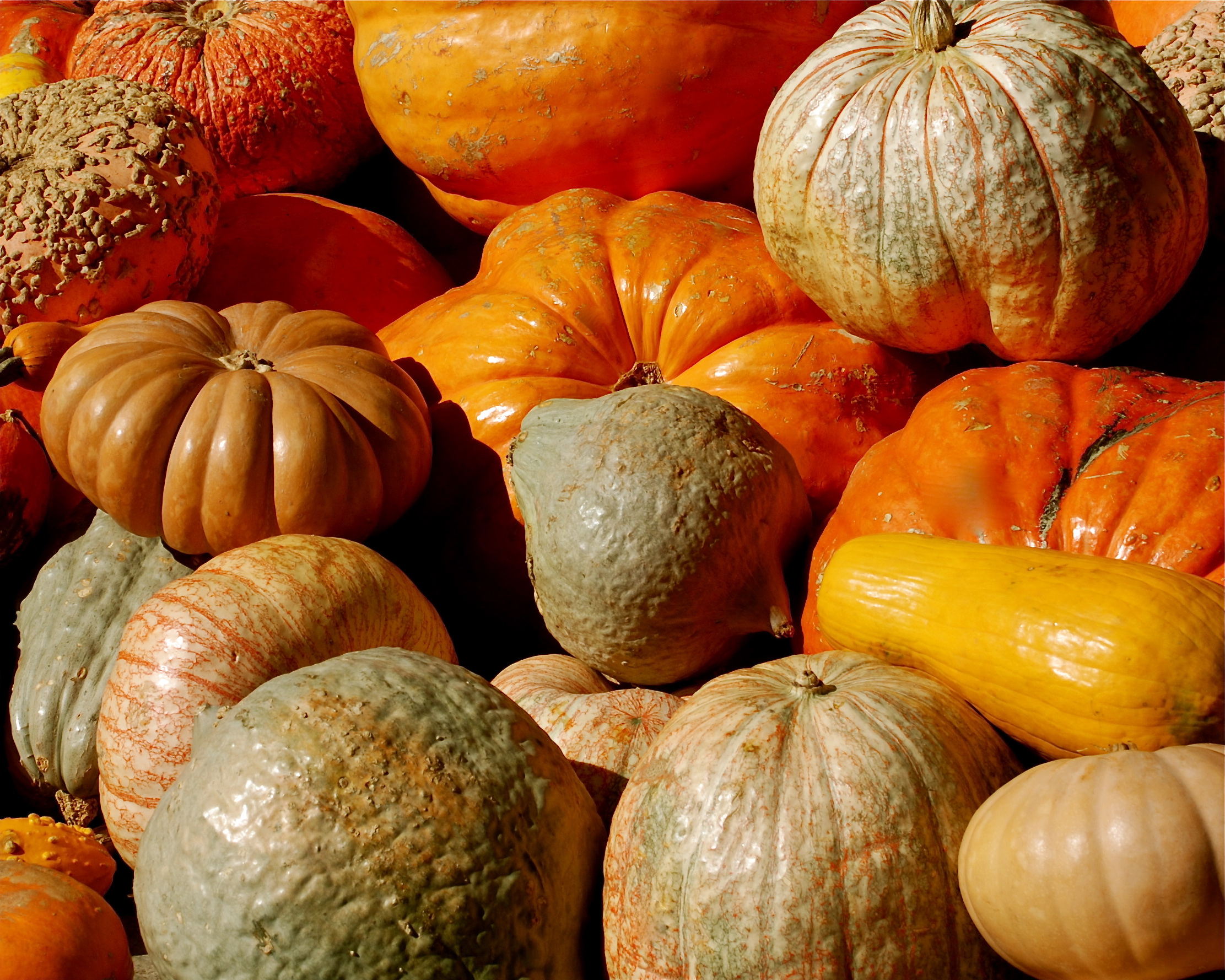
While the summer sun reigned high in the heavens, the trailing vines of Cucurbita inched along the ground.  Its flowers were pollinated, and then its fruits began to grow.  Tendrils on the vines helped anchor the rambler and protect them from the wind.  The leaves of the vines absorbed energy from the sun to spur the growth of the fruits, and the stems worked like umbilical cords to bring nutrients to the fruits while the thin and shiny outer layer of the fruits protected them from insects and disease.  As summer wound down, the ripening gourds began turning a spectacular color of orange, at least the traditional ones.  Then after the autumnal equinox, north winds venturing out of their haunts moved southward.  Along the way they gathered a fair measure of clouds; rain from the clouds greened the landscape; days became noticeably shorter; temperatures dropped below previous three digit highs; skies regained deeper hues; dawns became chillier; and the inimitable pumpkin, having been nipped off its vine, appeared on roadside stands and in grocery stores.  How I love Octobers and the whole autumn experience; hardly a day goes by that I don’t turn my eyes upward in praise, drop to my knees in thanksgiving, and wish I could throw my arms in adoration around  the Lord of all Creation!

May the peoples praise you, O God; may all the peoples praise you.  Then the land will yield its harvest, and God, our God, will bless us.  ~Psalm 67:5-6  ✝

164. Is not this a true autumn day? Just the still melancholy that I love — that makes life and nature harmonize. ~George Eliot

Delicious autumn!
My very soul is wedded to it,
and if I were a bird I would fly about the earth
seeking the successive autumns.
~George Eliot

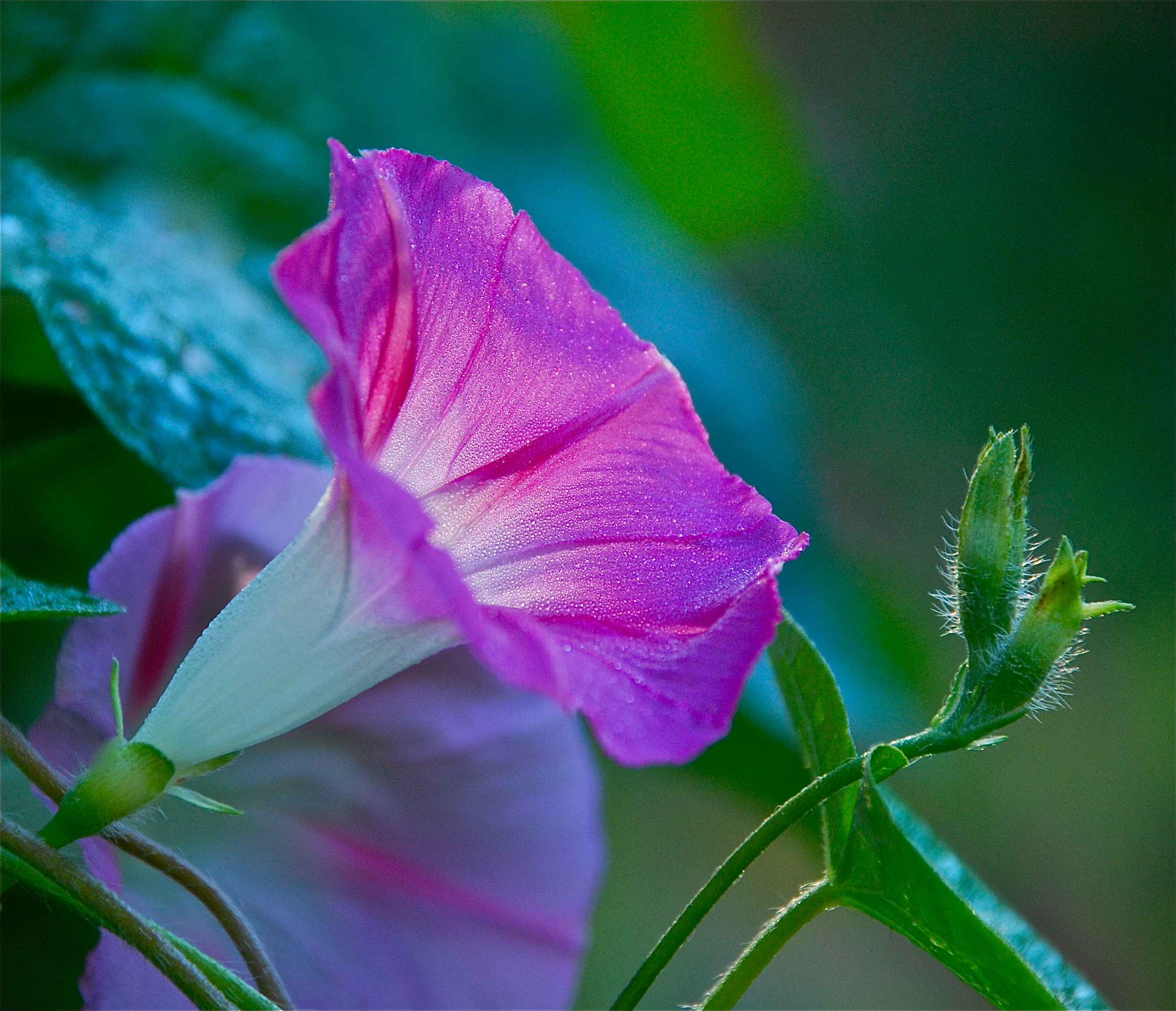
**I was hoping you could see that the morning glory below, heavy with dew after the rain, was an awesome, pink delight to behold, but the image is too smalll here for you to see its alluring sparkle.

Image

Northerly winds in the night blew our gray, rain-bearing clouds away, and the day dawned under a fresh, China blue sky.  Layers of dust that had been blowing in on southerly winds for weeks were washed away, sent back to the soil from whence they came.  As a result heaven’s dome along with the landscape looked sparkling clean and pristine.  In the day’s early light growing green things shined greener, new growth pushed up on rose canes, seedlings appeared in soil once parched and cracked by summer’s fiendish assaults.   Wildlife, though always smaller in number in October, flew, crawled, and buzzed with renewed energy and enthusiasm in the aftermath of the recent slow, soaking rains.  And so with a bit of an almost frosty nip in the air, this day evolved into our first quintessential, autumn day.  How, then, on such a day, could the early call to venture out in the yard, camera in hand, have been ignored?  Or how could it have been a surprise that the vignettes I found were so exquisite that all I could muster, with eyes blurred by joyful tears, was praise for the Holy One whose presence amidst the glory was sweetly palpable?

Let them give thanks to the Lord for His unfailing love and his wonderful deeds for mankind.  Let them sacrifice thank offerings and tell of his works with songs of joy.  ~Psalm 107:21-22  ✝

144. In the right light, at the right time, everything is extraordinary. ~Aaron Rose

For me, a landscape does not exist in its own right,
since its appearance changes at every moment;
but the surrounding atmosphere brings it to life – the
light and the air which vary continually.
For me, it is only the surrounding atmosphere
which gives subjects their true value.
~Claude Monet

Image

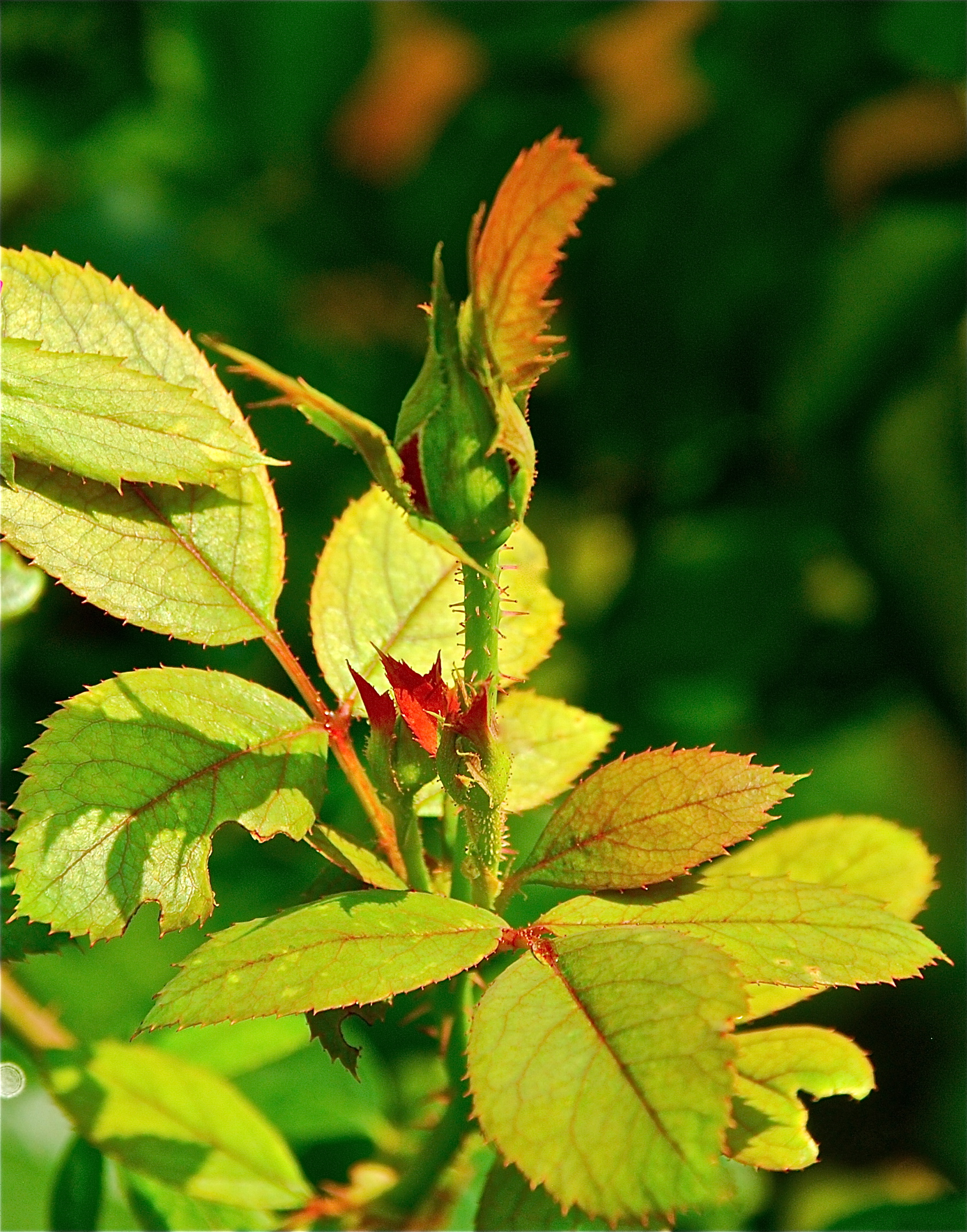
Living in a garden day after day, being a participant in all its events, witnessing the changes from season to season, and watching the way differing light falls on the landscape make gardening a thrilling experience.  The fact that colors in the garden change off and on during the course of a day fascinates me.  In morning light the hues are vivid and bright, but as daylight mellows into twilight, they melt into quieter, more subdued tones.  Light even affects the fragrance of things for it is only in the cooler moments of early morn and twilight that the strongest aromas are dispelled from herbs and flowers.  But then things are not just affected by changes in lighting.  Sometimes colors change as flowers and leaves age, when temperatures rise or fall, when changes occur in the content of the soil, or when rainfall is lacking or in abundance.  That’s why without looking at a calendar, I can tell that the rose bud in the photo is one born of recent rainfall and the passing of the autumnal equinox.  The constancy of this inconstancy defines the soul of a garden, and, like all else in nature, speaks to me of rhythmical and purposeful ordination.

Awake, north wind, and come, south wind!  Blow on my garden that its presence may spread everywhere.  Let my beloved come into his garden and taste its choice fruits.  ~Song of Songs 4:16   ✝

135. As for marigolds, poppies, hollyhocks, and valorous sunflowers, we shall never have a garden without them… ~Henry Ward Beecher

Eagle of flowers! I see thee stand
And on the sun’s noon-glory gaze;
With eye like his, thy lids expand,
And fringe their disk with golden rays:
Though fix’d on earth, in darkness rooted there
Light is thy element, thy dwelling air
Thy prospect heaven.
~The Sunflower by James Montgomery, British editor and poet

Image

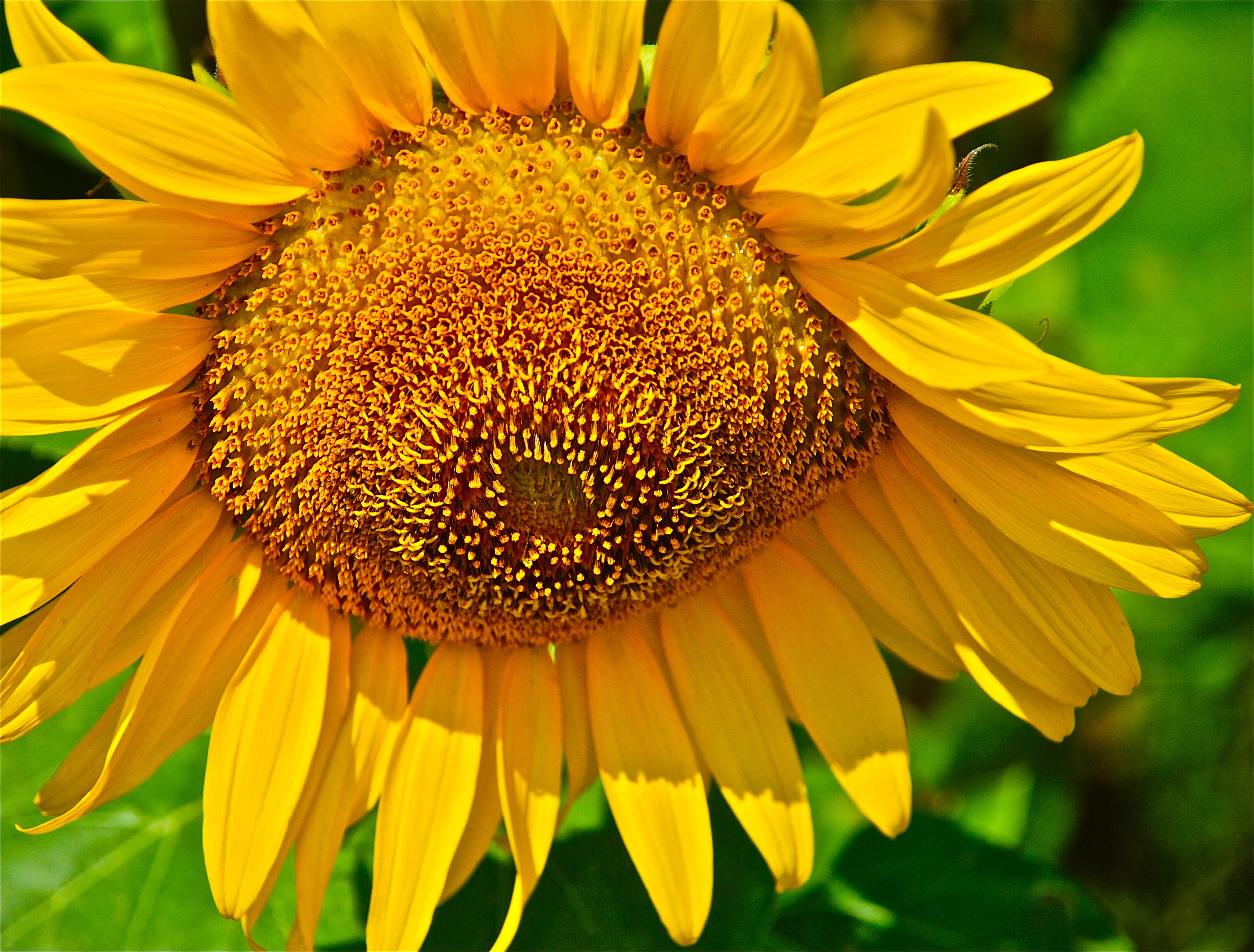
The sunflower with its “gaudy crown of gold” courts the heavenly expanse in search of the sun.  But is that iconic golden spectacle seeking to be prospered by the sun a single flower?  No, each sunflower is actually a cluster of sometimes more than 2,000 small flowers all growing together to mimic the sun and harvest its light.  Amazingly, at maturity some flower heads of the sunflower measure 2 feet across while the plants that hold them up sometimes grow as high as 18 feet.  Henry Ward Beecher additionally said all flowers “have an expression of countenance as much as men or animals.  Some of them seem to smile; some have a sad expression; some are pensive and diffident; others again are plain, honest, and upright, like the broad-faced sunflower. . .”  I agree and adore the plain honesty and uprightness of the sunflower, but in them I also see a touch of elegance in their statuesque stance in the landscape.

This is what the Lord says to me: “I will remain quiet and will look on from my dwelling place, like shimmering heat in the sunshine, like a cloud of dew in the heat of harvest.”  ~Isaiah 18:4   ✝

18. The first fall of snow is not only an event, it is a magical event. ~J. B. Priestley

Out of the bosom of the Air,
Out of the cloud-folds of her garments shaken,
Over the woodlands brown and bare,
Over the harvest-fields forsaken,
Silent, and soft, and slow
Descends the snow.
~Henry Wadsworth Longfellow

Image

Our area, that had been desperately in need of rain, was the beneficiary of fortuitous events on Christmas Eve.  Could it be that the celebration of the Messiah’s coming the night before was what prompted the blessing of rain as well as the magical, miracle of snow.  So many voices were lifted up in praise and worship of Him that our petitions for rain might have been heard as well. Occasionally on cold, crisp wintry days or nights layers of snow blanket God’s creation even here in north central Texas, but this time we received a strange mixture of “wet” goodness.  At eventide sparkling stars punctuated the ancient moon in heaven’s blackened dome, but during the course of the Messiah’s birthday, clouds laden with moistures moved in, flashes of lightning lit up the sky, a good amount of rain was garnered, hail fell, and finally snow covered the landscape.  If this is not an assortment of  Divine providence mixed with earthly “enchantment,” then as Priestley says, “where is such to be found?”

Praise His Holy Name!

12. Ring out, wild bells, to the wild sky, the flying cloud, the frosty light. . . ~Alfred Lord Tennyson

Yet a few sunny days, in which the bee
Shall murmur by the hedge that skirts the way,
The cricket chirp upon the russet lea,
And man delight to linger in thy ray.
Yet one rich smile, and we’ll try to bear
The piercing winter frost, and winds, and darkened air.
~William Cullen Bryant

Image

With every north wind that blows the landscape unravels more and more; after each assault the downed foliage leaves in its wake mounting numbers of skeletons bracing themselves for winter’s icy blasts.  In addition the ornamental grasses are drying out and taking on their a wild and tattered look, and yet a few touches of color remain in the leaves and flowers that have yet to be exiled.  Still audible in the “honey’d leavings” of warm afternoons are their faint renditions of the lusty songs of life, but regardless of how sweet the sound of that is, the sands in autumn’s hourglass are running out.  Like all things, it too will come at last to its Sabbath and therein rest until its next appointed hour upon life’s stage.

11. The moment one gives close attention to anything,
even a blade of grass, it becomes a mysterious, awesome,
indescribably magnificent world in itself. ~Henry Miller

Each blade of grass has its spot on earth whence it draws its life,
its strength; and so man is rooted to the land
from which he draws his faith together with his life.
~Joseph Conrad

DSC_0026

Against the backdrop of autumn’s falling leaves ornamental grasses shift and sigh adding an ethereal element to the landscape.  With airy flower panicles, fluffy seed plumes, and striking seed heads ornamental grasses provide charming “fringe accents” in yards and gardens. Even after the onslaughts of freezing temperatures, grasses continue to grace the landscape with beauty.  They add subtle colors, assorted textures, and the dimensions of motion and sound.  Throughout winter’s “vale of grief,” they capture and play with whatever light is available and in so doing speak of life and give us something “that glimmers in the sleep of things.” The “music” of their swishing and swaying reminds us that what’s happening isn’t an ending but merely a transition for the next beginning.

In a poetic conversation with the Lord, Edna St. Vincent Millay said, “God, I can push the grass apart and lay my finger on Thy heart.”  A Quaker and itinerant preacher named Elias Hicks wrote that “the fullness of the godhead dwelt in every blade of grass.”  And Thomas Carlyle, a Scottish writer, asked, “To us also, through every star, through every blade of grass, is not God made visible if we will open our minds and our eyes.”  These writers, like me, realize that man was meant to be “rooted to the land and therefore to God.”  But, the “umbilical cord” that connects all humanity to Creation and God seems, for many, to have been severed.

The Lord, however, refuses to remain separated or removed from that which He has made.  In an effort to reconnect people to the land and to provide healthier food, many neighborhoods are finding places to build community gardens.  More and more people are getting involved in caring for the land in these communal plots.  Also many schools across the nation are incorporating habitat gardens into the learning experiences of their students, and we are seeing a rise in “hobby farms” where retired professionals have started a second career as a hobby farmer or others who are still working are spending their spare time on their own small farm.

You care for the land and water it; You enrich it abundantly.  The streams of God are filled with water to provide the people with grain, for so You have ordained it.   You drench its furrows and level its ridges; You soften it with showers and bless its crops. You crown the year with Your bounty, and Your carts overflow with abundance.  The grasslands of the wilderness overflow; the hills are clothed with gladness.  The meadows are covered with flocks and the valleys are mantled with grain; they shout for joy and sing.  ~Psalm 65:9-13   ✝