267. God waits to win back His own flowers as gifts from man’s hands. ~Rabindranath Tagore

Flowers don’t worry about how they are going to bloom.
They just open up and turn toward the light
and that makes them beautiful.
~Jim Carrey

Image

Small children pick flowers for their mamas, men bring flowers to women they love, flowers are thrown on a stage after a stellar performance, a bride carries flowers down the aisle at her wedding, returning warriors were once showered with flower petals, a coffin may be surrounded by flowers at a funeral, and on and on go the roles that flowers play in our lives.  We adore them and deem them worthy tokens of admiration, love, respect, and honor.

I’ve tended the soil and planted flowers for my own enjoyment and because I feel close to God in my garden, but until I read what Tagore said, I’d never thought about it as being a way to give gifts to God.  I’ve known that how we live and what we do with our lives is to be an offering to the Lord and done for His glory, and now the thought of presenting Him with my posies as gifts adds an even greater level of joy to my labors in the garden.  Although the time has not yet come for a miraculous flower like the one in the photo to bloom, I offer up this one from last year’s bounty as a thank offering to the Holy One for the coming of another spring and for His continual presence in my life and for all the ways He blesses me.  I chose this Star Magnolia because it lights up whatever darkness surrounds it in the same way the stars light the heavens and Jesus lights the darkness around us.

And let the peace of Christ rule in your hearts, to which indeed you were called in one body.  And be thankful.  ~Colossians 3:15  ✝

**Over the past 10 years, a plethora of research has shown that flowers increase the levels of positive energy and moods, reduce the likelihood of stress-related depression, and help people feel secure, relaxed, optimistic, and happy.
266. When hope is hungry, everything feeds it. ~Mignon McLaughlin

Though you lose all hope,
there is still hope,
and it loves to surprise.
~Robert Brault

Image

Image

Goodbye January and hello February!  Whew, January is a long month, isn’t it?!  So much so that it makes my hope very hungry indeed.  Dada, dada da da da!  I said hello, February…well hello February…It’s so nice you’ve finally come around again.  You’re lookin’ swell, February…And time will tell February…That spring’s a comin’ February…  Okay, to appreciate my attempt here at “cleverosity” with the previous lines, you have to try to remember a song from a musical by the same name called HELLO DOLLY.  Okay, so maybe it was a lame attempt, but today is just that kind of day, one that puts a song in my heart.  Why?  Why you ask?  Well…

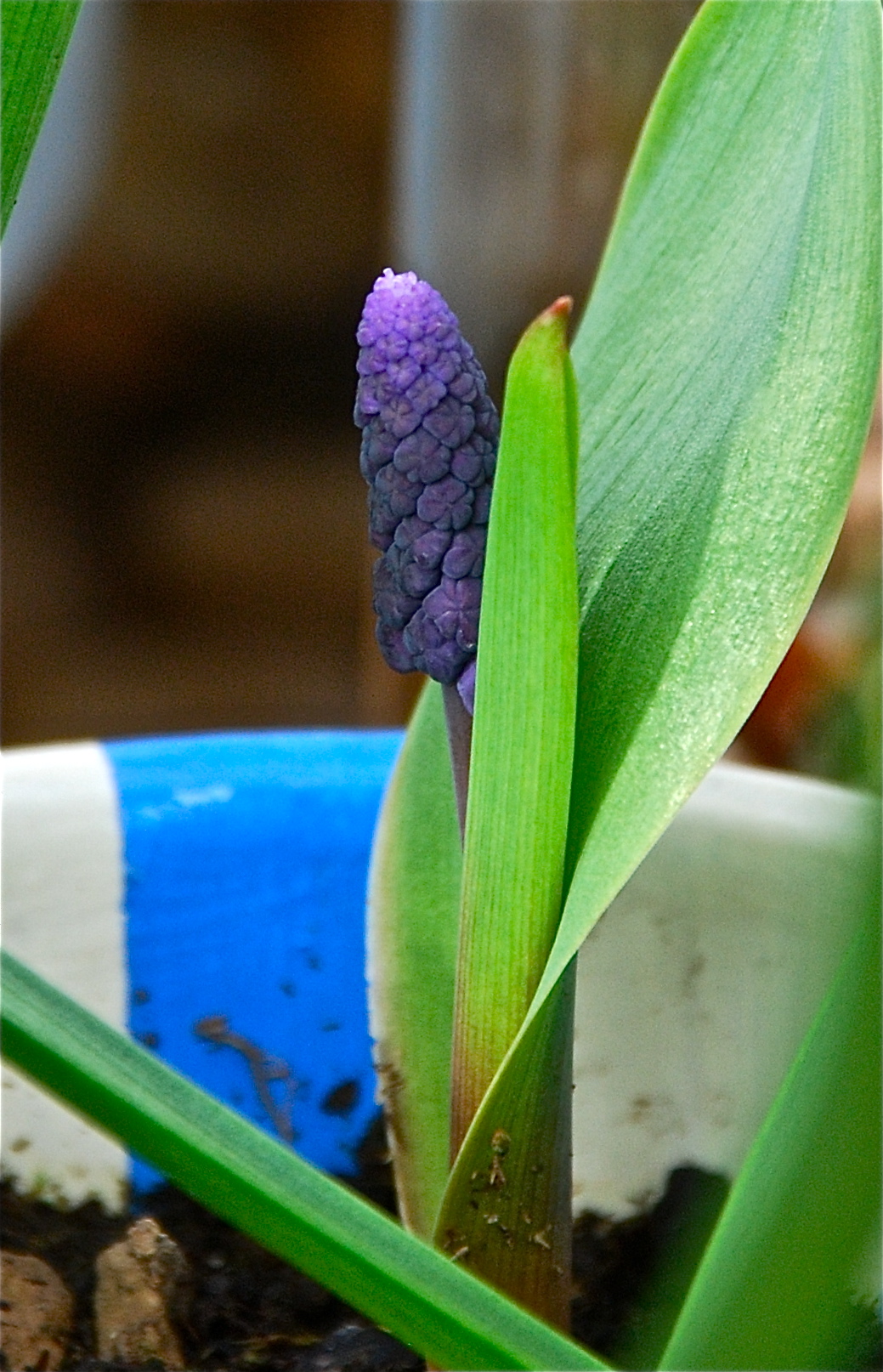
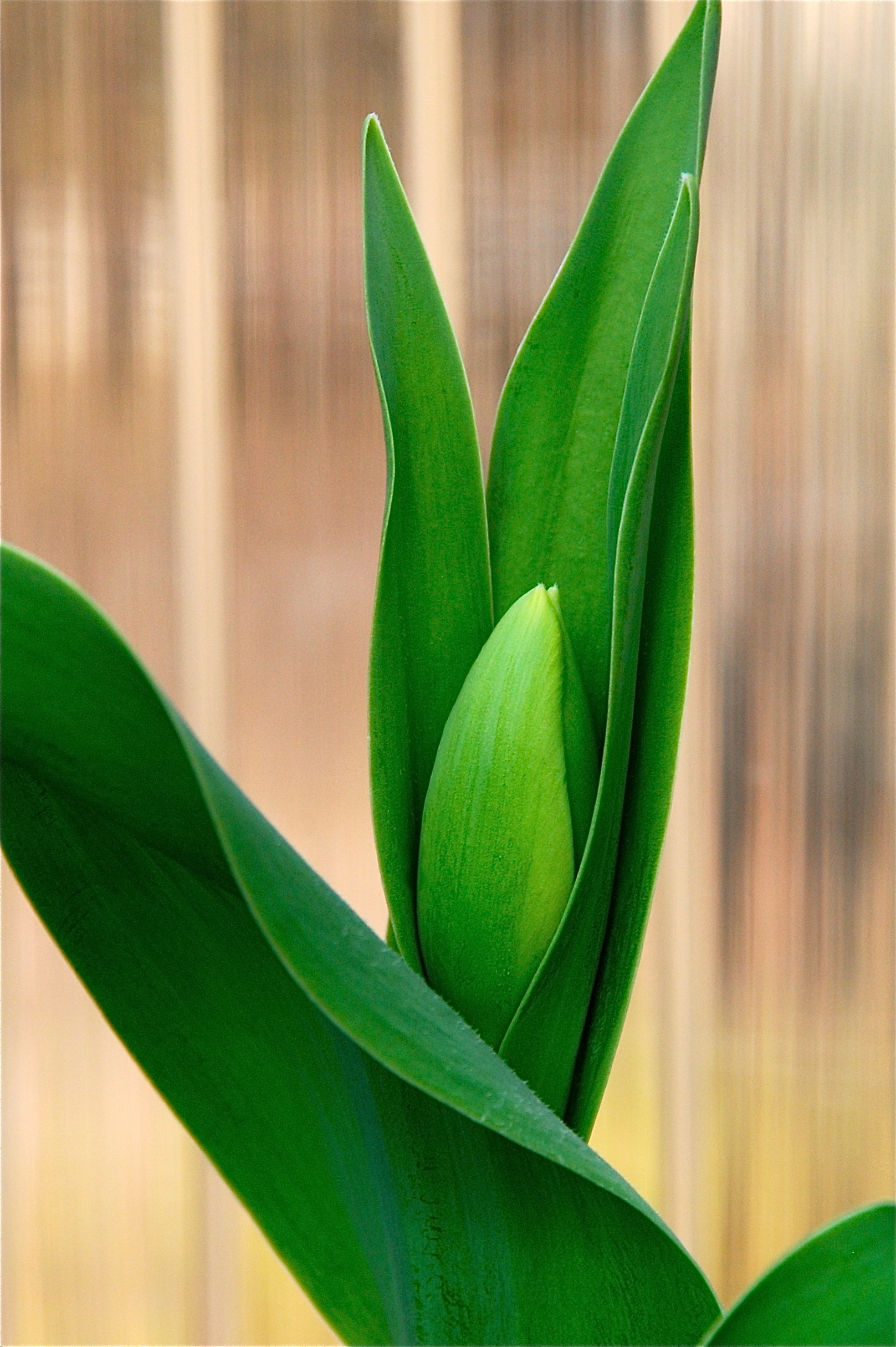
About the time the barrenness of winter starts putting asunder all hope of anything different, February saves the day by bringing forth visible signs of the new spring.  And so it did this year on its very first day.  After I’d watered and waited and watched the bulbs I’d started weeks ago in the greenhouse, I was rewarded today with several emerging buds.  The result: squeals of joy peeled forth inside its walls along with hallelujahs and praise for such glorious surprises amid winter’s gloomy, brown and beige drabness.  But they’re just flowers some might say, but pshaw!  They are pieces in the puzzle of Creation itself, blessed and holy and full of purpose.  They’ve been touched by the very hand of God and then ordained as part of the faithful and reoccurring provision not only for man’s needs but for his pleasure as well.  And if flowers are inconsequential why are so many poems and pieces of literature devoted to them, and why are they considered by many as desirable gifts, and why are their scents revered for use in perfumes, and why have they been worth at times more than gold?

“Come, therefore, let us enjoy the good things that exist, and make use of the creation to the full as in youth.  Let us take our fill of costly wine and perfumes, and let no flower of spring pass us by.  Let us crown ourselves with rosebuds before they wither…”  ~Wisdom 2:6-8  ✝

265. Of the six million species on the planet, only man makes language. Words. What’s more — in evidence of the Divine — we string symbols together and then write them down, where they take on a life of their own and breathe outside of us. ~Charles Martin

Image

I write because there is nothing larger in life than
To be read, maybe even reread by another–
To be examined and then verified of being
Understood, or trusted like a saint–
I don’t imagine being immortalized
Or stacked in a library for hands with a million
Oppositions to wander through for
Poetic justice either–

Perhaps purpose is purchased or earned or even
Inherited by some mystic right–
But it is my reasoning I hearken to,
All that I am resonates with inscribing, putting down
My Self on the papyrus of today,
Like a manuscript never quite decrypt but
Interesting to the soul’s eye
For perpetual encounter.
~Deborah Jeanne Avila

All the kings of the earth shall praise you, O Lord for they have heard the words of your mouth.  Psalm 138:4  ✝

256. The best place to seek God is in a garden. You can dig for Him there. ~George Bernard Shaw

Flower in the crannied wall,
I pluck you out of the crannies.
I hold you here root and all, in my hand flower–
but if I could understand what you are
root and all, and all in all,
I should know what God and man is!
~Alfred Lord Tennyson

Image

Image

Whenever I read Tennyson’s poem or see a garden wall I think of Burnett’s novel, THE SECRET GARDEN, and then I find myself trying to imagine what Tennyson’s crannied wall and the garden walls at Misselthwaite Manor looked like.  I’ve read that walled growing spaces date back to the earliest of Persian gardens and that their function, especially in the northern temperate zones, was to shelter a garden from frost and wind.  Since purportedly the sheltering walls raised the ambient temperature inside a garden by several degrees, I’m guessing they were made of heavy stones.  Although the garden walls in Tennyson’s poem and Hodgson’s novel no doubt were constructed similarly and to serve the same purpose, the practicality of such, is not the point of the two tales.  The two literary pieces have to do with the impact of encountering the Ancient of Days or the contemplation of His mystery that often takes place within a garden’s walls.  Every garden in a very real sense is a piece of Eden, and in Eden man inevitably encountered Him by whose Hands both he and it were made.  As Tennyson grasped the entirety of a little flower in his hand, he voiced a firm belief that comprehending its mystery would lead to an unraveling of the ultimate conundrum, man and God.  And in THE SECRET GARDEN the lives of two children were resurrected and subsequently infused with that same mysterious “stuff of life” after holy “place” and “elemental” grace had had their way with them.

And the Lord God planted a garden in Eden, in the east; that there he put man whom he had formed…They heard the sound of the Lord God walking in the garden at the time of the evening breeze…  ~Genesis 2:8 and Genesis 3:8a  ✝

245. Novelty is an essential attribute of the beautiful. ~Benjamin Disraeli

What was any art but a mould
in which to imprison for a moment
the shining elusive element
which is life itself.
~Willa Cather

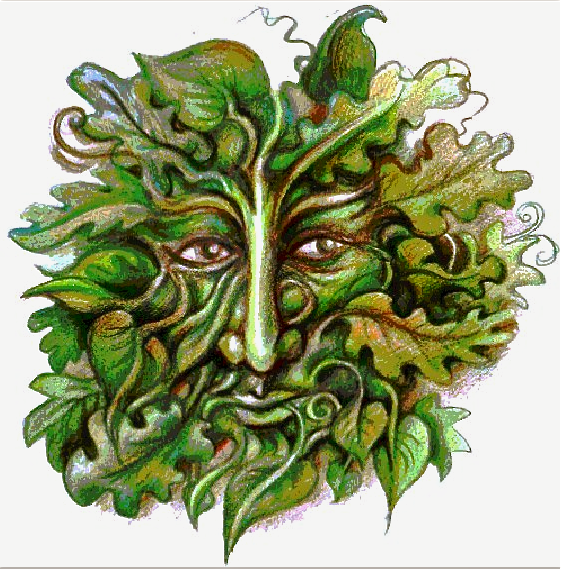
The foliate head and the Green Man are sculptures or drawings in which almost always a man’s face is surrounded by or made from leaves; it is a face that merges nature with humanity.

Image

The Green Man is “a mythic figure that appears in art and legend throughout the centuries and independently in diverse cultures.”  Purportedly the images of these leafy men represent life irrepressible.

Image

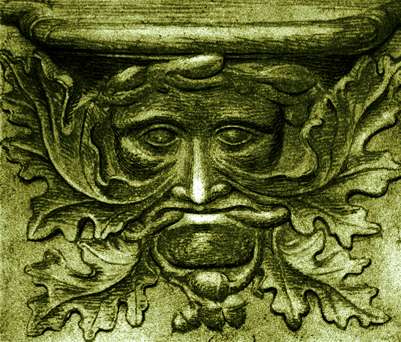
Countless numbers of the leafy faces can be seen on medieval castles, abbeys, and churches.  In fact it was the Europeans who are said to have spread the Green Man’s image and lore to the parts of the world they colonized.

Image

For some the Green Man’s image symbolized the triumph of green life over death and winter.  Others considered him the protector of nature; parallels have even been drawn between the Green Man and Jesus Christ.

Image

I see the foliate face as a mould, as Cather suggests, in which can be seen the artistic quintessence of vegetative and human life.  And as Disraeli proposes, it is the novelty of its beauty, unconventional as it may be, that is most appealing.  On days when I can’t or don’t get out into my garden, I see my semi-human, foliate-faced “friend” on the ground at the end of the stone path out my back door.  He is a reminder of the strong connection I feel to the natural world and God, its holy Maker. His eyes seem to peer longingly from behind his verdant leafiness in the same way I perceive that the Lord peers down at the world wanting to know, protect, and love His children.  His countenance evokes thoughts of man’s need to create as the made-in-the-image-heir of a creative God, of man’s desire to feel connected to the whole of Creation, and of man’s hope that new seasons will arise again and again as promised.  The man in the stone may seem to be locked in perpetual silence, but he speaks to me and I often talk to him.

…the Lord make His face to shine upon you, and be gracious to you; the Lord lift up His countenance upon you, and give you peace.  ~Numbers 6:25-26  ✝

241. O thou, Who chariotest to their dark wintry bed the winged seeds, where they lie cold and low, each like a corpse within its grave, until thine azure sister of the spring shall blow her clarion o’er the dreaming earth. ~John Davies

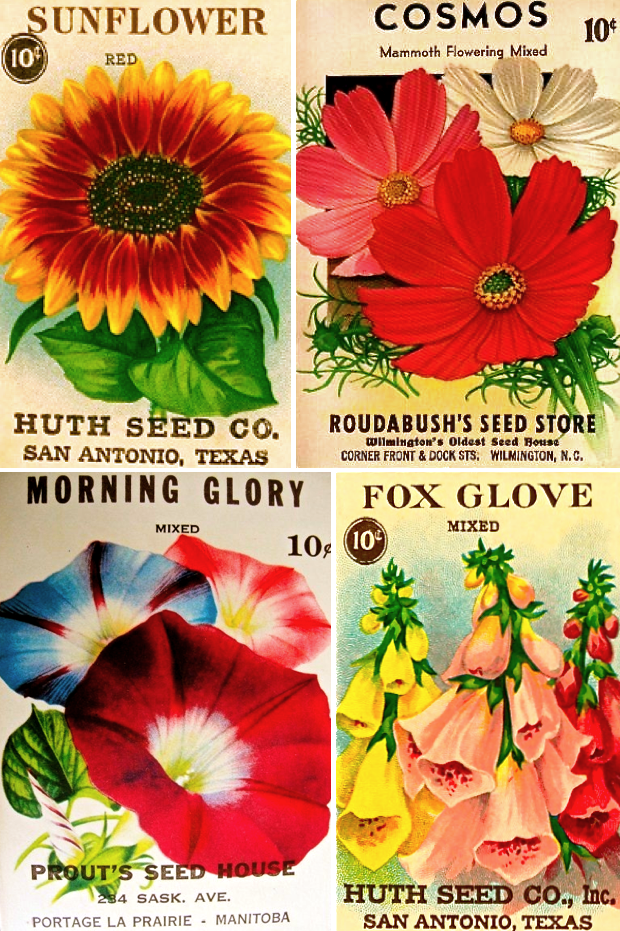
I paid a dime for a package of seeds
And the clerk tossed them out with a flip.
“We’ve got ‘em assorted for every man’s needs,”
He said with a smile on his lip.
“Pansies and poppies and asters and peas!
Ten cents a package and pick as you please!”

Now seeds are just dimes to the man in the store
And dimes are the things he needs;
And I’ve been to buy them in seasons before,
But have thought of them merely as seeds.
But it flashed through my mind as I took them this time
“You have purchased a miracle here for a dime!”

“You’ve a dime’s worth of power no man can create,
You’ve a dime’s worth of life in your hand!
You’ve a dime’s worth of mystery, destiny, fate,
Which the wisest cannot understand.
In this bright little package, now isn’t it odd?
You’ve a dime’s worth of something known only to God.
~Edgar A. Guest

Image

Nowadays a packet of seeds costs more than a dime; yet one can still buy a packet of “miracles” for a reasonable sum.  And the initial investment is small compared to the potential yield not only from the generous number of seeds in each packet but also from the seeds that those plants ultimately produce.  I know because my garden is full of plants started from seeds I never bought.  Not only that but lots of birds eat well on the excess “birdseed” I don’t have to buy.  So it is that in nurturing I am nurtured.  By becoming a part of the “cosmic consciousness,” I  get to participate in the sacred dance of life.

The Book of Genesis tells us that on the third day the Lord created seed-bearing plants and trees.  And from the moment He spoke those words, countless seasons have come and gone and the soil in any given garden has quaked with life from seeds forming in its dark wombs.  As the trembling in “dark wintry beds” increased, an impetus not unlike labor pains pushed roots downward and tiny green shoots upwards toward the light until at last new “miracles” became stable,visible, and tangible.  As more and more darkness melted away in the blaze of lengthening days and intensifying sunlight, the warp and woof of nature began weaving another springtime into existence.  And when the shroud of gloom, winter’s drab garment, was finally sloughed off it was replaced by spring’s brilliant, gauzy garments, garments as colorful as the “silks of Samarkand.”

Isaac sowed seed in that land, and in the same year reaped a hundredfold.  ~Genesis 26:12  ✝

229. So, like a forgotten fire, a childhood can always flare up again within us. ~Gaston Bachelard

To speak truly, few adult persons can see nature.
Most persons do not see the sun.
At least they have a very superficial way of seeing.
The sun illuminates only the eye of the man
but shines into the eye and heart of the child.
The lover of nature is he whose inward and outward senses
are still truly adjusted to each other;
who has retained the spirit of infancy even into the era of manhood.
~Ralph Waldo Emerson

Image

God sometimes reaches out at the most unexpected times to capture our hearts and attention, and not infrequently does He do that by using one of Creation’s eye-catching spectacles.  When a moment like that happens, it’s much like when a lover surprises his beloved by pulling a handful of flowers from behind his back.   And every time I’m delighted by the Holy One in such a way, I fall in love with Him all over again.  A friend of mine recently shared a moment like that with me, and as I read her description, I realized that understanding God’s parables can occur when the innocence of childhood floats up back up in our present realities.

On this cool, crisp morning, I arose before the sun and
went out my front door to look for the newspaper.
But that’s not what caused me to stop in my driveway, paper forgotten.
Overhead, Ursa Major and other stars twinkled brightly,
framed only by a few thin, wind-shaped clouds.
And at a time of the year when children take center stage,
I thought of the innocence in all of us.
For it was not my intellect that held me spellbound
but my own innocence, untarnished by age.
In that moment, caught by the wonder of nature,
blessed with its beauty, I felt magical.
~Emily Seate

Who is this that appears like the dawn, fair as the moon, bright as the sun, majestic as the stars in procession?  ~Song of Solomon 6:10  ✝

205. Beauty is the shadow of God on the universe. ~Gabriela Mistral

A man should hear a little music,
read a little poetry, and
see a fine picture every day of his life,
in order that worldly cares
may not obliterate the sense of the
beautiful implanted in the human soul.
~Johann Wolfgang Goethe

Image

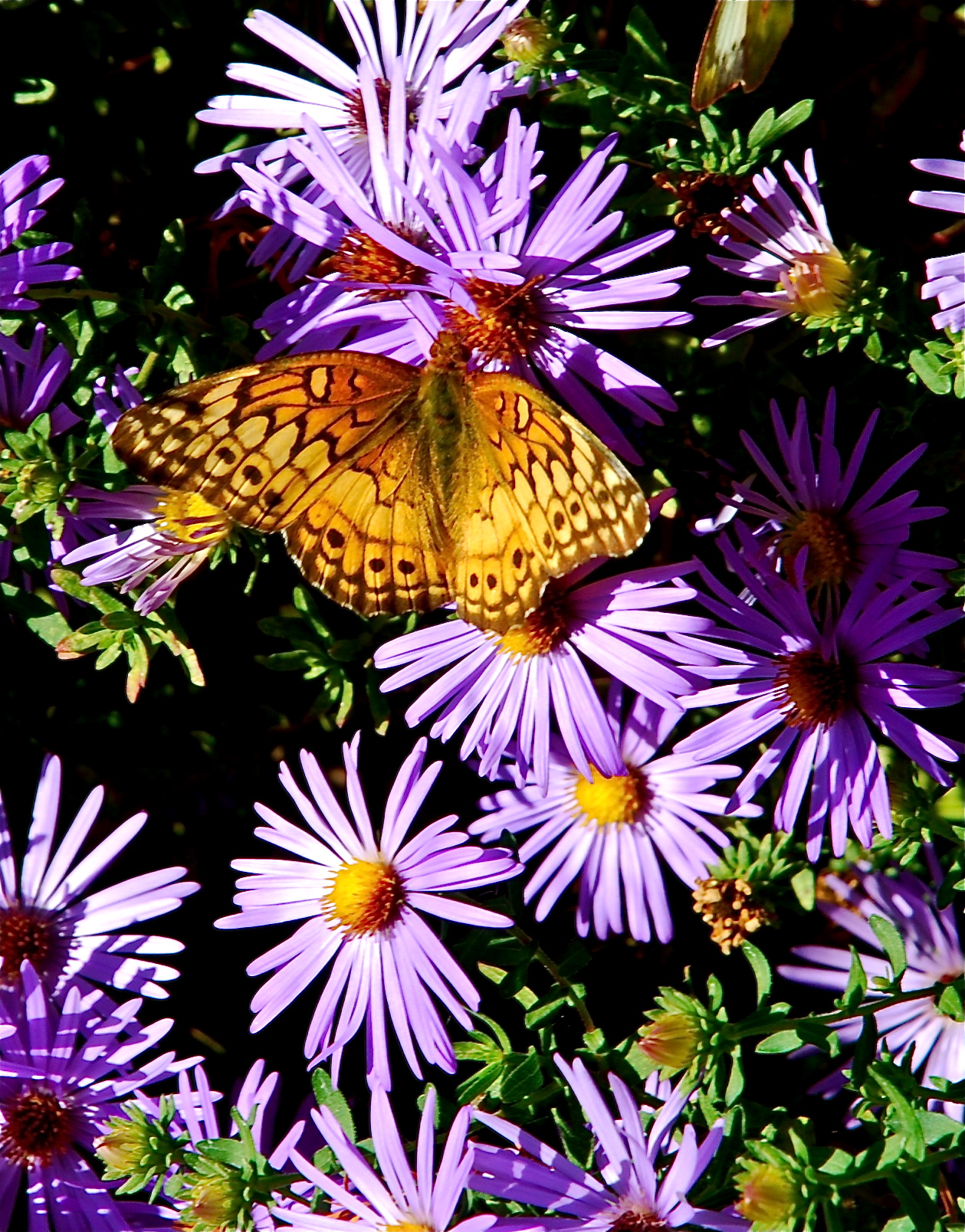
In her novel, THE COLOR PURPLE, Alice Walker maintains that God gets angry if a person walks by the color purple in a field and doesn’t notice it.  So it is that at one point in the story the main character, Celie, is told to look at the purple flowers and then to embrace their beauty in spite of all the pain and suffering in her world.  She is urged to see the good in them and acknowledge it because God placed them all on earth.  After she learns the lesson, she has more respect for life and what it has to offer.  It’s obvious that God puts a premium on beauty, not only for His own sake but for ours as well.  Since we are made in His image, our souls cannot help but be implanted with a “sense of the beautiful” as Goethe suggests.  Therein beauty feeds us spiritually and like a highway sign it points to God and His goodness.  If we can find beauty, we can find God.  He uses it as a way to speak to us and grow us in His image.

From Zion, perfect in beauty, God shines forth.   ~Psalm 50:2  ✝

203. Surely a man needs a closed place where in he may strike root and, like the seed become. ~Antoine de St. Exupéry

But he also needs the Great Milky Way
above him and the vast sea spaces,
though neither stars nor ocean serve his daily needs.
~Antoine de St. Exupéry

Image

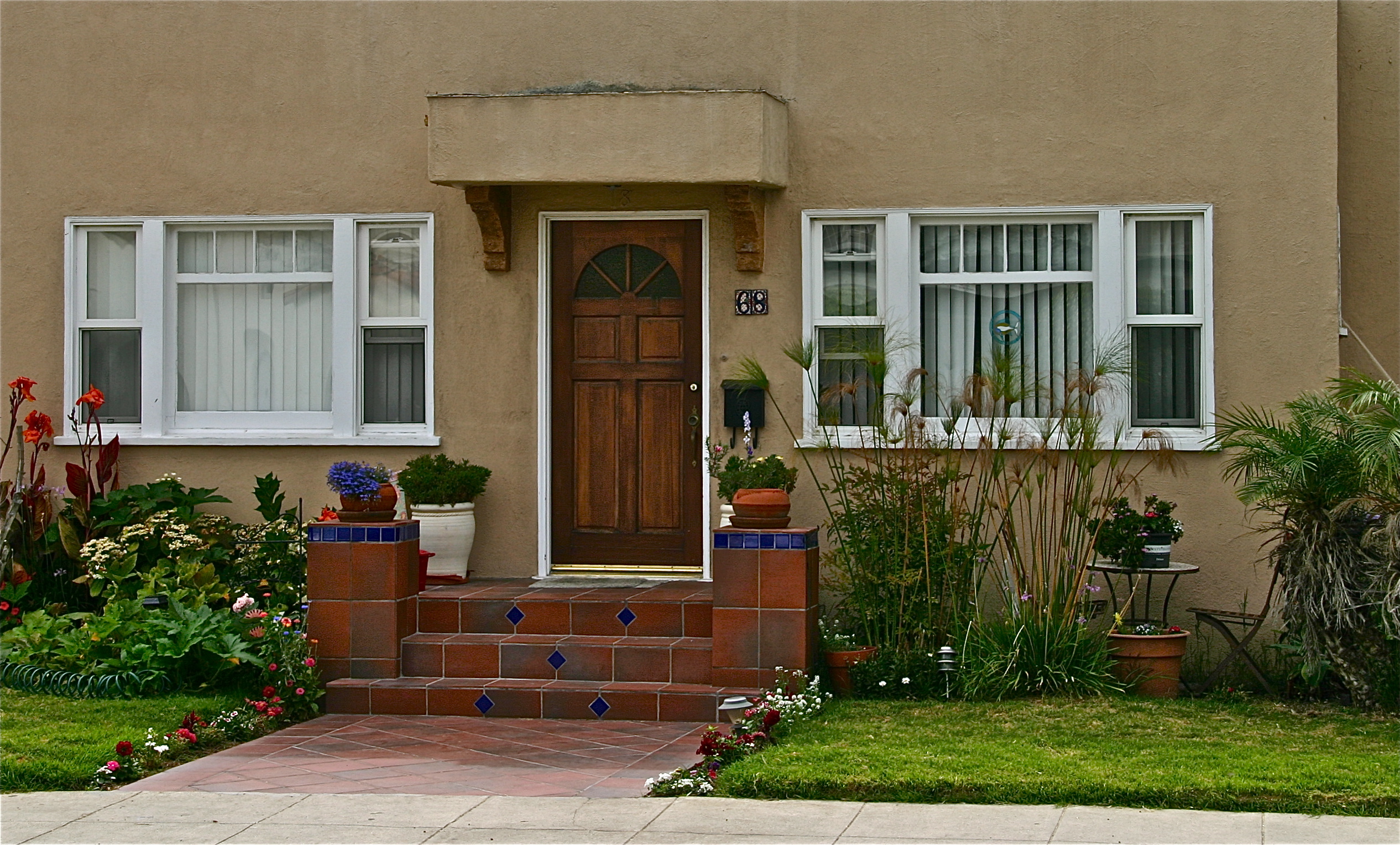
For me, autumn, especially late autumn, is a time for reflection, contemplation, and soul searching–a time for ruminating on the things that move me and make me who and what I am.  And so as I worked out in the yard on this sunny last day of November, the windmills in my mind started churning up memories of the events that led to its door.  Rather than covering every step of the journey, I decided to start when I found my “closed place” in this house with its spacious yards where I began to “strike roots.”  In the beginning, though the home and its conveniences served my physical needs and provided me with creature comforts, relief from old emotional wounds and peaceful contentment remained elusive long afterwards.  Years passed with little change in the status quo until one summer while recalling the beautiful flowers surrounding my childhood home (above) in California, I decided it was time to try growing my own flowers right here in hot old Texas.  Since I wasn’t sure I’d inherited the proverbial “green thumb” of my ancestors, I resolved to begin on a small scale.  So I cleaned off a corner of the patio, bought some bags of potting soil and an assortment of pots and seeds, and thus commenced what I know now to have been a pivotal moment in my life.  From the minute the first seeds germinated, a soul-saving passion for gardening was being birthed in me.  Despite the summer’s miserable heat, I faithfully watered and fussed over my thriving “little flock,” and it was those familiar flowery scents that were the catalysts which sparked my spiritual reawakening.  The next summer with the success of the previous year under my belt and a renewed recognition of Ruach Elohim (the Spirit of God), I decided to branch out and actually sow  seeds in the ground and dig a few holes for bedding plants.  Success came again and with it the quickening in my spirit intensified so much so that I decided to take my recently commissioned mentor’s advice to attend church once more.  This was the first step in righting the derailment of my faith journey that had begun after the early death of my father.

Scripture tells us that Christ is the vine, and we are the branches.  Until those first two growing summers the branch that was Natalie had been withering, not because the Lord had been doing less but because I had been turning a deaf ear and  blaming Him for the loss of my father as well as for painful, emotional wounds and the awful, unrelenting migraines that had started in my mid-twenties.  Since then I have spent season after glorious season planting, replanting, listening, seeking His presence, and marveling at the wonders of heaven and earth.  This pilgrimage that was involved in becoming the Natalie I am today has taught me that He, His Church, and His Creation, which includes the Great Milky Way, the vast sea spaces, and a garden, are the “holy foods” I must have to survive and live in peace and harmony.  Now minute by minute in this place where I have deeply “rooted” myself, the hungering need for “more” has been forever silenced by miracles great and small, blessing upon blessing, and the amazing grace He continues to bestow upon me.

I am the vine, and my Father is the gardener… Remain in me, as I also remain in you.  No branch can bear fruit by itself; it must remain in the vine.  Neither can you bear fruit unless you remain in me.  I am the vine;  you are the branches.  If you remain in me and I in you, you will bear much fruit; apart from me you can do nothing.  John 15:1 and 4-5

200. For flowers that bloom about our feet; for tender grass, so fresh, so sweet; for song of bird, and hum of bee; for all things fair we hear or see, Father in heaven, we thank Thee! ~Ralph Waldo Emerson

Thanksgiving is the holiday of peace,
the celebration of work and the simple life. . .
a true folk-festival that speaks
the poetry of the turn of the seasons,
the beauty of seedtime and harvest,
the ripe product of the year –
and the deep, deep connection
of all these things to God.
~Ray Stannard Baker (David Grayson)

Image

At the beginning of time the Lord set the wheels in motion for the making of continual banquets for man and creature alike.  And so in light of His abundant provisions and as the Canticle of Creation plays on, it is time to pause and give thanks to our gracious Benefactor.  The year is drawing to its appointed end and before it sinks into winter, the Sabbath of the year, we must look around and take stock of the Lord’s never-ending activity in Creation and be thankful for the constancy of His love and beneficent involvement in each of our lives.  W. J. Cameron said, “. . .a thankful heart hath a continual feast,” and so with beholden hearts, let us give praise and thanks for our Heavenly Father, His Grace, and His goodness.  I pray that this be a blessed time of thanksgiving for all of you and those you love; may all the roads you travel be, now and forever, filled with grace and peace and love.

If I have enjoyed
the hospitality of the Host of the universe,
Who daily spreads a table in my sight,
surely I cannot do less
than acknowledge my dependence.
~G. A. Johnston Ross

Enter His gates with thanksgiving and His courts with praise; give thanks to Him and praise His name.  ~Psalm 100:4  ✝