174. The greatness of a nation and its moral progress can be judged by the way its animals are treated. ~Mahatma Ghandi

If all the beasts were gone,
men would die from a great loneliness of spirit,
for whatever happens to the beasts
also happens to the man.
All things are connected.
Whatever befalls the Earth befalls the sons of Earth.
~Chief Seattle of the Suquamish Tribe
Image

The creatures of earth, sea and sky came forth “out of the waters of God’s life.”   And their arrival was yet another manifestation of the visible from the invisible–another disclosure of the mystery of God.  In addition, “with the birth of the creatures there is the emergence of seeing, hearing, smelling, tasting, and touching.  The light of the sun and the whiteness of the moon can now be seen.  The wind blowing through the leaves of trees and the crashing of ocean waves can be heard.  The early morning fragrance of the earth can be smelled.  Its fruit can be tasted, and its textures touched,” writes J. Philip Newell.  It has even been said that if one wants to know the Creator, one of the ways to gain insight is to know His creatures, and I think that’s especially true when it comes to examining the sensory aspect of their coming.  For does not the ability to see, that the creatures brought, teach mankind to see with the eyes of the heart?  In the silences of humanity’s reality does not the ability to hear teach men to listen for the “echo of the spheres” and the still, small voice of God?  Do not the abilities to smell, taste, and touch help mortals meet their Savior, Jesus, through the holy sacrament of the Eucharist (Communion)?

And to all the beasts of the earth and all the birds in the sky and all the creatures that move along the ground–everything that has the breath of life in it–I give every green plant for food.”  And it was so.  ~Genesis 1:30
139. The roots of all goodness lie in the soil of appreciation for goodness. ~Dalai Lama

Every day that we wake up
is a good day.
Every breath that we take
is filled with hope for a better day.
Every word that we speak
is a chance to change what is bad into something good.
~Walter Mosley

Image

Scripture says that at the end of each day of Creation’s beginnings, God looked at what He made and saw that it was good.  Mankind, then, draws every breath amidst that goodness.  Yes, there are days fraught with trials and grief, but they alter not the fabric in which all life was woven.  Goodness and the miraculous are as constant as the sun, moon, and stars, and man has a chance of finding and being blessed by God’s graciousness when he lets go of his yesterdays and looks only to the day at hand.  If his cup is to be filled with the promised goodness and mercy, he must empty the chalice of his being on a daily basis.  Otherwise the bitter stings of the past will poison the mix and rob him of all that could have been.  Man’s days have a planned shape in the soil of goodness, and its bounty rises to the surface, not because of what he is or what he does, but because of who God is and what He’s already done.

God saw all that He had made, and it was very good. . .Thus the heavens and earth were completed in their vast array.  ~Genesis 1:31a, Genesis 2:1  ✝

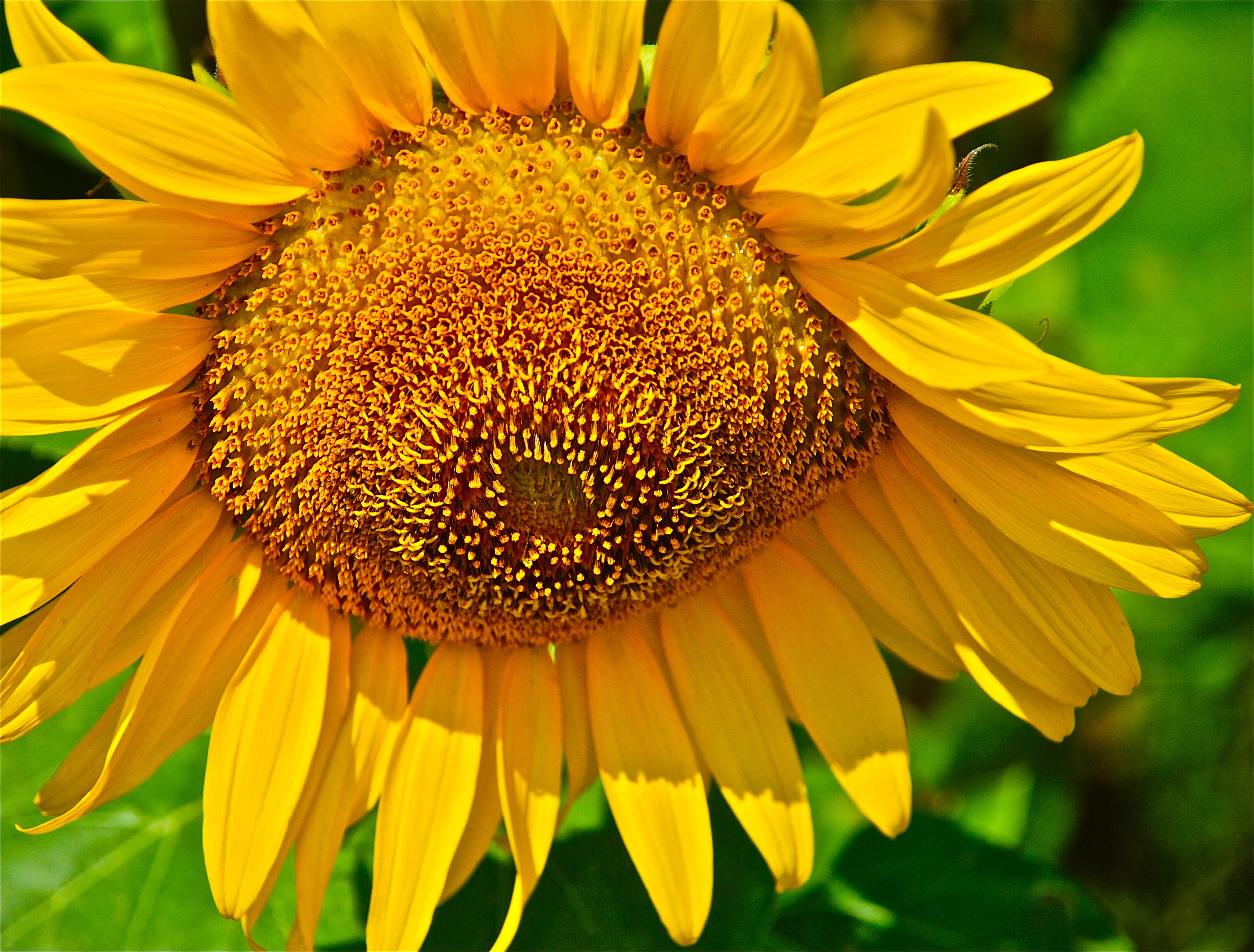
135. As for marigolds, poppies, hollyhocks, and valorous sunflowers, we shall never have a garden without them… ~Henry Ward Beecher

Eagle of flowers! I see thee stand
And on the sun’s noon-glory gaze;
With eye like his, thy lids expand,
And fringe their disk with golden rays:
Though fix’d on earth, in darkness rooted there
Light is thy element, thy dwelling air
Thy prospect heaven.
~The Sunflower by James Montgomery, British editor and poet

Image

The sunflower with its “gaudy crown of gold” courts the heavenly expanse in search of the sun.  But is that iconic golden spectacle seeking to be prospered by the sun a single flower?  No, each sunflower is actually a cluster of sometimes more than 2,000 small flowers all growing together to mimic the sun and harvest its light.  Amazingly, at maturity some flower heads of the sunflower measure 2 feet across while the plants that hold them up sometimes grow as high as 18 feet.  Henry Ward Beecher additionally said all flowers “have an expression of countenance as much as men or animals.  Some of them seem to smile; some have a sad expression; some are pensive and diffident; others again are plain, honest, and upright, like the broad-faced sunflower. . .”  I agree and adore the plain honesty and uprightness of the sunflower, but in them I also see a touch of elegance in their statuesque stance in the landscape.

This is what the Lord says to me: “I will remain quiet and will look on from my dwelling place, like shimmering heat in the sunshine, like a cloud of dew in the heat of harvest.”  ~Isaiah 18:4   ✝

127. When you arise in the morning, think of what a precious privilege it is to be alive – to breathe, to think, to enjoy, to love. ~Marcus Aurelius

Move to your heart, breathe.
Close your eyes and breathe deeply –
slowly – fill your lungs with love and gratitude –
exhale each and every trouble –
again and again – gratitude in, troubles out.
~Jonathan Lockwood Huie

Image

Then the Lord God formed a man from the dust of the ground and breathed into his nostrils the breath of life, and the man became a living being.  ~Genesis 2:7  ✝

69. Only from the heart can you touch the sky. ~Rumi

It is a glorious privilege
to live, to know, to act, to listen, to behold, to love.
To look up at the blue summer sky;
to see the sun sink slowly beyond the line of the horizon;
to watch the worlds come twinkling into view,
first one by one, and the myriads that no man can count,
and lo! the universe is white with them;
and you and I are here.
~Marco Morrow

Image

It is God’s privilege to conceal things and the king’s privilege to discover them.  ~Proverbs 25:2   ✝

23. Nature, like man, sometimes weeps for gladness. ~Anonymous

Rain! whose soft architectural hands
have power to cut stones, and
chisel to shapes of grandeur the very mountains.
~Henry Ward Beecher

Image

Each drop of rain is a powerful miracle, a miracle that falls between heaven and earth as it travels vast distances around earth’s surface.  It speaks so loudly of holiness that whenever it appears here, it never fails to draw me to itself.   Perhaps because somewhere in my memory’s oldest and deepest recesses there’s a vague in-utero recollection of the soothing nature of a watery beginning, a remembrance of a sacred mothering source.  When the first drops of rain hit the ground, especially after a long absence, they fall on my ears not unlike the chords of a beloved’s voice.  And after the rain, when the smell of wet soil and damp grass greet my nose, I “weep for gladness.”  The deliciousness of its return prompts the same urges I experienced in childhood.  What fun it would have been to have played in the rain and danced with wanton delight in the sloshy puddles beneath my feet had mom not forbid it.

All the water earth will ever have was granted us at the beginning of time.  In whatever form it falls to earth, be it rain, fog, frost, snow, or sleet, water is part of a divinely designed cycle to insure Creation’s continuance.  The holy water-bearers bring the stuff without which there is no life for it is the substance in which life is formed and the substance of which life is sustained.  As a part of the grand and holy design, falling waters move in never-ending circles to kiss the earth and return to the clouds.  Given that I can’t help but wonder how far each drop of moisture has traveled throughout the eons of time.  One thing of which I’m always certain though is that rain’s “soft architectural hands” were made by the soft Hands of He who made the earth and us.

I will send you rain in its season, and the ground will yield its crops and the trees their fruit.  Leviticus 26: 4   ✝

17. God is closest to those with broken hearts. ~Jewish Saying

Loving God, help us remember the birth of Jesus
that we may share in the song of the angels,
and the gladness of the shepherds,
and the worship of the wise men.
Close the door of hate and
open the door of love all over the world.
~Robert Louis Stevenson

Image

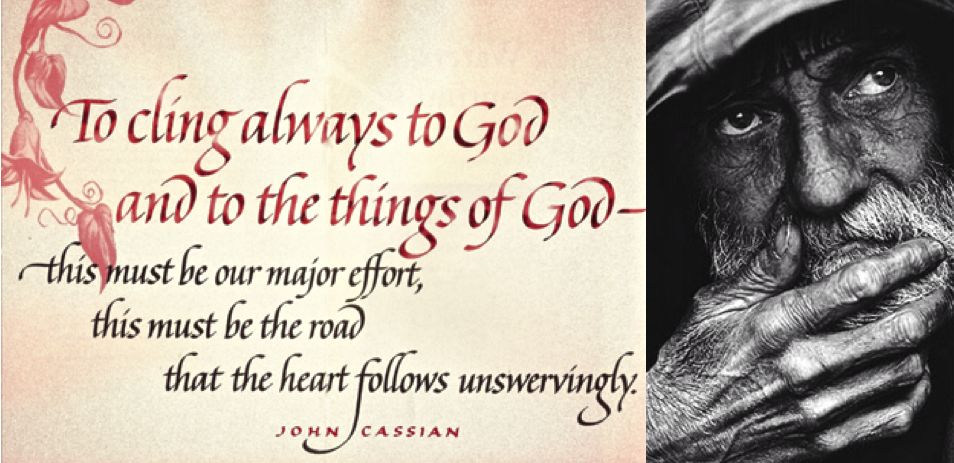
More than likely the man in this photo has no address, no phone number, no car, no money in his pocket, and certainly no credit cards.  He probably doesn’t know from whence his next meal is coming, if it comes at all, nor does he know where he’ll lay his head to sleep tonight.  I’d like to help in some way, but I know not his name nor where he’s from nor where he is now.  What trials lead this man to the harsh realities of the streets where he currently exists are a disturbing mystery, at least to me, and yet in spite of all he doesn’t have and all the things I don’t know about him, I do know in whose image he was made and by whose hands he was created.  I also know that if there is to be joy in his world and peace in his silent nights and ours, it will happen only with help from those of us who are part of Christ’s body.  I know that in the Father’s eyes this man’s worth is no less than that of any man, and the story of desperation in his eyes is deserving of compassionate hearing from those able to to lend a helping, healing hand.  But then given what I don’t know about this man, or where he is, or what he needs, how can I help.

 “. . . if two of you agree on earth about anything they ask, it will be done for them by my Father in heaven.  For where two or three are gathered in my name, there am I in the midst of them.”  ~Matthew 18:19-20   ✝

Please help me pray for this man, the well being of all God’s children, and for peace on earth and good will towards men.

**The photograph of this homeless man was taken from an enews bulletin at the First United Methodist Church of Fort Worth.

14. In every man’s heart there is a secret nerve that answers to the vibrations of beauty. ~Christopher Morley

A man should hear a little music,
read a little poetry, and
see a fine picture every day of his life,
in order that worldly cares
may not obliterate the sense of the
beautiful implanted in the human soul.
~Johann Wolfgang Goethe

Image

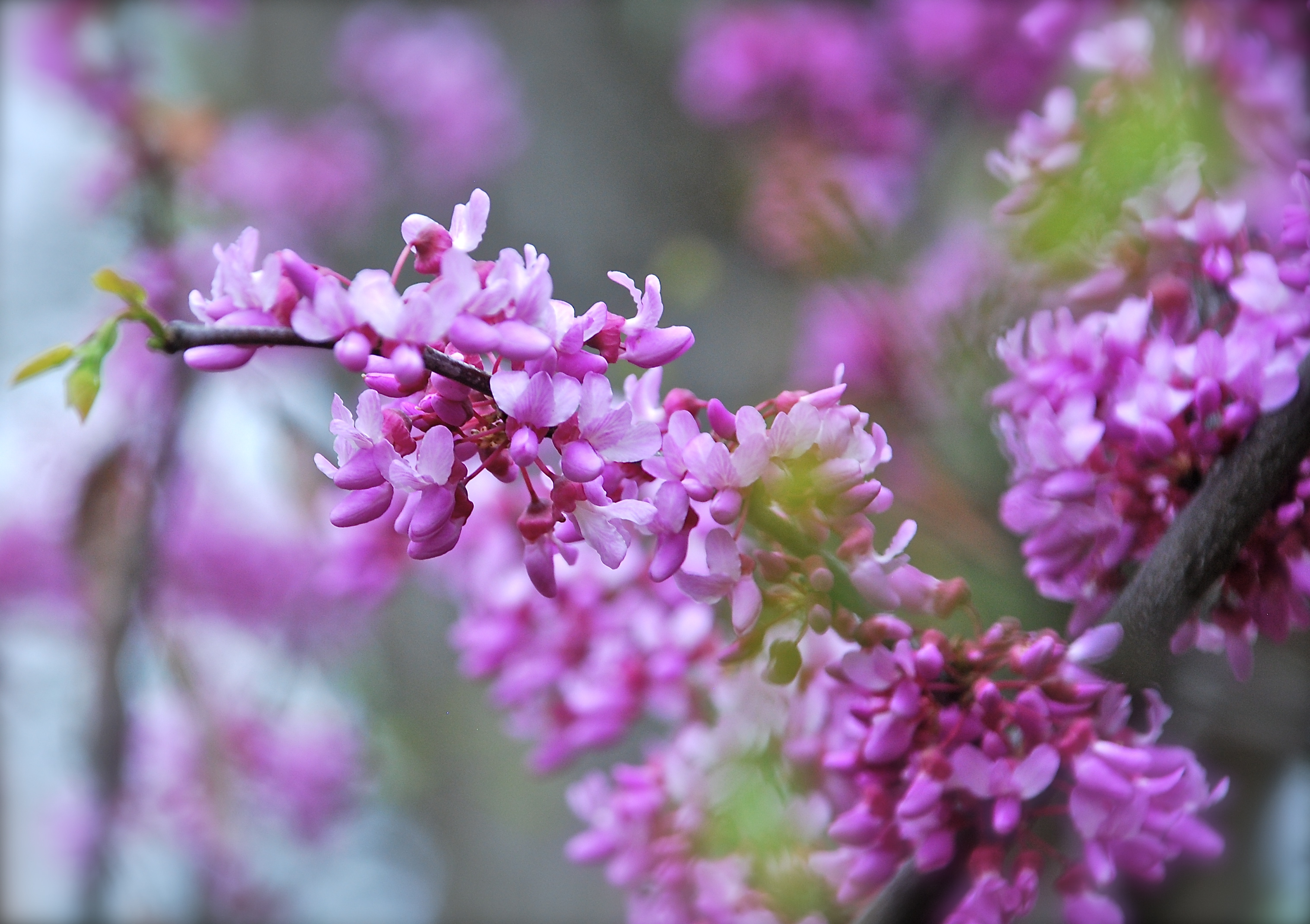
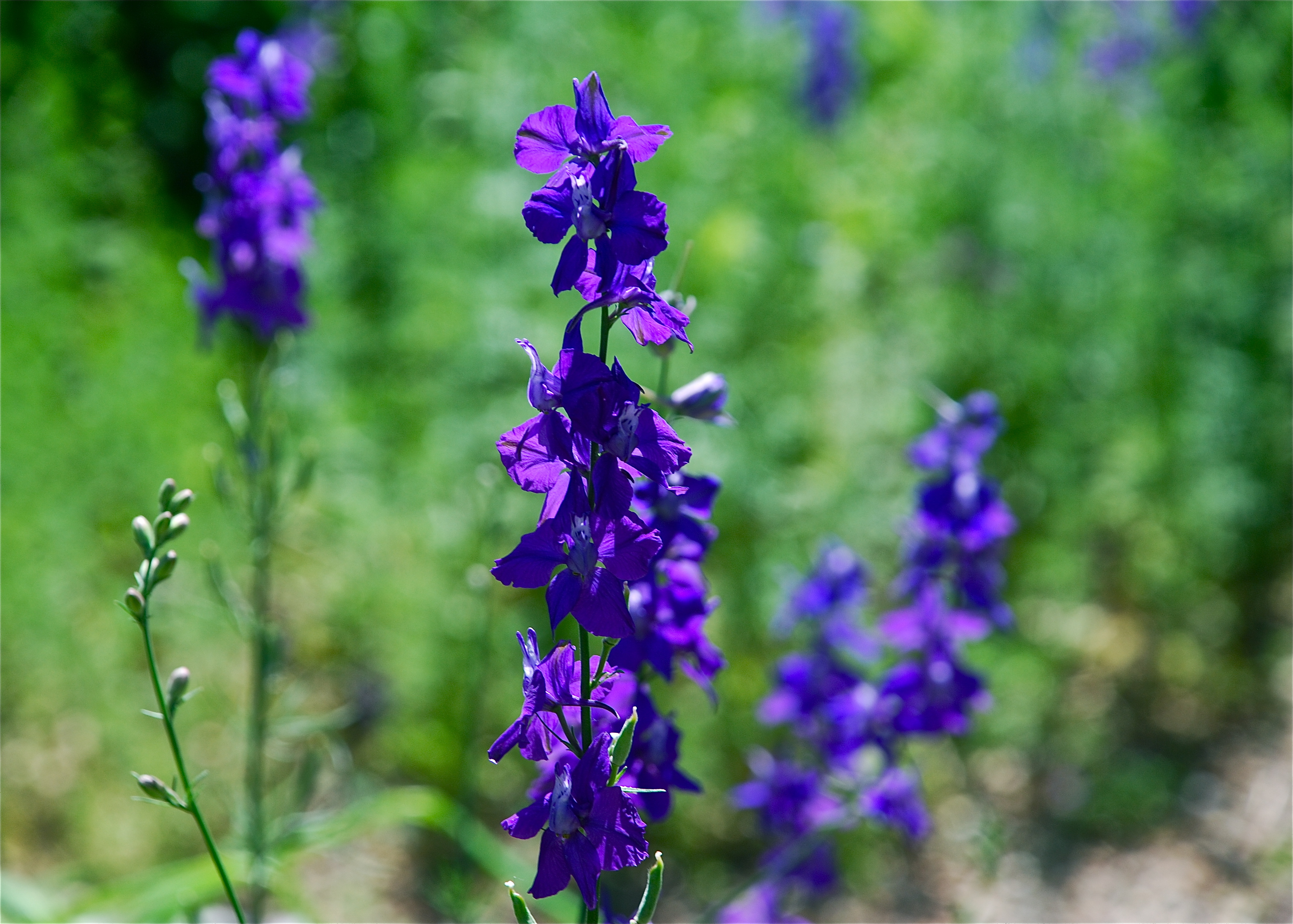
In her novel, THE COLOR PURPLE, Alice Walker says she thinks God gets angry if a person walks by the color purple and doesn’t notice it.  At one point in her story the main character, Celie is told to look at the purple flowers and to embrace their beauty in spite of all the pain and suffering in her world.  She is urged to see the good in them because it was God who placed them on earth.  As she comes to this realization for herself, she begins to understands the magnitude of God’s grace, and like the purple flowers, blossoms as she gains a respect for God and life.

It’s obvious that God puts a premium on beauty, not only for His own sake but also for ours.  Since we are made in His image, our souls cannot help but be implanted by a “sense of the beautiful” as Goethe suggests.  As a highway sign points us in the right direction, in the same way loveliness points to God’s heavenly realm and His goodness.   If we can find beauty, then we can find God. Beauty is meant to feed us spiritually, and the Lord uses what’s beautiful to speak to our hearts for His divine purposes.  For example notice all the richness and beauty involved in the scriptural telling of the birth of the Christ child.  It starts with a beautiful star that leads the way to a manger.  For Celie her beautiful flowers led her to God’s grace, and the Christ child brings all who follow the star and Him the same gift of redeeming grace.

11. The moment one gives close attention to anything,
even a blade of grass, it becomes a mysterious, awesome,
indescribably magnificent world in itself. ~Henry Miller

Each blade of grass has its spot on earth whence it draws its life,
its strength; and so man is rooted to the land
from which he draws his faith together with his life.
~Joseph Conrad

DSC_0026

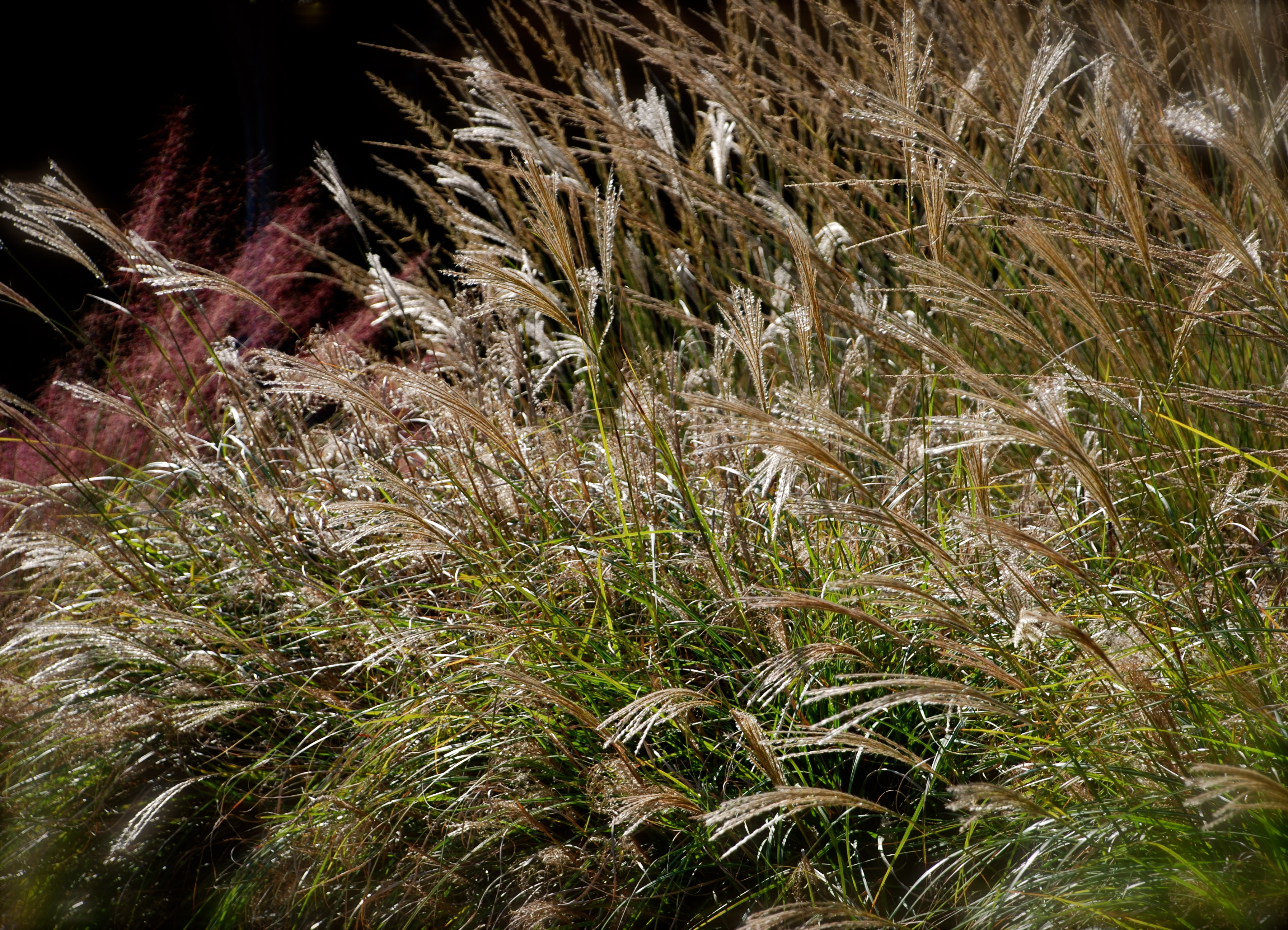
Against the backdrop of autumn’s falling leaves ornamental grasses shift and sigh adding an ethereal element to the landscape.  With airy flower panicles, fluffy seed plumes, and striking seed heads ornamental grasses provide charming “fringe accents” in yards and gardens. Even after the onslaughts of freezing temperatures, grasses continue to grace the landscape with beauty.  They add subtle colors, assorted textures, and the dimensions of motion and sound.  Throughout winter’s “vale of grief,” they capture and play with whatever light is available and in so doing speak of life and give us something “that glimmers in the sleep of things.” The “music” of their swishing and swaying reminds us that what’s happening isn’t an ending but merely a transition for the next beginning.

In a poetic conversation with the Lord, Edna St. Vincent Millay said, “God, I can push the grass apart and lay my finger on Thy heart.”  A Quaker and itinerant preacher named Elias Hicks wrote that “the fullness of the godhead dwelt in every blade of grass.”  And Thomas Carlyle, a Scottish writer, asked, “To us also, through every star, through every blade of grass, is not God made visible if we will open our minds and our eyes.”  These writers, like me, realize that man was meant to be “rooted to the land and therefore to God.”  But, the “umbilical cord” that connects all humanity to Creation and God seems, for many, to have been severed.

The Lord, however, refuses to remain separated or removed from that which He has made.  In an effort to reconnect people to the land and to provide healthier food, many neighborhoods are finding places to build community gardens.  More and more people are getting involved in caring for the land in these communal plots.  Also many schools across the nation are incorporating habitat gardens into the learning experiences of their students, and we are seeing a rise in “hobby farms” where retired professionals have started a second career as a hobby farmer or others who are still working are spending their spare time on their own small farm.

You care for the land and water it; You enrich it abundantly.  The streams of God are filled with water to provide the people with grain, for so You have ordained it.   You drench its furrows and level its ridges; You soften it with showers and bless its crops. You crown the year with Your bounty, and Your carts overflow with abundance.  The grasslands of the wilderness overflow; the hills are clothed with gladness.  The meadows are covered with flocks and the valleys are mantled with grain; they shout for joy and sing.  ~Psalm 65:9-13   ✝

9. O Autumn…pass not, but sit…and tune thy jolly voice…and all the daughters of the year shall dance! ~William Blake

In the garden, Autumn is, indeed the crowning glory of the year,
bringing us the fruition of months of thought, and care, and toil.
~Rose G. Kingsley, British Gardener and Writer

Image

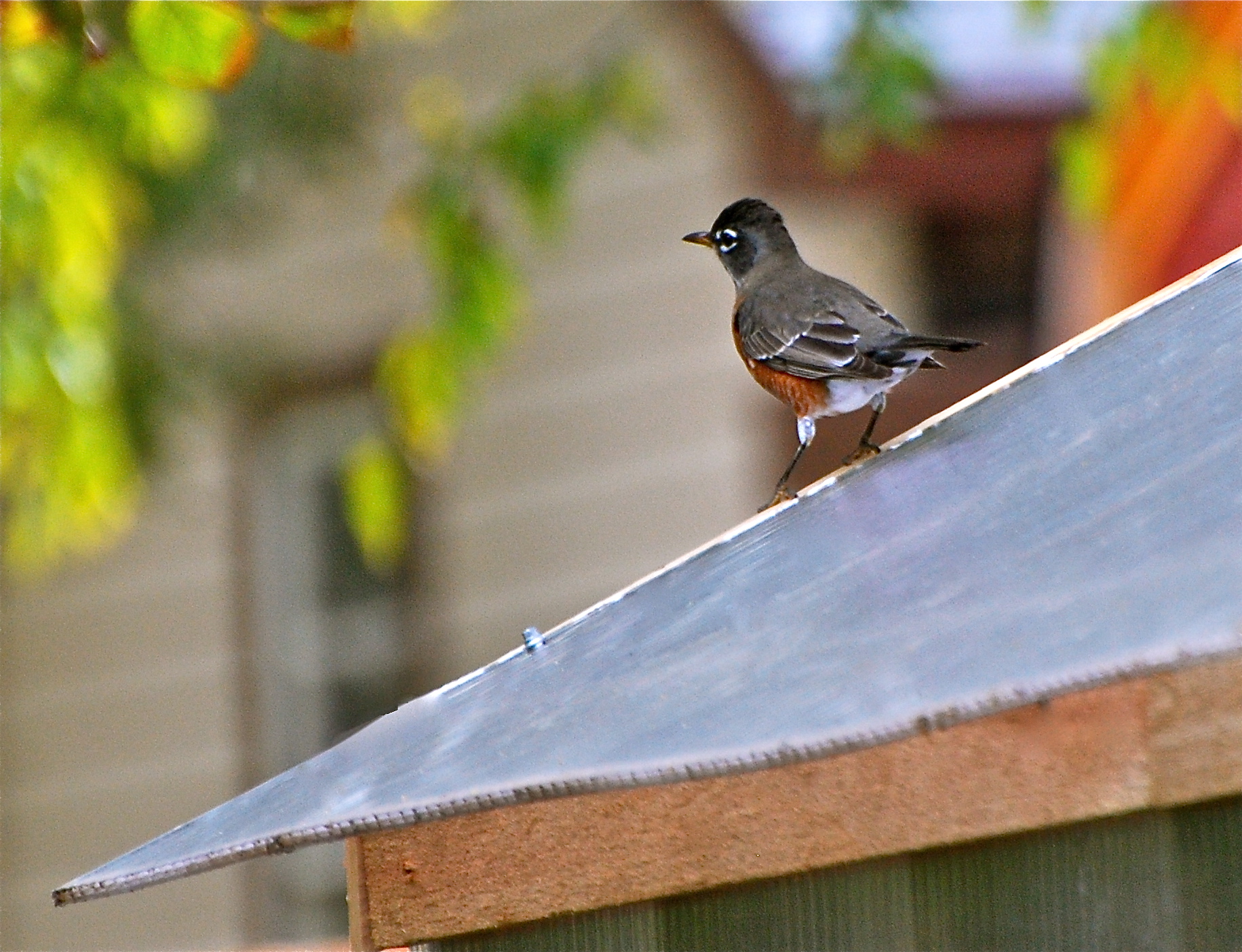
Now that the year has grown long in the tooth, the migratory birds have moved on to warmer lands.  But the birds who overwinter here are still very visible and busy.  However, on the chillier days they, like me, “remain perched” early in the morning and later when the sun is well over the rooftops.  Nevertheless, in spite of our periodic and combined lethargy, we still manage to be out and working during the warmer parts of the day.  The “common feast for all” the garden spreads may be nearly gone and the bird’s tired wings along with my tired feet may drag somewhat, but autumn’s remaining golden glory continues to quicken our spirits.  In fact even after winter ravages the land, we, man and beast alike, who live close to the soil will venture out on the occasional warm day to search with hungry eyes for any signs of what we know lies waiting to emerge from beneath the surface of things.

Autumn’s song is indeed “a rich and lusty melody.”  It induces a healthy renewal in bodies wilted by summer’s long siege of torrid heat, and it creates a restful peacefulness that washes away the “fret and fever of life.”  “It’s jolly voice” sings a comforting song of promise that speaks of God’s circadian rhythms of life–the rhythm of changing seasons, busyness followed by stillness, “youth’s energy followed by age’s measured pace.”

There is a time for everything, and a season for every activity under the heavens. . .  ~Ecclesiastes 3:1   ✝