212. It is part of the cure to want to be cured. ~Seneca

To feel keenly the poetry of a morning’s roses,
one has to just have escaped from the claws
of this vulture which we call sickness of body or heart.
~Adapted excerpt from Henri Frederic Amiel

Image

In order to mend and bridge chasms of painful, isolating realities, I often douse the fires of what breaks my heart in cups of tea or tears that flow during quiet dawns or at night when the wee hours find me awake and alone.  After the sipping or crying comes to an end, a numbed stillness often develops.  When it does, I become aware in its clarity of the amazing nearness of God.  Jesus, whom I’ve been calling, is offering to guide me through portals to places where pools of mercy await.  Sometimes the healing waters lie deep within my own being where the Holy Spirit resides in His cloistered sanctuary.  At other times they are found in the beautiful colors of autumn, or in the glistening dew on greening grass and flowers in springtime, or in the gentle gestures of another’s compassion, or in softly spoken prayers proffered by kind and endearing voices.  Wherever the pool and whoever the beneficial bearer of blessing, one or both sustain me, if I yield, in the returning rhythm of fitness as the Lord’s grace works to render me wholly well.

I’ve discovered that tears have amazing restorative powers for frequently it is when my eyes are blurred with wetness from them that a sense of God’s presence is strongest.  For surely in the loss of His own son by the hands of creatures He breathed life into, He shed more tears than we’ll ever know.  We all endure difficult and sorrowful moments in our lives.  So excruciating is the pain on occasion that it nearly stifles our very breath, but one breath and one step at a time begins the journey out of the depths of despair.

“But I will restore your health and heal your wounds,” declares the Lord…  ~Jeremiah 30:17a  ✝

**Whittard’s is a tea, coffee, and cocoa shop that we found in London last summer.
197. If insects were to vanish, the environment would collapse into chaos. ~Edward O. Wilson, American Biologist

A single swallow, it is said,
devours ten millions of insects every year.
The supplying of these insects
I take to be a signal instance of the Creator’s bounty
in providing for the lives of His creatures.
~Ambrose Bierce

Image

Image

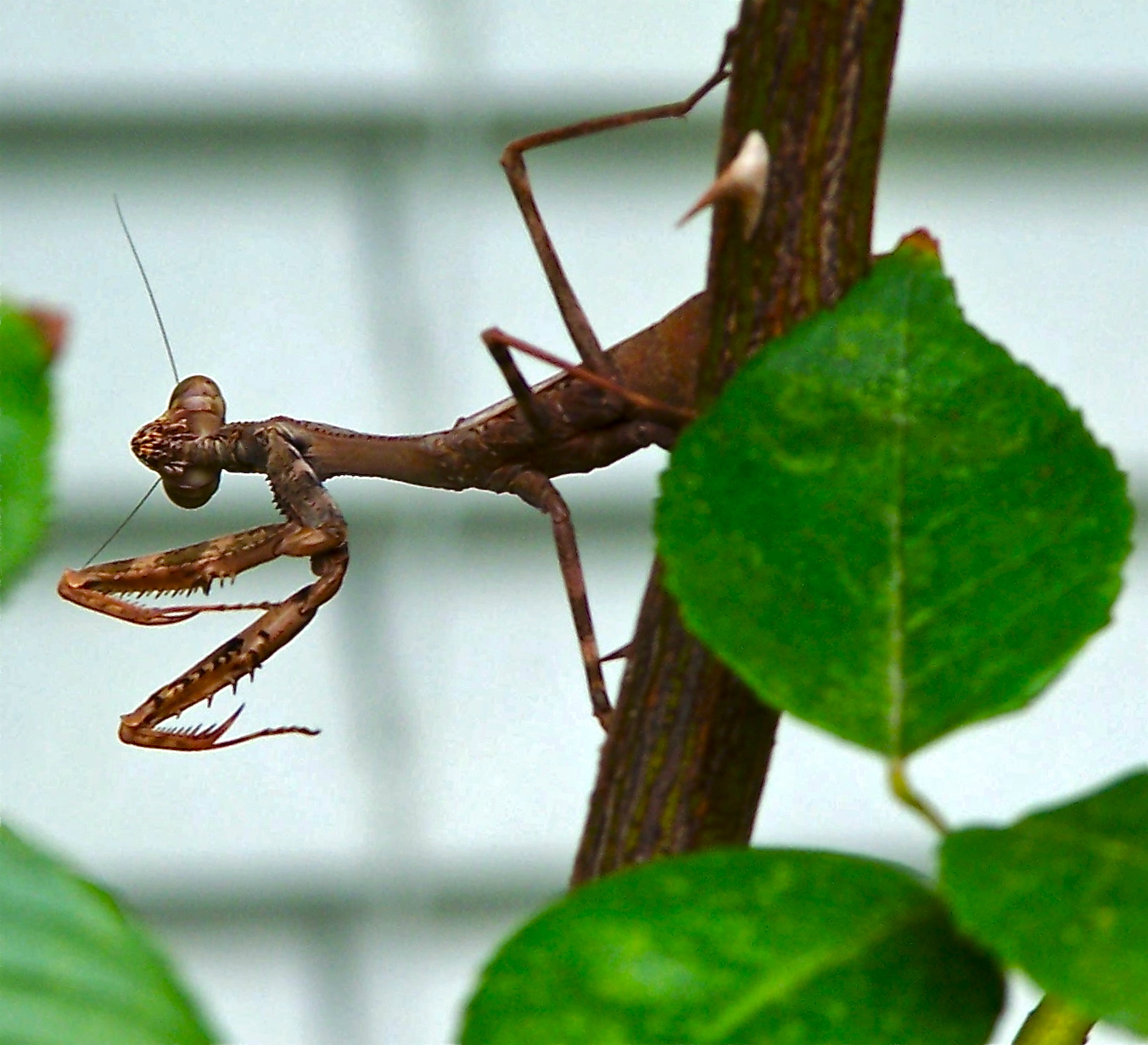
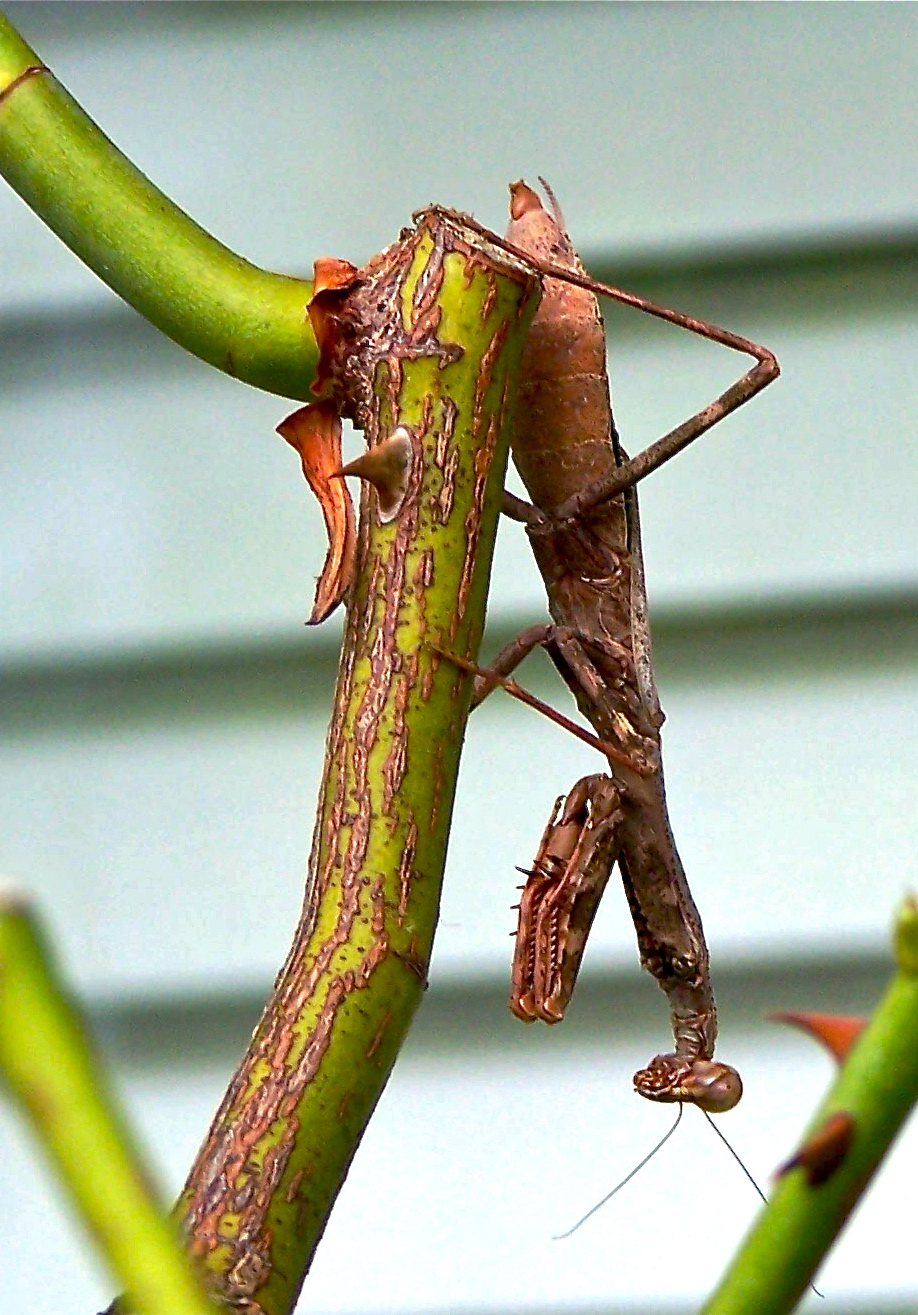
Seldom silent is a garden, not in deep darkness nor when the savage sun sits high atop the world.  In it are creatures that buzz, some that croak, others that chirp, those that squawk, and many a bird that has a pretty melody to sing.  These creatures fly, they hop, they walk, they slither, they crawl, they jump; one of them even prays as does the kind of “beastie” I found hiding in one of my roses last week.   Late in the day I’d gone out to cut away rose growth withered by summer’s siege.  As I reached in the second one to cut what I thought was a dead, brown piece of stem lying flat against a thick cane, it moved and raised its upper body.  Quite alive instead was a mantis hanging comically upside down and peering out at me.  When I realized what it was, I dashed back in the house to grab my camera.  Once back at the scene I took a few shots where it was; then I tried to get it to turn into an upright position.  Despite my repeated attempts, it only conceded a sideways turn which allowed me at least to see that one of its eyes was missing and covered with scar tissue.  Stubbornly determined however to get more compliance, I persisted in my nudging effort one more time. But boy oh boy, this guy had had enough, and it instantly raised its front legs as if preparing to attack the overzealous, annoying, and maddening pest.  So I wisely relented in my efforts, took what shots I could get, and departed.  The mantis was still holding steadfastly to that same cane when I went in at dusk, but by the next morning he had moved on to either a safer haven or one where the prey he was trying to lure with his “dead leaf” appearance was a great deal smaller and less bothersome than I.

Yet I am not silenced by the darkness, by the thick darkness that covers my face.  ~Job 23:17  ✝

192. Magnificent Autumn! He comes like a warrior, with the stain of blood upon his brazen mail. ~Henry Wadsworth Longfellow

Fall: bright flame before winter’s deadness;
harvest; orange, gold, amber;
cool nights and the smell of fire…
…everything we see is celebrating
one last violently hued hurrah before
the black and white and silence of winter.
~Shauna Niequist

Image

Image

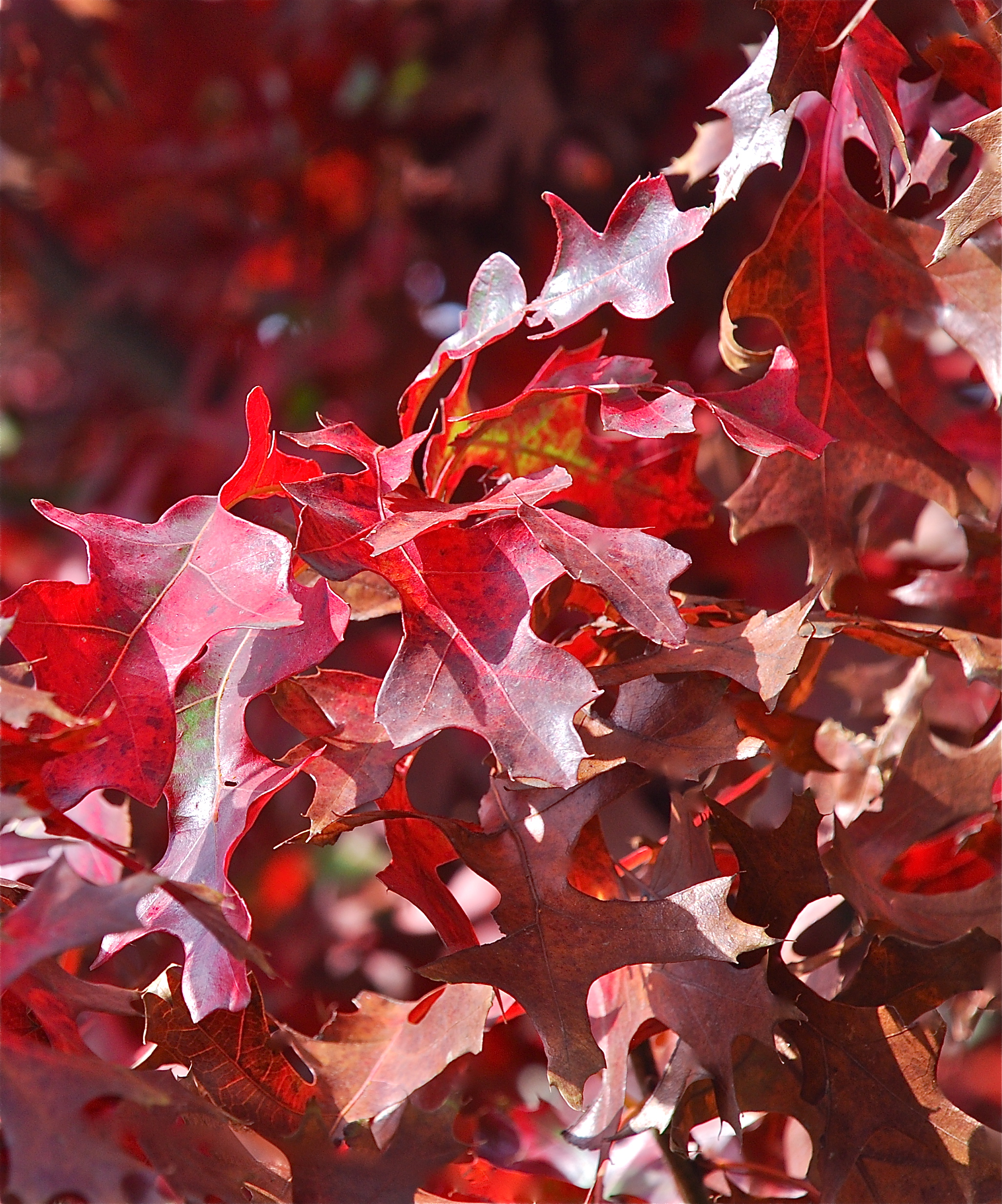
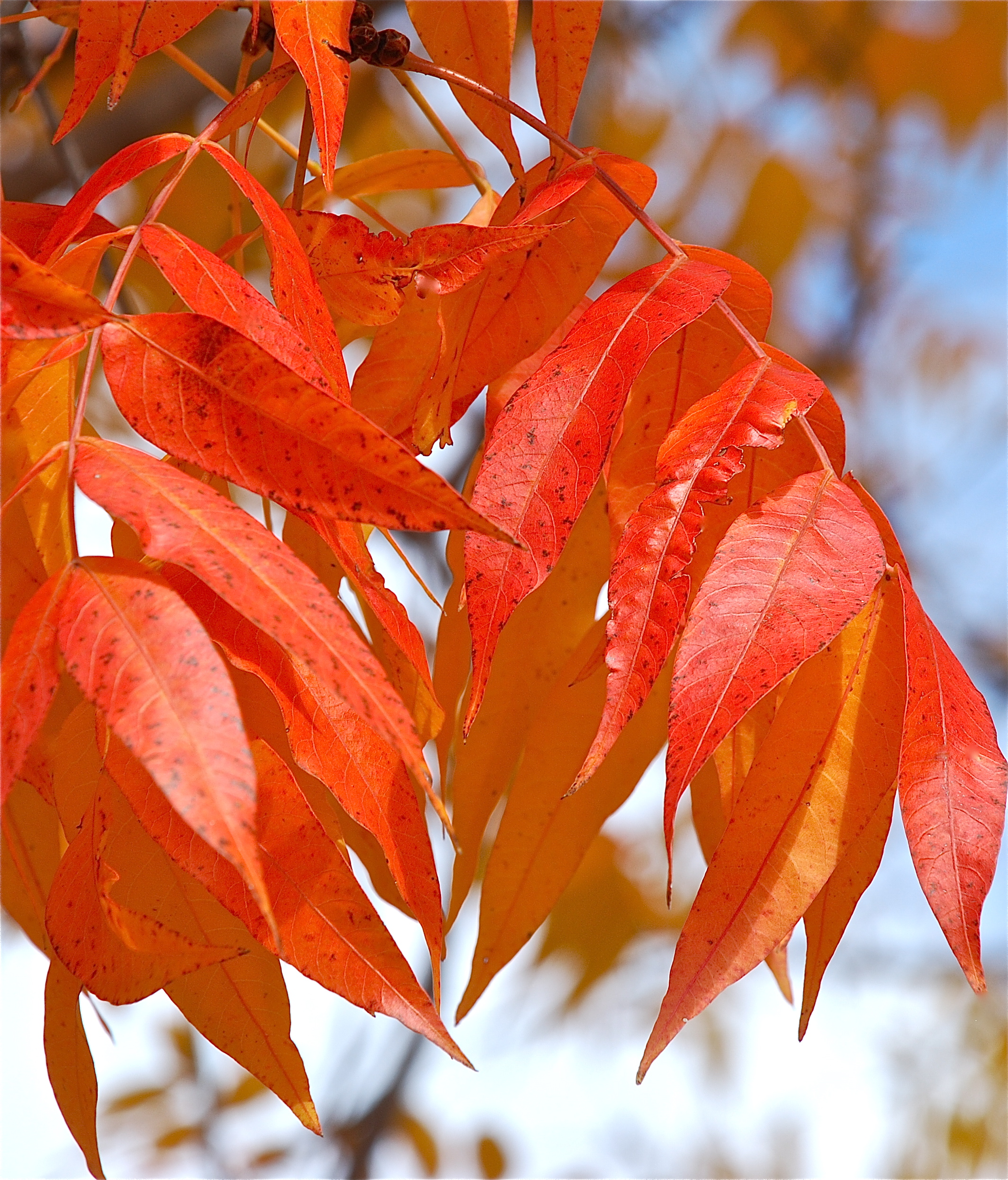
After last week’s hard freeze the march of fall’s foot soldiers revved up, and now more and more leafy encampments are being set ablaze.  What leafage is still dressed in green regimentals is fading fast to shades of yellow, orange, or hot reds cooled only by the occasional purple hue.  Though rare so far have been the firings of booming “thunder cannons” and the barrages of pelting rain, there have been, indicative fiery, explosions erupting on the eastern horizon at sunrise or westward over the rooftops at sunset forewarning the coming of fall’s final, crushing blitz.  The fallen victims of the earliest skirmishes are already gathering along curbs, littering the ground, and floating where waters collect, and the yet vanquished remaining leafy squadrons have not long before they too shall face their “last, violently hued hurrah.”  All is not as lost as it would seem however; for, despite the ever-increasing volume of casualties and the fact that the winter solstice is closing in, a measure of springtime miracles are already pushing up low and in warm safety under the autumnal warrior’s leafy carnage that’s been ransacked from on high by gusting winds.  Though but skimpily clad seedlings they be now, the deepening roots of larkspur, columbine, and poppies will hold their new growth steadfastly in place enabling them to hang tenaciously to life all winter long under fall’s stricken glory.  How could there be a more supremely, well-designed plan than that or any better a Creator than the Lord who devised such a grand and faithful plan!

Yet I call this to mind and therefore I have hope: Because of the Lord’s great love we are not consumed, for His compassions never fail.  They are new every morning, great is Your faithfulness.”  ~Lamentations 3:21-23  ✝

Music’s Mystery

Image

I’ve heard it said that only human beings have been given the gift of music; that only people create songs, sing and serenade their souls with this most magical and uplifting form of communication and communion. Yet, should we not consider the song of the lark? The haunting ballads of the whales? The mournful call of the wolf? The robin’s lyrical laugh at dawn and dusk? The crickets that serenade the nighttide? The burbles of monkeys swaying in the trees? The laughing of the hyena?

Who is to say that in their melodic tunes, caterwauls, howls, wails, and other worldly vocalizations there is not some measure of music. Why should we be the only ones to sing praise, to croon our love, and to bewail our distress? How can we know, in truth, in honesty, that the deliberate scree of the hawk, the piercing bugle of the elk, the chattering of raccoon and ferret, and the murmurings of infrasonic elephant calls is not music to their ears?

Music is a form of communication that lifts the soul, expresses emotion, and brings one being into contact with another being. If this is, indeed, the definition of music (of which it is a form) then can that being not be one other than human? Does not one wolf join another when it sings? Does not the whale song change season to season and year to year, picked up by another whale to be carried on? Does not one roaring lion inspire the entire pride by its lusty cry?

Consider what the morning would sound like without the sweet music of the birds. Contemplate what the summer night might be when not a single chirrup, trill, drone or buzz lilted through the air. Ponder how deep and lonely the oceans would be without the drifting, breathtaking songs of the whales. Can you even imagine a mountain landscape without hearing the echoing howl of a wolf or the bubbling laugh of the loon?

If these sounds, that can captivate us and uplift our thoughts, our hearts and even our souls, are not music and do not do the same for all those who hear them, regardless of race, than perhaps, we must follow that course of logic and say that cave paintings are not art, tap is not dance, improvisation is not acting and free verse is not poetry.

Or perhaps, Music Teaches the Soul what the Heart Feels and Guides the Heart with what only the Soul can Truly Know.

Music’s Mystery is by Morgan at:  http://booknvolume.com

190. Listen! the wind is rising, and the air is wild with leaves… ~Humbert Wolfe

Yet one smile more, departing, distant sun!
One mellow smile through the soft vapory air. . .
Yet a few sunny days, in which the bee
Shall murmur by the hedge that skirts the way,
The cricket chirp upon the russet lea,
And man delight to linger in thy ray.
Yet one rich smile, and we will try to bear
The piercing winter frost, and winds, and darkened air.
~William Cullen Bryant

Image

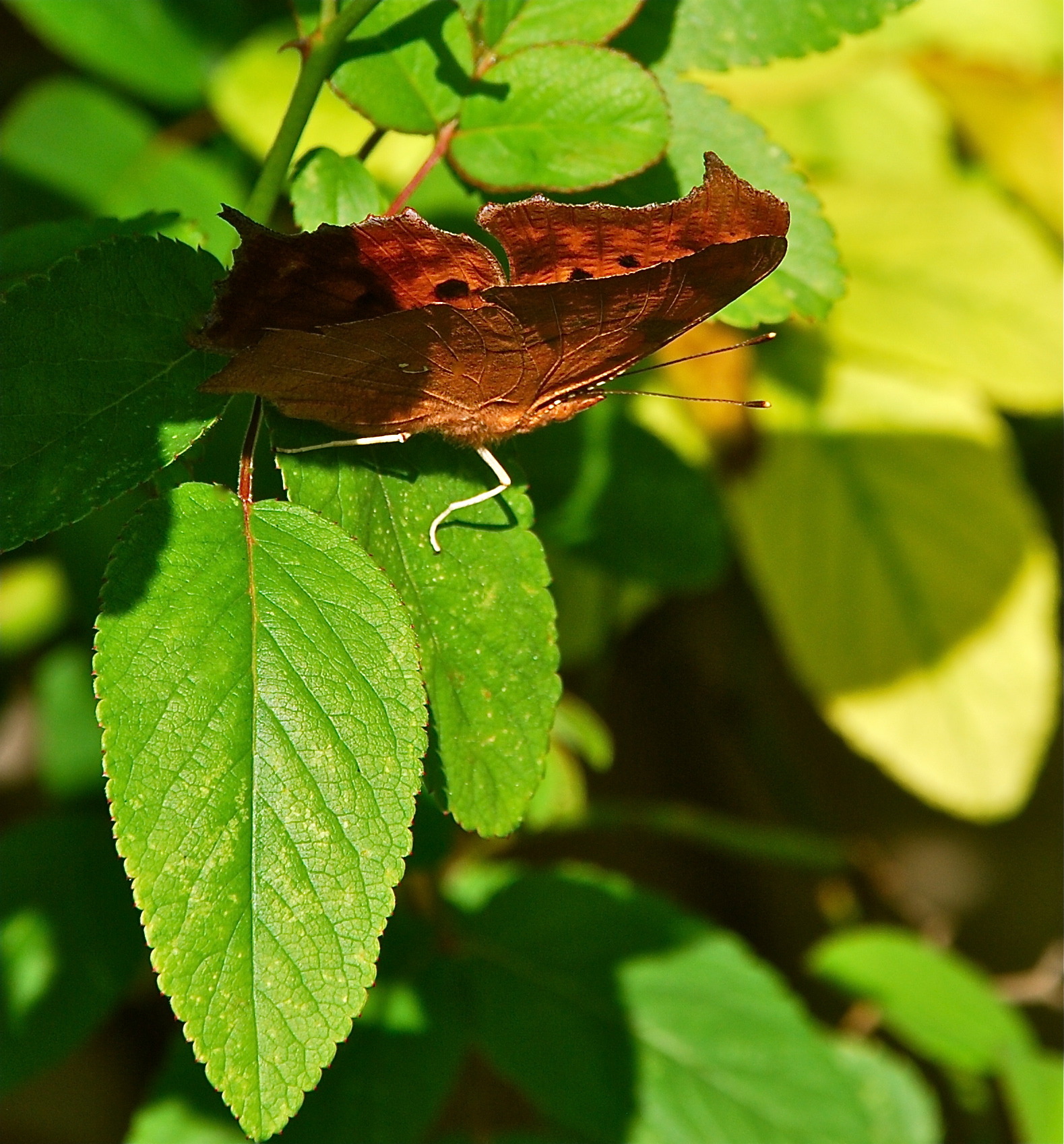
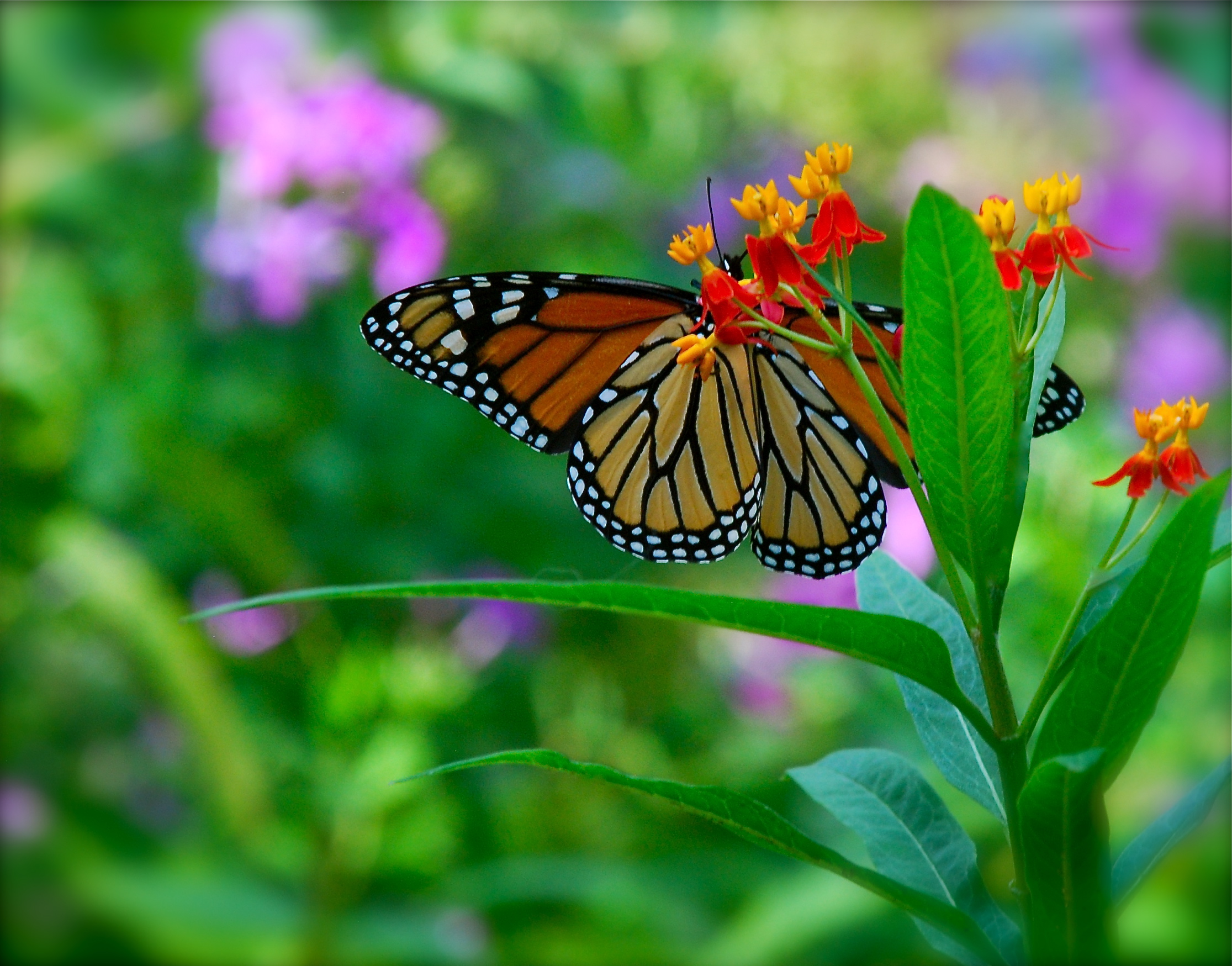
What a season of contrasts autumn is!  Many of its striking contradistinctions and “mellow smiles” can be seen on a single day, and yesterday was a fascinating example of Fall’s many faces.  Early in the morning the sky was a clear, brilliant blue, and as I wandered the yard I found a butterfly prettily perched on the leaves of a climbing rose.  Then the winds picked up and threatening clouds blew in.  About 30 minutes later, a narrow band of rain clouds passed over us leaving not a single drop, however, in their wake.  Afterwards the sun sat smiling again in the sapphire sky, but it was streaked with a few bands of Cirrus clouds.  Not too long after that the stormy/clear scenario repeated itself.  Finally late in the afternoon a blustery wind blew down like rain more of the yellow leaves off the willow tree as it chased the sun away for good.  What had been an almost balmy day in the mid-70‘s had rapidly changed, and the bite of the chilling north wind stung my unsuitably-clad body when I went out to unplug the fountain and close up the greenhouse.

He(God) wraps us the waters in his clouds, yet the clouds do not burst under their weight.  ~Job 26:8  ✝

174. The greatness of a nation and its moral progress can be judged by the way its animals are treated. ~Mahatma Ghandi

If all the beasts were gone,
men would die from a great loneliness of spirit,
for whatever happens to the beasts
also happens to the man.
All things are connected.
Whatever befalls the Earth befalls the sons of Earth.
~Chief Seattle of the Suquamish Tribe

Image

The creatures of earth, sea and sky came forth “out of the waters of God’s life.”   And their arrival was yet another manifestation of the visible from the invisible–another disclosure of the mystery of God.  In addition, “with the birth of the creatures there is the emergence of seeing, hearing, smelling, tasting, and touching.  The light of the sun and the whiteness of the moon can now be seen.  The wind blowing through the leaves of trees and the crashing of ocean waves can be heard.  The early morning fragrance of the earth can be smelled.  Its fruit can be tasted, and its textures touched,” writes J. Philip Newell.  It has even been said that if one wants to know the Creator, one of the ways to gain insight is to know His creatures, and I think that’s especially true when it comes to examining the sensory aspect of their coming.  For does not the ability to see, that the creatures brought, teach mankind to see with the eyes of the heart?  In the silences of humanity’s reality does not the ability to hear teach men to listen for the “echo of the spheres” and the still, small voice of God?  Do not the abilities to smell, taste, and touch help mortals meet their Savior, Jesus, through the holy sacrament of the Eucharist (Communion)?

And to all the beasts of the earth and all the birds in the sky and all the creatures that move along the ground–everything that has the breath of life in it–I give every green plant for food.”  And it was so.  ~Genesis 1:30

166. Another fall, another turned page: there was something of jubilee in that annual autumnal beginning…. ~Wallace Stegner

The foliage had been losing its freshness through the month of August,
and here and there a yellow leaf showed itself like a first gray hair…
September dressed herself in showy dahlias and
splendid marigolds and starry zinnias.
October, the extravagant sister, ordered an immense amount of
the most gorgeous forest tapestry to make glorious her grand spectacle.
~Edited and adapted excerpt from Oliver Wendell Holmes

Image

The first leafy sign of autumn appeared on the Dogwood today, and it triggered a flood of “color” musings in my mind.  Chestnut and chocolate!  What’s not to love about a season that clears off summer’s calamities, piles delectable hues back on nature’s palette, and calls for a pot of hot chocolate?  Lemon and lime!  Grasses, flowers, fruits, berries, and even a beastie or two weave fabulous garlands in the sacred temple bound by earth and sky.  Maroon and mahogany!  Chilling winds induce chemical changes in leaves that conjure up magic shows on woody altars in earth’s forests.  Mauve and mulberry!  The leaves on maples, oaks, dogwoods, pears, persimmons, and other trees give birth to colorful, parchment-like jewels that will one day snap off, swirl in little eddies, and play like children upon the ground.  Orange and ochre!  Pumpkins made to squat on porches or bales of hay tickle the fancy of mortal tongues anxiously awaiting fall feasts and winter banquets.  Red and russet!  Roses, asters, and Maximilian sunflowers invoke a breath of spring not stifled by summer’s heat to keep the year’s last child in colorful array.  Sable and sapphire!  Skies often shrouded by gauzy, gray clouds are swept clear by northerly winds as cold fronts advance.  On such days a spectacular brilliance can be seen on the brows of morn followed by daylight hours drenched in deep, dreamy shades of blue.  Sterling and pewter!  Plumed grasses shift and sigh in authorship of haunting, autumnal hymns.  Ah, how lovely are the many colors of autumn and the Holy One who made them!

As long as earth endures, seedtime and harvest (spring and autumn), cold and heat, summer and winter, day and night will never cease.  ~Genesis 8:22  ✝

156. I have always been delighted at the prospect of a new day, a fresh try, one more start, with perhaps a bit of magic waiting somewhere behind the morning. ~J. B. Priestley

I do believe in an everyday sort of magic–
the inexplicable connectedness we sometimes experience
with places, people, works of art and the like;
the eerie appropriateness of moments of synchronicity;
the whispered voice, the hidden presence,
when we think we’re alone.
~Charles de Lint

Image

Rose Fyleman (1877-1957) was an English writer and poet of exceptional talent who was best known for her works on the “fairy folk” for children.  She also translated many rare children’s books from French and German into their first English translations.  She eventually became the editor of one of the first children’s magazines called The Merry Go Round.  Rose was born in Nottingham, England, and there is speculation that it could have been the magical setting of Nottingham which led her to believe in fairies.  Whatever the reason, she blessed generations of readers with her lovely fairy poems.

It was one of Rose’s poem, Fairies at the Bottom of the Garden, which prompted my post last night about toadstools.  I loved her poetry as a child and I love it still.  I am passionate about gardening and its lore, and when I see creatures like the one in my photo I see how easy it would be to invent stories about “fairies.”  Besides what he said above, Charles de Lint, explained childhood this way:  “It is easy to believe in magic when you’re young.  Anything you couldn’t explain was magic then.  It didn’t matter if it was science or a fairy tale.  Electricity and elves were both infinitely mysterious and equally possible — elves probably more so.”  I believe Creation is both miracle and magic, and the more we try to explain it the more we see how miraculous and magical it is.  R. A. Salvatore said “a world without mystery is a world without faith,” and so it is because it is our faith that tells us what magic is “waiting somewhere behind the morning” and whose is the “whispered voice, the hidden presence, when we think we’re alone.”

There are fairies at the bottom of the garden!
It’s not so very, very far away;
You pass the gardener’s shed and you just keep straight ahead.
I do so hope they’ve really come to stay. . .
~for more of Fyleman’s work go to:  http://www.fairyamber.com/rfyleman.html

By faith he left Egypt, not fearing the king’s anger: he persevered because he saw Him who is invisible.  ~Hebrews 11:27

144. In the right light, at the right time, everything is extraordinary. ~Aaron Rose

For me, a landscape does not exist in its own right,
since its appearance changes at every moment;
but the surrounding atmosphere brings it to life – the
light and the air which vary continually.
For me, it is only the surrounding atmosphere
which gives subjects their true value.
~Claude Monet

Image

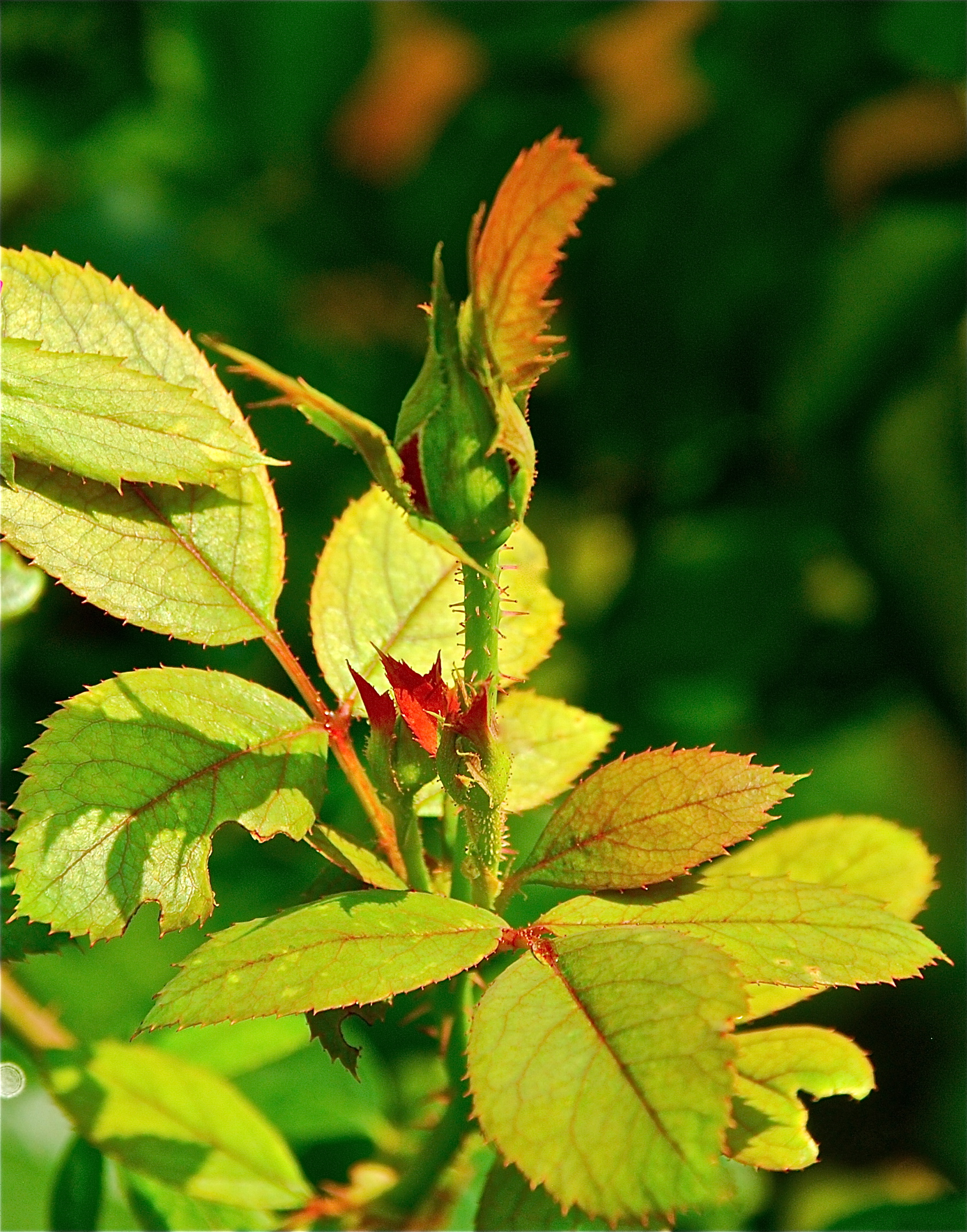
Living in a garden day after day, being a participant in all its events, witnessing the changes from season to season, and watching the way differing light falls on the landscape make gardening a thrilling experience.  The fact that colors in the garden change off and on during the course of a day fascinates me.  In morning light the hues are vivid and bright, but as daylight mellows into twilight, they melt into quieter, more subdued tones.  Light even affects the fragrance of things for it is only in the cooler moments of early morn and twilight that the strongest aromas are dispelled from herbs and flowers.  But then things are not just affected by changes in lighting.  Sometimes colors change as flowers and leaves age, when temperatures rise or fall, when changes occur in the content of the soil, or when rainfall is lacking or in abundance.  That’s why without looking at a calendar, I can tell that the rose bud in the photo is one born of recent rainfall and the passing of the autumnal equinox.  The constancy of this inconstancy defines the soul of a garden, and, like all else in nature, speaks to me of rhythmical and purposeful ordination.

Awake, north wind, and come, south wind!  Blow on my garden that its presence may spread everywhere.  Let my beloved come into his garden and taste its choice fruits.  ~Song of Songs 4:16   ✝

140. All nature sings, and round me rings the music of the spheres. ~Maltbie D. Babcock

This is my Father’s world
He shines in all that’s fair,
In the rustling grass I hear Him pass,
He speaks to me everywhere.
~Lyrics from This is My Father’s World by Maltbie D. Babcock

Image

What a glorious morning!  When I raised the shade, my eyes were met with a delicious light pouring down on a corner of the garden.  And it was light not born of the intense heat of past months but instead of the crisp coolness of a 59 degree autumnal equinox morn.  Zephyrs were ruffling leaves, and they were shouting hallelujahs in praise of the Lord’s Sabbath and yesterday’s rain.  Ancient Eden’s unmistakable holy voice reverberated in the air, and all of us, creature and man alike, recognized it and rejoiced.  The “special air of melancholy and magic” typical of September’s opus rose louder and louder as the light moved southward across the yard frosting everything in its wake.  Yahweh’s glory breathed new life into wilted leaves, faded blossoms, and weary bones as the light moved as sweetly as a bow across the strings of a Stradivarius in slanted increments across the yard.

“Arise, shine, for your light has come, and the glory of the Lord rises upon you.”  ~Isaiah 60:1  ✝

*Thanks to Annette Lepple for the great description of September that I quoted above.