299. Last weekend, there came a bitter cold snap, which did great damage to my garden…It is sad that Nature plays such tricks on us poor mortals, inviting us with sunny smiles to confide in her, and then, when we are entirely within her power, striking us to the heart. ~Edited and adapted excerpt from Nathaniel Hawthorne

Who loves a garden
Finds within his soul
Life’s whole,
He hears the anthem of the soil
While ingrates toil;
And sees beyond his little sphere
The waving fronds of heaven, clear.
~Louise Seymour Jones
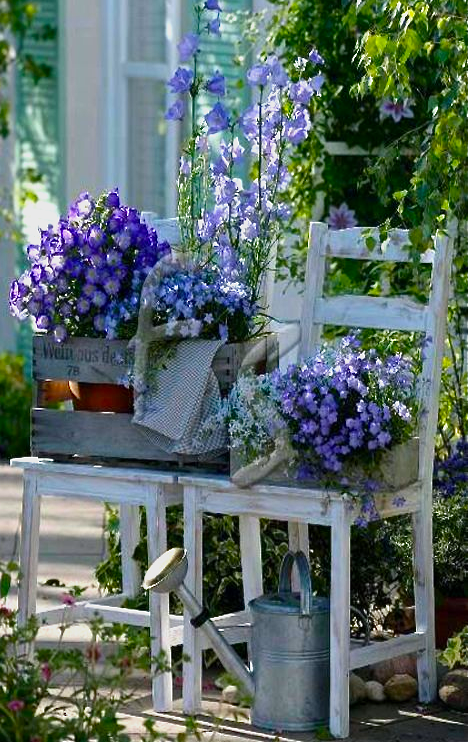
Image

I’ve been trying to figure out today what it is about a garden that is so seductive and irresistible for me, but I’m still no closer to an answer than when I’ve pondered it before.  I just know that something in nature calls to me and touches me on a deep level, brings glad music to my heart, and feeds “life’s whole” within my soul.  That’s why the losses due to last weekend’s dirty “trick” have struck a grievous blow to my heart which in turn has sent me sinking down, down, down into what one writer has called winter’s “vale of grief.”  Normally I can shake things off pretty quickly, but in addition to that casualty the arthritis in my left knee and left foot have me hobbling around on a cane, unable to get outside and do things that need to be done in the garden, and that’s creating a bluer than blue, bluish “funk.”  Now after spending way too much time inside, stationary and feeling a bit sorry for myself, I’m STARVED!!!  Like a junkie, I need my “fix.”  I need to hear the “anthem of the soil.”  Moreover, I need to touch the earth and dig in the dirt.  I need to feel Eden’s beating heart, her rhythms.  I need to hear the birds singing over my head.  I need color.  I need to see things growing and to look upon flowery faces, even a wretched dandelion would do.  I need to feel the sun’s warmth on my back.  And as much as anything else I need to feel God’s palpable presence in my tiny corner of His sanctum sanctorum.

Alas, sadly, I’m afraid it will be sometime before all those needs are met.  So I dug around on Pinterest board’s trying to find the kinds of images that typically draw me into a garden’s web of magic and glory.  Since I have no way of knowing when Old Man Winter will return to his arctic cave nor when my body will stop betraying me, they and a a little garden poetry will have to suffice.

From there you will seek the Lord your God, and you will find him if you search after him with all your heart and soul.  ~Deuteronomy 4:29   ✝
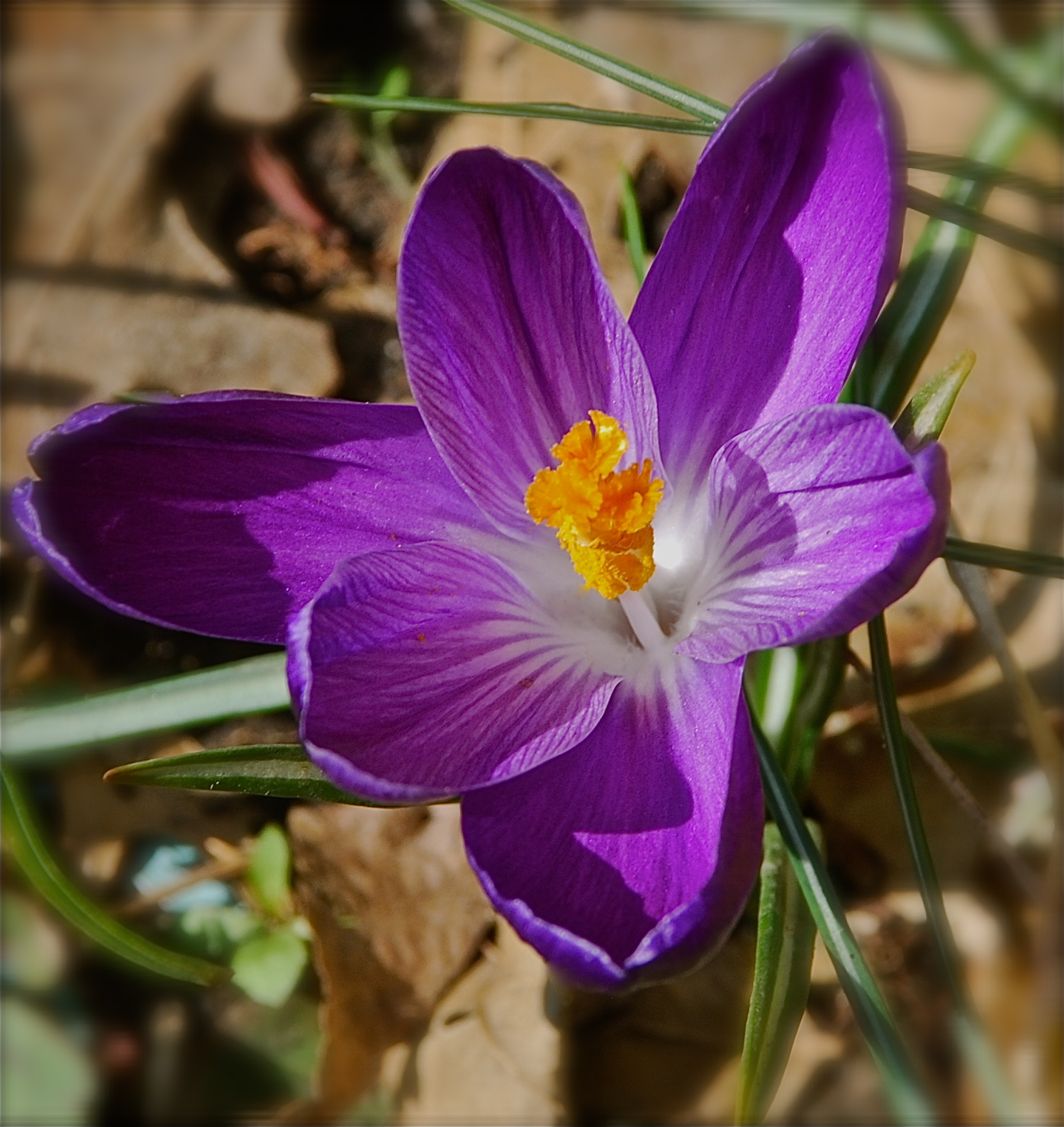
293. I think that no matter how old or infirm I may become, I will always plant a large garden in the spring.  Who can resist the feelings of hope and joy that one gets from participating in nature’s rebirth? ~Edward Giobbi 

The flowers of late winter and spring
occupy places in our hearts
well out of proportion to their size.
~Gertrude S. Wister

Image

Small for sure on earth’s vast stage are the first flowers of late winter and early spring, but large is their scope.  They, like the day’s first sunlight fractures darkness in the physical world, shatter darkness int the spiritual world.  And when any light breaks spiritual darkness, joy and hope can be sparked and subsequently release from any imposed bondage the light of God which is at the heart of all He created.  Thus I believe it is by Divine intent and for sacred purposes that these flowers occupy places of disproportionate size in the human heart.  Humanity lives with dreadful darknesses in this fallen world, and it could be that the Lord purposely built into Creation’s fabric the repetition of such sparks to keep igniting anew the glow of His Light.  J. Philip Newell proclaims that the light of God “dapples through the whole of creation.”  He declares that it can be seen “within the brilliance of the morning sun and the whiteness of the moon at night and that it issues forth in all that grows from the ground and the life that shines from the eyes of any living creature.”  Thus like cracks in a dam weaken the structure so that flood waters at some point may no longer be able to be contained, crack after crack in spiritual darkness eventually lets in more and more of God’s holy light.  Hence when the fullness of His Light breaks through into the world and the human heart, there is the potential for amazing floods of grace and healing as well as salvation.

You, O LORD, keep my lamp burning; my God turns my darkness into light.  Psalm 18:28   ✝

287. Hope is some extraordinary spiritual grace that God gives us… ~Vincent McNabb

Sit by the edge of the dawn / and the sun will rise for you.
Sit by the edge of the night / and the stars will shine for you.
Sit by the edge of the stream / and the nightingale will sing for you.
Sit by the edge of silence / and God will speak to you.
~from an ancient Hindu text

Image

“The semi-colon tells you that there is still some question about the preceding full sentence; something needs to be added…It is almost a greater pleasure to come across a semicolon than a period.  The period tells you that that is that; if you didn’t get all the meaning you wanted or expected, you got all the writer intended to parcel our and now you have to move along.  But with a semicolon there you get a pleasant little feeling of expectancy there is more to come; read on; it will get clearer.”  ~Lewis Thomas, American doctor and essayist

I think of nature’s seasons as junctures followed by divinely positioned, albeit invisible, semi-colons because they impart “a pleasant little feeling of expectancy.”  There are always more of them to be had, and it is that expectancy of “more” that keeps me hopeful not only in nature’s seasons but also in the seasons of my life when what I see tries to delude me into thinking things won’t ever change or this is the end.  In the passage above from the old Hindu text the use of “slashes” and “ands” could instead have been replaced with semi-colons because there is something more that comes after each of the suggested occasions to sit and wait.  In the same way, the fact that gardens keep an unfaltering “punctuation of continuance” right in front of me is one of the reasons I’m so drawn to spend time in them.  I need endless expectancy that breeds hopefulness.

And you will have confidence, because there is hope; you will be protected and take your rest in safety.  ~Job 11:18   ✝

**Even the two mauve hellebores in the photo look a bit like a semi-colon if one uses his/her imagination.

283. Man’s heart grows hard away from nature. ~Standing Bear, Ponca Chief

Image

For myself, I am grateful to nature,
not so much when I see her on the side
that is open to the world,
as when I’m permitted to enter her shrine.
Then one may seek
to know of what stuff the universe is made,
who is its author or guardian,
what is the nature of God…
Life would have been a useless gift,
were I not admitted to the study of such themes.
~Seneca, 4 BC-AD 65

Take delight in the Lord, and He will give you the desires of your heart.  ~Psalm 37:4   ✝

**Edited photo via Pinterest

276. There is no greater sorrow in the world, than eyes unseeing, color everywhere, or ears unhearing, softly wafted notes from nature’s great cathedral of the air. ~Mabel G. Austin

What is pink? a rose is pink
By a fountain’s brink.
What is red? a poppy’s red
In its barley bed.
What is blue? the sky is blue
Where the clouds float thro’.
~Christina Rossetti

Image

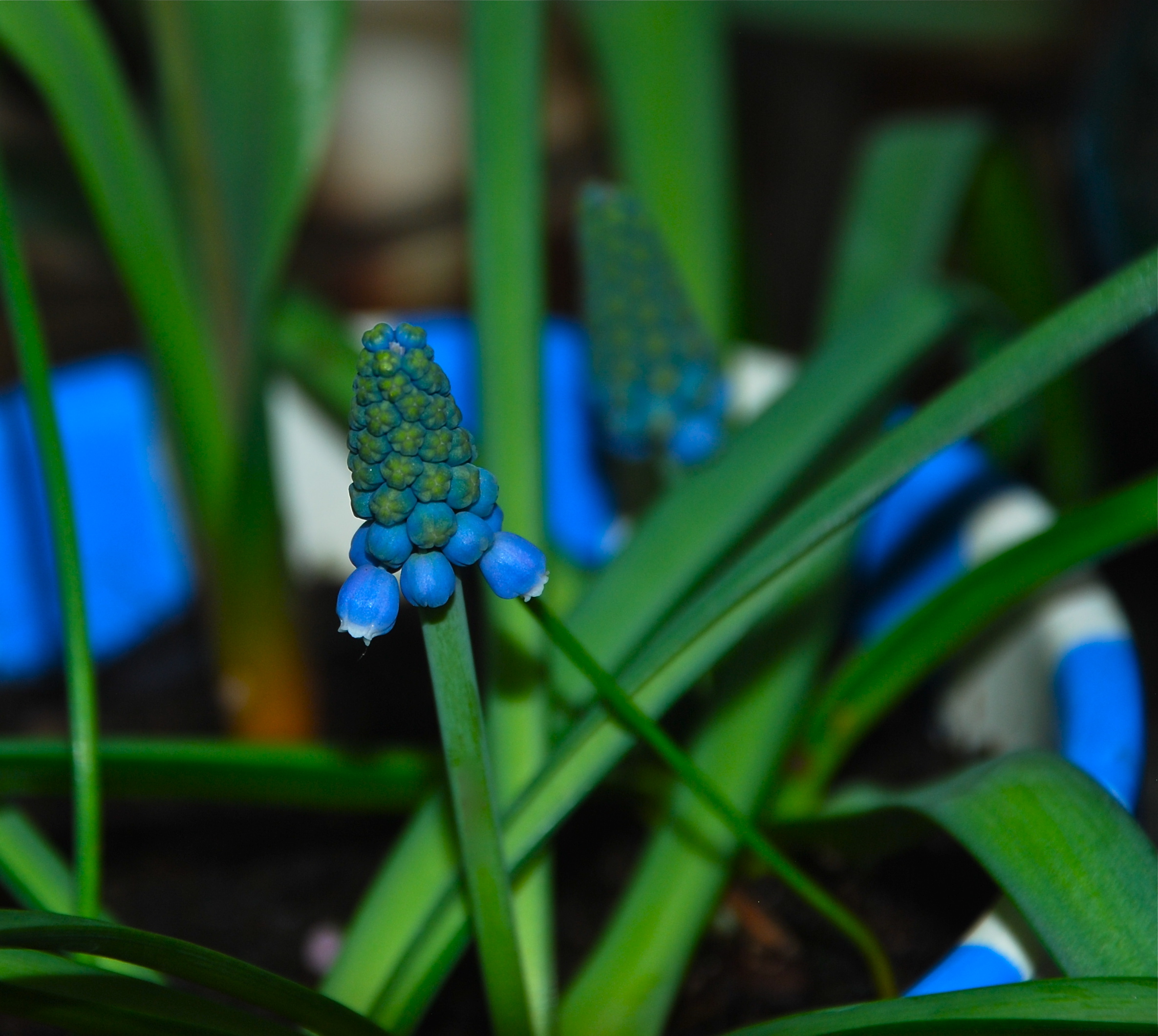
Well, it’s another gloomy winter’s day hereabouts, but I’m a singin’ away, a singin’ in the rain as a matter of fact.  “I’m laughing at the clouds so dark up above, what a glorious feelin’ I’m happy again…”  Okay, so it isn’t much rain, but it has rained a bit nevertheless.  And what am I a singing?  I’m a singin’ the blues.  No, no, no, not the sad blues–the happy blues because some of my little, blue grape hyacinths are blooming in the greenhouse, and they like “girls in white dresses with blue satin sashes” are “a few of my favorites things.”  I love the color blue and I love some of the expressions using the color blue, expressions like:  true blue, out of the blue, bluer than blue, blue on blue, once in a blue moon, something borrowed, something blue, and on and on it goes.  I also love some of the ways people describe what the color blue means to them.  For example I’ve heard things like: blue is the wonder in my mind; blue is the sound a sunny day makes; blue is the smell of blueberries ripening in the sun; blue is the wind over water; blue is the color of the never-ending sky; blue is the place where song birds fly; blue is a world of sweet mellow joy; blue is the sky that God holds close to His presence; blue was meant for us to see and believe.

Image

Blue is the color of God’s Glory according to some rabbinic sages, and it is a constant in our lives.  Not only is it the color of the clear sky and the deep sea, but it’s the color of our planet, Mother Earth, our precious blue pearl in the heavens.  God does indeed hold the sky close to His presence, and we were meant to see evidence of Him, our Creator, in its orbs and in “my blue, blue, blue heaven.”

Speak to the Israelites, and tell them to make fringes on the corners of their garments throughout the generations to put a blue cord on the fringe at each corner.  ~Numbers 15:38  ✝

275. Adopt the pace of nature; her secret is patience. ~Ralph Waldo Emerson

Image

This the garden’s magic,
That through the sunny hours
The gardener who tends it,
Himself outgrows his flowers.

He grows by gift of patience,
Since he who sows must know
That only in the Lord’s good time
Does any seedling grow.

He learns from buds unfolding,
From each tight leaf unfurled,
That his own heart, expanding,
Is one with all the world.

He bares his head to sunshine,
His bending back a sign
Of grace, and ev’ry shower becomes
His sacramental wine.

And when at last his labors
Bring forth the very stuff
And substance of all beauty
This is reward enough.
~Marie Nettleton Carroll

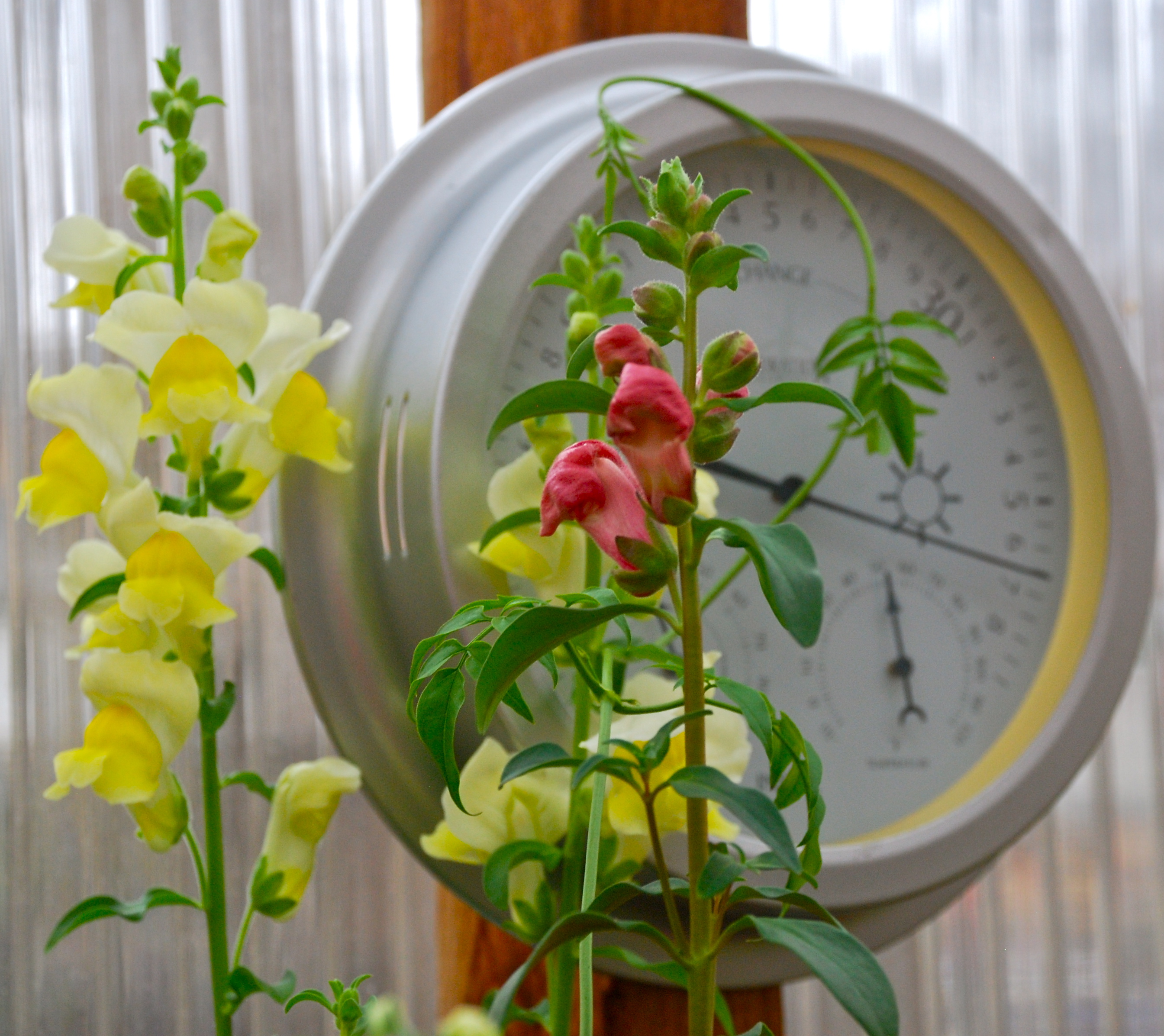
Patience, what a difficult thing to master!  At least it has been and still is for me at times.  But as Emerson and Carroll assert, part of a garden’s magic is the gift of patience.   So among other things I am learning that the anticipation of what unfolds from within the bud is almost as sweet as the blossom itself.  Emory Austen said, “Some days there won’t be a song in your heart.  Sing anyway.”  With that in mind I’m gonna be patient this week, be glad my snapdragons are blooming, believe that rain will come, and sing away as I continue to wait for my tulips to unfurl and this decade-long drought to end.

But if we hope for what we do not see, we wait for it with patience.  ~Romans 8:25  ✝

274. When bright flowers bloom parchment crumbles, my words fade, the pen has dropped… ~Morpheus

He who is born with a silver spoon in his mouth
is generally considered a fortunate person,
but his good fortune is small
compared to that of the happy mortal
who enters the world
with a passion for flowers in his soul.
~Celia Thaxter

Image

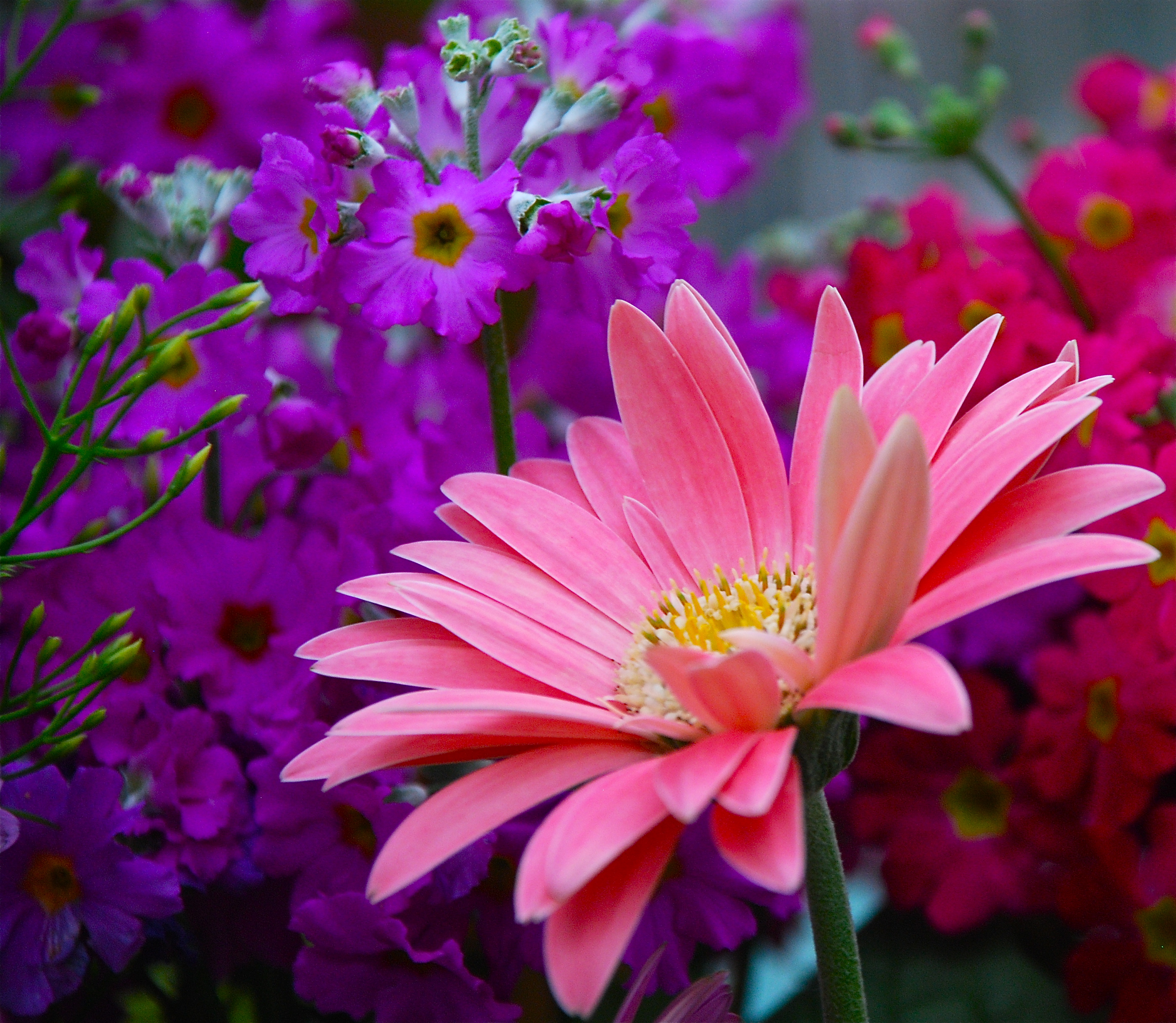
Ambrosia, food or drink of the gods in Greek mythology, brought to Olympus by doves and thought to be a kind of divine exhalation of the Earth–oh how tasty is ambrosia–mouthwatering, yummy ambrosia!  Leastways that’s the first word that comes to my mind when I see flower and color combinations like these is my photo.  But wait, some would say such things can’t be ambrosial because they aren’t food or drink.  And I would have to argue that they are, at least metaphorically speaking, because they are part of earth’s “divine exhalation” that satiates thirst in the spirit and hunger in the soul.   All of Creation shouts to the world that there is a Creator, and such is just one of its many compelling cries–sacred touches, as it were, of a loving God who wants to be found.

Ever since the creation of the world His eternal power and divine nature, invisible though they are, have been understood and seen through the things He has made.  ~Romans 1:20  ✝

**Photo taken in my greenhouse today.

270. Nature looks dead in winter because her life is gathered into her heart. ~Hugh Macmillan

She (nature) withers the plant down to the root
that she may grow it up again fairer and stronger.
She calls her family together
within her inmost home to prepare them for being
scattered abroad upon the face of the earth.
~Hugh Macmillan

Image

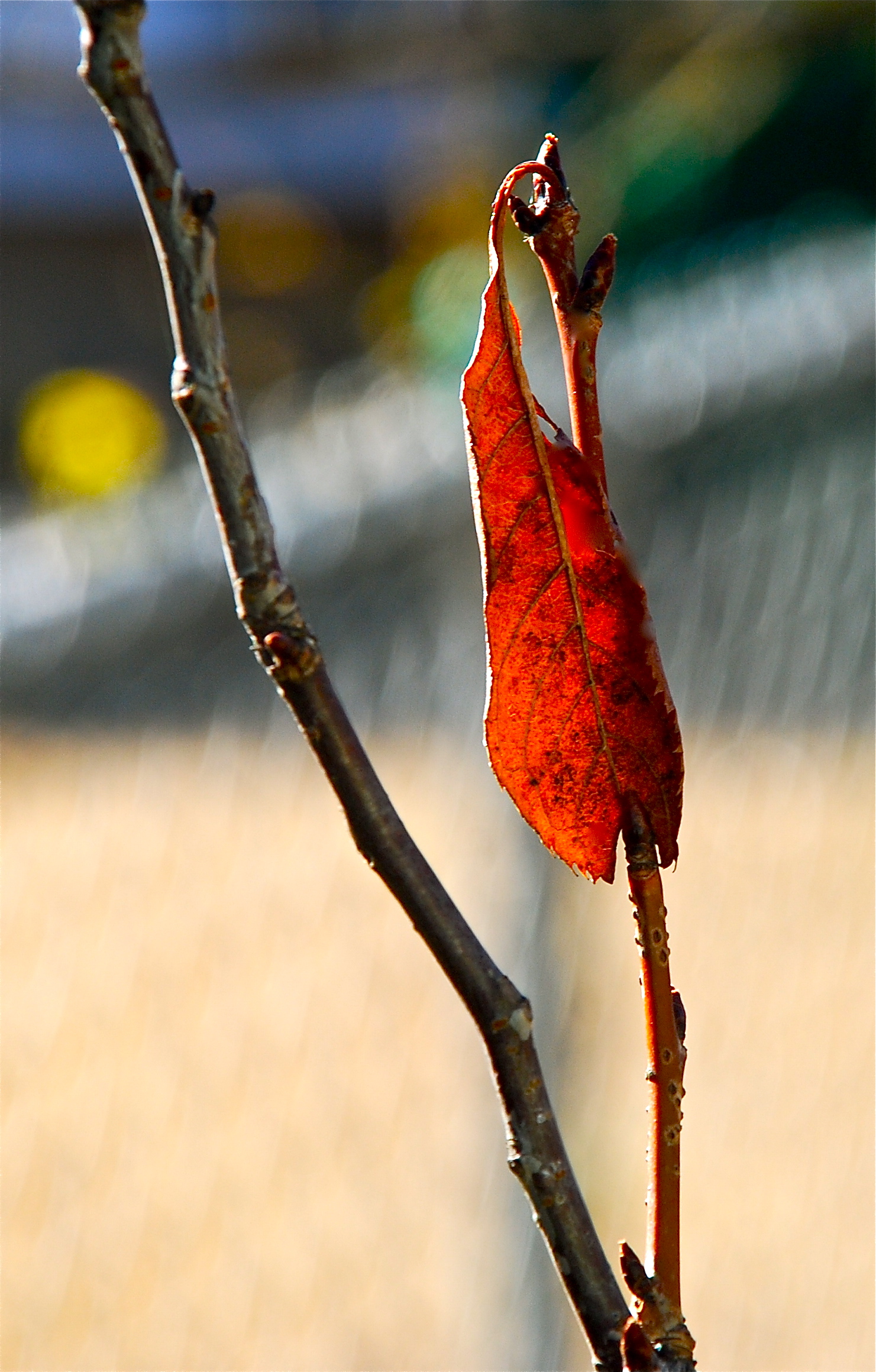
Early morning light steals across straw-colored grass and slowly warms the biting chill of a February dawn.  Splinters of sunlight glisten and sparkle as they move over the garden’s frost-laden, bare bones.  From my vantage point inside I can make out a lone, reddish leaf, not quite ready to be a memory, clinging tenaciously to a branch in the ornamental cherry tree.  It reminds me that a wellspring of life lies dormant below in nature’s “inmost home” where “her life is gathered into her heart.”  My attention is diverted next to the dogs I hear barking up and down the alleyway.  The feral cats must be on the move in search of food.  Then birds begin to show up at the feeders and high above their flutterings I see the first squirrels running the high wires.  Soon birdsong breaks morn’s silence, and lights start coming on in the once darkened houses around us.  The neighborhood is coming alive and gearing up for the day, but no, not I.   Since retirement I’ve been able to linger as long as I like most mornings and from my well-situated chair watch the days and the changing seasons pass over my yard.  Nature’s recurrent patterns and rhythms have always comforted me, and it’s delightful to be able to partake of her daily feasts.  Though evidence of God’s grace is readily apparent in the spectacular moments of life, perhaps sweeter are the ones ferreted out of day to day, ordinary living.  These are blessings that are not unlike the contrast of a mass of diamonds scattered out on a dark piece of velvet in which all are lovely but none seems particularly more special than the other and that of a singular diamond’s loveliness on the same piece of fabric which in its aloneness is brilliantly stunning.

For the word of the Lord is right and true; He is faithful in all He does.  ~Psalm 33:4  ✝

269. Will not a tiny speck very close to our vision blot out the glory of the world and leave only a margin by which we see the blot. ~George Eliot

You shall see them
on a beautiful quarto page,
where a neat rivulet of text shall meander
through a meadow of margin.
~Excerpt from “School for Scandal” by
Richard Brinsley Sheridan

Image

Image

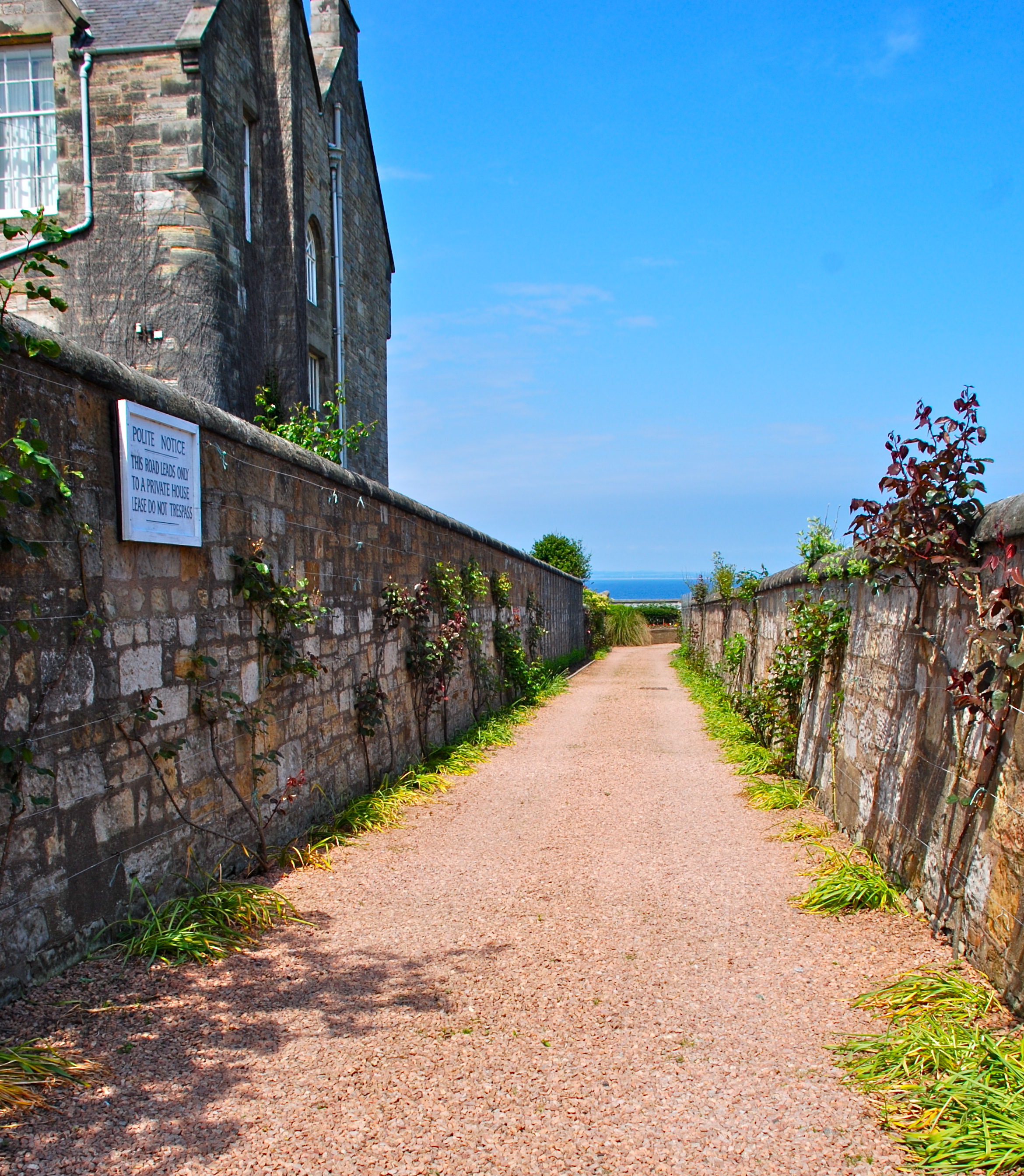
Margins–our lives are lived within all kinds of marginal edges.  In botany and entomology scientists talk of margins when they cite data about borders around leaves or the borders of insect wings.  The earth itself has what I think of as margins.  For example, phenomena like mountains, rivers, forests, or oceans hold things within or without; walled constructs built by the sea are held by nature and man.  Even our written documents and texts are kept inside a border of blank space called a margin.  In literary works poets and novelists speak of garden walls as the margins around growing spaces.  The margins around my backyard gardening spaces as well as the ones in public gardens I visit are fences.  Interestingly, at one time the margins around my yard were solely the fence lines, but now it is contained within its confines in places by an assortment of trees, some planted by human hands, others that sprang up by their own devices.

In the scriptural passage below God is telling the people of Jerusalem that although they are in a city without walls, He will protect them by being the barrier between them and their enemies.  The Lord does that for His children even when they misuse the reins of free will to wander poorly chosen worldly paths. Fortunately for us we never get so far down those potentially dangerous paths that we are out from under the spread of Yahweh’s mighty wings of grace.  When asked, He will pull us into a walled sanctuary where His forgiveness is an ever-standing offer for contrite hearts.  And as a fellow blogger noted, He walls our hearts with His love.

“And I myself will be a wall of fire around it,” declares the Lord, “and I will be its glory within.  ~Zechariah 2:5  ✝

252. Look deep into nature, and then you will understand everything better. ~Albert Einstein

The cycle of nature—the progress from seed to fruition to dying-off and then renewal in the spring—was mirrored in the wild fields and the cultivated garden alike, while the fragility of harvest—the possible interruption of the cycle by drought, wind, or other natural calamities— established the pattern of how humans understood the workings of the cosmos.  The oldest of surviving sacred stories have their roots in the garden and reflect how humanity sought to understand the changeable patterns of their world…  ~Peg Streep

Image

There is nothing better for mortals than to eat and drink, and find enjoyment in their toil.  This also, I saw, is from the hand of God; for apart from him who can eat or who can have enjoyment. For to the one who pleases him God gives wisdom and knowledge…  ~Ecclesiastes 2:24-26a  ✝

**In the photo is a pink poppy in bloom next to one that has already lost the petals which surrounded its seed pod.