304. The sun has come out…and the air is vivid with the coming spring’s light. ~Adapted excerpt from Byron Caldwell Smith

Let me arise and open the gate,
to breathe the wild warm air…
To let Life in, and to let out Death.
~Violet Fane
Image

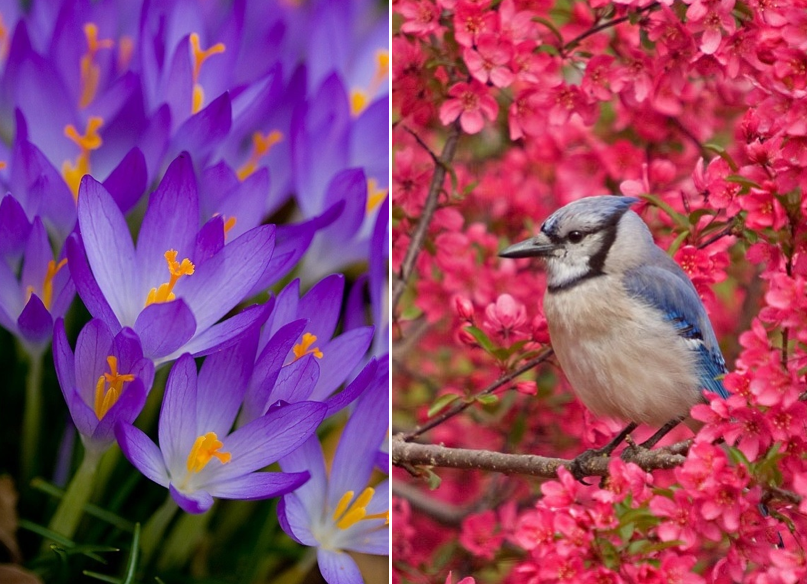
Blow, Breath of heaven, blow!  Blow through the land and over the waters.  Carry away death’s dark vapors and let life in.  Let every mountain, plain, and valley break forth in gladness.  Let the “wild warm air” of coming spring spark life in every nook and cranny.  Let the ceaseless waves of the seas and the rushing currents of rivers roar with renewed passion for life.  Let the clouds suckle earth’s waters and send rain from heaven to moisten the earth and let loose her flowering.  Let life, whole and vibrant, dazzle us anew.  Blow, sweet Breath of heaven, blow!  Blow through Your children and take us down to the bottom of our souls where You, O God, the Breath of all things, are present “deep within all that has life.”  We who have traversed icy winter’s dark domain yearn to feel your warmth and vitality course in us and all of life again.  We long for earth and sky’s vast array of bright colors to take away winter’s preponderance of grays and browns.  O Holy One, come; let us see You “in every emanation of Creation’s life.”  We give you glory and thanks for all that You are, for Your ever-lasting goodness and never-ending love, “for creatures stirring forth,” “for plant forms stretching and unfolding,” “for the stable earth and its solid rocks.”  O blessed Breath of heaven, arise and blow life afresh through Eden’s gates!  (Quoted phrases from SOUNDS OF THE ETERNAL by J. Philip Newell)

By the word of the LORD were the heavens made, their starry host by the breath of His mouth.  ~Psalm 33:6   ✝

**photos via Pinterest
277. In the depths of winter I finally learned that within me there lay an invincible summer. ~Albert Camus

Image

A warm and cheery fire roars merrily
And shadows dance about the darkened room.
Beside the hearth a gardener sits and dreams
Of sunny days, of flowers in full bloom.
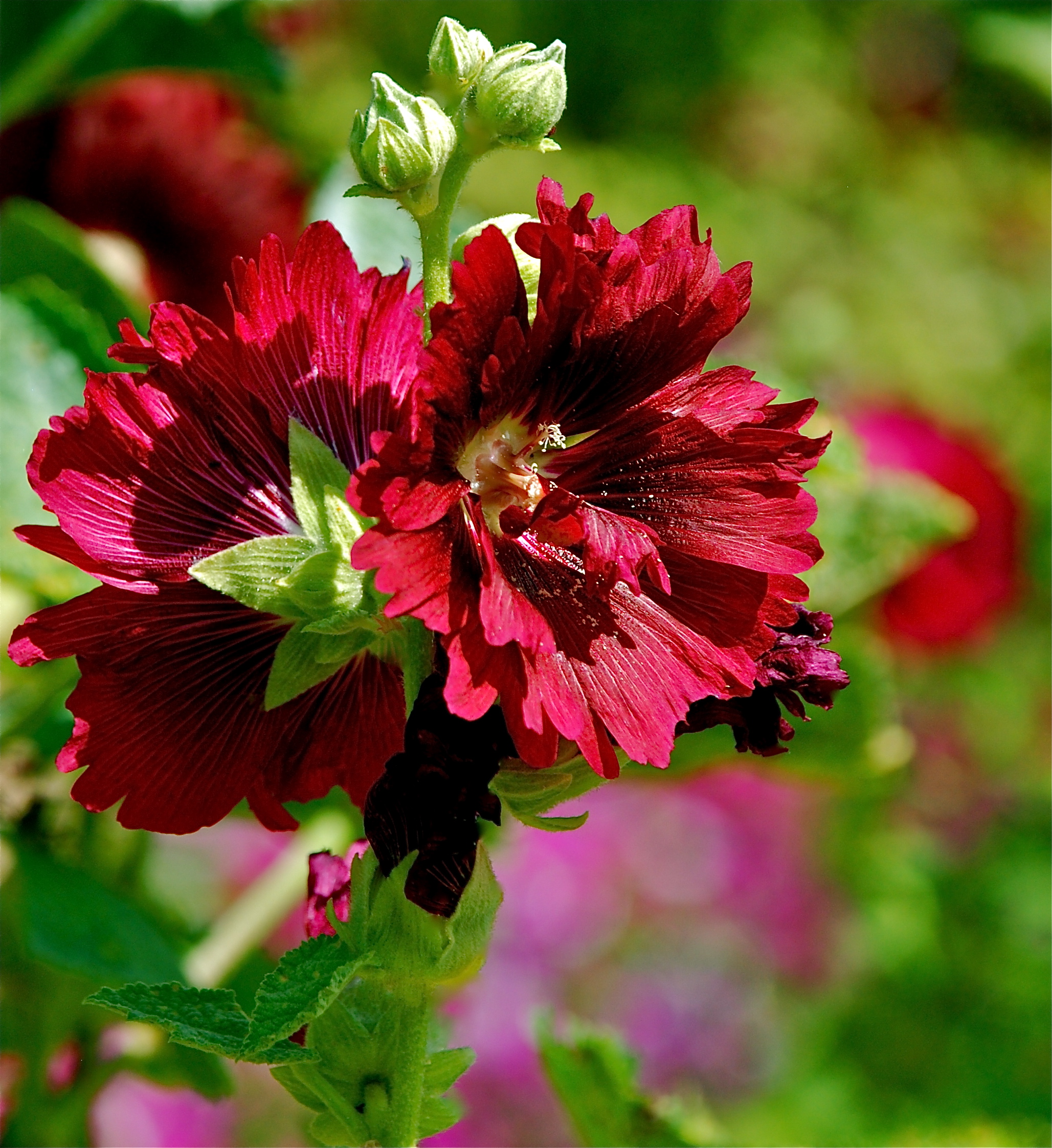
Some hollyhocks should tower near the fence,
Bright red ones that the bees can’t help but find.
The trellis at the gate again must wear
Blue morning glories, or the rosy kind.
To lend a bit of distance to the scene,
Close to the rear I’ll plant in shades of blue:
The tall and stately larkspur, double ones­
Of course I’ll put in scabiosa, too.
I couldn’t do without a pansy bed­
Snapdragons make such beautiful bouquets­.
Frilled zinnias and yellow marigolds
Add just the proper touch to autumn days.
The flowers grow and bloom with loveliness
Until a sound destroys the fantasy­
A burning ember falls and I must leave
My garden and my charming reverie.
~Helen Bath Swanson

I will sing to my God a new song: O Lord, you are great and glorious, wonderful in strength, invincible.  ~Judith (Apocrypha) 16:13  ✝

253. Blue color is everlastingly appointed by the Deity to be a source of delight. ~John Ruskin

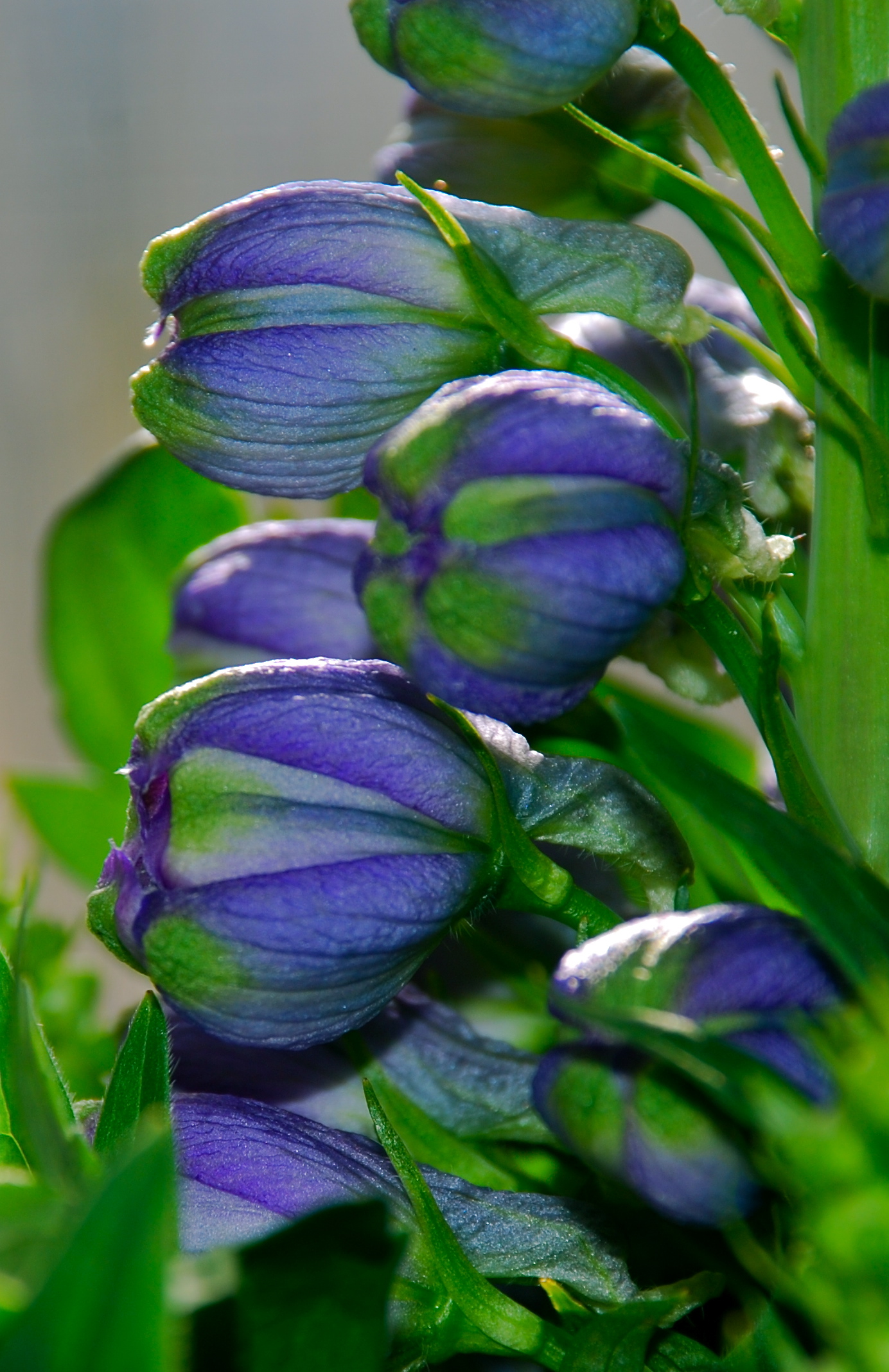
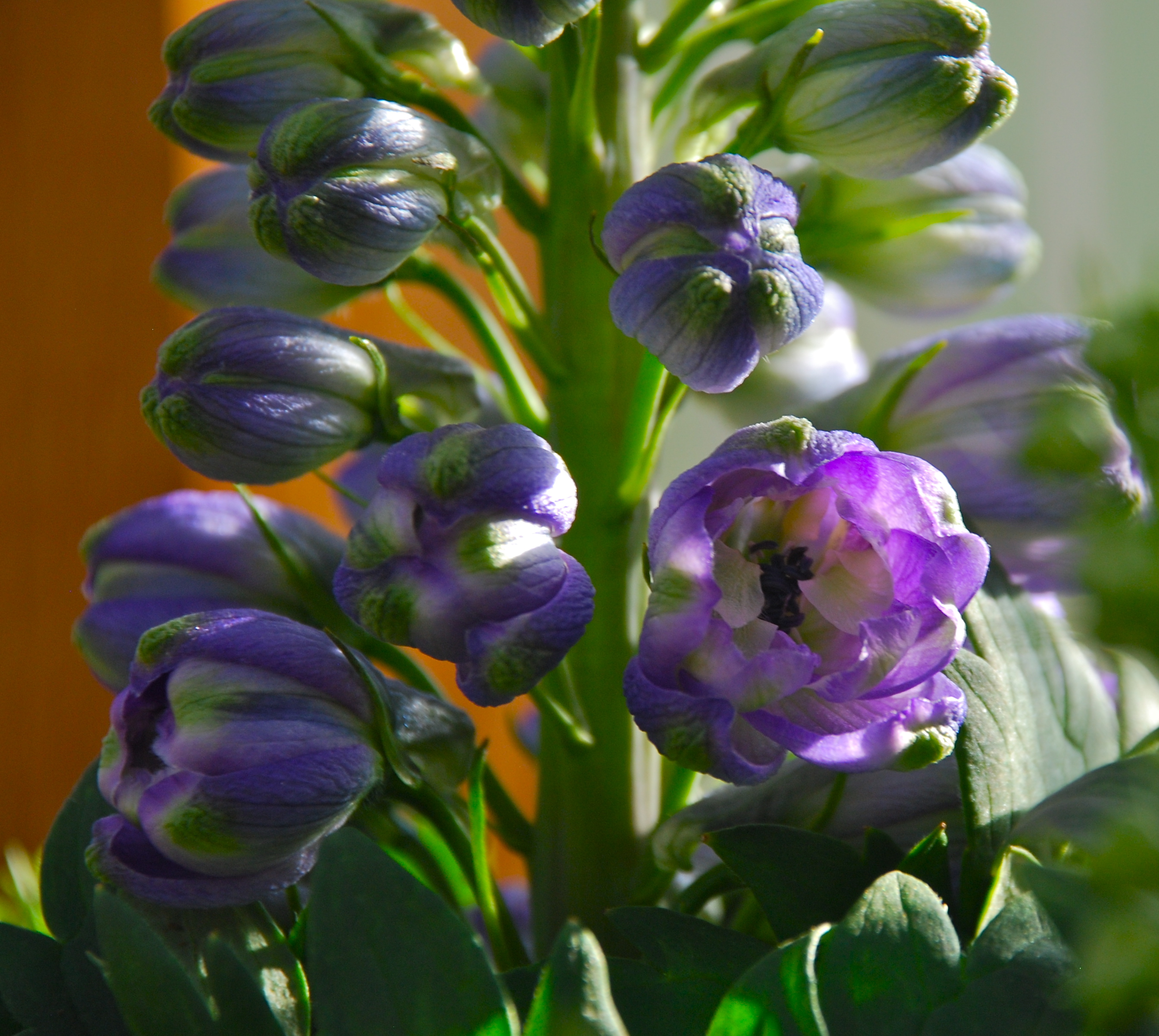
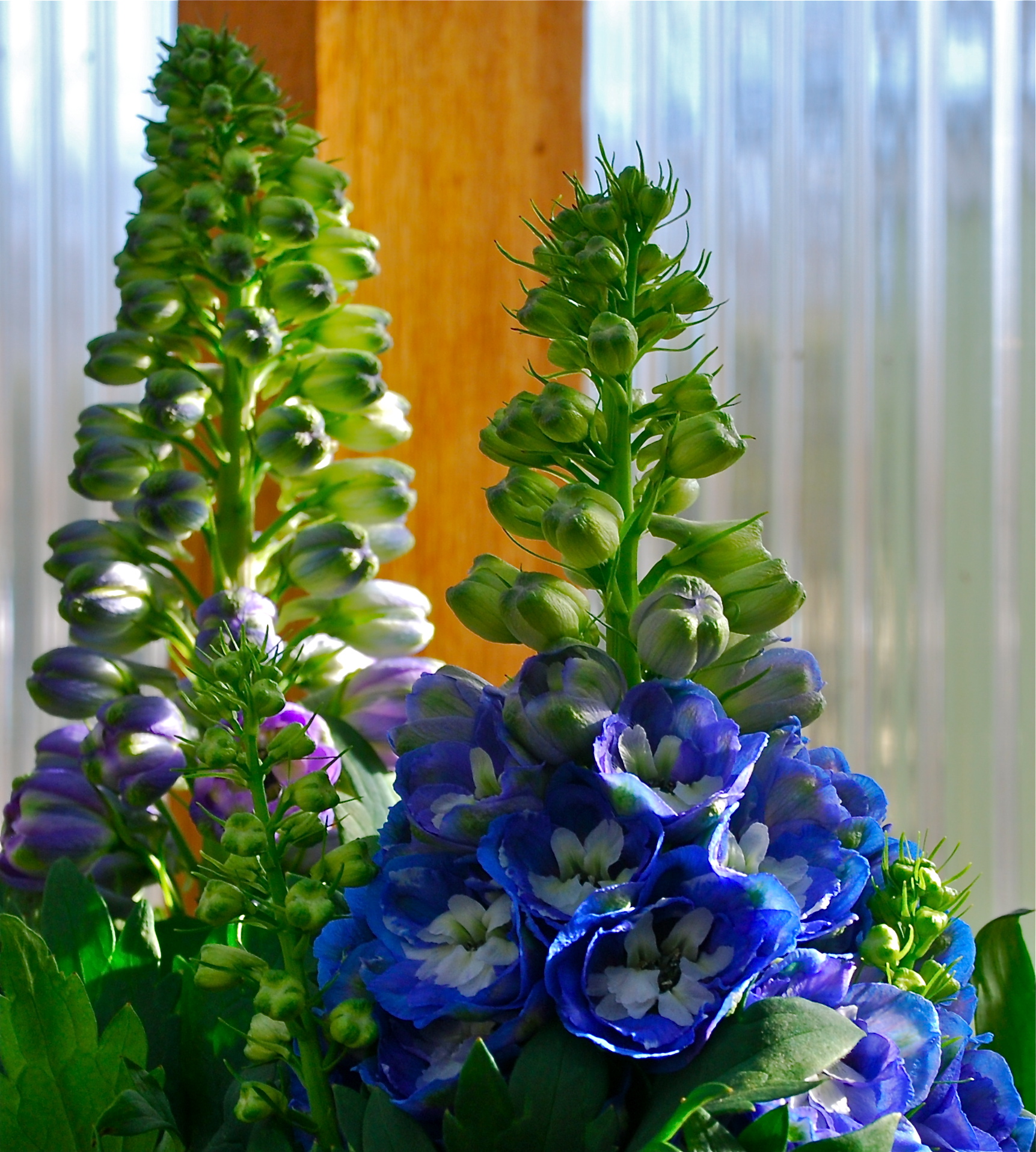
I’m a native of Europe and Siberia.
My name comes from the Greek word meaning “Dolphin.”
My dried flowers were used to dress wounds at the Battle of Waterloo.
European settlers made ink from my dried flowers.
I was used by West Coast Native Americans to make blue dye.
I’ve been said to represent the tears of the Virgin Mary.
Who am I? My name is Delphinium.
I can be blue and I’m beautiful.

Image

Image

Image

Blue is a popular color in the garden perhaps because it is relatively rare one in the plant world.   In fact, blue is said to be the most rare of colors amongst flowers.  Thus I am blessed to live in a place whose state flower is blue and whose landscape in places becomes covered in seas of bluebonnets for several weeks every spring.  Also, though Delphinium is not a staple in our landscape, they appear in pots in the nurseries this time of year before much, if anything, is blooming outside.  So I can, like I did last week, buy some to brighten the drab days of winter.  Both of the ones I got this year were marked as blue, but now that the second one is opening, I see that it’s going to be purple.  But hey, who am I to complain since purple is another of my favorite colors, and it too is often hard to come by in the garden.  Regardless of the color, now that I know that at one time delphiniums represented Mary’s tears, I’ll have yet another way of remembering what my salvation cost Mary and her precious son, the Christ.

May those who sow in tears reap with shouts of joy.  ~Psalm 126:5  ✝

237. Within the seed’s case a secret is held. Its fertile whisper shapes a song. ~Joan Halifax

I have great faith in a seed.
Convince me that you have a seed there,
and I am prepared to expect wonders.
~Henry David Thoreau

Image

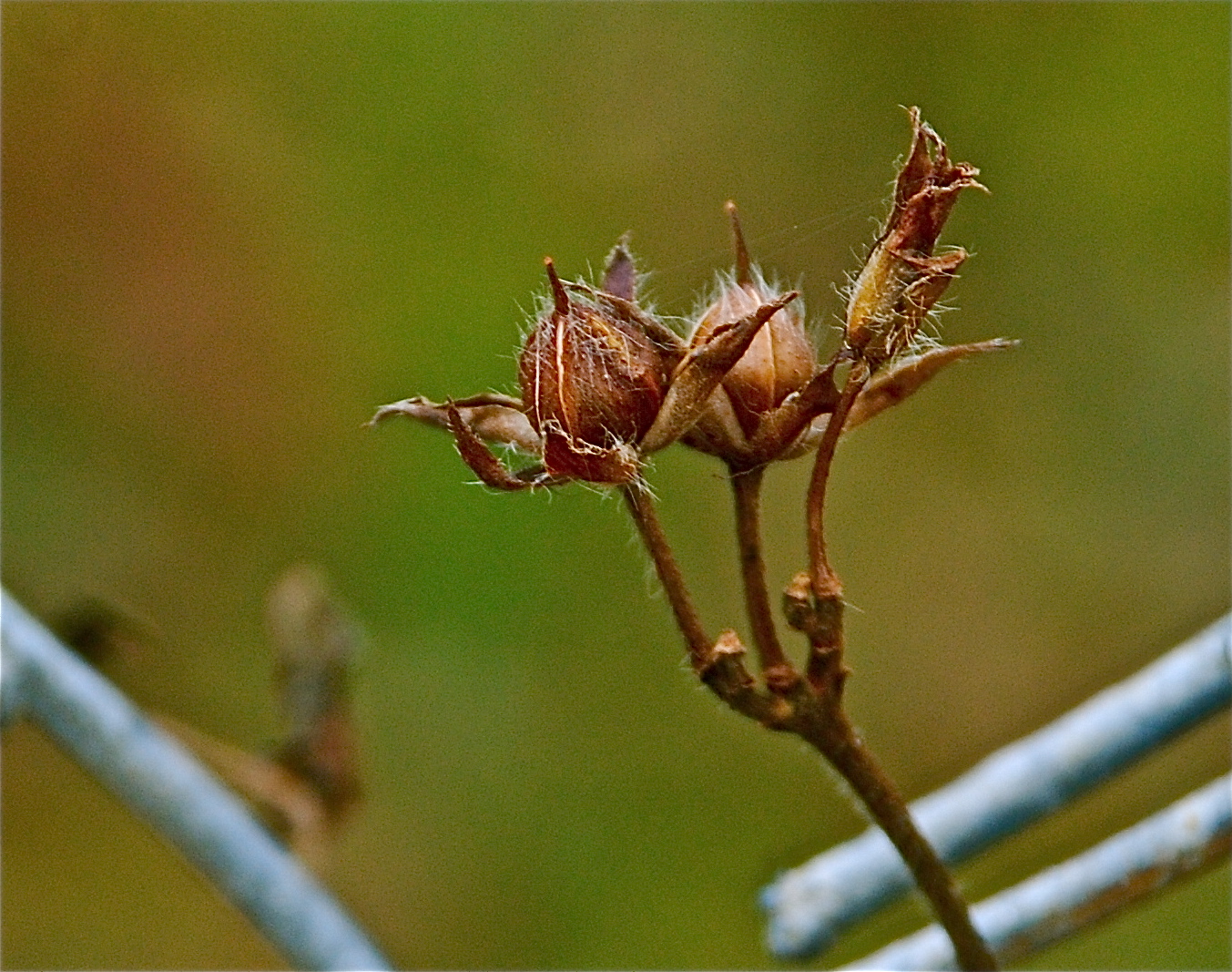
Shhh!  Can you hear it?  Look at the photos.  This is the hope; this is winter’s promise; this is the fertile whisper!   But wait, everything in the photographs is dried up and brown.  And dead!

Oh do not be deceived by appearances, my friends, for these seed cases are ripe and what they hold is ever so viable!  Their wealth may now be kept inside in secrecy but trust me these cases are vigilant and waiting–waiting for that wondrous moment in time when enough warmth and light and moisture will enliven their songs of fertility.  And then they will split wide open, spill their sacred secrets upon the soil, and spark new life.

David Walters said, “God’s promises are like the stars, the darker the night, the brighter they shine.”  For me seed cases are like God’s promises as well because the deeper and darker winter becomes, the more the expectation of what they hold brightens winter’s cold and forbidding days.  As their sweet melodies take shape, they keep the hopeful dream of spring alive when what I see conveys a story of death and decay.

God said, “See, I have given you every plant yielding seed that is upon the face of the earth, and every tree with seed in its fruit; you shall have them for food.”  ~Genesis 1:29  ✝

233. The day is of infinite length for him who knows how to appreciate and use it. ~Johann Wolfgang von Goethe

Image

Take time to think; it is the source of power.
Take time to play; it the secret of perpetual youth.
Take time to read; it is the fountain of wisdom.
Take time to pray; it is the greatest power on earth.
Take time to love and be loved; it is a God-given privilege.
Take time to be friendly; it is the road to happiness.
Take time to laugh; it is the music of the soul.
Take time to give; it is too short a day to be selfish.
Take time to be charitable; it is the key to heaven.
~Author Unknown

For everything there is a season, and a time for every matter under heaven: a time to be born, and a time to die; a time to plant, and a time to pluck up what is planted; a time to kill, and a time to heal; a time to break down, and a time to build up; …  ~Ecclesiastes 3:8  ✝

230. He who marvels at the beauty of the world in summer will find equal cause for wonder and admiration in winter… ~John Burroughs

Nature looks dead in winter because
her life is gathered into her heart.
She withers the plant down to the root
that she may grow it up again fairer and stronger.
She calls her family together
within her inmost home to prepare them
for being scattered abroad upon the face of the earth.
~Hugh Macmillan

Image

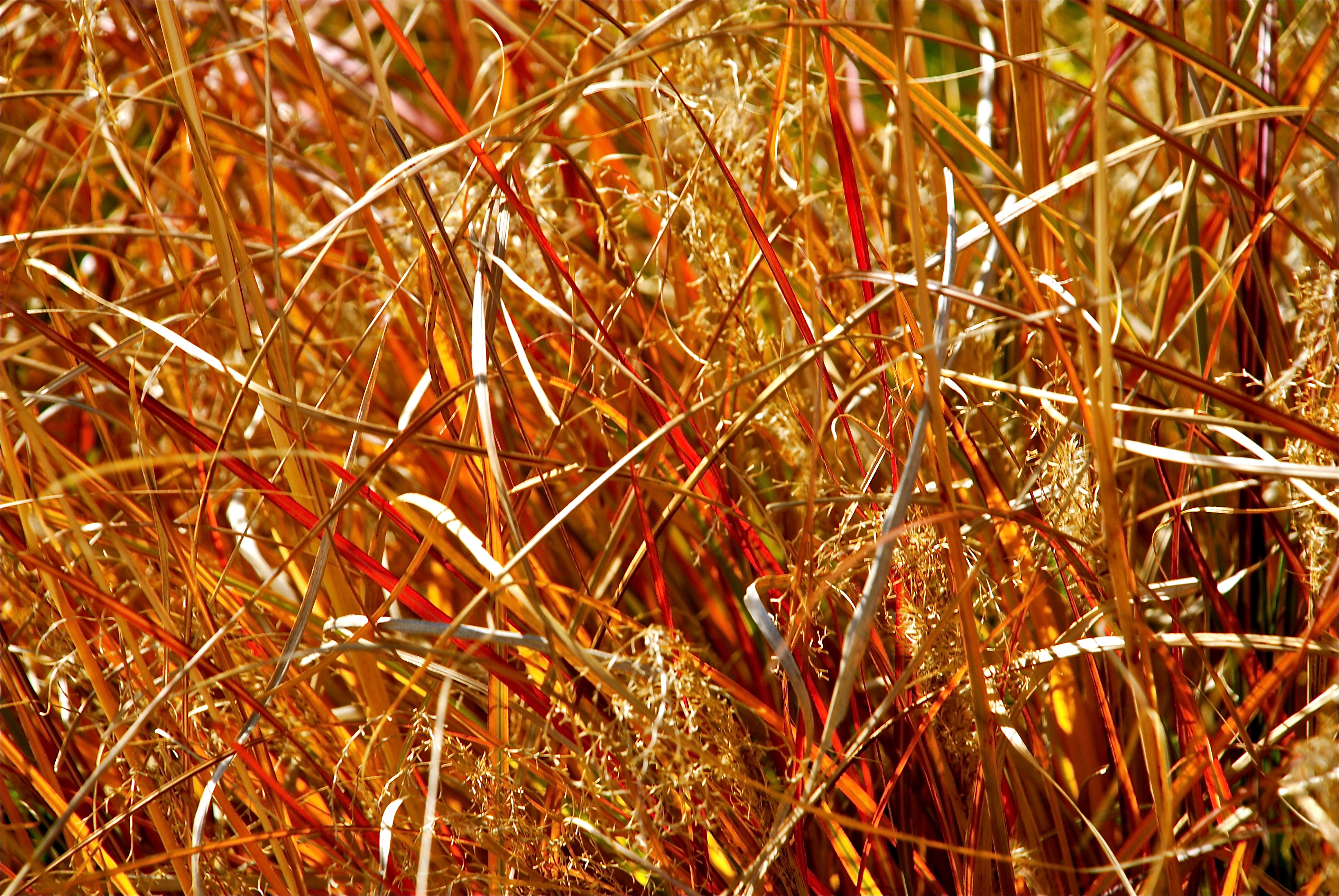
This time of year there’s a separateness in the garden which I rather like, but I’ve heard others say that they detest the bleak lifelessness of winter.  When asked why, they’ll tell me it’s because it fills them with a sense of loneliness or it speaks too strongly of death.  I, on the other hand, find a comforting orderliness in its realm because I can see the garden’s defining lines again after they’d been blurred or even obliterated in some cases by summer’s reckless, spreading abandon.   And when I’m out working in the winter garden as I was today, I don’t feel any sense of sadness; the feeling I get is more of a silent, but willing withdrawal–a retreat back to a trusted, reviving source.  It seems to me that the barren remains stand self-assuredly in an awareness of Creation’s ever-faithful, annual renewal and somehow understands winter’s lesson of waiting with expectancy and hope.

As long as earth endures, seedtime and harvest, cold and heat, summer and winter, day and night, shall not cease.  ~ Genesis 8:22  ✝

218. Poetry is the language in which man explores his own amazement. ~Christopher Fry

A man should have a little music,
read a little poetry, and see a fine picture
every day of his life,
in order that worldly cares may not obliterate the sense
of the beautiful implanted in the human soul.
~Johann Wolfgang Goethe

Image

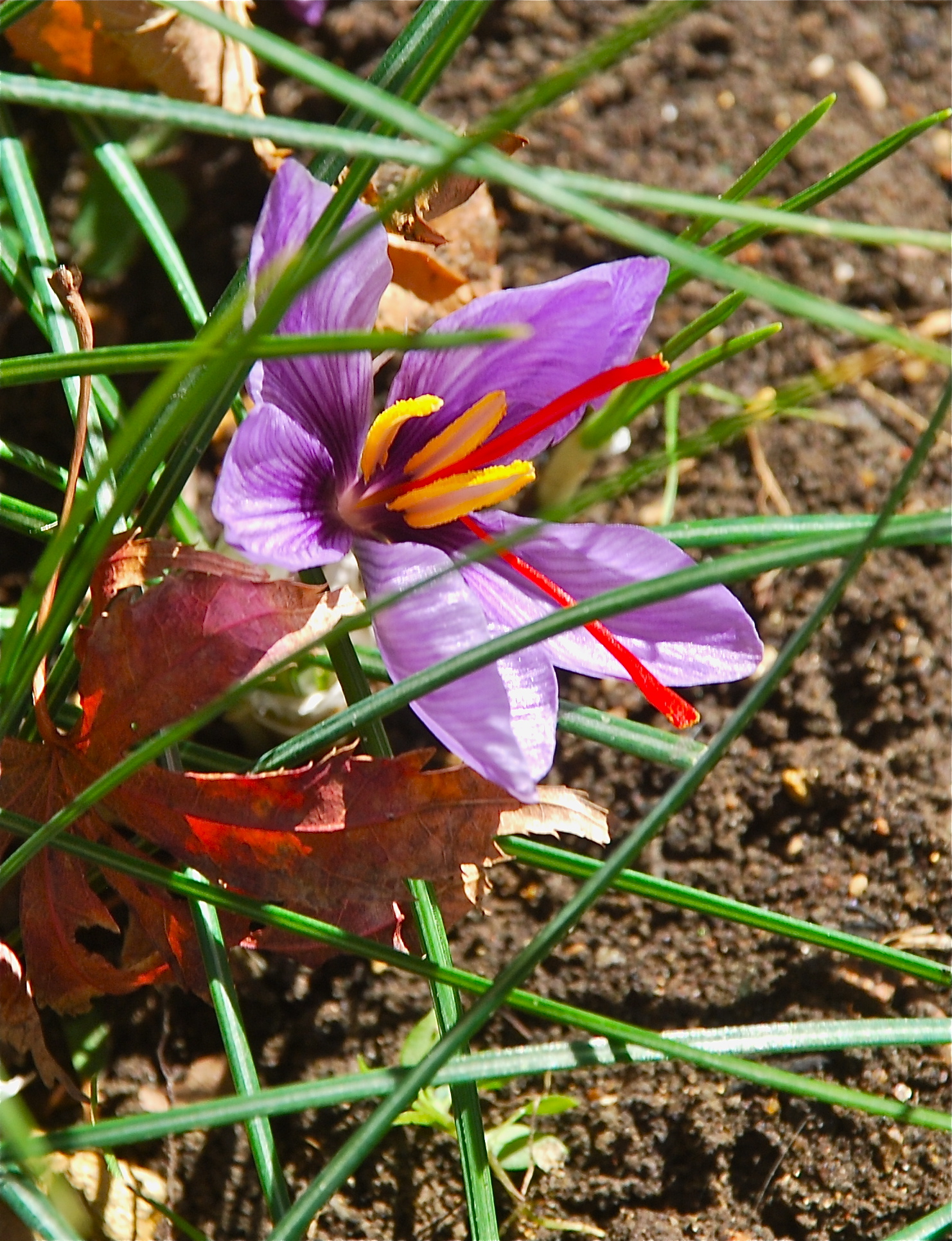
This saffron crocus had been buried under 4 to 5 inches of ice for nearly a week, and yet life had continued to stir in it.  But it’s not just the “fine picture” of the flower that kept an implanted sense of beauty from being obliterated in my soul like Goethe suggests; it’s the fact that the life of the flower was sparked in an icy tomb.  But then God is good at that.  The poetry of amazement never fails to stir something profoundly deep in my soul which in turn lifts me up and out of my moments of self-pity.

Now the earth was formless and empty, darkness covered the surface of the watery depths, and the Spirit of God was hovering over the surface of the waters. Then God said, “Let there be light,” and there was light.  ~Genesis 1:2-3  ✝

24. Within the seed’s case a secret is held. Its fertile whisper shapes a song. ~Joan Halifax

When I see that first, miniscule, curled, pale
green wisp of a sprout poking up between a couple of
grains of vermiculite, I hear God speaking.
~June Santon

Image

Seed plants date back about 365 million years ago to the Paleozoic era.  These wondrous pieces of antiquity vary greatly in size: the smallest being the dust-like seed of orchids and the largest, weighing as much at times as 50 pounds, being the fruit of the coco de mer, the double coconut palm.  A typical seed is composed of 3 basic parts: 1. an embryo, 2. a supply of nutrients for the embryo, and 3. a seed coat that protects the embryo from injury or from drying out.  Seeds have two points of growth, one which forms the stem of the plant and the other where the roots of the plant form.  Some seeds have wings or hairs and are dispersed by the wind.  Others are buoyant and float in rivers to the oceans and wash up on beaches; then there are those that are dispersed in various ways by animals.   Given the fascinating science of seeds, how they work and how tiny some of them are, how could one not hear fertile whispers from God in them.

Each seed, regardless of its size, is a sacred promise.  The dictionary defines a promise as: 1. a declaration that something will or will not be done or given, or as   2. an express assurance on which expectation is to be based, and seeds definitely declare what the Lord has done and given and what we as His children can expect.  Special mention of seeds and their promise is made on the 3rd day of the Genesis story where we can see that plants and trees are profuse manifestations of “this seed force.”  Plants and trees have been coming forth for millions of years and come forth yet.  During the unseen holy hours of nurturing, the “seed force” reaches down into the darkness of the earth’s “concealed depths” therein to be sustained by water.  In the Celtic tradition the moisture in earth’s soil is a “symbol of the waters of God that enfold and infuse all things.”  God’s goodness, deeper than any evil, then can be seen at the inception and very heart of life.  J. Philip Newell says that “everything that is born in the great matrix of life is sustained by roots that reach into the deep mystery of God’s life.”  The image which Newell’s words paint of all life reaching deep into God’s life is what, for many of us, shapes songs of joy and praise, for there is no more comforting, good, or safe place in the world than the heart of God!

As the rain and the snow come down from heaven, and do not return to it without  watering the earth and making it bud and flourish, so that it yields seed for the sower and bread for the eater, so is my word that goes out from my mouth: It will not return to me empty, but will accomplish what I desire and achieve the purpose for which I sent it.  ~Isaiah 55:10-11   ✝

3. Winter is an etching, spring a watercolor, summer an oil painting and autumn a mosaic of them all. ~Stanley Horowitz

O Autumn, laden with fruit, and stain’d
With the blood of the grape, pass not, but sit
Beneath my shady roof; there thou may’st rest,
And tune thy jolly voice to my fresh pipe,
And all the daughters of the year shall dance!
Sing now the lusty song of fruits and flowers.
~William Blake, English poet

Image

Lusty indeed is the dance of the year’s 4th child; regaled in glory and reigning in majesty, she’s a darling of the gardener.  Because fruitfulness and love run through her “thrilling veins,” those who choose to work the soil know they’ve got one last chance now before year’s end to plant, “to interact with nature, to share, to find sanctuary, to heal, to honor the earth, to leave a mark.”  So it is when autumn’s chariots, with pink and purple banners flying or veiled in a gray fog or torrents of rain, enter the eastern sky at dawn, the gardener’s heart is electrified.  Then when her crisp days are done and her carriage exits on the western horizon in a blaze of red and gold or is swallowed in the wetness of massive dark clouds, the gardener is left with the satisfied feeling that he’s conjured up or added yet another stroke or two to his beloved work of art.   As for what Blake called her “jolly voice,” autumn often sings gladsome odes to joy, but there are days when it belts out threatening, thunderous refrains or croons “mournful melodies.”  Regardless of what autumn vocalizes, it’s not until it plays “the harps of leafless trees” and sings the somber song of deep December that both the garden and gardener rest knowing that it’s time to let the Lord and Creation alone perform their miracles, God from on high and the earth from beneath the soil.

A common feast has been prepared at Creation’s hearty tables.  Food for the soul, spirit, and mind has been prepared and offered up for all of us.  So, come, dine with me there in the coming weeks.