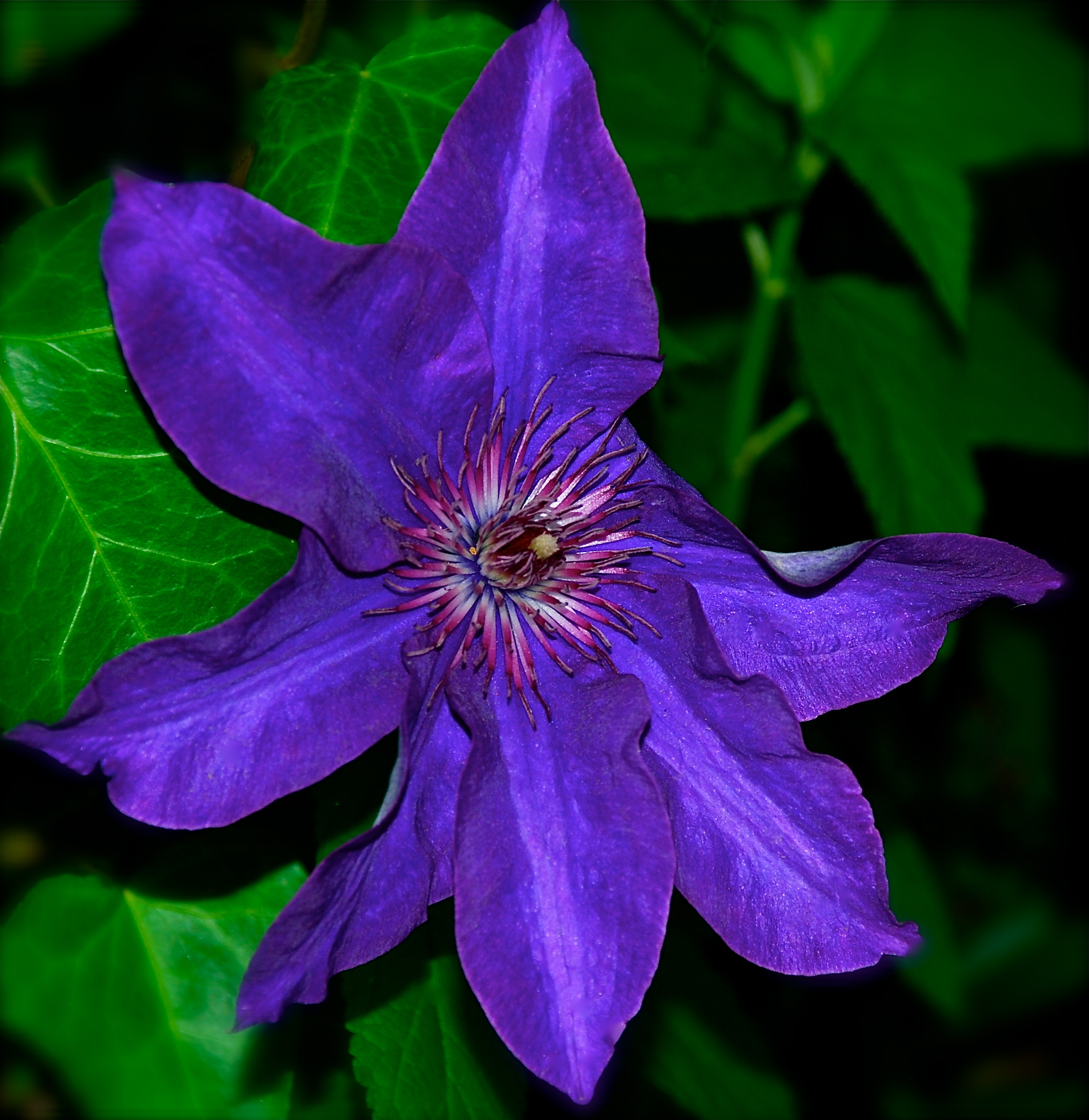
340. I sit in my garden, gazing upon beauty that cannot gaze upon itself, and I find sufficient purpose for my day. ~Robert Brault

Image

The garden reconciles human art and wild nature,
hard work and deep pleasure,
spiritual practice and the material world.
It’s a magical place because it’s not divided.
The many divisions and polarizations
that terrorize a disenchanted world
find peaceful accord
among mossy rock walls,
rough stony paths,
and trimmed bushes.
Maybe a garden sometimes seems fragile
because it achieves an extraordinary
delicate balance of nature and human life, naturalness and artificiality.
It has its own liminality,
its points of balance between great extremes.
~Thomas Moore

My beloved has gone down to the garden, to the beds of spices, to browse in the gardens and to gather the lilies. I am my beloved’s and my beloved is mine; he browses among the lilies. ~Song of Songs 6:2-3 ✝

Thank you, Lord Jesus, that you save, you heal, you restore, and you reveal Your Father’s heart to us! You have captured me with grace and I’m caught in Your infinite embrace!

287. Hope is some extraordinary spiritual grace that God gives us… ~Vincent McNabb

Sit by the edge of the dawn / and the sun will rise for you.
Sit by the edge of the night / and the stars will shine for you.
Sit by the edge of the stream / and the nightingale will sing for you.
Sit by the edge of silence / and God will speak to you.
~from an ancient Hindu text

Image

“The semi-colon tells you that there is still some question about the preceding full sentence; something needs to be added…It is almost a greater pleasure to come across a semicolon than a period.  The period tells you that that is that; if you didn’t get all the meaning you wanted or expected, you got all the writer intended to parcel our and now you have to move along.  But with a semicolon there you get a pleasant little feeling of expectancy there is more to come; read on; it will get clearer.”  ~Lewis Thomas, American doctor and essayist

I think of nature’s seasons as junctures followed by divinely positioned, albeit invisible, semi-colons because they impart “a pleasant little feeling of expectancy.”  There are always more of them to be had, and it is that expectancy of “more” that keeps me hopeful not only in nature’s seasons but also in the seasons of my life when what I see tries to delude me into thinking things won’t ever change or this is the end.  In the passage above from the old Hindu text the use of “slashes” and “ands” could instead have been replaced with semi-colons because there is something more that comes after each of the suggested occasions to sit and wait.  In the same way, the fact that gardens keep an unfaltering “punctuation of continuance” right in front of me is one of the reasons I’m so drawn to spend time in them.  I need endless expectancy that breeds hopefulness.

And you will have confidence, because there is hope; you will be protected and take your rest in safety.  ~Job 11:18   ✝

**Even the two mauve hellebores in the photo look a bit like a semi-colon if one uses his/her imagination.

266. When hope is hungry, everything feeds it. ~Mignon McLaughlin

Though you lose all hope,
there is still hope,
and it loves to surprise.
~Robert Brault
Image

Image

Goodbye January and hello February!  Whew, January is a long month, isn’t it?!  So much so that it makes my hope very hungry indeed.  Dada, dada da da da!  I said hello, February…well hello February…It’s so nice you’ve finally come around again.  You’re lookin’ swell, February…And time will tell February…That spring’s a comin’ February…  Okay, to appreciate my attempt here at “cleverosity” with the previous lines, you have to try to remember a song from a musical by the same name called HELLO DOLLY.  Okay, so maybe it was a lame attempt, but today is just that kind of day, one that puts a song in my heart.  Why?  Why you ask?  Well…

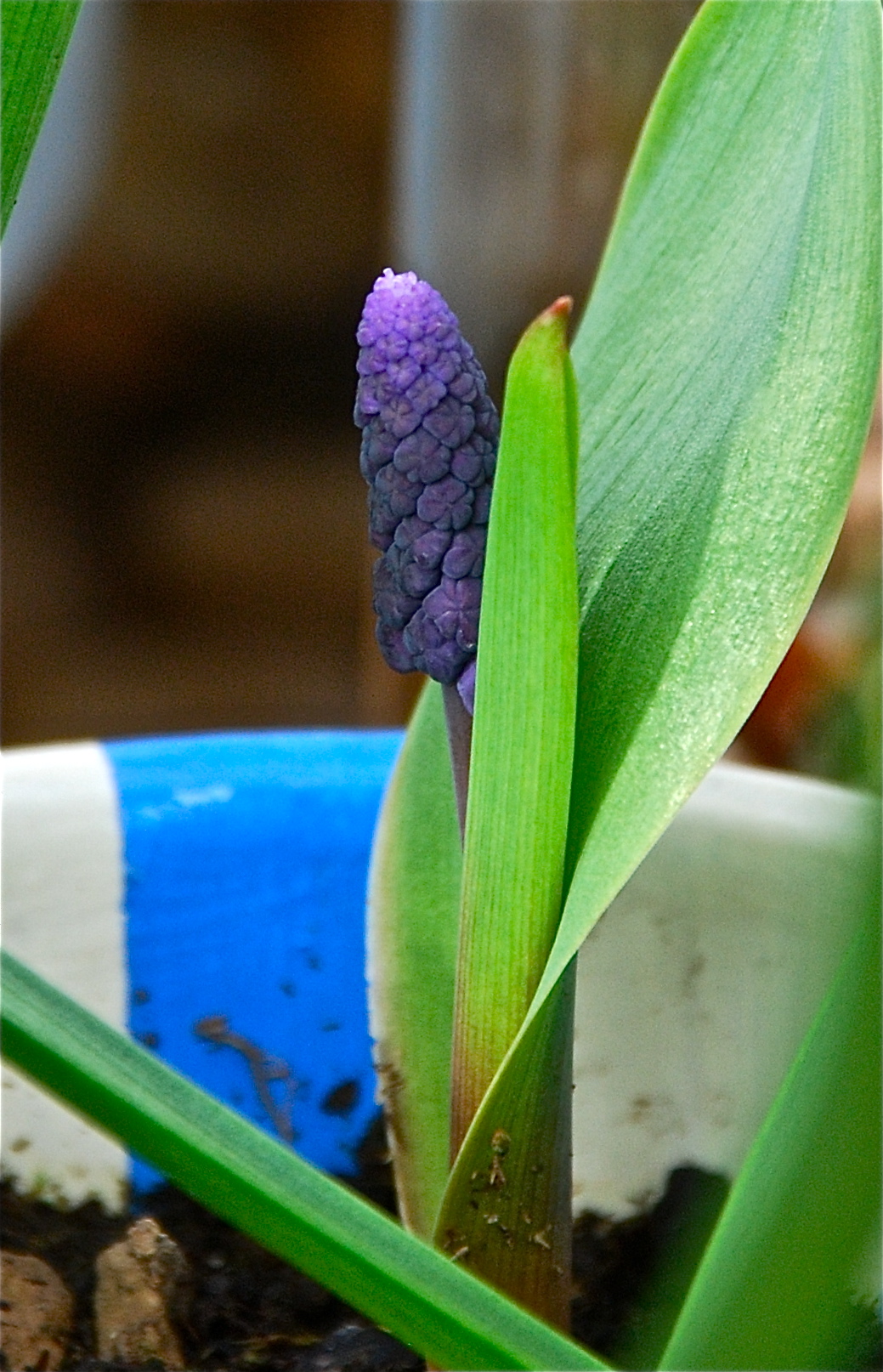
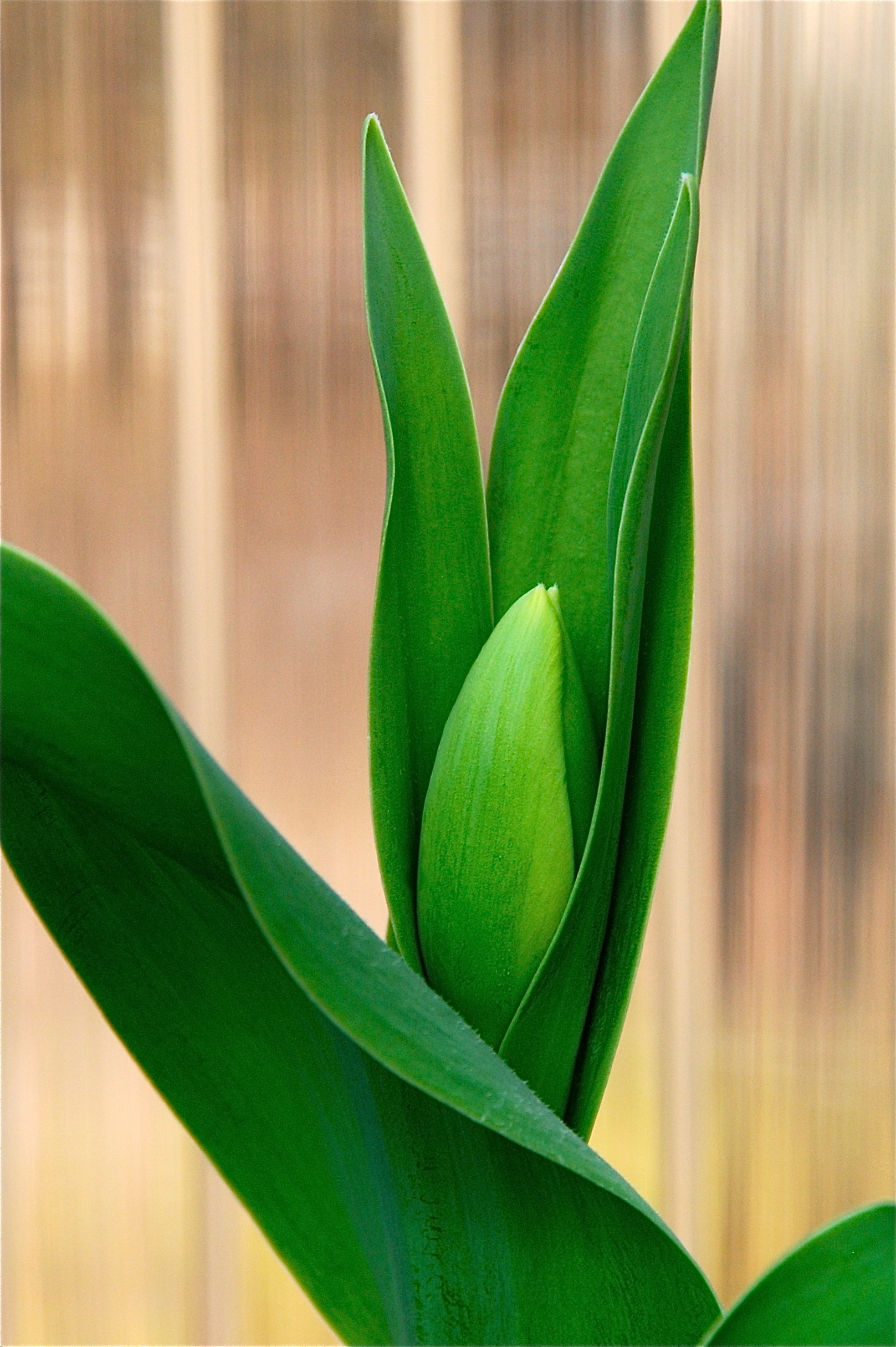
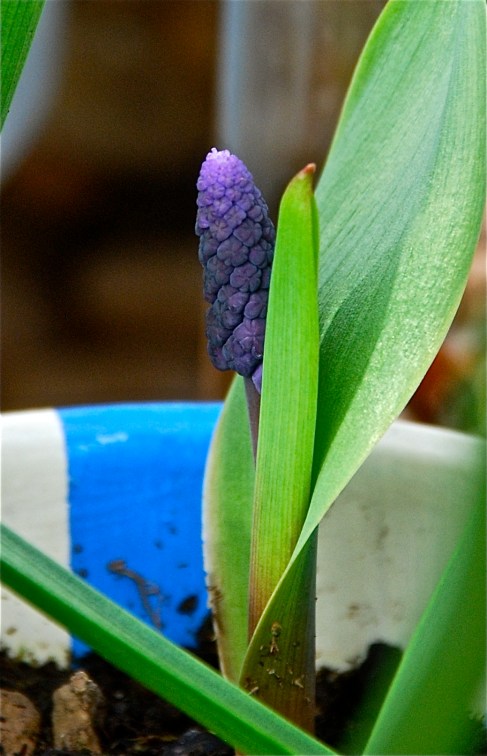
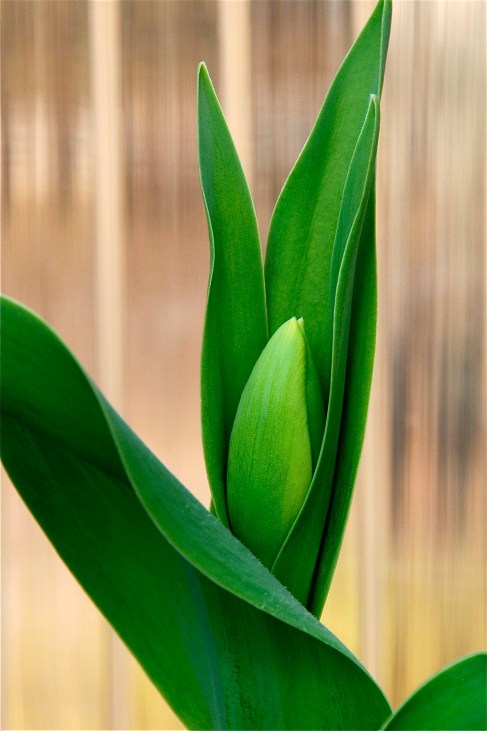
About the time the barrenness of winter starts putting asunder all hope of anything different, February saves the day by bringing forth visible signs of the new spring.  And so it did this year on its very first day.  After I’d watered and waited and watched the bulbs I’d started weeks ago in the greenhouse, I was rewarded today with several emerging buds.  The result: squeals of joy peeled forth inside its walls along with hallelujahs and praise for such glorious surprises amid winter’s gloomy, brown and beige drabness.  But they’re just flowers some might say, but pshaw!  They are pieces in the puzzle of Creation itself, blessed and holy and full of purpose.  They’ve been touched by the very hand of God and then ordained as part of the faithful and reoccurring provision not only for man’s needs but for his pleasure as well.  And if flowers are inconsequential why are so many poems and pieces of literature devoted to them, and why are they considered by many as desirable gifts, and why are their scents revered for use in perfumes, and why have they been worth at times more than gold?

“Come, therefore, let us enjoy the good things that exist, and make use of the creation to the full as in youth.  Let us take our fill of costly wine and perfumes, and let no flower of spring pass us by.  Let us crown ourselves with rosebuds before they wither…”  ~Wisdom 2:6-8  ✝

6. There is pleasure in the pathless woods. There is rapture in the lonely shore. There is society where none intrudes. ~Lord Byron

She sat down in a weed patch, her elbows on her knees,
and kept her eyes on the small mysterious world of the ground.
In the shade and sun of grass blade forests,
small living things had their metropolis.
~Nancy Price

Image

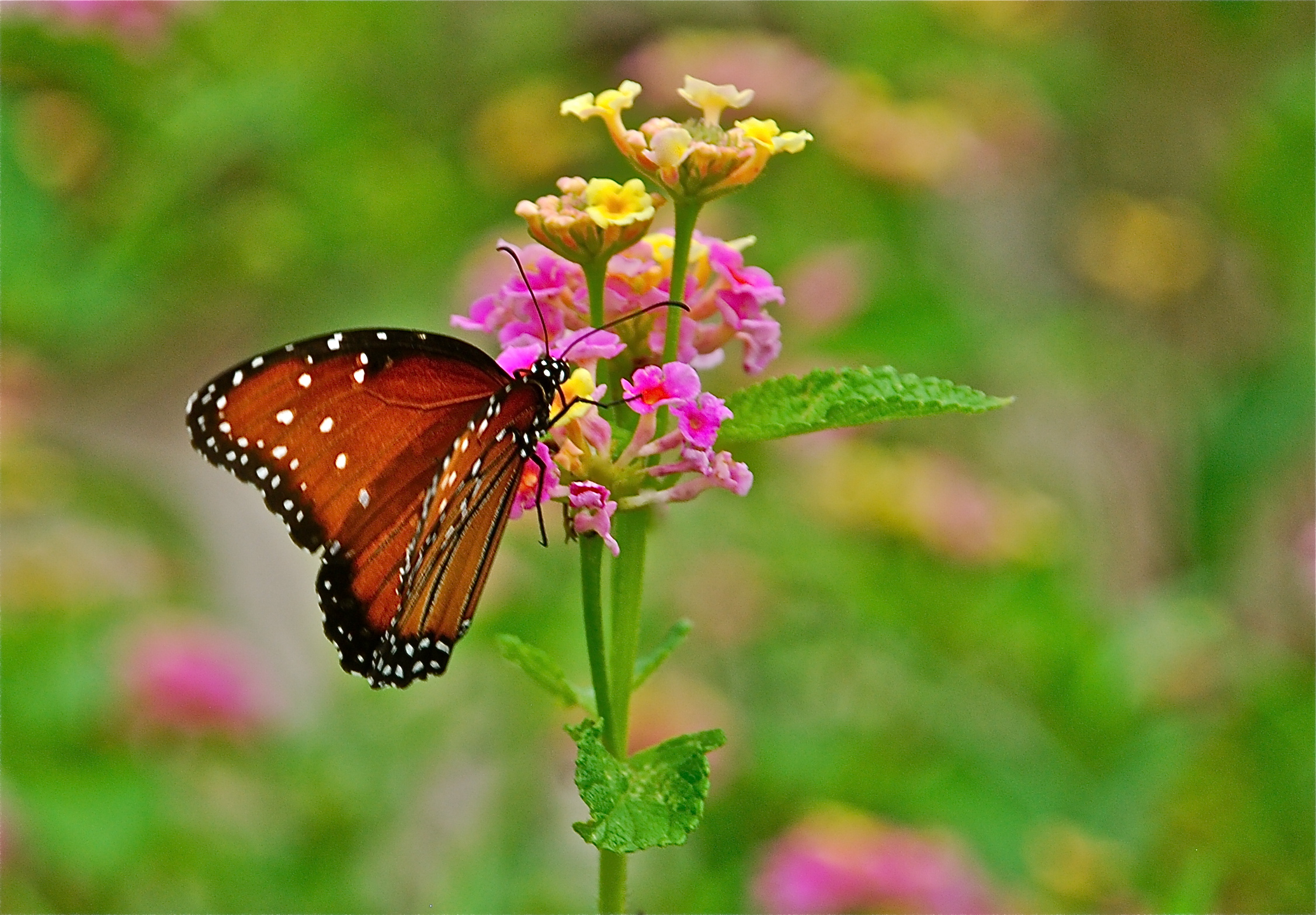
In and around blossoming things there is another mysterious metropolis.  This one is above the soil, and therein airborne things move around yearning to “possess the sweet of every flower that blooms.”  In that realm two simple equations are in place:  a) if there are no flowers there are no pollinators;  b)  if there are no pollinators there are no flowers, no fruits, no crops.  The hum or buzz of a pollinating agent and a flower’s blooming go hand in hand; together they commit reproductive acts of love as they dance the sacred dance of life orchestrated by the Lord.  In so doing they “remind us that there are other voices, other rhythms, other strivings, and other fulfillments. . .” in God’s grand plan.

Recently in a National Geographic snippet on the internet, the narrator remarked that present-day humanity is the recipient of a 400,000,000 year old legacy bequeathed by earth. Imagine that!  For all those years the sun has not failed to rise and set at its appointed time, fruits and crops have not failed to burst forth and ripen, and the earth has not failed to make its trip around the sun.  One season has followed another repeating the Genesis story over and over again as per the Lord’s plan.  Like the fruits and flowers and pollinators, our time here is very brief, and we who are fashioned by the same holy Hands as the sun and earth are no less adored and significant in our loving Father’s eyes.

There is a time for everything, and a season for every activity under the heavens. . .  ~Ecclesiastes 3:1   ✝