425. Loveliest of lovely things are they on earth that soon pass away. ~William Cullen Bryant

DSC_0020

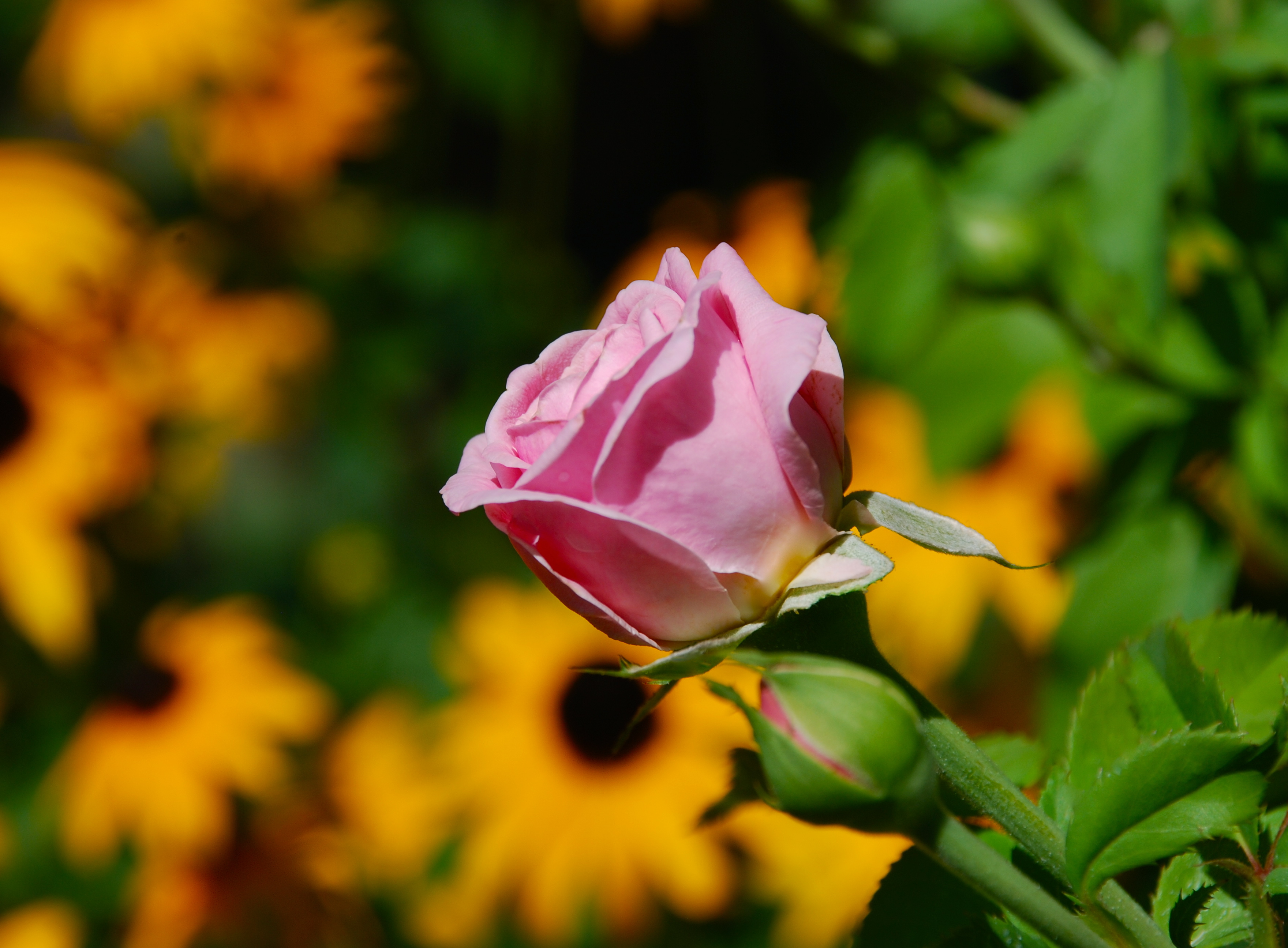
Pretty little pink rosebud
sitting atop your bed of gold rudbeckia
came you too late to last
for July has unlocked the gate
and  loosed the heat beast in the garden;
so it is that by mid afternoon
your sweet, rosy petals will have fried.
~Natalie Scarberry
Screen shot 2014-07-14 at 6.27.41 PM

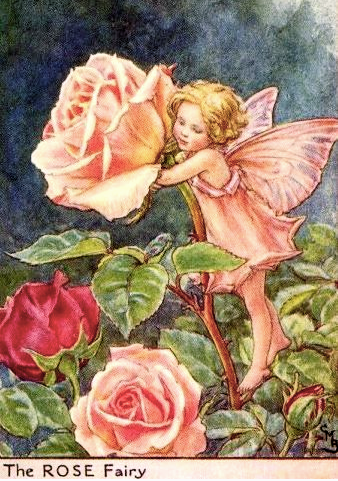
The Rose Fairy Poem


Best and dearest flower that grows,
Perfect both to see and smell;
Words can never, never tell
Half the beauty of a Rose-
Buds that open to disclose
Fold on fold of purest white,
Lovely pink, or red that glows
Deep, sweet-scented.
What delight 
To be a Fairy of the Rose!
~Cicely Mary Barker

Take delight in the Lord, and he will give you the desires of your heart. ~Psalm 37:4   ✝

Thank you, Jesus, that you save, you heal, you restore, and you reveal Your Father’s heart to us! You have captured me with grace and I’m caught in Your infinite embrace! Like Saint Hildegard Lord, may I too be a feather on your holy breath and spread, like seeds, the gospel abroad.
411. There is nothing more perplexing in life than to know at what point you should surrender your intellect to your faith. ~Margot Asquith

Your heart is a sun–
Joy its stars,
Faith a moon, shining in your darkness.
~Terri Guillemets

Image

I want to write about faith
about the way the moon rises
over cold snow, night after night.

faithful even as it fades from fullness,
slowly becoming that last curving and impossible
sliver of light before the final darkness.

But I have no faith myself,
I refuse it the smallest entry.

Let this then, my small poem,
like a new moon, slender and barely open,
be the first prayer that opens me to faith.
~David Whyte

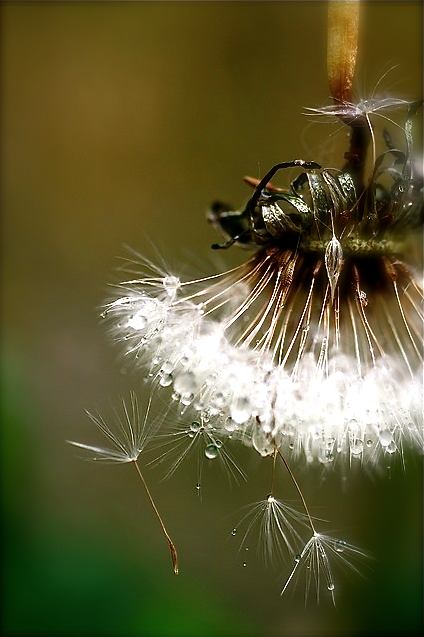
Some say the dandelion’s message is that every breath is a second chance. Let all those who know you not, O Lord, be open to the second chance faith offers them. Come fill their lungs anew with your holy breath of life and their veins with the blood you shed for them on Calvary’s cross.

Know that the Lord has set apart his faithful servant for himself; the Lord hears when I call to him. Psalm 4:3  ✝

** Image via Pinterest

344. Poetry is when an emotion has found its thought and the thought has found words. ~Robert Frost

Image

I want to make poems that say right out, plainly,
what I mean, that don’t go looking for the
laces of elaboration, puffed sleeves. I want to
keep close and use often words like
heavy, heart, joy, soon, and to cherish
the question mark and her bold sister

the dash. I want to write with quiet hands. I
want to write while crossing the fields that are
fresh with daisies and everlasting and the
ordinary grass. I want to make poems while thinking of
the bread of heaven and the
cup of astonishment; let them be

songs in which nothing is neglected,
not a hope, not a promise. I want to make poems
that look into the earth and the heavens
and see the unseeable. I want them to honor
both the heart of faith, and the light of the world;
the gladness that says, without any words, everything.
~Mary Oliver

Sing the praises of the Lord, you His faithful people, praise His holy name. ~Psalm 30:4  ✝

Thank you, Jesus, that you save, you heal, you restore, and you reveal Your Father’s heart to us! You have captured me with grace and I’m caught in Your infinite embrace!

271. A greenhouse is a way of upgrading your hardiness zone. ~Hugh Johnson

Who loves a garden loves a greenhouse too.
For unconscious of a less propitious clime,
There blooms beauty, warm and snug,
While the winds whistle and the snows descend.
All peep through foliage at the storm,
And seem to smile at what they need not fear.
~Edited excerpt from a poem by William Cowper

Image

Flowers…have a mysterious and subtle influence upon the feelings, not unlike some strains of music.  They relax the tenseness of the mind.   ~Henry Ward Beecher

…just as I (God) gave you the green plants, I give you everything.  ~Genesis 9:3   ✝

257. The tree is a slow, enduring force straining the win the sky. ~Antoine de Saint-Exupéry

Have you ever noticed a tree
standing naked against the sky, how beautiful it is?
All its branches outlined and in its nakedness,
there is a poem, there is a song…
When the spring comes, it again fills the tree
with the music of many leaves.
And this is the way of life.
~J. Krishnamurti

Image

Image

Trees don’t just provide shade or rhyme and lyric for mortals; they are frequented by and home to an assortment of wildlife.  For example birds not only perch and sing in their lofty heights; they build nests in them as do squirrels who also use the branches as connecting highways to get them from one branch or tree to another.  When it’s winter as it is now and the trees are leafless, I can see the little fluffy-tailed acrobats make leaps, sometimes very daring ones, from one branch or tree to another as they work back and forth or up and down gathering acorns and building nests.  This week while I was observing their antics, I started looking at the differing filigreed patterns of our naked trees.  It was then I noticed the combined density of several trees in the northeast corner of our lot.  They obscure the heavens now almost as much as they would when in full leaf.  In this aerial thicket of woodiness the horizontal branches of my willow tree cross in front of the vertical branches of neighboring trees, and so their poetry or music is more of a series of mingled couplets or vocal duets as they make their “endless efforts to speak to the listening heavens.”

The trees of the field shall know that I am the Lord…  ~Ezekiel 17:23a  ✝

256. The best place to seek God is in a garden. You can dig for Him there. ~George Bernard Shaw

Flower in the crannied wall,
I pluck you out of the crannies.
I hold you here root and all, in my hand flower–
but if I could understand what you are
root and all, and all in all,
I should know what God and man is!
~Alfred Lord Tennyson

Image

Image

Whenever I read Tennyson’s poem or see a garden wall I think of Burnett’s novel, THE SECRET GARDEN, and then I find myself trying to imagine what Tennyson’s crannied wall and the garden walls at Misselthwaite Manor looked like.  I’ve read that walled growing spaces date back to the earliest of Persian gardens and that their function, especially in the northern temperate zones, was to shelter a garden from frost and wind.  Since purportedly the sheltering walls raised the ambient temperature inside a garden by several degrees, I’m guessing they were made of heavy stones.  Although the garden walls in Tennyson’s poem and Hodgson’s novel no doubt were constructed similarly and to serve the same purpose, the practicality of such, is not the point of the two tales.  The two literary pieces have to do with the impact of encountering the Ancient of Days or the contemplation of His mystery that often takes place within a garden’s walls.  Every garden in a very real sense is a piece of Eden, and in Eden man inevitably encountered Him by whose Hands both he and it were made.  As Tennyson grasped the entirety of a little flower in his hand, he voiced a firm belief that comprehending its mystery would lead to an unraveling of the ultimate conundrum, man and God.  And in THE SECRET GARDEN the lives of two children were resurrected and subsequently infused with that same mysterious “stuff of life” after holy “place” and “elemental” grace had had their way with them.

And the Lord God planted a garden in Eden, in the east; that there he put man whom he had formed…They heard the sound of the Lord God walking in the garden at the time of the evening breeze…  ~Genesis 2:8 and Genesis 3:8a  ✝

250. Stay, little cheerful Robin! stay, and at my easement sing… ~William Wordsworth

Image

The robin’s song at daybreak
Is a clarion call to me.
Get up and get out in the garden.
For the morning hours flee.

Image

I cannot resist the summons,
What earnest gardener could?
For the golden hours of morning
Get into the gardener’s blood.

Image

The magic spell is upon me,
I’m glad that I did not wait;
For life’s at its best in the morning,
As you pass through the garden gate.
~Howard Dolf

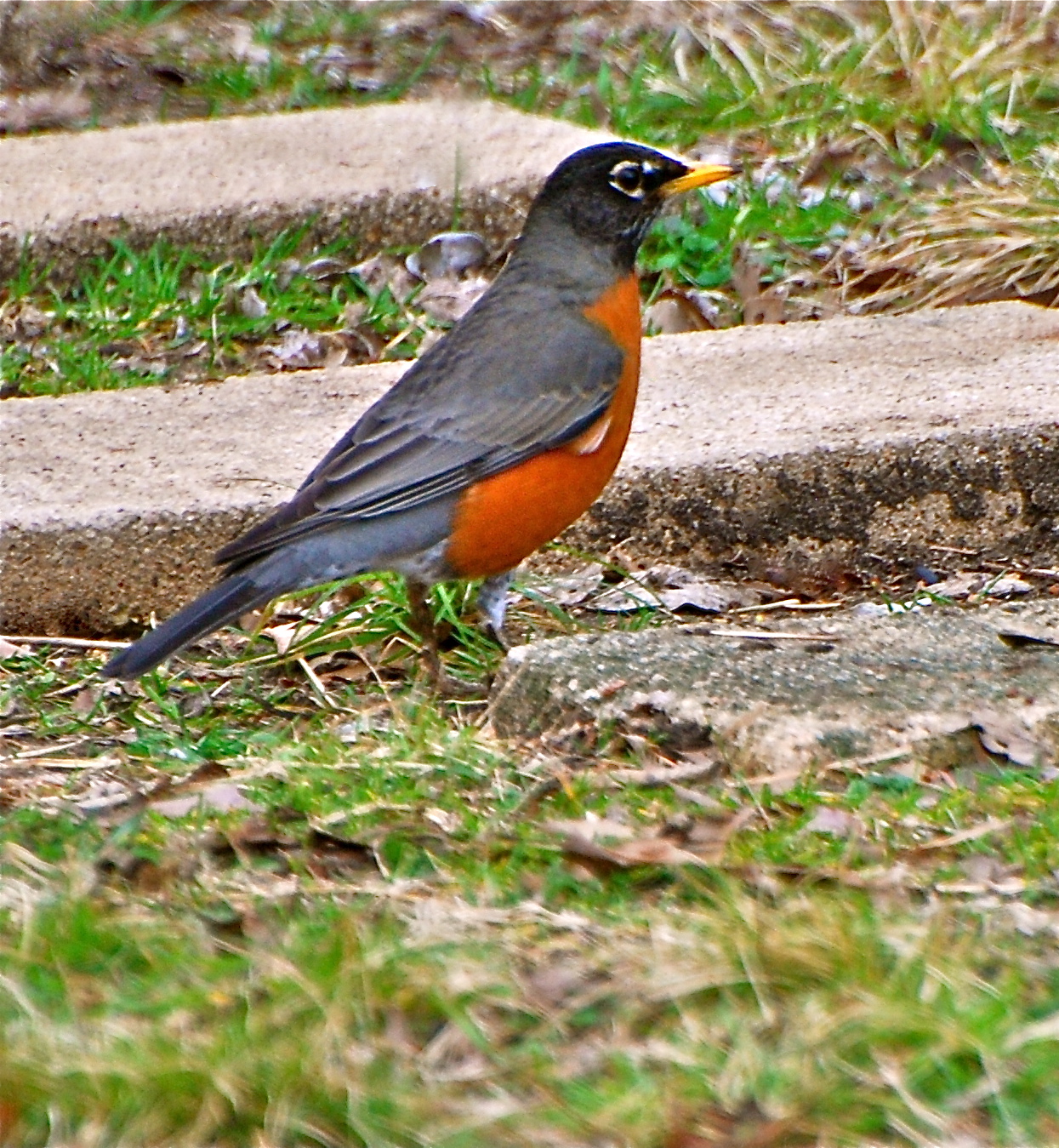
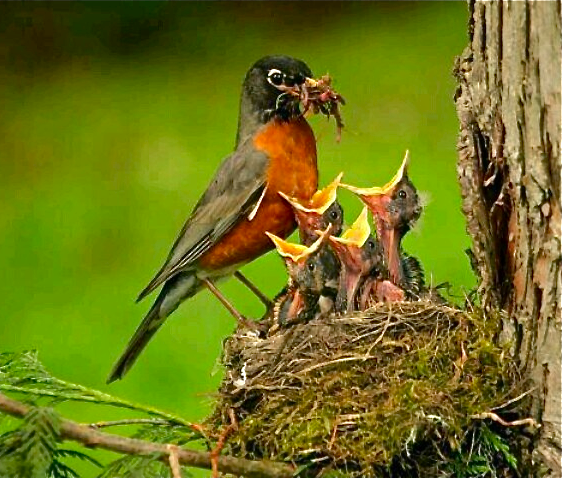
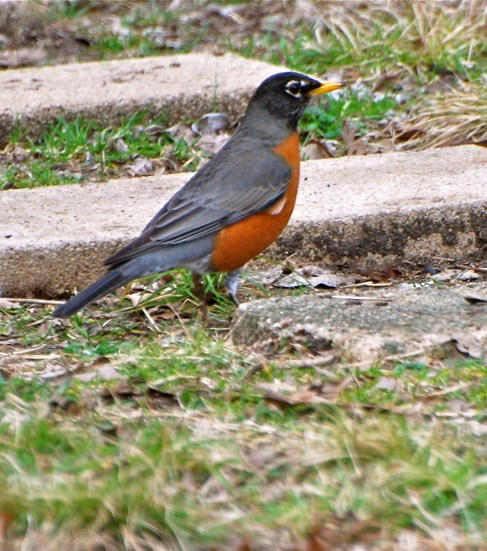
In the first photo, a Pinterest posting, is a European robin who according to my English garden bloggers is already singing in their gardens.  The one in the second photo is our American robin who has yet to come, but when he does, we’ll know that spring can’t be too far away.  For he, the stuff of a Messianic legend and spring’s cheery harbinger, will, as the poem says, sing loudly of its coming and our need to get up and out in the garden.  Given my willingness to heed a garden’s summons at any point in time, the robin’s task won’t be too hard to accomplish.  Would that I were as willing to listen to Christ’s calling.  The last photograph I also found on Pinterest.  Although I’ve heard and seen robins feeding their young in my yard, I’ve not yet been able to get a good photograph of the event.

For every wild animal of the forest is mine, the cattle on a thousand hills.  I(God) know all the birds of the air, and all that moves in the field is mine. ~Psalm 50:10-11  ✝

**See post 46 to read the legend of the robin.

72. Come, fill the Cup, . . . the Bird of time has but a little way to fly–and Lo! the Bird is on the wing. ~Omar Khayyám

The Moving Finger writes; and having writ,
Moves on: nor all your Piety nor Wit
Shall lure it back to cancel half a Line,
Nor all your Tears wash out a Word of it.
~Rubaiyat, Omar Khayyám, 11th century Persian poet

Image

In my twenties, I came face to face with the reality of what this Persian poet articulated in the Rubaiyat, but thankfully in my thirties I also realized that every spring all that God created begins again.  So even though I have no a chance to do anything about the past, in the season of restoration and rebirth God built into the fabric of Creation, I can forge on with writing new stories and/or penning different endings to ones not yet finished.  However, lest I get too comfortable in dalliances a long the way and to show how quickly what the poem’s author revealed can come about, I must remember that a new year’s garden progeny and its days come and go quickly, and when done they are never, as Khayyám said, to be lured back nor washed away by tears.  So with every spending of my time coins, I must seize opportunities opening to blushes of newness.  Scripture may tell the world that the “birthing and restoring” of new years will go on “as long as earth endures,” but last November’s brush with death taught me to make the most of each day and not rely on what I, myself, may not be given.

The best things in life are nearest:
Breath in your nostrils, light in your eyes, flowers at your feet,
duties at your hand, the path of right just before you.
Then do not grasp at the stars, but do life’s plain, common work as it comes,
certain that daily duties and daily bread are the sweetest things in life.
~Robert Louis Stevenson, Scottish poet

“As long as the earth endures, seedtime and harvest, cold and heat, summer and winter, day and night will never cease.”  ~Genesis 8:22   ✝

46. A Robin Redbreast in a cage puts all Heaven in a rage. ~William Blake, English poet, painter and printmaker

When father takes his spade to dig
then Robin comes along;
And sits upon a little twig
And sings a little song.
~Laurence Alma-Tadema

Image

The introductory line is from Blake’s “Auguries of Innocence,” a somewhat lengthy poem consisting of a series of paradoxes in which Blake juxtaposes innocence with evil and corruption. The word augury in the title means omen or token, and the robin is the poem’s first noted “augury of innocence.”  The robin’s song, personality, and countenance are such that it’s obvious why the poet saw the act of putting one in a cage as not only an enraging violation but also as a profound perversion of holiness.  The sweet song and colorful markings of a robin make the bird a delightful harbinger of spring’s infancy and innocence.  Looking forward to its coming is one of my favorite rites in spring’s passage, and like “all heaven” I’d be incensed if the bird’s freedom were taken away and its song silenced.  Below is a legend about the robin that again ties the bird to the blameless and sacred.  Although the truthfulness of legends is questionable, I’m fascinated that somehow, somewhere, and in some way the robin was connected to the Messiah.

The Legend of the First Robin

One day, long ago, a little bird in Jerusalem saw a large crowd gathered around a man carrying a heavy wooden cross.  On the man’s head was a crown made from a thorn branch.  The thorns were long and sharp.  The little bird saw that the thorns were hurting the man.  It wanted to help Him, so it flew down and took the longest, sharpest thorn in its tiny beak.  The bird tugged and pulled until the thorn snapped from the branch.  Then a strange thing happened.  A drop of blood fell onto the bird’s breast, staining it bright red.  The stain never went away.  And so today the robin proudly wears a red-breast, because it helped a man named Jesus.  

“But ask the animals, and they will teach you, or the birds of the air, and they will tell you; or speak to the earth, and it will teach you, or let the fish of the sea inform you.  Which of all these does not know that the hand of the LORD has done this?  In His hand is the life of every creature and the breath of all mankind. . .”  ~Job 12:7-10   ✝