153. The soul would have no rainbow had the eyes no tears. ~John Vance Cheney

The flower offered of itself
And eloquently spoke of God
In languages of rainbows
Perfumes,
And secret silence. . .
~Phillip Pulfrey, photographer, painter, and poet
Image

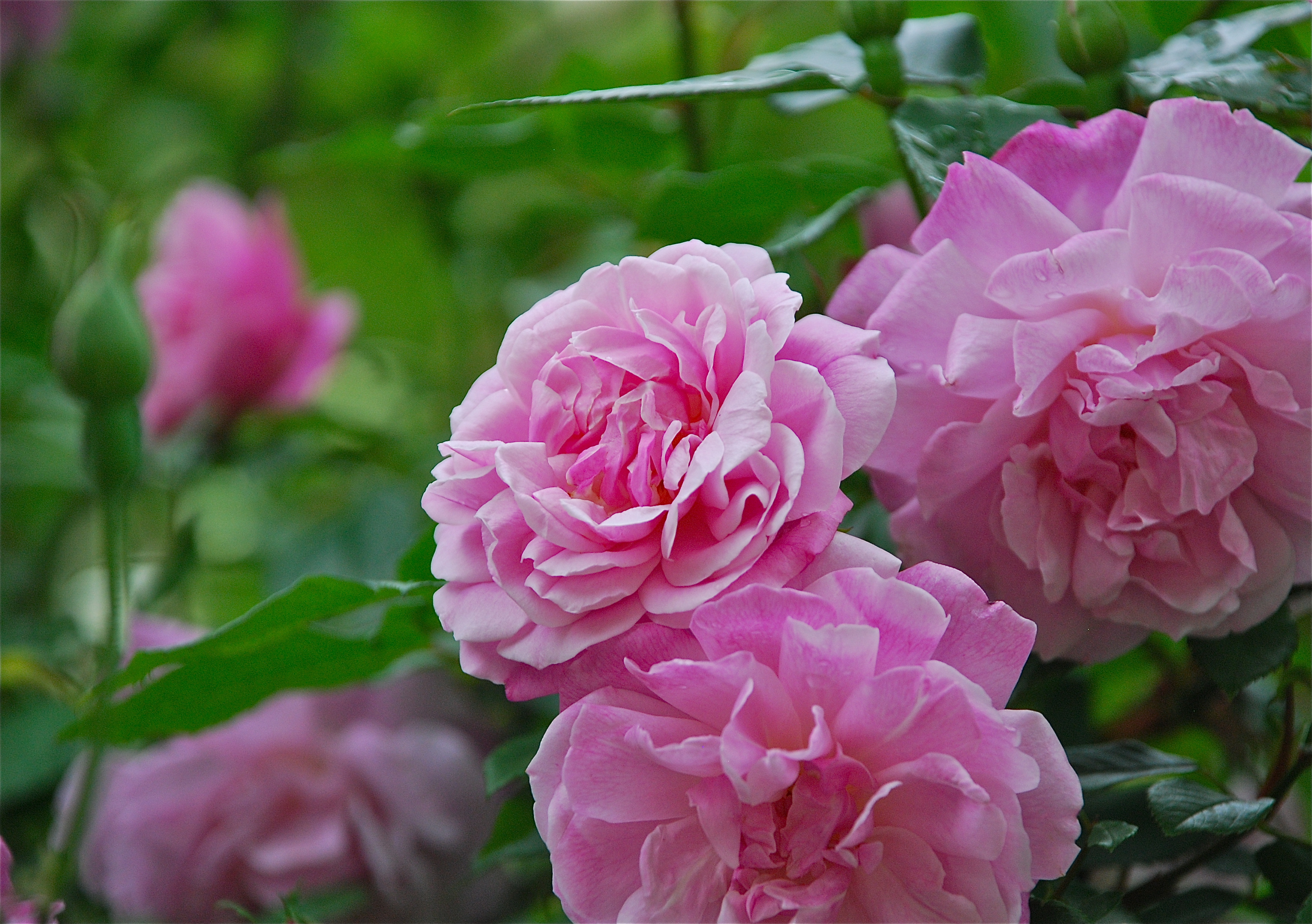
Almost comically what brought roses to Texas began with a “slow boat to China,” as it were.  The Chinese had been cultivating roses for over 5,000 years. Then during the early 19th century, ships of the East India Company brought the repeat-blooming China roses from the Orient to Europe.  Once there the Europeans bred the China roses with their once-blooming roses.  Eventually progeny of the old China roses, the once-blooming European roses, and their hybrids were brought to the Americas by the early settlers.  However as time passed, the public grew to have a greater desire for the more modern roses, and nurseries stopped offering old roses.  Thankfully in the last couple of decades there has been resurgence of interest in the old garden roses, and they are readily available to the public again.  In my garden most of the 70+ roses I’ve planted are roses of antiquity.  I’ve found that they are much hardier, and I love wondering what roads they must have traveled to get here, but the best part is that in every season my old garden roses speak to me more and more distinctly of God, His love, and His faithfulness that can be seen in His rainbows.

I have set my rainbow in the clouds, and it will be the sign of the covenant between me and the earth.  -Genesis 9:13    ✝

*In the photo is the China Rose named, among other things, “Old Blush.”  She is one of the most famous of the China roses and an important parent of literally thousands of other roses.  She is generally accepted as the first East Asian rose cultivar to reach Europe.
152. A bit of fragrance always clings to the hand that gives roses. ~Chinese Proverb

Under a lawn, than skies more clear,
Some ruffled Roses nestling were,
And snuggling there, they seem’d to lie
As in a flowery nunnery;
They blush’d, and looked more fresh than flowers
Quickened of late by pearly showers. . .
~Robert Herrick, 17th century English poet

Image

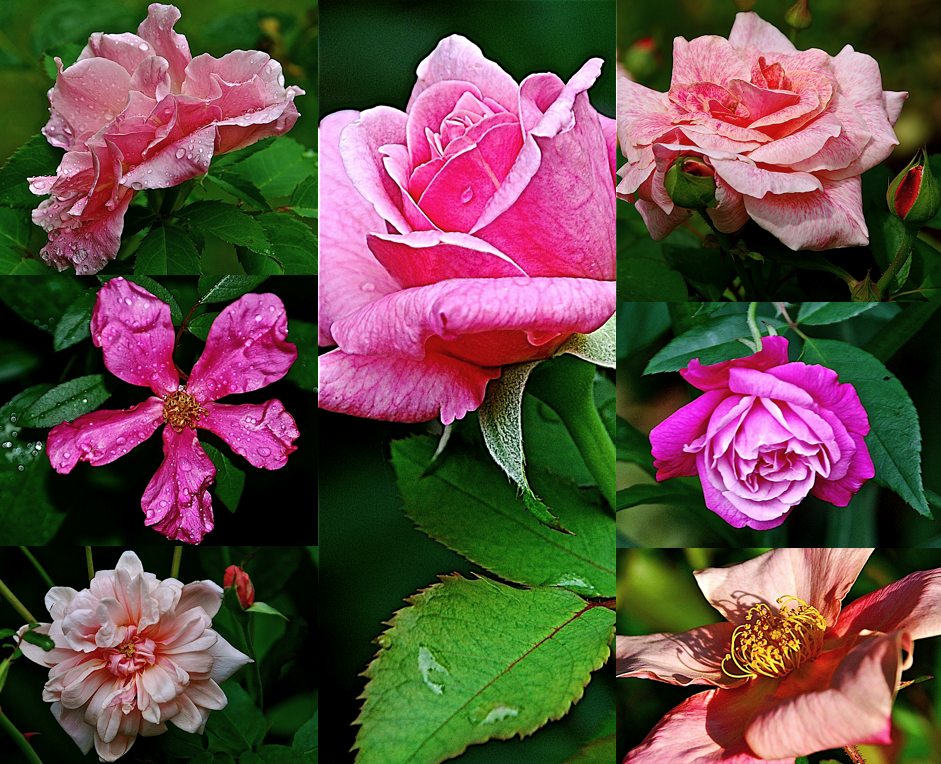
As you can see in my photographic “nunnery,” the “sisters” are all roses, but all are not wearing the same “habit.”  They all have petals, but the number of petals is not the same.  They’re all pink, but it is not the same shade of pink.  They all start out as not-so-different buds, but when open they do not all look alike.  Even the scents are not all the same.  However, there are those who been known to say, like I did at one time, that all roses are more or less the same.  But “a rose is a rose is a rose” is simply not the case.  When I fell in love with gardening, I started learning about the many varieties of roses, and after growing them I realized that each species has its own unique personality and appearance.  What surprised me the most was that according to fossil findings the roses we see today are the descendants of ones that have been growing for over 35,000,000 years.  It wasn’t until after prehistoric times, though, that treks of one kind or another began to spread them all around the world.  These early migrations are reported to have originated in places like Persia, Egypt, Mesopotamia, and China.  Then later on many of them traveled along with the spread of Christianity because monks would move them from one monastery garden to another during the Crusades, and it was some of those early Christians who identified the five petals of the single rose (lower right photo) with the five wounds of  the Messiah.

For we are to God the pleasing aroma of Christ among those who are being saved. . .  ~2 Corinthians 2:15

144. In the right light, at the right time, everything is extraordinary. ~Aaron Rose

For me, a landscape does not exist in its own right,
since its appearance changes at every moment;
but the surrounding atmosphere brings it to life – the
light and the air which vary continually.
For me, it is only the surrounding atmosphere
which gives subjects their true value.
~Claude Monet

Image

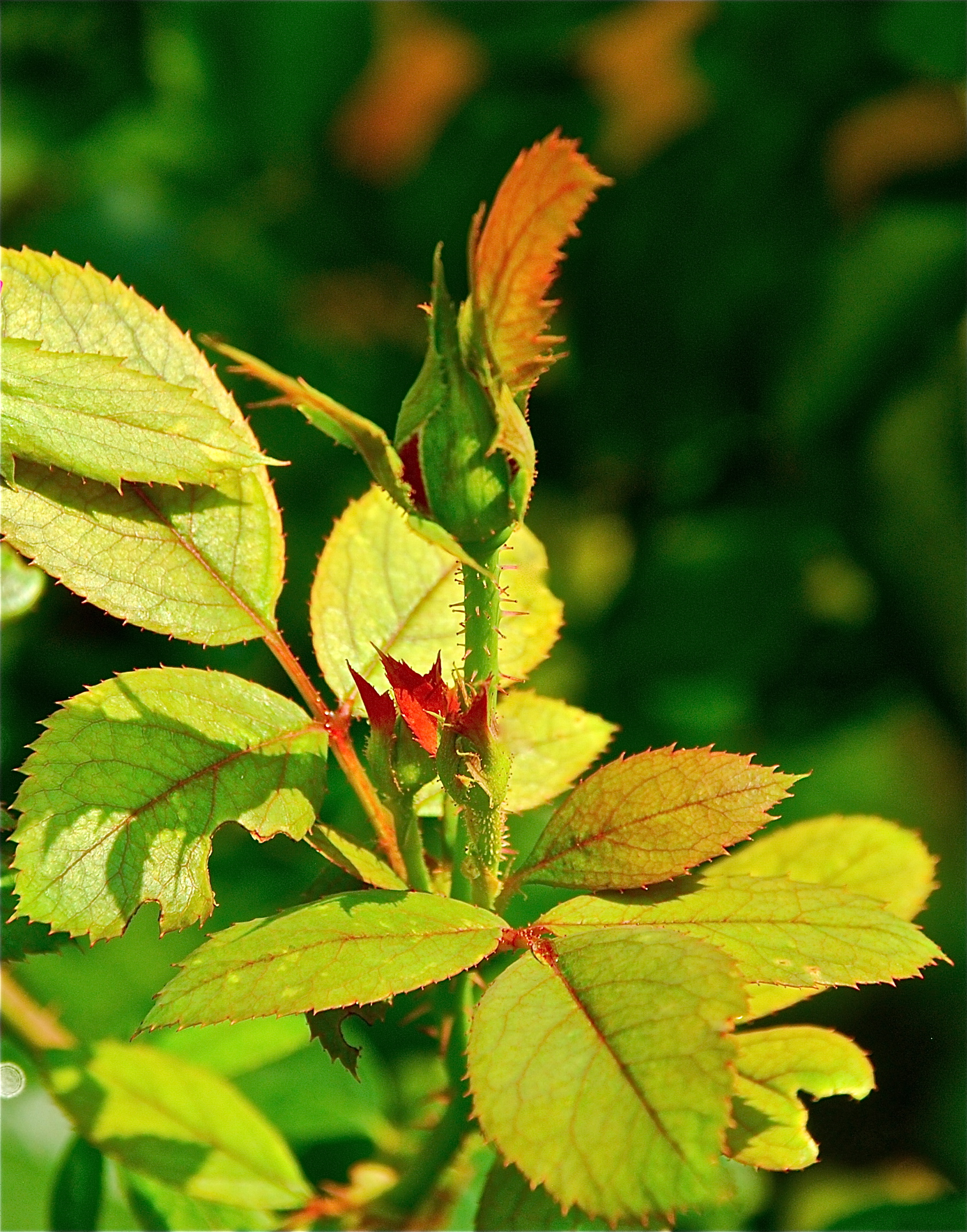
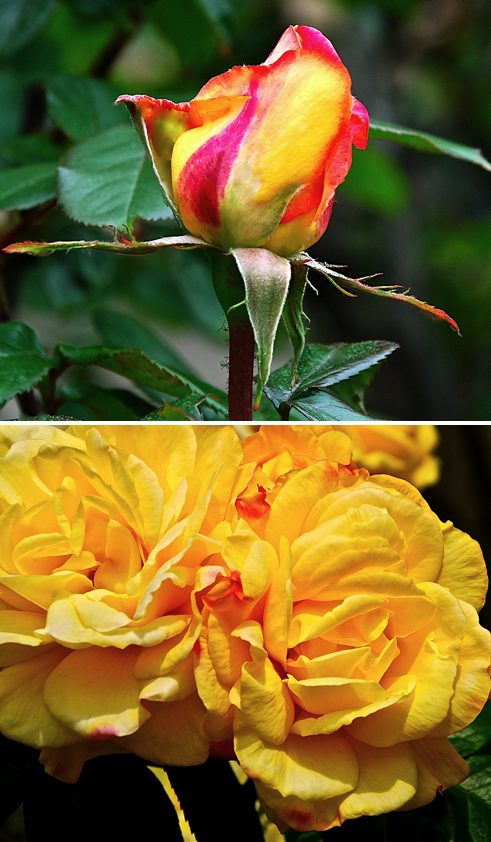
Living in a garden day after day, being a participant in all its events, witnessing the changes from season to season, and watching the way differing light falls on the landscape make gardening a thrilling experience.  The fact that colors in the garden change off and on during the course of a day fascinates me.  In morning light the hues are vivid and bright, but as daylight mellows into twilight, they melt into quieter, more subdued tones.  Light even affects the fragrance of things for it is only in the cooler moments of early morn and twilight that the strongest aromas are dispelled from herbs and flowers.  But then things are not just affected by changes in lighting.  Sometimes colors change as flowers and leaves age, when temperatures rise or fall, when changes occur in the content of the soil, or when rainfall is lacking or in abundance.  That’s why without looking at a calendar, I can tell that the rose bud in the photo is one born of recent rainfall and the passing of the autumnal equinox.  The constancy of this inconstancy defines the soul of a garden, and, like all else in nature, speaks to me of rhythmical and purposeful ordination.

Awake, north wind, and come, south wind!  Blow on my garden that its presence may spread everywhere.  Let my beloved come into his garden and taste its choice fruits.  ~Song of Songs 4:16   ✝

134. When Love first came to Earth, the Spring spread rose-beds to receive Him. ~Thomas Campbell

A Rose-bud by my early walk,
Adown a corn-enclosed bawk,
Sae gently bent its thorny stalk,
All on a dewy morning. . .
~Robert Burns

Image

In a recent visit to the UK and Paris I came across some amazing roses.  They were not only beautiful but immense, larger than any I’ve ever seen.  Sadly these photos don’t show how truly gorgeous and huge they were.  Nevertheless for me they will serve as a lovely reminder of lands and flowery faces that captivated and captured my heart.

Every day I will praise you and extol your name for ever and ever.  ~Psalm 145:2  ✝