298. All the flowers of all the tomorrows are in the seeds of today. ~Author Unknown

Image

The Seed-Shop

Here in a quiet and dusty room they lie,
Faded as crumbled stone or shifting sand,
Forlorn as ashes, shriveled, scentless, dry-
Meadows and gardens running through my hand.

In this brown husk a dale of hawthorn dreams;
A cedar in this narrow cell is thrust
That will drink deeply of a century’s streams;
These lilies shall make summer on my dust.

Here in their safe and simple house of death,
Sealed in their shells, a million roses leap;
Here I can blow a garden with my breath,
And in my hand a forest lies asleep.

~Muriel Stuart, English poet

He put before them another parable: “The kingdom of heaven is like a mustard seed that someone took and sowed in his field; it is the smallest of all the seeds, but when it has grown it is the greatest of shrubs and becomes a tree, so that the birds of the air come and make nests in its branches.”  ~Matthew 13:31-32   ✝
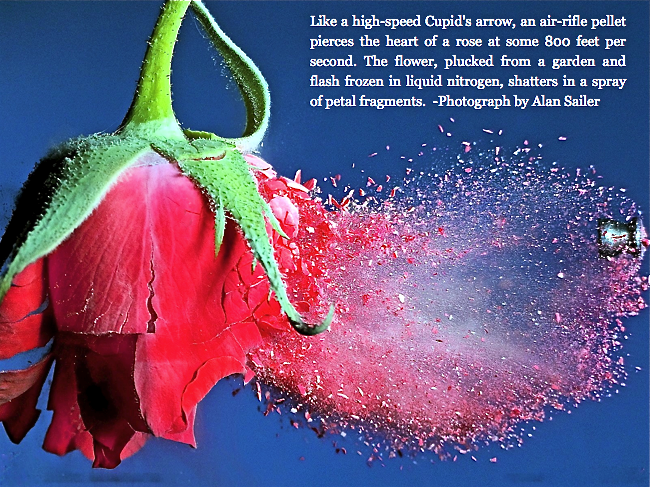
281. There are defeats more triumphant than victories. ~Michel de Montaigne

I found this image on the internet, and I’m not sure why I’m so fascinated with it, but I am.  Perhaps it’s because the rose, though now damaged, remains exquisite in color and form or because the spraying bits of freeze-dried petals create a stunning scene.  Or maybe I’m intrigued by the photo because it somehow reassures me that human brokenness touched by God’s grace can produce valuable and worthwhile fruit.  Whatever the case may be, all this pondering about the fragmented rose triggered the memory of the profound story below the photo.

Image

A water bearer in India had two large pots, each hung on each end of a pole which he carried across his neck.  One of the pots had a crack in it, and while the other pot was perfect and always delivered a full portion of water at the end of the long walk from the stream to the master’s house, the cracked pot arrived only half full.  For a full two years this went on daily, with the bearer delivering only one and a half pots full of water in his master’s house.  Of course, the perfect pot was proud of its accomplishments.  But the poor cracked pot was ashamed of its own imperfections, and miserable that it was able to accomplish only half of what it had been made to do. After two years of what it perceived to be a bitter failure, it spoke to the water bearer one day by the stream.  “I am ashamed of myself, and I want to apologize to you.”  “Why?” asked the bearer.  “What are you ashamed of?”  I have been able, for these past two years, to deliver only half my load because this crack in my side causes water to leak out all the way back to your master’s house.  Because of my flaws, you have to do all of this work and you don’t get full value for your efforts,” the pot said. The water bearer felt sorry for the old cracked pot and in his compassion he said, “As we return to the master’s house I want you to notice the beautiful flowers along the path.” Indeed, as they went up the hill, the old cracked pot took notice of the sun warming the beautiful wild flowers on the side of the path, and this cheered it some.  But at the end of the trail, it still felt bad because it had leaked out half its load, and so again it apologized to the bearer for its failure. The bearer said to the pot, “Did you notice that there were flowers only on your side of the path but not on the other pot’s side?  That’s because I have always known about your flaw, and I took advantage of it.  I planted flower seeds on your side of the path, and every day while we walk back from the stream, you’ve watered them.  For two years I have been able to pick these beautiful flowers to decorate my master’s table.  Without you being just the way you are, he would not have this beauty to grace his house.”  ~Author Unknown

Every human “pot” becomes “cracked” in some way, but that does not render the flawed man or woman ugly or useless.  The Creation story in Genesis tells us that each day God looked back at what He had made and saw that it was good.  So, although we humans are imperfect, we started from a place of goodness that is still in us.

Do not remember the sins of my youth and my rebellious ways; according to your love remember me, for you, LORD, are good.  ~Psalm 25:7  ✝

278. Winter is the time for comfort – it is the time for home. ~Edith Sitwell

Image

He knows no winter, he who loves the soil,
For, stormy days, when he is free from toil,
He plans his summer crops, selects his seeds
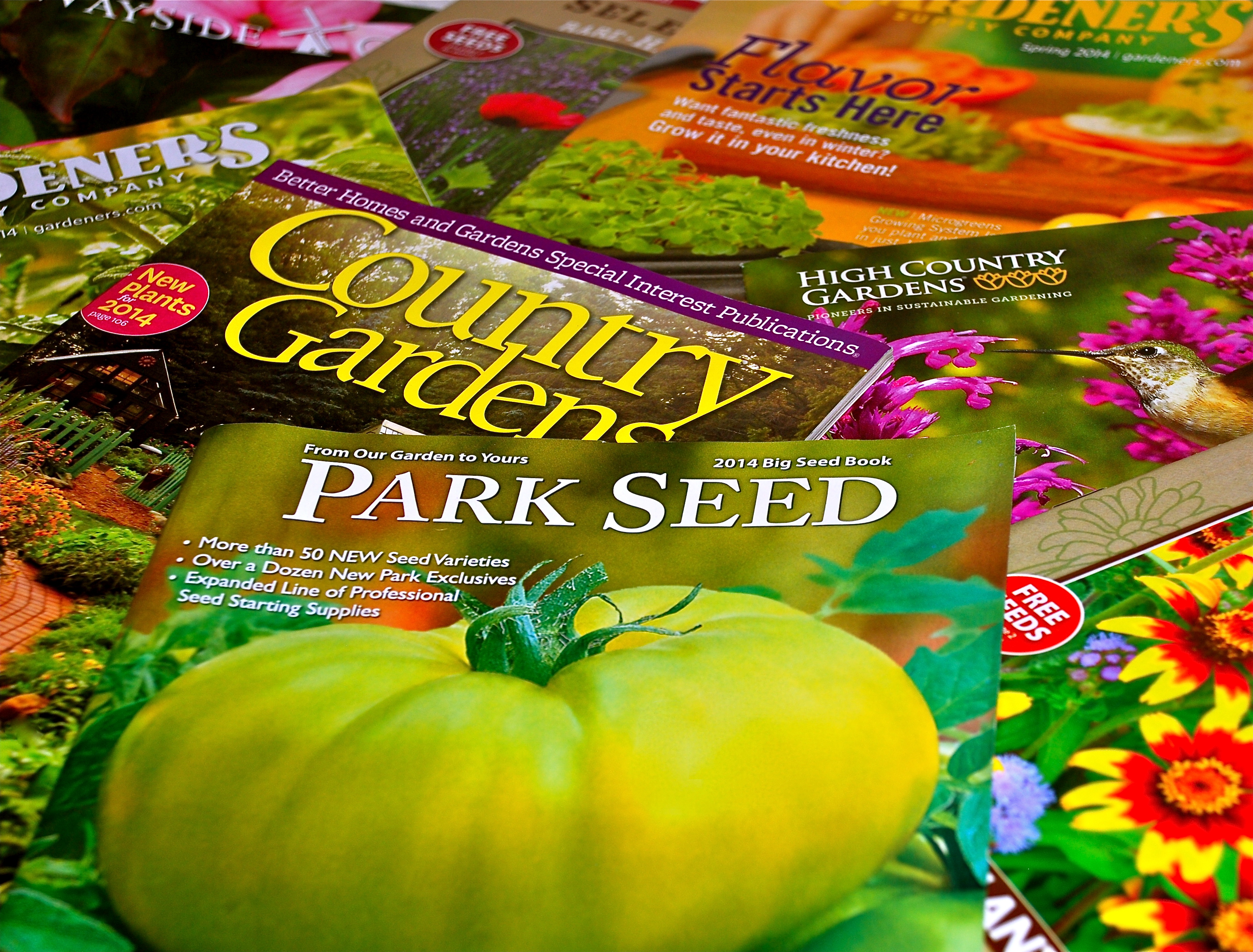
From bright-paged catalogues for garden needs.
When looking out upon frost-silvered fields,
He visualizes autumn’s golden yields;
He sees in snow and sleet and icy rain
Precious moisture for his early grain;
He hears spring heralds in the storm’s turmoil.
He knows no winter, he who loves the soil.
~Sudie Stuart Hager

…and the Lord your God will make you abundantly prosperous in all your undertakings, in the fruit of your body, in the fruit of your livestock, and in the fruit of your soil.  For the Lord will again take delight in prospering you, just as He delighted in prospering your ancestors…  ~Deuteronomy 30:9  ✝

263. Don’t grieve for me now. I am free. ~Author Unknown

This post is in loving memory of Debbie Jeanne Avila , a friend and fellow blogger.  Tonight I’ve chosen bits and pieces of some of Debbie’s poetry to honor her, and because she loved my photos of flowers, I’m including one with each excerpt.  Sweet Debbie you will not be forgotten, and I am comforted that for you to be absent here, means that you are now and forever in the presence of Jesus.  Till we meet again.  Love, Natalie

Image

I had forgotten what LIFE was all about,
Those dark chocolate nights dipped in indubitable doubts,
Wonderful wonderings if this was all there is,
And if it was, then, we had bitten envied bliss.

Image

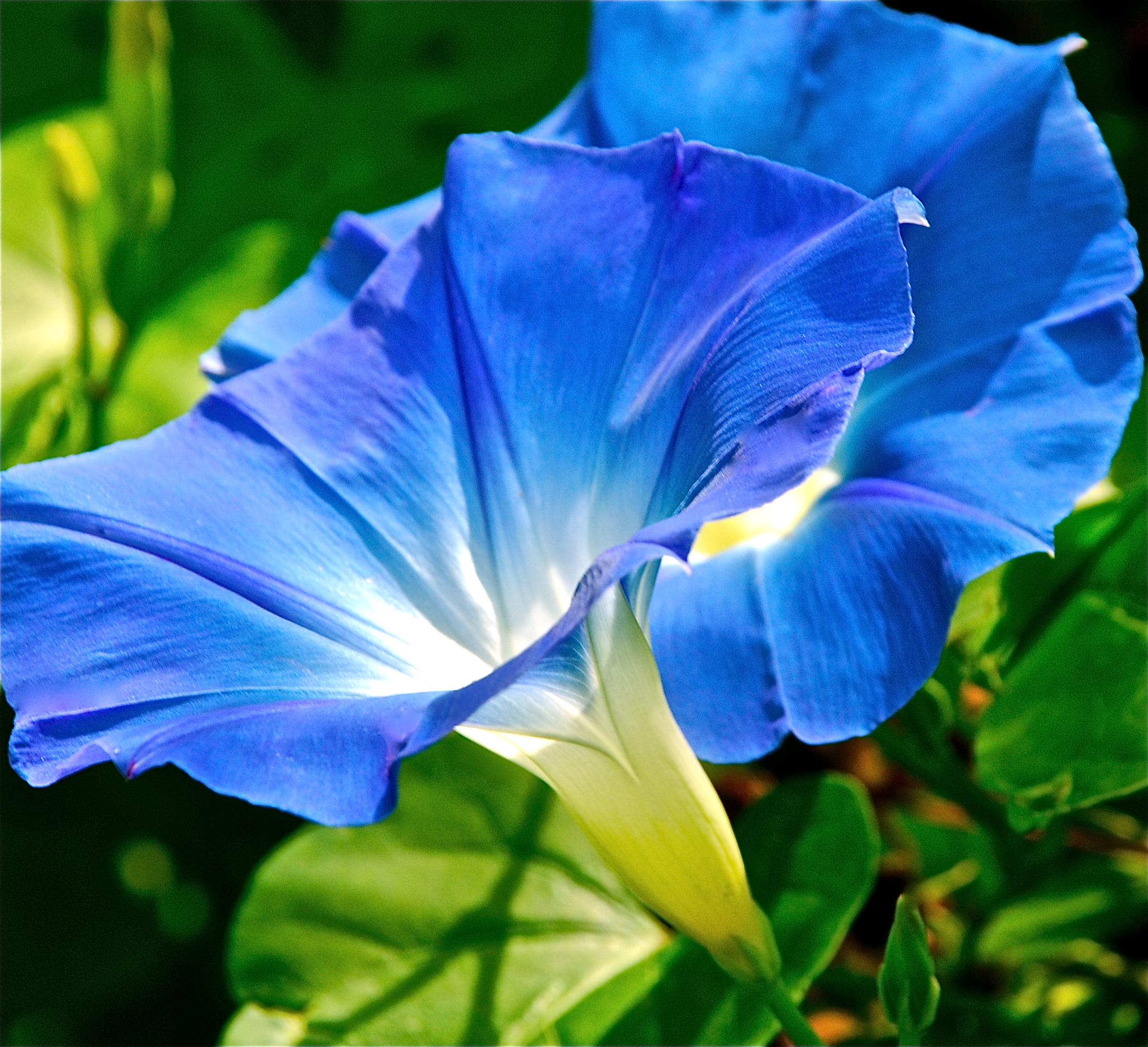
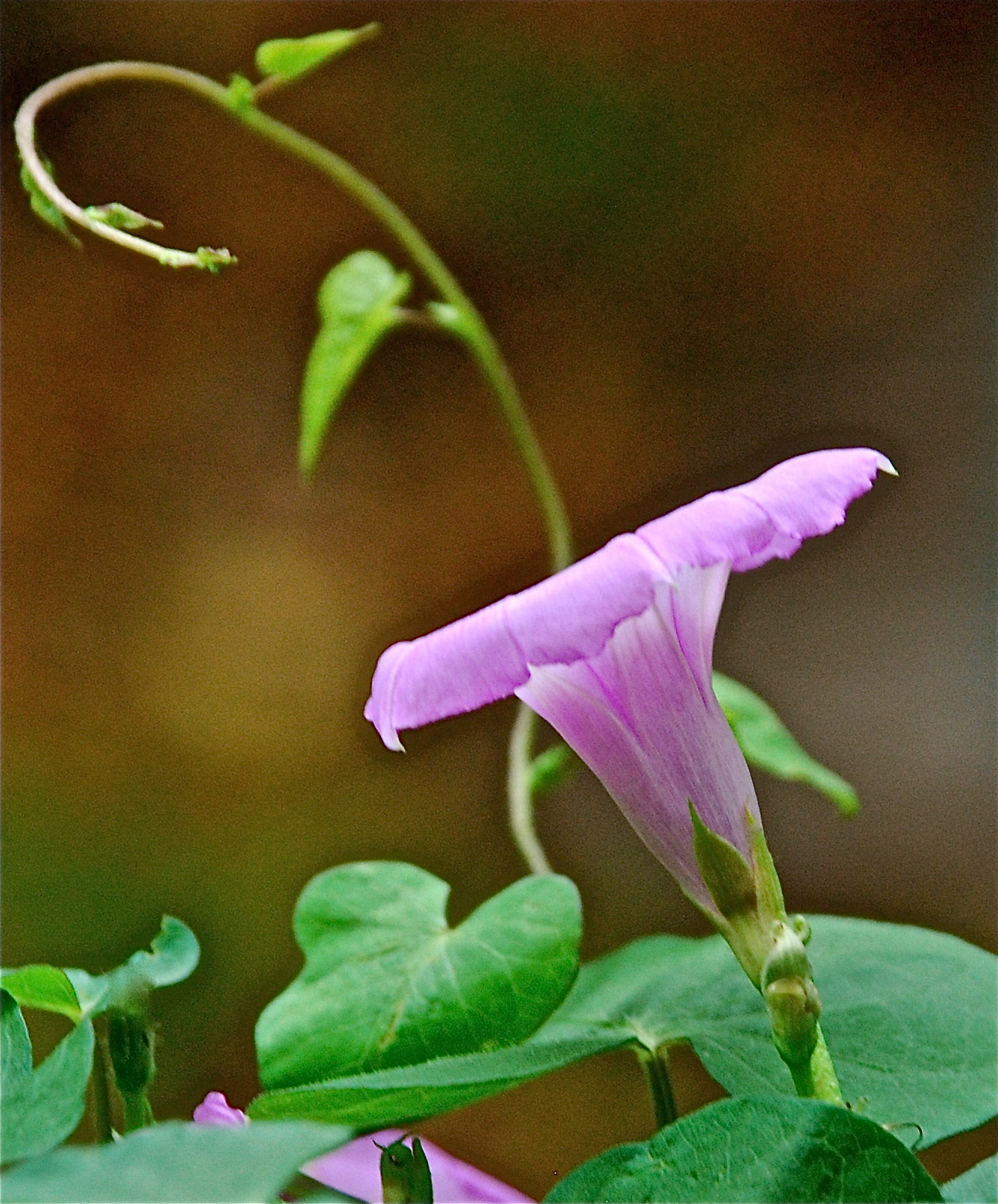
as sad as a morning glory that has never met
her glory I am damp with seeds that have never met
the portent wise sunlight–
damp with grinding dreams at my hoof and
damper after they sodden cold with dawn’s
twilight–
nothing reverts or inverts, if all formulates into
winter’s beginning and continuance

Image

Help me with my un-perceived progress
I stand still, everything around me sweeping
Like a Kansas tornado.
So many
voices within, held down and pressed,
It scares me to hear such a composing
Of songs I alone know

Image

September vivifies the introspections of soul like
The glaciating mountains in silence-
Ruminating, finding their niches so to sleep and then
Shake at springs kissing–
It embers gently, suspiciously as if someone would
Snuff it out too soon–

Image

Miscreant as it may some times be with the unexpected
Heat and elongated sun-kissed troubling–
Days are slightly shorter for most living breathing ways,
As I turn down the lights,
Pick up Keats and Dickinson, Rumi and rosehips
For morning simmering decadence. (http://girlwiththepen1118.wordpress.com)

Image

“Where, O death, is your victory?  Where, O death, is your sting?”  ~1 Corinthians 15:55  ✝

260. The shortest day has passed, and whatever nastiness of weather we may look forward to in January and February, at least we notice that the days are getting longer. ~Vita Sackville-West

January is the quietest month in the garden.
. . .But just because is looks quiet
doesn’t mean that nothing is happening.
The soil, open to the sky, absorbs the pure rainfall
while microorganisms convert tilled-under fodder
into usable nutrients for the next crop of plants.
The feasting earthworms tunnel along,
aerating the soil and preparing it to welcome
the seeds and bare roots to come.
~Rosalie Muller Wright

Image

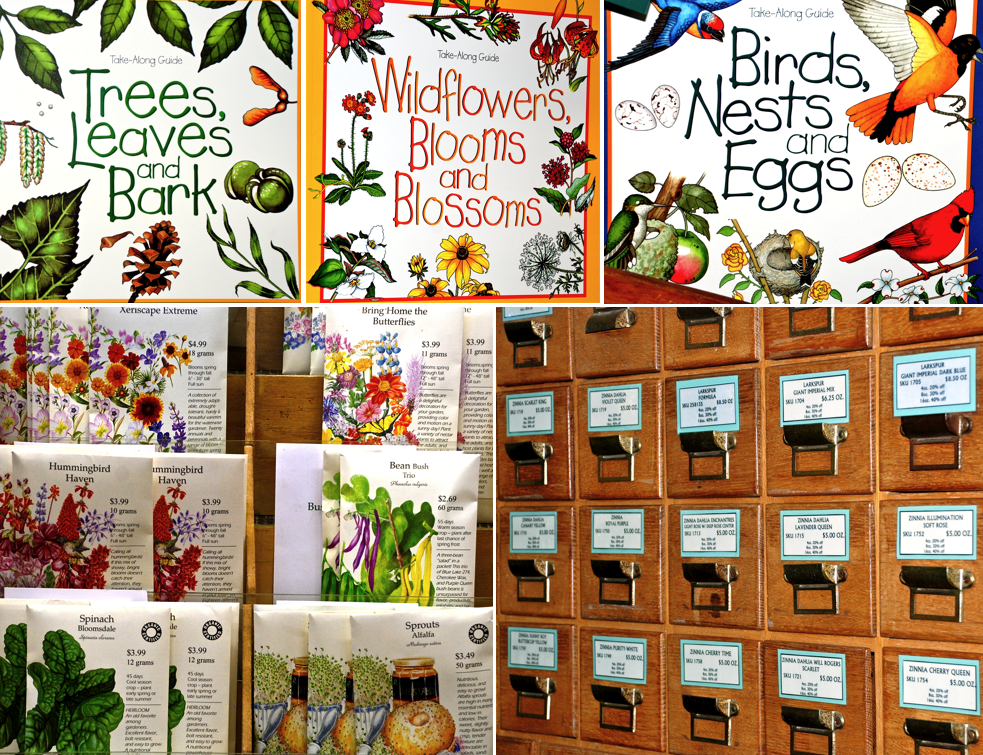
I’ve heard it said that “the color of springtime is in the flowers” whereas “the color of winter is in the imagination.”  Thankfully I’ve got a good imagination, and when that fails, I have a large collection of photos to look back on because by the end of January my spirit is in dire need of a boost.  A place I like to frequent also helps to keep my imagination alive and well.  It’s a nursery, and this particular Dallas nursery not only has a great selection of flowers during the growing seasons, but year round it has all sorts of indoor plants too.  In addition  to the plants it has an oak cabinet with drawers full of fascinating seeds, racks of seed packets, shelves filled with gardening books, and an array of tools.  So between the plant and seed catalogs that start arriving in the mail after Christmas and my visits to Nicholson-Hardie’s nursery, the “dream” is kept alive even when the under-the-surface busy but ravaged-atop January garden appears to be completely shut down.  And it is this “stuff” of which gardener’s dreams are made that keeps my imagination churning and my head full of schemes, schemes that are the spice of a gardener’s life.  What a blessing is our memory, our imagination, and our ability to dream; God is so good.

I will praise the name of God with a song; I will magnify Him with thanksgiving.  ~Psalm 69:30  ✝

246. The flower is the poetry of reproduction. It is an example of the eternal seductiveness of life. ~Jean Giraudoux

I am a symbol of love and immortality.
I have been around since the time of Confucius.
My name came from a Persian word.
At one time I was more expensive than precious metals.
I can be used in the place of an onion in cooking.
I am in the same family as a lily.

Image

Do you know who I am?  I am a native of Central Asia, and I am the world’s most planted flower.  When I arrived from Turkey in the mid-16th century, I was a gift from the Ottoman Empire that took Western Europe by storm.  But I did not come to the United States until the 1800’s.  There are about 3,000 varieties of me grown around the world, some that originated in the seventeenth century.  My petals come in every shade of the rainbow as well as black, but my most popular color is red.  And I can be forced into blooming after I have been stored in a refrigerator for 12-16 weeks.

A tulip doesn’t strive to impress anyone.
It doesn’t struggle to be different than a rose.
It doesn’t have to.
It is different.
And there’s room in the garden for every flower.
~Marianne Williamson

Image

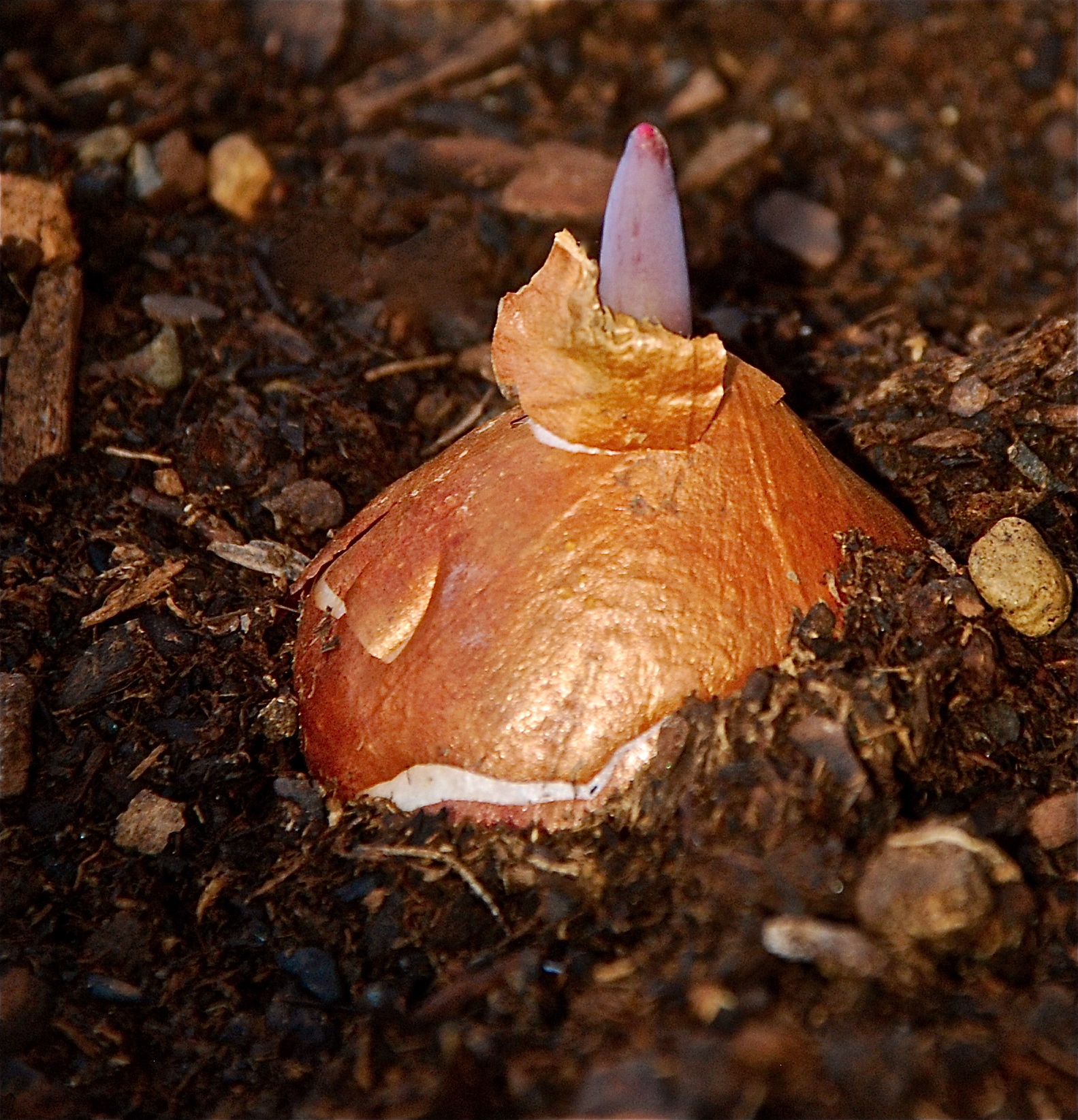
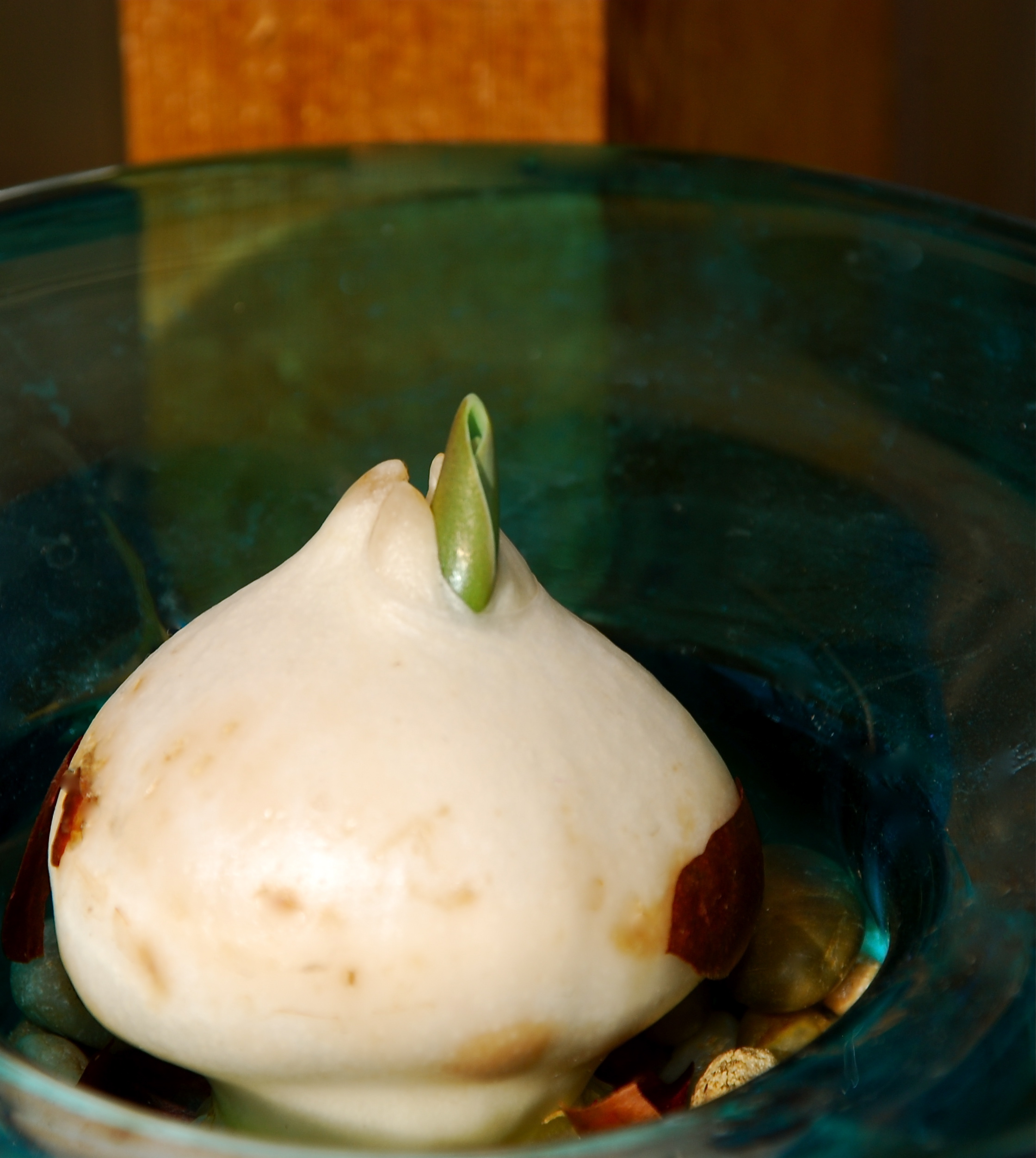
I’ve never had much luck with growing tulips in the ground.  So this year I decided to try forcing them in containers.  Two weeks ago after the bulbs had spent the required amount of time in my refrigerator, I planted some in soil and some in glass containers partially filled with pebbles and water.  As of today I’m proud to report that I have tulips sprouting in both types of containers.  Though it be only the 12th of January, springtime has sprung at least in my greenhouse.  One of the most seductive things in life I know is the thrill of the first spark of life in a garden.  Every time I experience it I feel as if a time machine has transported me back to Eden on the third day when creation was “born of the Spirit in the womb of the universe.”  On that day the first seeds were planted in the earth and their roots reached down for the waters that would sustain them.  Then and now such as this is clearly a manifestation of the goodness of God.

I believe that I shall see the goodness of the Lord in the land of the living.  ~Psalm 27:13  ✝

242. For last year’s words belong to last year’s language. And next year’s words await another voice and to make an end is to make a new beginning. ~T. S. Eliot

In my garden there is a large place for sentiment.
My garden of flowers is also my garden of thoughts and dreams.
The thoughts grow as freely and the flowers,
and the dreams are as beautiful.
~Abram L. Urban

Image

One of the fascinating things about a garden is that it’s never quite the same from year to year even if nothing is lost or nothing new is planted.  Depending on the variable nature of the weather and the seasons, there is always a difference from one year to the next in the way things grow and perform.  Since a garden is a living, breathing entity, it is always in a state of flux, a continuous inconstancy of gain and loss, rise and fall.  For example one never knows how many seeds will germinate and flourish or when they or something established will perish for one inexplicable reason or another.  So, like people, a garden awaits another “voice” each year, and every ending in it and us yields a new and somewhat different beginning.  Whatever was said and done last year is just that for both nature and humanity, and I’ve found it best to leave what was said and done in the past where it belongs.  Neither do I spend time thinking about new year’s resolutions because I know that the seasons in my life are always different and therefore evoke different feelings within me and different responses from me.

Time and time again life rises from death, and when it does, one can feel the beating heart of heaven and hear the hushed voice of grace–that unchanging holy voice of grace, that sacred in-and-out breath of life, the Presence that captures me again and again and again.  For me that is the only constancy, and I simply cannot live without it or the Ancient of Days by whose grace I live.

“The sounds, the aromas, the speech of life that infiltrates and seduces in heard and unheard melodies echoing from every life form to cocoon, to feed us, to excite us, to give solace, to renew, to cry in joy and sorrow, to create, to birth, to laugh at the sheer exuberance of feeling, I love.”    ~Patricia at: http://theenglishprofessor.net/qualifications.php

Obey the Lord and serve Him faithfully with all your heart; consider all the great things He has done for you.  ~1 Samuel 12:24  ✝

241. O thou, Who chariotest to their dark wintry bed the winged seeds, where they lie cold and low, each like a corpse within its grave, until thine azure sister of the spring shall blow her clarion o’er the dreaming earth. ~John Davies

I paid a dime for a package of seeds
And the clerk tossed them out with a flip.
“We’ve got ‘em assorted for every man’s needs,”
He said with a smile on his lip.
“Pansies and poppies and asters and peas!
Ten cents a package and pick as you please!”

Now seeds are just dimes to the man in the store
And dimes are the things he needs;
And I’ve been to buy them in seasons before,
But have thought of them merely as seeds.
But it flashed through my mind as I took them this time
“You have purchased a miracle here for a dime!”

“You’ve a dime’s worth of power no man can create,
You’ve a dime’s worth of life in your hand!
You’ve a dime’s worth of mystery, destiny, fate,
Which the wisest cannot understand.
In this bright little package, now isn’t it odd?
You’ve a dime’s worth of something known only to God.
~Edgar A. Guest

Image

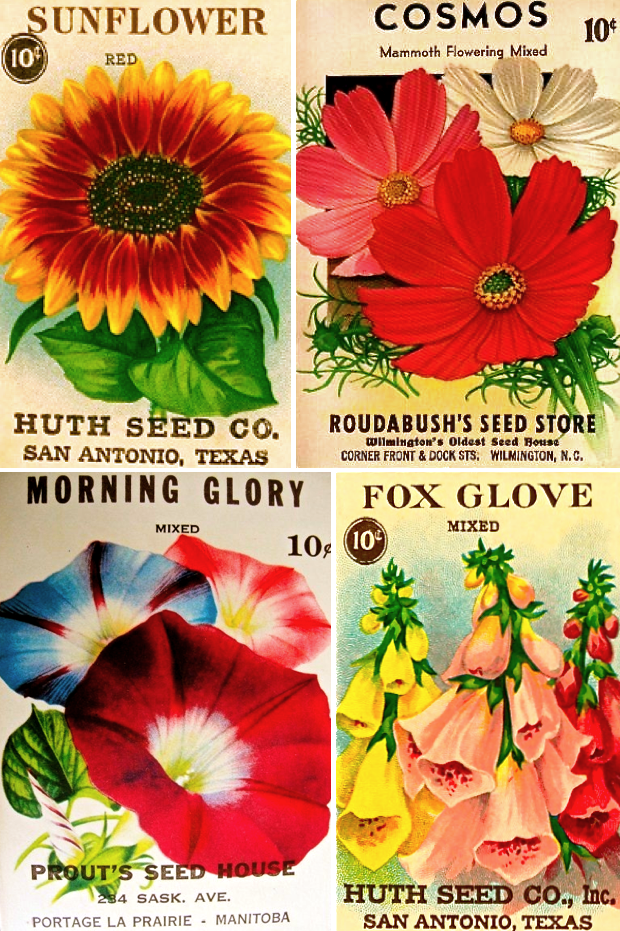
Nowadays a packet of seeds costs more than a dime; yet one can still buy a packet of “miracles” for a reasonable sum.  And the initial investment is small compared to the potential yield not only from the generous number of seeds in each packet but also from the seeds that those plants ultimately produce.  I know because my garden is full of plants started from seeds I never bought.  Not only that but lots of birds eat well on the excess “birdseed” I don’t have to buy.  So it is that in nurturing I am nurtured.  By becoming a part of the “cosmic consciousness,” I  get to participate in the sacred dance of life.

The Book of Genesis tells us that on the third day the Lord created seed-bearing plants and trees.  And from the moment He spoke those words, countless seasons have come and gone and the soil in any given garden has quaked with life from seeds forming in its dark wombs.  As the trembling in “dark wintry beds” increased, an impetus not unlike labor pains pushed roots downward and tiny green shoots upwards toward the light until at last new “miracles” became stable,visible, and tangible.  As more and more darkness melted away in the blaze of lengthening days and intensifying sunlight, the warp and woof of nature began weaving another springtime into existence.  And when the shroud of gloom, winter’s drab garment, was finally sloughed off it was replaced by spring’s brilliant, gauzy garments, garments as colorful as the “silks of Samarkand.”

Isaac sowed seed in that land, and in the same year reaped a hundredfold.  ~Genesis 26:12  ✝

237. Within the seed’s case a secret is held. Its fertile whisper shapes a song. ~Joan Halifax

I have great faith in a seed.
Convince me that you have a seed there,
and I am prepared to expect wonders.
~Henry David Thoreau

Image

Shhh!  Can you hear it?  Look at the photos.  This is the hope; this is winter’s promise; this is the fertile whisper!   But wait, everything in the photographs is dried up and brown.  And dead!

Oh do not be deceived by appearances, my friends, for these seed cases are ripe and what they hold is ever so viable!  Their wealth may now be kept inside in secrecy but trust me these cases are vigilant and waiting–waiting for that wondrous moment in time when enough warmth and light and moisture will enliven their songs of fertility.  And then they will split wide open, spill their sacred secrets upon the soil, and spark new life.

David Walters said, “God’s promises are like the stars, the darker the night, the brighter they shine.”  For me seed cases are like God’s promises as well because the deeper and darker winter becomes, the more the expectation of what they hold brightens winter’s cold and forbidding days.  As their sweet melodies take shape, they keep the hopeful dream of spring alive when what I see conveys a story of death and decay.

God said, “See, I have given you every plant yielding seed that is upon the face of the earth, and every tree with seed in its fruit; you shall have them for food.”  ~Genesis 1:29  ✝

202. There is a communion with God, and there is a communion with earth, and there is a communion with God through the earth. ~Pierre Teilhard de Chardin, French philosopher and Jesuit priest

Grass is the forgiveness of nature-
her constant benediction.
Forests decay, harvests perish, flowers vanish,
but grass is immortal.
~Brian Ingalls

Image

Maiden grass, purple fountain grass, blood grass, little bluestem, pink muhly–what’s not to love about such names.  Not only are they alluring monikers for gardeners, but their visual charms provide great cover for  wildlife and their seeds are good food sources for birds.  Few pests bother them, and given a bit of wind their airy, flower panicles, feathery plumes, or striking seed heads resemble fairy wands as they capture and play with available light.  What I like best about them is that in their swishing and swaying the echoes of the eternal and murmurs of sacred benedictions can be heard.  A garden and all its plantings, be they grasses or trees or shrubs or ferns or herbs or mosses, always speak of earth’s primeval and venerable origins as well as man’s connection to the Holy Voice that spoke everything into being.  But it is in the movement of the grasses that I most feel the in and out movement of God’s ruach, His life-giving breath.  Chardin whom I quoted above contended that the more he devoted himself in some way to the interests of the earth the more he belonged to God.  It is the same for me because being close to and working the earth is like being attached to an umbilical cord that keeps me forever connected to and sustained by Him, the loving Source of all life.

Sing to the LORD with thanksgiving; make music to our God on the harp.  He covers the sky with clouds; he supplies the earth with rain and makes grass grow on the hills.  ~Psalm 147:7-8  ✝