181. How could such sweet and wholesome hours be reckoned but with herbs and flowers. ~Andrew Marvel

Natural object themselves
even when they make no claim to beauty,
excite the feelings, and occupy the imagination.
Nature pleases, attracts, delights,
merely because it’s nature.
~Karl Wilhelm Humboldt
Image

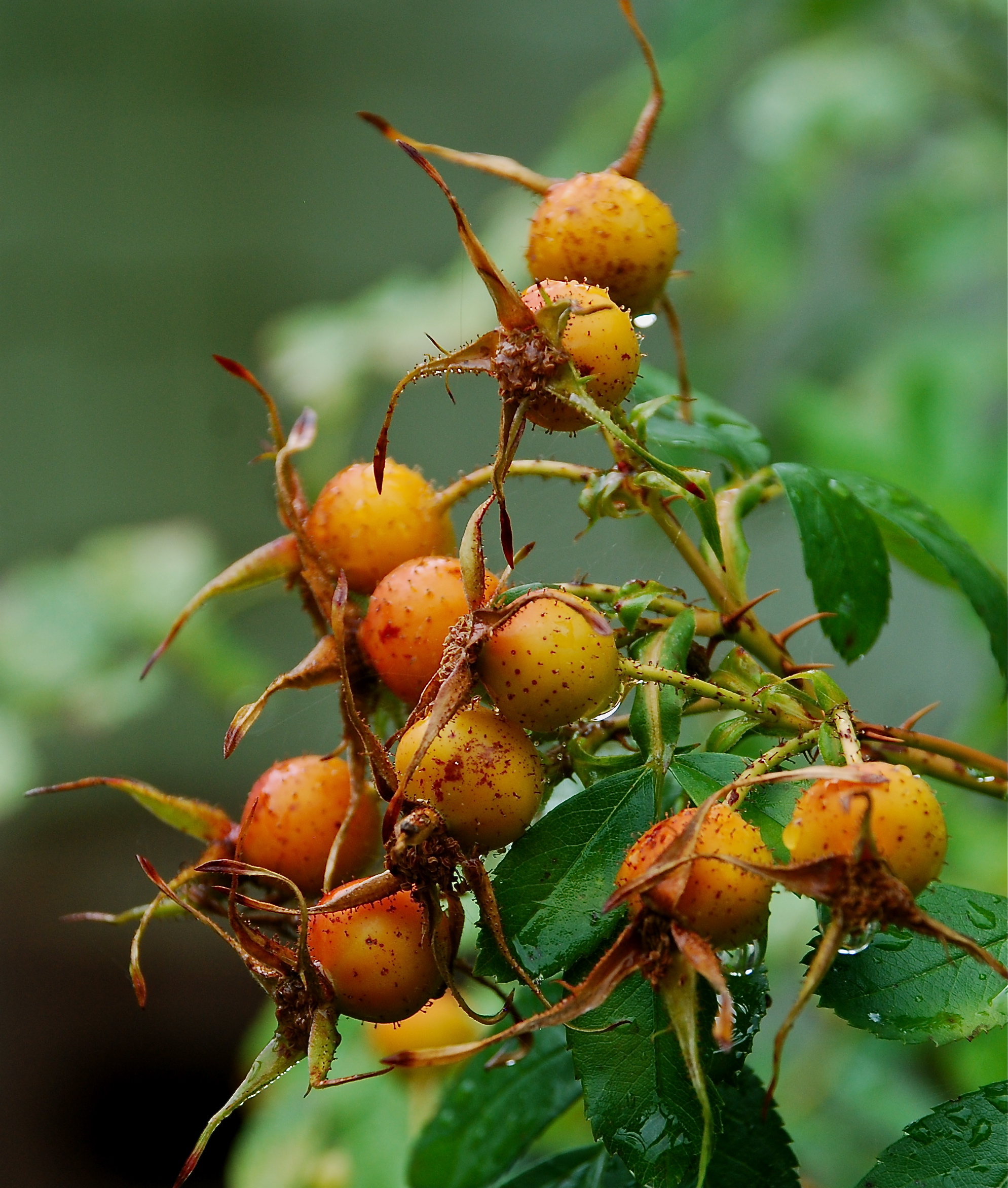
The most common attractions of the rose are the prettily colored flowers and the sweet to spicy fragrances.  On some roses there are also brightly colored hips that not only decorate bare canes in winter but also provide feasts for overwintering birds.  These hips are the pomaceous fruits of the rose, and they vary in size and shape and color.  Some of the first rosary beads were fashioned out of dried rose hips, and they have been used as well to make jellies, jam, marmalade, teas, soup, and medicinal compounds.  They also played an important role during World War II because they are very rich in Vitamin C.  It seems the people of Great Britain were encouraged to gather wild-grown rose hips to make a syrup for their children since German submarines were sinking commercial ships making it very difficult to import citrus fruits from the tropics.

Looking with expectancy for things that excite, I venture out into my gardens almost daily, weather permitting.  To that end I am seldom disappointed even on drippy days like this one.  Today’s find were some gold-orange-reddiish rose hips, and though they make no claim to great beauty, I was thrilled to see them once again.  After photographing them and beginning this post I began pondering what a difference for the better it might make if I greeted every new day’s living with the same attitude.  What an impact might it have on those around me if I met them filled with joy and expected the best from the encounter.  Once again I see how God’s Eden is not only a great sustainer but also an excellent teacher.

The seed will grow well, the vine will yield its fruit, the ground will produce crops, and the heavens will drop their dew.  ~Zechariah 8:12  ✝

178. All the flowers of all the tomorrows are in the seeds of today and yesterday. ~Chinese Proverb

In the garden the door is always open into the holy –
growth, birth, death.
Every flower holds the whole mystery in its short cycle,
and in the garden we are never far away from death,
fertilizing, good, creative death.
~May Sarton

Image

Every year the unseen becomes visible as new life explodes from quiet, dark, sustaining wombs.  Beneath the soil roots grow and above the surface tiny leaves yield proof of life.  Enlivening rains come, and the leaves grow.  Daylight hours lengthen, and they grow more.  Amid the leaves emerge buds, and they grow.  Buds burst into flowers, the flowers fade, and their petals fall.  Fruits, seed heads, or pods appear, and they ripen.  Fruits are harvested, seeds are spilled onto the soil, and buds are set inside woody canes or branches.  Then comes the time of rest, the discontinuance of the same, the different new genesis.  The beginnings, the middles, the ends–never an ending without a beginning–never a beginning without an ending, so goes the cyclic constancy of a garden.

The land produced vegetation; plants bearing seed according to its kinds and trees bearing fruit with seed in it according to their kinds.  And God saw that it was good.  ~Genesis 1:12  ✝

167. God gave us memory so that we might have roses in December. ~James M. Barrie

I arise today
blessed by all things.
~John O’Donohue

Image

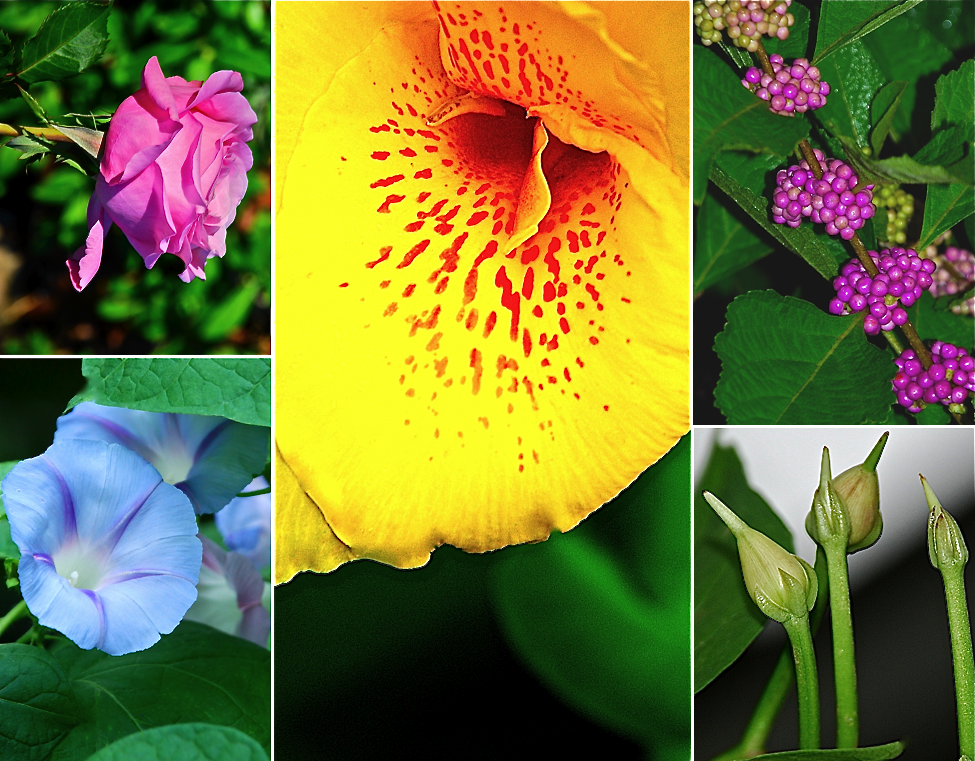
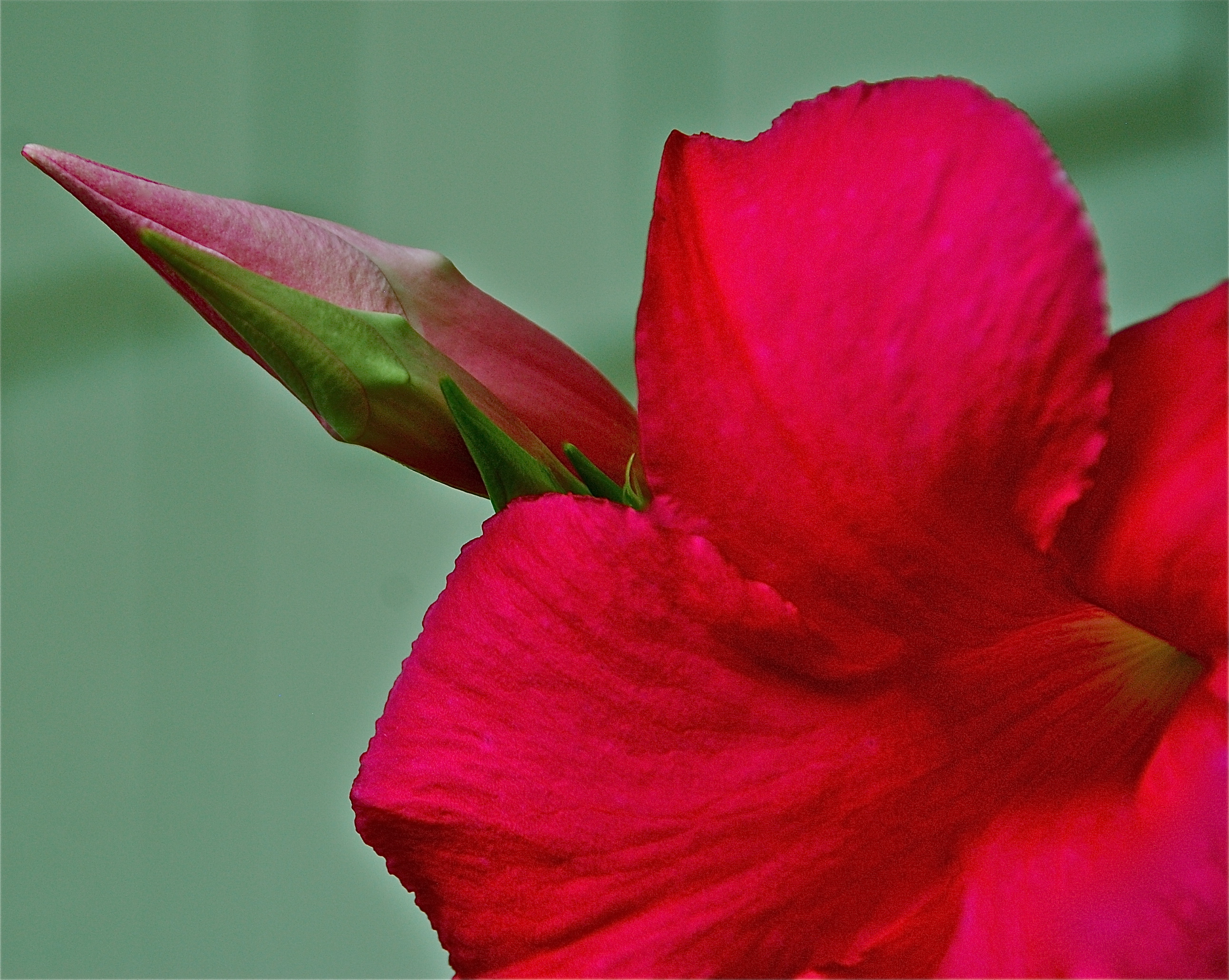
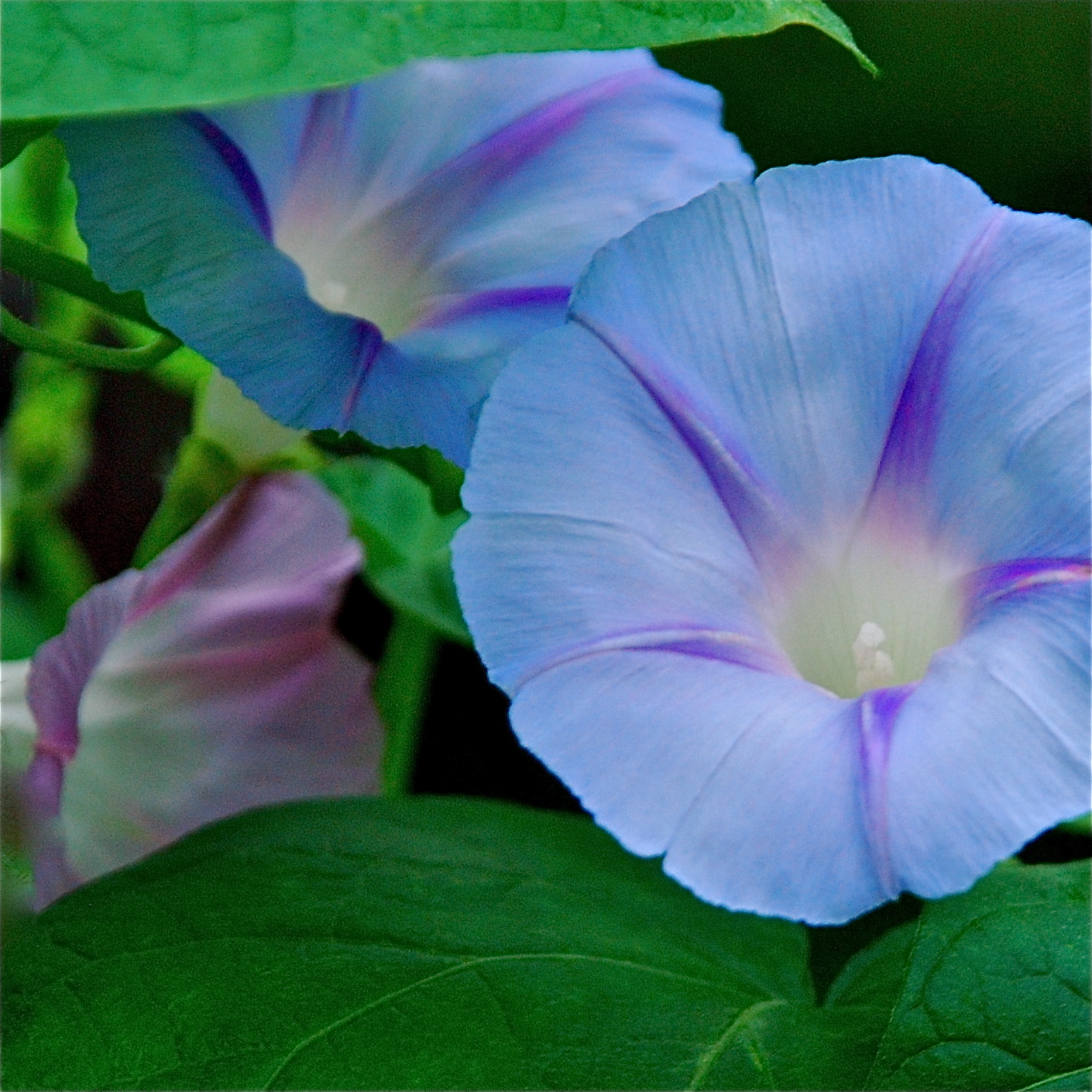
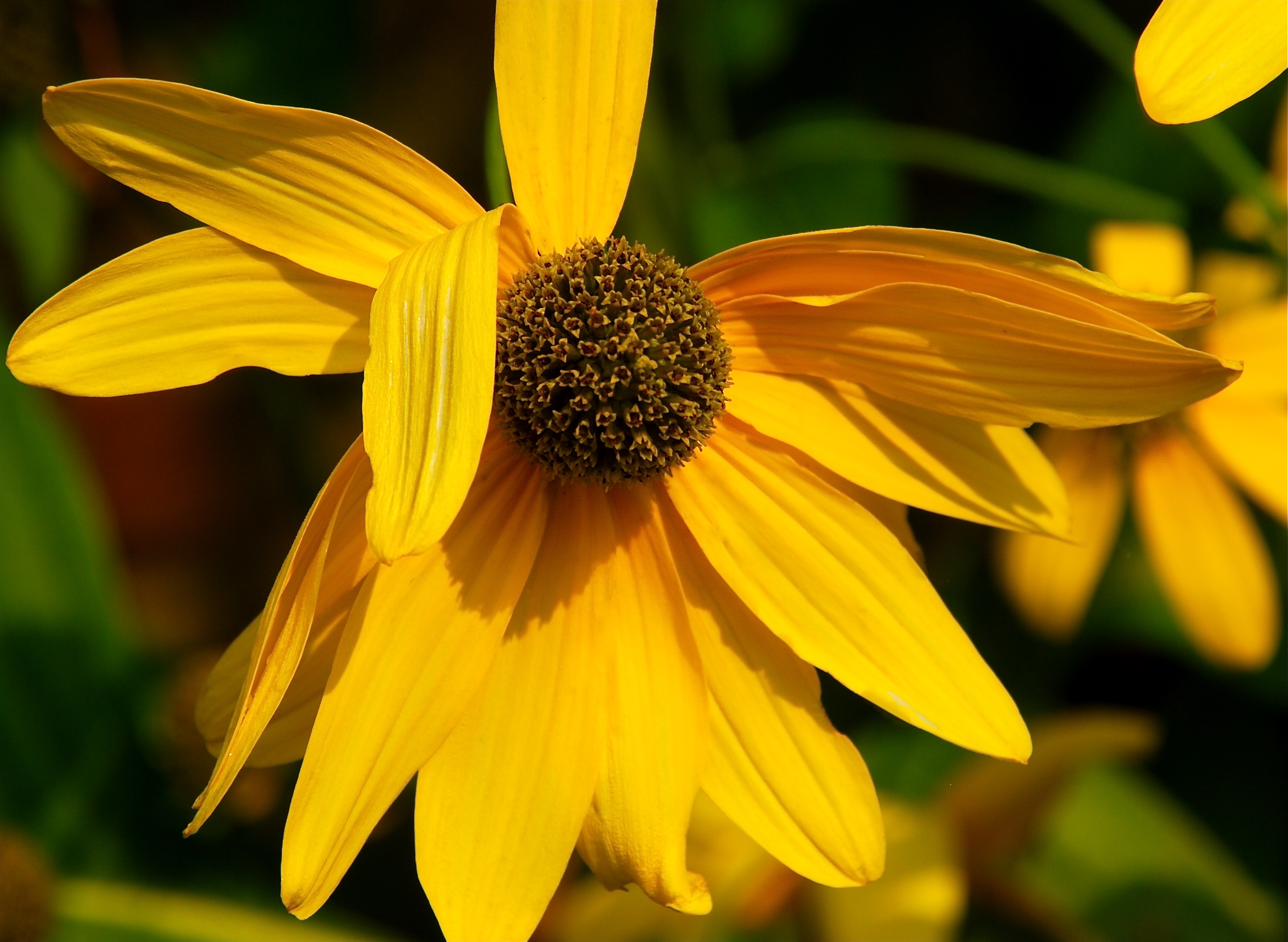
The English poet, William Blake, once penned that all “the daughters of the year shall dance” in autumn and “sing the lusty song of fruit and flowers.”  I think it might be hard to find a much lustier song or livelier a dance than what the beauties above are lending to October’s opus.  As a part of the process of summer’s “slow disrobing” and the “summing up” before year’s end, their ordained and impassioned performances are undeniably spreading a magnificent and long lasting “common feast for all that live.”  From this rich banquet, the berries will remain on winter’s menu for birds who fly not elsewhere for warmer refuge.  The seeds in the lower right corner produced from flowers like the pink and blue morning glories will foster faith and hope for we mortals as they carry the promise of spring through winter’s cold and dark dominion.  The scarlet spots in the throat of the yellow Canna will bleed thoughts of Christ into our awareness as we look forward to celebrating His birth in deep December.  And the scent and sight of the inimitable rose will take its usual place in memory whilst not in bloom.

I will perpetuate Your memory through all generations; therefore the nations will praise You for ever and ever.  ~Psalm 9:6  ✝

166. Another fall, another turned page: there was something of jubilee in that annual autumnal beginning…. ~Wallace Stegner

The foliage had been losing its freshness through the month of August,
and here and there a yellow leaf showed itself like a first gray hair…
September dressed herself in showy dahlias and
splendid marigolds and starry zinnias.
October, the extravagant sister, ordered an immense amount of
the most gorgeous forest tapestry to make glorious her grand spectacle.
~Edited and adapted excerpt from Oliver Wendell Holmes

Image

The first leafy sign of autumn appeared on the Dogwood today, and it triggered a flood of “color” musings in my mind.  Chestnut and chocolate!  What’s not to love about a season that clears off summer’s calamities, piles delectable hues back on nature’s palette, and calls for a pot of hot chocolate?  Lemon and lime!  Grasses, flowers, fruits, berries, and even a beastie or two weave fabulous garlands in the sacred temple bound by earth and sky.  Maroon and mahogany!  Chilling winds induce chemical changes in leaves that conjure up magic shows on woody altars in earth’s forests.  Mauve and mulberry!  The leaves on maples, oaks, dogwoods, pears, persimmons, and other trees give birth to colorful, parchment-like jewels that will one day snap off, swirl in little eddies, and play like children upon the ground.  Orange and ochre!  Pumpkins made to squat on porches or bales of hay tickle the fancy of mortal tongues anxiously awaiting fall feasts and winter banquets.  Red and russet!  Roses, asters, and Maximilian sunflowers invoke a breath of spring not stifled by summer’s heat to keep the year’s last child in colorful array.  Sable and sapphire!  Skies often shrouded by gauzy, gray clouds are swept clear by northerly winds as cold fronts advance.  On such days a spectacular brilliance can be seen on the brows of morn followed by daylight hours drenched in deep, dreamy shades of blue.  Sterling and pewter!  Plumed grasses shift and sigh in authorship of haunting, autumnal hymns.  Ah, how lovely are the many colors of autumn and the Holy One who made them!

As long as earth endures, seedtime and harvest (spring and autumn), cold and heat, summer and winter, day and night will never cease.  ~Genesis 8:22  ✝

165. Some praise the Lord for Light, the living spark; I thank God for the Night, the healing dark. ~Robert William Service, “Weary”

Night, the beloved.
Night, when words fade and things come alive.
When the destructive analysis of day is done,
and all that is truly important becomes whole and sound again.
When man reassembles his fragmentary self
and grows with the calm of a tree.
~Antoine de Saint-Exupéry

Image

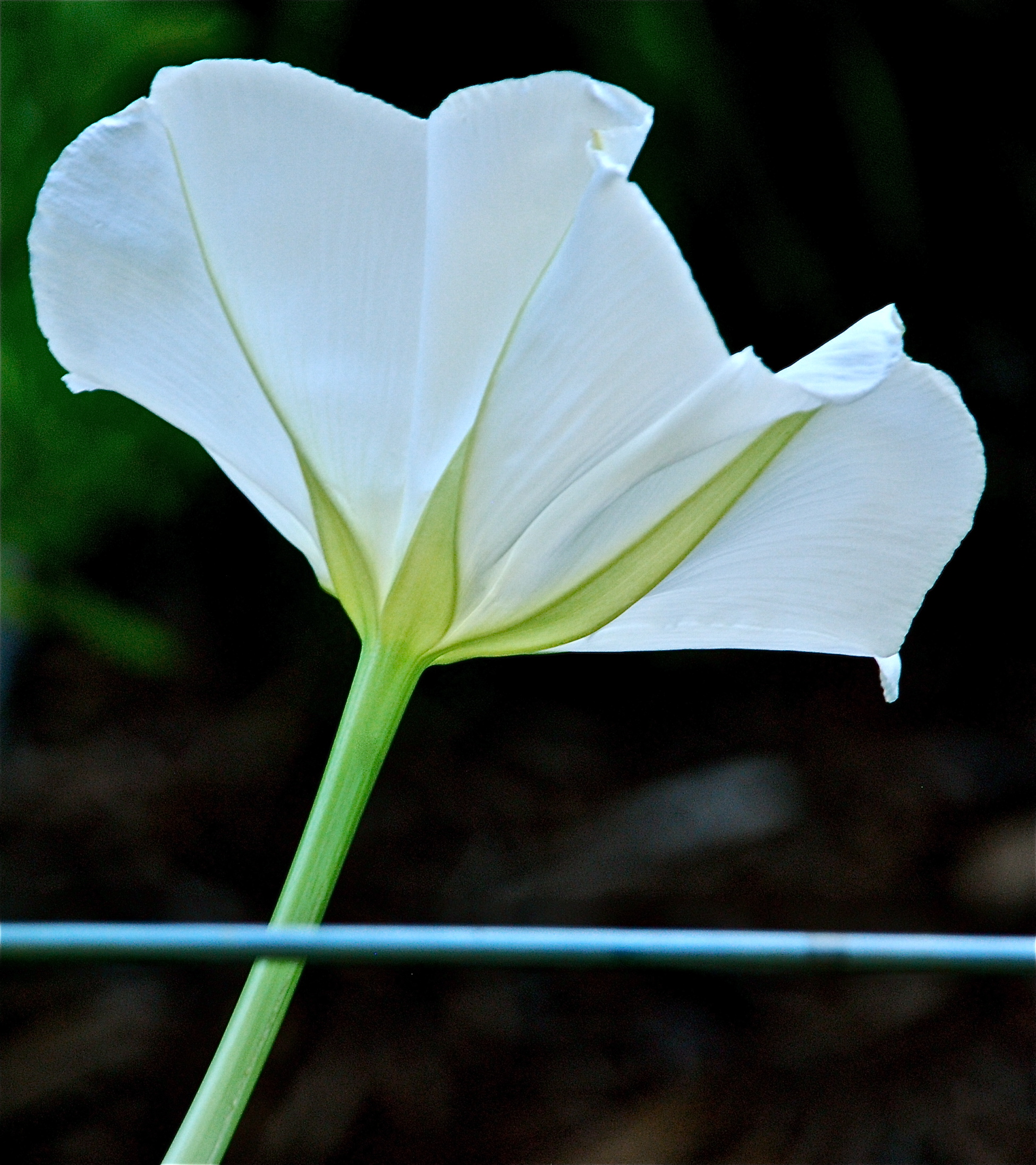
The air was crisp and cool; day’s light had just slipped away.  Wet blades of grass sparkled in a kind of diamond-dusted majesty under the glow of a rising harvest moon.  As if to punctuate my scattered thoughts, tiny aircraft lights glided from time to time through the darkening indigo sky.  When I began glancing around the yard, the images that confronted me seemed to be popping up like photos in a slowly advancing slide show.  The first one I saw was of the red turk’s caps underneath the rose arch, then the white moonflowers on the neighbor’s fence, fattening seed pods under the oak, a Celtic cross, a flying moth, an intermittently  shrouded moon.  The spell was broken only for a short while when the fragrance from my potted herbs temporarily seduced my nose.  Then the slide show started up again with a flash of yellow and white lights, followed by a rustling noise, leafy branches hanging low, a sculpted monk, stone rabbits, and a fleeting little lizard.  Music in the distance floated down the alley, and when I turned to follow the sound, I was startled by ghostly shadows dancing on the shed in the deepening darkness.  However the fear was fleeting and not enough to alleviate my growing sleepiness.  It wasn’t until water tapped noisily in the nearly drained fountain and a pair of feral cats came meowing at my feet that I was jolted out of my reverie.  And it had been such a lovely respite for a weary soul, always is when under the holy hosts of heaven that light the night.

And God said, “Let there be lights in the vault of the sky to separate the day from the night, and let them serve as signs to mark sacred times, and days and year…   ~Genesis 1:14  ✝

136. The bee is more honored than other animals, not because she labors, but because she labors for others. ~Saint John Chrysostom

His Labor is a Chant–
his idleness–a Tune–
oh, for a Bee’s experience
of Clovers, and of Noon!
~Emily Dickinson

Image

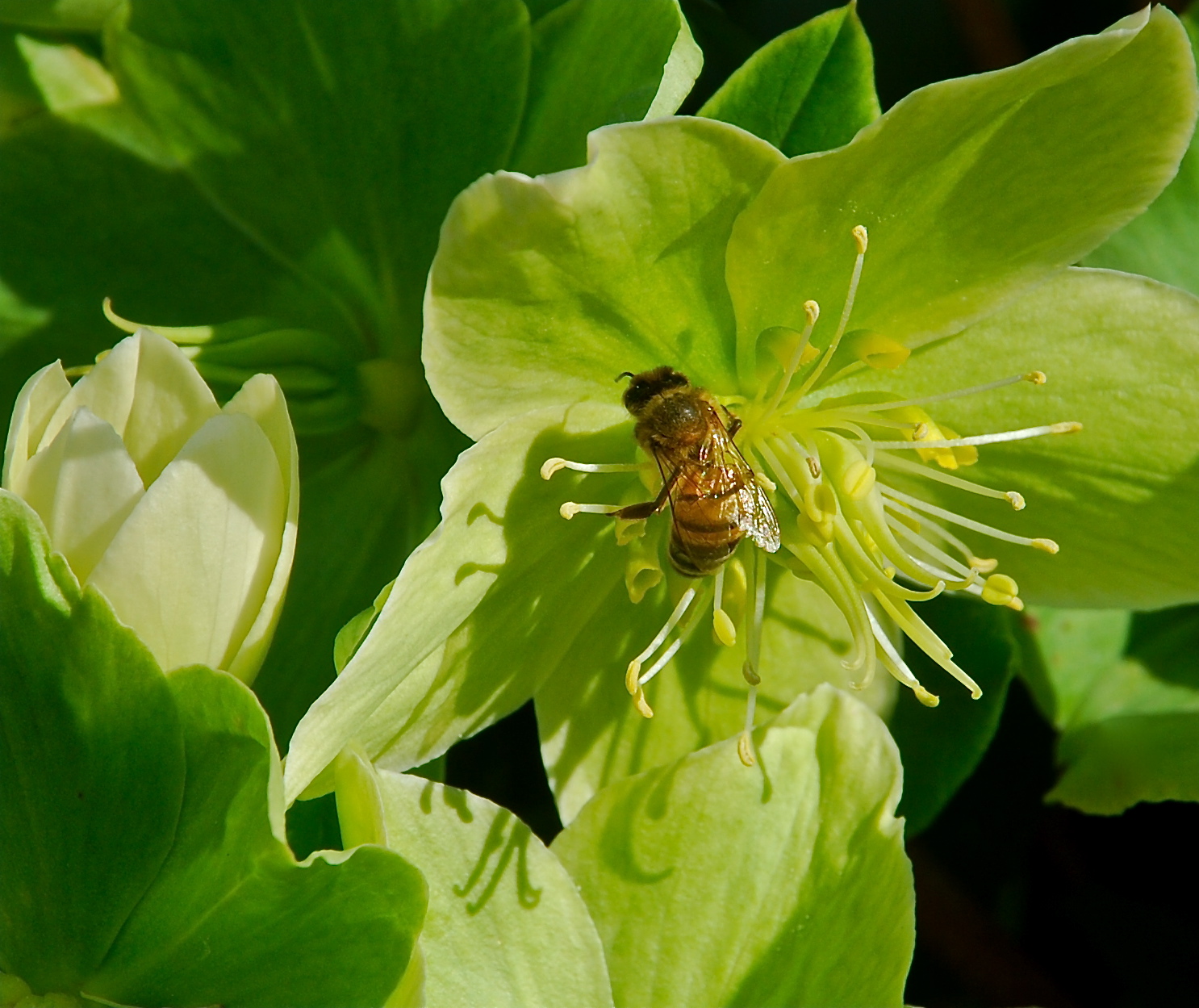
Honey bees and bumblebees, it seems, find a flower’s countenance as irresistible as I, and that “irresistibility” is of holy intent.  In the passage of Scripture that follows, we see that the Lord’s plan involved an interconnectedness of all life as well as a dependency, one on the other.  The poet, Kahlil Gibran, explains that connectedness in this way: “a flower is a fountain of life” for the bee, and to the bee and flower “the giving and receiving is a need and an ecstasy.”  But wait, how is any of this relevant in the 21st century?  In the age of incredible and still advancing technology should anyone care about flowers and bees?  Indeed all of us should care because bees are absolutely essential pollinators, and sadly there are now alarming reports which indicate that one fourth of the northern hemisphere’s honeybee population mysteriously vanished by the spring of 2007.  Then by the end of 2008, one in three hives was left lifeless.  Simply put, the honeybee is disappearing at an alarming rate across the entire globe.  The worst part is that those in the know are not sure why this is happening, but they do know that should the increasing catastrophe not be addressed and solutions to the problem not found, the complete loss of honeybees as pollinators would mean the end of agriculture as we know it.  Since much of what we wear and one third of what we eat depends on the pollinating activity of honeybees, our way of life and civilization would be threatened.  In fact one report said the situation is so dire that mankind would survive only 4 years after the complete collapse of the honeybee population.

Then God said, “I give you every seed-bearing plant on the face of the whole earth and every tree that has fruit with seed in it. They will be yours for food.  And to all the beasts of the earth and all the birds of the air and all the creatures that move on the ground—everything that has the breath of life in it—I give every green plant for food.”  And it was so.  ~Genesis 1:29-30   ✝

133. My little hut is newly thatched, I see, with blue morning glories. ~Kobayashi Issa

A morning glory at my window
satisfies me more
than the metaphysics of books.
~Walt Whitman

Image

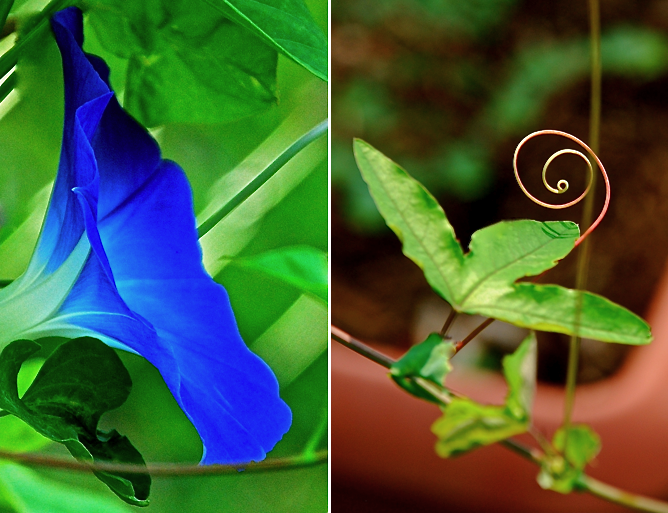
I love the tendrils vines use to climb as well as the vertical interest the vines themselves add in a garden.  Scrambling upwards enables the twining plants to reach sunlight with a minimum investment of energy rather than investing their energy in a lot of supportive tissue, and many of them can be easily started from seed or even better some easily reseed themselves from year to year.  Vines are not fussy plants that require special care, and as long as they are watered regularly, some of them even thrive through the hottest parts of summer growing strong in the garden’s web of life until the first freeze finishes them off.  For me one of the best reasons for adding vines in a garden is that some of them are hummingbird magnets.

The whole earth is filled with awe at your wonders; where morning dawns, where evening fades, you call forth songs of joy.  ~Psalm 65:8  ✝

132. For summer here, bear in mind, is a loitering gossip, that only begins to talk of leaving when September rises to go. ~George W. Cable

Take thy spade,
It is thy pencil;
Take thy seeds, thy plants,
They are your colours.
~William Mason, English poet, editor, and cleric

Image

The level of sand in summer’s hour glass may be low, but, and in spite of August’s  lingering heat, there is yet to come a fair measure of glory in the garden.  The cycle of earth’s fruiting isn’t completely over here in north central Texas until Jack Frost’s frigid touch rings the death knell in mid-November or early December.  So the remaining modicum of flowers will be joined in the coming days and weeks with substantially more blossoms.  Moreover, squirrels aren’t finished gathering nuts, birds have songs yet unsung, pollinators have more rounds to make, and roses have a second flush of blooms to proffer.  But most of all autumn is the time for we who “dwell in gardens” to plant, sow seeds, and raise our voices in gratitude for what the Lord has already graciously given us.

You who dwell in the gardens with friends in attendance, let me hear your voice.  ~Song of Songs 8:13  ✝

130. The fact that I can plant a seed and it becomes a flower, share a bit of knowledge and it becomes another’s, smile at someone and receive a smile in return, are to me continual spiritual exercises. ~Leo Buscaglia

I saw an act of faith today.
A man was on his knees–
not in a pew in a church
but in a garden planting seeds.
~Author Unknown

Image

How awesome it is that living works of flowering art grow out of the dirt under our feet and from something as small and seemingly insignificant as a seed!  Also amazing is the fact that the Holy One planted seeds of greatness with a purpose within each of us.  Then He anointed our words, hands, and actions with the creative power to bring them to fruition.   But the real genius is that what flowers in us drops seeds of increased possibility into the lives of others just like a flower drops seeds in the garden where it grows.

For as the soil makes the sprout come up and a garden causes seeds to grow, so the Sovereign LORD will make righteousness and praise spring up before all nations.  ~Isaiah 61:11    ✝

129. To be surprised, to wonder, is to begin to understand. ~José Ortega y Gasset

But the sower going forth
to sow seeds sets foot in time to come,
the seeds, falling on his own place.
He has prepared a way for his life
to come to him, if it will.
~Wendell Berry

Image

Like master gardener and writer, June Santon, “When I see that first, minuscule, curled, pale green wisp of a sprout poking up between a couple of grains of vermiculite, I hear God speaking.”  But then again, it’s really more than just hearing Him speak.  It is connecting with Him in a way unlike anything else because when sowing a seed, like Him, it is creating life.  After all we are made in the image of our Creator God, and so we too have the ability to create.  My particular palette is made up of photographs and words and seeds and plants whereas someone else’s may be notes of music, globs of paint, utensils in a kitchen, pieces of metal, blocks of wood.  The possibilities go on and on because we are not only capable of creating with objects but also with the very essence of who and what we are, as with teachers and ministers and parents.

I praise you because I am fearfully and wonderfully made; your works are wonderful, I know that full well.  ~Psalm 139:13-15  ✝