260. The shortest day has passed, and whatever nastiness of weather we may look forward to in January and February, at least we notice that the days are getting longer. ~Vita Sackville-West

January is the quietest month in the garden.
. . .But just because is looks quiet
doesn’t mean that nothing is happening.
The soil, open to the sky, absorbs the pure rainfall
while microorganisms convert tilled-under fodder
into usable nutrients for the next crop of plants.
The feasting earthworms tunnel along,
aerating the soil and preparing it to welcome
the seeds and bare roots to come.
~Rosalie Muller Wright
Image

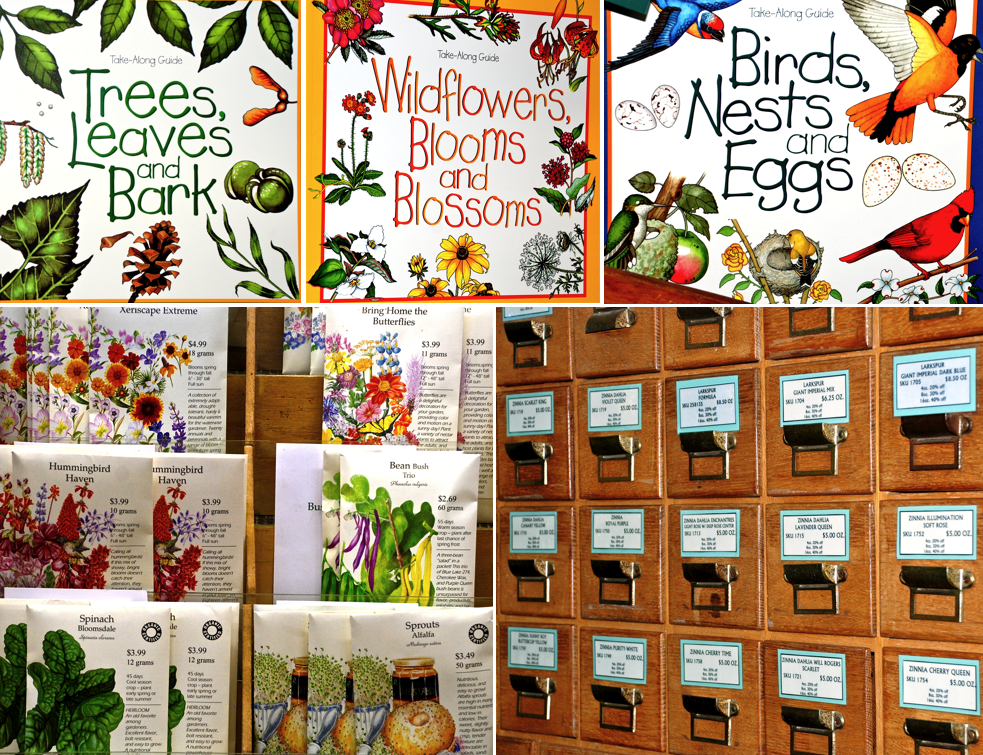
I’ve heard it said that “the color of springtime is in the flowers” whereas “the color of winter is in the imagination.”  Thankfully I’ve got a good imagination, and when that fails, I have a large collection of photos to look back on because by the end of January my spirit is in dire need of a boost.  A place I like to frequent also helps to keep my imagination alive and well.  It’s a nursery, and this particular Dallas nursery not only has a great selection of flowers during the growing seasons, but year round it has all sorts of indoor plants too.  In addition  to the plants it has an oak cabinet with drawers full of fascinating seeds, racks of seed packets, shelves filled with gardening books, and an array of tools.  So between the plant and seed catalogs that start arriving in the mail after Christmas and my visits to Nicholson-Hardie’s nursery, the “dream” is kept alive even when the under-the-surface busy but ravaged-atop January garden appears to be completely shut down.  And it is this “stuff” of which gardener’s dreams are made that keeps my imagination churning and my head full of schemes, schemes that are the spice of a gardener’s life.  What a blessing is our memory, our imagination, and our ability to dream; God is so good.

I will praise the name of God with a song; I will magnify Him with thanksgiving.  ~Psalm 69:30  ✝
248. I look back with gladness to the day when I found the path to the land of heart’s desire… ~Mrs. George Cran

Earth, thou great footstool of our God,
who reigns on high;
thou fruitful source of all our
raiment, life, and food;
our house, our parent, our nurse,
and our teacher.
~Edited and adapted excerpt from Isaac Watts

Image

What’s that whisper in the wind?  Do you hear it?  Listen, there it is again!  Oh, I know.  It’s that ancient and seductive call that tempts the gardener to come and play in the dirt?  And it doesn’t take much bidding before this one can do naught but hearken to the bewitching pleas.

For days now I’ve heard the “call” because even though winter is still quite young,  January has obliged the “voice” by bringing some warmer days.  So several days ago I began clearing my flower beds of autumn’s dead, leafy debris, cutting off seed heads to be scattered elsewhere, and pruning weak, leggy growth off shrubs and roses.  Working close to the soil let me, as usual, hear earth’s heartbeat, and that sweet sound in turn spread a soothing balm over the spiritual doldrums.

Ironically, however, it occurred to me as I worked today that I was blessing the warmth of the same sun that only a few months ago I’d been cursing for its relentless waves of miserable heat.  That brought me face to face afresh with the truth that too much of anything spoils even the very best of things, that there is a purpose, if not understanding, in all things, and that gratitude, when in comfort or lack, is the only appropriate response to a day’s gifts.  So, you see, it was more than an ordinary call or faint heartbeat that I’d heard; I’d encountered the Teacher and He, leading me in and out of flesh and spirit, had shown me, again, wisdom growing in the garden’s “soil.”

…and the Lord your God will make you abundantly prosperous in all your undertakings, in the fruit of your body, in the fruit of your livestock, and in the fruit of your soil.  ~Deuteronomy 30:9a  ✝

246. The flower is the poetry of reproduction. It is an example of the eternal seductiveness of life. ~Jean Giraudoux

I am a symbol of love and immortality.
I have been around since the time of Confucius.
My name came from a Persian word.
At one time I was more expensive than precious metals.
I can be used in the place of an onion in cooking.
I am in the same family as a lily.

Image

Do you know who I am?  I am a native of Central Asia, and I am the world’s most planted flower.  When I arrived from Turkey in the mid-16th century, I was a gift from the Ottoman Empire that took Western Europe by storm.  But I did not come to the United States until the 1800’s.  There are about 3,000 varieties of me grown around the world, some that originated in the seventeenth century.  My petals come in every shade of the rainbow as well as black, but my most popular color is red.  And I can be forced into blooming after I have been stored in a refrigerator for 12-16 weeks.

A tulip doesn’t strive to impress anyone.
It doesn’t struggle to be different than a rose.
It doesn’t have to.
It is different.
And there’s room in the garden for every flower.
~Marianne Williamson

Image

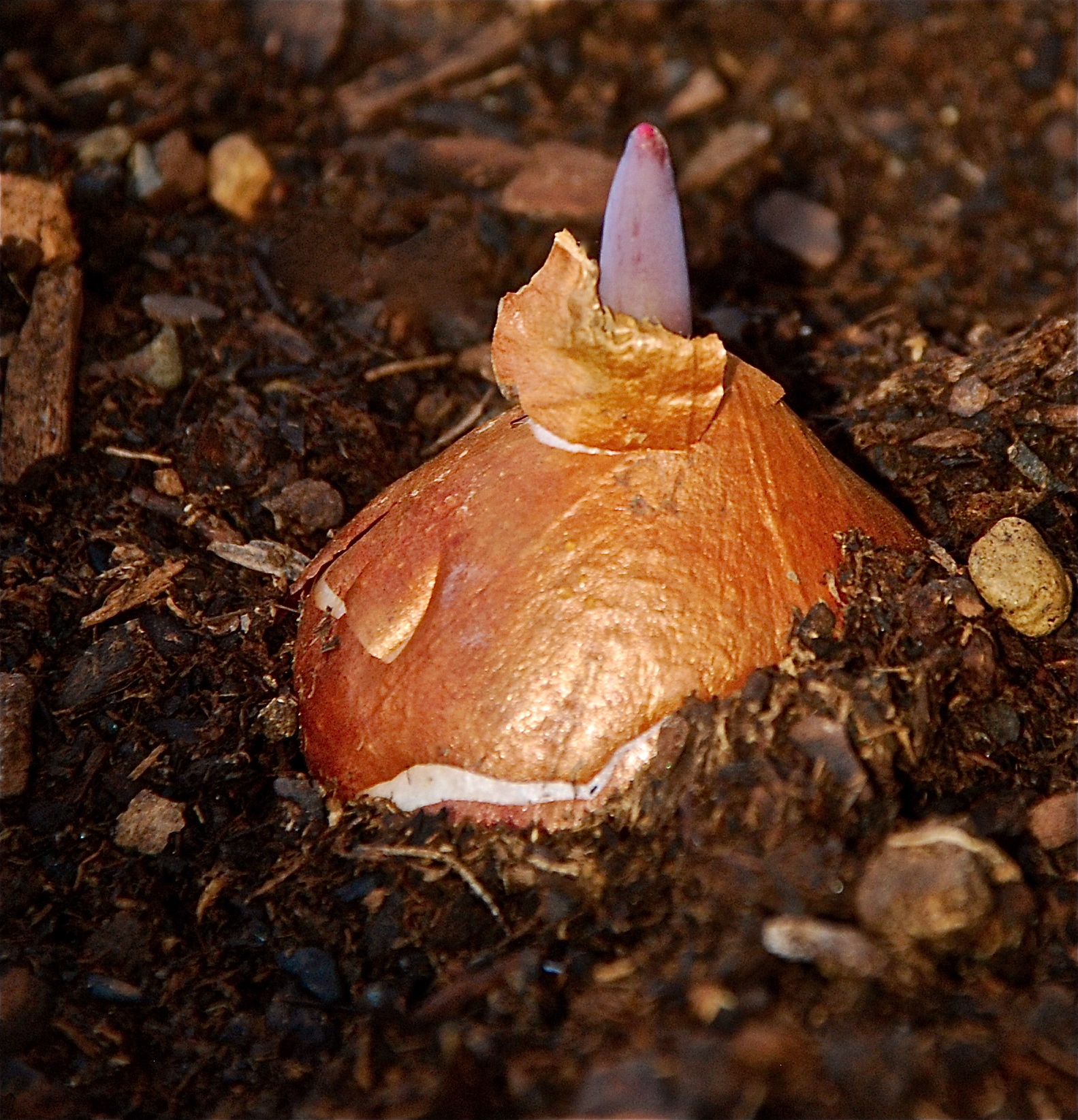
I’ve never had much luck with growing tulips in the ground.  So this year I decided to try forcing them in containers.  Two weeks ago after the bulbs had spent the required amount of time in my refrigerator, I planted some in soil and some in glass containers partially filled with pebbles and water.  As of today I’m proud to report that I have tulips sprouting in both types of containers.  Though it be only the 12th of January, springtime has sprung at least in my greenhouse.  One of the most seductive things in life I know is the thrill of the first spark of life in a garden.  Every time I experience it I feel as if a time machine has transported me back to Eden on the third day when creation was “born of the Spirit in the womb of the universe.”  On that day the first seeds were planted in the earth and their roots reached down for the waters that would sustain them.  Then and now such as this is clearly a manifestation of the goodness of God.

I believe that I shall see the goodness of the Lord in the land of the living.  ~Psalm 27:13  ✝

241. O thou, Who chariotest to their dark wintry bed the winged seeds, where they lie cold and low, each like a corpse within its grave, until thine azure sister of the spring shall blow her clarion o’er the dreaming earth. ~John Davies

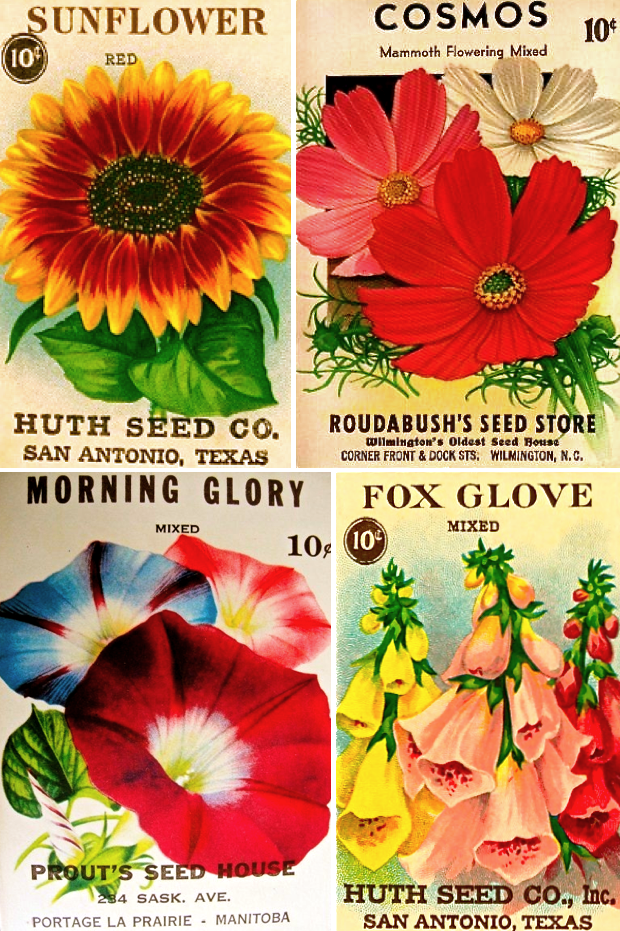
I paid a dime for a package of seeds
And the clerk tossed them out with a flip.
“We’ve got ‘em assorted for every man’s needs,”
He said with a smile on his lip.
“Pansies and poppies and asters and peas!
Ten cents a package and pick as you please!”

Now seeds are just dimes to the man in the store
And dimes are the things he needs;
And I’ve been to buy them in seasons before,
But have thought of them merely as seeds.
But it flashed through my mind as I took them this time
“You have purchased a miracle here for a dime!”

“You’ve a dime’s worth of power no man can create,
You’ve a dime’s worth of life in your hand!
You’ve a dime’s worth of mystery, destiny, fate,
Which the wisest cannot understand.
In this bright little package, now isn’t it odd?
You’ve a dime’s worth of something known only to God.
~Edgar A. Guest

Image

Nowadays a packet of seeds costs more than a dime; yet one can still buy a packet of “miracles” for a reasonable sum.  And the initial investment is small compared to the potential yield not only from the generous number of seeds in each packet but also from the seeds that those plants ultimately produce.  I know because my garden is full of plants started from seeds I never bought.  Not only that but lots of birds eat well on the excess “birdseed” I don’t have to buy.  So it is that in nurturing I am nurtured.  By becoming a part of the “cosmic consciousness,” I  get to participate in the sacred dance of life.

The Book of Genesis tells us that on the third day the Lord created seed-bearing plants and trees.  And from the moment He spoke those words, countless seasons have come and gone and the soil in any given garden has quaked with life from seeds forming in its dark wombs.  As the trembling in “dark wintry beds” increased, an impetus not unlike labor pains pushed roots downward and tiny green shoots upwards toward the light until at last new “miracles” became stable,visible, and tangible.  As more and more darkness melted away in the blaze of lengthening days and intensifying sunlight, the warp and woof of nature began weaving another springtime into existence.  And when the shroud of gloom, winter’s drab garment, was finally sloughed off it was replaced by spring’s brilliant, gauzy garments, garments as colorful as the “silks of Samarkand.”

Isaac sowed seed in that land, and in the same year reaped a hundredfold.  ~Genesis 26:12  ✝

237. Within the seed’s case a secret is held. Its fertile whisper shapes a song. ~Joan Halifax

I have great faith in a seed.
Convince me that you have a seed there,
and I am prepared to expect wonders.
~Henry David Thoreau

Image

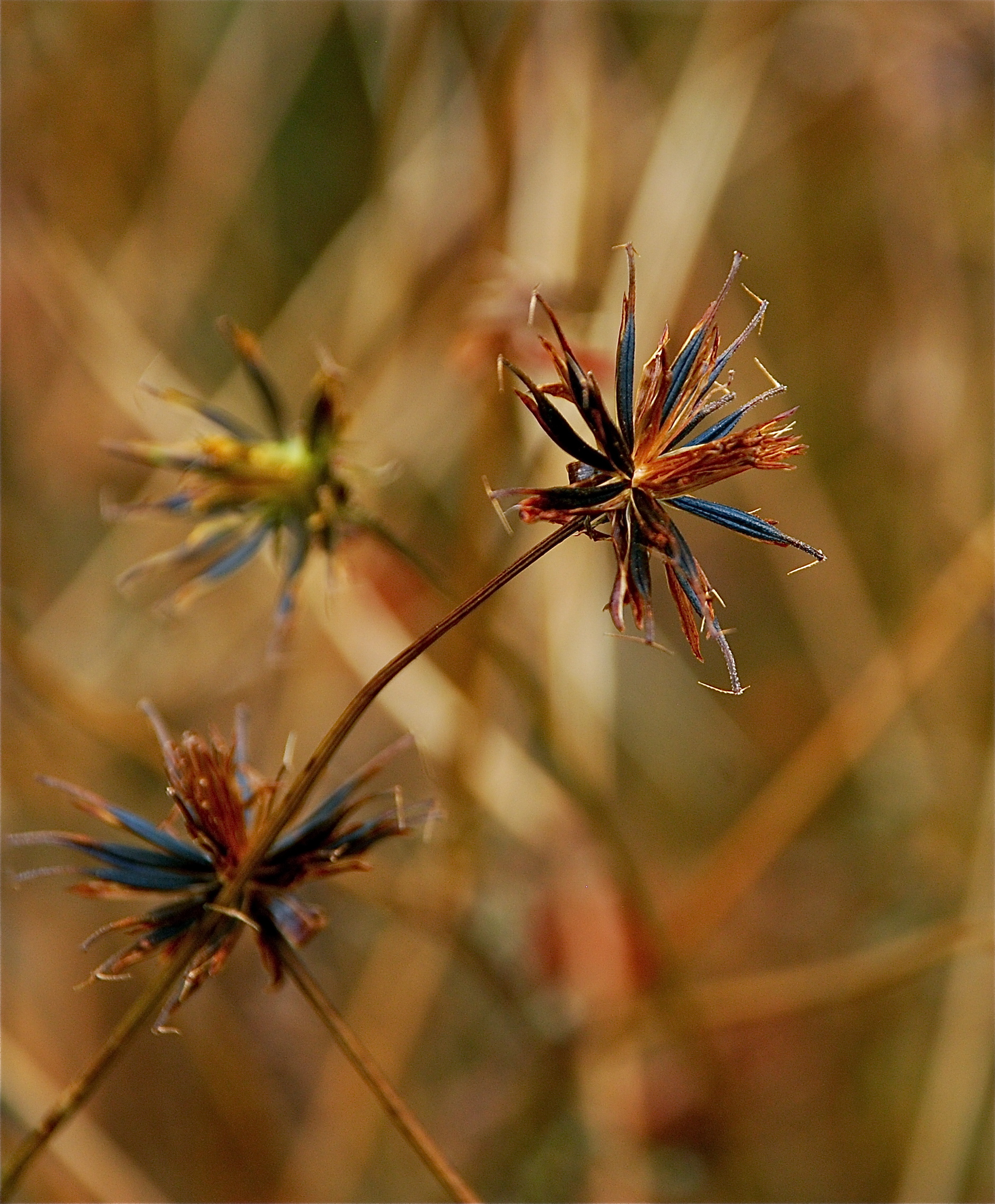
Shhh!  Can you hear it?  Look at the photos.  This is the hope; this is winter’s promise; this is the fertile whisper!   But wait, everything in the photographs is dried up and brown.  And dead!

Oh do not be deceived by appearances, my friends, for these seed cases are ripe and what they hold is ever so viable!  Their wealth may now be kept inside in secrecy but trust me these cases are vigilant and waiting–waiting for that wondrous moment in time when enough warmth and light and moisture will enliven their songs of fertility.  And then they will split wide open, spill their sacred secrets upon the soil, and spark new life.

David Walters said, “God’s promises are like the stars, the darker the night, the brighter they shine.”  For me seed cases are like God’s promises as well because the deeper and darker winter becomes, the more the expectation of what they hold brightens winter’s cold and forbidding days.  As their sweet melodies take shape, they keep the hopeful dream of spring alive when what I see conveys a story of death and decay.

God said, “See, I have given you every plant yielding seed that is upon the face of the earth, and every tree with seed in its fruit; you shall have them for food.”  ~Genesis 1:29  ✝

219. That each day I may walk unceasingly on the banks of my water, that my soul may repose on the branches of the trees which I planted, that I may refresh myself under the shadow of my sycamore. ~Egyptian Tomb Inscription, circa 1400 BCE

Because they are primeval, because they outlive us,
because they are fixed, trees seem to emanate a sense of permanence.
And though rooted in earth, they seem to touch the sky.
For these reasons it is natural to feel we might learn wisdom from them,
to haunt about them with the idea that if we could only read
their silent riddle rightly we should learn some secret vital
to our real, our lasting and spiritual existence.
~Kim Taplin

Image

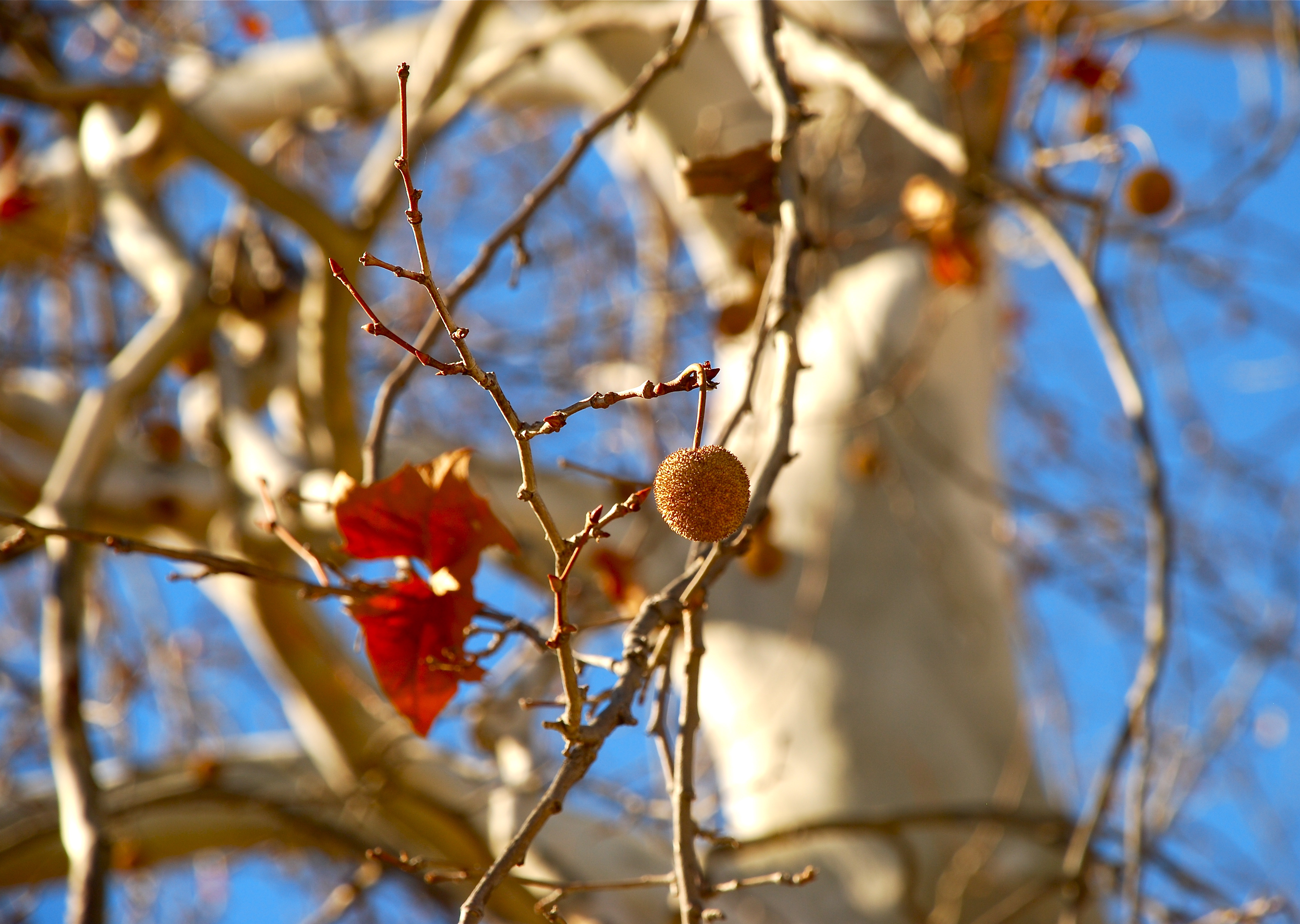
Before the sun fell over the edge of the world yesterday, it painted its recently traversed path with reddish-pink and mauve streaks.  In between the streaks were smaller golden rays that eventually blended into the pinker bands of light.  As these streaks shot up to the sky’s pinnacle, they oozed deliciousness through the open spaces in one of my favorite trees.  It’s a sycamore tree directly across the street from our house, and it’s so old that most of its bark has fallen away.  When it has, as it has now, lost most of its floppy brown leaves the tree’s strange fruits are more visible as area its long, slender alabaster arms, arms that seem to reach up and caress the heavens’ spacious blue lagoons.  Another thing I love about this particular tree is that in winter’s chilling winds its clattering branches seem to whisper prophecies of another spring’s birthing beneath the soil in silent chambers waiting for the prompting of the sun’s warmth on lengthening days and spring rains.

I’m the first one to admit that sometimes I’m hard pressed on difficult days to find reasons to be joyful, but I’m learning to look expectantly as well as long enough to find some measure of God’s glory in the day at hand.  When dealing with a run of painful days as I am now, it becomes not only more challenging but also more necessary.  The Holy Spirit within is the protector of one’s spiritual flame as well as a guide, and so if one turns inward to look for an appointment of grace, he/she will find what’s needed to press upward and onward.  On this day that spark of relief and mercy was found in the beauty of a tree.

This is the day that the Lord has made; let us rejoice and be glad in it.  ~Psalm 118:24  ✝

215. A few minutes ago every tree was excited, bowing to the roaring storm, waving, swirling, tossing their branches in glorious enthusiasm like worship… ~John Muir

…But though to the outer ear these trees are now silent,
their songs never cease.
Every hidden cell is throbbing with music and life,
every fiber thrilling like harp strings…
~John Muir, American naturalist and author

Image

In this particular writing Muir eventually goes on to say that it’s “no wonder the hills and groves were God’s first temples.”  When one thinks about earth’s courts in such a way, he/she realizes that trees, whose roots are three times the size of the tree itself, monopolize large chunks of the planet’s hallowed ground, and so it’s not surprising that throughout the ages trees have been endowed with profound and sacred meanings.  For example, by observing the growth and death of trees, the flexible nature of their branches, the annual reoccurrence of their foliage, many have regarded trees as powerful symbols of growth, decay, and resurrection.  In addition to their aesthetic appeal, trees prevent soil erosion; they provide weather-sheltered ecosystems in and under their leaves; they play a vital role in the production of oxygen and the reduction of carbon dioxide; they moderate ground temperatures; and some even produce sumptuous orchard fruits.  Trees also speak to mortal men of the largeness and power of their Creator, and their lofty heights as well as the views afforded from them are envied by those who dare not climb their towering trunks.

The Lord God made all kinds of trees grow out of the ground–trees that were pleasing to the eye and good for food.  ~Genesis 2:9a  ✝

203. Surely a man needs a closed place where in he may strike root and, like the seed become. ~Antoine de St. Exupéry

But he also needs the Great Milky Way
above him and the vast sea spaces,
though neither stars nor ocean serve his daily needs.
~Antoine de St. Exupéry

Image

For me, autumn, especially late autumn, is a time for reflection, contemplation, and soul searching–a time for ruminating on the things that move me and make me who and what I am.  And so as I worked out in the yard on this sunny last day of November, the windmills in my mind started churning up memories of the events that led to its door.  Rather than covering every step of the journey, I decided to start when I found my “closed place” in this house with its spacious yards where I began to “strike roots.”  In the beginning, though the home and its conveniences served my physical needs and provided me with creature comforts, relief from old emotional wounds and peaceful contentment remained elusive long afterwards.  Years passed with little change in the status quo until one summer while recalling the beautiful flowers surrounding my childhood home (above) in California, I decided it was time to try growing my own flowers right here in hot old Texas.  Since I wasn’t sure I’d inherited the proverbial “green thumb” of my ancestors, I resolved to begin on a small scale.  So I cleaned off a corner of the patio, bought some bags of potting soil and an assortment of pots and seeds, and thus commenced what I know now to have been a pivotal moment in my life.  From the minute the first seeds germinated, a soul-saving passion for gardening was being birthed in me.  Despite the summer’s miserable heat, I faithfully watered and fussed over my thriving “little flock,” and it was those familiar flowery scents that were the catalysts which sparked my spiritual reawakening.  The next summer with the success of the previous year under my belt and a renewed recognition of Ruach Elohim (the Spirit of God), I decided to branch out and actually sow  seeds in the ground and dig a few holes for bedding plants.  Success came again and with it the quickening in my spirit intensified so much so that I decided to take my recently commissioned mentor’s advice to attend church once more.  This was the first step in righting the derailment of my faith journey that had begun after the early death of my father.

Scripture tells us that Christ is the vine, and we are the branches.  Until those first two growing summers the branch that was Natalie had been withering, not because the Lord had been doing less but because I had been turning a deaf ear and  blaming Him for the loss of my father as well as for painful, emotional wounds and the awful, unrelenting migraines that had started in my mid-twenties.  Since then I have spent season after glorious season planting, replanting, listening, seeking His presence, and marveling at the wonders of heaven and earth.  This pilgrimage that was involved in becoming the Natalie I am today has taught me that He, His Church, and His Creation, which includes the Great Milky Way, the vast sea spaces, and a garden, are the “holy foods” I must have to survive and live in peace and harmony.  Now minute by minute in this place where I have deeply “rooted” myself, the hungering need for “more” has been forever silenced by miracles great and small, blessing upon blessing, and the amazing grace He continues to bestow upon me.

I am the vine, and my Father is the gardener… Remain in me, as I also remain in you.  No branch can bear fruit by itself; it must remain in the vine.  Neither can you bear fruit unless you remain in me.  I am the vine;  you are the branches.  If you remain in me and I in you, you will bear much fruit; apart from me you can do nothing.  John 15:1 and 4-5

185. For the wisdom that fashioned the universe and can be read in earth’s dark depths and in heaven’s infinity of lights, thanks be to you, O God. ~John Philip Newell

How silently they tumble down
And come to rest upon the ground
To lay a carpet, rich and rare,
Beneath the trees without a care,
Content to sleep, their work well done,
Colors gleaming in the sun.
-Elsie N. Brady, poet

Image

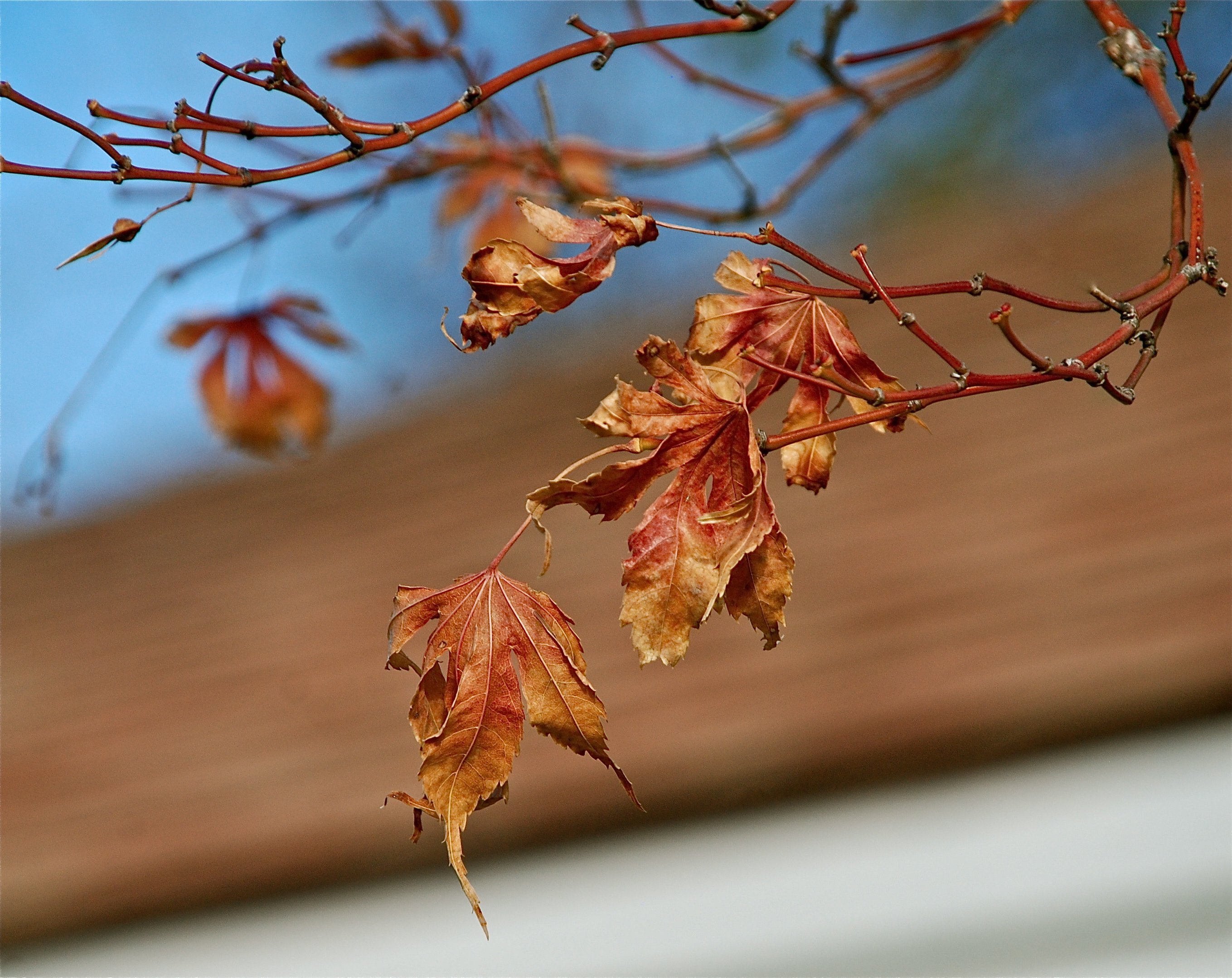
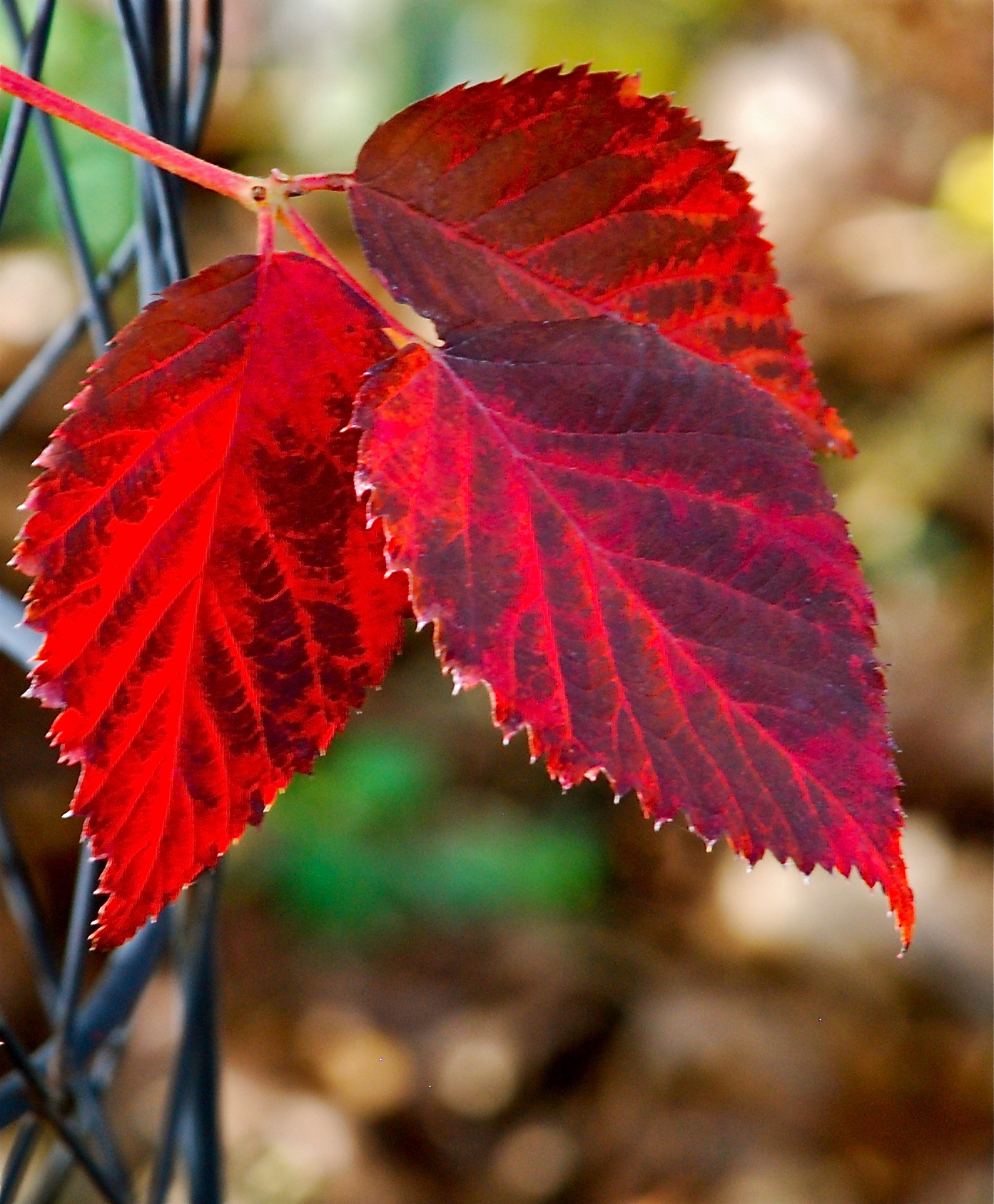
As Brady points out, when leaves “come to rest upon the ground,” it is a completion, but the work of fallen autumn leaves is far from done at that point.  As they “rest upon the ground,” besides being a warm blanket for what lies beneath them and a life-saving provision for the trees, they become food for a host of soil organisms that are vital to the overall health of ecosystems.  As time moves on and the leaves decompose, they restock the soil with nutrients and they make up a part of the spongy humus that absorbs and holds rainfall.  At last “with the arrival of warmth and spring, insects, bacteria, and fungi gear up!  Leaves are chewed and rotted, releasing nutrients for plant growth.”  So it is that with another round of plant growth, Creation and its inhabitants are guaranteed what they need to survive until the recycling process begins again the next fall.  How comforting it is to know that the Hand of the Almighty is always near!  For, you see, it was after a stroke threatened my life and wholeness a year ago yesterday that the Lord’s mighty hands performed the necessary miracles to grant me another year of health and life.

 He put a new song in my mouth, a hymn of praise to our God.  ~Psalm 40:3a  ✝

183. Why are there trees I never walk under but large and melodious thoughts descend upon me? ~Walt Whitman

And this our life,
exempt from public haunt,
finds tongues in trees,
books in running brooks,
sermons in stones,
and good in everything.
~William Shakespeare

Image

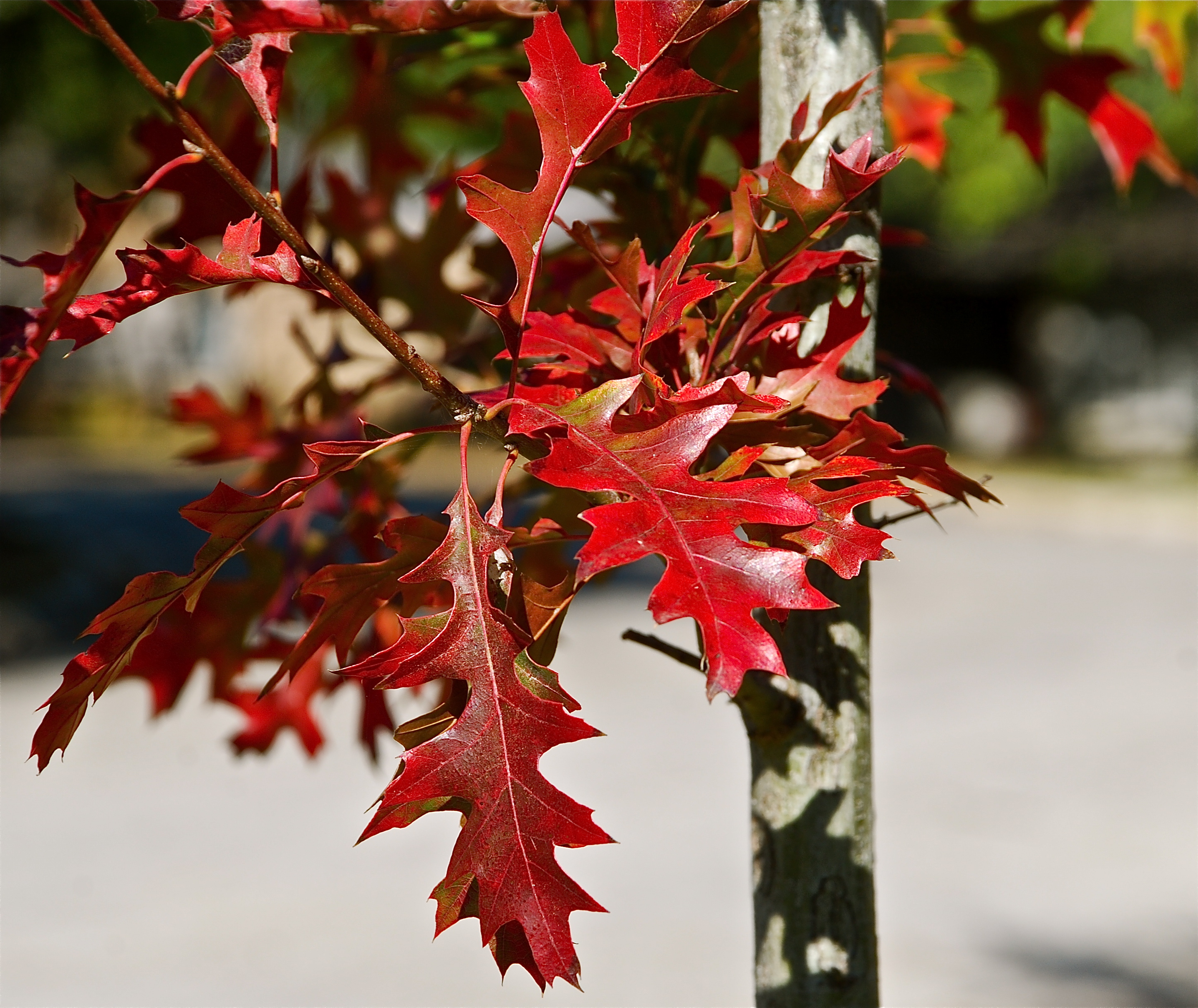
Standing beneath the Shumard Red Oak made me feel like I was standing in a temple of the Most High.  The breeze was ruffling its leaves, and they in turn were prompting sacred tongues to utter incantations of their divine purpose.  For though the leaves face eminent extinction and expulsion from the branches, in their dying they’ll fall and create warm blankets to cover the ground.  In so doing they will protect the life that lies beneath the surface during winter’s cold, cold days.  Even at the close of winter their goodness will not be at an end for as they deteriorate, the remaining bits and pieces will add nutrients to enhance the soil.  Thus goes the circle of life and the interdependency of all things.

God’s voice thunders in marvelous ways; He does great things beyond our understanding.  ~Job 37:5  ✝