141. Colors are the smiles of nature. ~Leigh Hunt

Of all God’s gifts to the sighted man,
color is the holiest, the most divine, the most solemn.
~John Ruskin

Image

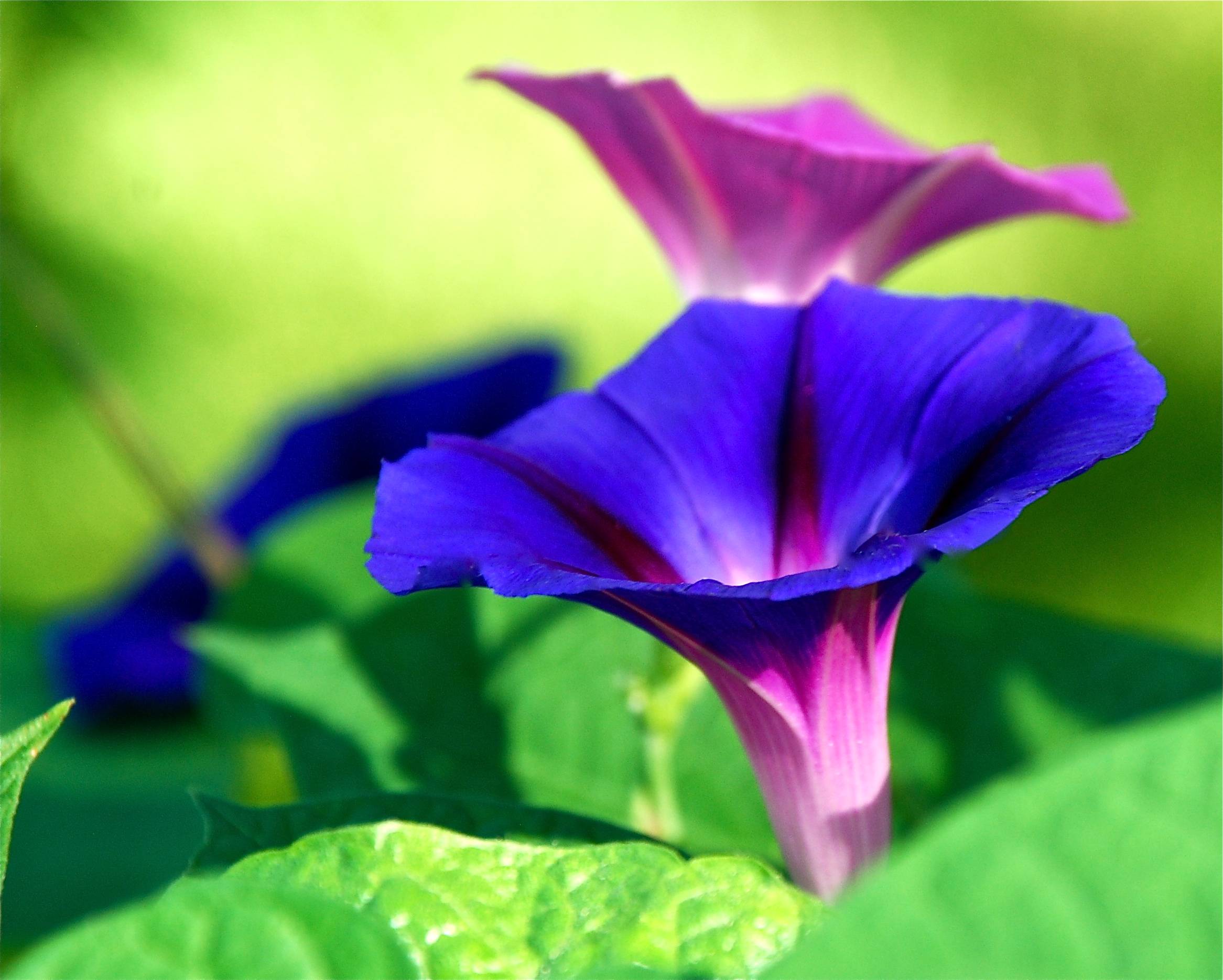
To the sighted man color is emphatically holy, but I believe the sanctity of it goes deeper than the eye.  Deep within the human soul color is recognized as tidings from the Father of our world and the message is twofold.  Color is a hallowed melody meant not just for the eyes but for the ears as well.  Pablo Picasso touched on this when he asked, “Why do two colors, one put next to the other, sing?” He couldn’t explain it nor can I, but there are color combinations that compose the sweetest of songs.  Pink and blue is one of those duos, and together they pen a heavenly harmony reminiscent of sapphire skies streaked with luscious pink ribbons of light.

The Lord reigns, let the earth be glad; let the distant shores rejoice.  ~Psalm 97:1  ✝

140. All nature sings, and round me rings the music of the spheres. ~Maltbie D. Babcock

This is my Father’s world
He shines in all that’s fair,
In the rustling grass I hear Him pass,
He speaks to me everywhere.
~Lyrics from This is My Father’s World by Maltbie D. Babcock

Image

What a glorious morning!  When I raised the shade, my eyes were met with a delicious light pouring down on a corner of the garden.  And it was light not born of the intense heat of past months but instead of the crisp coolness of a 59 degree autumnal equinox morn.  Zephyrs were ruffling leaves, and they were shouting hallelujahs in praise of the Lord’s Sabbath and yesterday’s rain.  Ancient Eden’s unmistakable holy voice reverberated in the air, and all of us, creature and man alike, recognized it and rejoiced.  The “special air of melancholy and magic” typical of September’s opus rose louder and louder as the light moved southward across the yard frosting everything in its wake.  Yahweh’s glory breathed new life into wilted leaves, faded blossoms, and weary bones as the light moved as sweetly as a bow across the strings of a Stradivarius in slanted increments across the yard.

“Arise, shine, for your light has come, and the glory of the Lord rises upon you.”  ~Isaiah 60:1  ✝

*Thanks to Annette Lepple for the great description of September that I quoted above. 

133. My little hut is newly thatched, I see, with blue morning glories. ~Kobayashi Issa

A morning glory at my window
satisfies me more
than the metaphysics of books.
~Walt Whitman

Image

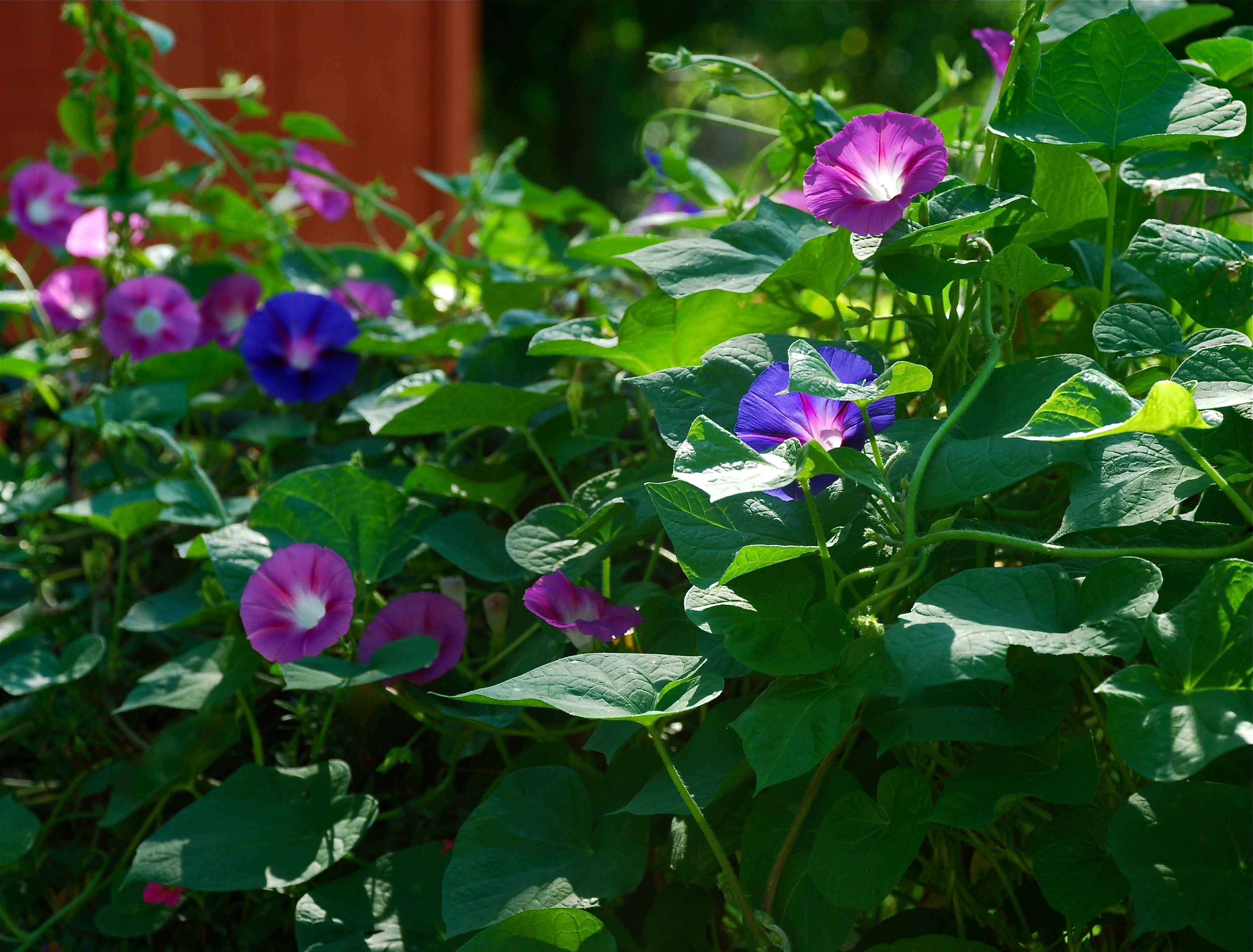
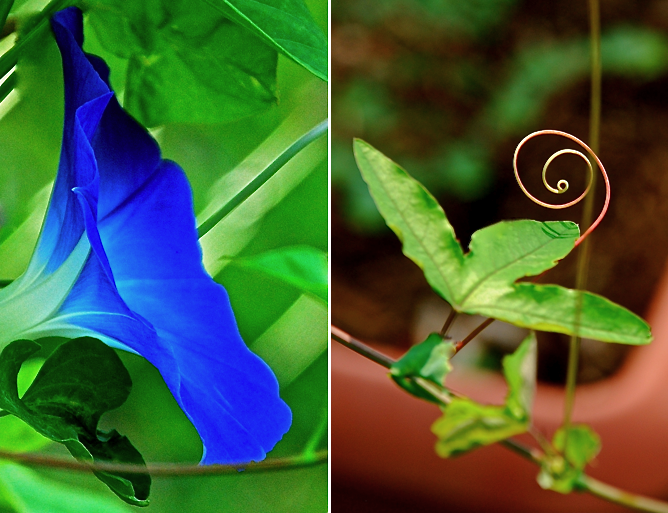
I love the tendrils vines use to climb as well as the vertical interest the vines themselves add in a garden.  Scrambling upwards enables the twining plants to reach sunlight with a minimum investment of energy rather than investing their energy in a lot of supportive tissue, and many of them can be easily started from seed or even better some easily reseed themselves from year to year.  Vines are not fussy plants that require special care, and as long as they are watered regularly, some of them even thrive through the hottest parts of summer growing strong in the garden’s web of life until the first freeze finishes them off.  For me one of the best reasons for adding vines in a garden is that some of them are hummingbird magnets.

The whole earth is filled with awe at your wonders; where morning dawns, where evening fades, you call forth songs of joy.  ~Psalm 65:8  ✝

132. For summer here, bear in mind, is a loitering gossip, that only begins to talk of leaving when September rises to go. ~George W. Cable

Take thy spade,
It is thy pencil;
Take thy seeds, thy plants,
They are your colours.
~William Mason, English poet, editor, and cleric

Image

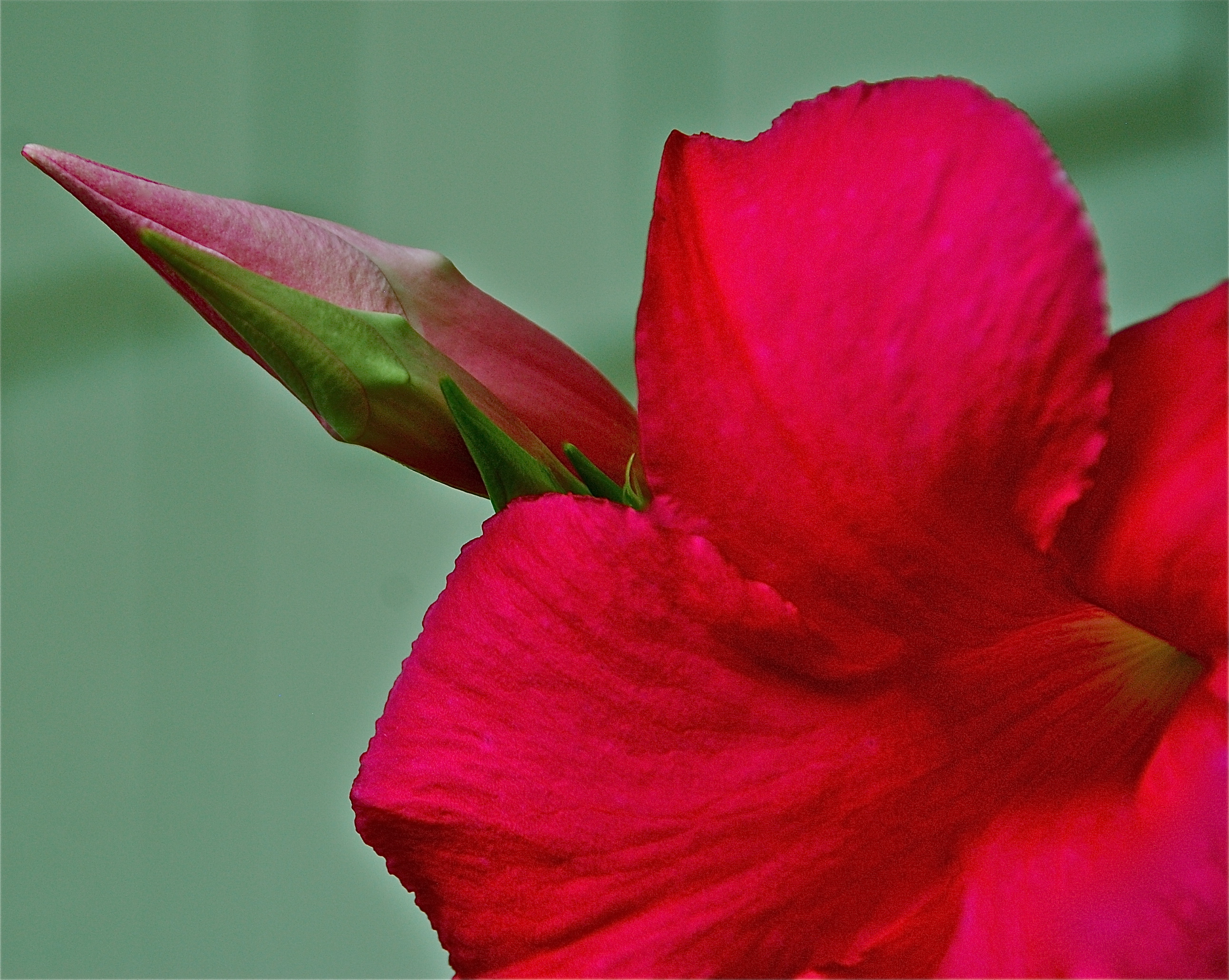
The level of sand in summer’s hour glass may be low, but, and in spite of August’s  lingering heat, there is yet to come a fair measure of glory in the garden.  The cycle of earth’s fruiting isn’t completely over here in north central Texas until Jack Frost’s frigid touch rings the death knell in mid-November or early December.  So the remaining modicum of flowers will be joined in the coming days and weeks with substantially more blossoms.  Moreover, squirrels aren’t finished gathering nuts, birds have songs yet unsung, pollinators have more rounds to make, and roses have a second flush of blooms to proffer.  But most of all autumn is the time for we who “dwell in gardens” to plant, sow seeds, and raise our voices in gratitude for what the Lord has already graciously given us.

You who dwell in the gardens with friends in attendance, let me hear your voice.  ~Song of Songs 8:13  ✝

24. Within the seed’s case a secret is held. Its fertile whisper shapes a song. ~Joan Halifax

When I see that first, miniscule, curled, pale
green wisp of a sprout poking up between a couple of
grains of vermiculite, I hear God speaking.
~June Santon

Image

Seed plants date back about 365 million years ago to the Paleozoic era.  These wondrous pieces of antiquity vary greatly in size: the smallest being the dust-like seed of orchids and the largest, weighing as much at times as 50 pounds, being the fruit of the coco de mer, the double coconut palm.  A typical seed is composed of 3 basic parts: 1. an embryo, 2. a supply of nutrients for the embryo, and 3. a seed coat that protects the embryo from injury or from drying out.  Seeds have two points of growth, one which forms the stem of the plant and the other where the roots of the plant form.  Some seeds have wings or hairs and are dispersed by the wind.  Others are buoyant and float in rivers to the oceans and wash up on beaches; then there are those that are dispersed in various ways by animals.   Given the fascinating science of seeds, how they work and how tiny some of them are, how could one not hear fertile whispers from God in them.

Each seed, regardless of its size, is a sacred promise.  The dictionary defines a promise as: 1. a declaration that something will or will not be done or given, or as   2. an express assurance on which expectation is to be based, and seeds definitely declare what the Lord has done and given and what we as His children can expect.  Special mention of seeds and their promise is made on the 3rd day of the Genesis story where we can see that plants and trees are profuse manifestations of “this seed force.”  Plants and trees have been coming forth for millions of years and come forth yet.  During the unseen holy hours of nurturing, the “seed force” reaches down into the darkness of the earth’s “concealed depths” therein to be sustained by water.  In the Celtic tradition the moisture in earth’s soil is a “symbol of the waters of God that enfold and infuse all things.”  God’s goodness, deeper than any evil, then can be seen at the inception and very heart of life.  J. Philip Newell says that “everything that is born in the great matrix of life is sustained by roots that reach into the deep mystery of God’s life.”  The image which Newell’s words paint of all life reaching deep into God’s life is what, for many of us, shapes songs of joy and praise, for there is no more comforting, good, or safe place in the world than the heart of God!

As the rain and the snow come down from heaven, and do not return to it without  watering the earth and making it bud and flourish, so that it yields seed for the sower and bread for the eater, so is my word that goes out from my mouth: It will not return to me empty, but will accomplish what I desire and achieve the purpose for which I sent it.  ~Isaiah 55:10-11   ✝

12. Ring out, wild bells, to the wild sky, the flying cloud, the frosty light. . . ~Alfred Lord Tennyson

Yet a few sunny days, in which the bee
Shall murmur by the hedge that skirts the way,
The cricket chirp upon the russet lea,
And man delight to linger in thy ray.
Yet one rich smile, and we’ll try to bear
The piercing winter frost, and winds, and darkened air.
~William Cullen Bryant

Image

With every north wind that blows the landscape unravels more and more; after each assault the downed foliage leaves in its wake mounting numbers of skeletons bracing themselves for winter’s icy blasts.  In addition the ornamental grasses are drying out and taking on their a wild and tattered look, and yet a few touches of color remain in the leaves and flowers that have yet to be exiled.  Still audible in the “honey’d leavings” of warm afternoons are their faint renditions of the lusty songs of life, but regardless of how sweet the sound of that is, the sands in autumn’s hourglass are running out.  Like all things, it too will come at last to its Sabbath and therein rest until its next appointed hour upon life’s stage.