
Most cats do not approach humans recklessly.
The possibility of weapons, clods, or sticks
tend to make them reserved. . .
Much ceremony must be observed,
and a number of diplomatic feelers put out,
before establishing a state of truce.
~Lloyd Alexander
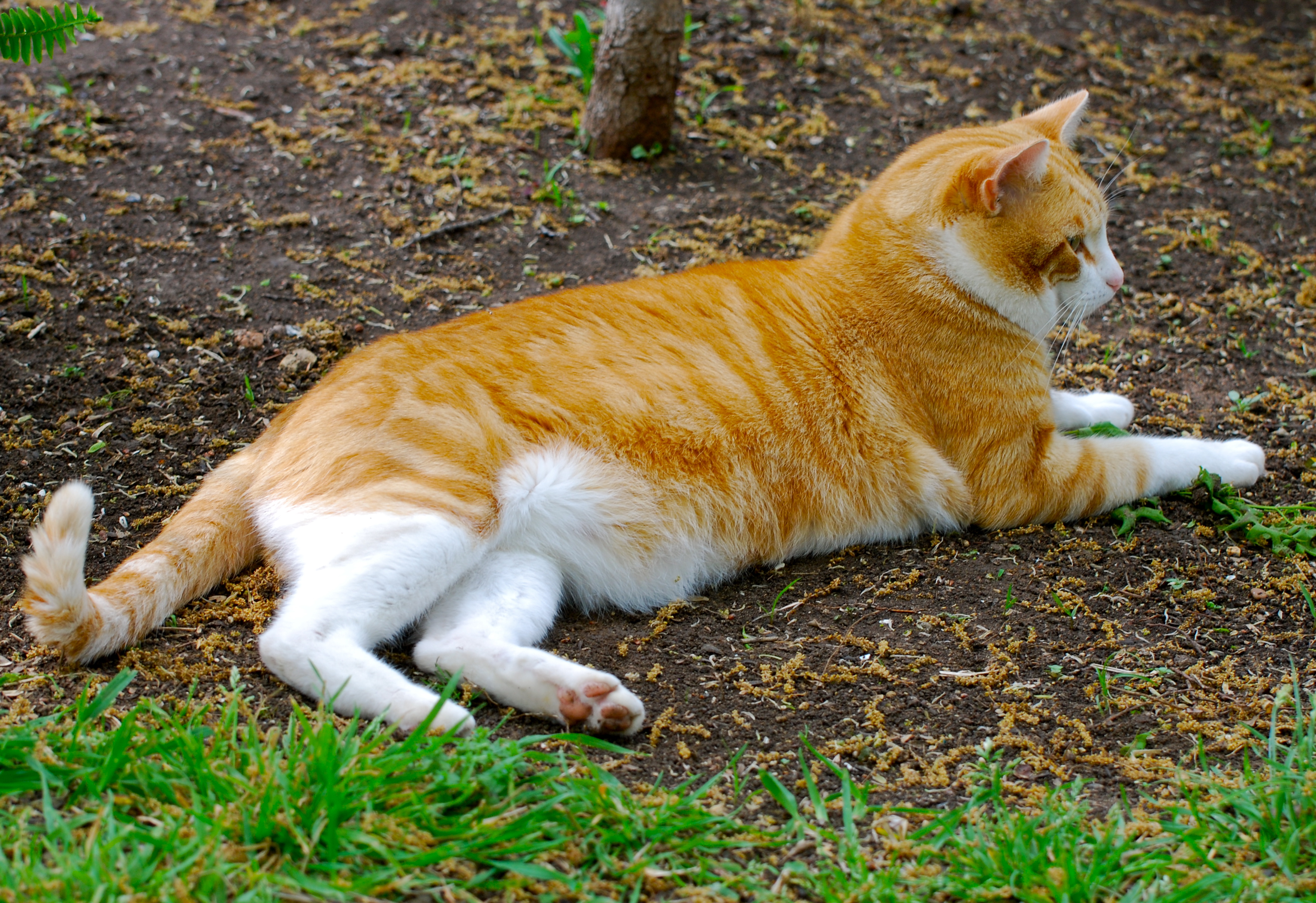
A beautiful stray cat came into our world some time back, and slowly but surely we managed to earn some of his trust. From his size at the time he started coming into our yard we decided he was about a year old, and from his behavior it was apparent he had had some unfriendly encounters with humans. However, as time went on he seemed to take more and more of a liking to us, and eventually he chose to stay in our yard most of the time. As he became more accustomed to our presence, he started letting us get close enough to pet him. Then one day he began loving us back in the way that feral cats do, but the exchanges were always done with that predictable element of guarded caution. For example when I’d be out working in the yard, he’d follow me wherever I went and throw himself down to nap while I worked, but he never fell so fast asleep or got so close that he couldn’t make a fast get away if need be. As the months passed he became more accepting of us, so much so that he followed me into my studio one afternoon and napped there. Subsequently that became a daily thing, and he would even remain there on cold, cold nights. After that winter, we were so in hopes he would one day let us pick him up and get him in a carrier to go to the vet’s for his shots and neutering. Sadly though his trust fell just short of that.
The cat clawed its way into my heart
and wouldn’t let go. . .
When you’re used to hearing purring
and suddenly it’s gone, it’s hard to silence
the blaring sound of sadness.
~Missy Altijd
For a short period of time this yellow cat we named Beastie called our yard his home. We had managed to establish “a state of truce” with him, but as it turned out it was never going to be a complete surrender. One day the call of the wild became much stronger than the call of the safe and secure. The first time he left us, he was only gone for 6 days, but then he left again the next day for another 5 days. After the third departure we never saw him again. What became of our little feline friend we’ll never know.
Give sorrow words;
the grief that does not speak
whispers the o’er fraught heart
and bids it break.
~William Shakespeare
When Beastie disappeared for good, he took pieces of my heart with him, and if I hadn’t given my grief to words, as Shakespeare suggests, I fear my “fraught” heart would have broken and all its chambers flooded with tears. Jean Burden was right when she said, “Prowling his own quiet backyard or asleep by the fire, a cat is still only a whisker away from the wilds.” The Beast Man was never far from his feral beginnings, and when the wild called, he could do naught but answer. Agnes Repplier summed it up best when she said, “it’s impossible to banish these alert, gentle, and discriminating little friends, who give us just enough of their regard and complaisance to make us hunger for more.” Indeed, I have hungered for more ever since; in fact I’m still hungering and hurting because there’s no more of his sweet life to be shared. My big backyard that I love so much seems like an empty and lonely place without that “silly” yellow cat to keep me company. He was a confidant and consultant in my garden dreams and schemes, and I was his protector from pesky mockingbirds wanting to keep him from their nests and from any and all suspicious human interlopers. I know I need to put this behind me and move on, but it has been a long time since grief has had so heavy a hold on my heart. There was just something compelling and charming about that sweet boy, and he, a cherished presence too soon lost, will be forever missed.


 Sacred Touches