306. What is there beyond knowing that keeps calling to me? ~Mary Oliver

Go to your bosom:
Knock there,
and ask your heart
what it doth know?
~William Shakespeare

Image

We run; we stumble; we fall; we get up; and somehow we find the stamina to move on again.  That same scenario plays over and over again in our lives; so what is it that get us back up on our feet willing to do it all over again?

Is it the hope of wealth or at least sufficiently comfortable numbers in our checkbooks and bank accounts to buy whatever we need and/or want?

Is it the hope of owning a nice car, having a roof over our head, finding food in the pantry, or clothes to put on our backs?

Is it being able to travel wherever and whenever we want?

Is it the hope that scientific theories will one day answer the questions that disturb us?

Or it is instead because we seem to know somehow that a divine power much bigger and smarter has set all this in motion for a reason and that He cheers us on in the face of troubling realities and difficulties?

And isn’t it also because His imploring little voice within us encourages us to finish the race set before us because that is what we are really here for?

At some point in time, do we not begin to perceive divine threads in the fabric of life?

Do not these threads in the tapestry gather together enough gladness and joy so we that can find the strength and courage to face trials, disappointments, and defeats?

Isn’t it the perception of these divine threads that keeps us willing to run again, stumble again, to fall again, to get up again, and to move on again even when we are hurting or become disheartened or grow weary?

Do we not come to realize that life is not just an end in itself but instead a preparation for something more, even if the something more is not clearly defined?  And as strange as it may seem, after a while in our heart of hearts do we not become aware of a sense of awe of and growing gratitude for the very “race” that often torments us?

Life just has to be worth more than material gain, more than temporal pleasures, more than the noisy, senseless endurance of the perverse, violent, and/or mundane.  In moments of utter silence and stillness in an emptied mind we can, can’t we, hear that reassuring little voice that calls to us urging us on because all this isn’t some pointless game, a worthless hour upon a harsh stage, “full of sound and fury, signifying nothing.”  And does not what our heart “doth know” tell us something of a loving Creator’s sacred purpose.  Don’t we do it because as Marianne Williamson says, “We were born to manifest the glory of God that is within us.”

But I have raised you up for this very purpose, that I might show you my power and that my name might be proclaimed in all the earth.  ~Exodus 9:16   ✝

**Images via Pinterest
276. There is no greater sorrow in the world, than eyes unseeing, color everywhere, or ears unhearing, softly wafted notes from nature’s great cathedral of the air. ~Mabel G. Austin

What is pink? a rose is pink
By a fountain’s brink.
What is red? a poppy’s red
In its barley bed.
What is blue? the sky is blue
Where the clouds float thro’.
~Christina Rossetti

Image

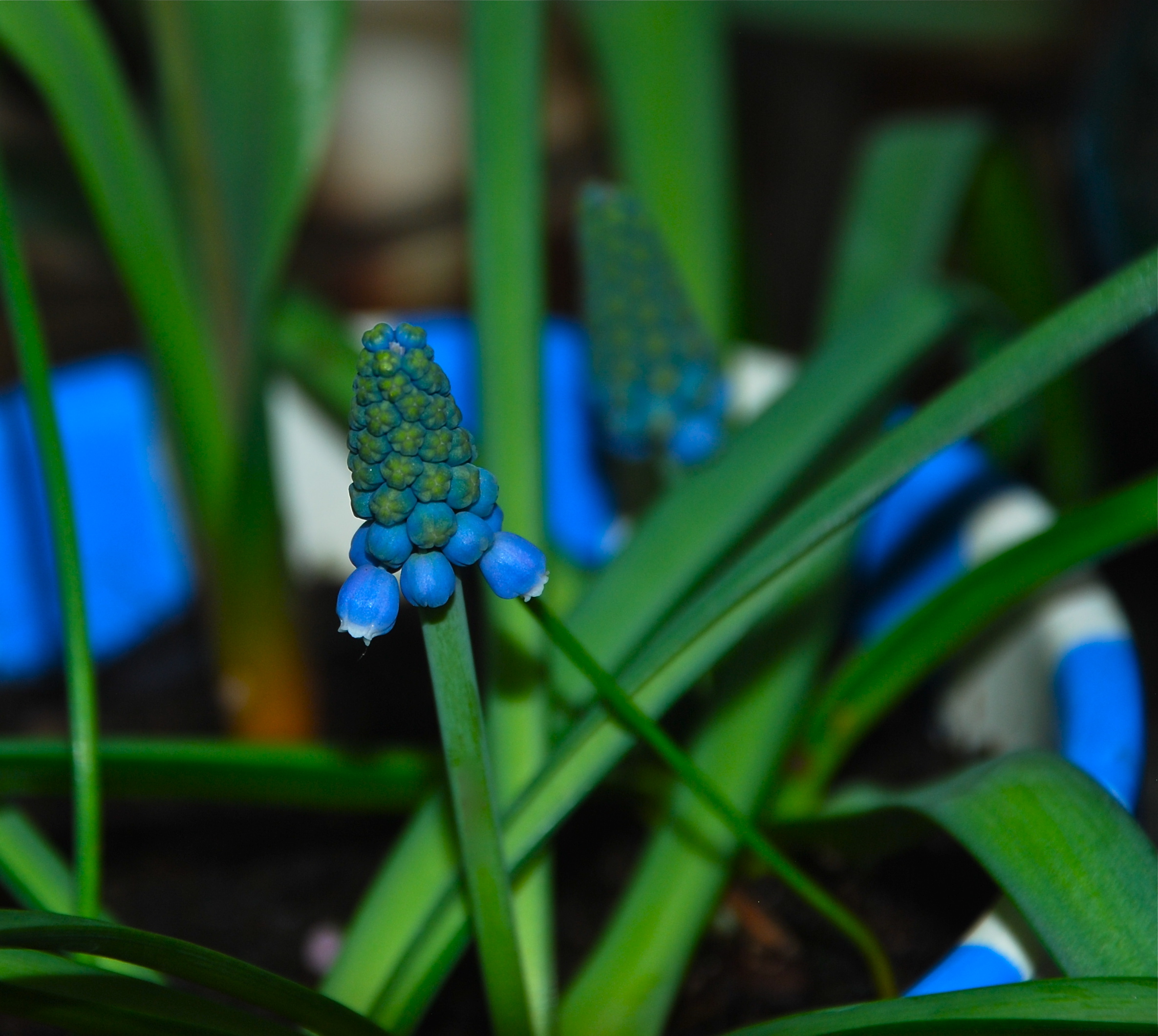
Well, it’s another gloomy winter’s day hereabouts, but I’m a singin’ away, a singin’ in the rain as a matter of fact.  “I’m laughing at the clouds so dark up above, what a glorious feelin’ I’m happy again…”  Okay, so it isn’t much rain, but it has rained a bit nevertheless.  And what am I a singing?  I’m a singin’ the blues.  No, no, no, not the sad blues–the happy blues because some of my little, blue grape hyacinths are blooming in the greenhouse, and they like “girls in white dresses with blue satin sashes” are “a few of my favorites things.”  I love the color blue and I love some of the expressions using the color blue, expressions like:  true blue, out of the blue, bluer than blue, blue on blue, once in a blue moon, something borrowed, something blue, and on and on it goes.  I also love some of the ways people describe what the color blue means to them.  For example I’ve heard things like: blue is the wonder in my mind; blue is the sound a sunny day makes; blue is the smell of blueberries ripening in the sun; blue is the wind over water; blue is the color of the never-ending sky; blue is the place where song birds fly; blue is a world of sweet mellow joy; blue is the sky that God holds close to His presence; blue was meant for us to see and believe.

Image

Blue is the color of God’s Glory according to some rabbinic sages, and it is a constant in our lives.  Not only is it the color of the clear sky and the deep sea, but it’s the color of our planet, Mother Earth, our precious blue pearl in the heavens.  God does indeed hold the sky close to His presence, and we were meant to see evidence of Him, our Creator, in its orbs and in “my blue, blue, blue heaven.”

Speak to the Israelites, and tell them to make fringes on the corners of their garments throughout the generations to put a blue cord on the fringe at each corner.  ~Numbers 15:38  ✝

256. The best place to seek God is in a garden. You can dig for Him there. ~George Bernard Shaw

Flower in the crannied wall,
I pluck you out of the crannies.
I hold you here root and all, in my hand flower–
but if I could understand what you are
root and all, and all in all,
I should know what God and man is!
~Alfred Lord Tennyson

Image

Image

Whenever I read Tennyson’s poem or see a garden wall I think of Burnett’s novel, THE SECRET GARDEN, and then I find myself trying to imagine what Tennyson’s crannied wall and the garden walls at Misselthwaite Manor looked like.  I’ve read that walled growing spaces date back to the earliest of Persian gardens and that their function, especially in the northern temperate zones, was to shelter a garden from frost and wind.  Since purportedly the sheltering walls raised the ambient temperature inside a garden by several degrees, I’m guessing they were made of heavy stones.  Although the garden walls in Tennyson’s poem and Hodgson’s novel no doubt were constructed similarly and to serve the same purpose, the practicality of such, is not the point of the two tales.  The two literary pieces have to do with the impact of encountering the Ancient of Days or the contemplation of His mystery that often takes place within a garden’s walls.  Every garden in a very real sense is a piece of Eden, and in Eden man inevitably encountered Him by whose Hands both he and it were made.  As Tennyson grasped the entirety of a little flower in his hand, he voiced a firm belief that comprehending its mystery would lead to an unraveling of the ultimate conundrum, man and God.  And in THE SECRET GARDEN the lives of two children were resurrected and subsequently infused with that same mysterious “stuff of life” after holy “place” and “elemental” grace had had their way with them.

And the Lord God planted a garden in Eden, in the east; that there he put man whom he had formed…They heard the sound of the Lord God walking in the garden at the time of the evening breeze…  ~Genesis 2:8 and Genesis 3:8a  ✝

248. I look back with gladness to the day when I found the path to the land of heart’s desire… ~Mrs. George Cran

Earth, thou great footstool of our God,
who reigns on high;
thou fruitful source of all our
raiment, life, and food;
our house, our parent, our nurse,
and our teacher.
~Edited and adapted excerpt from Isaac Watts

Image

What’s that whisper in the wind?  Do you hear it?  Listen, there it is again!  Oh, I know.  It’s that ancient and seductive call that tempts the gardener to come and play in the dirt?  And it doesn’t take much bidding before this one can do naught but hearken to the bewitching pleas.

For days now I’ve heard the “call” because even though winter is still quite young,  January has obliged the “voice” by bringing some warmer days.  So several days ago I began clearing my flower beds of autumn’s dead, leafy debris, cutting off seed heads to be scattered elsewhere, and pruning weak, leggy growth off shrubs and roses.  Working close to the soil let me, as usual, hear earth’s heartbeat, and that sweet sound in turn spread a soothing balm over the spiritual doldrums.

Ironically, however, it occurred to me as I worked today that I was blessing the warmth of the same sun that only a few months ago I’d been cursing for its relentless waves of miserable heat.  That brought me face to face afresh with the truth that too much of anything spoils even the very best of things, that there is a purpose, if not understanding, in all things, and that gratitude, when in comfort or lack, is the only appropriate response to a day’s gifts.  So, you see, it was more than an ordinary call or faint heartbeat that I’d heard; I’d encountered the Teacher and He, leading me in and out of flesh and spirit, had shown me, again, wisdom growing in the garden’s “soil.”

…and the Lord your God will make you abundantly prosperous in all your undertakings, in the fruit of your body, in the fruit of your livestock, and in the fruit of your soil.  ~Deuteronomy 30:9a  ✝

239. Blow, blow, thou Winter wind… ~William Shakespeare

How can those who do not garden,
who have no lot in the great fraternity of those
who watch the changing year
as it affects the earth and its growth,
how can they keep warm their hearts in winter?
~Francis King

Image

Blustery was the north wind that came up last night.  As it ran groaning around the corners of the house, it rattled the windows and doors.  But there were no snow flurries nor threats of icy assaults, no misery other than the cold sting in the sound of creaking tree limbs, in the sound of the rushing gale.  As the Sabbath dawned, blue were the skies and bright was the light from above, but the relentless, chilling winds kept on and in check the thermometer.  The endless gusts and leafy flutterings throughout the day intimated over and over again that tonight will neither be inviting nor without loss.  To lower the risks inside faucets will be left to drip, cabinet doors will be opened in front of the pipes below, and thermostats will be turned up higher than usual.  So I will not feel the bite of the chilling wind nor will my heart for, oddly enough, I know where lay outside what will keep it warm. Though I know not how they survive, the larkspur seedlings in the photo will make it through this long, cold night as well as others like it.  I may not be able to fathom all that God built into Creation, but I can and do praise Him for all His goodness.

From its chamber comes the whirlwind, and cold from scattering winds.  ~Job 37:9  ✝

216. Like light dappling through the leaves of a tree and wind stirring its branches, like birdsong sounding from the heights of an orchard and the scent of blossom after rainfall, so You (Lord) dapple and sound in the human soul, so You (Lord) stir into motion all that lives. ~J. Philip Newell

The oaks and pines and their brethren of the wood,
have seen so many suns rise and set,
so many seasons come and go,
and so many generations pass into silence,
that they may well wonder what
“the story of the trees” would be to us
if they had tongues to tell it,
or if we had ears fine enough to understand.
~Author Unknown

Image

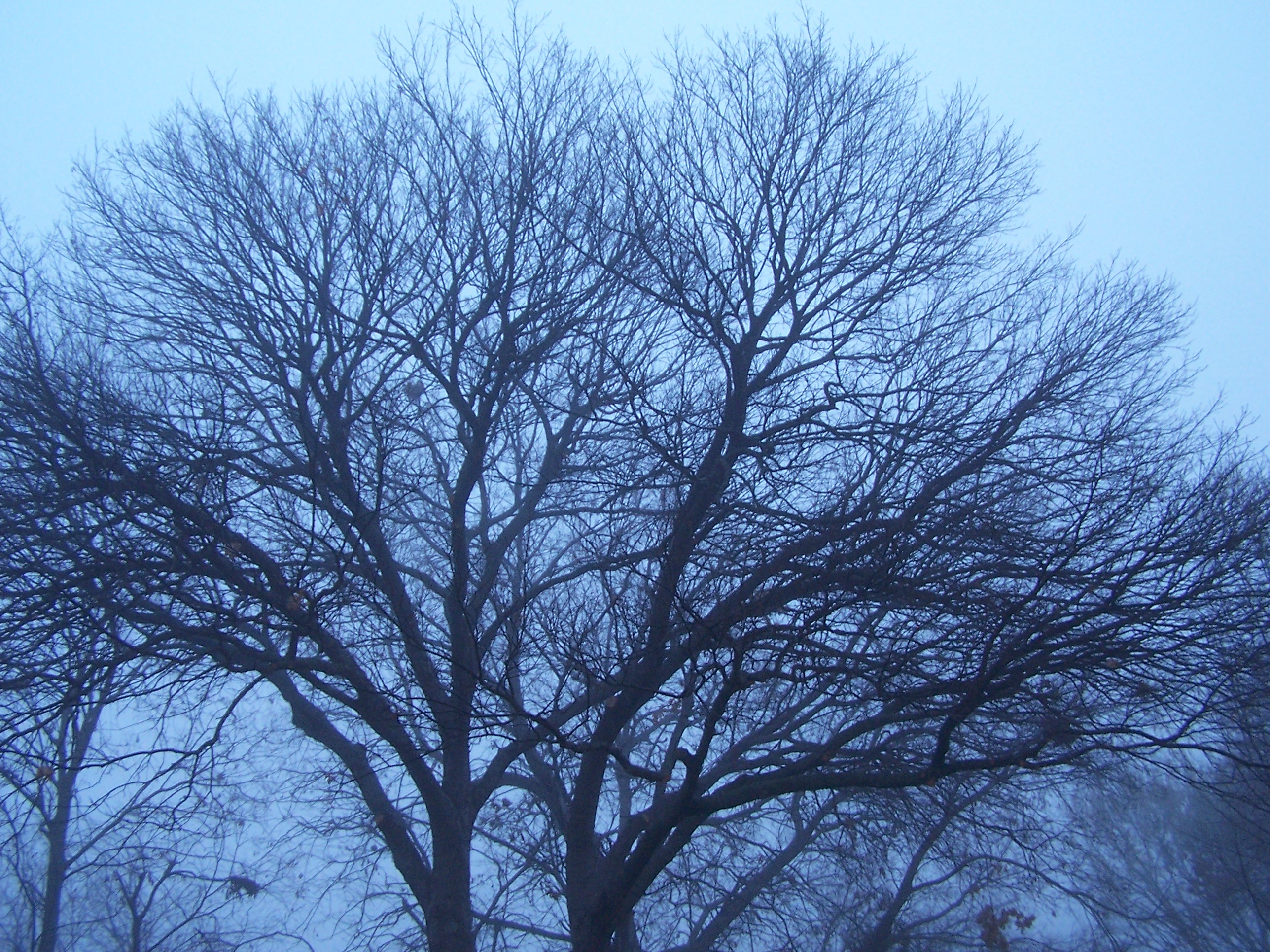
Though left barren by a blue norther and seemingly now no more than silent sentries watching over the landscape, somewhere in the core of these trees their music plays on.  John Muir’s idea that the fibers of a tree’s being thrills “like harp strings” not only sets well with me, but it also answers the question Walt Whitman once asked, “Why are there trees I never walk under but large and melodious thoughts descend upon me?”  The music of life of which he and so many others have verbalized through the ages plays on in all of Creation.  We may not always hear or pay attention to the music but the melodies are there; we may be absent from the Lord, but He is never absent from us.  I know because I hear nature’s songs and I see reminders of the Lord’s continual and constant presence in the great and small pulsing lights in the heavens, in the caroling colors of earth and sky, in the sizzling efficacy of the sun’s warmth, in the rush of roaring waters and tides, in the sighing and howling of the wind, wind which like the Holy One is a presence that can be felt but not seen.

Let the trees of the forest sing, let them sing for joy before the Lord…  ~1 Chronicles 16:33  ✝

196. There is not one blade of grass, there is no color in this world that is not intended to make us rejoice. ~John Calvin

The moment one gives close attention to anything,
even a blade of grass, it becomes a mysterious, awesome,
indescribably magnificent world in itself.
~Henry Miller

Image

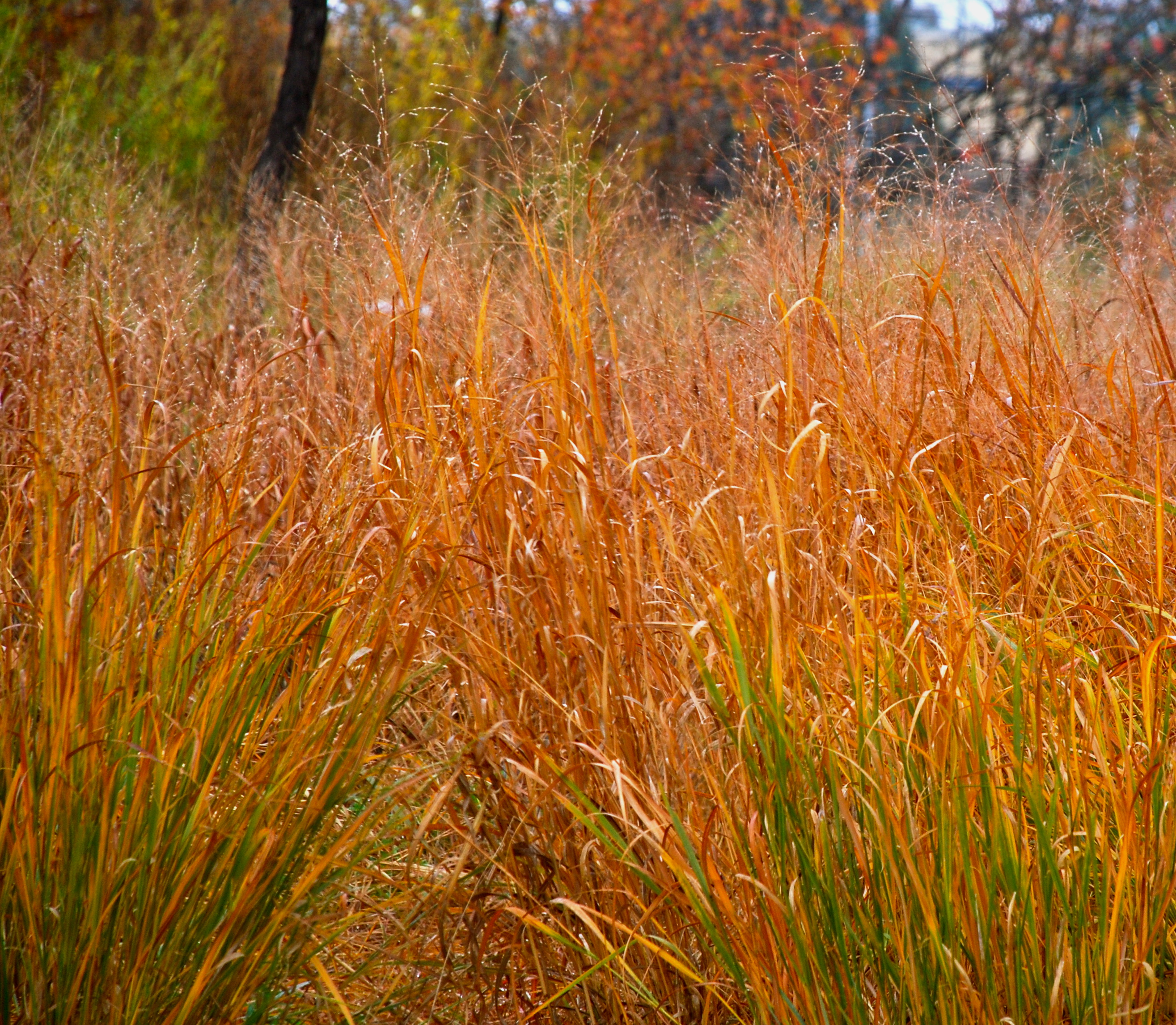
Against the backdrop of “red leaf and the gold” ornamental grasses shift and sigh in autumn’s chilling winds, and as they do, they add to the landscape an ethereal element with their airy flower panicles, fluffy seed plumes, and striking seed heads.  Even after the initial onslaughts of freezing temperatures, grasses continue to grace the landscape with “fringe accents” by adding subtle colors, assorted textures, and the dimensions of motion and sound.  Throughout winter’s “vale of grief,” undaunted by the cold, they capture and play with whatever light is available, and in their animated swayings they speak of life and give us something “that glimmers in the sleep of things.”  And best of all, the lack of heaviness in their lyrical swishing motions along with their visible seed formations remind us that what’s happening is not an end but instead merely the onset of another beginning.

When He(G0d) thunders, the waters in the heavens roar; He makes clouds rise from the ends of the earth.  He sends lightning with the rain and brings out the wind from His storehouses.  ~Jeremiah 10:13  ✝

12. Ring out, wild bells, to the wild sky, the flying cloud, the frosty light. . . ~Alfred Lord Tennyson

Yet a few sunny days, in which the bee
Shall murmur by the hedge that skirts the way,
The cricket chirp upon the russet lea,
And man delight to linger in thy ray.
Yet one rich smile, and we’ll try to bear
The piercing winter frost, and winds, and darkened air.
~William Cullen Bryant

Image

With every north wind that blows the landscape unravels more and more; after each assault the downed foliage leaves in its wake mounting numbers of skeletons bracing themselves for winter’s icy blasts.  In addition the ornamental grasses are drying out and taking on their a wild and tattered look, and yet a few touches of color remain in the leaves and flowers that have yet to be exiled.  Still audible in the “honey’d leavings” of warm afternoons are their faint renditions of the lusty songs of life, but regardless of how sweet the sound of that is, the sands in autumn’s hourglass are running out.  Like all things, it too will come at last to its Sabbath and therein rest until its next appointed hour upon life’s stage.

11. The moment one gives close attention to anything,
even a blade of grass, it becomes a mysterious, awesome,
indescribably magnificent world in itself. ~Henry Miller

Each blade of grass has its spot on earth whence it draws its life,
its strength; and so man is rooted to the land
from which he draws his faith together with his life.
~Joseph Conrad

DSC_0026

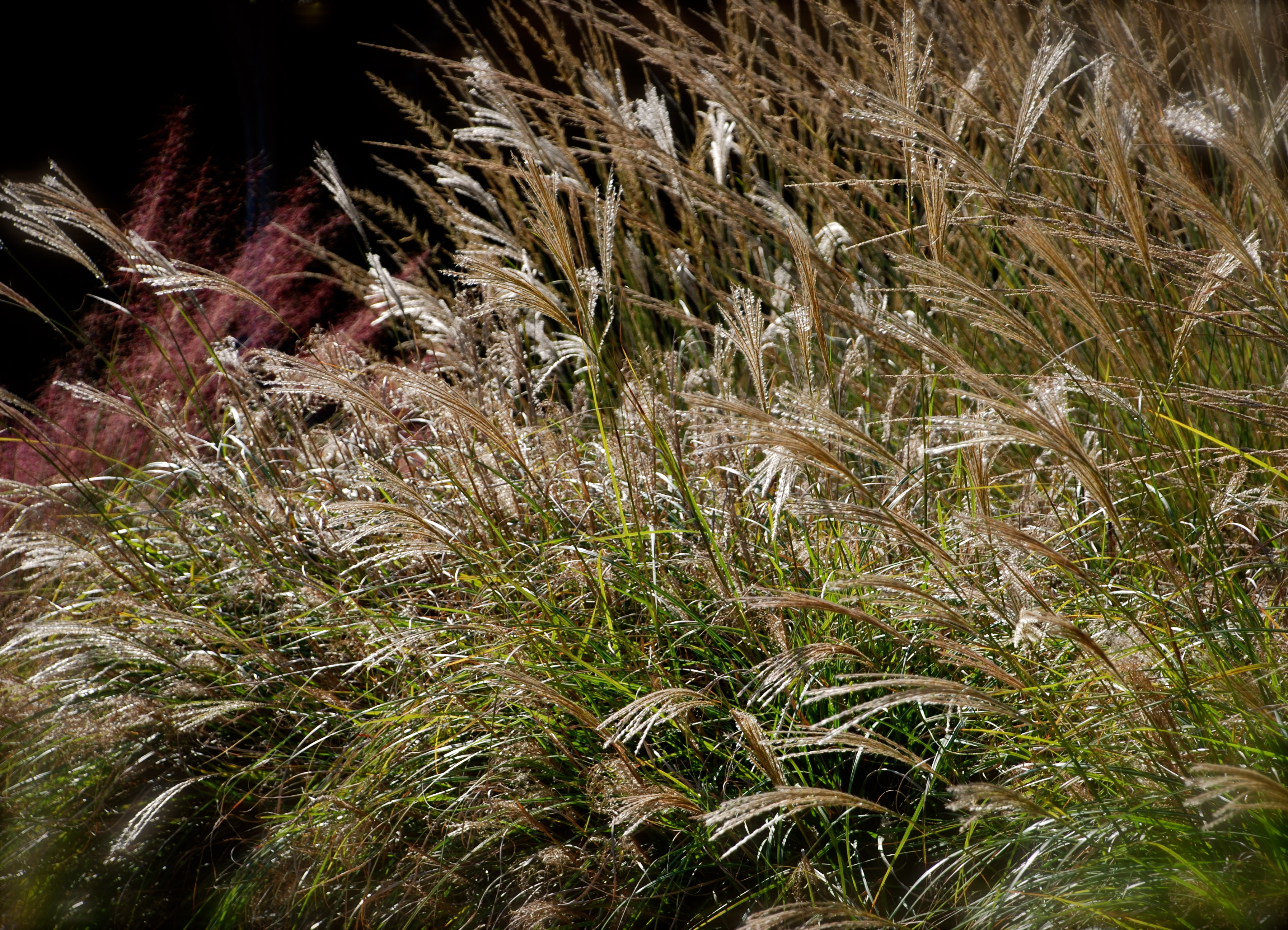
Against the backdrop of autumn’s falling leaves ornamental grasses shift and sigh adding an ethereal element to the landscape.  With airy flower panicles, fluffy seed plumes, and striking seed heads ornamental grasses provide charming “fringe accents” in yards and gardens. Even after the onslaughts of freezing temperatures, grasses continue to grace the landscape with beauty.  They add subtle colors, assorted textures, and the dimensions of motion and sound.  Throughout winter’s “vale of grief,” they capture and play with whatever light is available and in so doing speak of life and give us something “that glimmers in the sleep of things.” The “music” of their swishing and swaying reminds us that what’s happening isn’t an ending but merely a transition for the next beginning.

In a poetic conversation with the Lord, Edna St. Vincent Millay said, “God, I can push the grass apart and lay my finger on Thy heart.”  A Quaker and itinerant preacher named Elias Hicks wrote that “the fullness of the godhead dwelt in every blade of grass.”  And Thomas Carlyle, a Scottish writer, asked, “To us also, through every star, through every blade of grass, is not God made visible if we will open our minds and our eyes.”  These writers, like me, realize that man was meant to be “rooted to the land and therefore to God.”  But, the “umbilical cord” that connects all humanity to Creation and God seems, for many, to have been severed.

The Lord, however, refuses to remain separated or removed from that which He has made.  In an effort to reconnect people to the land and to provide healthier food, many neighborhoods are finding places to build community gardens.  More and more people are getting involved in caring for the land in these communal plots.  Also many schools across the nation are incorporating habitat gardens into the learning experiences of their students, and we are seeing a rise in “hobby farms” where retired professionals have started a second career as a hobby farmer or others who are still working are spending their spare time on their own small farm.

You care for the land and water it; You enrich it abundantly.  The streams of God are filled with water to provide the people with grain, for so You have ordained it.   You drench its furrows and level its ridges; You soften it with showers and bless its crops. You crown the year with Your bounty, and Your carts overflow with abundance.  The grasslands of the wilderness overflow; the hills are clothed with gladness.  The meadows are covered with flocks and the valleys are mantled with grain; they shout for joy and sing.  ~Psalm 65:9-13   ✝