203. Surely a man needs a closed place where in he may strike root and, like the seed become. ~Antoine de St. Exupéry

But he also needs the Great Milky Way
above him and the vast sea spaces,
though neither stars nor ocean serve his daily needs.
~Antoine de St. Exupéry

Image

For me, autumn, especially late autumn, is a time for reflection, contemplation, and soul searching–a time for ruminating on the things that move me and make me who and what I am.  And so as I worked out in the yard on this sunny last day of November, the windmills in my mind started churning up memories of the events that led to its door.  Rather than covering every step of the journey, I decided to start when I found my “closed place” in this house with its spacious yards where I began to “strike roots.”  In the beginning, though the home and its conveniences served my physical needs and provided me with creature comforts, relief from old emotional wounds and peaceful contentment remained elusive long afterwards.  Years passed with little change in the status quo until one summer while recalling the beautiful flowers surrounding my childhood home (above) in California, I decided it was time to try growing my own flowers right here in hot old Texas.  Since I wasn’t sure I’d inherited the proverbial “green thumb” of my ancestors, I resolved to begin on a small scale.  So I cleaned off a corner of the patio, bought some bags of potting soil and an assortment of pots and seeds, and thus commenced what I know now to have been a pivotal moment in my life.  From the minute the first seeds germinated, a soul-saving passion for gardening was being birthed in me.  Despite the summer’s miserable heat, I faithfully watered and fussed over my thriving “little flock,” and it was those familiar flowery scents that were the catalysts which sparked my spiritual reawakening.  The next summer with the success of the previous year under my belt and a renewed recognition of Ruach Elohim (the Spirit of God), I decided to branch out and actually sow  seeds in the ground and dig a few holes for bedding plants.  Success came again and with it the quickening in my spirit intensified so much so that I decided to take my recently commissioned mentor’s advice to attend church once more.  This was the first step in righting the derailment of my faith journey that had begun after the early death of my father.

Scripture tells us that Christ is the vine, and we are the branches.  Until those first two growing summers the branch that was Natalie had been withering, not because the Lord had been doing less but because I had been turning a deaf ear and  blaming Him for the loss of my father as well as for painful, emotional wounds and the awful, unrelenting migraines that had started in my mid-twenties.  Since then I have spent season after glorious season planting, replanting, listening, seeking His presence, and marveling at the wonders of heaven and earth.  This pilgrimage that was involved in becoming the Natalie I am today has taught me that He, His Church, and His Creation, which includes the Great Milky Way, the vast sea spaces, and a garden, are the “holy foods” I must have to survive and live in peace and harmony.  Now minute by minute in this place where I have deeply “rooted” myself, the hungering need for “more” has been forever silenced by miracles great and small, blessing upon blessing, and the amazing grace He continues to bestow upon me.

I am the vine, and my Father is the gardener… Remain in me, as I also remain in you.  No branch can bear fruit by itself; it must remain in the vine.  Neither can you bear fruit unless you remain in me.  I am the vine;  you are the branches.  If you remain in me and I in you, you will bear much fruit; apart from me you can do nothing.  John 15:1 and 4-5
195. Dull November brings the blast, then the leaves are whirling fast. ~Sara Coleridge

Every landscape is, as it were,
a state of the soul,
and whoever penetrates into both
is astonished to find how much likeness
there is in each detail.
~Henri Frederic Amiel

Image

It blew and it blew and it blew all day long yesterday.  Then in the night the lightning lit up our north Texas skies and the thunder growled its mighty roars while rain pelted the house and brought down masses of Autumn’s colored leaves.  The serious rain had ended by midnight, but the clouds never left and today their gentle, mists have made blurry our November sky off and on all day.  The temperature dropped to almost freezing over night, and the winds, though not as strong as yesterday’s, have continued as well so that it has been very cold, very wet and very blustery.  It seems the ancient, arctic curmudgeon wanted to give us a taste of wintry stuff before his appointed reign on winter’s throne begins.  But seasons are like that, aren’t they?  There’s always a beginning, a middle, and an end, and everything but the middles is really a overlapping of the before and after so to speak.  One season doesn’t just slam the door on the other or keep the next one locked out according to some appointed date on the calendar.  The new one just sort of oozes in a little at a time and then after a while slowly, but surely lets the next one start taking hold making of the seasons an ongoing continuum rather than a series of separate entities.  And nature’s patterns have played themselves out like that for over 4 billion years!  Amazing!  Nature is simply amazing!  As is her Creator!  Something else to consider is that the seasons of our lives come and go in much the same way, do they not?

The wind blows to the south and turns to the north; round and round it goes, ever returning on its course.  ~Ecclesiastes 1:6  ✝

153. The soul would have no rainbow had the eyes no tears. ~John Vance Cheney

The flower offered of itself
And eloquently spoke of God
In languages of rainbows
Perfumes,
And secret silence. . .
~Phillip Pulfrey, photographer, painter, and poet

Image

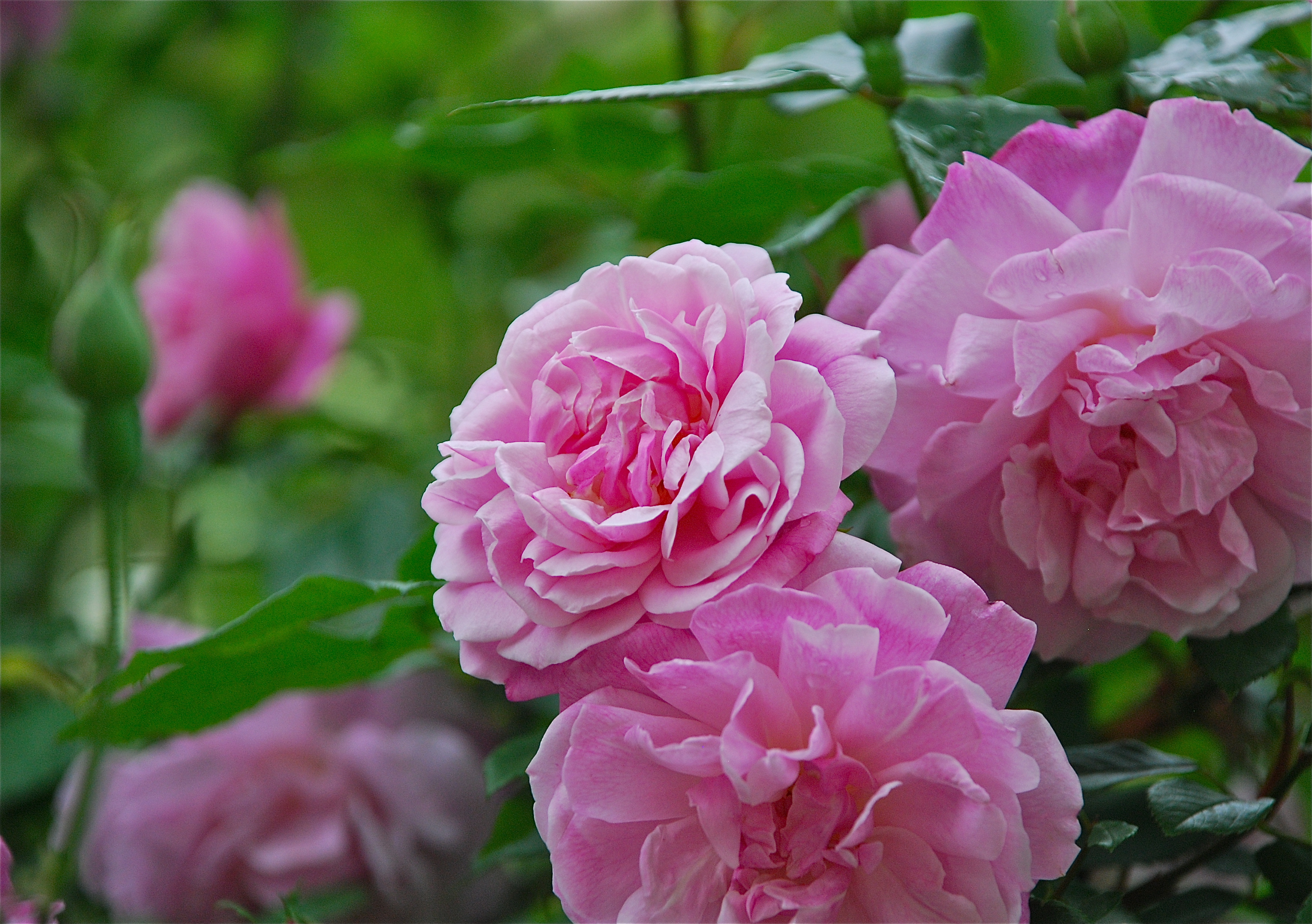
Almost comically what brought roses to Texas began with a “slow boat to China,” as it were.  The Chinese had been cultivating roses for over 5,000 years. Then during the early 19th century, ships of the East India Company brought the repeat-blooming China roses from the Orient to Europe.  Once there the Europeans bred the China roses with their once-blooming roses.  Eventually progeny of the old China roses, the once-blooming European roses, and their hybrids were brought to the Americas by the early settlers.  However as time passed, the public grew to have a greater desire for the more modern roses, and nurseries stopped offering old roses.  Thankfully in the last couple of decades there has been resurgence of interest in the old garden roses, and they are readily available to the public again.  In my garden most of the 70+ roses I’ve planted are roses of antiquity.  I’ve found that they are much hardier, and I love wondering what roads they must have traveled to get here, but the best part is that in every season my old garden roses speak to me more and more distinctly of God, His love, and His faithfulness that can be seen in His rainbows.

I have set my rainbow in the clouds, and it will be the sign of the covenant between me and the earth.  -Genesis 9:13    ✝

*In the photo is the China Rose named, among other things, “Old Blush.”  She is one of the most famous of the China roses and an important parent of literally thousands of other roses.  She is generally accepted as the first East Asian rose cultivar to reach Europe.

150. He made you a part of Creation, and you praise Him in glorious celebration. ~Katherine R. Lane

Bring to me then the plant
that points to those bright Lucidites
swirling up from the earth,
and life itself exhaling that central breath!
Bring me the sunflower crazed with the love of light.
~Eugenio Montale

Image

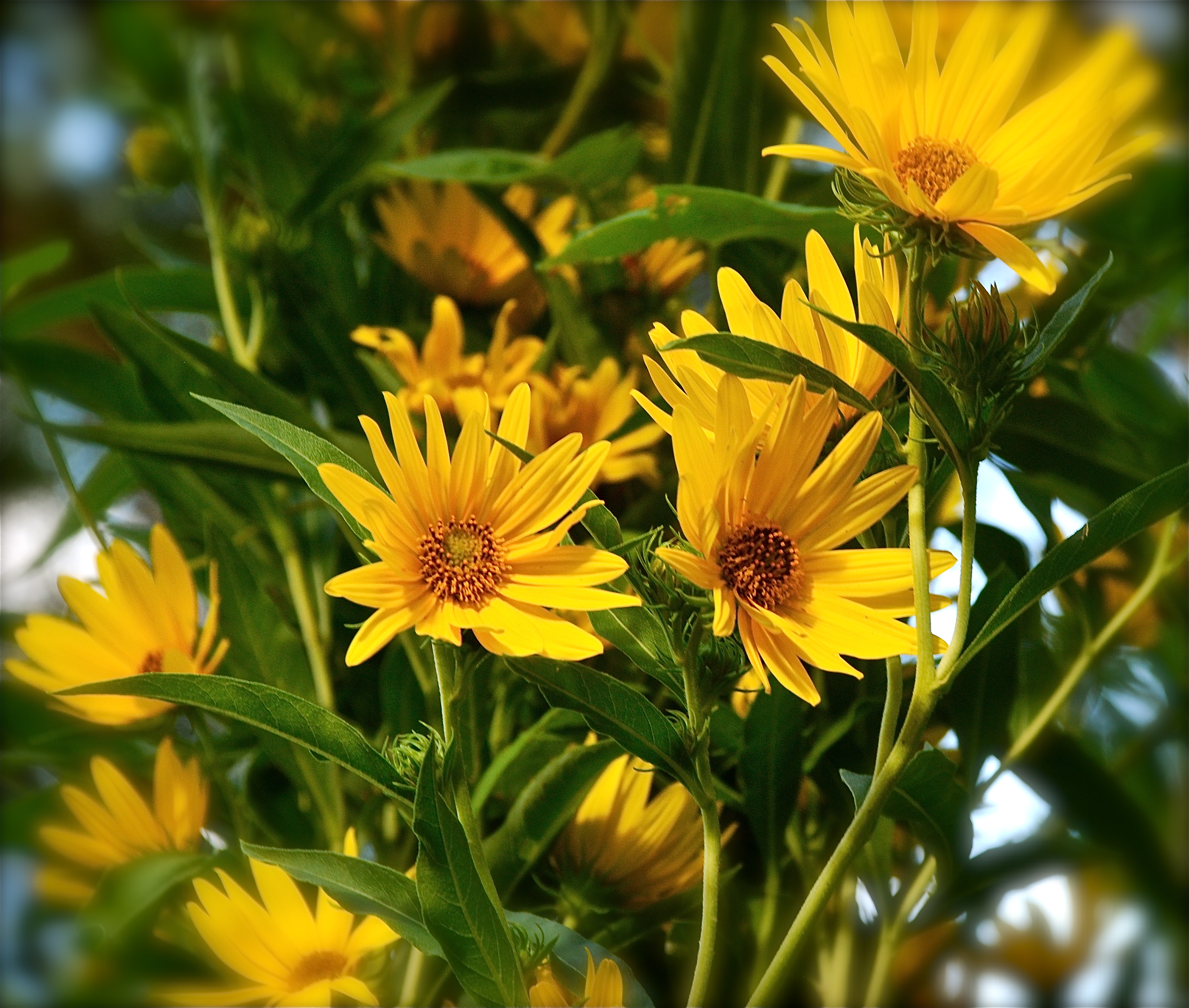
The Maximilian sunflowers in the photo are natives to Texas, but they extend north throughout the tall-grass prairies of the central plains where they were discovered in the 19th century by a German botanist named Prince Maxmilian Alexander Philip von-Wied-Neuwied, thus their rather lofty sounding name.  When I planted 2 of them several years ago, I knew that like their name, they would reach lofty heights before beginning to bloom in September, and that first summer they grew to about 7 feet.  However, by the second year these perennials herbs were reaching heights of 12-16 feet or more, and although I know people like to claim that things are always bigger in Texas, I’m not buying that.  So I did some research and come to find out the more one waters them the taller they grow.  Okay, so now what to do?  Well, before digging them up and moving them or admitting to my husband that I do, in fact, water too much, I’ve decided to give them one more year where they are and try a trick I recently read about; a plantsman in one article said if I pinch off the growing tips when the plants are 3-4 tall I will get shorter plants with more flowers.  More flowers, did he say more flowers?  Now that’s sweet music to my ears!

They are like a well-watered plant in the sunshine, spreading its shoots over the garden. . .  ~Job 8:16  ✝

142. Red is the ultimate cure for sadness. ~Bill Blass

May you be blessed with
warmth in your home,
peace in your soul
and joy in your life.
~Irish blessing

Image

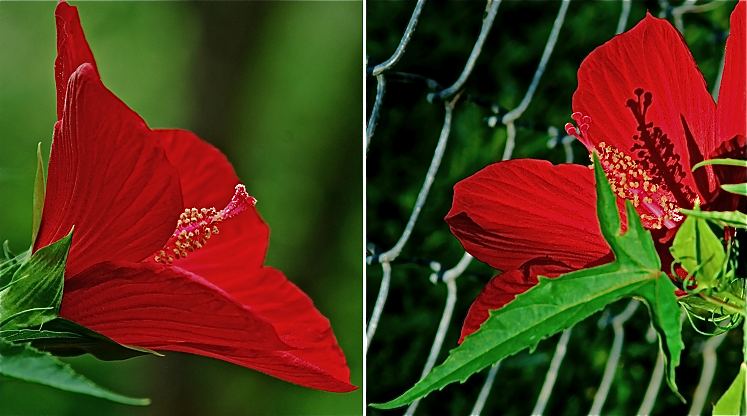
A swamp mallow is she in the photograph, and like her name she is one of the stars of our hot Texas summers.  Her scientific name is Hibiscus coccineus, but here in the Lone Star state she is commonly called the Texas Star Swamp Hibiscus. The Star can grow as tall as 7 feet and puts on stunning four inch crimson blossoms.  Another perk is that she attracts hummingbirds, butterflies, and other avian visitors.  However, according to some she can be as big a challenge as the state she’s named after.  In my garden, however, I’ve found her surprisingly easy to manage, and I love that her season runs from June to October and provides lush summer and fall color.

Your ways, God, are Holy.  ~Psalm  77:13  ✝

132. For summer here, bear in mind, is a loitering gossip, that only begins to talk of leaving when September rises to go. ~George W. Cable

Take thy spade,
It is thy pencil;
Take thy seeds, thy plants,
They are your colours.
~William Mason, English poet, editor, and cleric

Image

The level of sand in summer’s hour glass may be low, but, and in spite of August’s  lingering heat, there is yet to come a fair measure of glory in the garden.  The cycle of earth’s fruiting isn’t completely over here in north central Texas until Jack Frost’s frigid touch rings the death knell in mid-November or early December.  So the remaining modicum of flowers will be joined in the coming days and weeks with substantially more blossoms.  Moreover, squirrels aren’t finished gathering nuts, birds have songs yet unsung, pollinators have more rounds to make, and roses have a second flush of blooms to proffer.  But most of all autumn is the time for we who “dwell in gardens” to plant, sow seeds, and raise our voices in gratitude for what the Lord has already graciously given us.

You who dwell in the gardens with friends in attendance, let me hear your voice.  ~Song of Songs 8:13  ✝

18. The first fall of snow is not only an event, it is a magical event. ~J. B. Priestley

Out of the bosom of the Air,
Out of the cloud-folds of her garments shaken,
Over the woodlands brown and bare,
Over the harvest-fields forsaken,
Silent, and soft, and slow
Descends the snow.
~Henry Wadsworth Longfellow

Image

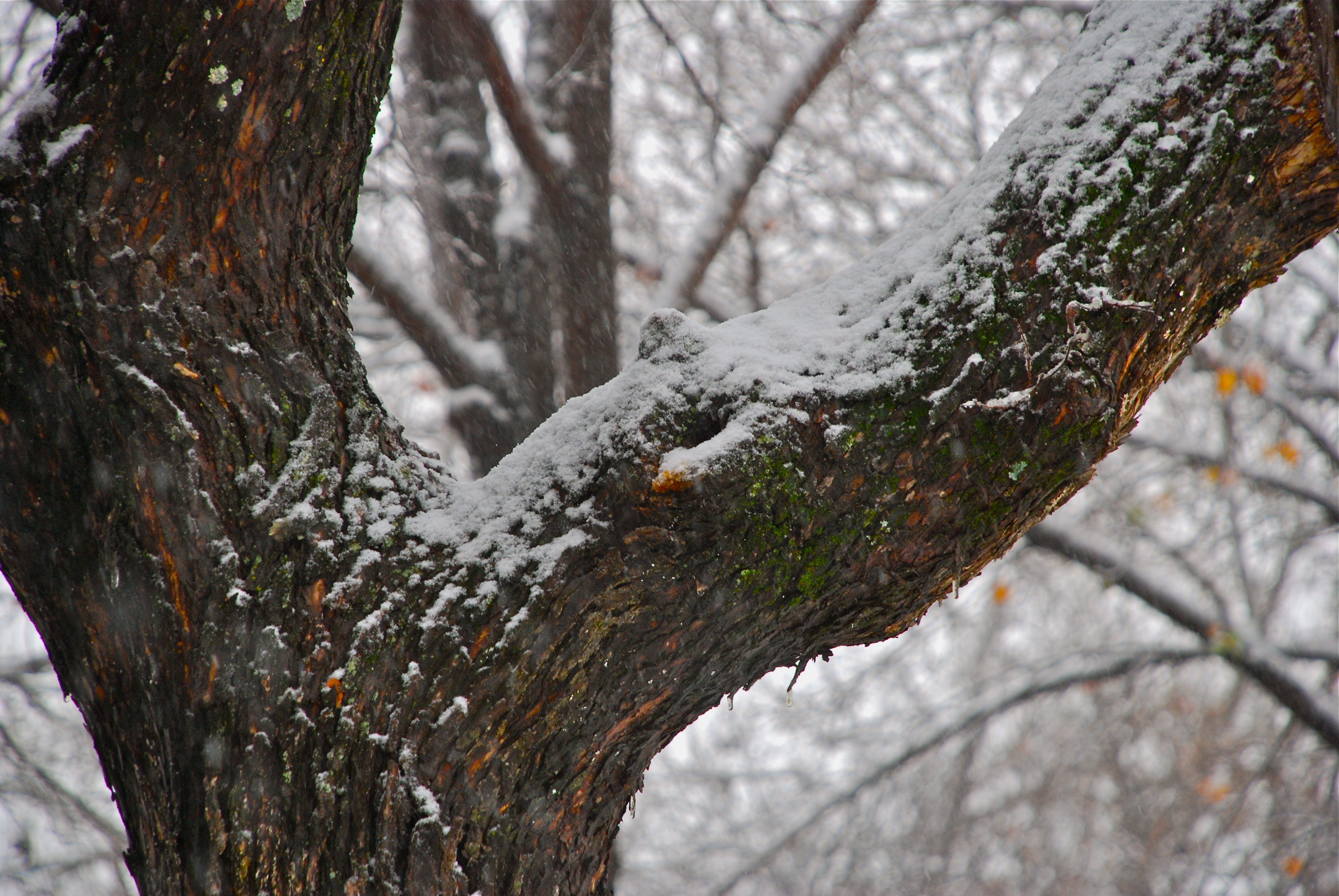
Our area, that had been desperately in need of rain, was the beneficiary of fortuitous events on Christmas Eve.  Could it be that the celebration of the Messiah’s coming the night before was what prompted the blessing of rain as well as the magical, miracle of snow.  So many voices were lifted up in praise and worship of Him that our petitions for rain might have been heard as well. Occasionally on cold, crisp wintry days or nights layers of snow blanket God’s creation even here in north central Texas, but this time we received a strange mixture of “wet” goodness.  At eventide sparkling stars punctuated the ancient moon in heaven’s blackened dome, but during the course of the Messiah’s birthday, clouds laden with moistures moved in, flashes of lightning lit up the sky, a good amount of rain was garnered, hail fell, and finally snow covered the landscape.  If this is not an assortment of  Divine providence mixed with earthly “enchantment,” then as Priestley says, “where is such to be found?”

Praise His Holy Name!