260. The shortest day has passed, and whatever nastiness of weather we may look forward to in January and February, at least we notice that the days are getting longer. ~Vita Sackville-West

January is the quietest month in the garden.
. . .But just because is looks quiet
doesn’t mean that nothing is happening.
The soil, open to the sky, absorbs the pure rainfall
while microorganisms convert tilled-under fodder
into usable nutrients for the next crop of plants.
The feasting earthworms tunnel along,
aerating the soil and preparing it to welcome
the seeds and bare roots to come.
~Rosalie Muller Wright
Image

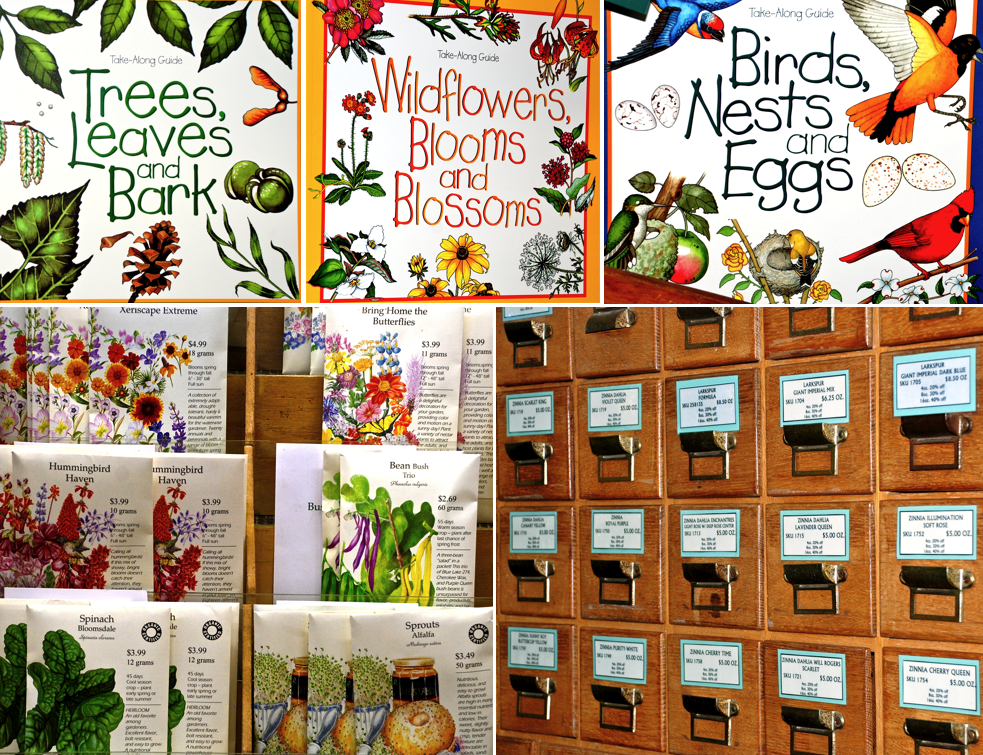
I’ve heard it said that “the color of springtime is in the flowers” whereas “the color of winter is in the imagination.”  Thankfully I’ve got a good imagination, and when that fails, I have a large collection of photos to look back on because by the end of January my spirit is in dire need of a boost.  A place I like to frequent also helps to keep my imagination alive and well.  It’s a nursery, and this particular Dallas nursery not only has a great selection of flowers during the growing seasons, but year round it has all sorts of indoor plants too.  In addition  to the plants it has an oak cabinet with drawers full of fascinating seeds, racks of seed packets, shelves filled with gardening books, and an array of tools.  So between the plant and seed catalogs that start arriving in the mail after Christmas and my visits to Nicholson-Hardie’s nursery, the “dream” is kept alive even when the under-the-surface busy but ravaged-atop January garden appears to be completely shut down.  And it is this “stuff” of which gardener’s dreams are made that keeps my imagination churning and my head full of schemes, schemes that are the spice of a gardener’s life.  What a blessing is our memory, our imagination, and our ability to dream; God is so good.

I will praise the name of God with a song; I will magnify Him with thanksgiving.  ~Psalm 69:30  ✝

202. There is a communion with God, and there is a communion with earth, and there is a communion with God through the earth. ~Pierre Teilhard de Chardin, French philosopher and Jesuit priest

Grass is the forgiveness of nature-
her constant benediction.
Forests decay, harvests perish, flowers vanish,
but grass is immortal.
~Brian Ingalls

Image

Maiden grass, purple fountain grass, blood grass, little bluestem, pink muhly–what’s not to love about such names.  Not only are they alluring monikers for gardeners, but their visual charms provide great cover for  wildlife and their seeds are good food sources for birds.  Few pests bother them, and given a bit of wind their airy, flower panicles, feathery plumes, or striking seed heads resemble fairy wands as they capture and play with available light.  What I like best about them is that in their swishing and swaying the echoes of the eternal and murmurs of sacred benedictions can be heard.  A garden and all its plantings, be they grasses or trees or shrubs or ferns or herbs or mosses, always speak of earth’s primeval and venerable origins as well as man’s connection to the Holy Voice that spoke everything into being.  But it is in the movement of the grasses that I most feel the in and out movement of God’s ruach, His life-giving breath.  Chardin whom I quoted above contended that the more he devoted himself in some way to the interests of the earth the more he belonged to God.  It is the same for me because being close to and working the earth is like being attached to an umbilical cord that keeps me forever connected to and sustained by Him, the loving Source of all life.

Sing to the LORD with thanksgiving; make music to our God on the harp.  He covers the sky with clouds; he supplies the earth with rain and makes grass grow on the hills.  ~Psalm 147:7-8  ✝

200. For flowers that bloom about our feet; for tender grass, so fresh, so sweet; for song of bird, and hum of bee; for all things fair we hear or see, Father in heaven, we thank Thee! ~Ralph Waldo Emerson

Thanksgiving is the holiday of peace,
the celebration of work and the simple life. . .
a true folk-festival that speaks
the poetry of the turn of the seasons,
the beauty of seedtime and harvest,
the ripe product of the year –
and the deep, deep connection
of all these things to God.
~Ray Stannard Baker (David Grayson)

Image

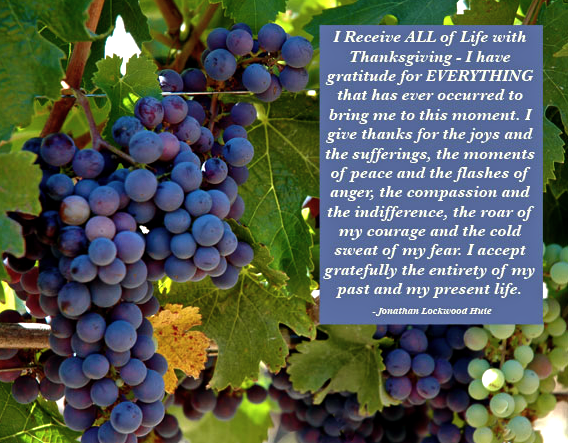
At the beginning of time the Lord set the wheels in motion for the making of continual banquets for man and creature alike.  And so in light of His abundant provisions and as the Canticle of Creation plays on, it is time to pause and give thanks to our gracious Benefactor.  The year is drawing to its appointed end and before it sinks into winter, the Sabbath of the year, we must look around and take stock of the Lord’s never-ending activity in Creation and be thankful for the constancy of His love and beneficent involvement in each of our lives.  W. J. Cameron said, “. . .a thankful heart hath a continual feast,” and so with beholden hearts, let us give praise and thanks for our Heavenly Father, His Grace, and His goodness.  I pray that this be a blessed time of thanksgiving for all of you and those you love; may all the roads you travel be, now and forever, filled with grace and peace and love.

If I have enjoyed
the hospitality of the Host of the universe,
Who daily spreads a table in my sight,
surely I cannot do less
than acknowledge my dependence.
~G. A. Johnston Ross

Enter His gates with thanksgiving and His courts with praise; give thanks to Him and praise His name.  ~Psalm 100:4  ✝

173. I’m so glad I live in a world where there are Octobers. ~Lucy Maud Montgomery

Autumn, that season of peculiar and inexhaustible influence
on the mind of taste and tenderness,
that season which has drawn from every poet,
worthy of being read,
some attempt at description, or some lines of feeling.
~Jane Austen

Image

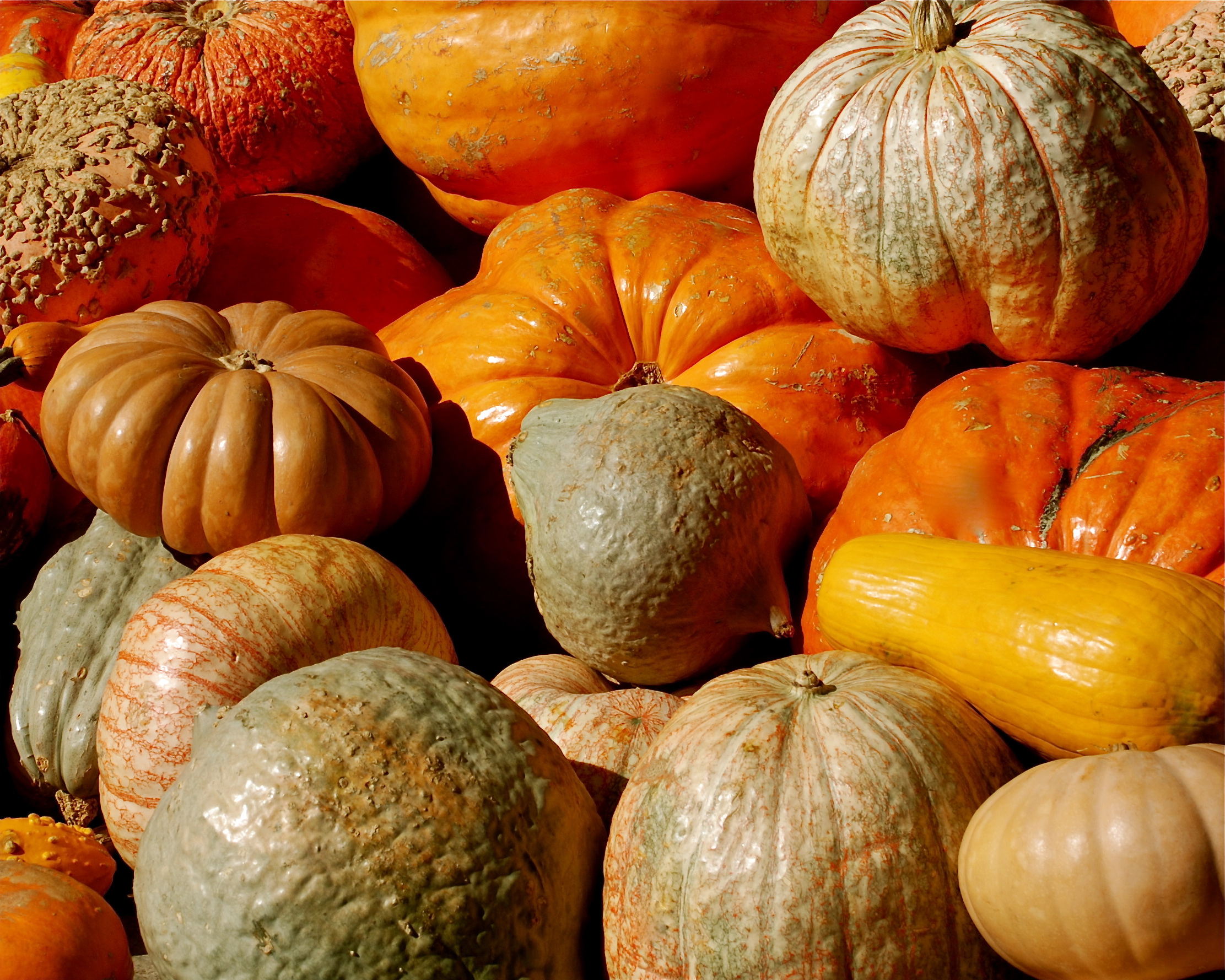
While the summer sun reigned high in the heavens, the trailing vines of Cucurbita inched along the ground.  Its flowers were pollinated, and then its fruits began to grow.  Tendrils on the vines helped anchor the rambler and protect them from the wind.  The leaves of the vines absorbed energy from the sun to spur the growth of the fruits, and the stems worked like umbilical cords to bring nutrients to the fruits while the thin and shiny outer layer of the fruits protected them from insects and disease.  As summer wound down, the ripening gourds began turning a spectacular color of orange, at least the traditional ones.  Then after the autumnal equinox, north winds venturing out of their haunts moved southward.  Along the way they gathered a fair measure of clouds; rain from the clouds greened the landscape; days became noticeably shorter; temperatures dropped below previous three digit highs; skies regained deeper hues; dawns became chillier; and the inimitable pumpkin, having been nipped off its vine, appeared on roadside stands and in grocery stores.  How I love Octobers and the whole autumn experience; hardly a day goes by that I don’t turn my eyes upward in praise, drop to my knees in thanksgiving, and wish I could throw my arms in adoration around  the Lord of all Creation!

May the peoples praise you, O God; may all the peoples praise you.  Then the land will yield its harvest, and God, our God, will bless us.  ~Psalm 67:5-6  ✝