204. The autumn leaves drift by my window, the autumn leaves of red and gold…and soon I’ll hear old winter’s song… ~Excerpts from a tune by Johnny Mercer

There is music in the meadows, in the air…
Leaves are crimson, brown, and yellow…
There is rhythm in the woods,
And in the fields, nature yields…
~Excerpts from LYRIC OF AUTUMN by
William Stanley Braithwaite
Image

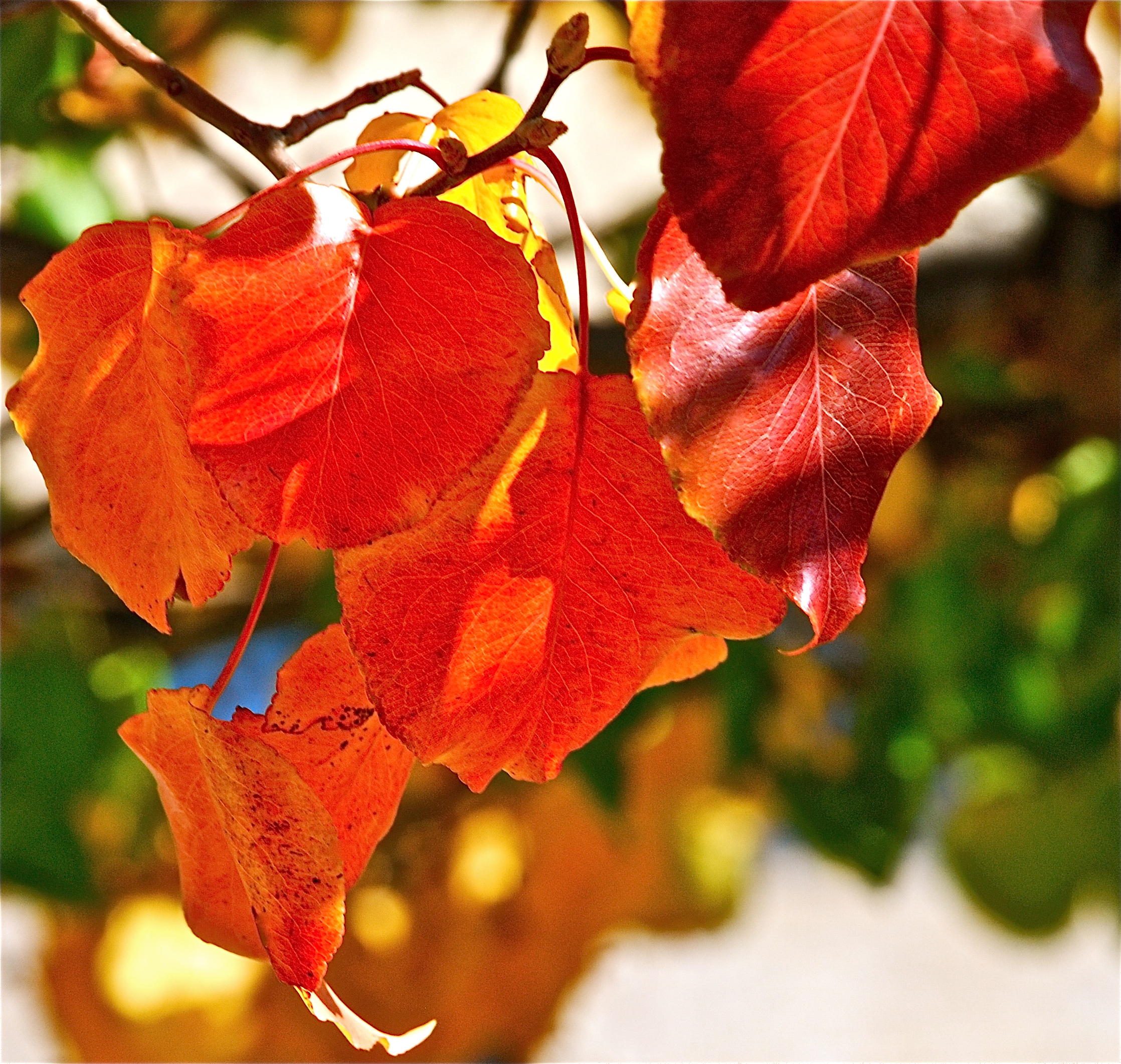
It was 1947 when Johnny Mercer borrowed lines from a French song to create the lyrics to his unforgettable melody, AUTUMN LEAVES, a song I find myself singing, at least the parts I remember, almost every year as I tear November’s page off the calendar.  Why?  I don’t know.  The words just seem appropriate when autumn’s persistent winds, wild with leaves, blow wide open the final month’s portals, and this year’s opening was no different.  November’s yet in place blustery gales did in fact sweep December onto its throne.  Once seated, the 12th month opened under bright, sunny skies, but by noon day one had become shrouded in unending shades of gray.   When night fell, there were few, if any, remaining leaves on the redbud and willow at the back of the yard.  The beneficiaries of these as well as the oak’s leaves when they fall are the big island bed and my secret garden in the north corner.  So now not only can my voice be heard singing autumn’s anthems, but wherever these tinted tidbits lie, I’ll be able to hear them crooning their embracing ballads of promise.  And theirs, songs different from the ones in springtime, pledge warmth and declare they’ll keep my plants safe during the bitter, stone-cold days of winter.  But wait, things like trees and leaves sing?  Really? As a matter of fact, according to some Scriptural references and to those of us who listen carefully, they do!

The Lord reigns…Let the heavens rejoice, let the earth be glad; let the sea resound, and all that is in it.  Let the fields be jubilant, and everything in them; let all the trees of the forest sing with joy.  ~Psalm 96:11-12  ✝

202. There is a communion with God, and there is a communion with earth, and there is a communion with God through the earth. ~Pierre Teilhard de Chardin, French philosopher and Jesuit priest

Grass is the forgiveness of nature-
her constant benediction.
Forests decay, harvests perish, flowers vanish,
but grass is immortal.
~Brian Ingalls

Image

Maiden grass, purple fountain grass, blood grass, little bluestem, pink muhly–what’s not to love about such names.  Not only are they alluring monikers for gardeners, but their visual charms provide great cover for  wildlife and their seeds are good food sources for birds.  Few pests bother them, and given a bit of wind their airy, flower panicles, feathery plumes, or striking seed heads resemble fairy wands as they capture and play with available light.  What I like best about them is that in their swishing and swaying the echoes of the eternal and murmurs of sacred benedictions can be heard.  A garden and all its plantings, be they grasses or trees or shrubs or ferns or herbs or mosses, always speak of earth’s primeval and venerable origins as well as man’s connection to the Holy Voice that spoke everything into being.  But it is in the movement of the grasses that I most feel the in and out movement of God’s ruach, His life-giving breath.  Chardin whom I quoted above contended that the more he devoted himself in some way to the interests of the earth the more he belonged to God.  It is the same for me because being close to and working the earth is like being attached to an umbilical cord that keeps me forever connected to and sustained by Him, the loving Source of all life.

Sing to the LORD with thanksgiving; make music to our God on the harp.  He covers the sky with clouds; he supplies the earth with rain and makes grass grow on the hills.  ~Psalm 147:7-8  ✝

198. Autumn is the dim shadow that clusters about the sweet precious things that God created in the realm of nature. ~Northern Advocate

That soft autumnal time…
The year’s last, loveliest smile,
Thou comest to fill with hope the human heart,
And strengthen it to bear the storms a while,
Till winter days depart…

Far in a shelter’d nook
I’ve met, in these calm days, a smiling flower,
A lonely aster, trembling by a brook…
~John Howard Bryant

Image

In autumn the Maker’s pigments turn from the soft pastels of springtime to emboldened, jewel tones.  Glad witnesses are we to the green leaves on shining sumac, flowering dogwoods, Bradford pears, sweet gums, Shumard oaks, and crape myrtles changing to mixtures of burgundy, crimson, orange, and gold.  Other treats are setting buds for next year’s blossoms among the fiery red, ripening fruits of the dogwoods, and the deeper shades of blues and pinks that adorn the thickened petals of hydrangeas.  And if that is not enough to make the year smile, there are the willow leaves, among the other falling foliage, that rain down golden glory in one wave after the other like confetti from a ticker-tape parade.  In the gusting winds they litter the streets, and as cars pass by the multicolored leafage gives a festive look to curbs and lawns.  But again, that’s not all.  Roses bloom in deeper hues than before, the red fruits on the Prairifire crabapples shine forth, and sweet purple asters with their bright yellow eyes provide a closing feast for hordes of humming bees.  So smile on, lovely Autumn, and fill my heart with the hope I need to be strengthened against winter’s gathering storms.

Faithfulness spring’s forth from the earth, and righteousness looks down from heaven.  The Lord will indeed give what is good, and our land will yield its harvest.   ~Psalm 85:11-12  ✝

Music’s Mystery

Image

I’ve heard it said that only human beings have been given the gift of music; that only people create songs, sing and serenade their souls with this most magical and uplifting form of communication and communion. Yet, should we not consider the song of the lark? The haunting ballads of the whales? The mournful call of the wolf? The robin’s lyrical laugh at dawn and dusk? The crickets that serenade the nighttide? The burbles of monkeys swaying in the trees? The laughing of the hyena?

Who is to say that in their melodic tunes, caterwauls, howls, wails, and other worldly vocalizations there is not some measure of music. Why should we be the only ones to sing praise, to croon our love, and to bewail our distress? How can we know, in truth, in honesty, that the deliberate scree of the hawk, the piercing bugle of the elk, the chattering of raccoon and ferret, and the murmurings of infrasonic elephant calls is not music to their ears?

Music is a form of communication that lifts the soul, expresses emotion, and brings one being into contact with another being. If this is, indeed, the definition of music (of which it is a form) then can that being not be one other than human? Does not one wolf join another when it sings? Does not the whale song change season to season and year to year, picked up by another whale to be carried on? Does not one roaring lion inspire the entire pride by its lusty cry?

Consider what the morning would sound like without the sweet music of the birds. Contemplate what the summer night might be when not a single chirrup, trill, drone or buzz lilted through the air. Ponder how deep and lonely the oceans would be without the drifting, breathtaking songs of the whales. Can you even imagine a mountain landscape without hearing the echoing howl of a wolf or the bubbling laugh of the loon?

If these sounds, that can captivate us and uplift our thoughts, our hearts and even our souls, are not music and do not do the same for all those who hear them, regardless of race, than perhaps, we must follow that course of logic and say that cave paintings are not art, tap is not dance, improvisation is not acting and free verse is not poetry.

Or perhaps, Music Teaches the Soul what the Heart Feels and Guides the Heart with what only the Soul can Truly Know.

Music’s Mystery is by Morgan at:  http://booknvolume.com

Rambling Thoughts

This is a reblog from Annette’s Garden at: http://wp.me/p32RMi-cI

Image

In autumn, when the trees cry colourful leaves and the vibrant spirit of summer is only a memory, thoughts go on a ramble. Time for reflection and contemplation. A damp, heavy quietness settles on the garden. The work is done, we can sit back and watch. When I plant bulbs in the autumn, and there seem to be more and more each year, I always wonder how many more springtimes I will live to see. I don’t ask as a result of depression (I’m not a child of sadness!), but because I think of these bulbs that fill me with such happiness. First when I’m planting then later, when in the comfort of my armchair in front of the fire -longing in my eyes- they fill my head with fields of colour and scent and carry me through the season which I never came to love, although it has its beauty too. It must be the bulbs that fill me with wantonness and unreasonable hope. The expression “to be happy like a child” comes to my mind but kids are not happy and innocent like they used to be. If you’re faced with the first murder during breakfast and with Jingle Bells and plastic Santas climbing ridiculously into chimneys from September onwards how could you possibly hold on to that pure and carefree joy? As for myself, I find lots of happiness in the little treasures and secrets nature and garden hold for me. All the same, there’s something morbid about this question, and I admit that I never ask myself at other times of the year. How many summers or autumns will I live to see? No way. But maybe the reason for planting these crazy amounts of promising bulbs and corms lies in my hidden wish that the older I get the more spectacular spring ought to be. Recently I read a quote by Henry David Thoreau which follows me ever since: The mass of men lead lives of quiet desperation. Thoreau said this in the 19th century but it is still true. The reason for this lies in the continuous remoteness and alienation from nature which in its most dramatic case leads to people perceiving nature as an enemy or danger. Pristine nature has become rare and if it’s really wild, we meet it with fear and suspicion. Seeing and hearing have also become rare skills. We’re constantly exposed to noise, being lulled and deadened. Even the news are hammered into us to the sound of percussions so that there’s no risk of us coming to our senses or to be bored. Tranquility is out. A friend of mine told me about a visitor from Canada who switched on a tape each night at bedtime: She couldn’t bear the quiet, only with the constant noise was she able to sleep. Cathy at http://wordsandherbs.wordpress.com/ did a great post dealing with the subject of hearing a while ago, and I hope she will share the link once she reads this. To hear and I mean TO HEAR is by no means taken for granted anymore. There’s so much to hear when you listen to supposed quiet. Have you ever tried? The silence that makes you feel like you’re deaf has become rare. Where I live, in the middle of the woods, it can still happen. It descends like a comfortable blanket. No fear, no panic just peace. Some shake their heads asking how can you possibly live here? We shake our heads knowing that every explanation would fall into nothingness. The general rush and fear of missing out on something are so widespread that many cannot understand how satisfying it is to fill the basket with firewood to heat the house, to collect eggs from your hens and to tend the garden. To hear nothing and to work in the garden are today’s last luxuries. During our hikes we sometimes meet extreme mountainbikers rushing down steep slopes with fierce expression, or cool guys on rattling motorbikes, modern Marlborough-Cowboys. None of them knows the intriguing scents and sounds of the forest, sees the pink mushroom in the undergrowth, the tree creeper searching the bark for insects or hears the melancholic song of the robin. Kids don’t know anymore that milk comes from cows. A vegetarian friend of mine suggested recently that one could keep milking cows without letting them have calves. Once I watched children beating newly planted fruit trees with sticks until the bark had come off while their mother watched them proudly. Great to see kids fulfilling themselves. Nature is retreating more and more and can only be found where access is hard or impossible or where there’s nothing to exploit. Would we ask men their definition of nature – what would the answer be? I fear the answer a lot more than visitors the solitude of my wood. Why should men protect something they’re not aware of and don’t see, never mind appreciate? When man moves away from nature, he loses his roots, becomes depressed and unhappy. I could never be without my garden and nature, my sanity depends on them. I draw energy, courage and meaning out of them. Okay, some things don’t work out in the garden but I’m never disappointed and depressed. Still nothing fills me with more hope and optimism. A life of quiet desperation? That’ll never be an issue for someone who hasn’t lost touch with his/her roots.

186. Music expresses that which cannot be said and on which it is impossible to be silent. ~Victor Hugo

There is in souls a sympathy with sounds:
And as the mind is pitch’d the ear is pleased
With melting airs, or martial, brisk or grave;
Some chord in unison with what we hear
Is touch’d within us, and the heart replies.
~William Cowper

Image

The November morn was cool and crisp, and the solitary man playing the bag pipes was standing against the backdrop of changing leaves and flowing water.  The mystical sounds of the “pipes” were drifting along on gentle breezes over the whole of a very large park.  It was Veterans Day, and the man may have been playing in remembrance of friends or relatives, but it could have been a salutation to the day’s magnificence as well because his harmonies embodied not only touches of the melancholy but also traces of the celebratory.  As I watched transfixed and mesmerized by the sounds, he played on at first unaware of my presence behind him.  But soon I realized that between the melodies he was slowly turning in a circle and would soon face me and the ones gathering behind me.  It was as if he was wanting to address his elegy and/or hymn of praise to all the earth.  At each of his turns we who were witnessing the spectacle seemingly became aware that something sacrosanct was moving through us, moving through the “piper”, moving through the pipes, moving through the trees, moving through the water.  More than that, one could not help but feel that the sanctity was moving throughout the whole of Creation that was within the sound of his pipes and our vision.  I can’t speak for the other observers, but when the “piper” finished “some chord in unison” with what I’d heard and seen had touched me so deeply that my heart replied with tears of sadness for fallen and wounded patriots everywhere and for the joy I’d felt in the beauty of the “piper’s” music.

**I didn’t attempt to take the bag piper’s photo that day because it somehow seemed like an invasion of his privacy.  I decided the one above would be equally appropriate for this post since my sister took it on a beach at Normandy where so many fell in WW II while in pursuit of freedom’s calling.

My heart, O God, is steadfast, my heart is steadfast; I will sing and make music.  ~Psalm 57:7  ✝

185. For the wisdom that fashioned the universe and can be read in earth’s dark depths and in heaven’s infinity of lights, thanks be to you, O God. ~John Philip Newell

How silently they tumble down
And come to rest upon the ground
To lay a carpet, rich and rare,
Beneath the trees without a care,
Content to sleep, their work well done,
Colors gleaming in the sun.
-Elsie N. Brady, poet

Image

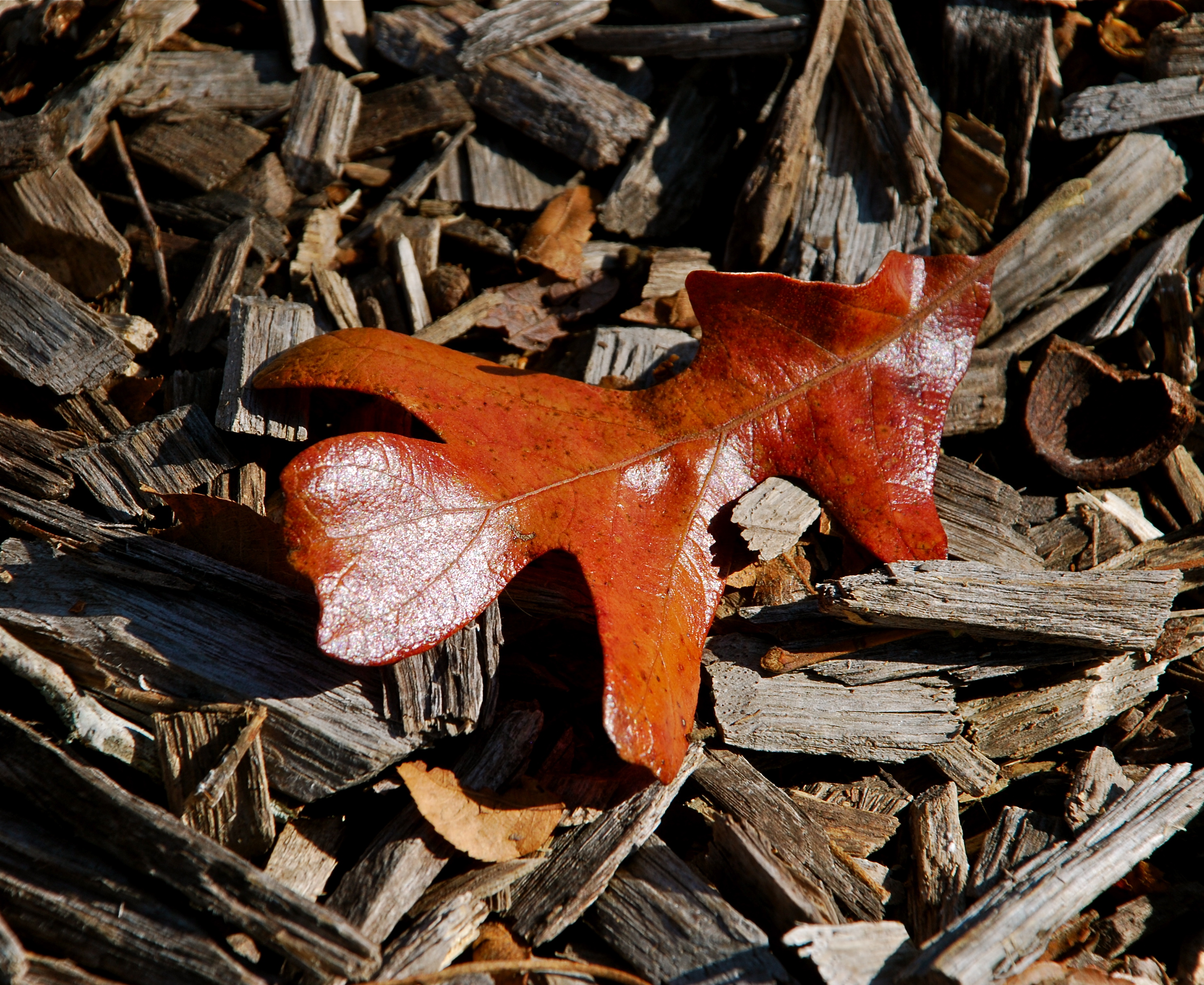
As Brady points out, when leaves “come to rest upon the ground,” it is a completion, but the work of fallen autumn leaves is far from done at that point.  As they “rest upon the ground,” besides being a warm blanket for what lies beneath them and a life-saving provision for the trees, they become food for a host of soil organisms that are vital to the overall health of ecosystems.  As time moves on and the leaves decompose, they restock the soil with nutrients and they make up a part of the spongy humus that absorbs and holds rainfall.  At last “with the arrival of warmth and spring, insects, bacteria, and fungi gear up!  Leaves are chewed and rotted, releasing nutrients for plant growth.”  So it is that with another round of plant growth, Creation and its inhabitants are guaranteed what they need to survive until the recycling process begins again the next fall.  How comforting it is to know that the Hand of the Almighty is always near!  For, you see, it was after a stroke threatened my life and wholeness a year ago yesterday that the Lord’s mighty hands performed the necessary miracles to grant me another year of health and life.

 He put a new song in my mouth, a hymn of praise to our God.  ~Psalm 40:3a  ✝

184. The day I see a leaf is a marvel of a day. ~Kenneth Patton

For man, autumn is a time of harvest,
of gathering together.
For nature, it is a time of sowing,
of scattering abroad.
~Edwin Way Teale

Image

Most of us know that autumn’s winds are scatterers and sowers designed to achieve part of nature’s plans, but until I read Teale’s lines and did some research I wasn’t aware of the full and vital extent of what the winds scatter far and wide.  It’s fairly obvious that the presence of autumn leaves on the ground protects things from damage that comes as a result of fewer hours of light and bitterly cold temperatures.  What I didn’t know until now is that because cold, dry winter winds strip moisture from trees through their leaves, trees lose their leaves as a means of protecting themselves.  In that way leafless trees can conserve the much needed moisture in their branches and trunks so they don’t dry out and die.  Another consideration is that energetically it would be very costly for trees to keep their little leafy food factories up and running in winter because the fewer hours of sunlight and freezing temperatures are less efficient and make the transport of water from the ground into the trunk and leaves a damaging drain on the trees’ resources.  The loss of leaves then is designed to put trees into a state of dormancy thereby reducing the amount of energy they need to stay alive; essentially the process sends leafless trees into a life-preserving hibernation during the winter months.  What a grand plan!  How can a day not be a marvel when confronted with such grand plans?  The older I get the more constant a state of marvel I live in, and the more I adore Creation’s Maker.

I will proclaim the name of the Lord.  Oh, praise the greatness of our God.  ~Deuteronomy 32:3  ✝

183. Why are there trees I never walk under but large and melodious thoughts descend upon me? ~Walt Whitman

And this our life,
exempt from public haunt,
finds tongues in trees,
books in running brooks,
sermons in stones,
and good in everything.
~William Shakespeare

Image

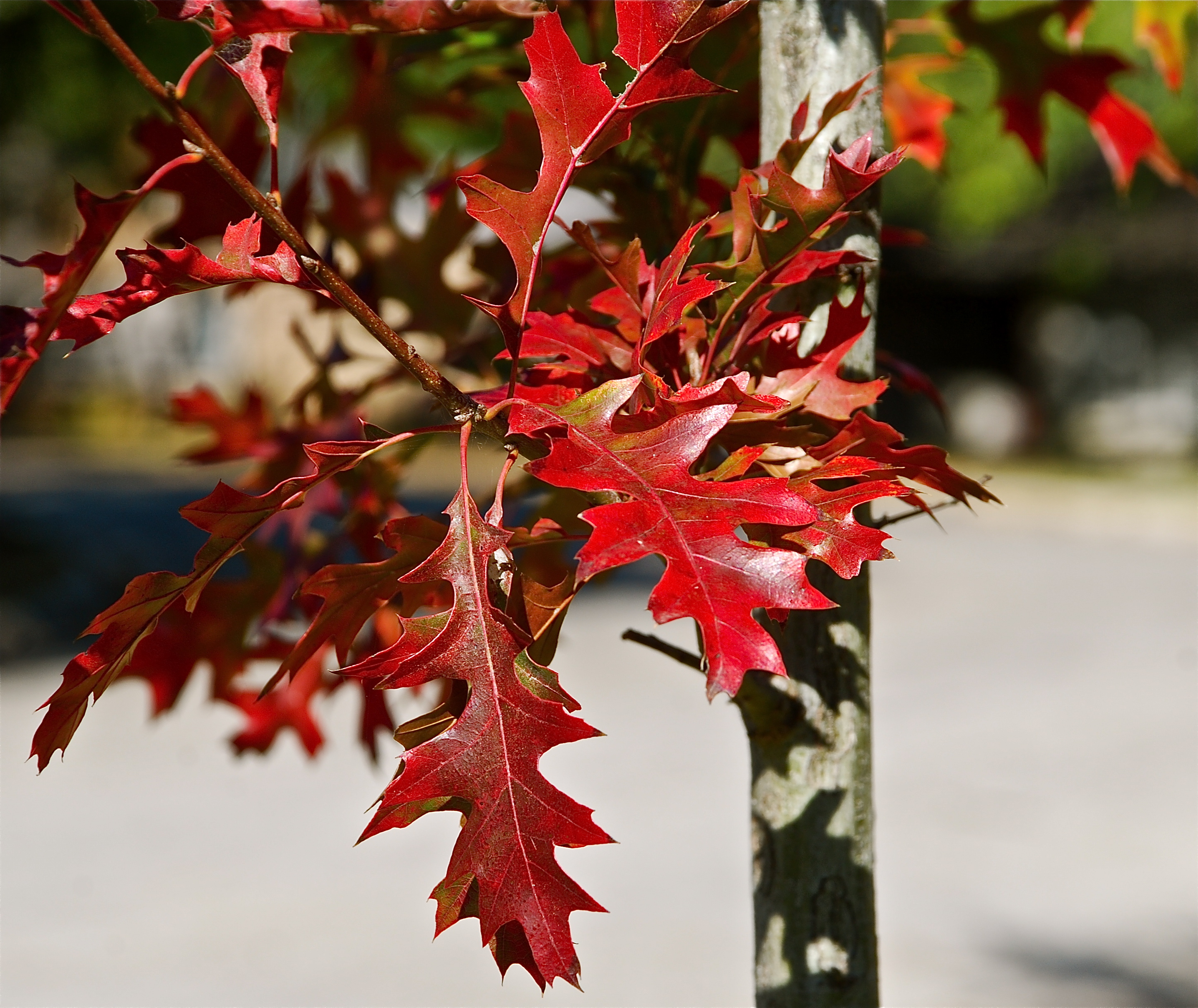
Standing beneath the Shumard Red Oak made me feel like I was standing in a temple of the Most High.  The breeze was ruffling its leaves, and they in turn were prompting sacred tongues to utter incantations of their divine purpose.  For though the leaves face eminent extinction and expulsion from the branches, in their dying they’ll fall and create warm blankets to cover the ground.  In so doing they will protect the life that lies beneath the surface during winter’s cold, cold days.  Even at the close of winter their goodness will not be at an end for as they deteriorate, the remaining bits and pieces will add nutrients to enhance the soil.  Thus goes the circle of life and the interdependency of all things.

God’s voice thunders in marvelous ways; He does great things beyond our understanding.  ~Job 37:5  ✝

178. All the flowers of all the tomorrows are in the seeds of today and yesterday. ~Chinese Proverb

In the garden the door is always open into the holy –
growth, birth, death.
Every flower holds the whole mystery in its short cycle,
and in the garden we are never far away from death,
fertilizing, good, creative death.
~May Sarton

Image

Every year the unseen becomes visible as new life explodes from quiet, dark, sustaining wombs.  Beneath the soil roots grow and above the surface tiny leaves yield proof of life.  Enlivening rains come, and the leaves grow.  Daylight hours lengthen, and they grow more.  Amid the leaves emerge buds, and they grow.  Buds burst into flowers, the flowers fade, and their petals fall.  Fruits, seed heads, or pods appear, and they ripen.  Fruits are harvested, seeds are spilled onto the soil, and buds are set inside woody canes or branches.  Then comes the time of rest, the discontinuance of the same, the different new genesis.  The beginnings, the middles, the ends–never an ending without a beginning–never a beginning without an ending, so goes the cyclic constancy of a garden.

The land produced vegetation; plants bearing seed according to its kinds and trees bearing fruit with seed in it according to their kinds.  And God saw that it was good.  ~Genesis 1:12  ✝