253. Blue color is everlastingly appointed by the Deity to be a source of delight. ~John Ruskin

I’m a native of Europe and Siberia.
My name comes from the Greek word meaning “Dolphin.”
My dried flowers were used to dress wounds at the Battle of Waterloo.
European settlers made ink from my dried flowers.
I was used by West Coast Native Americans to make blue dye.
I’ve been said to represent the tears of the Virgin Mary.
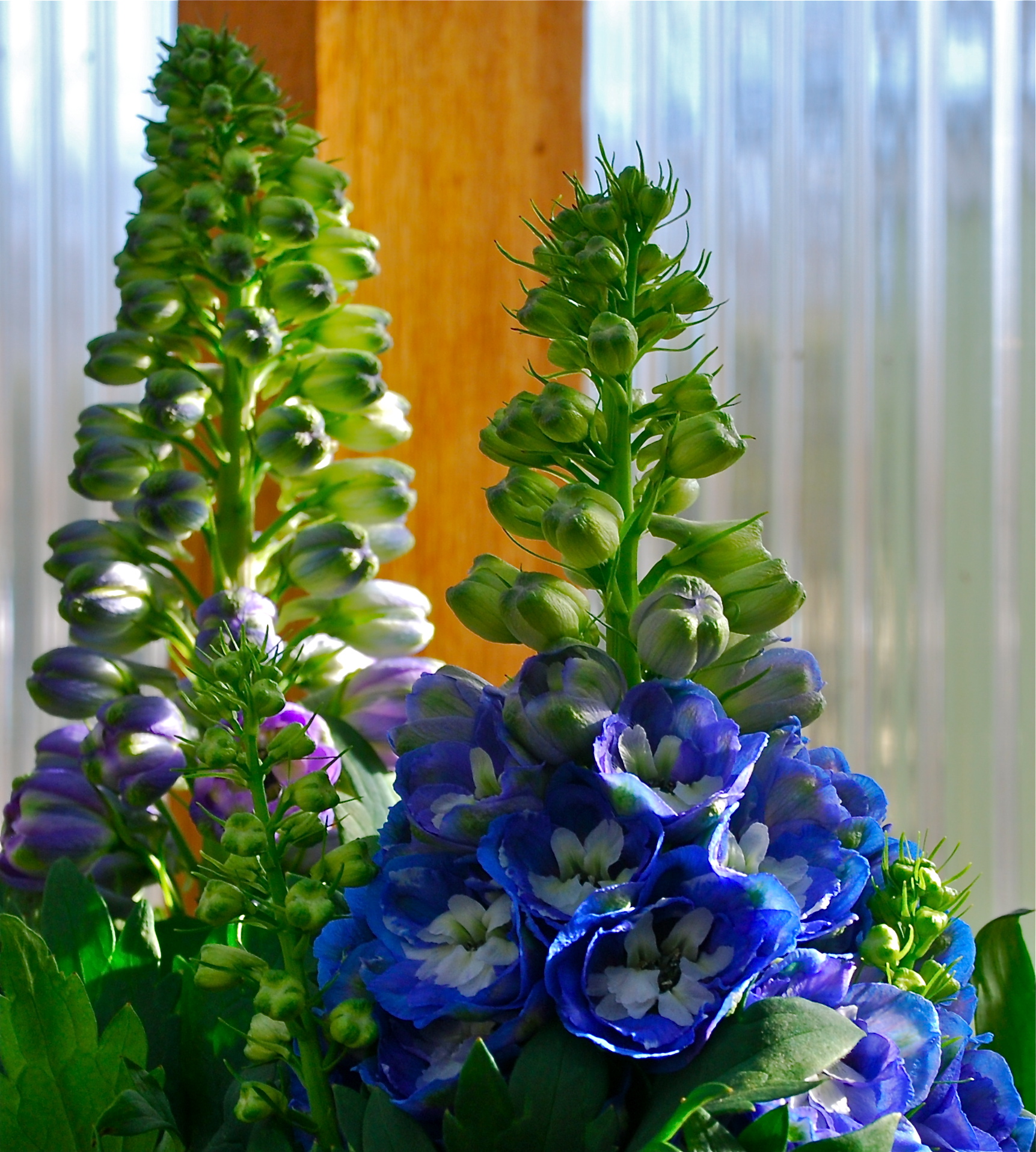
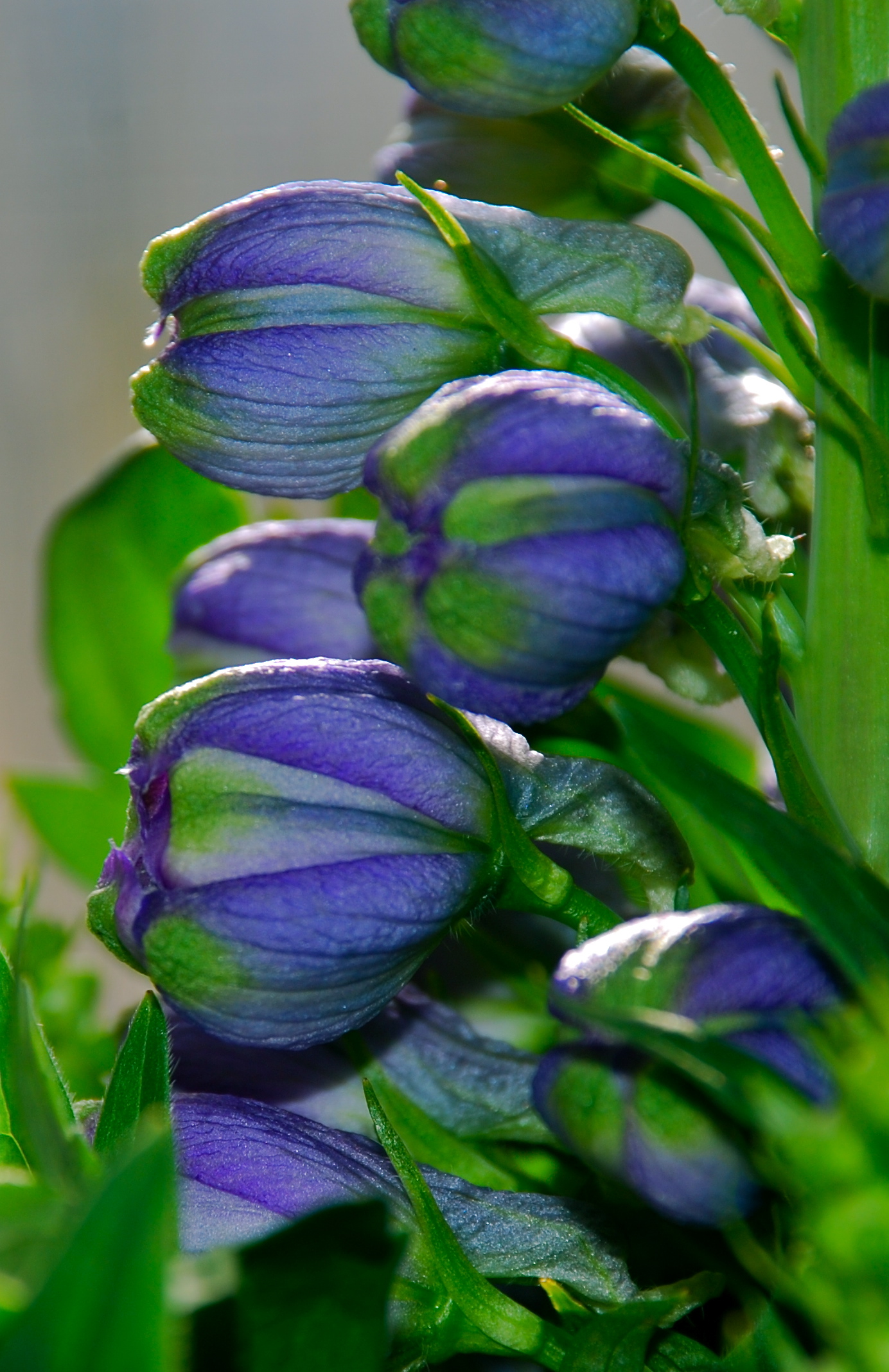
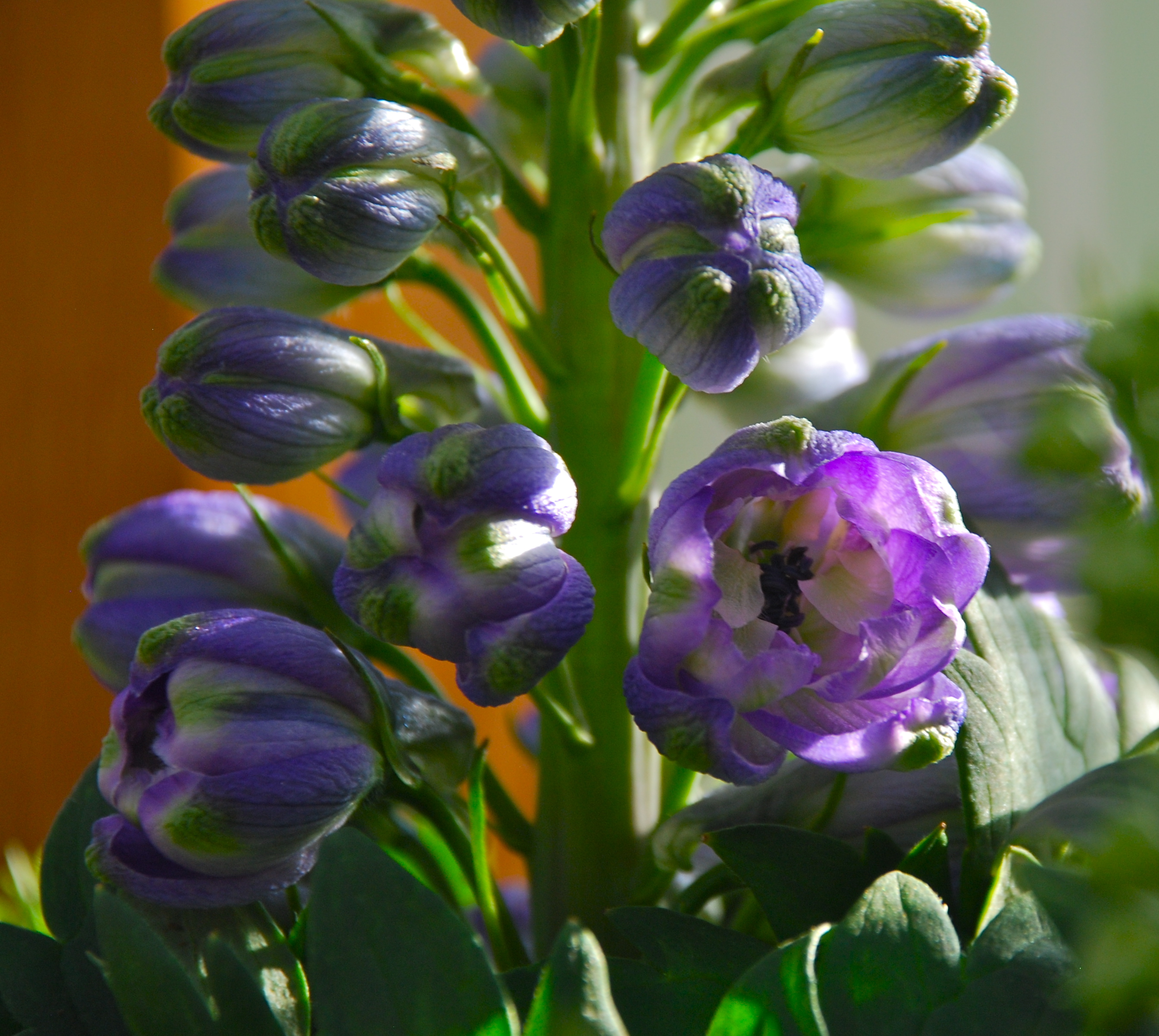
Who am I? My name is Delphinium.
I can be blue and I’m beautiful.
Image

Image

Image

Blue is a popular color in the garden perhaps because it is relatively rare one in the plant world.   In fact, blue is said to be the most rare of colors amongst flowers.  Thus I am blessed to live in a place whose state flower is blue and whose landscape in places becomes covered in seas of bluebonnets for several weeks every spring.  Also, though Delphinium is not a staple in our landscape, they appear in pots in the nurseries this time of year before much, if anything, is blooming outside.  So I can, like I did last week, buy some to brighten the drab days of winter.  Both of the ones I got this year were marked as blue, but now that the second one is opening, I see that it’s going to be purple.  But hey, who am I to complain since purple is another of my favorite colors, and it too is often hard to come by in the garden.  Regardless of the color, now that I know that at one time delphiniums represented Mary’s tears, I’ll have yet another way of remembering what my salvation cost Mary and her precious son, the Christ.

May those who sow in tears reap with shouts of joy.  ~Psalm 126:5  ✝

252. Look deep into nature, and then you will understand everything better. ~Albert Einstein

The cycle of nature—the progress from seed to fruition to dying-off and then renewal in the spring—was mirrored in the wild fields and the cultivated garden alike, while the fragility of harvest—the possible interruption of the cycle by drought, wind, or other natural calamities— established the pattern of how humans understood the workings of the cosmos.  The oldest of surviving sacred stories have their roots in the garden and reflect how humanity sought to understand the changeable patterns of their world…  ~Peg Streep

Image

There is nothing better for mortals than to eat and drink, and find enjoyment in their toil.  This also, I saw, is from the hand of God; for apart from him who can eat or who can have enjoyment. For to the one who pleases him God gives wisdom and knowledge…  ~Ecclesiastes 2:24-26a  ✝

**In the photo is a pink poppy in bloom next to one that has already lost the petals which surrounded its seed pod.

247. The breeze at dawn has secrets to tell you. Don’t go back to sleep. ~Rumi

Every morning is a fresh beginning.
Every day is the world made new.
Today is a new day.
Today is my world made new.
I have lived all my life up to this moment,
to come to this day.
This moment–this day–is as good as any moment in all eternity.
I shall make of this day–a heaven on earth.
This is my day of opportunity.
~Dan Custer

Image

Welcome the new day; it is a new creation.  Greet it with gratitude.  It is a  nonrepeatable gift; it is a promise of resurrection.  Miss not the day’s beauty.  Miss not the joy.  Miss not the wonder.  Miss not chances to make the world a better place.  Miss not opportunities to praise God!

The steadfast love of the Lord never ceases, his mercies never come to an end; they are new every morning; great is your faithfulness.  ~Lamentations 3:22-23  ✝

245. Novelty is an essential attribute of the beautiful. ~Benjamin Disraeli

What was any art but a mould
in which to imprison for a moment
the shining elusive element
which is life itself.
~Willa Cather

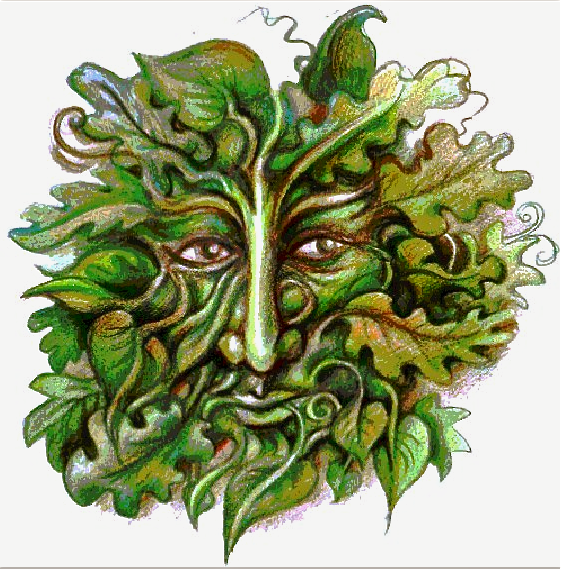
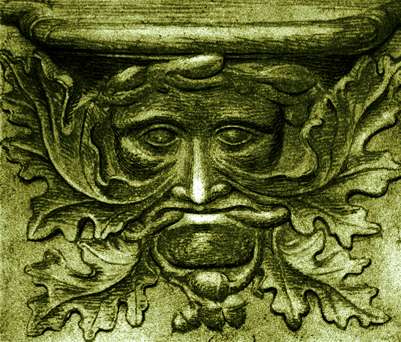
The foliate head and the Green Man are sculptures or drawings in which almost always a man’s face is surrounded by or made from leaves; it is a face that merges nature with humanity.

Image

The Green Man is “a mythic figure that appears in art and legend throughout the centuries and independently in diverse cultures.”  Purportedly the images of these leafy men represent life irrepressible.

Image

Countless numbers of the leafy faces can be seen on medieval castles, abbeys, and churches.  In fact it was the Europeans who are said to have spread the Green Man’s image and lore to the parts of the world they colonized.

Image

For some the Green Man’s image symbolized the triumph of green life over death and winter.  Others considered him the protector of nature; parallels have even been drawn between the Green Man and Jesus Christ.

Image

I see the foliate face as a mould, as Cather suggests, in which can be seen the artistic quintessence of vegetative and human life.  And as Disraeli proposes, it is the novelty of its beauty, unconventional as it may be, that is most appealing.  On days when I can’t or don’t get out into my garden, I see my semi-human, foliate-faced “friend” on the ground at the end of the stone path out my back door.  He is a reminder of the strong connection I feel to the natural world and God, its holy Maker. His eyes seem to peer longingly from behind his verdant leafiness in the same way I perceive that the Lord peers down at the world wanting to know, protect, and love His children.  His countenance evokes thoughts of man’s need to create as the made-in-the-image-heir of a creative God, of man’s desire to feel connected to the whole of Creation, and of man’s hope that new seasons will arise again and again as promised.  The man in the stone may seem to be locked in perpetual silence, but he speaks to me and I often talk to him.

…the Lord make His face to shine upon you, and be gracious to you; the Lord lift up His countenance upon you, and give you peace.  ~Numbers 6:25-26  ✝

243. A Summer fog for fair, a Winter fog for rain. ~Weather Lore prediction

Oh fog! Oh fog!
What can I say?
You’ve painted the day
A thick shade of grey.
~Adapted excerpt from a poem by Andrew D. Robertson

Image

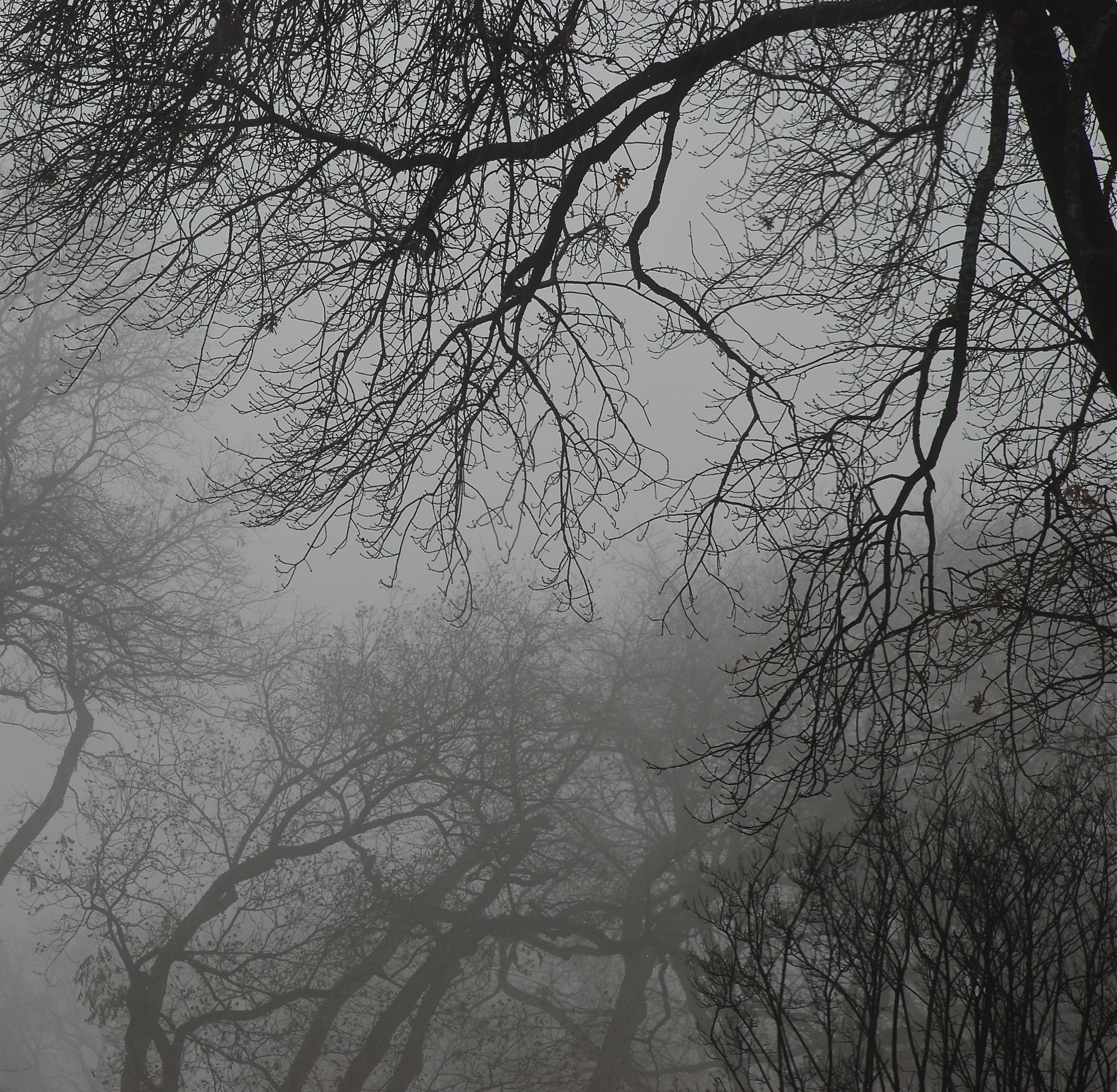
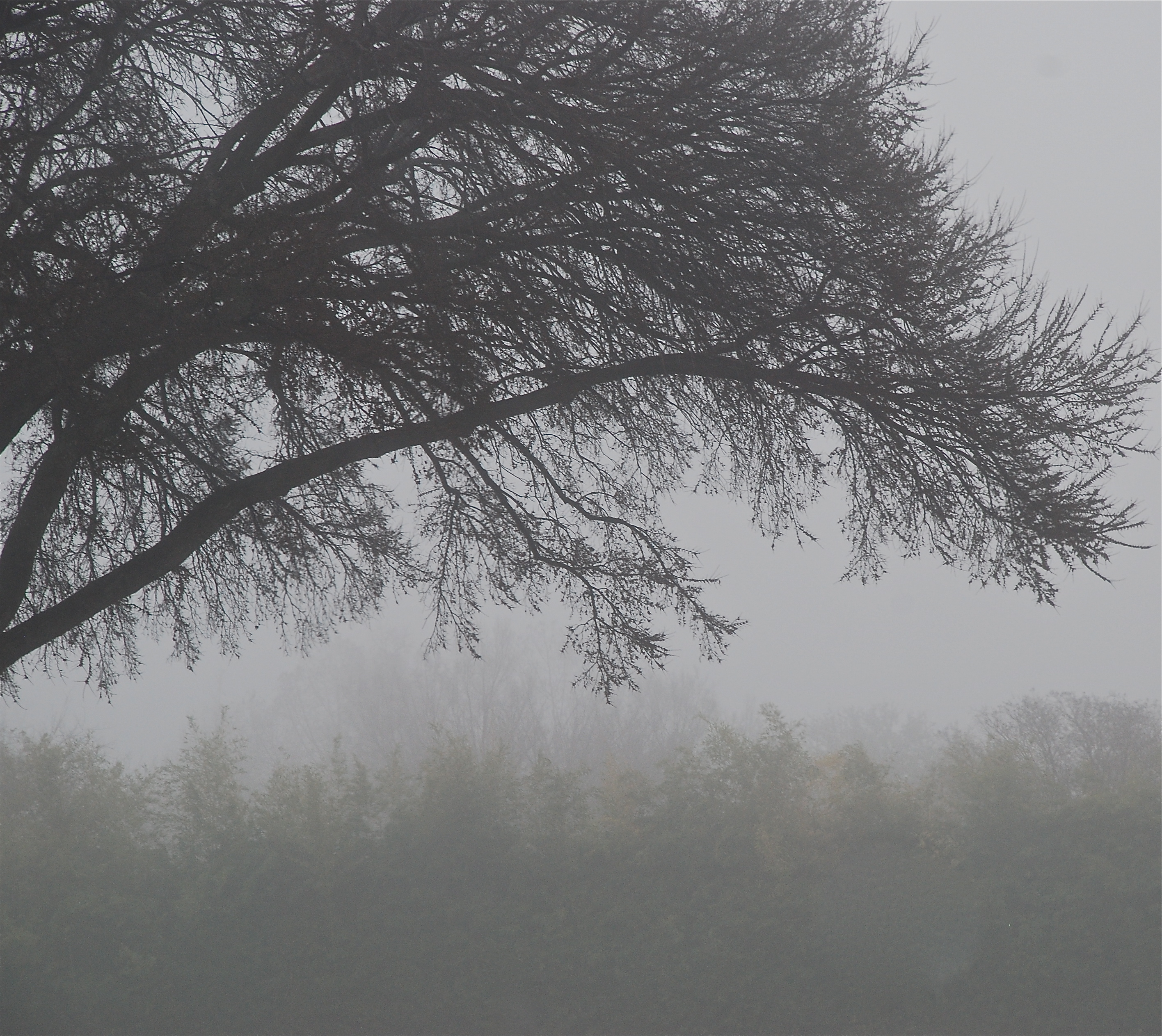
A textbook definition of fog is that it is a collection of water droplets or ice crystals suspended in the air at or near the Earth’s surface–a cloud of sorts, as it were.  Since it wasn’t cold enough last night for this one to have been formed from ice crystals, it had to have been from the little bit of misting rain we got yesterday.  Thus, the only strange thing is that I’ve never seen a fog of either kind come so early or last as long as this one has, at least here in north central Texas.  And the somewhat dense fog not only wrapped its arms around the morning, but it has also kept us held tightly in its embrace all day long.  Furthermore, as darkness closed in on us, it still hadn’t lifted.

The fog is an illusion–
A master of disguise;
Which hides the tangible
Before our very eyes.

It gives an air of mystery
That has long prevailed.
Dangerously intriguing
Is the fog’s foggy veil.
~Excerpts from a poem by W. Salley

Image

In the silence of its thick haze this strange January fog has been reducing visibility and cloaking our city and the outlying areas in its mysterious veil of shyness since first light.  In grayness not unlike a pigeon’s feather, it has literally held our world close to the ground all day long, coating all the eyes could see.  And lying heavy on all that it encompassed, it kept the sun pushed back which sheltered the earth, smothered most of the day’s colors, and blurred everything as it clung to all possible shapes it could find.

Foggy mist, misty fog
Marvelous manifestation
Of magnificent nature!
~N. Subbarman

The fog descends
in the wee hours of dawn
like a sacred thing.
~John Tiong Chunghoo

Image

Like most weather events, fog is often seen as some kind of spiritual force as it creeps along the ground and across the sky.  Actually there seems to be something about all weather phenomena that lends itself to perceptions of sanctity.  Perhaps tis so because all such events fall from the heavens overhead or, like the fog, are a part of earth’s mysterious beneath-the-surface workings.  And because they are beyond our control, we feel helpless to stop them and sometimes lives as well as homes are lost in the wake of the more forceful ones.  Genesis tells us that a mighty wind swept over the waters as God set about the business of Creation, and in His hands He held the elements of earth, air, fire, and water.  As He cast them out upon the wind, they were carried throughout the universe on its wild wings.  How could one not stand in awe and consider sacred such immense and mysterious powers!

In the beginning when God created the heavens and earth, the earth was a formless void and darkness covered the face of the deep, while a wind from God swept over the face of the waters.  Genesis 1:1  ✝

240. …everyone wants to be excited by something magical and wondrous – to be reminded of how they once saw the world… ~John Geddes

“I watched bulls bred to cows, watched mares foal, I saw life come from the egg and the multiplicative wonders of mudholes and ponds, the jell and slime of life shimmering in gravid expectation. Everywhere I looked, life sprang from something not life, insects unfolded from sacs on the surface of still waters and were instantly on prowl for their dinner, everything that came into being knew at once what to do and did it, unastonished that it was what it was, unimpressed by where it was, the great earth heaving up bloodied newborns from every pore, every cell, bearing the variousness of itself from every conceivable substance which it contained in itself, sprouting life that flew or waved in the wind or blew from the mountains or stuck to the damp black underside of rocks, or swam or suckled or bellowed or silently separated in two.”  ~E. L. Doctorow

Image

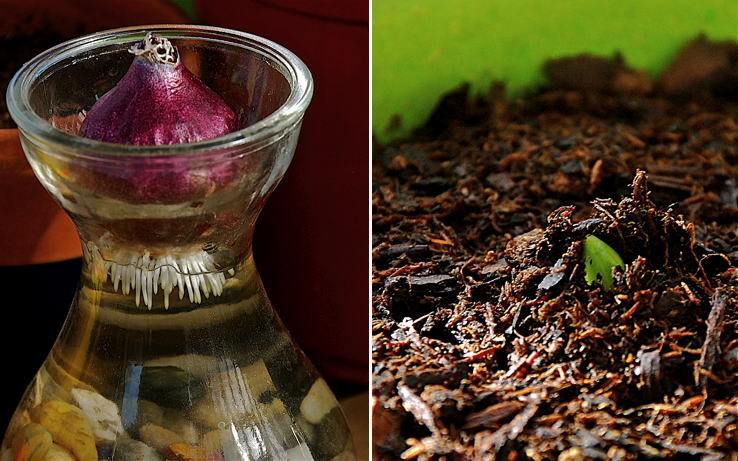
Life!  Life I say!  Life-sacred and mysterious–I’ve had a hand in creating life again!  And as usual, it is ever so magical and wondrous!  Since early last week I’ve been setting bulbs in containers in the greenhouse, and even as cold as it has been today, I made my daily visit out there to see if anything had started happening.   And as tiny a start as it was, life had indeed begun!  Actor Mike Dolan once said, you should “anticipate the day as if it were your birthday and you were turning six.”  I did and it was and I responded like any normal 6 year old, with a dropping of my jaw and squeals of joy.  The photos aren’t great but you can see where roots have started forming on the bottom of a hyacinth bulb and the tiny green emergence of a ranunculus bulb.

You garden because you need
to make a profound connection with the Earth.
It’s your birthright.
A primordial longing to experience
and participate in the magic of nature.
The deep knowing that ultimately nature is your teacher.
Your guide.
You’re a participant. A cog in the wheel. Not in charge.
~Fran Sorin, Gardening Gone Wild,  http://www.gardeninggonewild.com/

My garden and my greenhouse are my classrooms, and the Lord is my teacher and facilitator.  “See, God exalted in His power; who is a teacher like Him?”  ~Job 36:22

236. Everything in creation has its appointed painter or poet and remains in bondage like the princess in the fairy tale till its appropriate liberator comes to set it free. ~Ralph Waldo Emerson

Poetry is not always words.
Poetry is a layering of meanings…
Poetry evokes emotional or sensual responses…
Poetry creates musical or incantatory effects…
Poetry forms connections not previously perceived…
~Audrey Foris

Image

There are “wordless voices,” as Foris suggests, and they speak in a variety of ways.  Some are heard in music instead of poetry while others are witnessed in the spectacle of a drama or ballet, or they may be perceived in the steps and rhythm of a dance routine.  Humans can’t help but find a way to express what profoundly breaks into their inner silences and urges expression for they, being made in the image of a limitless Creator, are innately creative in some way.

As for me an artist or a poet I am not, but the desire to be gifted in such a way inhabits my soul.  I’ve tried my hand many times at being both but any real talent for either continues to be imprisoned within me.  So now with no “appropriate liberator” in sight I try only with my camera to satisfy the yearning of my incarcerated artist, and from time to time, at least in my own eyes, I achieve a marginal level of success.  How could I not for in its vast array of choices, the earth is a wondrous wellspring even with nothing more than a point and shoot camera.  As for my jailed poet self, her craving is partially satiated because life and the natural world have a way of writing their own poetry even in a photograph and because accomplished others have published readily, accessible poetic works.

So God created humankind in His image, in the image of God He created them; male and female He created them.  ~Genesis 1:27  ✝

230. He who marvels at the beauty of the world in summer will find equal cause for wonder and admiration in winter… ~John Burroughs

Nature looks dead in winter because
her life is gathered into her heart.
She withers the plant down to the root
that she may grow it up again fairer and stronger.
She calls her family together
within her inmost home to prepare them
for being scattered abroad upon the face of the earth.
~Hugh Macmillan

Image

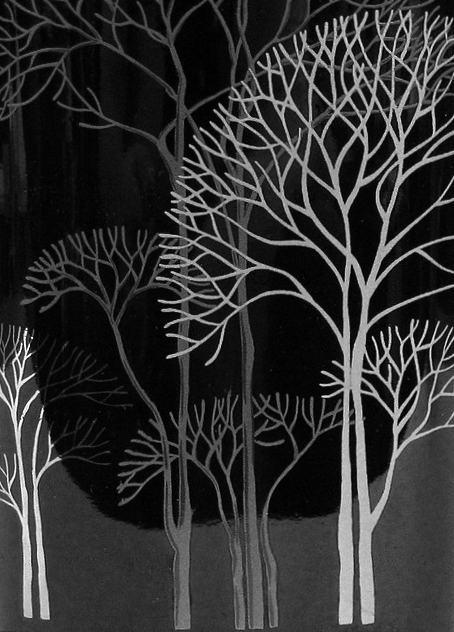
This time of year there’s a separateness in the garden which I rather like, but I’ve heard others say that they detest the bleak lifelessness of winter.  When asked why, they’ll tell me it’s because it fills them with a sense of loneliness or it speaks too strongly of death.  I, on the other hand, find a comforting orderliness in its realm because I can see the garden’s defining lines again after they’d been blurred or even obliterated in some cases by summer’s reckless, spreading abandon.   And when I’m out working in the winter garden as I was today, I don’t feel any sense of sadness; the feeling I get is more of a silent, but willing withdrawal–a retreat back to a trusted, reviving source.  It seems to me that the barren remains stand self-assuredly in an awareness of Creation’s ever-faithful, annual renewal and somehow understands winter’s lesson of waiting with expectancy and hope.

As long as earth endures, seedtime and harvest, cold and heat, summer and winter, day and night, shall not cease.  ~ Genesis 8:22  ✝

227. This, this is Christ the King, whom shepherds guard and angels sing; haste, haste to bring him laud, the babe, the son of Mary. ~William C. Dix

Image

May your home be a sanctuary
wherein you feel the continual presence of Yeshua, the Christ.
May you feel His mantle of love perpetually
surrounding you and all those you love.
May there be forgiveness and healing wherever there is brokenness.
May your life be long and yield a multitude of days
filled with laughter, love, and well-being.
May your world be blessed with plentitude and joy.
May there always be love in your heart; in your soul, may there be peace;
and in your mind may tranquility reign.
May each season of the coming years bring you
the best they have to proffer.
May you never be lacking enough and never want for more.
On rainy or troubling days may there be rainbows,
physical or spiritual, to gladden your eyes and heart and spirit.
As you listen for the sacred incantations of heaven’s orbs
may your hear the “echoes of the spheres”
speak of the Holy One and His goodness and mercy.
O come let us adore Him! He has come! The Messiah has come!

For I am convinced that neither death, nor life, nor angels, nor rulers, nor things present, nor things to come, nor powers, nor height, nor depth, nor anything else in all creation, will be able to separate us from the love of God in Christ Jesus our Lord.  ~Romans 8:38-39  ✝

225. Stripes that are red like the blood shed for me. ~Author Unknown

There’s a song in the air!
There’s a star in the sky!
~Joseph G. Holland

Image

The strongest connection one might make between the origins of the candy cane and any intentional Christian association is to guess that possibly some unknown person, at some indefinite time, took a long-existing form of sweet (i.e., straight white sticks of sugar candy) that was already associated with Christmas and produced bent versions of it to represent a shepherd’s crook and/or make it easier to hang on Christmas trees, but even that general association is nothing more than mere supposition with no supporting evidence behind it.  This is charming folklore, but one should not lose sight of the fact that such stories of the candy cane’s origins are, like Santa Claus, myths and not “true stories.”

There is one verifiable (albeit indirect) religious connection associated with the modern candy cane, however.

In 1919 Bob McCormack began making candy canes for local use and sales in Albany, Georgia, and by the middle of the century his company (originally the Famous Candy Company, then the Mills-McCormack Candy Company, and later Bob’s Candies) had become one of the world’s leading candy cane producers. But candy cane manufacturing initially required a fair bit of labor that limited production quantities (the canes had to be bent manually as they came off the assembly line in order to create their ‘J’ shape,) and it was McCormack’s brother-in-law, a Catholic priest named Gregory Harding Keller, who came up with the solution: Father Keller invented the Keller Machine that automated the process of shaping straight candy sticks into candy canes.   ~Barbara Mikkelson

The woman said to him, “I know Messiah is coming” (who is called Christ).  “When he comes, he will proclaim all things to us.”  ~John 4:25  ✝