95. How cunningly nature hides every wrinkle of her inconveivable antiquity under roses and violets and morning dew! ~Ralph Waldo Emerson

In the house of words was a table of colors.
They offered themselves in great fountains,
and each poet took the color he needed:
lemon yellow or sun yellow,
ocean blue or smoke blue,
crimson red, blood red, wine red.
Eduardo Galeano, Uruguayan writer
Screen Shot 2016-07-11 at 11.05.27 PM.png

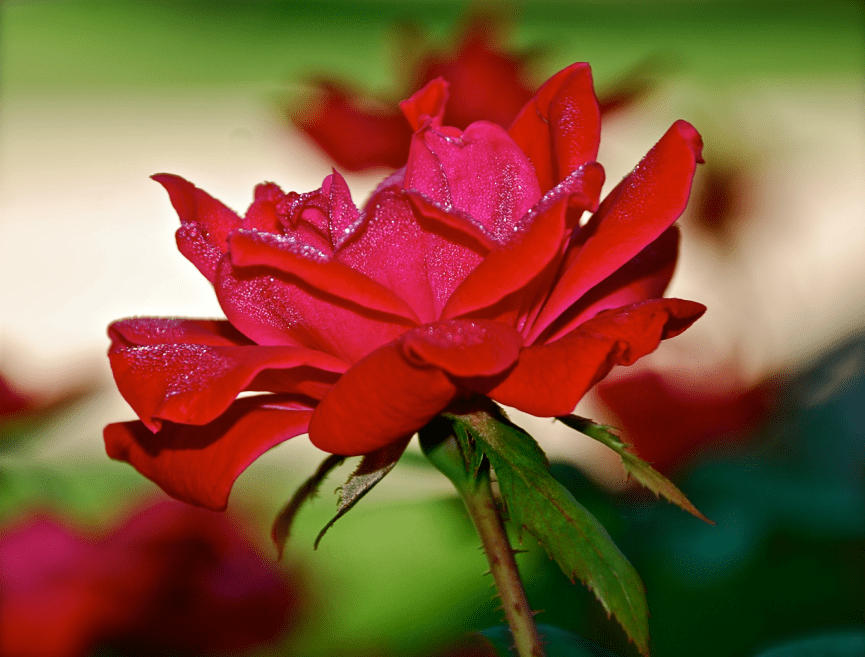
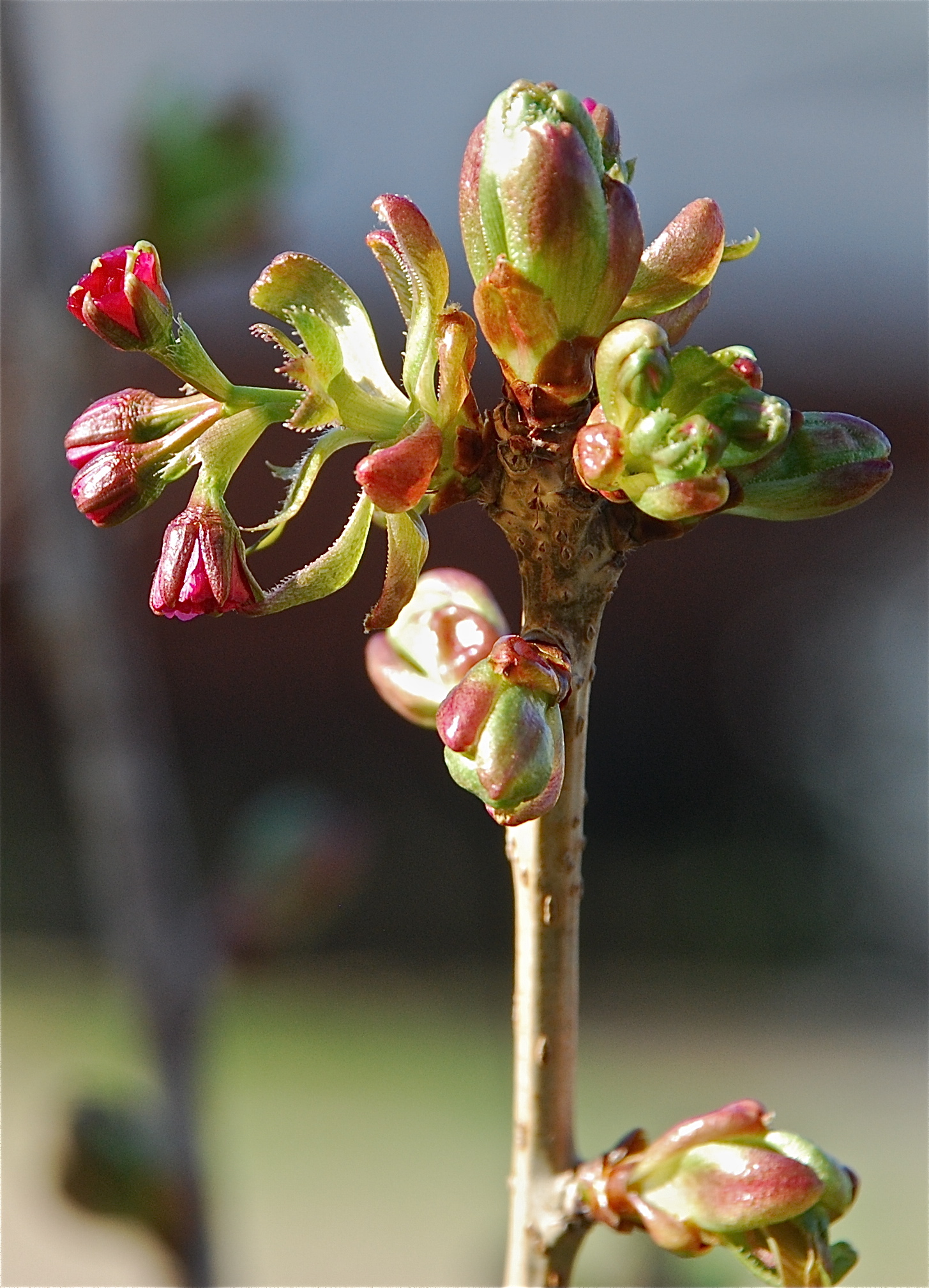
We see in Scripture that red is a color valued by the Lord for it played a prominent role in the building of the wilderness tabernacle in the Old Testament, and it is the color of life-giving blood, both ours and Christ’s.  And Galeano’s “poet” writes such striking rhymes and stanzas with it that one might believe he and the Lord love red the best.  In fact so lyrical is the poetry of red in a garden that my wanderings come to a halt, at least for a moment, when I come upon red blossoming beauties.  It was American fashion designer, Bill Blass, who said “red is the ultimate cure for sadness,” and I would have to agree.  Bright reds in a garden evoke an energizing kind of joy, and the deep reds add to that an air of a smiling, sultry mystery.  So I’m not at all surprised that “a red letter day” came into being to indicate one that is joyful and memorable.  I am surprised, however, that bees cannot see the color red and so don’t pollinate red flowers. When it comes to red blossoms pollination has to be done by birds, butterflies, bats, or the wind. I also find it odd that red is the topmost color of the rainbow, but it is the first color one loses sight of at twilight. No matter what the color red is or is not, does or does not do, I always think of it as a zesty spice in the garden, titillating to the senses and the eyes.

So I commend the enjoyment of life, because there is nothing better for a person under the sun than to eat and drink and be glad. Then joy will accompany them in their toil all the days of the life God has given them under the sun.  ~Ecclesiastes 8:15 ✝
94. The roots of all goodness lie in the soil of appreciation for goodness. ~Dalai Lama

Every day that we wake up

is a good day.

Every breath that we take

is filled with hope for a better day.

Every word that we speak

is a chance to change what is bad into something good.

~Walter Mosley

Image

Scripture says that at the end of each day of Creation’s beginnings, God looked at what He made and saw that it was good.  Mankind, then, draws every breath amidst goodness.  Yes, there are days fraught with trials and grief, but they alter not the fabric in which all life was woven.  Goodness and the miraculous are as constant as the sun, moon, and stars, and man has a chance of finding and being be blessed by their graciousness when he lets go of his yesterdays and looks only to the day at hand.  If his cup is to be filled with promised goodness and mercy, he must empty the chalice of his being on a daily basis and respond to the “tugs of divinty” inside himself.  Otherwise the bitter stings of the past will poison the mix and rob him of what is to be.  Man’s days have a planned shape in the soil of goodness, and good’s bounty perpetually rises to the surface, not because of what man is or what man does, but because of who God is and what He has already done.

God saw all that He had made, and it was very good. . .Thus the heavens and earth were completed in their vast array.  ~Genesis 1:31a, Genesis 2:1

93. If there is magic on the planet, it is contained in water. ~Loren Eisley

Let us bless the grace of water:

Flowing crystal clear and free through delighted emptiness…

A ceaseless traverse of presence…

Sounding out its journey, raising up buried music

Where the silence of time becomes almost audible…

Let us bless the humility of water, always willing to take the shape

Of whatever otherness holds it…

~Edited and adapted excerpts from IN PRAISE OF WATER

by John O’Donohue-Irish poet, philosopher, and scholar

Image

The Celts reverenced God in all that had life and in what He gave mankind to sustain life.  They understood that God speaks to man not only through the Bible but also through Creation.  One comes into awareness of such when in Genesis he/she finds that Creation is rooted in “the waters of God’s” very being for when the Ancient of Days separated the waters, it gave mankind the soil of the ground in which to grow and nourish vegetation needed for survival and continuance. When I read those opening pages of the Bible’s first book, I often imagine the four elements–earth, wind, fire, and water swirling about in a great maelstrom, and out of that chaotic wildness Yahweh’s mighty hands plucking and putting in place everything needed to birth Creation.

J. Philip Newell tells us one of his books that “the early Celtic church was characterized by patterns of worship under the open skies.”  Evidence of this, he says, can be seen in the “Celtic monastic communities” that “dotted the coastlines of Ireland and Britain” where “earth, sea, and sky, rather than enclosed sanctuaries, were the temple of God.”  For the same reason I’m always eager to get back out into my garden.  In my small piece of Eden I feel very close to God.  Therein I find such comfort and peace as I cherish the beauty, reverence His presence, and try to grasp His mystery.  Whenever and wherever rain falls may the power and presence of God be evident in the “grace of water.”

I will send you rain in its season, and the ground will yield its crops and the trees of the field their fruit.  ~Leviticus 26:4  (NIV)   ✝

92. All deep things are song.  It seems somehow the very central essence of us, song; as if all the rest were but wrappages and hulls! ~Thomas Carlyle

Flowers have spoken to me more than I can tell in written words.
They are the hieroglyphics of angels,
loved by all men for the beauty of their character,
though few can decipher even fragments of their meaning.
~Lydia M. Child

Image

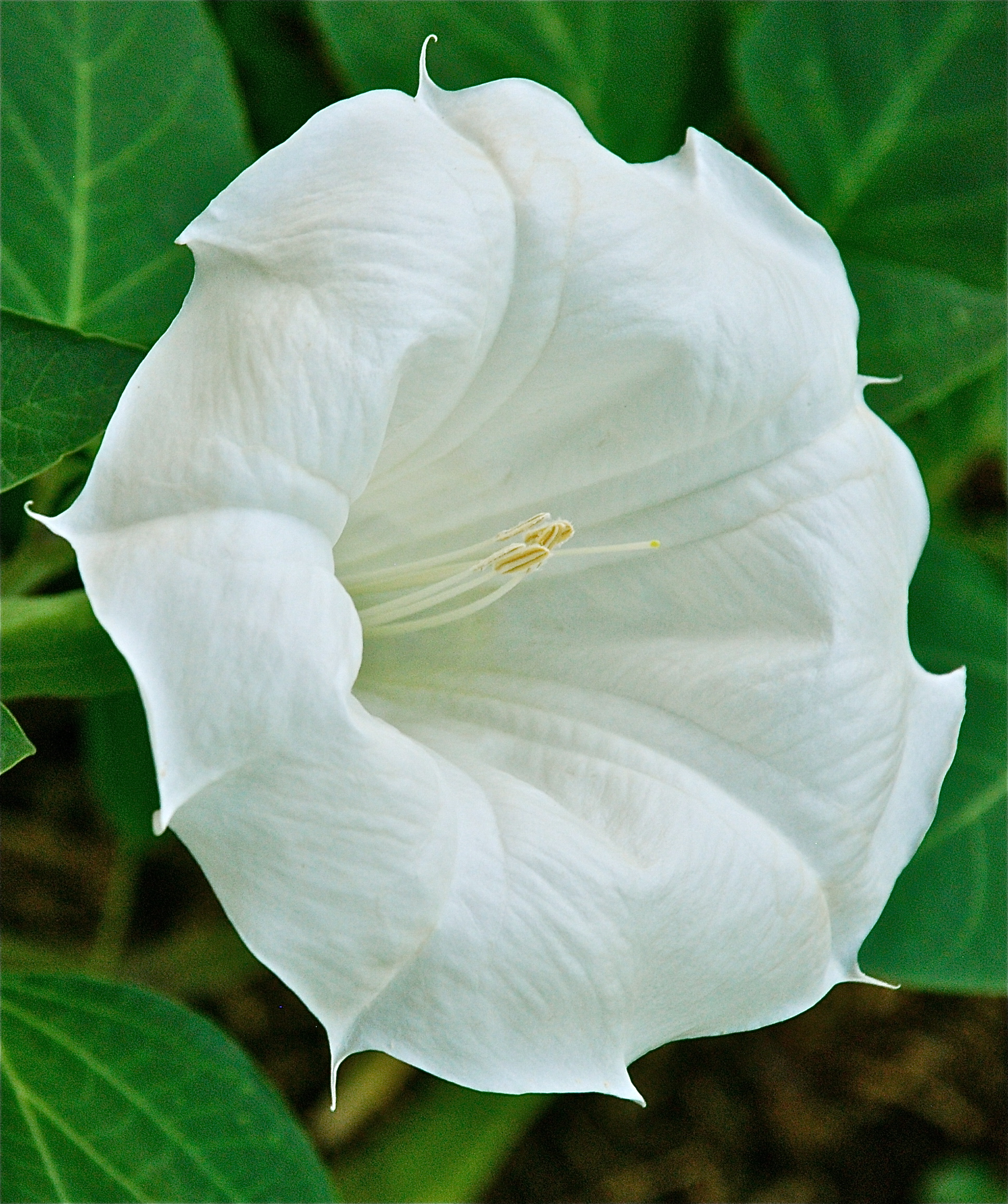
Not only is this large white flower an angelic hieroglyph, it’s common name is Angel’s Trumpet, and from start to finish the cherubic things hold me captive in “the beauty of their character.”  Though the flower itself is not new to me, until recently I hadn’t had one growing in my yard so that I could observe its habits from beginning to end.  Now that I’ve planted one, I’m continually fascinated that the flower begins life in what looks like an unassuming okra-like pod and ends its cycle in a curious spiny capsule.  When the plant emerges in the spring, it leafs out some before the okra-like-pods begin to appear.  Then the tiny buds grow longer and longer until they reach about 4 inches in length.  At that point the tip end splits open to reveal about an inch of a tightly wrapped, almost beige bud. Then the next morning the still tightly wrapped flower fully emerges from the pod and turns white.  Later in the day when it’s almost dark, the exquisite blossom finally unwinds and opens into the whiter-than-white glorious “trumpet” you see in my photograph.  Sadly its completed ascent into glory lasts for only a wee while because when the first rays of light hit it the next morning, it withers and dies.  After the withered “trumpet” falls away, the flower’s calyx is replaced by a large and very interesting prickly pod.  If left to dry and split, the spiny capsule spills seeds which fall to the ground guaranteeing that next year more “angels” will have trumpets to play.

Also at your times of rejoicing–your appointed festivals and New Moon feasts–you are to sound the trumpets…  ~Numbers 10:10

91. Deep in the sun-searched growths the dragonfly hangs like a blue thread loosened from the sky. ~Dante Gabriel Rossetti

In these times when geography becomes virtual

And developers urbanize the earth,

May the gardener continue to hold true ground,

Keeping the intimate knowing of the clay and nature’s benefactors alive,

Nourishing us with the fruits  and flowers of the earth,

Serving as custodian of that precious threshold

Where the rhythm of nature with its serene pulse

And sublime patience sustains our bodies and restores our minds.

~Edited and adapted excerpt from a book of blessings

by John O’Donohue, Irish poet, philosopher, and scholar

Image

The blue-eyed beauty in the photo is not a dragonfly.  It is a spread wing damselfly, but it certainly looks like it might have been something loosed from heaven like Rossetti’s dragonfly.  Its eyes were strikingly blue as was the juncture between its wings and the very tip of its tail, but sadly at dusk my camera insisted on popping up the flash which washed out the blueness a bit.  It wasn’t faded enough however for me not to be thankful that on the 5th day with the birthing of earth’s creatures came the senses–seeing, hearing, smelling, tasting, and touching.  Now colors and the lights of the sun, moon, and stars could be seen.  The wind, rain, and crashing of waves could be heard.  The earth’s aromas and fragrances could be smelled, it fruits tasted, and its textures touched.  Columbanus, a 6th century Irish monk, went so far as to say, “If you wish to know the Creator, come to know His creatures.”  The knowing we should hope to achieve is not a knowing that comes only through our sighted eyes and intellect; it should also come through our God-given senses and from looking at Creation with the eyes of our hearts.  All facets of Creation and everything we’ve been given to sustain life here are pieces of the puzzle of God’s mystery.  Taking a look at all that He made, knowing what He values, and reverencing what God brought into being is a way of knowing more of Him.

“But ask the animals, and they will teach you, or the birds of the air, and they will tell you; or speak to the earth, and it will teach you, or let the fish of the sea inform you. . .”  ~Job 12:7-8

90. “Come with me into the field of sunflowers. Their burnished disks, their dry spines creak like ship masts. . .” ~Mary Oliver

At early dawn, like soldiers in their places stand

Those voiceless watchers at the morning’s gate.

And all day long that silent worship lasts,

And as their god moves grandly down the west,

And every stem a lengthening shadow casts

And watch till every lingering ray is gone,

Then slowly turn to greet another dawn.

~Edited poem by Albert Bigelow Paine

Image

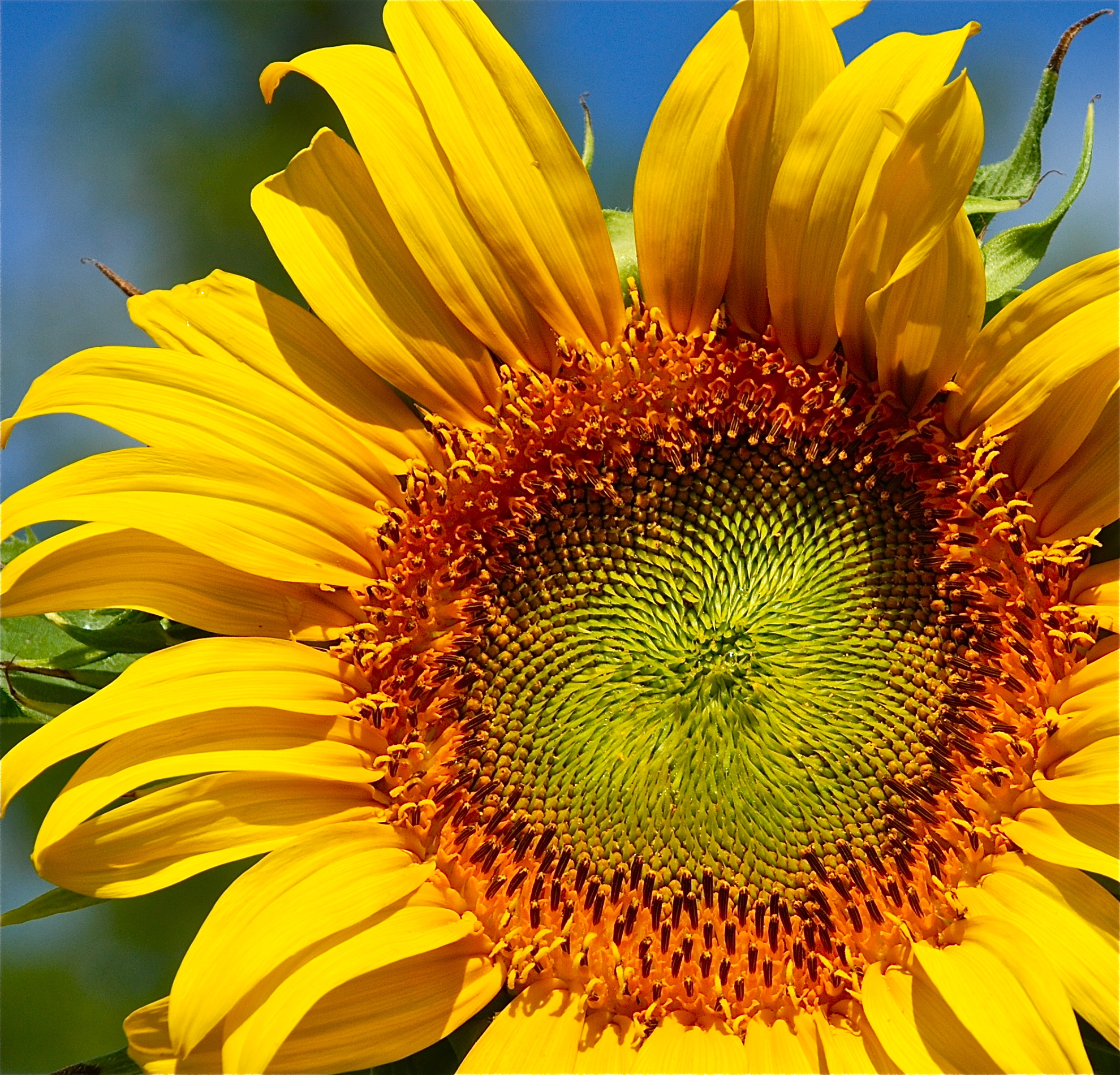
It would have taken no more than the first few words of Mary Oliver’s poem for me to want to join her in that field of sunflowers.  I would go anywhere sunflowers grow, for surely the flowery “soldiers” as Paine calls them, as well as the flocks of wandering “beasties” that visit them, have adventurous tales to tell those who thirst for nature’s narratives.  The voiceless worshippers waiting for weeks at dawn’s opening gate know well the demon and angel of drought and rain, the hungry adoration of visiting pollinators, the bearer of blessed light and sometimes searing heat, the sparkling orbs of cooling darkness.  Even in their day’s of perishing they die not in silence nor in sadness for the rows and rows of seeds they bear guarantee new tales of other admirers, other dawns, and other sunsets.  Dressed in simple garments of broad, green leaves and rising from coarse roots often sunk into poor soils, the sunflower, modest follower of the sun’s journey across the heavens, offers up a golden face covered in sticky, appetizing sugars.  During the course of the day the bold sun worshiper blooms out large and tall while looking directly into the blazing sun, and with a radiant face poised against heaven’s blue the beauteous flower spreads a fanciful feast for birds, butterflies, and bees.  Moreover, in that same sugary stickiness is a honeyed holiness, a potent, calming elixir for the human worshiper in the taxed, heat-beleaguered world beneath.

From the fullness of His grace we have all received one blessing after another.  ~John 1:16

89. In every man’s heart there is a secret nerve that answers to the vibrations of beauty. ~Christopher Morley

Everybody needs beauty as well as bread,
places to play in and pray in,
where nature may heal and give strength
to body and soul.
~John Muir

Image

Many literary researchers believe that Margaret Wolfe Hungerford, who wrote prolifically under the pen name “The Duchess,” was the first to assert that  “beauty is in the eye of the beholder.”  Since then the truth in her assertion has been universally accepted because beauty is, and has always been, highly subjective.  Eye-appeal not only comes from a variety of sources, but it also means different things to each heir of its gift.  Regardless of what our perception of beauty is, however, I believe the profit gained by an individual’s spirit is the same as what his or her body gains from water, vitality and renewal.  Even the smallest measure of comeliness is one of the very best and most uplifting joys in life; it is like a blinking sign that says “look and listen–you are glimpsing the great goodness in the sacred heart of God.”  Its life-giving spark is a powerfully restorative tidbit in a random moment that blesses the beholder, a magical moment that creates a kind of vacuum, a space not unlike what is found in the eye of a storm where peace and rest reign.  And in beauty’s stilled-for-the-moment haven hunger in the gut is squelched and the soul is fed with holy benedictions.

One thing I ask of the LORD, this is what I seek: that I may dwell in the house of the LORD all the days of my life, to gaze upon the beauty of the LORD and to seek Him in His temple.  ~Psalm 27:4

88. The magnetic pulls we create between others and ourselves make up the magic of every ordinary day; they are the white spaces in life in between the written lines, the cracks in which the sunlight filters into. ~Edited excerpt from C. JoyBell C.

A commonplace life, we say and we sigh;

But why should we sigh as we say?

The commonplace sun in the commonplace sky

Makes up the commonplace day.

The moon and the stars are commonplace things,

The flower that blooms and the bird that sings;

But sad were the world, and dark were our lot,

If flowers failed to bloom and the sun shone not.

-Sarah Chauncey Woolsey

Image

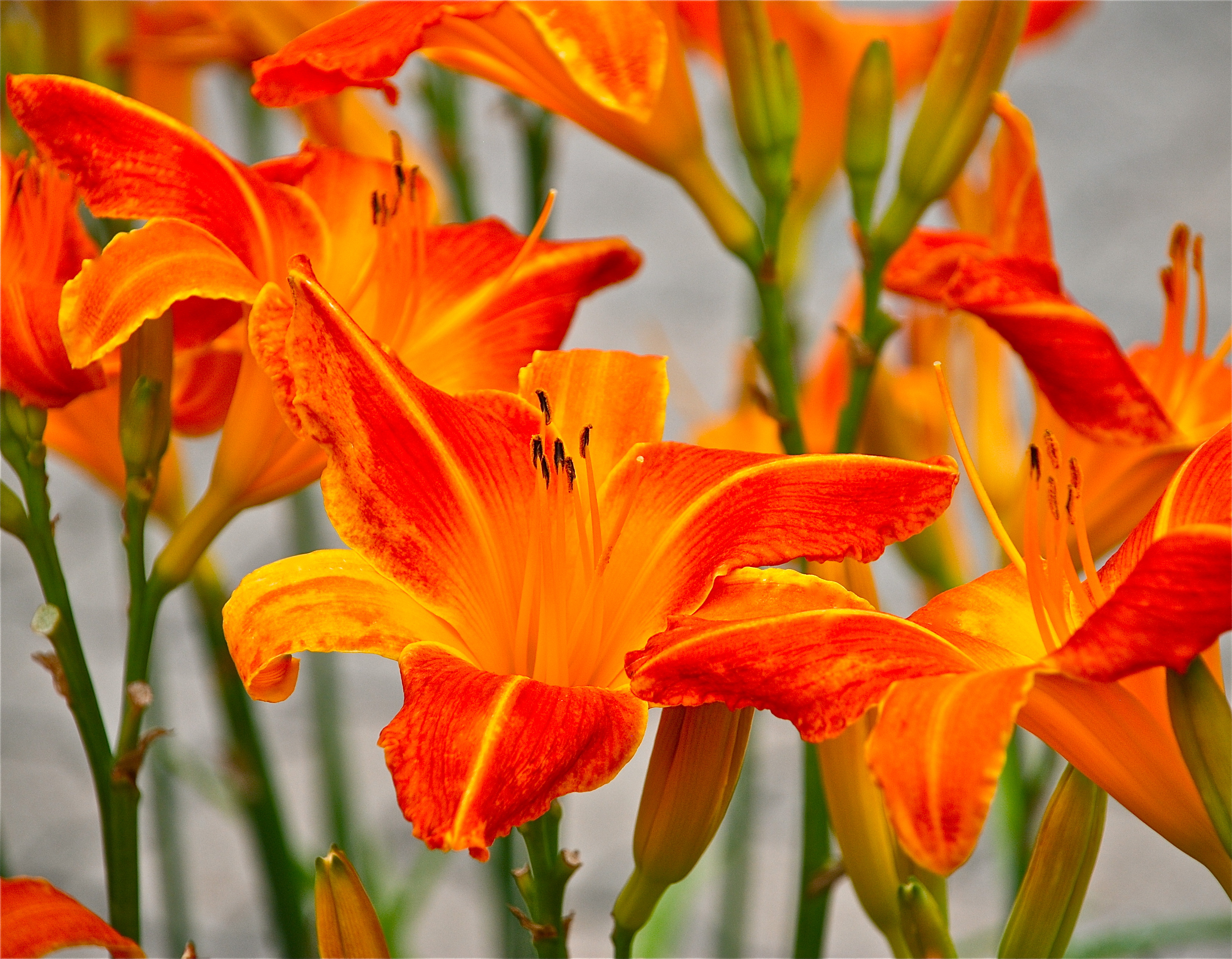
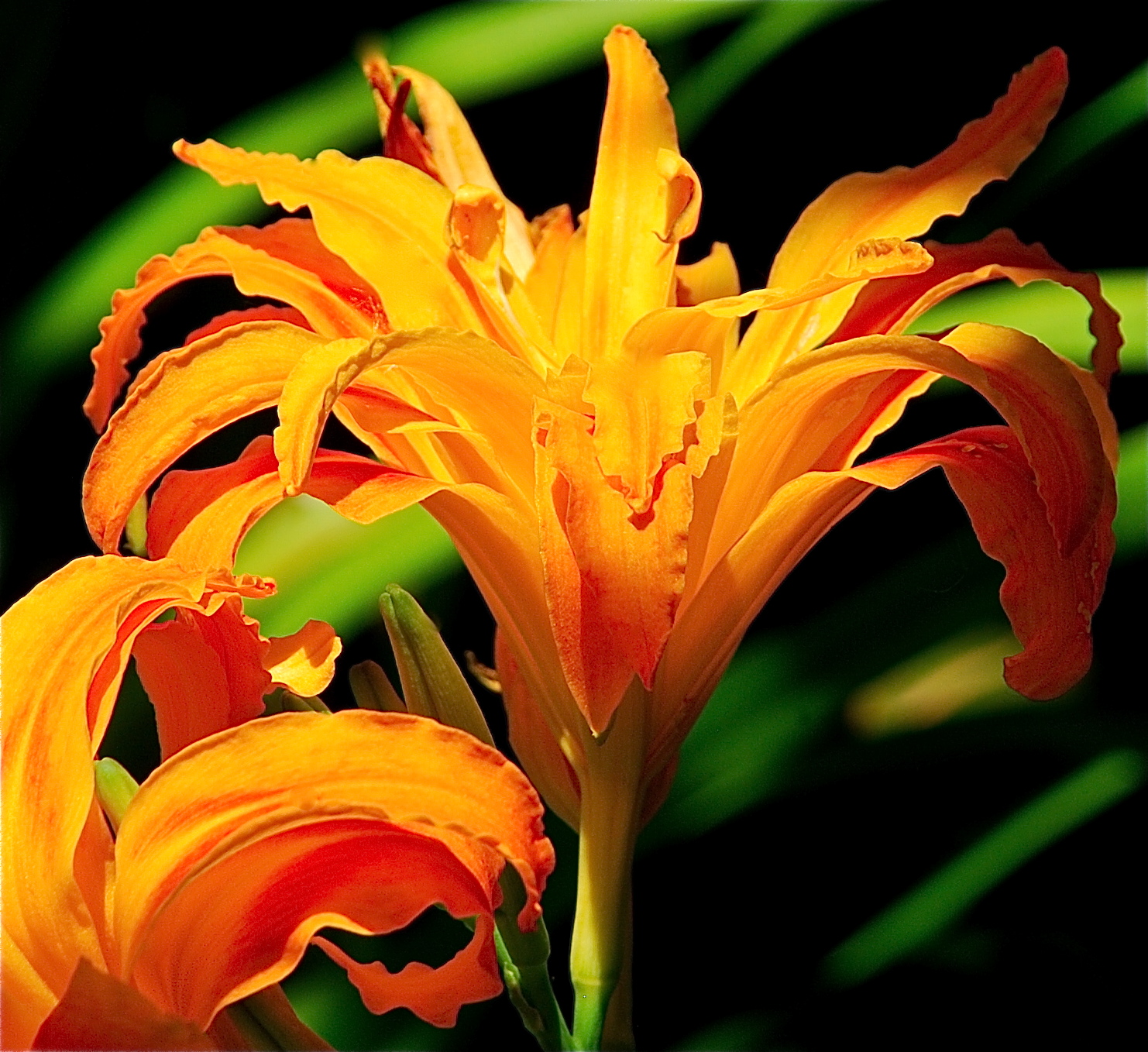
Although ordinary and commonplace yellow and orange beauties in the garden often bring me to a halt in treks around the yard.  How could they not?  There’s golden glory to behold in a daffodil which trumpets the coming growing seasons followed by, among other things, the splendid native daylily which heralds summer as she “boldly struts her brief hour upon life’s stage.”  Pansies and daisies are also quite commonplace, and yet in their typicality there is enough of the spectacular to declare them a worthy representative of God’s majesty in bloom.  In addition to the orange and lemony flowers are butterflies like the Gulf Fritillary and the Monarch, stunning “beasties” whenever and wherever their remarkable orange wings flutter.

Splendor and majesty are before Him; strength and joy are in His dwelling place.  ~1 Chronicles 16:27

87. Silence-The flower offered of itself and eloquently spoke of God in languages of rainbows, perfumes, and secret silences. . . ~Edited excerpt by Phillip Pulfrey

Image

God’s poet is silence! His song is unspoken,
And yet so profound, so loud, and so far,
It fills you, it thrills you with measures unbroken,
And as soft, and as fair, and as far as a star.
~Joaquin Miller

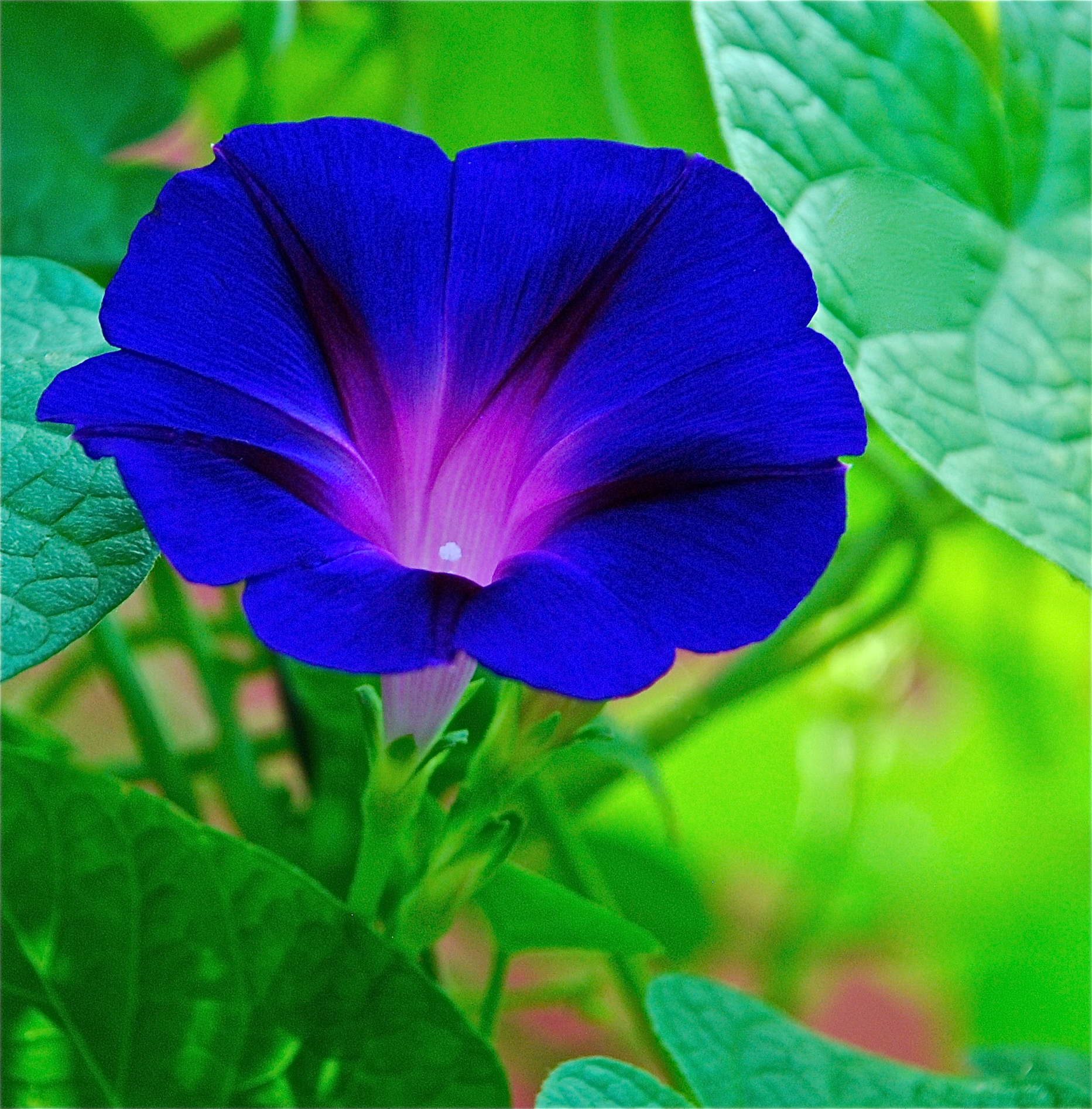
When a pandemic of blues and purples appear in the garden, the sound of their secret silence is almost deafening.  So sweet are their melodies that not only do they whisper “velvet seductions” to the bees, but they murmur too thunderous truths of holy words, holy hands, holy love, and holy intent to listening human ears.  How fortuitous then are the lilting, purple and blue incantations of earth’s beauty!

When the deep purple falls over sleepy garden walls

And the stars begin to twinkle in the sky–

In the mist of a memory you wander back to me

Breathing my name with a sigh. . .

~Excerpt from lyrics by Mitchell Parish

Creation is, as J. Philip Newell pens, “where the truth of God is hidden, like a treasure buried in a field,” and so for many purple is said to nurture the soul of the believer.  Over the centuries purple has also been a color used to depict nobility, passion, pain, creativity, magic, and mystery.  As amazing as it is, purple does not, however, surpass the color blue in beauty nor is it as much a constant in our lives.  Blue is always with us because it is the color of sea and sky.  Even the nighttime sky turns to indigo before it completely blackens.  For some, the deep blue of the night sky “symbolizes a mystical borderland of wisdom,” and indigo has a way of taking blue from the external world and pushing its influence inward where it increases depth of thought and brings profound insights.  In the garden some blues are soothing colors that invoke rest and are capable of causing the human body to produce chemicals which calm it.  On the other hand brilliant or electric blues are so dramatic and dynamic that they are often invigorating and exhilarating.  Regardless of what shade of blue blesses the eye, John Ruskin hit the nail on the head when he called blue the color “everlastingly appointed by the Deity to be a source of delight.”

Where can I go from your Spirit?  Where can I flee from your presence?  If I go up to the heavens, you are there; if I make my bed in the depths, you are there.  If I rise on the wings of the dawn, if I settle on the far side of the sea, even there your hand will guide me, your right hand will hold me fast.  ~Psalm 139:7-10