46. A Robin Redbreast in a cage puts all Heaven in a rage. ~William Blake, English poet, painter and printmaker

When father takes his spade to dig
then Robin comes along;
And sits upon a little twig
And sings a little song.
~Laurence Alma-Tadema
Image

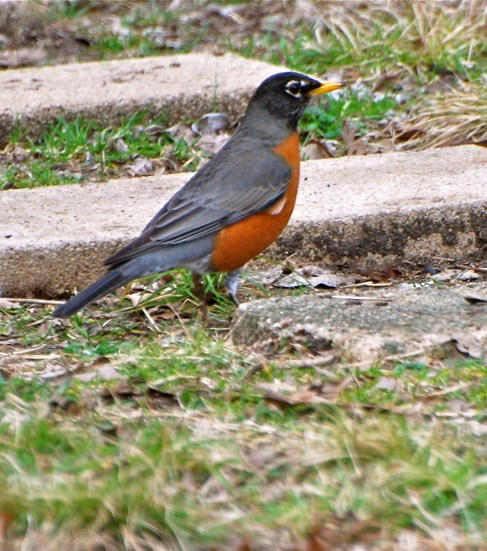
The introductory line is from Blake’s “Auguries of Innocence,” a somewhat lengthy poem consisting of a series of paradoxes in which Blake juxtaposes innocence with evil and corruption. The word augury in the title means omen or token, and the robin is the poem’s first noted “augury of innocence.”  The robin’s song, personality, and countenance are such that it’s obvious why the poet saw the act of putting one in a cage as not only an enraging violation but also as a profound perversion of holiness.  The sweet song and colorful markings of a robin make the bird a delightful harbinger of spring’s infancy and innocence.  Looking forward to its coming is one of my favorite rites in spring’s passage, and like “all heaven” I’d be incensed if the bird’s freedom were taken away and its song silenced.  Below is a legend about the robin that again ties the bird to the blameless and sacred.  Although the truthfulness of legends is questionable, I’m fascinated that somehow, somewhere, and in some way the robin was connected to the Messiah.

The Legend of the First Robin

One day, long ago, a little bird in Jerusalem saw a large crowd gathered around a man carrying a heavy wooden cross.  On the man’s head was a crown made from a thorn branch.  The thorns were long and sharp.  The little bird saw that the thorns were hurting the man.  It wanted to help Him, so it flew down and took the longest, sharpest thorn in its tiny beak.  The bird tugged and pulled until the thorn snapped from the branch.  Then a strange thing happened.  A drop of blood fell onto the bird’s breast, staining it bright red.  The stain never went away.  And so today the robin proudly wears a red-breast, because it helped a man named Jesus.  

“But ask the animals, and they will teach you, or the birds of the air, and they will tell you; or speak to the earth, and it will teach you, or let the fish of the sea inform you.  Which of all these does not know that the hand of the LORD has done this?  In His hand is the life of every creature and the breath of all mankind. . .”  ~Job 12:7-10   ✝

44. A latch and a handle into a new world. . .

Image

I managed then to keep a few square yards on a shelf
for staging in a greenhouse, and those few square yards
were crowded with tiny bright things  from New Year’s Day to Easter.
Their brilliance contrasted with the snow and leaden skies;
it was like coming into an aviary of tropical birds or butterflies.
~Vita Sackville-West, English author and poet

What you see in the photos may be a new world for me, but by no means is the greenhouse a new concept.   What lead ultimately to its invention began long ago when it was noted that discarded seeds grew better on rubbish heaps loaded with manure.  From that the idea of growing in a hot bed was developed.  Following that was the discovery that if one dug a pit for the growing of crops, the plants grew even better and more quickly with the added benefit of shelter and warm soil.  Further down the road during the 2nd century A.D. the idea emerged for building an open house with walls above the ground for growing plants.  In the beginning no roof was placed on the “growing houses,” but as the concept continued to evolve, covering them with thin slabs of mica came into practice.  Eventually fires for added warmth were kept burning around the exterior.  However, following the fall of the Roman Empire and the decline of their influence such horticultural methods were lost until the middle of the 13th century.  One of the great scholars of that time was a Dominican friar named Albertus Magnus who wrote knowledgeably on the subject of plants.  During the course of his studies he delved into writings about Roman horticulture, and it was he who subsequently revived the practice of forcing flowers and fruits in a hothouse.  The next reference to greenhouses is of one in the physic garden (a garden for growing medicinal herbs) established in Oxford.  In this garden a slate roofed greenhouse was built in 1670; it was heated by fire baskets burning charcoal that were wheeled around the walls by the gardeners.  Then in 1734 in the same garden the first wooden greenhouse was erected.  During this time greenhouses were coming into more general use, first by the very wealthy and then somewhat later prefabrication made the prices of greenhouses more affordable for the working man.

As long as the earth endures, seedtime and harvest, cold and heat, summer and winter, day and night will endure.   ~Genesis 8:22

40. Spring shows what God can do with a drab and dirty world. ~Virgil Kraft

Awake, thou wintry earth –
fling off thy sadness!
Fair vernal flowers, laugh forth –
your ancient gladness!
~Thomas Blackburn

Image

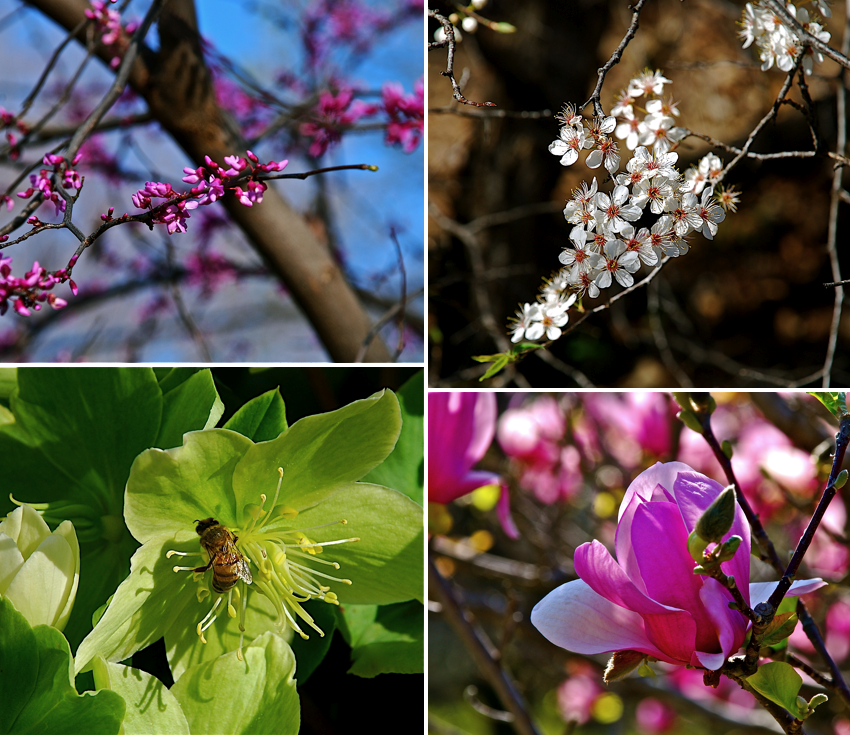
Leaf by leaf, bud by bud, and blossom by blossom the spring of the year advances.   On warmish days, earth casts off its wintry gloom, and breezes broadcast sweetly-scented aromas.  The first butterflies then dare to soar and the hungry bees hum amid the glad laughter issuing forth from flowering bulbs and trees.  As a result the year’s initial poetry of rebirth is penned by the pollinating, aerial whirring of dainty wings.  In the meantime as I hurry about trying to taking photos of the blossoming narratives and their paramours, I often find myself asking the same question Walt Whitman once did.  “Why are there trees I never walk under but large and melodious thoughts descend upon me?”  The answer I’ve decided is that the arms of trees reach towards the heavens to gather sacred messages meant to draw mankind near to “the living Word of God in nature” as well as what is read in Scripture.

In our area the first verses of  “tree” poetry come from Saucer Magnolias.  Their big, goblet-shaped flowers pen exquisite couplets in pink and white.  Soon to follow are the brilliant white blossoms of Star Magnolias.  Though not quite enough lines to form a fourteen-lined sonnet, their twelve exquisite, “petal-poesy” lines form rhyming schemes as lovely as any Shakespearean sonnet.  Next and in perfect rhyming sequences come the double samaras.  Samaras, the scarlet, dual winged fruits of the Red Maple, look like long, slender fairy wings as they dance choric rhymes writ by the winds.  Then come the Eastern Redbuds and Bradford Pears that compose stunning free-verse stanzas in purple and white, each resplendent branch, a psalm written in praise of its Maker.  For a pollinator now there’s no quandary about where sweet nectaries are to be found for stanza after stanza they and I are lead in springtime to earth’s most festive and delicious banquets.

He has taken me to the banquet hall, and His banner over me is love.  ~Song of Songs 2:4

37. Love is, above all, the gift of oneself.  -Jean Anouilh, French dramatist

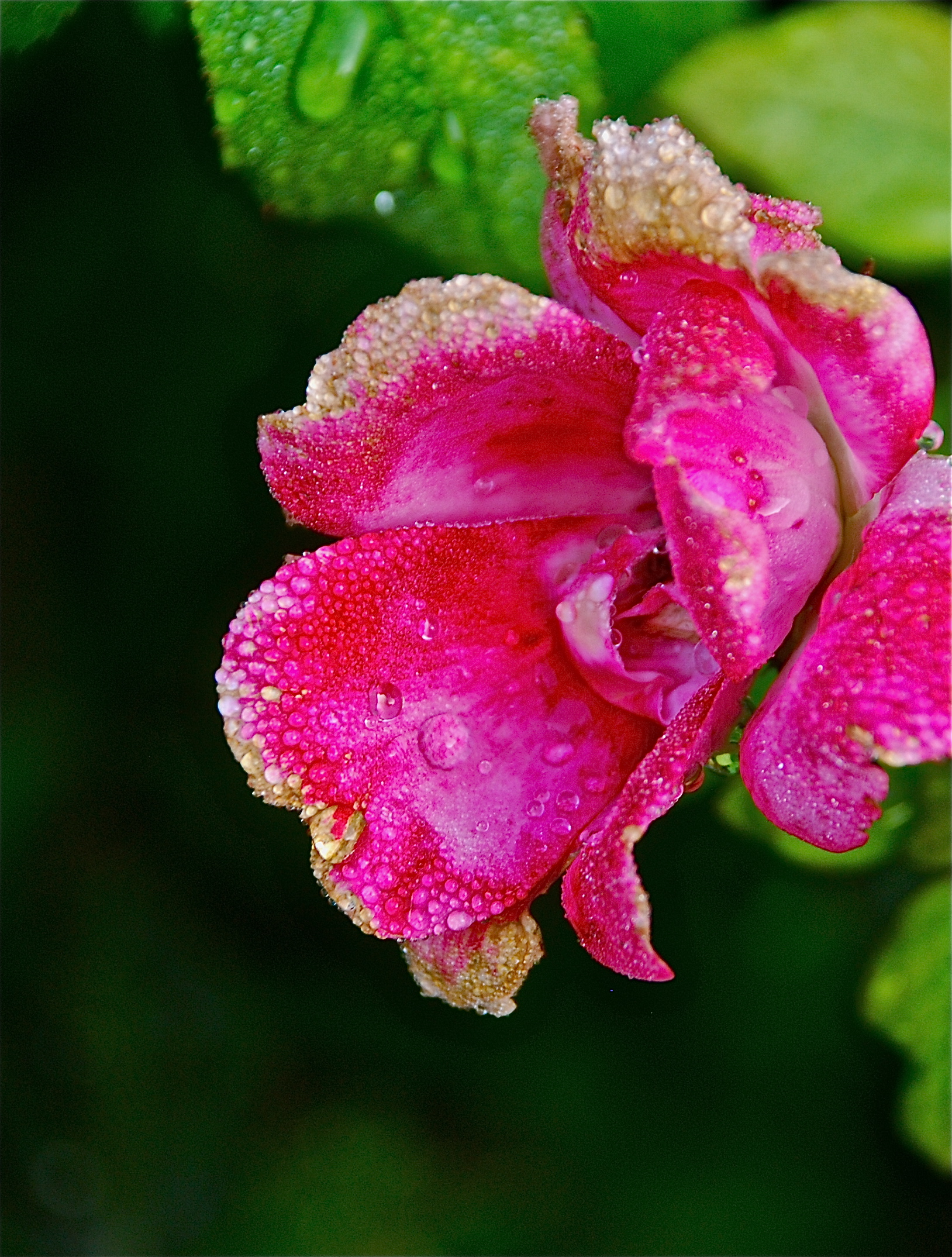
I’m not sure why I found this photograph intriguing when I loaded it onto my computer, but something caused me to stop from hitting the delete button right away.  Its less than usual and strangely colored complement of petals seemed so flawed at first; however, after glancing at it for some time I realized that though the malformed pink rose was distorted and defective, the rain beaded petals made it seductively engaging.  I eventually came to the conclusion that my fascination with the rose might be its brokenness reassuring me that even when a entity is damaged, there’s more than enough left of its anointing for to continue being beautiful and fruitful.

Image

A water bearer in India had two large pots, each hung on each end of a pole which he carried across his neck.  One of the pots had a crack in it, and while the other pot was perfect and always delivered a full portion of water at the end of the long walk from the stream to the master’s house, the cracked pot arrived only half full.  For a full two years this went on daily, with the bearer delivering only one and a half pots full of water in his master’s house.  Of course, the perfect pot was proud of its accomplishments.  But the poor cracked pot was ashamed of its own imperfections, and miserable that it was able to accomplish only half of what it had been made to do. After two years of what it perceived to be a bitter failure, it spoke to the water bearer one day by the stream.  “I am ashamed of myself, and I want to apologize to you.”  “Why?” asked the bearer.  “What are you ashamed of?”  I have been able, for these past two years, to deliver only half my load because this crack in my side causes water to leak out all the way back to your master’s house.  Because of my flaws, you have to do all of this work and you don’t get full value for your efforts,” the pot said. The water bearer felt sorry for the old cracked pot and in his compassion he said, “As we return to the master’s house I want you to notice the beautiful flowers along the path.” Indeed, as they went up the hill, the old cracked pot took notice of the sun warming the beautiful wild flowers on the side of the path, and this cheered it some.  But at the end of the trail, it still felt bad because it had leaked out half its load, and so again it apologized to the bearer for its failure. The bearer said to the pot, “Did you notice that there were flowers only on your side of the path but not on the other pot’s side?  That’s because I have always known about your flaw, and I took advantage of it.  I planted flower seeds on your side of the path, and every day while we walk back from the stream, you’ve watered them.  For two years I have been able to pick these beautiful flowers to decorate my master’s table.  Without you being just the way you are, he would not have this beauty to grace his house.”  ~Author Unknown

Every human “pot” is cracked in some way, but it does not render the flawed vessel ugly or useless.  If we but learn to embrace our imperfections and accept them as a divine part of who we are, Christ can and does use them to grace His Father’s table.  All that is required is that we submit to Him and allow Him to use all that we are or aren’t to further the Father’s Kingdom.  So as the Lord calls us to the tasks He has ordained, lets answer the call with no fear of our frailties for it is His intention to use them as a display of His amazing glory and to bless many.

Do not remember the sins of my youth and my rebellious ways; according to your love remember me, for you, LORD, are good.  -Psalm 25:7 ✝

Food for thought:  The Creation story in Genesis tells us that God looked after what He had made each day and saw that it was good. So, though humans are flawed because they have a propensity to fall from grace and sin, they always start from a place of goodness that is never lost.

35. Who, being loved, is poor? ~Oscar Wilde

Tell me how many beads there are
In a silver chain of evening rain,
Unravelled from the tumbling main,
And threading the eye of a yellow star –
So many times do I love again.
~Thomas Lovell Beddoes, 19th century English poet

Image

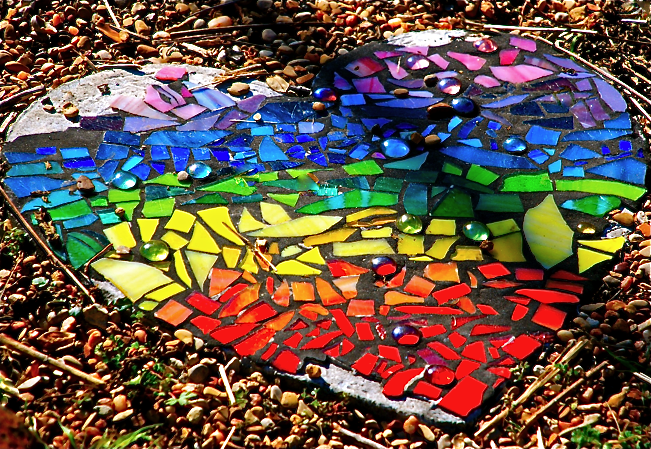
Humans are indeed capable of loving over and over again, and the people we love become like “beads” on the “silver chain” of our life experiences.  Creation is like that too.  Piece by different piece God linked the elements of Creation together to fulfill His grand design, and each unique piece in the mosaic of Creation is the result of His amazing creativity, goodness, and love.  I believe part of His plan for humanity is that the people who cross our paths are there to present new opportunities for us to love, not necessarily ones easy to love, but opportunities nevertheless.  And when we tap into our inherent goodness, take a chance on love, and invest ourselves to that end, our lives are colored in amazing hues and altered for the better.  Adam and Eve may have fallen short of God’s ideal plan, but it was not until AFTER they had been created and implanted with God’s indestructible goodness, His ability to love, and His willingness to redeem the fallen with grace.

Goodness and love can be suppressed, beaten down, and/or buried, but like the light that the apostle John said is never overcome by darkness, they are not overcome and therefore always to be found somewhere in the human heart.    Should there be any doubt about the innate goodness in a human’s heart, consider these things:  Man was created in the image of a good and loving God who has attempted, repeatedly and most magnanimously with His Son, to show us the goodness and ability to love within us, and He has some very definitive words to say about the goodness of all that He made.  Happy Valentine’s Day!

Day 1:  God said, “Let there be light,” and there was light.  God saw that it was good. . .  -Genesis 1:3-4

Day 2:  God called the dry ground “land,” and the gathered waters he called “seas.”  And God saw that it was good.  -Genesis 1:10

Day 3:  The land produced vegetation: plants bearing seed according to their kinds and trees bearing fruit with seed in it according to their kind.  And God saw that it was good.  -Genesis 1:12

Day 4:  God set them in the expanse of the sky to give light to the earth, to govern the day and the night, and to separate light from darkness.  And God saw that it was good.  -Genesis 1:17-18

Day 5:  So God created the great creatures of the sea and every living  and moving thing with which the water teems, according to their kinds, and every winged bird according to its kind.  And God saw that it was good.  -Genesis 1:21

Day 6:  God saw all that he had made(livestock, wild animals, all creatures that move along the ground, man in His own image, fish of the sea, birds of the air), and it was very good.  -Genesis 1:31

Day 7:   By the seventh day God had finished the work he had been doing; so on the seventh day he rested from all his work.  And God blessed the seventh day and made it holy, because on it he rested from all the work of creating that he had done.  -Genesis 2:2-3

34. The subtlety of nature is greater many times over than the subtlety of the senses and understanding. ~Francis Bacon

When daffodils begin to peer,
With the heigh!  the doxy over the dale,
When, then comes in the sweet o’ the year;
For the red blood reigns in the winter’s pale.
~William Shakespeare

Image

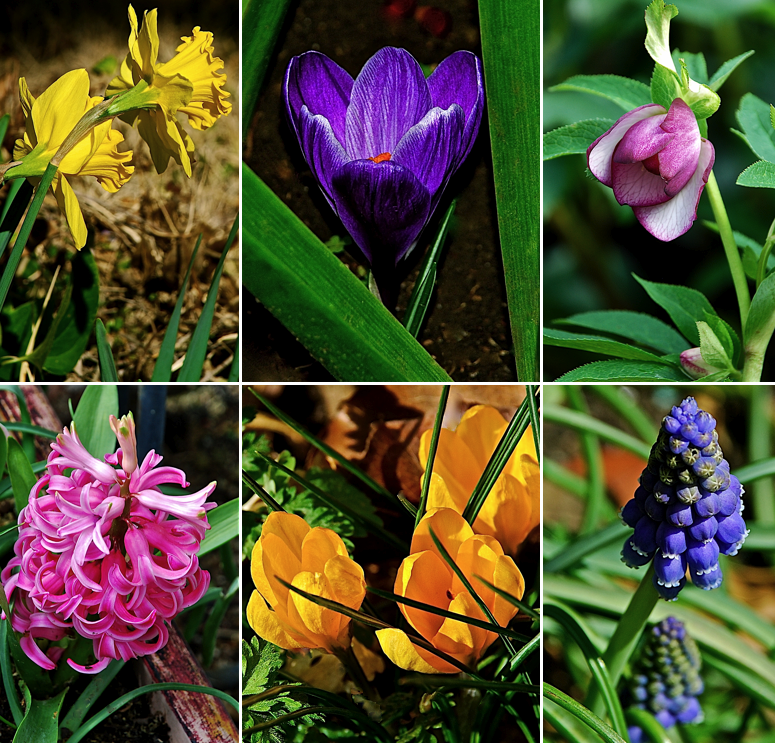
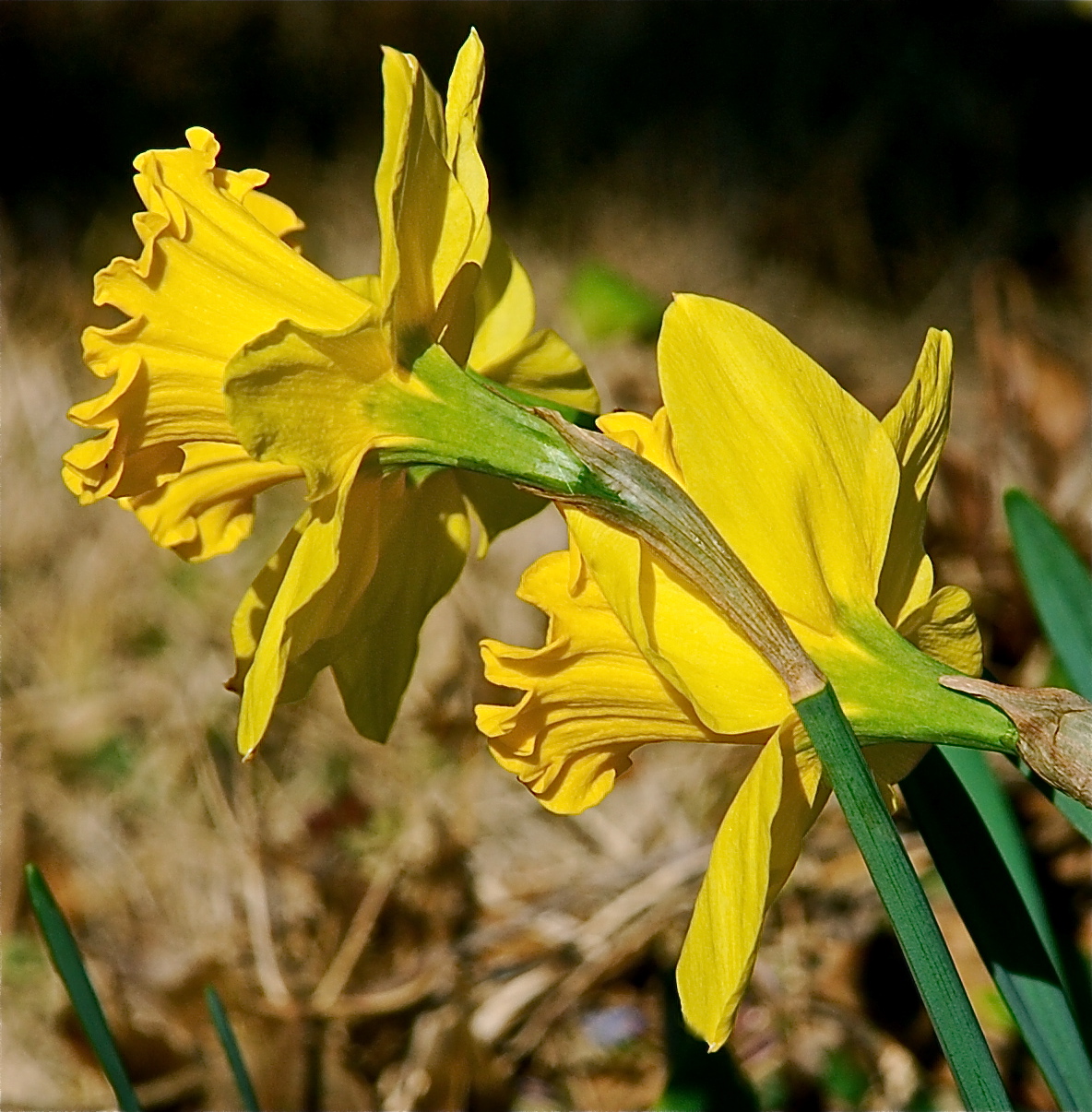
Winter here has been drawing more and more pale for some time because “the sweet o’ the year” prematurely moved in to steal its frigid shows of ice and snow.  Since mid-January, we’ve had an inordinate number of sun-drenched and warmish days, and as the sun was strengthening and temperatures were rising higher than usual, earth’s heartbeat quickened.  Now in mid-February I’m finding random emergences and swellings in the garden.  In some places, I’ve found not only the tinting of buds but flowers in full bloom.  Though it appears that an early spring may have also been occurring where Shakespeare was when he penned these lines, something is perplexing in this excerpt.  Notice that he does not mention the presence of other flowers.  Fortunately for us here in north central Texas when our daffodils “begin to peer” from out their papery sheaths, they are not alone.  Even if they rise early from their wintry beds, they find themselves in the happy company of other early risers like hellebores, crocuses, hyacinths, flowering quinces, and saucer magnolias.

The flowers of late winter and spring occupy places
in our hearts well out of proportion to their size.
~Gertrude Wister

Regardless of whether they show up early or late, small for sure on earth’s vast stage are the first flowers of spring.  However, as dawn’s sunlight fractures darkness in the physical world, they fracture darkness in the “spiritual world.”  And when any kind of light breaks into darknesses, joy and hope come along with them.  Much of humanity lives “with horrid darknesses,” and I believe one the subtleties of nature is that the Lord purposely built into Creation’s fabric the repetition of sparks of light, even tiny ones, that keep igniting anew the glow of His healing and restoring light.  Rev. J. Philip Newell notes that the light of God “dapples through the whole of creation.  It is within the brilliance of the morning sun and the whiteness of the moon at night.  It issues forth in all that grows from the ground and the life that shines from the eyes of any living creature.”  So I believe it is by Divine intent and for sacred purpose that these wee flowers occupy special places in the human heart.  A tiny crack in a dam, for example, eventually gives way to the flood it holds back, and in the same way crack after crack in spiritual darkness regardless of its size lets in a torrent of God’s holy light.  And when the fullness of His Light finally breaks through, it brings with it a deluge of His goodness and grace and mercy.

May great things come to you this week from the tiny flowerings on earth and those that grow in your spirit.

You, O LORD, keep my lamp burning; my God turns my darkness into light.  ~Psalm 18:28

32. I devour nature ceaselessly. ~Van Gogh

The February sunshine steeps your boughs
and tints the buds and swells the leaves within.
~William Cullen Bryant

Image

Aided by an usually warmer January, February’s sunshine has not only done what Bryant described within; it has also pushed many of the “tinted buds” and swollen leaves “without.”  Such can be seen in the flowering things that have popped up and out during this, February’s first week.  For example there are buds and blooms all over both the scarlet and white flowering quince along with a smattering of blossoming daffodils.  There are even more of the “daffadowndillies” visibly ready to burst forth from their papery sheaths.  Most of the roses I’ve seen are leafing out, my hyacinth buds are pushing up and in some cases showing color, and a few saucer magnolias in the park are beginning to flower.  Earth’s resting cycle may not yet have reached its appointed end on the calendar, but its life blood is quickening at least in our corner of the world.  Ready or not, winter’s quiet stillness is having to give way to ordained and purposeful busyness as forces, irrepressible and strong, ignite the birthing of spring’s earliest progeny.  Our typical last average freeze date here is March the 15th so certainly things could change, but barring a late freeze spring’s voice will continue to build across the landscape.  Sooner than usual the music will reach the deafening and glorious crescendos of her billion-year-old arias, and as the sun continues to strengthen, spring’s melodies and longer hours of light will infuse our bodies and spirits with their much needed vigor, vitality, and hopefulness.

Keep your faith in beautiful things;
in the sun when it is hidden,
and in Spring when it is gone.
~Roy R. Gibson

One of the things that increases my faith in the unseen is the endless disappearance and reappearance of nature’s seasons. The English writer, W. E. Johns, said, “One of the most delightful things about a garden is the anticipation it provides,” and so it is that the prospect of the season’s unfailing recurrences and that of my encounters with the Creator’s holy presence keep my faith strong.  The dictionary defines the word  “anticipation” as expectation or hope.  Expecting a thing means knowing it will inevitably come, and therein lies the key to faith. When the heartbeat of Creation’s life is sought and becomes as familiar as the beat of the heart within a person’s body, faith in the unseen is not only strengthened but also emboldened.  May your spirits be bolstered and uplifted by the “softening graces” of spring’s apparent little beginnings whenever it appears in your corner of the world.

Now faith is the reality of what is hoped for, the proof of what is not seen.  By faith we understand that the universe was created by the word of God, so that what is seen has been made from things that are not visible.  ~Hebrews 11:1,3

So we fix our eyes not on what is seen, but on what is unseen. For what is seen is temporary, but what is unseen is eternal.   ~2 Corinthians 4:16-18

31. With arms outstretched I thank. With heart beating gratefully I love. With body in health I jump for joy. With spirit full I live. ~Terri Guillemets

i thank You God for most this amazing
day: for the leaping greenly spirits of trees
and a blue true dream of sky; and for everything
which is natural which is infinite which is yes
~e. e. cummings

Image

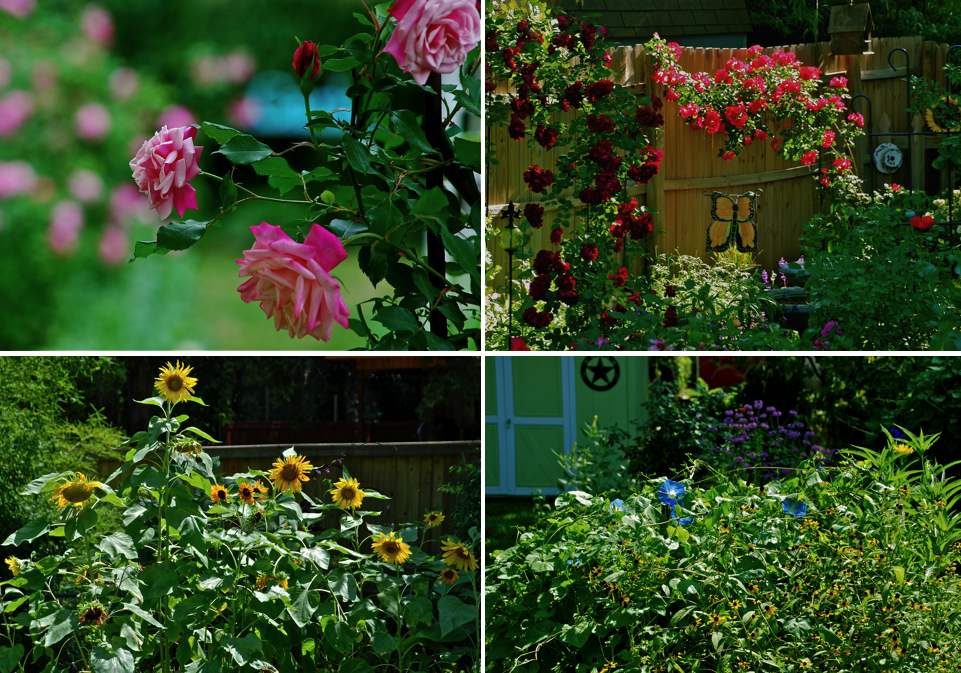
The flowers in the photos are some of the ones that bloomed in my yard at varying times throughout the course of a year’s growing seasons.  Witnessing their glory along with all the rest that bloomed was like reliving some of the 7 days of the Creation story.  The first beauties showed up in early spring while others appeared in mid to late spring, and a lesser measure bloomed during summer’s dreadful heat.  Later even a goodly portion of blossoms proffered themselves in autumn’s realm.  As the bountiful year ended I found myself wondering, as I have before, what I could do to offer up sufficient praise for the Lord’s lovely gifts in my garden and in my life in general.  In and of themselves the flowers, their paramours-the bees and butterflies, and other assorted Godsends evoked daily gratitude and adoration, but it didn’t seem enough since there was so much more to be thankful for.  For example, there was the reawakening of my ears to the sweet sound of earth’s music after winter’s silence and the reopening of my eyes to color after winter’s drabness; they reminded me how precious my God-given senses are and how much of the world comes to me through them.  In fact, in my garden I am always wowed by the delights my senses afford, and they, like nothing else, pump life-giving energy and spiritual well-being into me.  But again, the Godsends, the flowers, and the renewed awareness of sensory blessings were still only a portion of God’s gifts.  I was also granted the miracle of healing and restoration after a life-threatening stroke.  Cherished people and pets as well enriched my daily life along with the arresting spectacles of the changing seasons, the starry nights, the sky, both clear and full of stormy clouds after months of drought, and a myriad of other gifts and miraculous events.  Eventually the task of declaring suitable praise and gratitude became almost mind-boggling.  Then one Sunday I heard the solution in a pastor’s sermon: in addition to my expressed gratitude, the befitting way to adore the Lord and praise Him is for me to use my eyes, my face, my smile, my touch, my words, my very presence to reflect His amazing overflow of goodness, mercy, and loving-kindness.  My blessed life and gifts can be turned into blessings for others when I share such thing with my loved ones, with those who have no family or friends, with those who may not be able to witness a garden’s glory, with those whose hearts are broken, with those who live in fear, with those who are hurt or ill, with those who know hunger and thirst and so on?

Praise be to the God and Father of our Lord Jesus Christ, the Father of compassion and the God of all comfort, who comforts us in all our troubles, so that we can comfort those in any trouble with the comfort we ourselves receive from God.            ~2 Corinthians 1:3-4

30. The hum of bees is the voice of the garden. ~Elizabeth Lawrence

There’s music in the sighing of a reed;
There’s music in the gushing of a rill;
There’s music in all things, if men had ears:
Their earth is but an echo of the spheres.
~Lord Byron

Image

What is it in the sounds of nature that captivates so many of us?  Why do they, the wind and water and all the other sounds, inspire us to sit and listen and watch and wait?  Is it something that appeals to us on an intellectual level?  Or is it something that touches a secret nerve deep down inside?  And after listening to elemental sounds, what is it that encourages some to create music or art or literature in order to replicate or mimic the sounds?  Can we simply not just be satisfied to enjoy what nature offers our senses?  No, because there is an unquenchable “fire in the human belly” to create.  Why, because we are all made in the image of a creative God; something in our DNA, in every cell of our body, every fiber of our being, every drop of our life blood sparks an urge to create whether we recognize it or act upon it or not.

Some I’ve talked to say they create to keep cherished things close at hand or to be reminded of them frequently.  Others say inner voices encourage them to give life to their creative urges.  Then there are those who tell me they aren’t sure why they feel compelled to paint or write or play music; they just do.  I have heard some say that their lives are so richly blessed that they want to give something beautiful back, not unlike the child who draws “pretty” pictures or plays a happy tune for his/her mother.  For lots of folks it may be an attempt at immortality.  I personally think it’s because of that “still, small voice” who says,  “by rummaging around in your souls the Holy Presence you sense will be found.”  But regardless of what leads anyone down the creative path, we, the admirer’s of their talent, should be “grateful to people who make us happy” or enlighten us in some way for as Marcel Proust put it, “they are the charming gardeners who make our souls blossom.”  And in the anointed blossoming of souls, whether it be that of the creator or that of the charmed beneficiary, much is revealed about life, its Maker, and its sacred intent.

30. Outside the open window the morning air is all awash with angels. ~Richard Purdy Wilbur

Ever felt an angel’s breath in the gentle breeze?
A teardrop in the falling rain?
Hear a whisper amongst the rustle of leaves?
Or been kissed by a lone snowflake?
Nature is an angel’s favorite hiding place.
~Terri Guillemets

Image

Who among us doesn’t remember times when we felt the hand of benevolent angels at work in our lives or the lives of others?  Millennium after millennium and in various ways mortals have been fascinated by and tried to depict such angelic beings.  More than half a millennium ago one of the most celebrated angels was created by Michelangelo.  Of his famous sculpture, he said, “I saw the angel in the marble and I just chiseled until I set him free.”  Now many centuries later a pair of extraordinary angels have been set free here in in Fort Worth.  In the 1990’s the two of them were designed and installed as harbingers of the performing arts on the façade of the newly constructed Bass Performance Hall.  There the two majestic angels have reigned for nearly 2 decades offering a comforting presence amid the cacophonous noise and busy comings and goings of inner-city life. They have become “cultural icons” in a city whose history has been and still is steeped to some extent in cowboys, horses, cattle, and dusty trails.

The two imposing and dramatic angels created by Martón Varó are approximately 48 feet tall.  Their wings rise some 30 feet in height, and in one of their hands they hold a 13 foot brass trumpet.  The amazing high-relief figures were sculpted out of a 104 blocks of Texas Cordova Creme limestone quarried near Austin.  Each of the angels weighs 15 tons, and the blocks from which they are sculpted are attached to steel plates embedded in the concrete walls of the building. Because the angels are of the same limestone as the building, they look as if they mystifyingly drift out of the walls as they play their trumpets.  In their flowing gowns the limestone angels hover serenely above the street, and in so doing they keep our eyes lifted heavenward enabling us to see what Emerson called “the miraculous in the common.”  When the “air is all awash with angels” and it is in some way every day, it’s because the Lord wants His miracles and His miraculous works to be witnessed so that we will know something of Him and will want then to seek Him.

For He will command his angels concerning you to guard you in all your ways; they will lift you up in their hands, so that you will not strike your foot against a stone.  ~Psalm 91:11-12