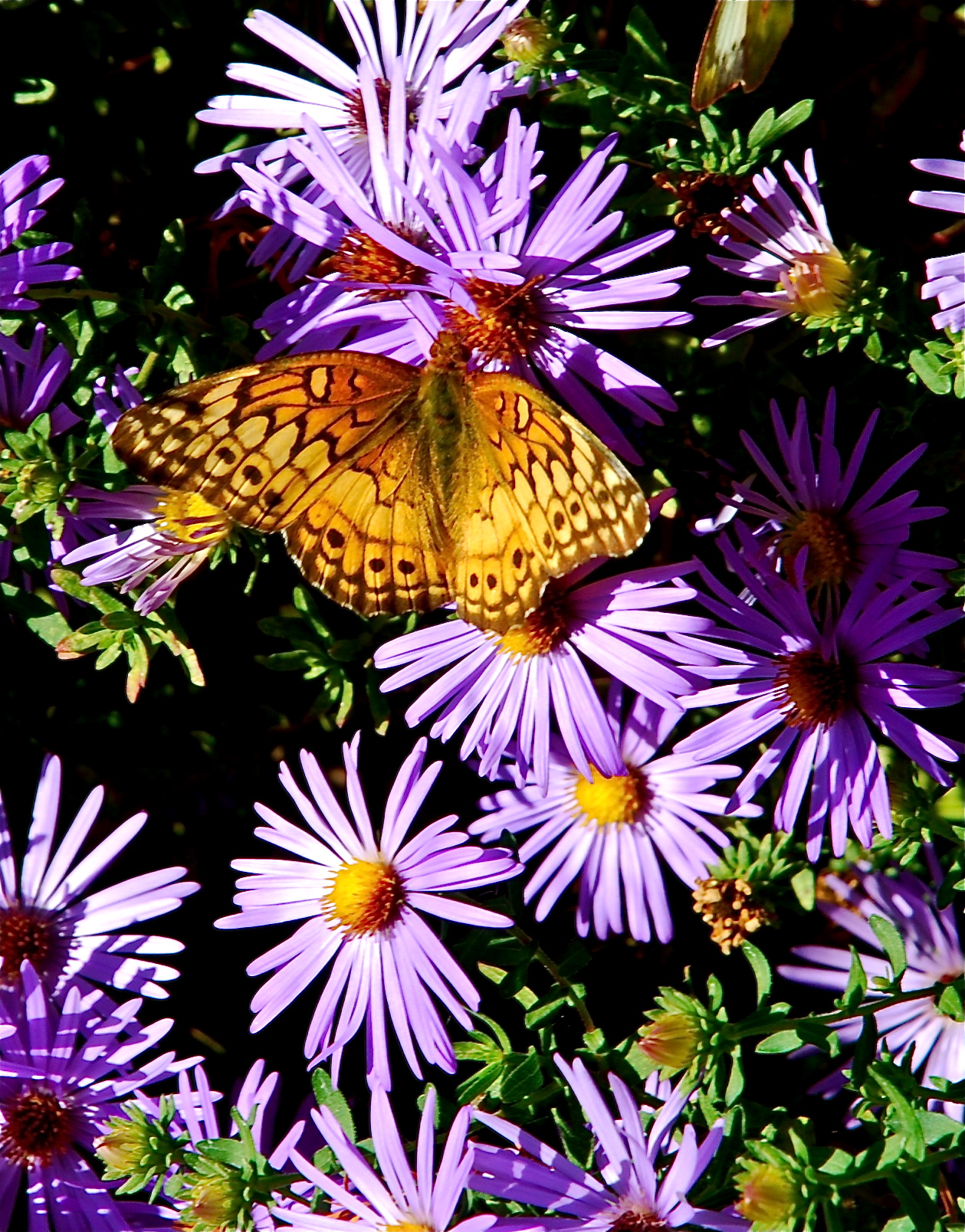
247. The breeze at dawn has secrets to tell you. Don’t go back to sleep. ~Rumi

Every morning is a fresh beginning.
Every day is the world made new.
Today is a new day.
Today is my world made new.
I have lived all my life up to this moment,
to come to this day.
This moment–this day–is as good as any moment in all eternity.
I shall make of this day–a heaven on earth.
This is my day of opportunity.
~Dan Custer

Image

Welcome the new day; it is a new creation.  Greet it with gratitude.  It is a  nonrepeatable gift; it is a promise of resurrection.  Miss not the day’s beauty.  Miss not the joy.  Miss not the wonder.  Miss not chances to make the world a better place.  Miss not opportunities to praise God!

The steadfast love of the Lord never ceases, his mercies never come to an end; they are new every morning; great is your faithfulness.  ~Lamentations 3:22-23  ✝

245. Novelty is an essential attribute of the beautiful. ~Benjamin Disraeli

What was any art but a mould
in which to imprison for a moment
the shining elusive element
which is life itself.
~Willa Cather

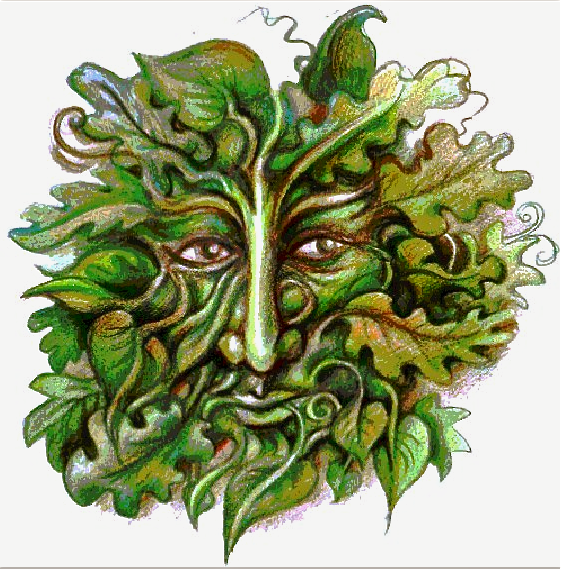
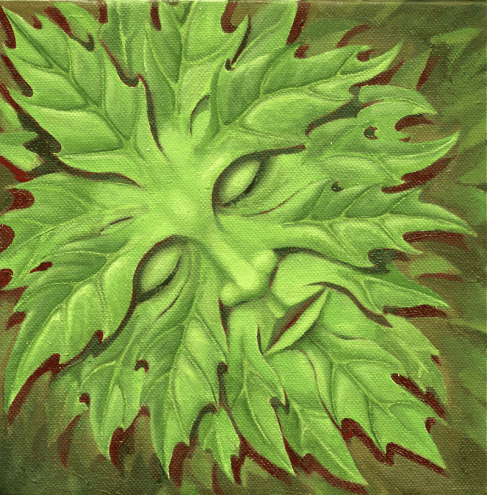
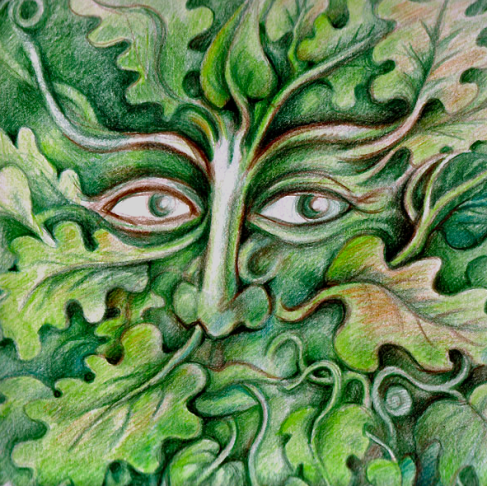
The foliate head and the Green Man are sculptures or drawings in which almost always a man’s face is surrounded by or made from leaves; it is a face that merges nature with humanity.
Image

The Green Man is “a mythic figure that appears in art and legend throughout the centuries and independently in diverse cultures.”  Purportedly the images of these leafy men represent life irrepressible.

Image

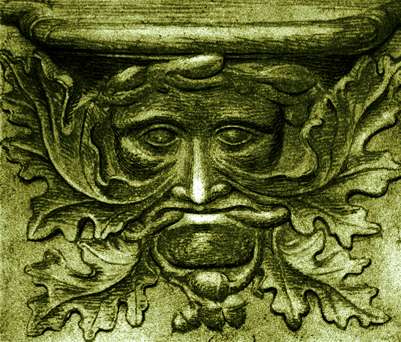
Countless numbers of the leafy faces can be seen on medieval castles, abbeys, and churches.  In fact it was the Europeans who are said to have spread the Green Man’s image and lore to the parts of the world they colonized.

Image

For some the Green Man’s image symbolized the triumph of green life over death and winter.  Others considered him the protector of nature; parallels have even been drawn between the Green Man and Jesus Christ.
Image

I see the foliate face as a mould, as Cather suggests, in which can be seen the artistic quintessence of vegetative and human life.  And as Disraeli proposes, it is the novelty of its beauty, unconventional as it may be, that is most appealing.  On days when I can’t or don’t get out into my garden, I see my semi-human, foliate-faced “friend” on the ground at the end of the stone path out my back door.  He is a reminder of the strong connection I feel to the natural world and God, its holy Maker. His eyes seem to peer longingly from behind his verdant leafiness in the same way I perceive that the Lord peers down at the world wanting to know, protect, and love His children.  His countenance evokes thoughts of man’s need to create as the made-in-the-image-heir of a creative God, of man’s desire to feel connected to the whole of Creation, and of man’s hope that new seasons will arise again and again as promised.  The man in the stone may seem to be locked in perpetual silence, but he speaks to me and I often talk to him.

…the Lord make His face to shine upon you, and be gracious to you; the Lord lift up His countenance upon you, and give you peace.  ~Numbers 6:25-26  ✝

230. He who marvels at the beauty of the world in summer will find equal cause for wonder and admiration in winter… ~John Burroughs

Nature looks dead in winter because
her life is gathered into her heart.
She withers the plant down to the root
that she may grow it up again fairer and stronger.
She calls her family together
within her inmost home to prepare them
for being scattered abroad upon the face of the earth.
~Hugh Macmillan

Image

This time of year there’s a separateness in the garden which I rather like, but I’ve heard others say that they detest the bleak lifelessness of winter.  When asked why, they’ll tell me it’s because it fills them with a sense of loneliness or it speaks too strongly of death.  I, on the other hand, find a comforting orderliness in its realm because I can see the garden’s defining lines again after they’d been blurred or even obliterated in some cases by summer’s reckless, spreading abandon.   And when I’m out working in the winter garden as I was today, I don’t feel any sense of sadness; the feeling I get is more of a silent, but willing withdrawal–a retreat back to a trusted, reviving source.  It seems to me that the barren remains stand self-assuredly in an awareness of Creation’s ever-faithful, annual renewal and somehow understands winter’s lesson of waiting with expectancy and hope.

As long as earth endures, seedtime and harvest, cold and heat, summer and winter, day and night, shall not cease.  ~ Genesis 8:22  ✝

229. So, like a forgotten fire, a childhood can always flare up again within us. ~Gaston Bachelard

To speak truly, few adult persons can see nature.
Most persons do not see the sun.
At least they have a very superficial way of seeing.
The sun illuminates only the eye of the man
but shines into the eye and heart of the child.
The lover of nature is he whose inward and outward senses
are still truly adjusted to each other;
who has retained the spirit of infancy even into the era of manhood.
~Ralph Waldo Emerson

Image

God sometimes reaches out at the most unexpected times to capture our hearts and attention, and not infrequently does He do that by using one of Creation’s eye-catching spectacles.  When a moment like that happens, it’s much like when a lover surprises his beloved by pulling a handful of flowers from behind his back.   And every time I’m delighted by the Holy One in such a way, I fall in love with Him all over again.  A friend of mine recently shared a moment like that with me, and as I read her description, I realized that understanding God’s parables can occur when the innocence of childhood floats up back up in our present realities.

On this cool, crisp morning, I arose before the sun and
went out my front door to look for the newspaper.
But that’s not what caused me to stop in my driveway, paper forgotten.
Overhead, Ursa Major and other stars twinkled brightly,
framed only by a few thin, wind-shaped clouds.
And at a time of the year when children take center stage,
I thought of the innocence in all of us.
For it was not my intellect that held me spellbound
but my own innocence, untarnished by age.
In that moment, caught by the wonder of nature,
blessed with its beauty, I felt magical.
~Emily Seate

Who is this that appears like the dawn, fair as the moon, bright as the sun, majestic as the stars in procession?  ~Song of Solomon 6:10  ✝

219. That each day I may walk unceasingly on the banks of my water, that my soul may repose on the branches of the trees which I planted, that I may refresh myself under the shadow of my sycamore. ~Egyptian Tomb Inscription, circa 1400 BCE

Because they are primeval, because they outlive us,
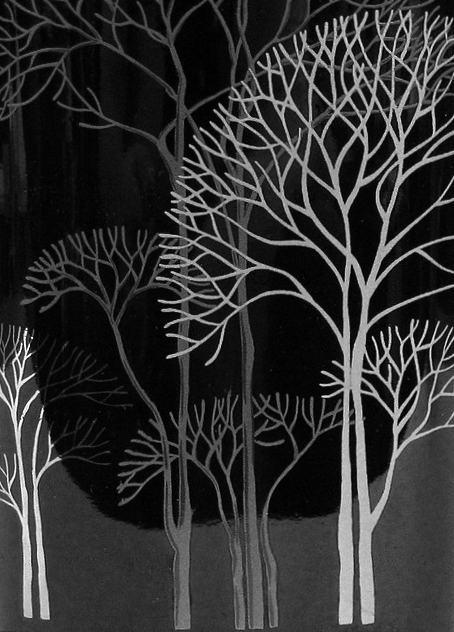
because they are fixed, trees seem to emanate a sense of permanence.
And though rooted in earth, they seem to touch the sky.
For these reasons it is natural to feel we might learn wisdom from them,
to haunt about them with the idea that if we could only read
their silent riddle rightly we should learn some secret vital
to our real, our lasting and spiritual existence.
~Kim Taplin

Image

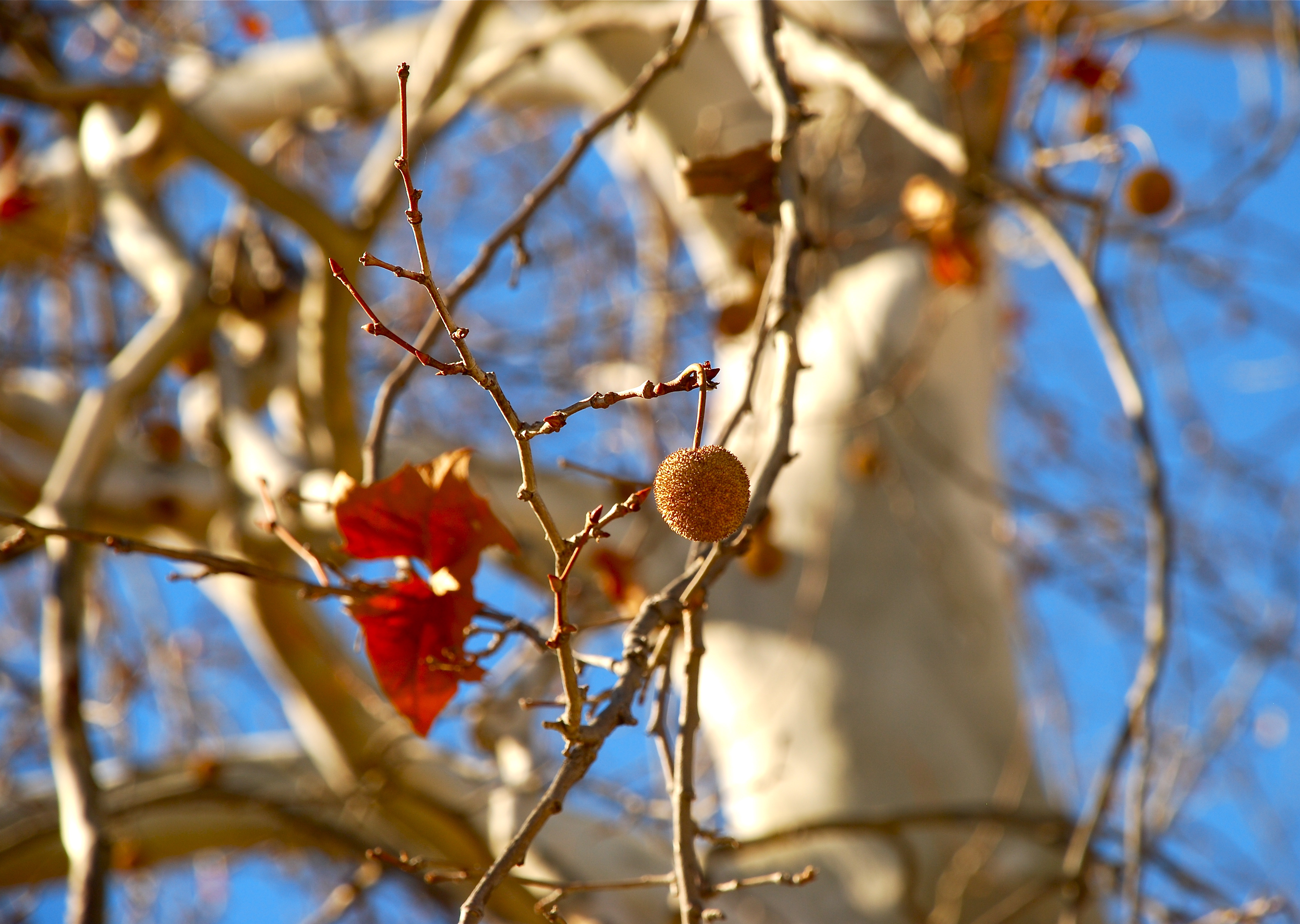
Before the sun fell over the edge of the world yesterday, it painted its recently traversed path with reddish-pink and mauve streaks.  In between the streaks were smaller golden rays that eventually blended into the pinker bands of light.  As these streaks shot up to the sky’s pinnacle, they oozed deliciousness through the open spaces in one of my favorite trees.  It’s a sycamore tree directly across the street from our house, and it’s so old that most of its bark has fallen away.  When it has, as it has now, lost most of its floppy brown leaves the tree’s strange fruits are more visible as area its long, slender alabaster arms, arms that seem to reach up and caress the heavens’ spacious blue lagoons.  Another thing I love about this particular tree is that in winter’s chilling winds its clattering branches seem to whisper prophecies of another spring’s birthing beneath the soil in silent chambers waiting for the prompting of the sun’s warmth on lengthening days and spring rains.

I’m the first one to admit that sometimes I’m hard pressed on difficult days to find reasons to be joyful, but I’m learning to look expectantly as well as long enough to find some measure of God’s glory in the day at hand.  When dealing with a run of painful days as I am now, it becomes not only more challenging but also more necessary.  The Holy Spirit within is the protector of one’s spiritual flame as well as a guide, and so if one turns inward to look for an appointment of grace, he/she will find what’s needed to press upward and onward.  On this day that spark of relief and mercy was found in the beauty of a tree.

This is the day that the Lord has made; let us rejoice and be glad in it.  ~Psalm 118:24  ✝

218. Poetry is the language in which man explores his own amazement. ~Christopher Fry

A man should have a little music,
read a little poetry, and see a fine picture
every day of his life,
in order that worldly cares may not obliterate the sense
of the beautiful implanted in the human soul.
~Johann Wolfgang Goethe

Image

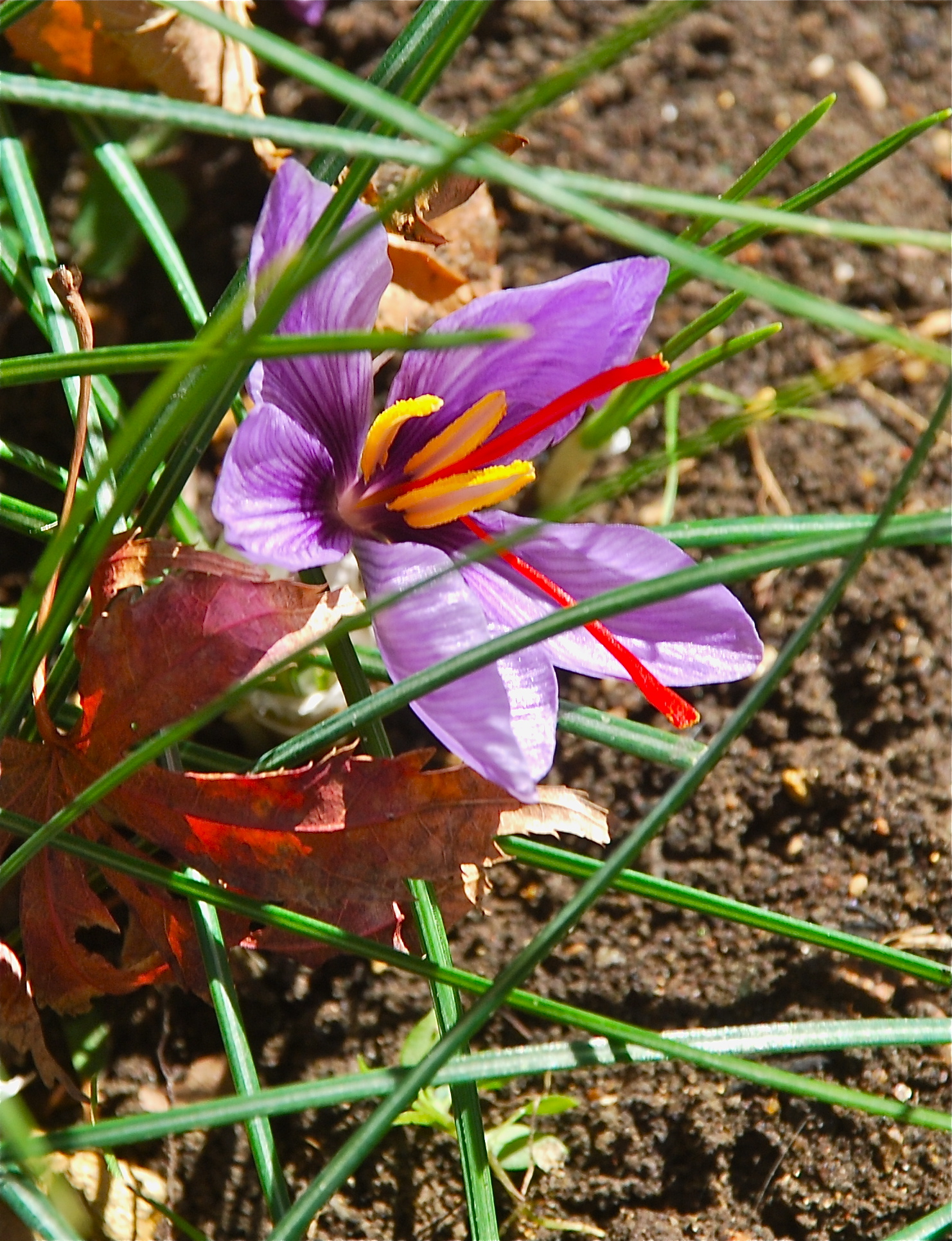
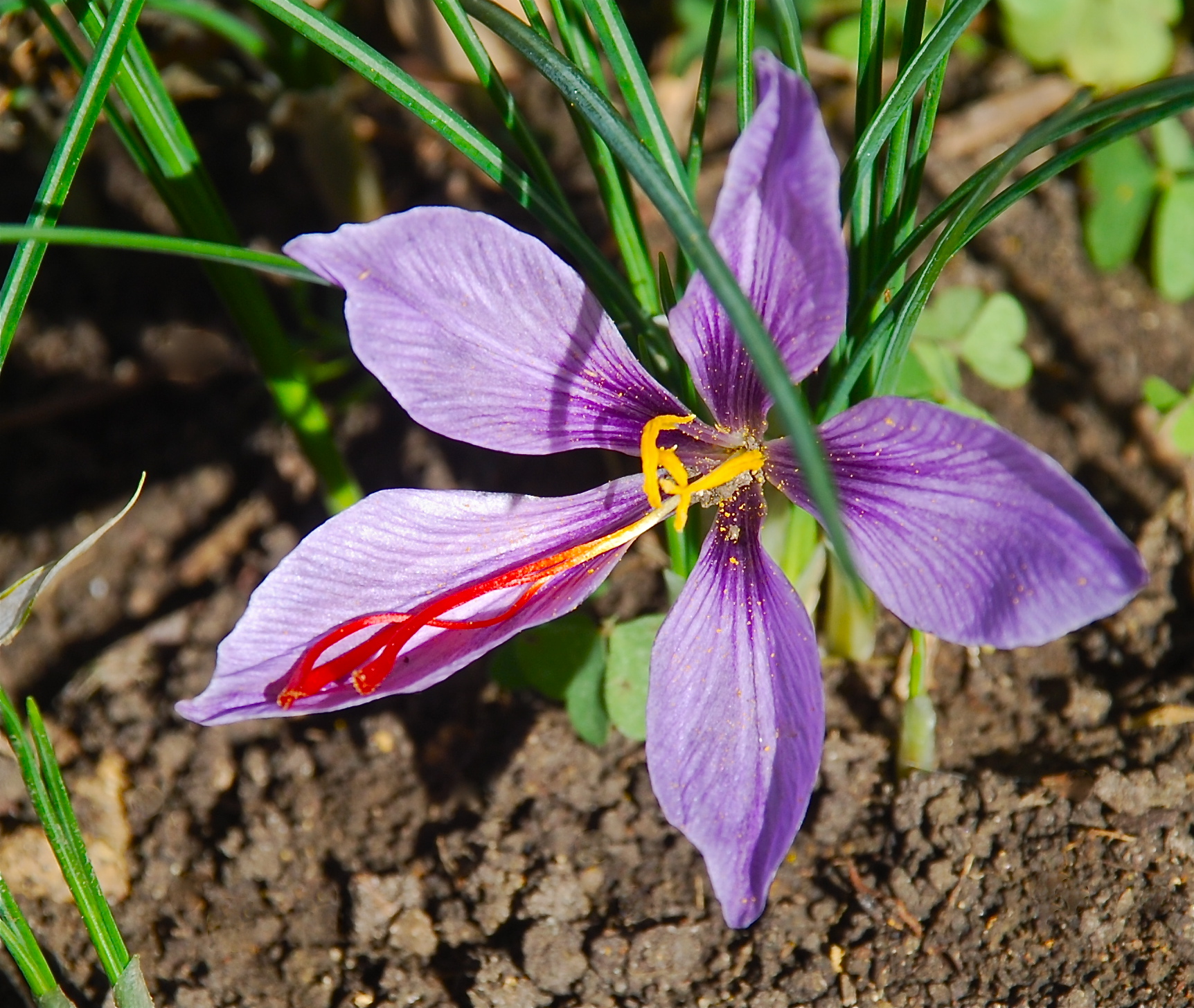
This saffron crocus had been buried under 4 to 5 inches of ice for nearly a week, and yet life had continued to stir in it.  But it’s not just the “fine picture” of the flower that kept an implanted sense of beauty from being obliterated in my soul like Goethe suggests; it’s the fact that the life of the flower was sparked in an icy tomb.  But then God is good at that.  The poetry of amazement never fails to stir something profoundly deep in my soul which in turn lifts me up and out of my moments of self-pity.

Now the earth was formless and empty, darkness covered the surface of the watery depths, and the Spirit of God was hovering over the surface of the waters. Then God said, “Let there be light,” and there was light.  ~Genesis 1:2-3  ✝

212. It is part of the cure to want to be cured. ~Seneca

To feel keenly the poetry of a morning’s roses,
one has to just have escaped from the claws
of this vulture which we call sickness of body or heart.
~Adapted excerpt from Henri Frederic Amiel

Image

In order to mend and bridge chasms of painful, isolating realities, I often douse the fires of what breaks my heart in cups of tea or tears that flow during quiet dawns or at night when the wee hours find me awake and alone.  After the sipping or crying comes to an end, a numbed stillness often develops.  When it does, I become aware in its clarity of the amazing nearness of God.  Jesus, whom I’ve been calling, is offering to guide me through portals to places where pools of mercy await.  Sometimes the healing waters lie deep within my own being where the Holy Spirit resides in His cloistered sanctuary.  At other times they are found in the beautiful colors of autumn, or in the glistening dew on greening grass and flowers in springtime, or in the gentle gestures of another’s compassion, or in softly spoken prayers proffered by kind and endearing voices.  Wherever the pool and whoever the beneficial bearer of blessing, one or both sustain me, if I yield, in the returning rhythm of fitness as the Lord’s grace works to render me wholly well.

I’ve discovered that tears have amazing restorative powers for frequently it is when my eyes are blurred with wetness from them that a sense of God’s presence is strongest.  For surely in the loss of His own son by the hands of creatures He breathed life into, He shed more tears than we’ll ever know.  We all endure difficult and sorrowful moments in our lives.  So excruciating is the pain on occasion that it nearly stifles our very breath, but one breath and one step at a time begins the journey out of the depths of despair.

“But I will restore your health and heal your wounds,” declares the Lord…  ~Jeremiah 30:17a  ✝

**Whittard’s is a tea, coffee, and cocoa shop that we found in London last summer.

208. It is the life of the crystal, the architect of the flake, the fire of the frost… ~John Burroughs

We feel cold, but we don’t mind it
because we will not come to harm.
And if we wrapped ourselves against the cold,
we wouldn’t feel other things,
like the bright tingle of the stars,
music of the Aurora,
or best of all the silky feeling of moonlight on our skin.
~Philip Pullman

Image

Image

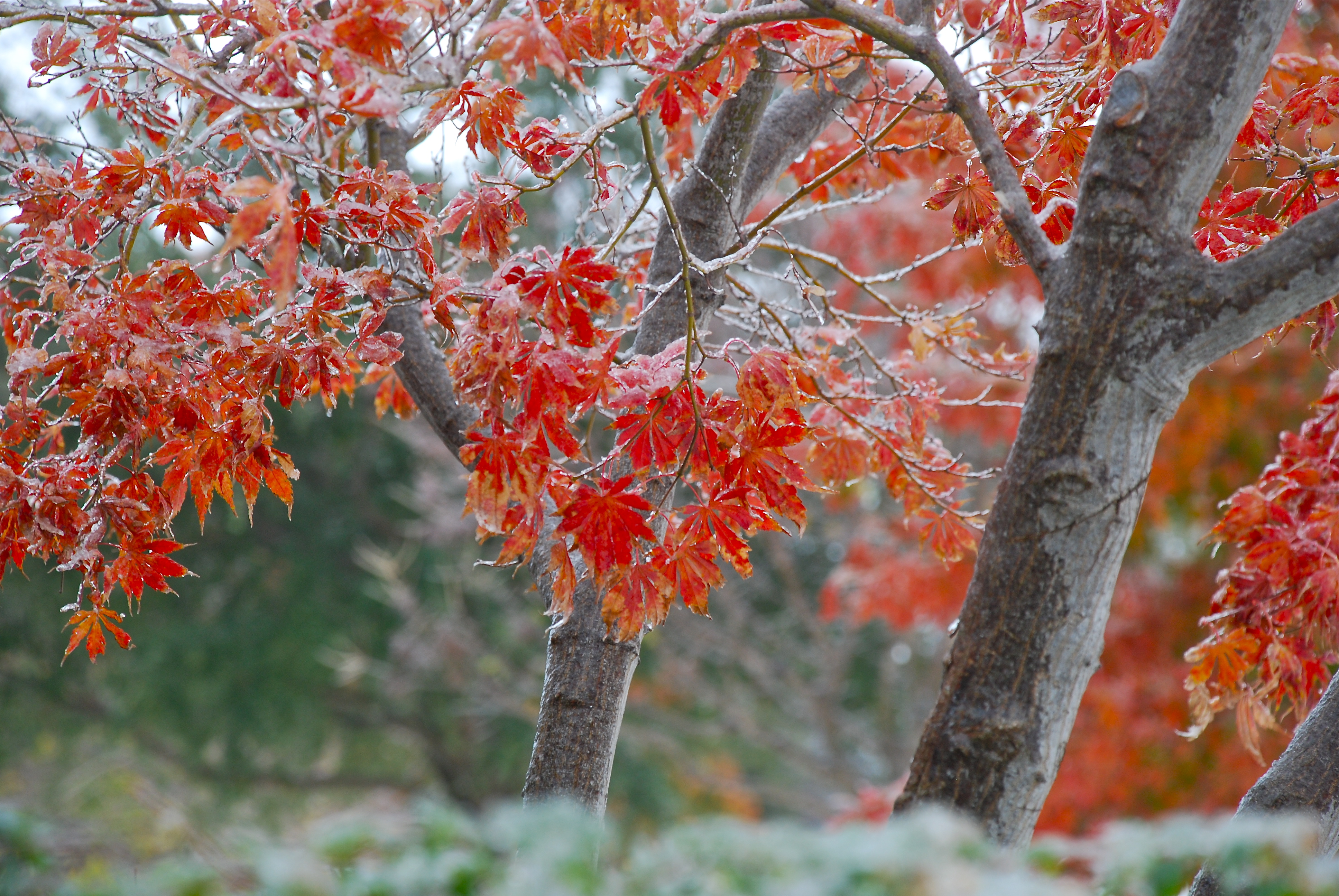
After last night’s winter storm, we woke to find the ground, the streets, and the rooftops covered in a solid blanket of sleet mixed with snow.  Icicles were hanging from eaves and other solid objects; branches, stems, leaves and the few remaining roses had been encapsulated in ice.  The forbidding frozen world outside was steeped in silence but for the occasional gusts of wind that sent falling leaves round and round in capricious little whirlwinds tapping softly against the icy ground.

In the coming days the garden will shrink dramatically.  It’s beauty will be harder to see, but for those who continually walk its paths with searching eyes and vivid memories, emerging treasures can be spotted and glory envisioned in places where it was and shall rise again from seeming nothingness.  During the warmer spells in the next few months, I’ll clean up the growing season’s spreading, untidy tangle and reshape her fetching figure while below in her fertile womb mysteries, ancient and sacred, are coming together to birth yet another springtime.

Then the Lord spoke to Job out of the storm.  He said From whose womb comes the ice?  Who gives birth to the frost from the heavens when the water become hard as stone, when the surface of the deep is frozen?  ~Job 38:1 and 29-30  ✝

206. The more I wonder, the more I love. ~Alice Walker, author of THE COLOR PURPLE

It seemed to my friend
that the creation of a landscape-garden
offered to the proper muse
the most magnificent of opportunities.
Here indeed was the fairest field
for the display of the imagination,
in the endless combining of forms of novel beauty.
~Edgar Allan Poe

Image

Image

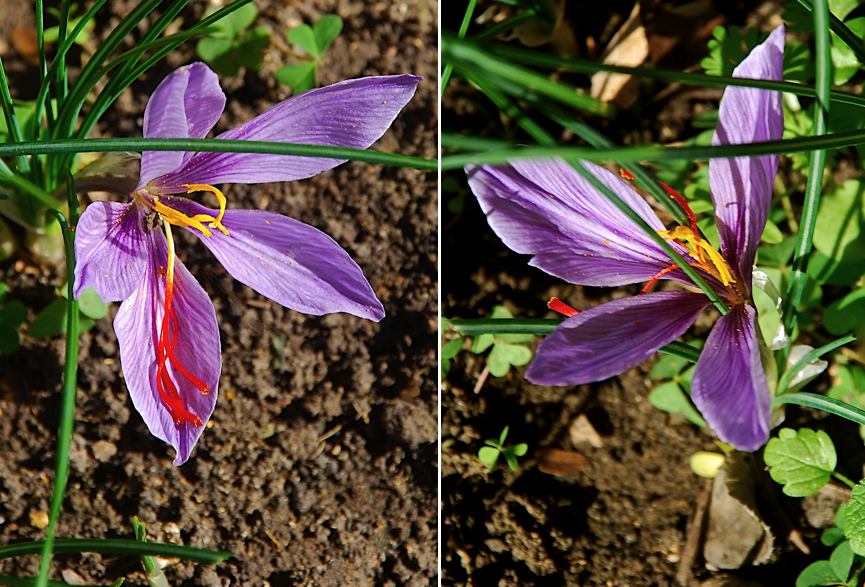
Purple, the most powerful wavelength of the rainbow, can be seen sometimes simply streaking the heavens, and it is mentioned at least 25 times in the Bible.  Over the ages the color’s “novel beauty” has symbolized magic, mystery, spirituality, the sub-conscious, creativity, dignity, and royalty; statistics show that it has evoked all of those meanings more so than any other color.  And yet the color purple is a rarity in nature so much so that its earliest dyes could be made only at great expense rendering it a color to be worn solely by kings, emperors, nobility, and priests. So when I find samplings of purple in my yard as I did yesterday, it feels as if honored guests have arrived at my “table.”  Add to that the fact that pigments from these particular guests have been found in prehistoric depictions dating back 50,000 years and that those depictions were found where the Garden of Eden could have been, then the honored guests become not only venerable ones but also sacred ones.  I sent out the invitations to these purple invitees last August after happening upon Crocus Sativus corms at a local nursery.  Since I had long wanted to try growing the plants from which the spice saffron is obtained, I came home and immediately planted my 6 little corms and then came the watching and waiting for signs of life.  But as the leaves began to fall and collect in the beds and I was spending less time outside, I’d almost forgotten about them until yesterday when I went out to get the mail.  To my surprise I spied two of the beauties with their three crimson stigmas (saffron threads) pushing up from under a layer of leaves.  Like a child I literally squealed with delight; it was as if I’d stepped into the Lord’s holy presence as He walked in His garden.

They put a purple robe on Him(Jesus), then twisted together a crown of thorns and set it on Him.  ~ Mark 15:17  ✝

205. Beauty is the shadow of God on the universe. ~Gabriela Mistral

A man should hear a little music,
read a little poetry, and
see a fine picture every day of his life,
in order that worldly cares
may not obliterate the sense of the
beautiful implanted in the human soul.
~Johann Wolfgang Goethe

Image

In her novel, THE COLOR PURPLE, Alice Walker maintains that God gets angry if a person walks by the color purple in a field and doesn’t notice it.  So it is that at one point in the story the main character, Celie, is told to look at the purple flowers and then to embrace their beauty in spite of all the pain and suffering in her world.  She is urged to see the good in them and acknowledge it because God placed them all on earth.  After she learns the lesson, she has more respect for life and what it has to offer.  It’s obvious that God puts a premium on beauty, not only for His own sake but for ours as well.  Since we are made in His image, our souls cannot help but be implanted with a “sense of the beautiful” as Goethe suggests.  Therein beauty feeds us spiritually and like a highway sign it points to God and His goodness.  If we can find beauty, we can find God.  He uses it as a way to speak to us and grow us in His image.

From Zion, perfect in beauty, God shines forth.   ~Psalm 50:2  ✝