128. The very act of planting a seed in the earth has in it something beautiful. I always do it with a joy that is largely mixed with awe. ~Celia Thaxter

Every friend is to the other a sun,
and a sunflower also.
He attracts and follows.
~Jean Paul Richter

Image

Over the years, I tried starting a few things from seed but never on a large scale.  Then a year or so back after I pulled up and out two poorly producing raised beds, I claimed the space beneath them that fall as seed beds.  In one I sowed poppies and in the other I sowed larkspur and was thrilled at the success of both the following spring.  After the poppies and larkspur were spent that spring, I sowed several types sunflowers in their stead so that I’d have homegrown food for my birds during the winter months.  Again I had great success, and so now, though not on as large a scale, I have several places around the yard where I reserve space for sowing morning glories, poppies, larkspur, and sunflowers.  And I have to say that the process still affects me in the same way as Celia Thaxter.  There is just something so terribly awesome about putting a tiny, almost nondescript seed in the ground and then after a period of watering and waiting discovering the tiniest of green shoots emerging from the blank soil.

The land produced vegetation: plants bearing seed according to their kinds and trees bearing fruit with seed in it according to their kinds. And God saw that it was good.  ~Genesis 1:12  ✝

126. What makes the desert beautiful is that somewhere it hides a well. ~Antoine de Saint-Exupery

Take almost any path you please,
and ten to one it carries you down to a dale,
and leaves you by a pool in the stream.
There is magic in it.
~From MOBY DICK by Herman Melville

Image

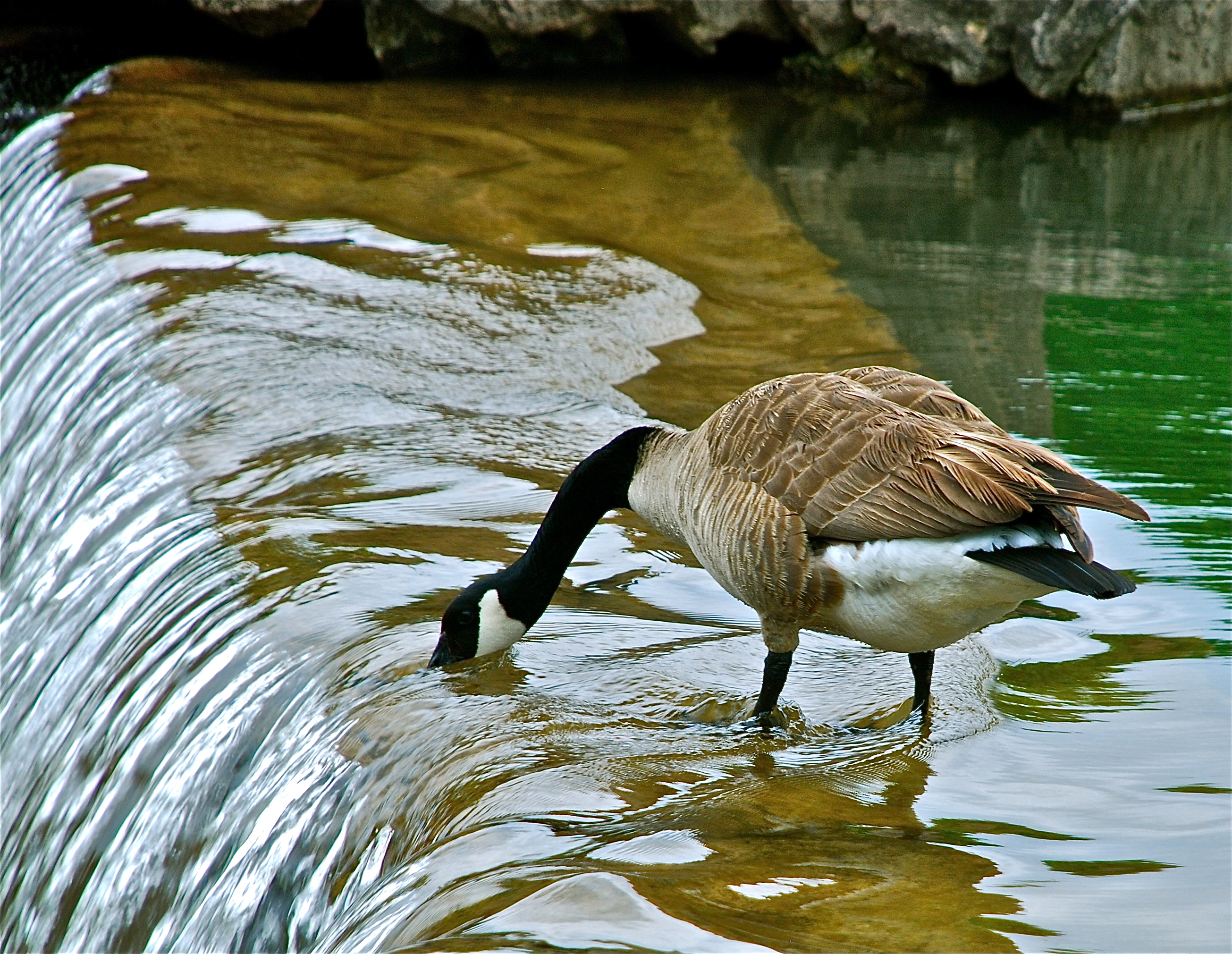
Like Melville, I’m drawn to water and its magical properties.  The curious thing is that the magic happens not only in vast bodies of water like oceans but also in bodies of water as limited as what might be found in a garden fountain or the  sometimes glassy stillness of water that stirs up magic and mystery.  Yes, mystery too, and part of the mystery is that water gives the feeling that one is in the presence of something alive and vibrant.  I remember as a child begging to go out and play in the rain or snow.  If and when I got the chance, like most children,  I’d stick out my tongue to catch raindrops or snowflakes and was so thrilled when either of them landed on my tongue.  When I felt the wetness I knew instinctively that I was being fed something good, something essential to my existence.  Perhaps  deep in my heart of hearts, I knew even then that the Presence I felt in water was the Holy One’s.  After all it was He who once hovered over earth’s waters and imbued them with His sanctity and His life giving force.

For the LORD your God is bringing you into a good land—a land with streams and pools of water, with springs flowing in the valleys and hills. . .  ~Deuteronomy 8:7   ✝

125. There brews He beautiful water! And beautiful it always is. ~John Bartholomew Gough

Water, thou has no taste, no color, no odor;
canst not be defined,
art relished while ever mysterious.
Not necessary to life,
but rather life itself,
thou fillest us with a gratification
that exceeds the delight of the senses.
~Antoine de Saint-Exupéry

Image

Water!  Blessed water!  Just looking at it has a cooling effect.  And when it’s a 100 degrees outside, one looks for anything that makes it feel cooler.  James and I go to Dallas every so often to eat at our favorite little burger place near SMU and to what I think are two of North Texas’ best plant nurseries.  Both the restaurant and the nurseries are fairly close to Turtle Creek, an area of Dallas that’s also one of our favorite haunts.  Not only are the creek and the grounds along the creek beautiful, but the homes and estates on either side of the it are some of the most spectacular in Dallas.

Now the earth was formless and empty, darkness was over the surface of the deep, and the Spirit of God was hovering over the waters.  ~Genesis 1:2

121. Come forth into the light of things, let nature be your teacher. ~William Wordsworth

In the midst of darkness, light;
In the midst of death, life;
In the midst of chaos, order.
Thus has it ever been,
Thus it is now, and
Thus it shall always be.
~Edited excerpt by Orlog, in the Norn’s Chant

Image

You will be secure, because there is hope; you will look about and take your rest in safety.  ~Job 11:18  ✝

76. Through the dancing poppies stole a breeze most softly lulling to my soul. ~John Keats

Of all the wonderful things in the wonderful universe of God,
nothing seems to me more surprising than the planting of a seed
in the blank earth and the result thereof.
Take the Poppy seed, for instance: it lies in your palm,
the merest atom of matter, hardly visible, a speck, a pin’s point in bulk,
but within it is imprisoned a spirit of beauty ineffable,
which will break its bonds and emerge from the dark ground
and blossom in a splendor so dazzling as to baffle all powers of description.
~Celia Thaxter

Image

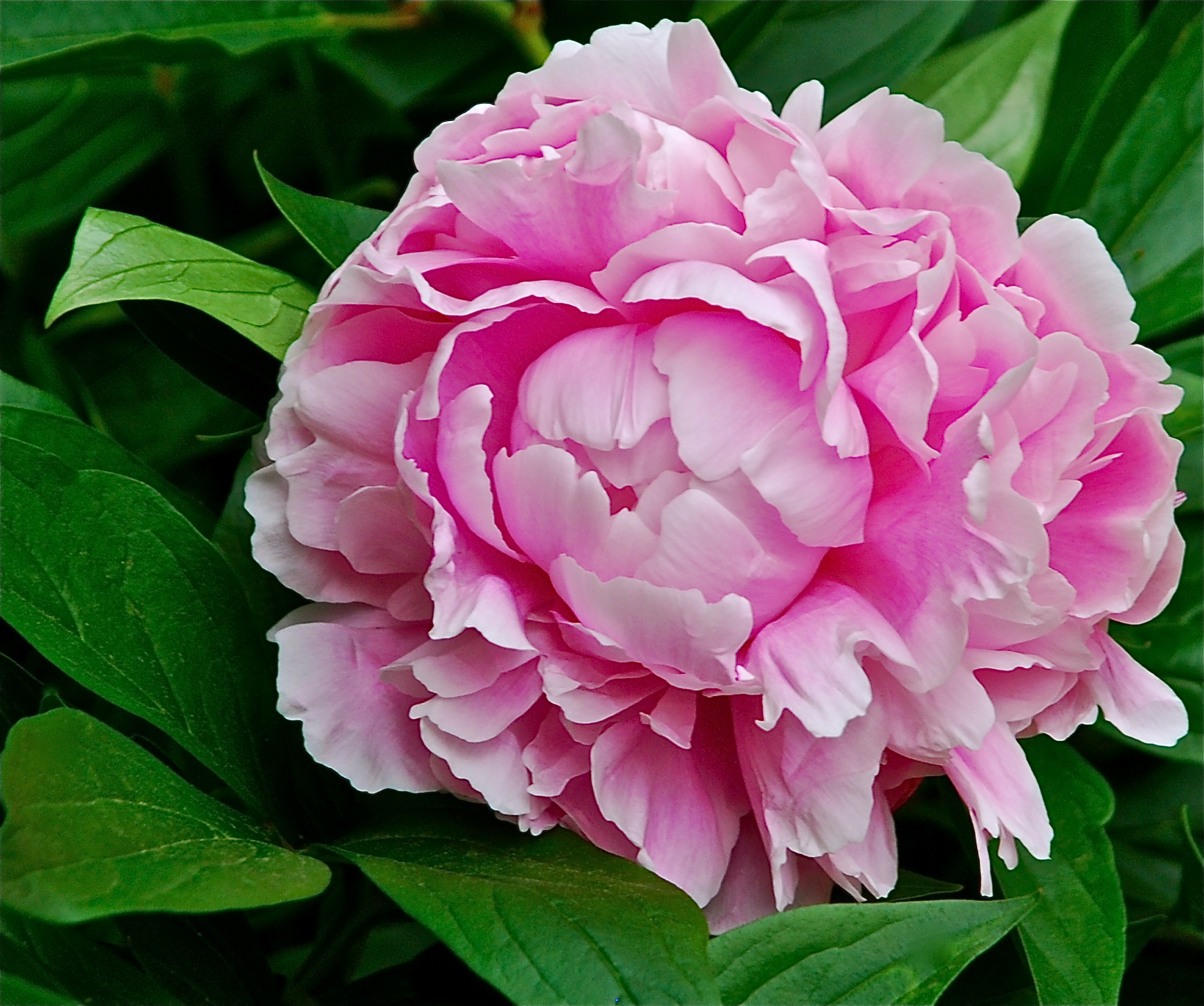
I love poppies, not just the flowers but also the lovely, fat pods that contain the future of the species.  The plants that put on silky, paper-thin blossoms can grow to be 3 or 4 feet tall here if the “hardly visible” seeds are sown in the fall.  So it is that in late October I toss out seeds from the ones I harvested from last’s years pods, and then all winter long I wait for the beauties which “baffle description” to make their appearance in my garden.  As winter moves along, I keep myself reassured by going out to check on them after especially frigid days or after occasional snowfalls to make sure the burgeoning “babies” have not succumbed to the elements.  And each time I go out, I almost squeal with delight when I discover that most of them, if not all, are still slowly but surely growing bigger and stronger.  Then sometime in the early spring the day comes when the waiting is over and standing before me are the first fruits of my labors and watchfulness.  Like dainty chalices, the cup-like flowers open up and drink in the day’s light while penning God’s autograph on the “scenes” of yet another springtime.  Day by day after each individual flower’s petals fall to the ground, the intriguing seed pods take their place, and as temperatures climb, they begin to ripen.  Some of these I eventually let fall to the ground to self sow; the remainder I gather and keep safe and dry until autumn comes and it is again time for me to partner with Creation and scatter abroad the “merest atoms” of such beautiful matter.

For as the soil makes the sprout come up and a garden causes seeds to grow, so the Sovereign Lord will make righteousness and praise spring up before all nations.  ~Isaiah 61:11

72. Come, fill the Cup, . . . the Bird of time has but a little way to fly–and Lo! the Bird is on the wing. ~Omar Khayyám

The Moving Finger writes; and having writ,
Moves on: nor all your Piety nor Wit
Shall lure it back to cancel half a Line,
Nor all your Tears wash out a Word of it.
~Rubaiyat, Omar Khayyám, 11th century Persian poet

Image

In my twenties, I came face to face with the reality of what this Persian poet articulated in the Rubaiyat, but thankfully in my thirties I also realized that every spring all that God created begins again.  So even though I have no a chance to do anything about the past, in the season of restoration and rebirth God built into the fabric of Creation, I can forge on with writing new stories and/or penning different endings to ones not yet finished.  However, lest I get too comfortable in dalliances a long the way and to show how quickly what the poem’s author revealed can come about, I must remember that a new year’s garden progeny and its days come and go quickly, and when done they are never, as Khayyám said, to be lured back nor washed away by tears.  So with every spending of my time coins, I must seize opportunities opening to blushes of newness.  Scripture may tell the world that the “birthing and restoring” of new years will go on “as long as earth endures,” but last November’s brush with death taught me to make the most of each day and not rely on what I, myself, may not be given.

The best things in life are nearest:
Breath in your nostrils, light in your eyes, flowers at your feet,
duties at your hand, the path of right just before you.
Then do not grasp at the stars, but do life’s plain, common work as it comes,
certain that daily duties and daily bread are the sweetest things in life.
~Robert Louis Stevenson, Scottish poet

“As long as the earth endures, seedtime and harvest, cold and heat, summer and winter, day and night will never cease.”  ~Genesis 8:22   ✝

69. Only from the heart can you touch the sky. ~Rumi

It is a glorious privilege
to live, to know, to act, to listen, to behold, to love.
To look up at the blue summer sky;
to see the sun sink slowly beyond the line of the horizon;
to watch the worlds come twinkling into view,
first one by one, and the myriads that no man can count,
and lo! the universe is white with them;
and you and I are here.
~Marco Morrow

Image

It is God’s privilege to conceal things and the king’s privilege to discover them.  ~Proverbs 25:2   ✝

60. That God once loved a garden we learn in Holy writ. And seeing gardens in the Spring I well can credit it. ~Winifred Mary Letts

With the birth of the creatures there is
the emergence of seeing, hearing,
smelling, tasting, and touching.
The light of the sun and the whiteness
of the moon can now be seen.
The wind blowing through the leaves
of the trees and the crashing
of ocean waves can be heard.
The early morning fragrance of
the earth can be smelled.
Its fruits can be tasted and
its textures touched.
~Excerpted lines by J. Philip Newell

Image

Springtime is so much “a showing forth of the mystery of God” that if one wants to know more of the Creator, all he/she needs do is pull up a chair in a garden and watch the year’s first season unfold.  Seeking the goodness of God and what He made by being still therein and listening to the Holy Spirit as well as Creation’s rhythms is a way of bringing the Heavenly Father closer.  In that nearness one is then able to look through eyes that recognize the depth of His and Creation’s  goodness.

And the LORD said, “I will cause all my goodness to pass in front of you, and I will proclaim my name, the LORD, in your presence. I will have mercy on whom I will have mercy, and I will have compassion on whom I will have compassion.  ~Exodus 33:19   ✝

46. A Robin Redbreast in a cage puts all Heaven in a rage. ~William Blake, English poet, painter and printmaker

When father takes his spade to dig
then Robin comes along;
And sits upon a little twig
And sings a little song.
~Laurence Alma-Tadema

Image

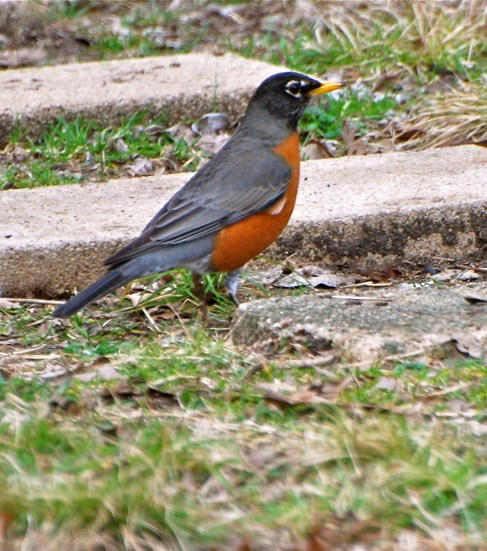
The introductory line is from Blake’s “Auguries of Innocence,” a somewhat lengthy poem consisting of a series of paradoxes in which Blake juxtaposes innocence with evil and corruption. The word augury in the title means omen or token, and the robin is the poem’s first noted “augury of innocence.”  The robin’s song, personality, and countenance are such that it’s obvious why the poet saw the act of putting one in a cage as not only an enraging violation but also as a profound perversion of holiness.  The sweet song and colorful markings of a robin make the bird a delightful harbinger of spring’s infancy and innocence.  Looking forward to its coming is one of my favorite rites in spring’s passage, and like “all heaven” I’d be incensed if the bird’s freedom were taken away and its song silenced.  Below is a legend about the robin that again ties the bird to the blameless and sacred.  Although the truthfulness of legends is questionable, I’m fascinated that somehow, somewhere, and in some way the robin was connected to the Messiah.

The Legend of the First Robin

One day, long ago, a little bird in Jerusalem saw a large crowd gathered around a man carrying a heavy wooden cross.  On the man’s head was a crown made from a thorn branch.  The thorns were long and sharp.  The little bird saw that the thorns were hurting the man.  It wanted to help Him, so it flew down and took the longest, sharpest thorn in its tiny beak.  The bird tugged and pulled until the thorn snapped from the branch.  Then a strange thing happened.  A drop of blood fell onto the bird’s breast, staining it bright red.  The stain never went away.  And so today the robin proudly wears a red-breast, because it helped a man named Jesus.  

“But ask the animals, and they will teach you, or the birds of the air, and they will tell you; or speak to the earth, and it will teach you, or let the fish of the sea inform you.  Which of all these does not know that the hand of the LORD has done this?  In His hand is the life of every creature and the breath of all mankind. . .”  ~Job 12:7-10   ✝

40. Spring shows what God can do with a drab and dirty world. ~Virgil Kraft

Awake, thou wintry earth –
fling off thy sadness!
Fair vernal flowers, laugh forth –
your ancient gladness!
~Thomas Blackburn

Image

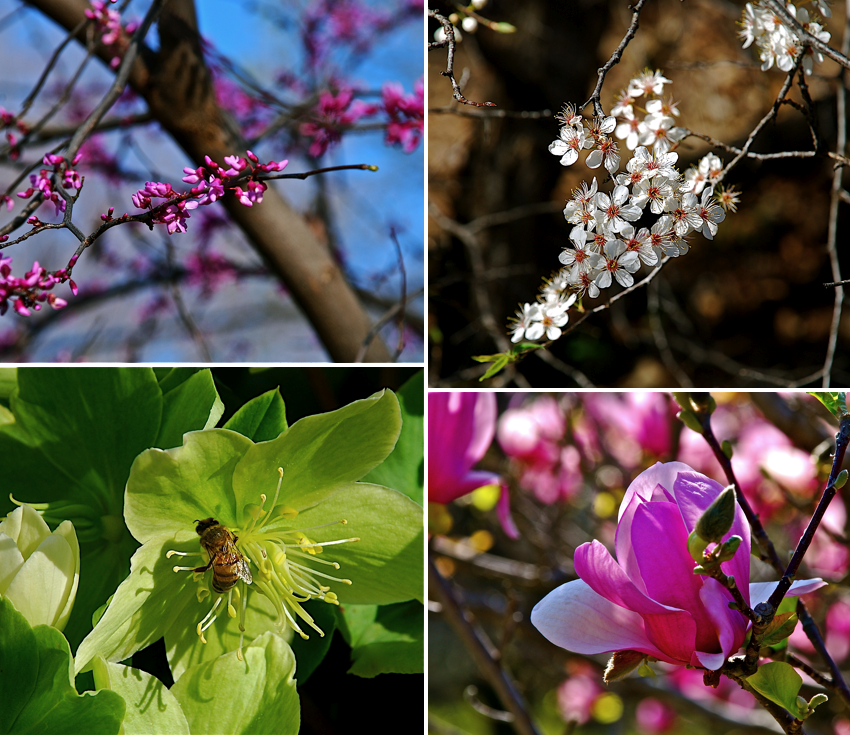
Leaf by leaf, bud by bud, and blossom by blossom the spring of the year advances.   On warmish days, earth casts off its wintry gloom, and breezes broadcast sweetly-scented aromas.  The first butterflies then dare to soar and the hungry bees hum amid the glad laughter issuing forth from flowering bulbs and trees.  As a result the year’s initial poetry of rebirth is penned by the pollinating, aerial whirring of dainty wings.  In the meantime as I hurry about trying to taking photos of the blossoming narratives and their paramours, I often find myself asking the same question Walt Whitman once did.  “Why are there trees I never walk under but large and melodious thoughts descend upon me?”  The answer I’ve decided is that the arms of trees reach towards the heavens to gather sacred messages meant to draw mankind near to “the living Word of God in nature” as well as what is read in Scripture.

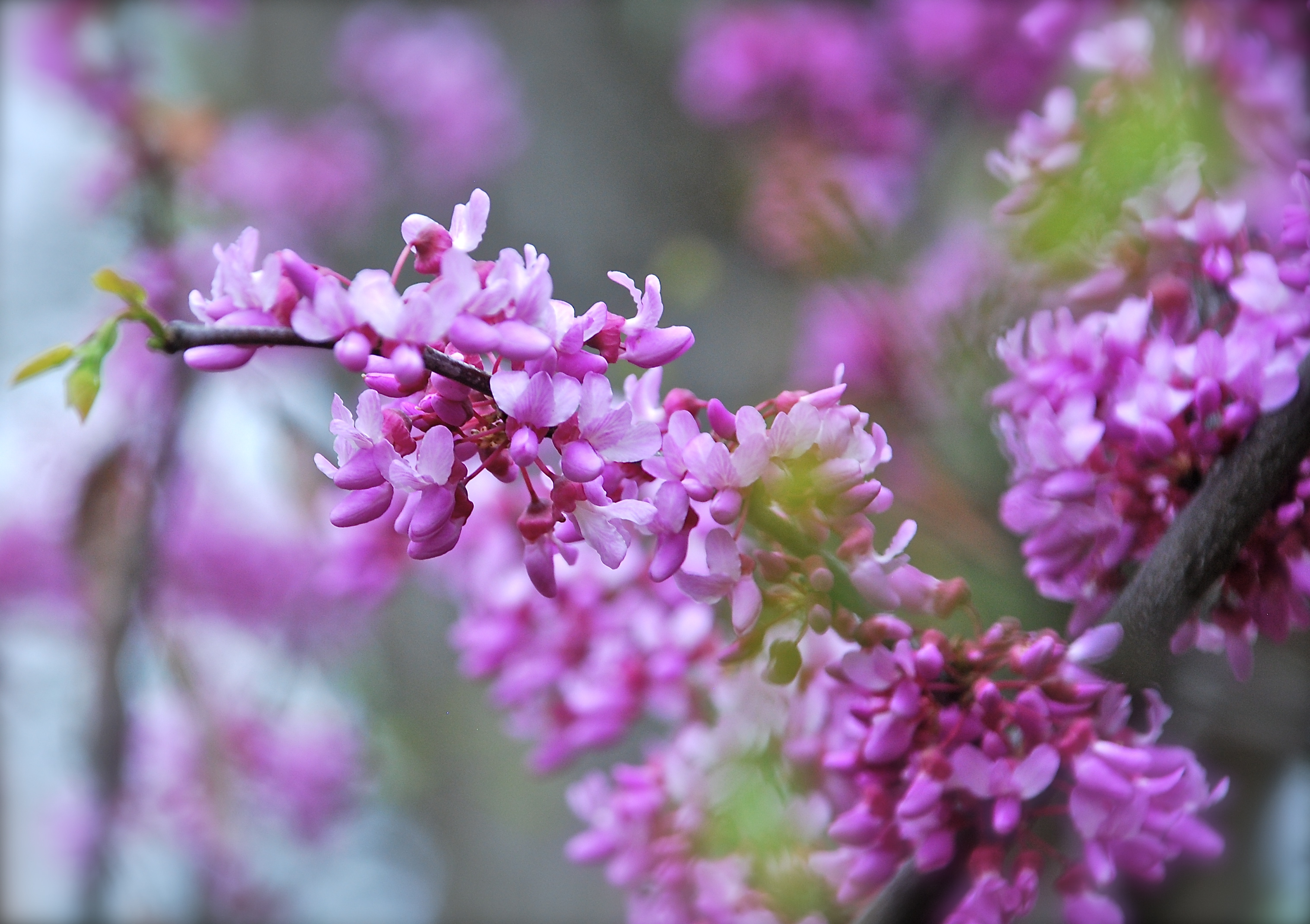
In our area the first verses of  “tree” poetry come from Saucer Magnolias.  Their big, goblet-shaped flowers pen exquisite couplets in pink and white.  Soon to follow are the brilliant white blossoms of Star Magnolias.  Though not quite enough lines to form a fourteen-lined sonnet, their twelve exquisite, “petal-poesy” lines form rhyming schemes as lovely as any Shakespearean sonnet.  Next and in perfect rhyming sequences come the double samaras.  Samaras, the scarlet, dual winged fruits of the Red Maple, look like long, slender fairy wings as they dance choric rhymes writ by the winds.  Then come the Eastern Redbuds and Bradford Pears that compose stunning free-verse stanzas in purple and white, each resplendent branch, a psalm written in praise of its Maker.  For a pollinator now there’s no quandary about where sweet nectaries are to be found for stanza after stanza they and I are lead in springtime to earth’s most festive and delicious banquets.

He has taken me to the banquet hall, and His banner over me is love.  ~Song of Songs 2:4