286. Where flowers bloom so does hope. ~Lady Bird Johnson

Live each season as it passes
breathe the air, drink the drink,
taste the fruit, and resign yourself
to the influences of each.
~Henry David Thoreau
Image

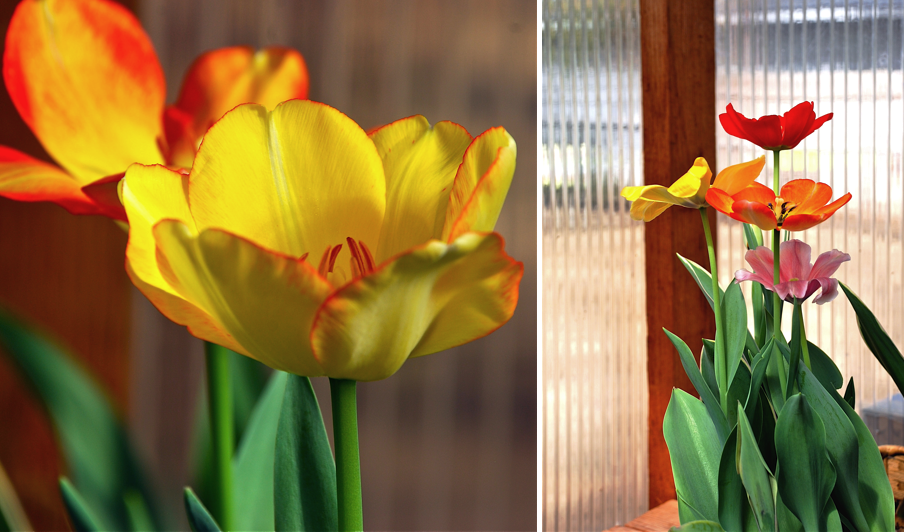
Smitten (v.) – affected suddenly and strongly with a specified feeling; affected mentally or morally with a sudden pang; impressed favorably; charmed; enamored.  I love the word smitten, I love being smitten, I look forward to being smitten, and on days like today I’m in desperate need of being smitten.  And what might the source of my “smittenness” be today?  It’s tulips and daffodils and hyacinths and crocus.  After years of planting bulbs in the ground to little or no avail, I’d resigned myself to being able to admire them until now only in books, magazines, and yards where others somehow have success with them.
Image

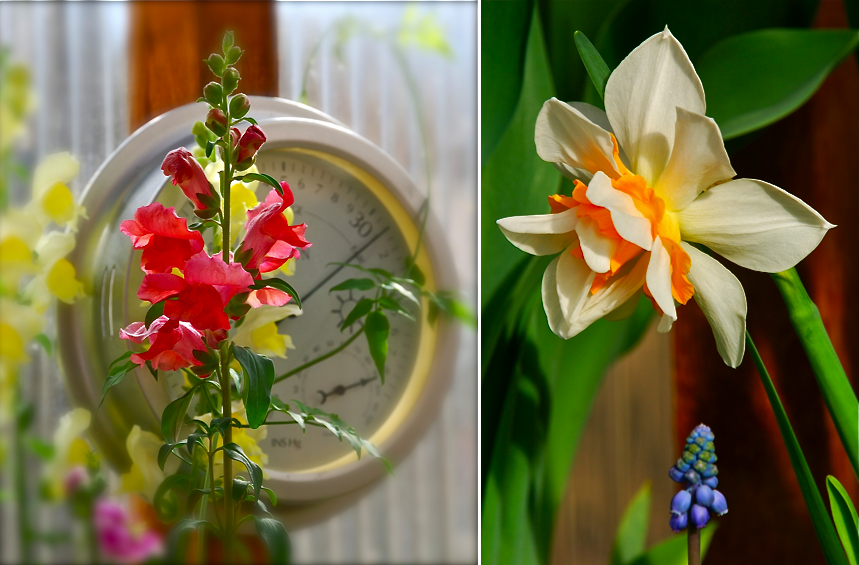
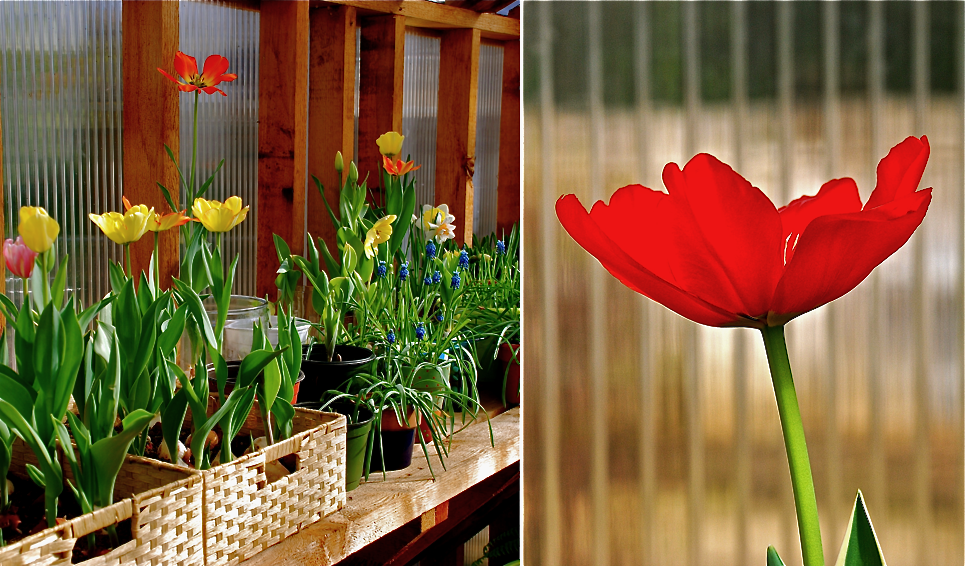
Nothing speaks of springtime louder or more clearly than flowering bulbs.  They are the epitome of spring’s opening opus, and now that my greenhouse is abloom with many of them, it feels like spring is close enough to reach out and touch.  Ah, spring, the season of increased sunlight, warmer temperatures, and the rebirth of fauna and flora, the season when the tilt of the earth relative to the sun is zero, the season which begins one month from today.
Image

For me drinking the drink, tasting the fruit, and resigning myself to the influence of each season as it passes is a way of life that inevitably brings me face to face with Yahweh and Son, the Holy One with whom I am beyond smitten.  Like Tennyson, I’m convinced that if one can understand what a flower is “root and all, and all in all, one should know what God and man is.”

O taste and see that the Lord is good; happy are those who take refuge in Him.  ~Psalm 34:8   ✝
69. Only from the heart can you touch the sky. ~Rumi

It is a glorious privilege
to live, to know, to act, to listen, to behold, to love.
To look up at the blue summer sky;
to see the sun sink slowly beyond the line of the horizon;
to watch the worlds come twinkling into view,
first one by one, and the myriads that no man can count,
and lo! the universe is white with them;
and you and I are here.
~Marco Morrow

Image

It is God’s privilege to conceal things and the king’s privilege to discover them.  ~Proverbs 25:2   ✝

40. Spring shows what God can do with a drab and dirty world. ~Virgil Kraft

Awake, thou wintry earth –
fling off thy sadness!
Fair vernal flowers, laugh forth –
your ancient gladness!
~Thomas Blackburn

Image

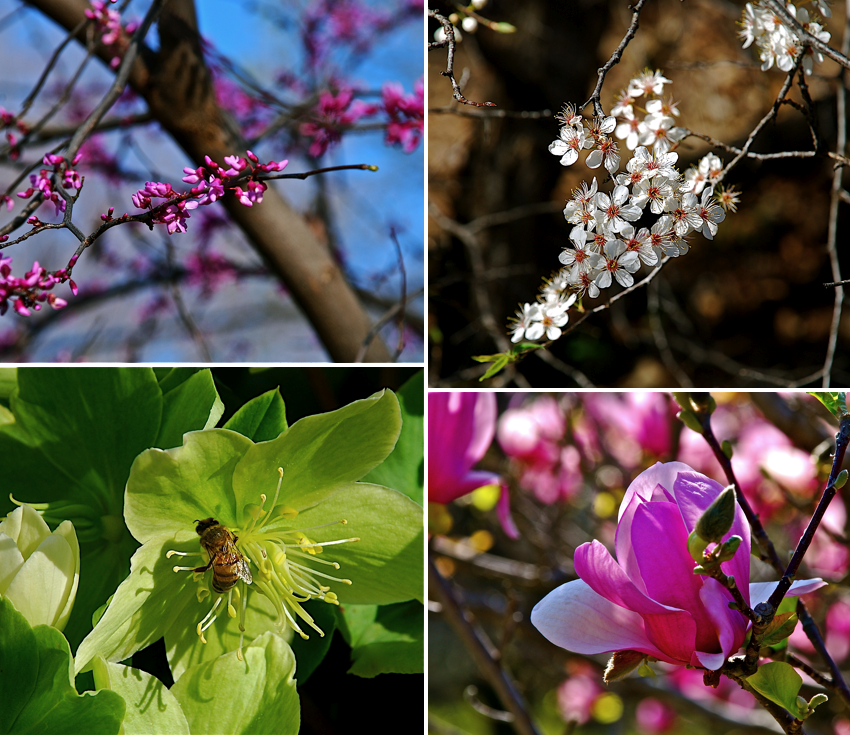
Leaf by leaf, bud by bud, and blossom by blossom the spring of the year advances.   On warmish days, earth casts off its wintry gloom, and breezes broadcast sweetly-scented aromas.  The first butterflies then dare to soar and the hungry bees hum amid the glad laughter issuing forth from flowering bulbs and trees.  As a result the year’s initial poetry of rebirth is penned by the pollinating, aerial whirring of dainty wings.  In the meantime as I hurry about trying to taking photos of the blossoming narratives and their paramours, I often find myself asking the same question Walt Whitman once did.  “Why are there trees I never walk under but large and melodious thoughts descend upon me?”  The answer I’ve decided is that the arms of trees reach towards the heavens to gather sacred messages meant to draw mankind near to “the living Word of God in nature” as well as what is read in Scripture.

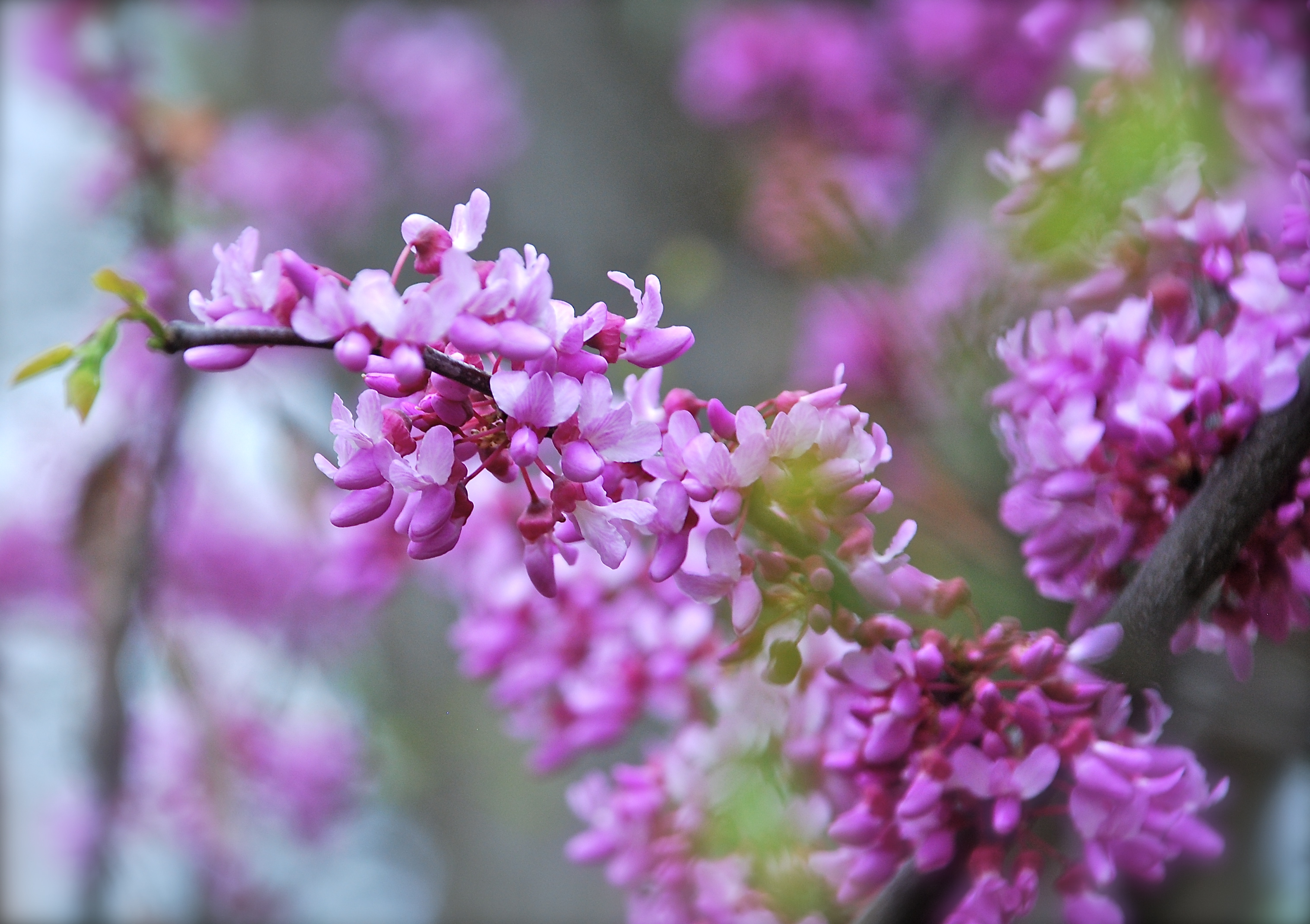
In our area the first verses of  “tree” poetry come from Saucer Magnolias.  Their big, goblet-shaped flowers pen exquisite couplets in pink and white.  Soon to follow are the brilliant white blossoms of Star Magnolias.  Though not quite enough lines to form a fourteen-lined sonnet, their twelve exquisite, “petal-poesy” lines form rhyming schemes as lovely as any Shakespearean sonnet.  Next and in perfect rhyming sequences come the double samaras.  Samaras, the scarlet, dual winged fruits of the Red Maple, look like long, slender fairy wings as they dance choric rhymes writ by the winds.  Then come the Eastern Redbuds and Bradford Pears that compose stunning free-verse stanzas in purple and white, each resplendent branch, a psalm written in praise of its Maker.  For a pollinator now there’s no quandary about where sweet nectaries are to be found for stanza after stanza they and I are lead in springtime to earth’s most festive and delicious banquets.

He has taken me to the banquet hall, and His banner over me is love.  ~Song of Songs 2:4