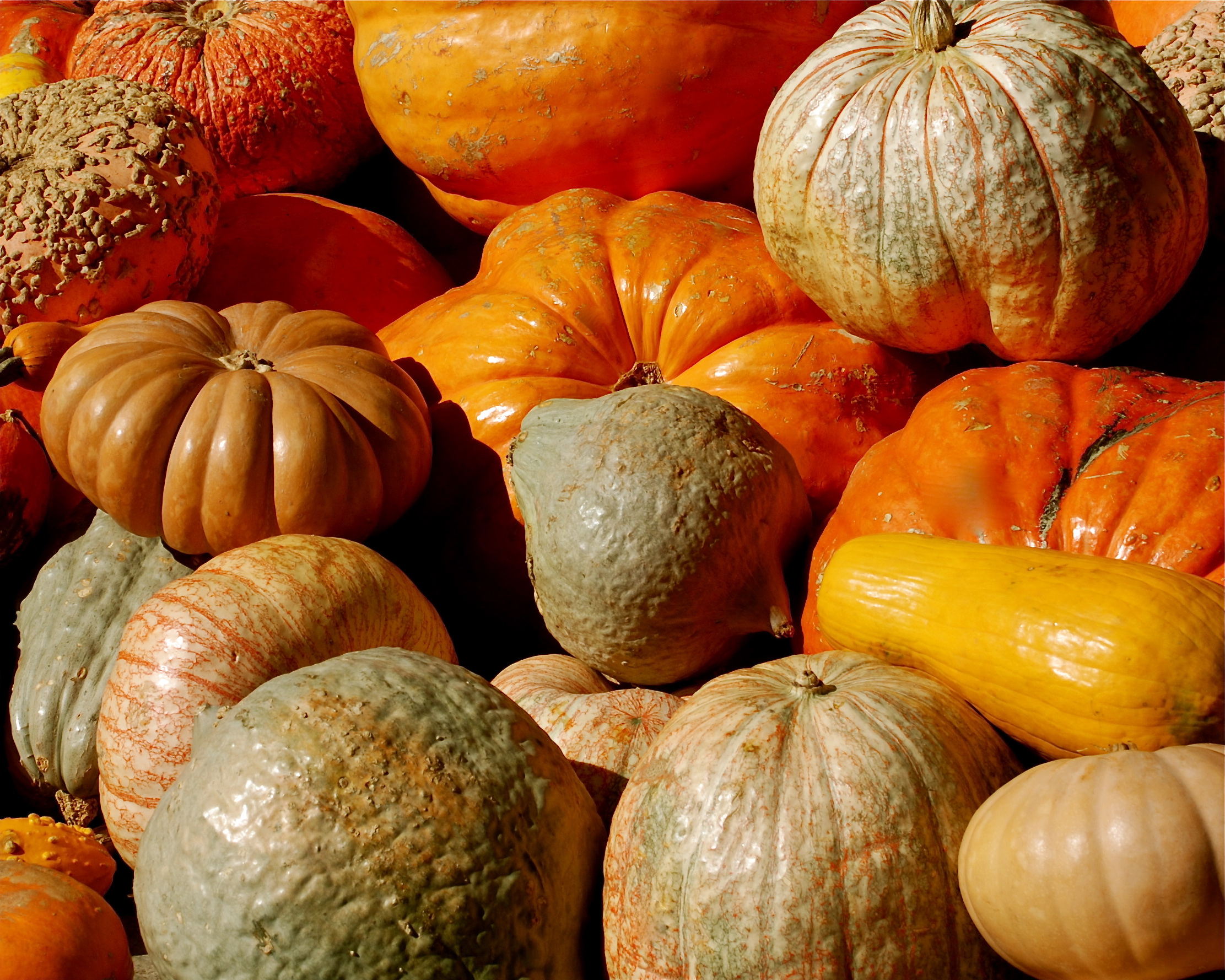
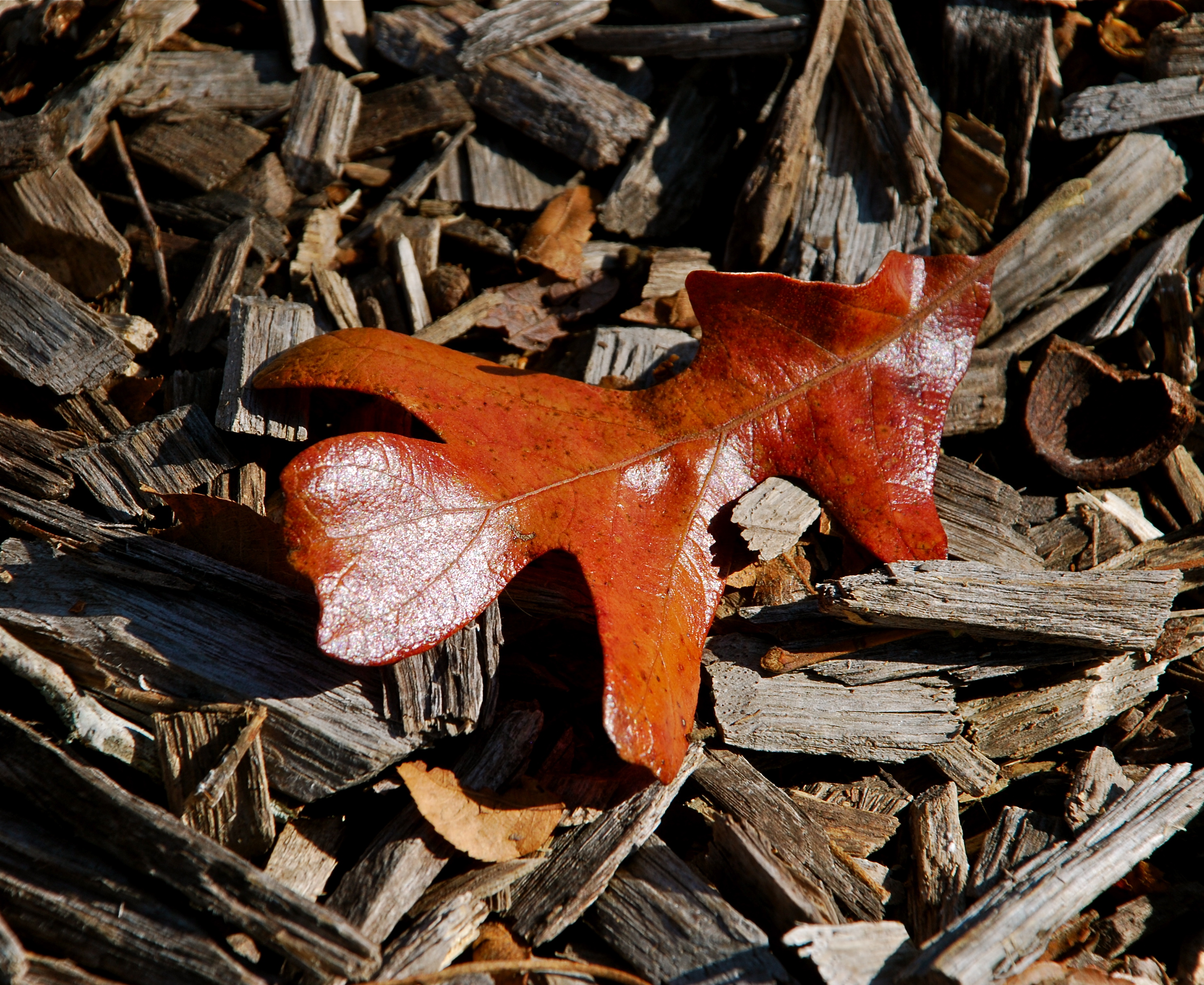
184. The day I see a leaf is a marvel of a day. ~Kenneth Patton

For man, autumn is a time of harvest,
of gathering together.
For nature, it is a time of sowing,
of scattering abroad.
~Edwin Way Teale
Image

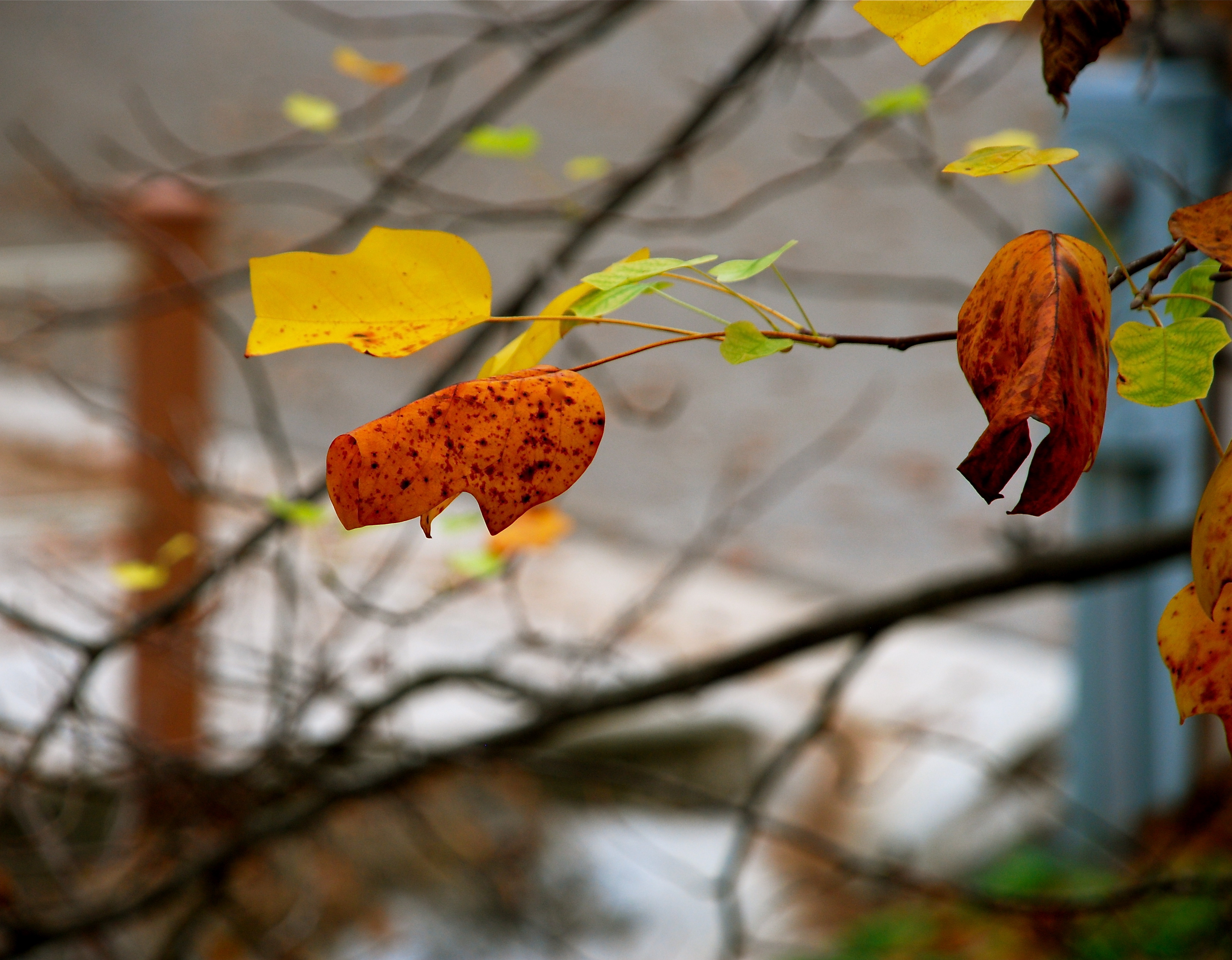
Most of us know that autumn’s winds are scatterers and sowers designed to achieve part of nature’s plans, but until I read Teale’s lines and did some research I wasn’t aware of the full and vital extent of what the winds scatter far and wide.  It’s fairly obvious that the presence of autumn leaves on the ground protects things from damage that comes as a result of fewer hours of light and bitterly cold temperatures.  What I didn’t know until now is that because cold, dry winter winds strip moisture from trees through their leaves, trees lose their leaves as a means of protecting themselves.  In that way leafless trees can conserve the much needed moisture in their branches and trunks so they don’t dry out and die.  Another consideration is that energetically it would be very costly for trees to keep their little leafy food factories up and running in winter because the fewer hours of sunlight and freezing temperatures are less efficient and make the transport of water from the ground into the trunk and leaves a damaging drain on the trees’ resources.  The loss of leaves then is designed to put trees into a state of dormancy thereby reducing the amount of energy they need to stay alive; essentially the process sends leafless trees into a life-preserving hibernation during the winter months.  What a grand plan!  How can a day not be a marvel when confronted with such grand plans?  The older I get the more constant a state of marvel I live in, and the more I adore Creation’s Maker.

I will proclaim the name of the Lord.  Oh, praise the greatness of our God.  ~Deuteronomy 32:3  ✝
183. Why are there trees I never walk under but large and melodious thoughts descend upon me? ~Walt Whitman

And this our life,
exempt from public haunt,
finds tongues in trees,
books in running brooks,
sermons in stones,
and good in everything.
~William Shakespeare

Image

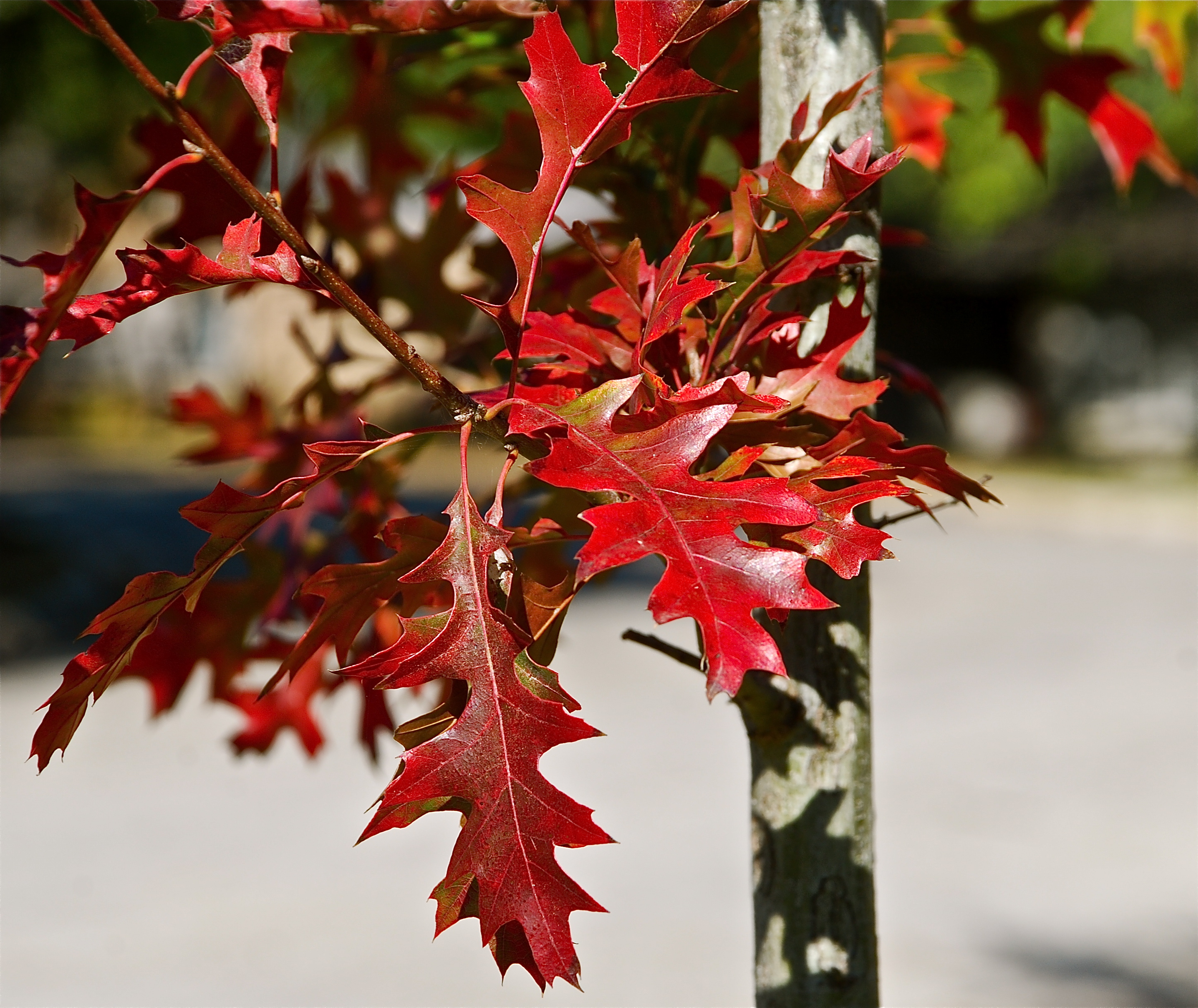
Standing beneath the Shumard Red Oak made me feel like I was standing in a temple of the Most High.  The breeze was ruffling its leaves, and they in turn were prompting sacred tongues to utter incantations of their divine purpose.  For though the leaves face eminent extinction and expulsion from the branches, in their dying they’ll fall and create warm blankets to cover the ground.  In so doing they will protect the life that lies beneath the surface during winter’s cold, cold days.  Even at the close of winter their goodness will not be at an end for as they deteriorate, the remaining bits and pieces will add nutrients to enhance the soil.  Thus goes the circle of life and the interdependency of all things.

God’s voice thunders in marvelous ways; He does great things beyond our understanding.  ~Job 37:5  ✝

181. How could such sweet and wholesome hours be reckoned but with herbs and flowers. ~Andrew Marvel

Natural object themselves
even when they make no claim to beauty,
excite the feelings, and occupy the imagination.
Nature pleases, attracts, delights,
merely because it’s nature.
~Karl Wilhelm Humboldt

Image

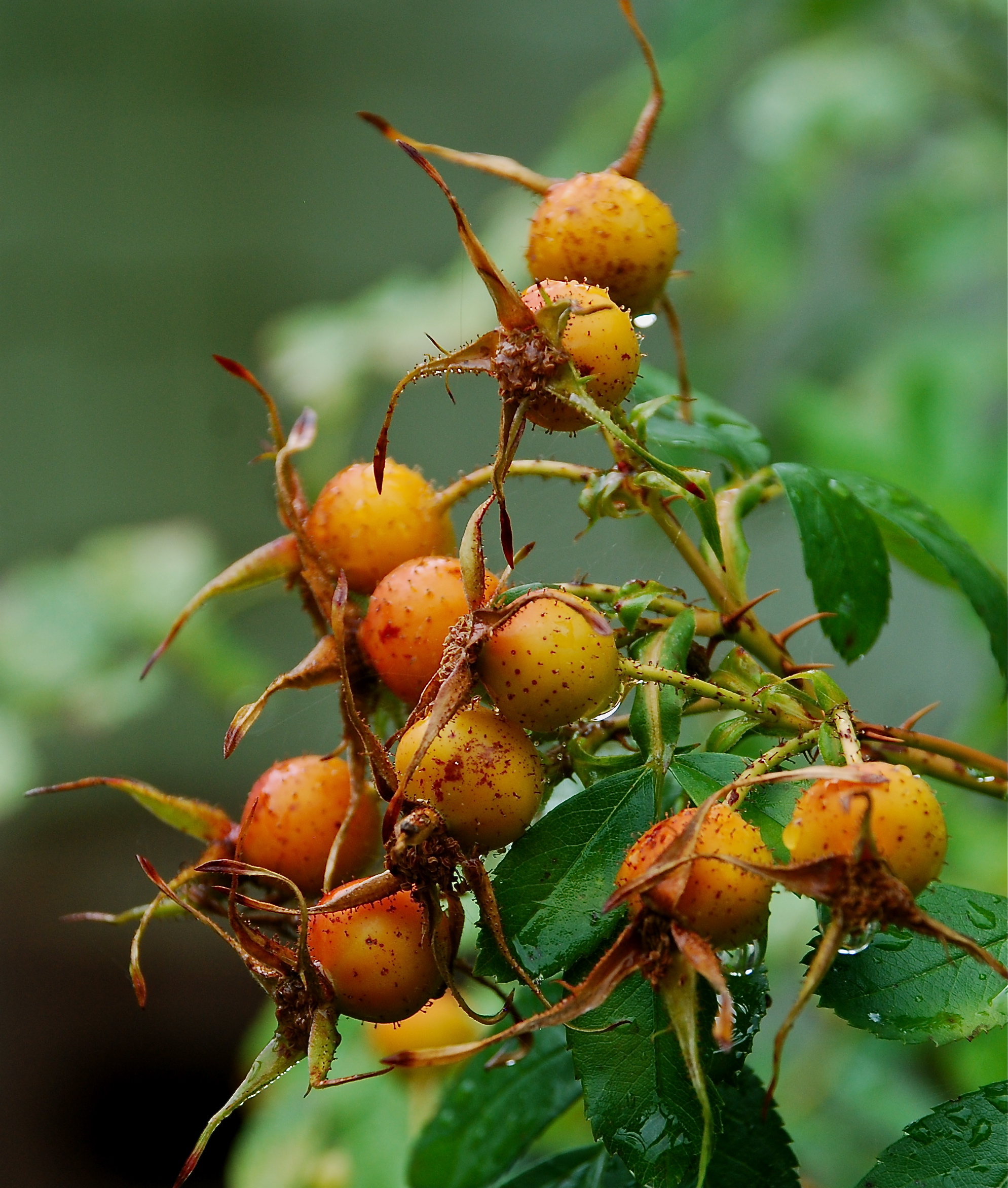
The most common attractions of the rose are the prettily colored flowers and the sweet to spicy fragrances.  On some roses there are also brightly colored hips that not only decorate bare canes in winter but also provide feasts for overwintering birds.  These hips are the pomaceous fruits of the rose, and they vary in size and shape and color.  Some of the first rosary beads were fashioned out of dried rose hips, and they have been used as well to make jellies, jam, marmalade, teas, soup, and medicinal compounds.  They also played an important role during World War II because they are very rich in Vitamin C.  It seems the people of Great Britain were encouraged to gather wild-grown rose hips to make a syrup for their children since German submarines were sinking commercial ships making it very difficult to import citrus fruits from the tropics.

Looking with expectancy for things that excite, I venture out into my gardens almost daily, weather permitting.  To that end I am seldom disappointed even on drippy days like this one.  Today’s find were some gold-orange-reddiish rose hips, and though they make no claim to great beauty, I was thrilled to see them once again.  After photographing them and beginning this post I began pondering what a difference for the better it might make if I greeted every new day’s living with the same attitude.  What an impact might it have on those around me if I met them filled with joy and expected the best from the encounter.  Once again I see how God’s Eden is not only a great sustainer but also an excellent teacher.

The seed will grow well, the vine will yield its fruit, the ground will produce crops, and the heavens will drop their dew.  ~Zechariah 8:12  ✝

180. The great man is he who does not lose his child’s heart. ~Mencius, Chinese philosopher and sage

Image

rainy days
magical rainy days
pitter-patter, pitter-patter

puddles forming everywhere
bouncing droplets on the ground
pitter-patter, pitter-patter, pitter-patter

water gushing off old, rusty gutters
wind chimes whirling around and around
bowers bending from heavy showers, pitter-patter

each drop a tiny dancer bobbing up and down
tiny rivers flowing between stones on a garden path
beads forming along the tendrils of a grapevine, pitter-patter

rumbling, grumbling thunder; flashes of cool, clean air in the face
tree branches bending close to the ground; soothing sounds all around
vague memories of wet beginnings forever draw me to the rain, pitter-patter

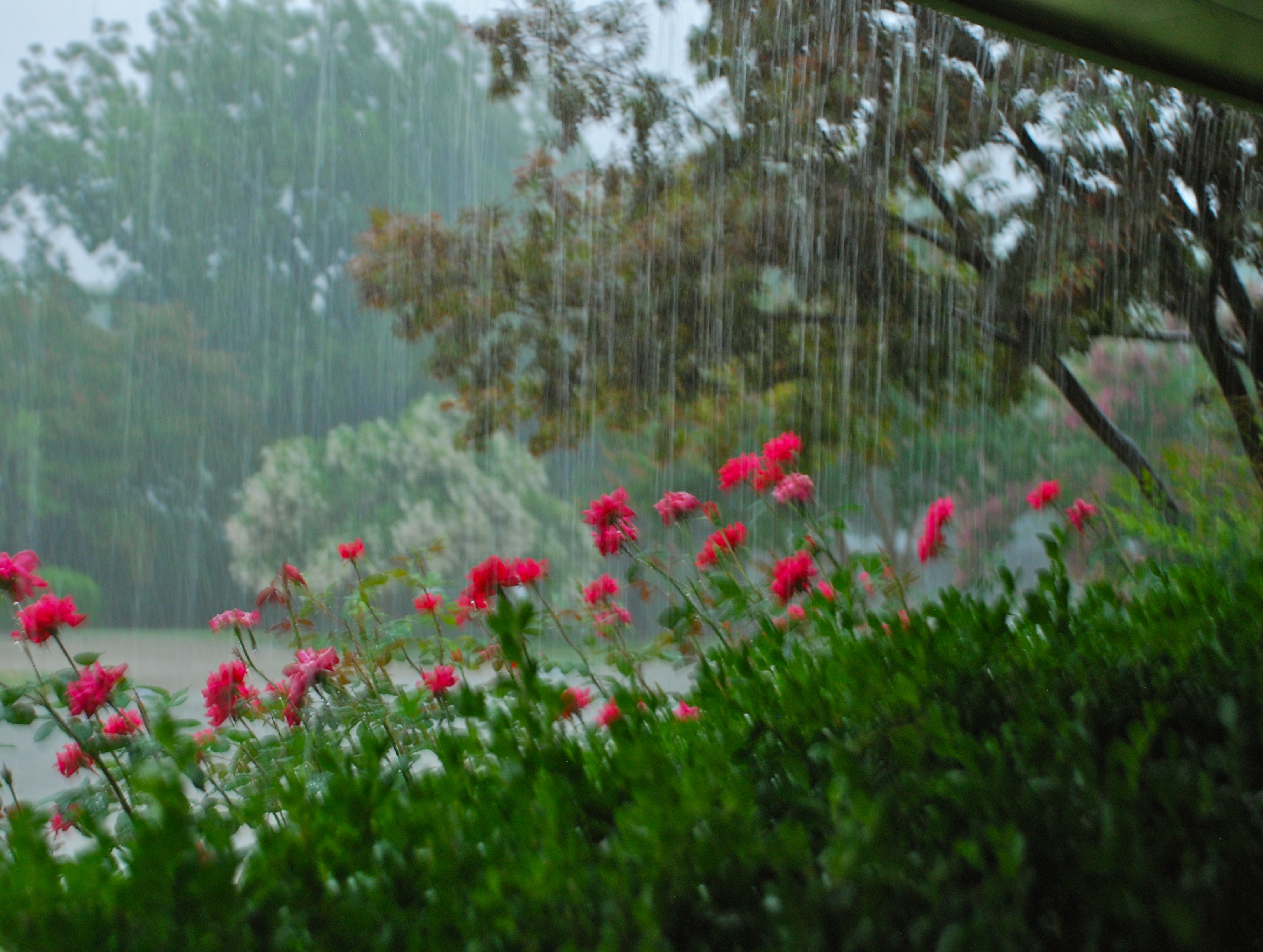
As I the rain started to fall today, I noticed it began with a few drops here and a few drops there.  Then there were a few more more and then more and more until finally it was falling steadily all around.  It was like it was building up momentum and so as I watched, I let my words fall on the page in a similar manner while watching the effects of its progression.  What I wanted to do was imitate the pleasant sights and sounds that kept cropping up as the rain fell heavier and heavier.  Frivolous and silly perhaps but every now and then I think we need to remember the kinds of simple pleasure we enjoyed as children.

When they see among them their children, the work of My hands, they will keep My name holy. . and will stand in awe of the God of Israel.  ~Isaiah 29:23  ✝

179. November’s sky is chill and drear, November’s leaf is red and sear. ~Sir Walter Scott

Pleasures lie thickest where no pleasures seem:
There’s not a leaf that falls upon the ground
But holds some joy of silence of sound,
Some spirits begotten of a summer dream.
~Laman Blanchard

Image

The first Sunday of November had been running out like slow, thick molasses as deepening autumn’s shades of gray hung on it like a shroud.  Even the flocks of busying birds and the foraging squirrels succumbed, as did I, to the hypnotic laziness of the day’s dark, engulfing gloom.  However, things became a little livelier for a time late in the day when the cement on the patio became a dance floor filled with tiny rain-drop dancers jitterbugging to the short-lived “drippy” rhythms.  After the rainy spell light broke briefly through the clouds, and it was enough to highlight a few colorful leaves and a potted petunia.  Together those two sights interjected a touch of color while the wrought-iron furniture that glistened in the light added a bit of beaded elegance to the drab scene.  How sweetly even a token display of earth’s delights can thrill this observer!

Surely then you will find delight in the Almighty and will lift up your face to God.  ~Job 22:26  ✝

178. All the flowers of all the tomorrows are in the seeds of today and yesterday. ~Chinese Proverb

In the garden the door is always open into the holy –
growth, birth, death.
Every flower holds the whole mystery in its short cycle,
and in the garden we are never far away from death,
fertilizing, good, creative death.
~May Sarton

Image

Every year the unseen becomes visible as new life explodes from quiet, dark, sustaining wombs.  Beneath the soil roots grow and above the surface tiny leaves yield proof of life.  Enlivening rains come, and the leaves grow.  Daylight hours lengthen, and they grow more.  Amid the leaves emerge buds, and they grow.  Buds burst into flowers, the flowers fade, and their petals fall.  Fruits, seed heads, or pods appear, and they ripen.  Fruits are harvested, seeds are spilled onto the soil, and buds are set inside woody canes or branches.  Then comes the time of rest, the discontinuance of the same, the different new genesis.  The beginnings, the middles, the ends–never an ending without a beginning–never a beginning without an ending, so goes the cyclic constancy of a garden.

The land produced vegetation; plants bearing seed according to its kinds and trees bearing fruit with seed in it according to their kinds.  And God saw that it was good.  ~Genesis 1:12  ✝

176. For the mind disturbed, the still beauty of dawn is nature’s finest balm. ~Edwin Way Teale

Slow buds the pink dawn like a rose
from out night’s gray and cloudy sheath;
softly and still it grows and grows,
petal by petal, leaf by leaf.
~Susan Coolidge

Image

Tired of tossing and turning, I got up out of bed and went in to rock in my favorite chair.  Not wanting to miss the “slow budding” of dawn’s light, however, I first raised the bamboo shade in front of the glass, patio-doors.  After a short wait a faint pinkish glow appeared low on the horizon in the eastward sky, and as the sun inched up and up and up, a ray of golden light poured through an opening centered in the heart of a tall tree framed against it just above a neighboring housetop.  The branches of the tree then took on a hallowed appearance so much so that a bird atop the roof and two squirrels sitting very still in nearby branches looked like parishioners in pews awaiting the high priest.  Later, as the sun climbed high enough for night’s curtain to be lifted completely off earth’s stage, it was apparent that all who’d seen this amazing “salutation of the dawn” were summoned to make ready for the new day.  The first to respond was a flock of birds darting willy nilly across the pastel blue sky in search of food, but beneath them as more and more drops of light appeared like jewels aloft in the bamboo I knew that despite a restless night the time for me to rise had come as well.

If I rise on the wings of dawn, if I settle on the far side of the sea, even there Your hand will guide me, Your right hand will hold me fast.  ~Psalm 139:9-10  ✝

174. The greatness of a nation and its moral progress can be judged by the way its animals are treated. ~Mahatma Ghandi

If all the beasts were gone,
men would die from a great loneliness of spirit,
for whatever happens to the beasts
also happens to the man.
All things are connected.
Whatever befalls the Earth befalls the sons of Earth.
~Chief Seattle of the Suquamish Tribe

Image

The creatures of earth, sea and sky came forth “out of the waters of God’s life.”   And their arrival was yet another manifestation of the visible from the invisible–another disclosure of the mystery of God.  In addition, “with the birth of the creatures there is the emergence of seeing, hearing, smelling, tasting, and touching.  The light of the sun and the whiteness of the moon can now be seen.  The wind blowing through the leaves of trees and the crashing of ocean waves can be heard.  The early morning fragrance of the earth can be smelled.  Its fruit can be tasted, and its textures touched,” writes J. Philip Newell.  It has even been said that if one wants to know the Creator, one of the ways to gain insight is to know His creatures, and I think that’s especially true when it comes to examining the sensory aspect of their coming.  For does not the ability to see, that the creatures brought, teach mankind to see with the eyes of the heart?  In the silences of humanity’s reality does not the ability to hear teach men to listen for the “echo of the spheres” and the still, small voice of God?  Do not the abilities to smell, taste, and touch help mortals meet their Savior, Jesus, through the holy sacrament of the Eucharist (Communion)?

And to all the beasts of the earth and all the birds in the sky and all the creatures that move along the ground–everything that has the breath of life in it–I give every green plant for food.”  And it was so.  ~Genesis 1:30

173. I’m so glad I live in a world where there are Octobers. ~Lucy Maud Montgomery

Autumn, that season of peculiar and inexhaustible influence
on the mind of taste and tenderness,
that season which has drawn from every poet,
worthy of being read,
some attempt at description, or some lines of feeling.
~Jane Austen

Image

While the summer sun reigned high in the heavens, the trailing vines of Cucurbita inched along the ground.  Its flowers were pollinated, and then its fruits began to grow.  Tendrils on the vines helped anchor the rambler and protect them from the wind.  The leaves of the vines absorbed energy from the sun to spur the growth of the fruits, and the stems worked like umbilical cords to bring nutrients to the fruits while the thin and shiny outer layer of the fruits protected them from insects and disease.  As summer wound down, the ripening gourds began turning a spectacular color of orange, at least the traditional ones.  Then after the autumnal equinox, north winds venturing out of their haunts moved southward.  Along the way they gathered a fair measure of clouds; rain from the clouds greened the landscape; days became noticeably shorter; temperatures dropped below previous three digit highs; skies regained deeper hues; dawns became chillier; and the inimitable pumpkin, having been nipped off its vine, appeared on roadside stands and in grocery stores.  How I love Octobers and the whole autumn experience; hardly a day goes by that I don’t turn my eyes upward in praise, drop to my knees in thanksgiving, and wish I could throw my arms in adoration around  the Lord of all Creation!

May the peoples praise you, O God; may all the peoples praise you.  Then the land will yield its harvest, and God, our God, will bless us.  ~Psalm 67:5-6  ✝

171. Nature is to be found in her entirety nowhere more than in her smallest creatures. ~Pliny the Elder (Roman Scholar)

She sat down in a weed patch, her elbows on her knees ,
and kept her eyes on the small mysterious world of the ground.
In the shade and sun of grass blade forests,
small living things had their metropolis.
~Nancy Price, Website writer and poet

Image

This writer is describing a kingdom that exists in probably every square foot of ground in any garden, and it is not a singular kingdom.  In and around blossoming things there’s yet another mysterious metropolis.  In it airborne living things yearn to “possess the sweet of every flower that blooms,” and so in that above-ground realm there really is a very simple equation: if there are no flowers there are no pollinators; if there are no pollinators there are no flowers.  One simply doesn’t exist without the other, at least for very long.  The hum or buzz of the pollinating agent and the flower’s blooming go hand in hand.   Together they dance the dance of life and commit their acts of love.  And so it is that different life forms as well as scripture “remind us that there are other voices, other rhythms, other strivings, and other fulfillments…”  How I’d love to hover over the petals of a rose, peer deep into its center, and then dive in to taste its “sweets” like the wasp on this bi-colored Scentimental rose.

God’s voice thunders in marvelous ways; he does great things beyond our understanding.  ~Job 37:5   ✝