363. There is material enough in a single flower for the ornament of a score of cathedrals. ~John Ruskin

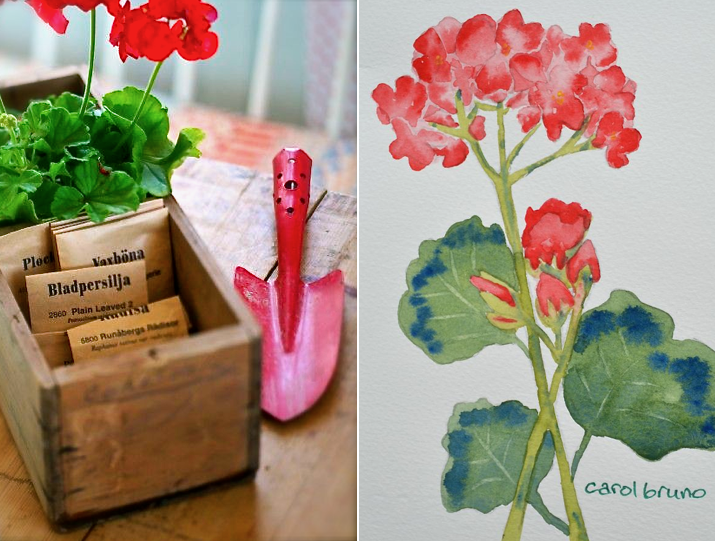
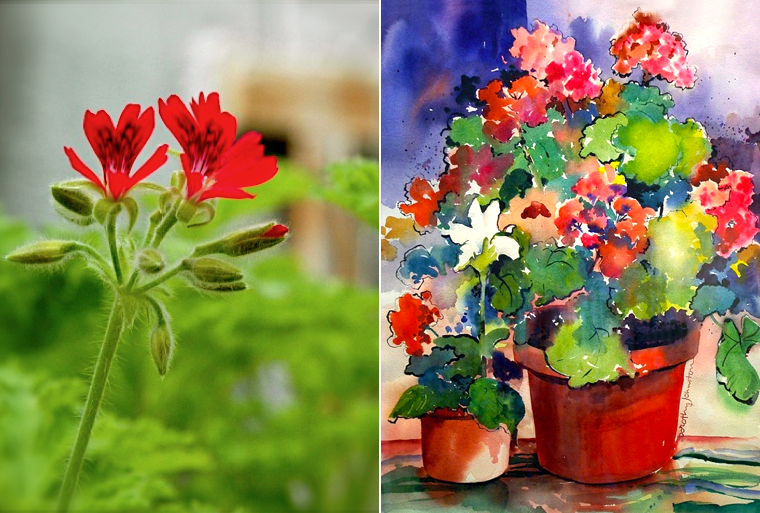
The Geranium
~by Leonard Feeney

If you wish to grow a lily
With its white and golden hue,
You will have to have a mansion
And a gardener or two.

Image

A rose must have a radiant bush
With lots of room and air;
And a peony wants the terrace
Of a multimillionaire;

Image

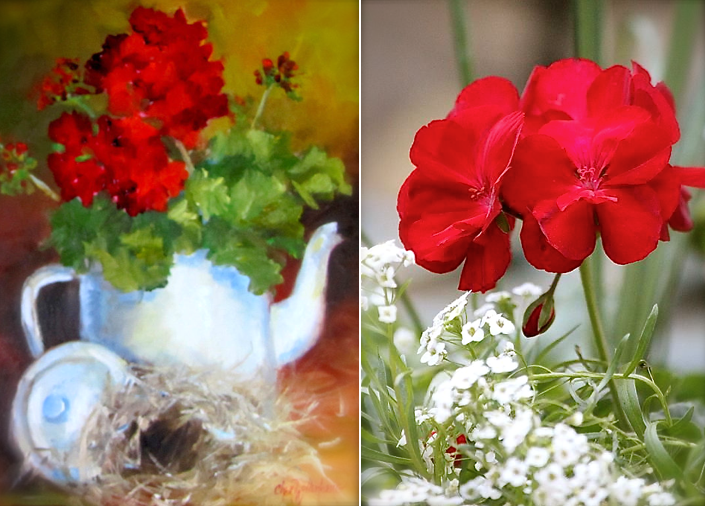
But all a poor geranium
Will ever ask a man–
Is a little bit of fragrant earth
And an old tomato can.

Image

Flowers appear on the earth; the season of singing has come, the cooing of doves is heard in our land. ~Song of Songs 2:12  ✝

Thank you, Lord Jesus, that you save, you heal, you restore, and you reveal Your Father’s heart to us! You have captured me with grace and I’m caught in Your infinite embrace!

** Images via Pinterest

360. …Monet portrayed the changeability and flux of every moment. “The Water Lilies” give you a jittery, amorphous sense of a world seen at the speed of light. ~Jerry Saltz

I gathered them–the lilies pure and pale,
The golden-hearted lilies, virgin fair,
And in a vase of crystal, placed them where
Their perfumes might unceasingly exhale.
High in my lonely tent above the swale,
Above the shimmering mere and blossoms there,
I solaced with their sweetness my despair,
And fed with dews their beauteous petals frail.
~Florence Earle Coates

Image

Wow! Don’t ya just love to be wowed?! According to the dictionary “wow” as an expression of excitement was first recorded in Scots in the early 16th century. But the dictionary doesn’t tell us what it was that generated enough excitement to inspire the “wow” in Scots, and I for one would really like to know. I love to be wowed; Creation and the Lord wow me over and over again in ways like no other. Okay, okay, I know; so what is the connection between water lilies and a word that expresses astonishment or admiration. Well…yesterday, we drove through our local Botanical Gardens and I noticed they had put some water lilies in one of their ponds and was thrilled to find something new to “feed” my camera and thus my soul, but wait, that is not what created the “wow” factor although water lilies are “wowish” enough in their own right. It was something I read about them when I got home that prompted the really animated “wows.” According to an encyclopedia, “the Fragrant Water Lily has a unique pollination strategy. On the first day that the flower blooms, its pollen is not yet released. Instead, a fluid fills the centre of the flower covering the female parts. Should an insect visit the flower, the design of the petals causes it to fall into the fluid. If the insect is covered in pollen, the pollen dissolves in the fluid and fertilizes the flower. The next day, no fluid is produced, and pollen is released instead. The insect that falls into the fluid usually emerges unharmed; although a few unlucky ones may be trapped and drown.” Is that amazing or what?! This is exactly why I garden and love gardens and God as much as I do. He is in the goodness and “wow” business, and He does both like nothing else! The world may be in flux at every moment, but the Lord is true and faithful to all His promises and His inherent goodness.

I am my beloved’s and my beloved is mine; he browses among the lilies. ~Song of Songs 6:3 ✝

Thank you, Lord Jesus, that you save, you heal, you restore, and you reveal Your Father’s heart to us! You have captured me with grace and I’m caught in Your infinite embrace!

349. The sky and the strong wind have moved the spirit inside me till I am carried away trembling with joy. ~Uvavnuk, a female angakkuq (shaman) of the Iglulik Inuit, now considered an oral poet

Oh wind, a blowing all day long,
Oh wind, that sings so loud a song!
~Robert Louis Stevenson

Image

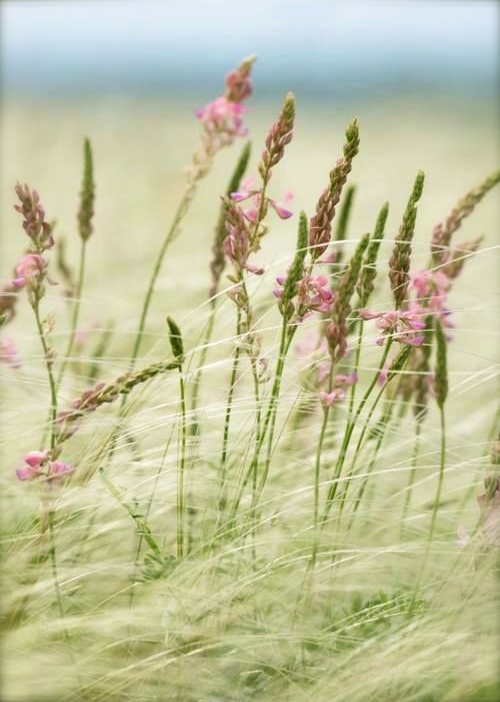
In a spring garden flowers speak of sacred sacraments; the wind that ruffles through them, like my breath moving in and out, speaks of holy beginnings. And so back go my thoughts to Eden wherein the creative acts of Ruach Elohim took place. Ruach is an ancient Hebrew word for God which literally means “wind.” As such it was not observed as a being but rather as a “vitalizing force.” Bishop J. S. Spong explains that “among the Hebrews the ruach or wind of God was said to bring forth life. Slowly this ruach evolved and became personalized and called Spirit… The ruach or wind of God was not external. It rather emerged from within the world and was understood as its very ground, its live-giving reality…in the very mysterious wind, which the Jews felt on their faces, they believed they found themselves touched by God here and now.” So it is that in the here and now of my life, I find myself touched by Ruach Elohim in my garden hour after hour, day after day, month after month, year after year. The holiness within my garden’s confines comes forth again and again from branch and leaf, thorn and blossom, and creatures great and small. Through it flow waters that sustain and nurture life. Above it orbs, golden and white, shine bringing light into darkness, and the ground upon which I walk is as holy as the hallowed ground on which Yahweh and the Christ trod.

Which of all these does not know that the hand of the LORD has done this? In his hand is the life of every creature and the breath of all mankind. ~Job 12:9-10 ✝

Thank you, Lord Jesus, that you save, you heal, you restore, and you reveal Your Father’s heart to us! You have captured me with grace and I’m caught in Your infinite embrace!

323. Nature inanimate employs sweet sounds, but animated nature sweeter still, to soothe and satisfy the human ear. ~William Cowper

There’s music in the sighing of a reed;
There’s music in the gushing of a rill;
There’s music in all things, if men had ears;
Their earth is but an echo of the spheres.
~Lord Byron
Image

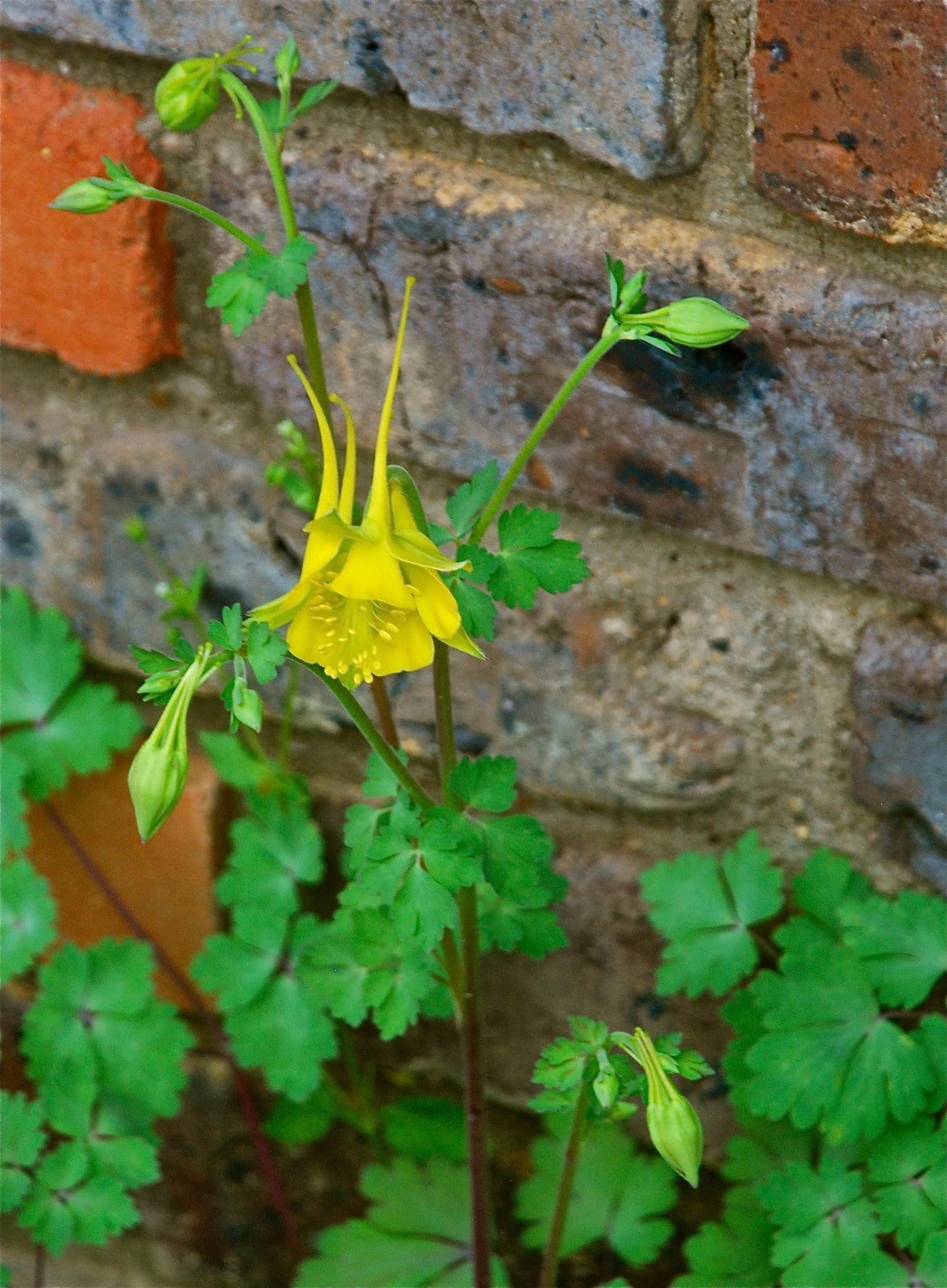
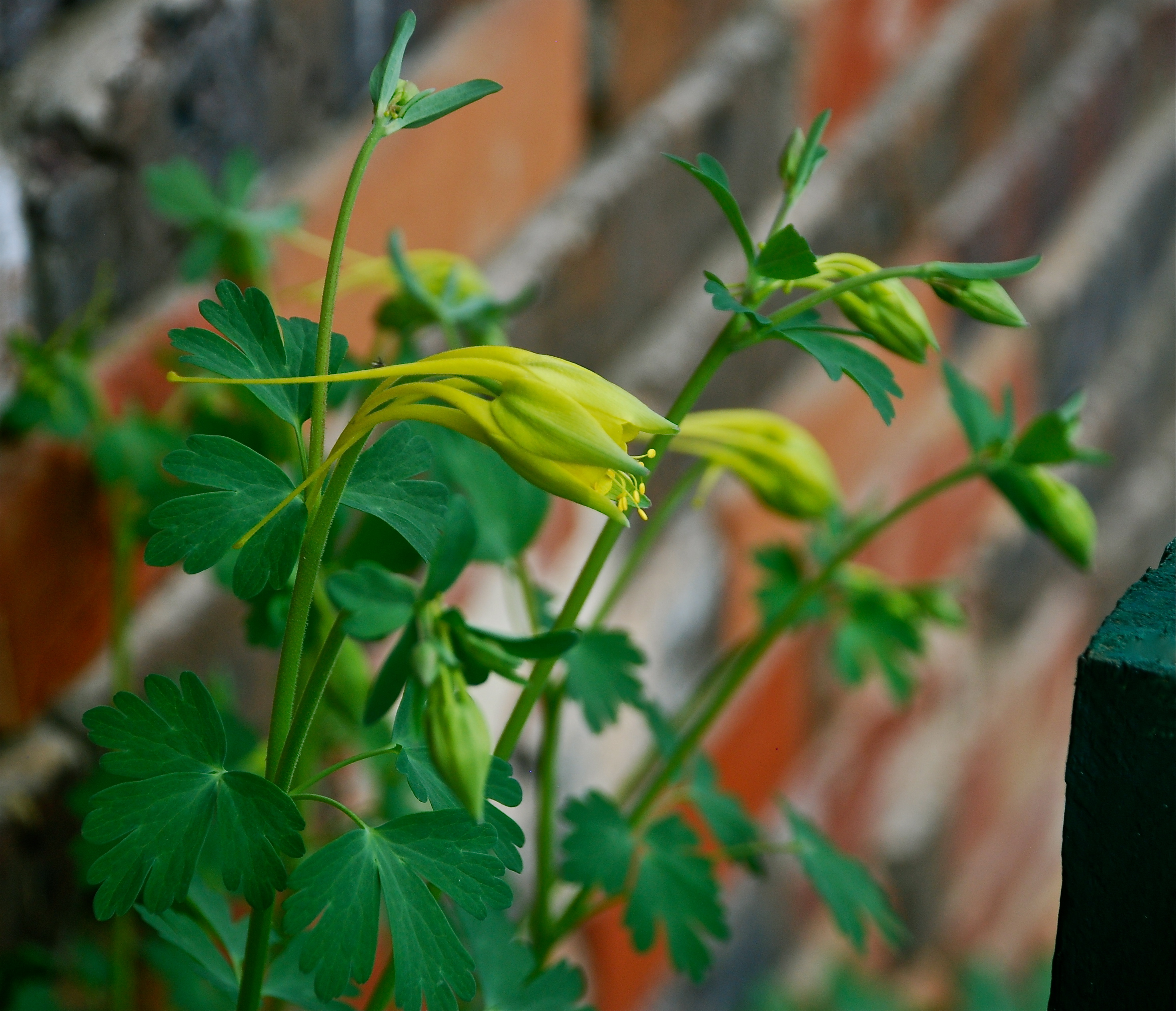
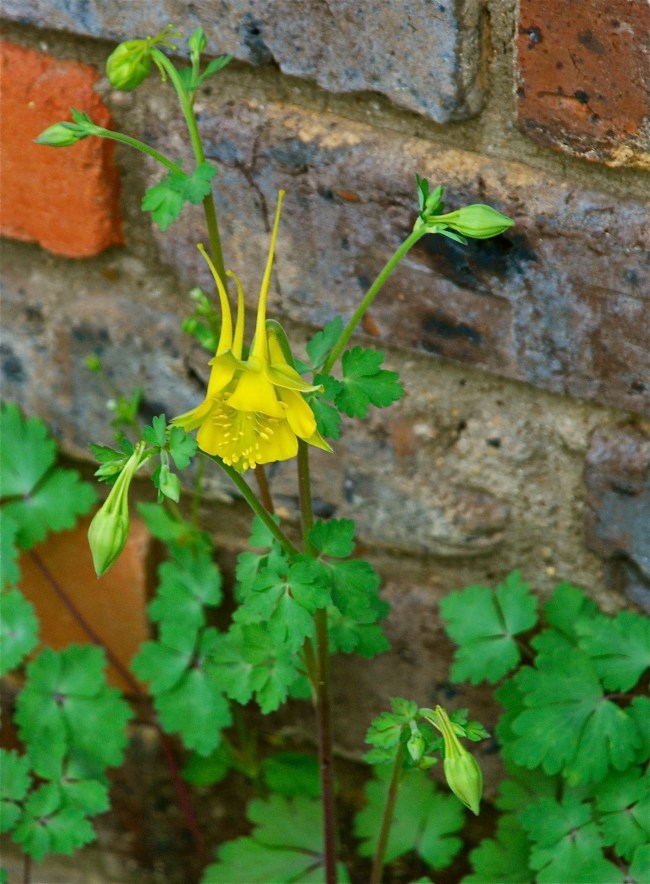
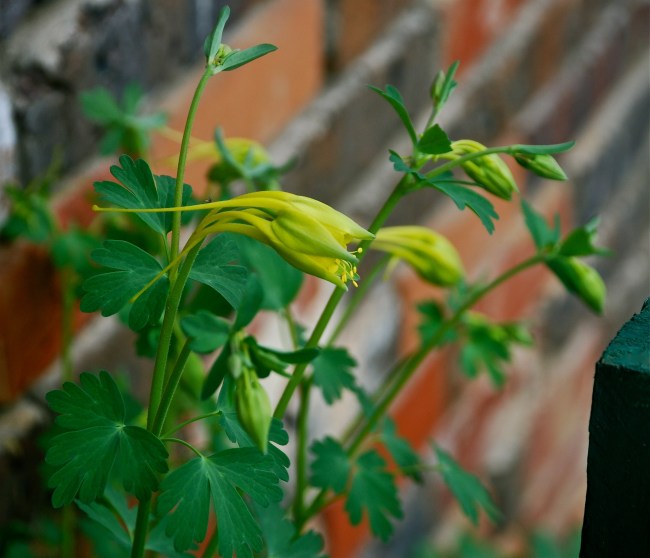
The wings of spring have taken flight in the feisty winds of March. In so doing they have lifted Columbine’s curving, knob-tipped spurs on fanciful flights. Spilling down from deep in the throats of the yellow, flowering “bells” are stunning filaments and anthers which are like tiny, musical tongues issuing forth sweet, golden proclamations. Winter, as inanimate as it seems, has a lyrical sound, but the sounds of spring as the earth reanimates itself are far richer and more honeyed. They along with the other silvery sounds of spring are soft-hearted and serene in the beginning; however, as spring grows long in the tooth and summer approaches, the arias reach almost deafening crescendos. Then after the solstice passes, summer moves along to a steady, hot latino beat until autumn comes again and tones down earth’s rhythms with ripe, mellower tones. We, mortals, may never understand the what and where of earth’s magic and music, but that certainly can’t stop us from enjoying it nor from adoring the mysteries of the music’s Maker.  Lest one believe that it is only poets, writers, and musicians who hear the music of the natural world, let me say that it was Giuseppe Mazzini, an influential Italian political thinker, who said, “Music is the harmonious voice of Creation, and echo of the invisible world.”  I believe the love of music comes from the Lord because He gave birds their songs, and also those who love and compose music are created in God’s image.
Image

Music expresses that which cannot be put into words and that which cannot remain silent. ~Victor Hugo

Praise the Lord with the harp; make music to Him on the ten-stringed lyre. Psalm 33:2 ✝

Thank you, Lord Jesus, that you save, you heal, you restore, and you reveal Your Father’s heart to us!

278. Winter is the time for comfort – it is the time for home. ~Edith Sitwell

Image

He knows no winter, he who loves the soil,
For, stormy days, when he is free from toil,
He plans his summer crops, selects his seeds
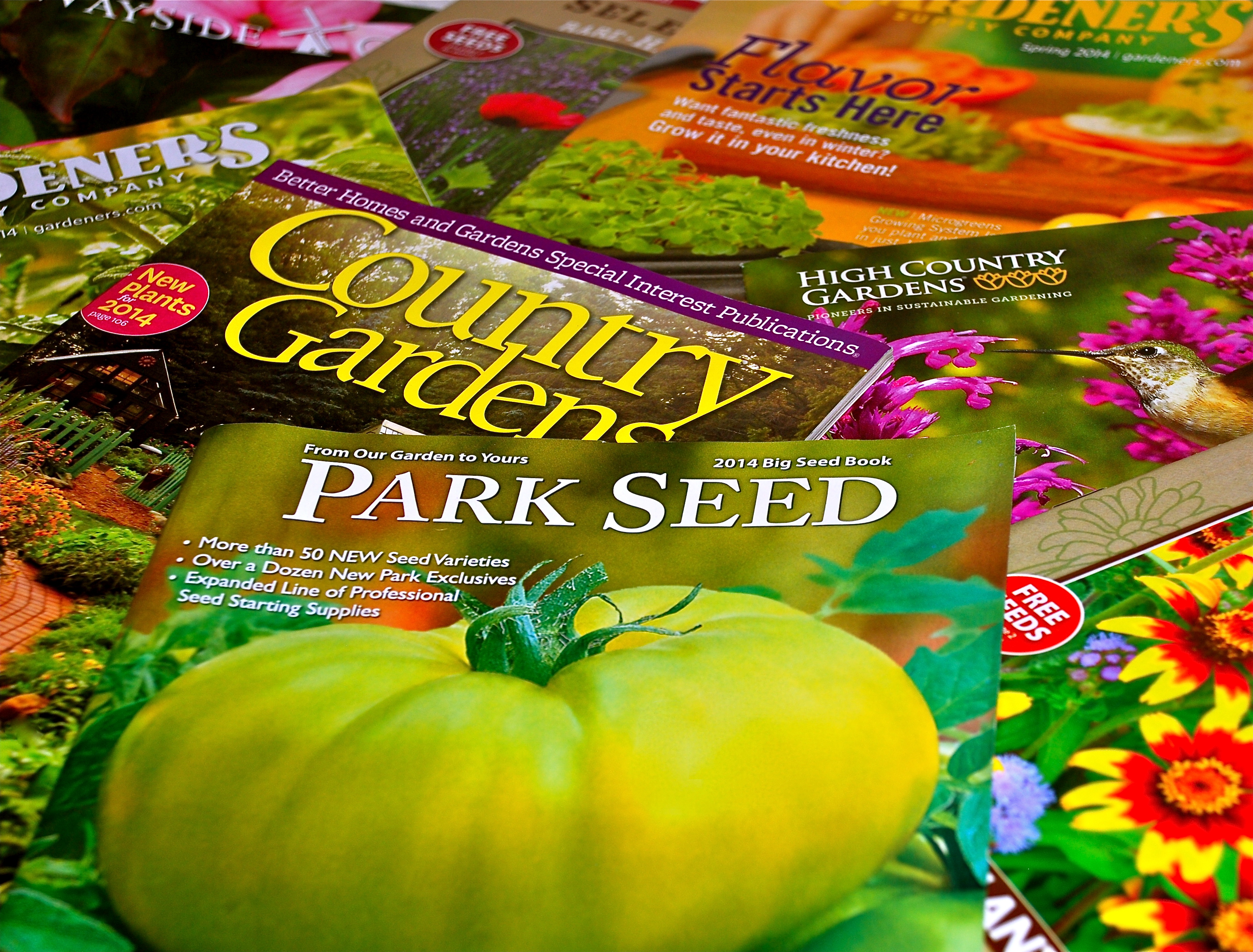
From bright-paged catalogues for garden needs.
When looking out upon frost-silvered fields,
He visualizes autumn’s golden yields;
He sees in snow and sleet and icy rain
Precious moisture for his early grain;
He hears spring heralds in the storm’s turmoil.
He knows no winter, he who loves the soil.
~Sudie Stuart Hager

…and the Lord your God will make you abundantly prosperous in all your undertakings, in the fruit of your body, in the fruit of your livestock, and in the fruit of your soil.  For the Lord will again take delight in prospering you, just as He delighted in prospering your ancestors…  ~Deuteronomy 30:9  ✝

250. Stay, little cheerful Robin! stay, and at my easement sing… ~William Wordsworth

Image

The robin’s song at daybreak
Is a clarion call to me.
Get up and get out in the garden.
For the morning hours flee.

Image

I cannot resist the summons,
What earnest gardener could?
For the golden hours of morning
Get into the gardener’s blood.

Image

The magic spell is upon me,
I’m glad that I did not wait;
For life’s at its best in the morning,
As you pass through the garden gate.
~Howard Dolf

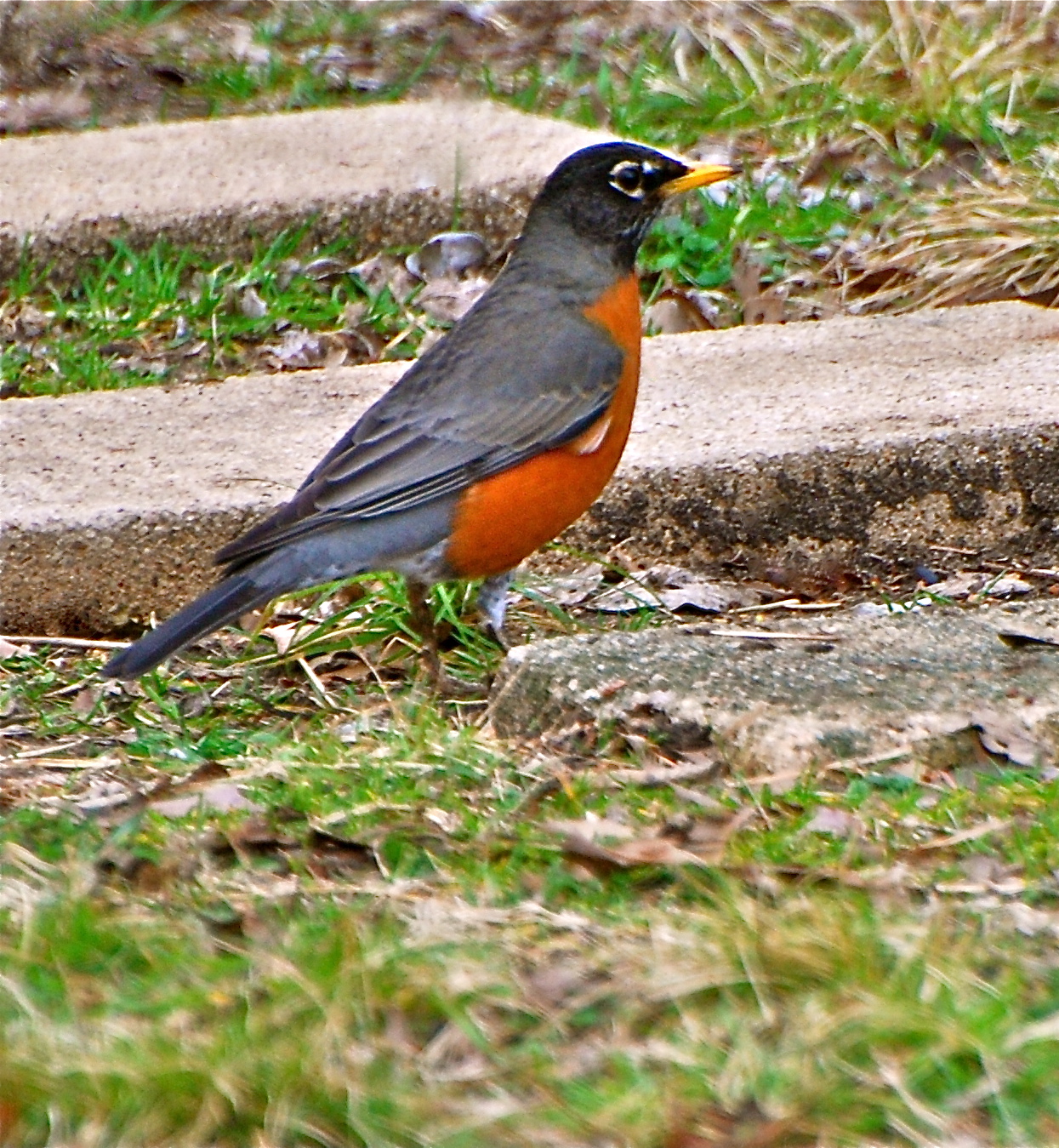
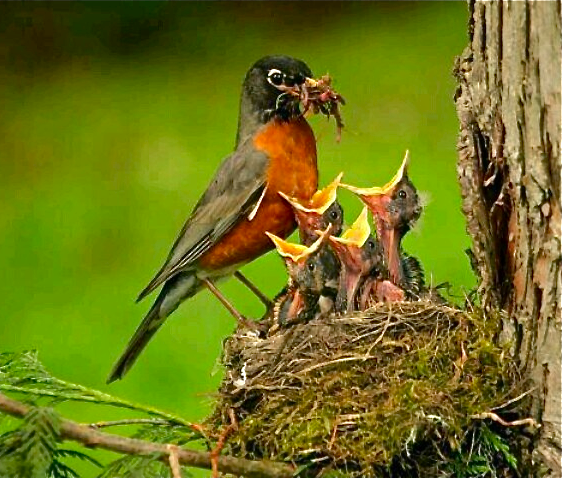
In the first photo, a Pinterest posting, is a European robin who according to my English garden bloggers is already singing in their gardens.  The one in the second photo is our American robin who has yet to come, but when he does, we’ll know that spring can’t be too far away.  For he, the stuff of a Messianic legend and spring’s cheery harbinger, will, as the poem says, sing loudly of its coming and our need to get up and out in the garden.  Given my willingness to heed a garden’s summons at any point in time, the robin’s task won’t be too hard to accomplish.  Would that I were as willing to listen to Christ’s calling.  The last photograph I also found on Pinterest.  Although I’ve heard and seen robins feeding their young in my yard, I’ve not yet been able to get a good photograph of the event.

For every wild animal of the forest is mine, the cattle on a thousand hills.  I(God) know all the birds of the air, and all that moves in the field is mine. ~Psalm 50:10-11  ✝

**See post 46 to read the legend of the robin.

219. That each day I may walk unceasingly on the banks of my water, that my soul may repose on the branches of the trees which I planted, that I may refresh myself under the shadow of my sycamore. ~Egyptian Tomb Inscription, circa 1400 BCE

Because they are primeval, because they outlive us,
because they are fixed, trees seem to emanate a sense of permanence.
And though rooted in earth, they seem to touch the sky.
For these reasons it is natural to feel we might learn wisdom from them,
to haunt about them with the idea that if we could only read
their silent riddle rightly we should learn some secret vital
to our real, our lasting and spiritual existence.
~Kim Taplin

Image

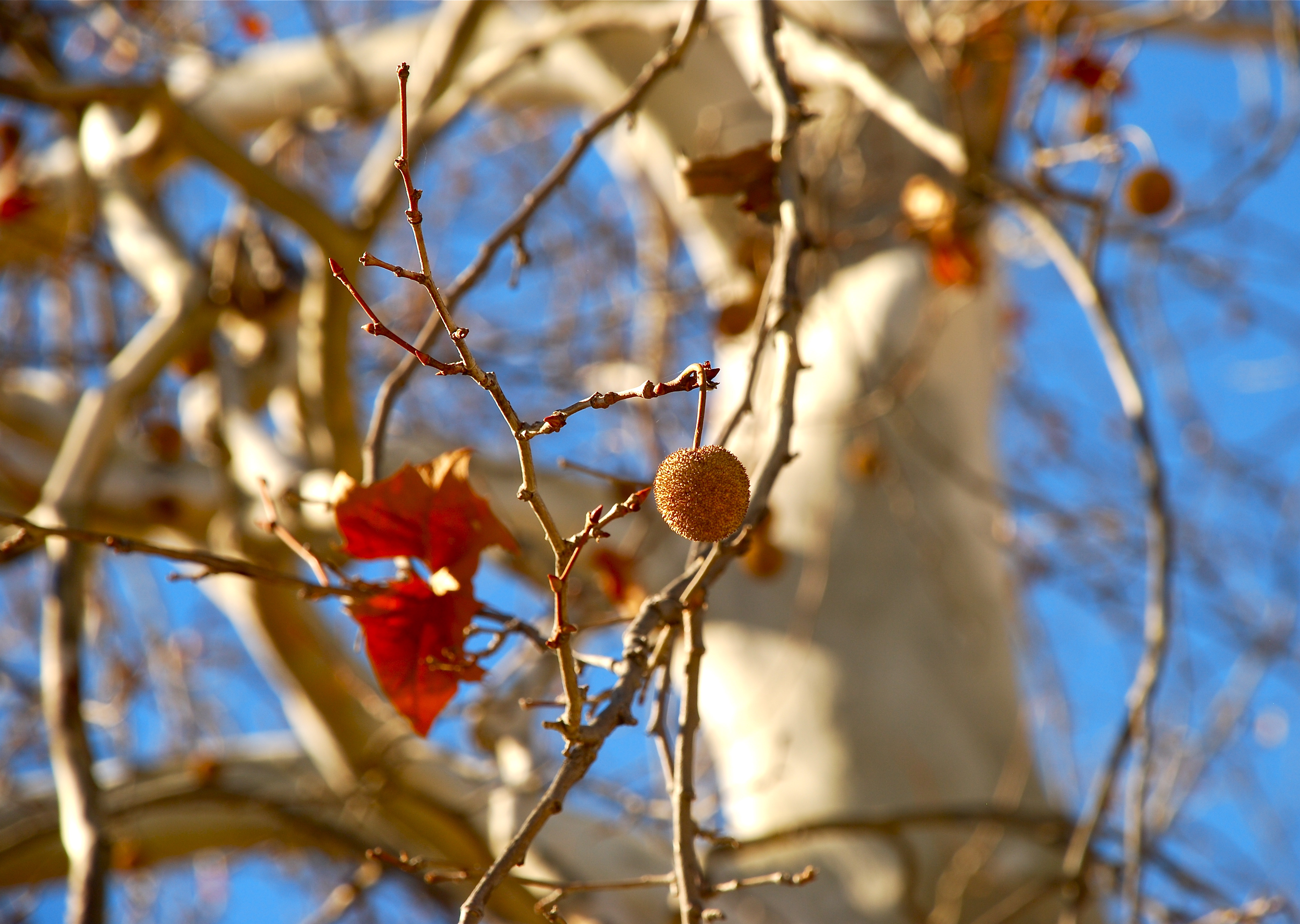
Before the sun fell over the edge of the world yesterday, it painted its recently traversed path with reddish-pink and mauve streaks.  In between the streaks were smaller golden rays that eventually blended into the pinker bands of light.  As these streaks shot up to the sky’s pinnacle, they oozed deliciousness through the open spaces in one of my favorite trees.  It’s a sycamore tree directly across the street from our house, and it’s so old that most of its bark has fallen away.  When it has, as it has now, lost most of its floppy brown leaves the tree’s strange fruits are more visible as area its long, slender alabaster arms, arms that seem to reach up and caress the heavens’ spacious blue lagoons.  Another thing I love about this particular tree is that in winter’s chilling winds its clattering branches seem to whisper prophecies of another spring’s birthing beneath the soil in silent chambers waiting for the prompting of the sun’s warmth on lengthening days and spring rains.

I’m the first one to admit that sometimes I’m hard pressed on difficult days to find reasons to be joyful, but I’m learning to look expectantly as well as long enough to find some measure of God’s glory in the day at hand.  When dealing with a run of painful days as I am now, it becomes not only more challenging but also more necessary.  The Holy Spirit within is the protector of one’s spiritual flame as well as a guide, and so if one turns inward to look for an appointment of grace, he/she will find what’s needed to press upward and onward.  On this day that spark of relief and mercy was found in the beauty of a tree.

This is the day that the Lord has made; let us rejoice and be glad in it.  ~Psalm 118:24  ✝

198. Autumn is the dim shadow that clusters about the sweet precious things that God created in the realm of nature. ~Northern Advocate

That soft autumnal time…
The year’s last, loveliest smile,
Thou comest to fill with hope the human heart,
And strengthen it to bear the storms a while,
Till winter days depart…

Far in a shelter’d nook
I’ve met, in these calm days, a smiling flower,
A lonely aster, trembling by a brook…
~John Howard Bryant

Image

In autumn the Maker’s pigments turn from the soft pastels of springtime to emboldened, jewel tones.  Glad witnesses are we to the green leaves on shining sumac, flowering dogwoods, Bradford pears, sweet gums, Shumard oaks, and crape myrtles changing to mixtures of burgundy, crimson, orange, and gold.  Other treats are setting buds for next year’s blossoms among the fiery red, ripening fruits of the dogwoods, and the deeper shades of blues and pinks that adorn the thickened petals of hydrangeas.  And if that is not enough to make the year smile, there are the willow leaves, among the other falling foliage, that rain down golden glory in one wave after the other like confetti from a ticker-tape parade.  In the gusting winds they litter the streets, and as cars pass by the multicolored leafage gives a festive look to curbs and lawns.  But again, that’s not all.  Roses bloom in deeper hues than before, the red fruits on the Prairifire crabapples shine forth, and sweet purple asters with their bright yellow eyes provide a closing feast for hordes of humming bees.  So smile on, lovely Autumn, and fill my heart with the hope I need to be strengthened against winter’s gathering storms.

Faithfulness spring’s forth from the earth, and righteousness looks down from heaven.  The Lord will indeed give what is good, and our land will yield its harvest.   ~Psalm 85:11-12  ✝

176. For the mind disturbed, the still beauty of dawn is nature’s finest balm. ~Edwin Way Teale

Slow buds the pink dawn like a rose
from out night’s gray and cloudy sheath;
softly and still it grows and grows,
petal by petal, leaf by leaf.
~Susan Coolidge

Image

Tired of tossing and turning, I got up out of bed and went in to rock in my favorite chair.  Not wanting to miss the “slow budding” of dawn’s light, however, I first raised the bamboo shade in front of the glass, patio-doors.  After a short wait a faint pinkish glow appeared low on the horizon in the eastward sky, and as the sun inched up and up and up, a ray of golden light poured through an opening centered in the heart of a tall tree framed against it just above a neighboring housetop.  The branches of the tree then took on a hallowed appearance so much so that a bird atop the roof and two squirrels sitting very still in nearby branches looked like parishioners in pews awaiting the high priest.  Later, as the sun climbed high enough for night’s curtain to be lifted completely off earth’s stage, it was apparent that all who’d seen this amazing “salutation of the dawn” were summoned to make ready for the new day.  The first to respond was a flock of birds darting willy nilly across the pastel blue sky in search of food, but beneath them as more and more drops of light appeared like jewels aloft in the bamboo I knew that despite a restless night the time for me to rise had come as well.

If I rise on the wings of dawn, if I settle on the far side of the sea, even there Your hand will guide me, Your right hand will hold me fast.  ~Psalm 139:9-10  ✝

135. As for marigolds, poppies, hollyhocks, and valorous sunflowers, we shall never have a garden without them… ~Henry Ward Beecher

Eagle of flowers! I see thee stand
And on the sun’s noon-glory gaze;
With eye like his, thy lids expand,
And fringe their disk with golden rays:
Though fix’d on earth, in darkness rooted there
Light is thy element, thy dwelling air
Thy prospect heaven.
~The Sunflower by James Montgomery, British editor and poet

Image

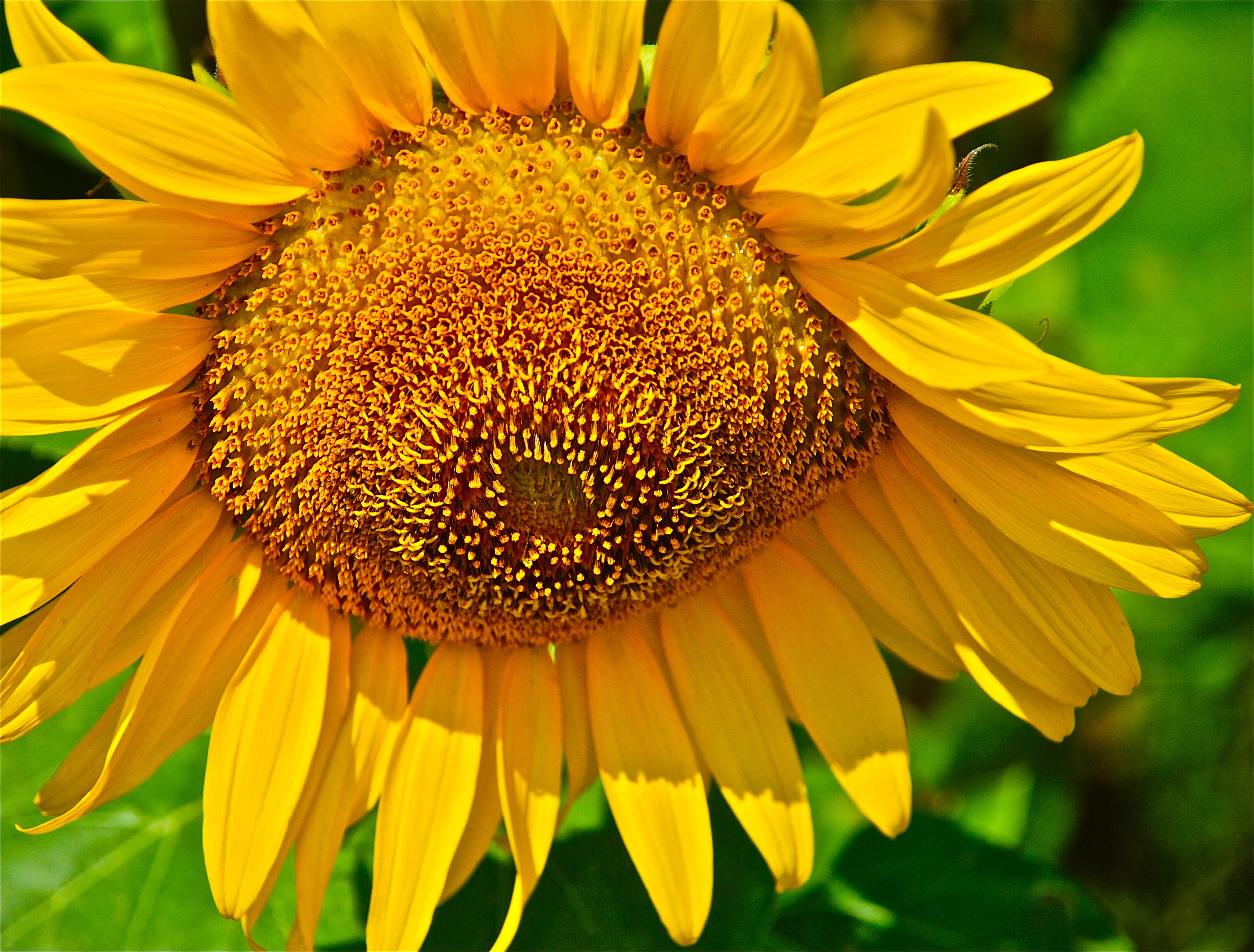
The sunflower with its “gaudy crown of gold” courts the heavenly expanse in search of the sun.  But is that iconic golden spectacle seeking to be prospered by the sun a single flower?  No, each sunflower is actually a cluster of sometimes more than 2,000 small flowers all growing together to mimic the sun and harvest its light.  Amazingly, at maturity some flower heads of the sunflower measure 2 feet across while the plants that hold them up sometimes grow as high as 18 feet.  Henry Ward Beecher additionally said all flowers “have an expression of countenance as much as men or animals.  Some of them seem to smile; some have a sad expression; some are pensive and diffident; others again are plain, honest, and upright, like the broad-faced sunflower. . .”  I agree and adore the plain honesty and uprightness of the sunflower, but in them I also see a touch of elegance in their statuesque stance in the landscape.

This is what the Lord says to me: “I will remain quiet and will look on from my dwelling place, like shimmering heat in the sunshine, like a cloud of dew in the heat of harvest.”  ~Isaiah 18:4   ✝