275. Adopt the pace of nature; her secret is patience. ~Ralph Waldo Emerson

Image

This the garden’s magic,
That through the sunny hours
The gardener who tends it,
Himself outgrows his flowers.

He grows by gift of patience,
Since he who sows must know
That only in the Lord’s good time
Does any seedling grow.

He learns from buds unfolding,
From each tight leaf unfurled,
That his own heart, expanding,
Is one with all the world.

He bares his head to sunshine,
His bending back a sign
Of grace, and ev’ry shower becomes
His sacramental wine.

And when at last his labors
Bring forth the very stuff
And substance of all beauty
This is reward enough.
~Marie Nettleton Carroll

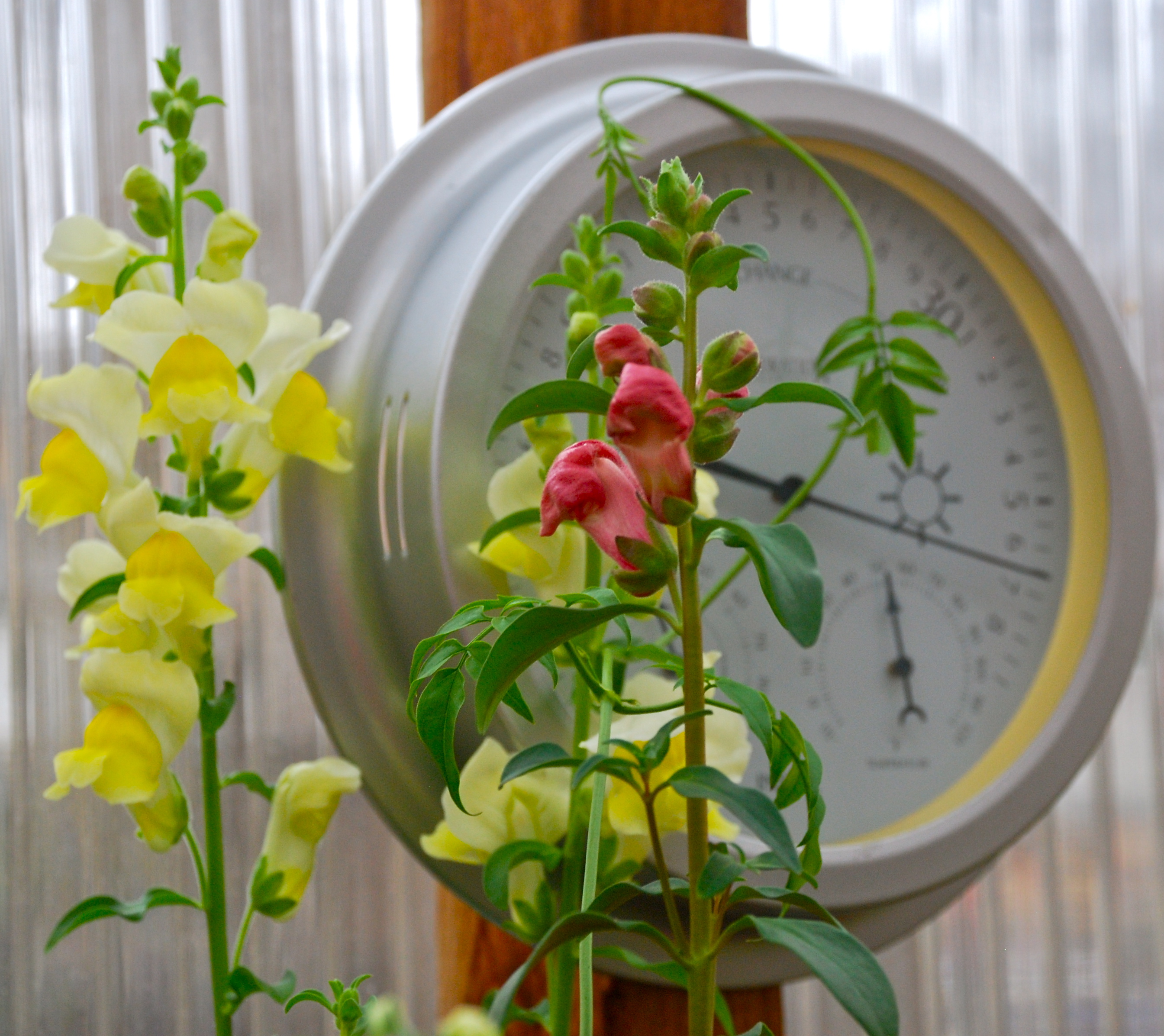
Patience, what a difficult thing to master!  At least it has been and still is for me at times.  But as Emerson and Carroll assert, part of a garden’s magic is the gift of patience.   So among other things I am learning that the anticipation of what unfolds from within the bud is almost as sweet as the blossom itself.  Emory Austen said, “Some days there won’t be a song in your heart.  Sing anyway.”  With that in mind I’m gonna be patient this week, be glad my snapdragons are blooming, believe that rain will come, and sing away as I continue to wait for my tulips to unfurl and this decade-long drought to end.

But if we hope for what we do not see, we wait for it with patience.  ~Romans 8:25  ✝
270. Nature looks dead in winter because her life is gathered into her heart. ~Hugh Macmillan

She (nature) withers the plant down to the root
that she may grow it up again fairer and stronger.
She calls her family together
within her inmost home to prepare them for being
scattered abroad upon the face of the earth.
~Hugh Macmillan

Image

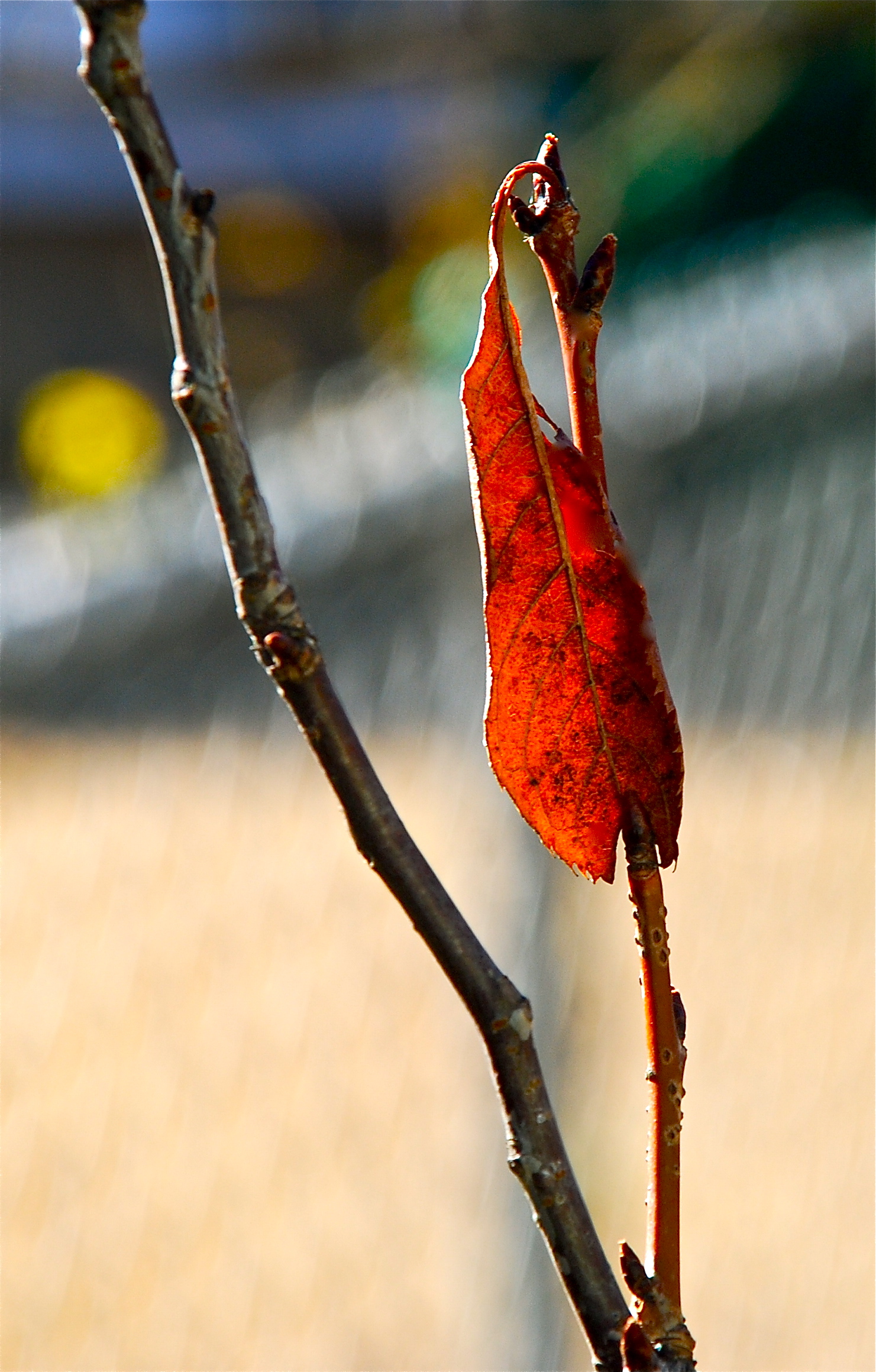
Early morning light steals across straw-colored grass and slowly warms the biting chill of a February dawn.  Splinters of sunlight glisten and sparkle as they move over the garden’s frost-laden, bare bones.  From my vantage point inside I can make out a lone, reddish leaf, not quite ready to be a memory, clinging tenaciously to a branch in the ornamental cherry tree.  It reminds me that a wellspring of life lies dormant below in nature’s “inmost home” where “her life is gathered into her heart.”  My attention is diverted next to the dogs I hear barking up and down the alleyway.  The feral cats must be on the move in search of food.  Then birds begin to show up at the feeders and high above their flutterings I see the first squirrels running the high wires.  Soon birdsong breaks morn’s silence, and lights start coming on in the once darkened houses around us.  The neighborhood is coming alive and gearing up for the day, but no, not I.   Since retirement I’ve been able to linger as long as I like most mornings and from my well-situated chair watch the days and the changing seasons pass over my yard.  Nature’s recurrent patterns and rhythms have always comforted me, and it’s delightful to be able to partake of her daily feasts.  Though evidence of God’s grace is readily apparent in the spectacular moments of life, perhaps sweeter are the ones ferreted out of day to day, ordinary living.  These are blessings that are not unlike the contrast of a mass of diamonds scattered out on a dark piece of velvet in which all are lovely but none seems particularly more special than the other and that of a singular diamond’s loveliness on the same piece of fabric which in its aloneness is brilliantly stunning.

For the word of the Lord is right and true; He is faithful in all He does.  ~Psalm 33:4  ✝

199. Every leaf speaks bliss to me, fluttering down from the autumn tree… ~Emily Brontë

How silently they tumble down
And come to rest upon the ground
To lay a carpet, rich and rare,
Beneath the trees without a care,
Content to sleep, their work well done,
Colors gleaming in the sun.
~Elsie N. Brady

Image

Image

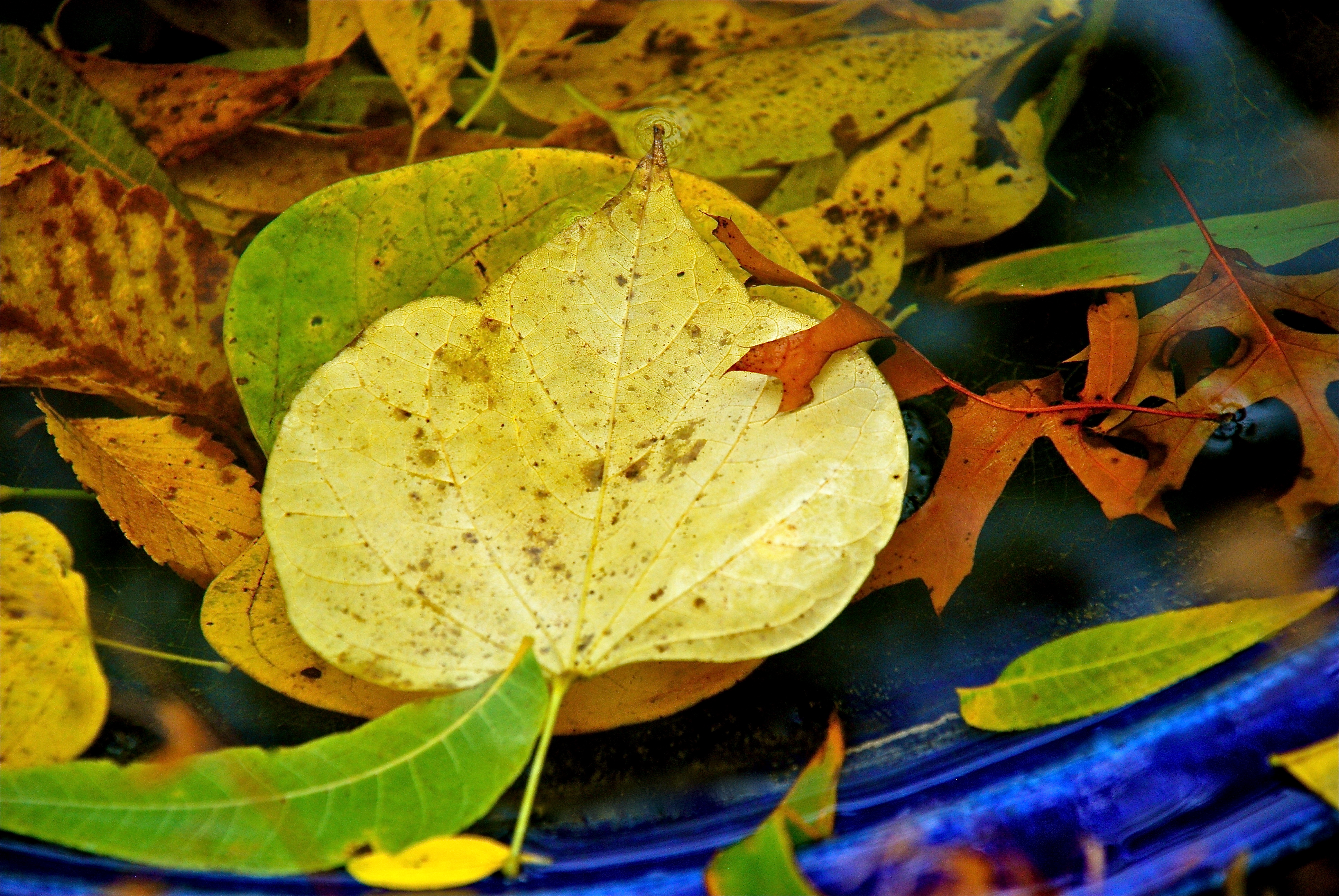
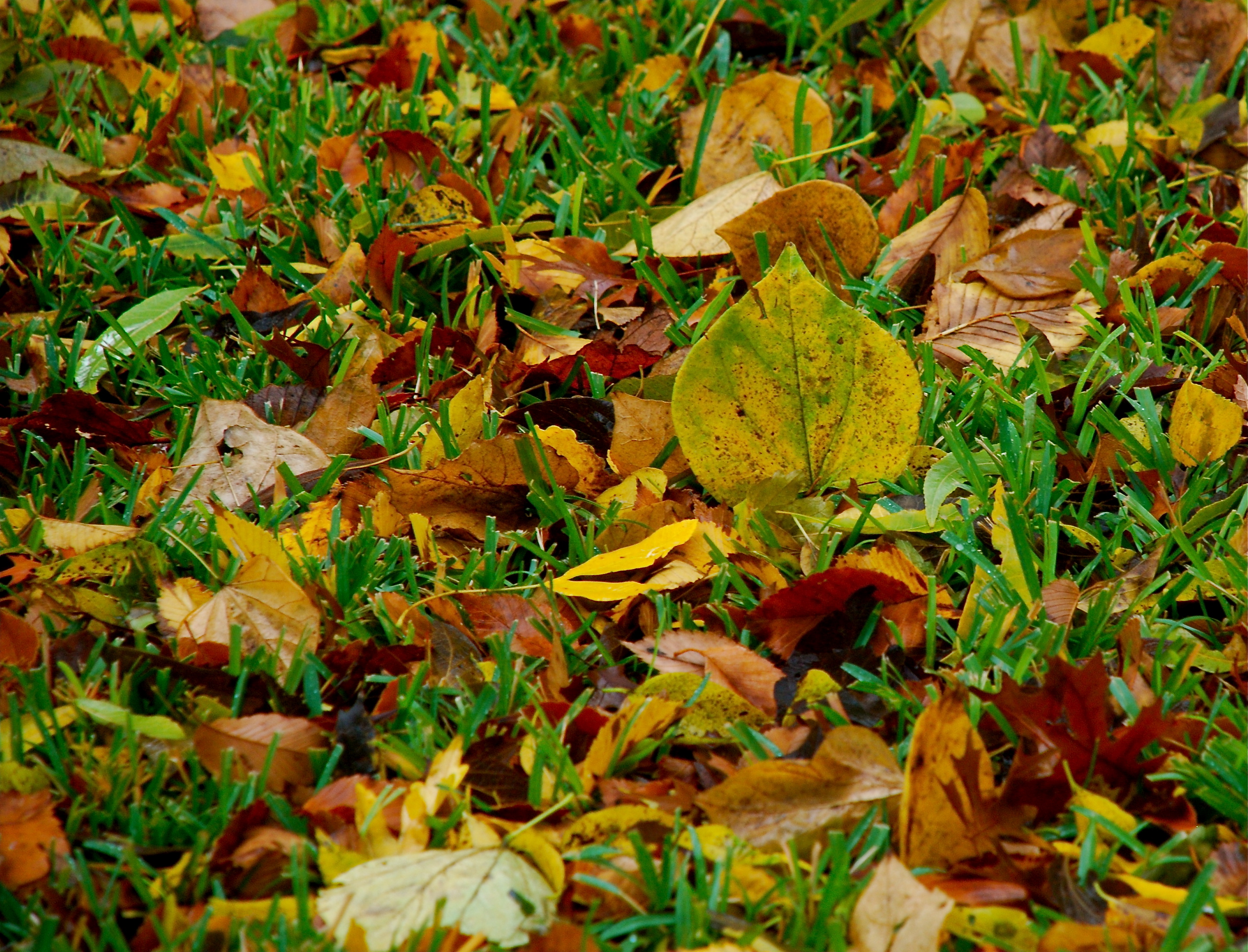
Pat.  Pat, pat.  Pat, pat, pat.  Pat.  Pat, pat.  Pat.  Pat, pat, pat.  “Listen to the falling rain; listen to it fall.”  A remembered lyric from an old José Feliciano song ran through my mind.  But wait, I didn’t feel anything wet and the afternoon sun was shining in a cloudless sky.  So if it wasn’t rain, what on earth had I heard behind me.  As I turned to investigate, I saw that it was indeed raining, but not in the way I expected.  November’s gusting winds were letting loose hundreds of colored leaves from their woody perches.  The ones not already brought down by the rains of recent days were not tumbling down silently as Brady suggests; they were pelting the shed, the greenhouse, the birdbaths, and the ground so forcefully that they sounded like huge raindrops.  So it was pouring all right; it was raining leaf after leaf after leaf, pretty autumn tinted leaves, and the air in which they were dancing was made gold and red and ripe.

For You make me glad by Your deeds, Lord; I sing for joy at what Your hands have done.  ~Psalm 92:4  ✝


196. There is not one blade of grass, there is no color in this world that is not intended to make us rejoice. ~John Calvin

The moment one gives close attention to anything,
even a blade of grass, it becomes a mysterious, awesome,
indescribably magnificent world in itself.
~Henry Miller

Image

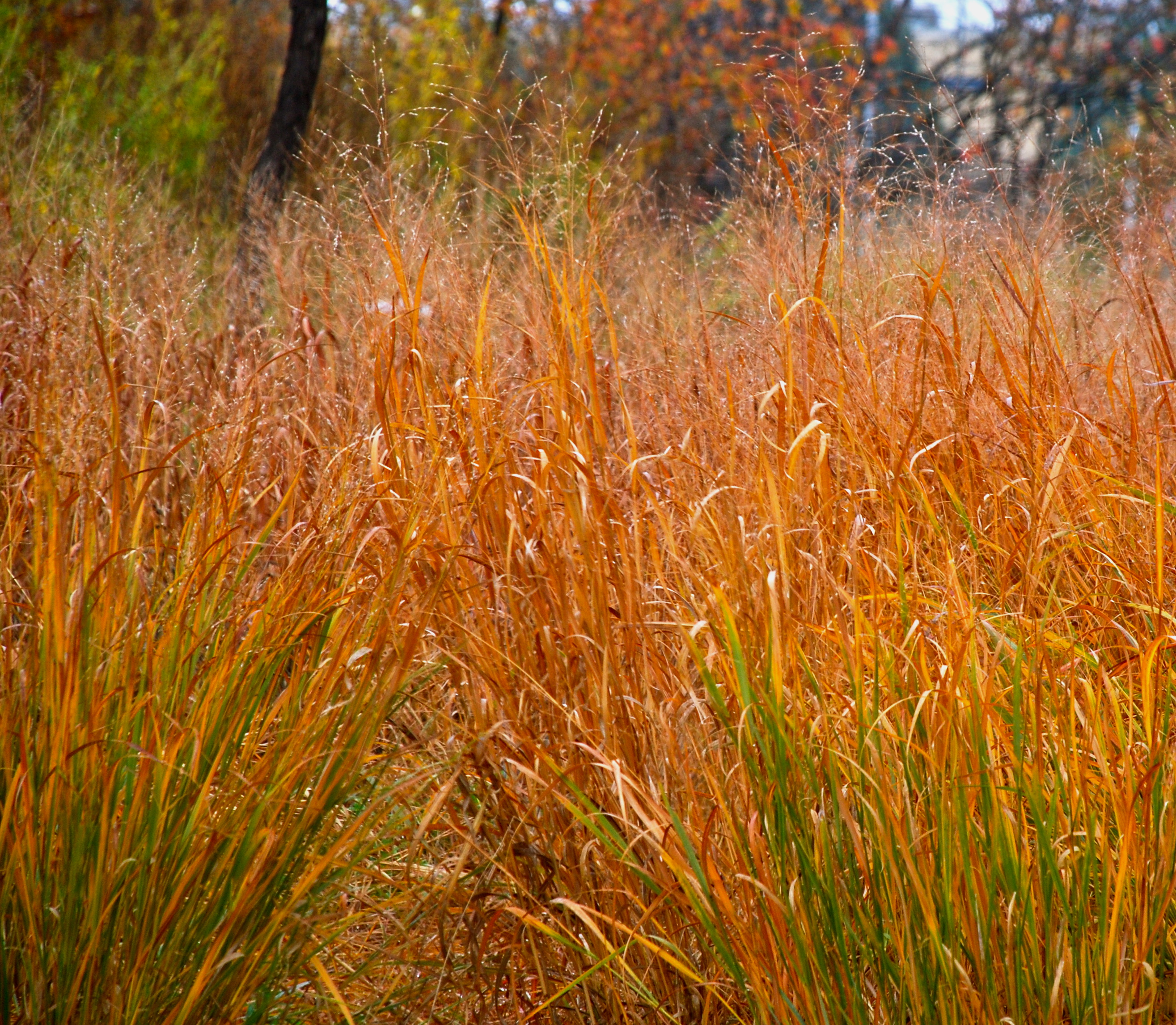
Against the backdrop of “red leaf and the gold” ornamental grasses shift and sigh in autumn’s chilling winds, and as they do, they add to the landscape an ethereal element with their airy flower panicles, fluffy seed plumes, and striking seed heads.  Even after the initial onslaughts of freezing temperatures, grasses continue to grace the landscape with “fringe accents” by adding subtle colors, assorted textures, and the dimensions of motion and sound.  Throughout winter’s “vale of grief,” undaunted by the cold, they capture and play with whatever light is available, and in their animated swayings they speak of life and give us something “that glimmers in the sleep of things.”  And best of all, the lack of heaviness in their lyrical swishing motions along with their visible seed formations remind us that what’s happening is not an end but instead merely the onset of another beginning.

When He(G0d) thunders, the waters in the heavens roar; He makes clouds rise from the ends of the earth.  He sends lightning with the rain and brings out the wind from His storehouses.  ~Jeremiah 10:13  ✝

187. The gardener’s feet drag a bit on the dusty path and the hinge in the back is full of creaks. ~Louise Seymour Jones

Pleasures lie thickest where no pleasures seem:
There’s not a leaf that falls upon the ground
But holds some joy of silence or of sound,
Some spirits begotten of spring and summer dreams.
~Adapted excerpt from Laman Blanchard

Image

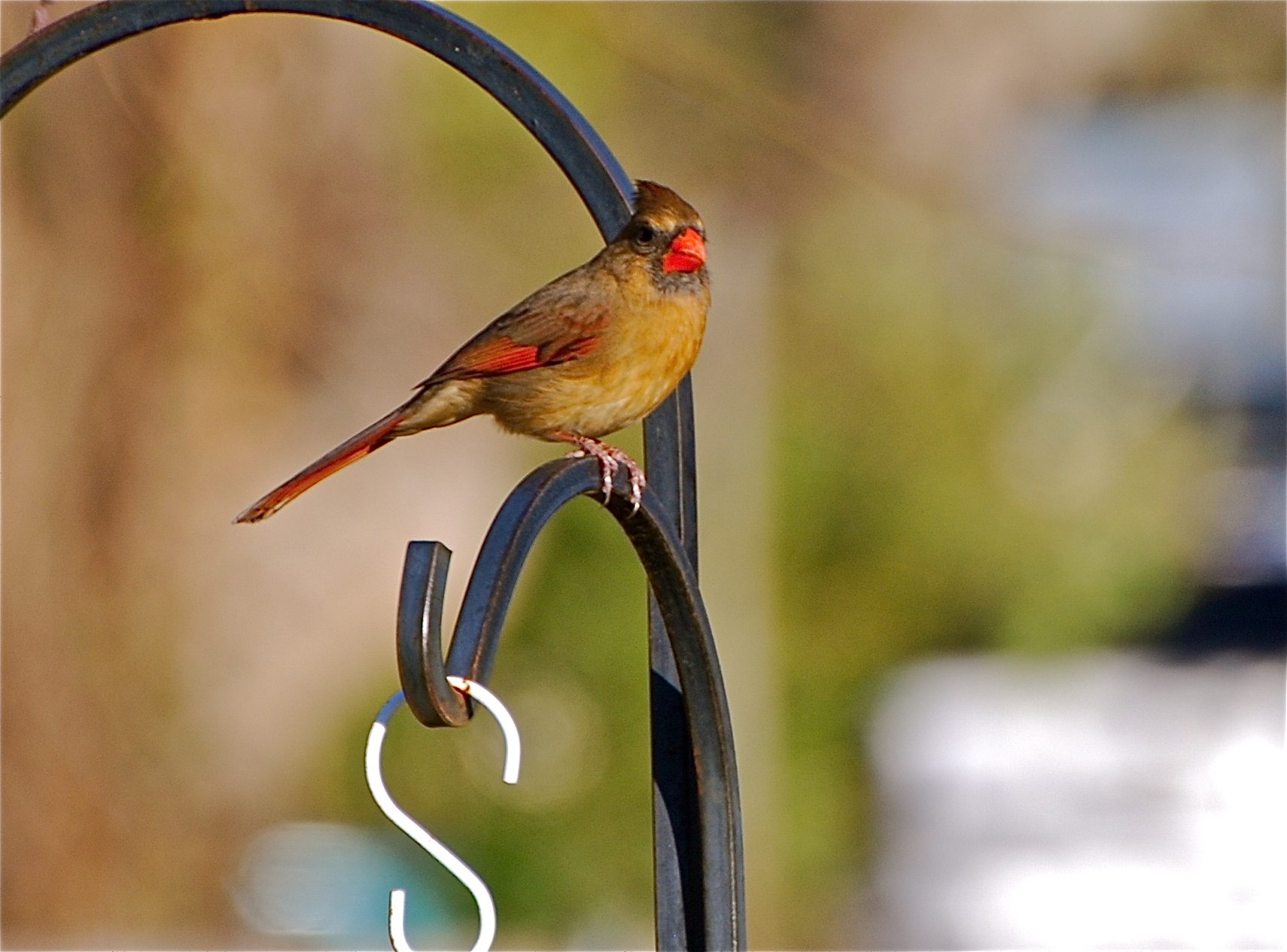
Birds that annually flee our area before winter arrives have already headed out on their migratory treks to warmer havens.  Thus, the number of avian guests in my yard is considerably smaller, and those that are still here have let up on their frantically busy doings in the garden.  The remainder of my “flock,” like me, are sometimes content to just perch a bit in idle watchfulness.  But despite our combined and periodic lethargy, the birds and I continue to greet our days with delight and a kind of expectancy even though we know old man Winter has left his arctic haunts and is headed down our way.

But now the LORD my God has given me rest on every side, and there is no adversary or disaster.  -1 Kings 5:4   ✝

176. For the mind disturbed, the still beauty of dawn is nature’s finest balm. ~Edwin Way Teale

Slow buds the pink dawn like a rose
from out night’s gray and cloudy sheath;
softly and still it grows and grows,
petal by petal, leaf by leaf.
~Susan Coolidge

Image

Tired of tossing and turning, I got up out of bed and went in to rock in my favorite chair.  Not wanting to miss the “slow budding” of dawn’s light, however, I first raised the bamboo shade in front of the glass, patio-doors.  After a short wait a faint pinkish glow appeared low on the horizon in the eastward sky, and as the sun inched up and up and up, a ray of golden light poured through an opening centered in the heart of a tall tree framed against it just above a neighboring housetop.  The branches of the tree then took on a hallowed appearance so much so that a bird atop the roof and two squirrels sitting very still in nearby branches looked like parishioners in pews awaiting the high priest.  Later, as the sun climbed high enough for night’s curtain to be lifted completely off earth’s stage, it was apparent that all who’d seen this amazing “salutation of the dawn” were summoned to make ready for the new day.  The first to respond was a flock of birds darting willy nilly across the pastel blue sky in search of food, but beneath them as more and more drops of light appeared like jewels aloft in the bamboo I knew that despite a restless night the time for me to rise had come as well.

If I rise on the wings of dawn, if I settle on the far side of the sea, even there Your hand will guide me, Your right hand will hold me fast.  ~Psalm 139:9-10  ✝

40. Spring shows what God can do with a drab and dirty world. ~Virgil Kraft

Awake, thou wintry earth –
fling off thy sadness!
Fair vernal flowers, laugh forth –
your ancient gladness!
~Thomas Blackburn

Image

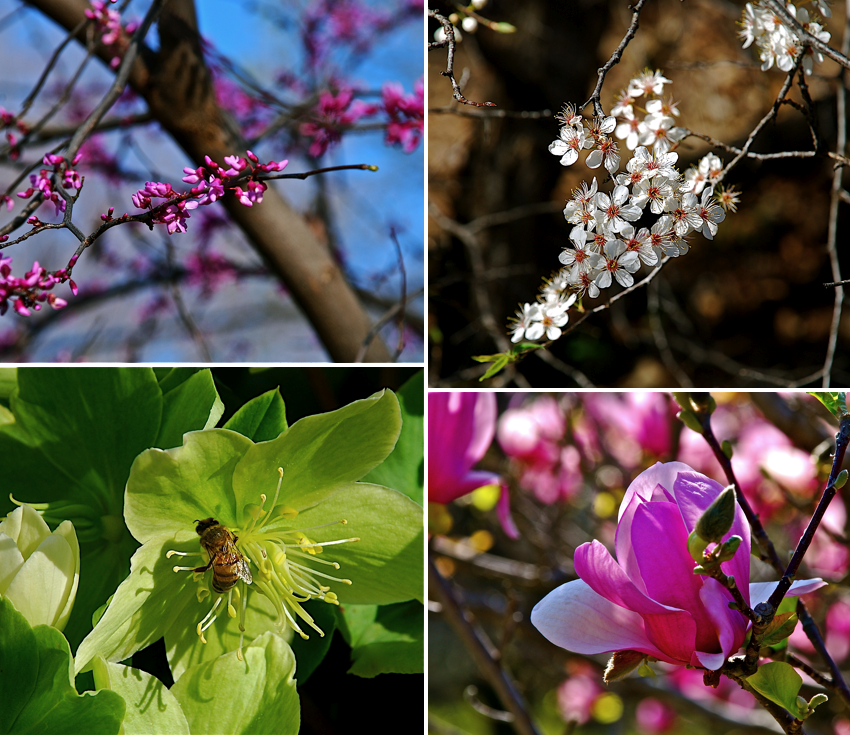
Leaf by leaf, bud by bud, and blossom by blossom the spring of the year advances.   On warmish days, earth casts off its wintry gloom, and breezes broadcast sweetly-scented aromas.  The first butterflies then dare to soar and the hungry bees hum amid the glad laughter issuing forth from flowering bulbs and trees.  As a result the year’s initial poetry of rebirth is penned by the pollinating, aerial whirring of dainty wings.  In the meantime as I hurry about trying to taking photos of the blossoming narratives and their paramours, I often find myself asking the same question Walt Whitman once did.  “Why are there trees I never walk under but large and melodious thoughts descend upon me?”  The answer I’ve decided is that the arms of trees reach towards the heavens to gather sacred messages meant to draw mankind near to “the living Word of God in nature” as well as what is read in Scripture.

In our area the first verses of  “tree” poetry come from Saucer Magnolias.  Their big, goblet-shaped flowers pen exquisite couplets in pink and white.  Soon to follow are the brilliant white blossoms of Star Magnolias.  Though not quite enough lines to form a fourteen-lined sonnet, their twelve exquisite, “petal-poesy” lines form rhyming schemes as lovely as any Shakespearean sonnet.  Next and in perfect rhyming sequences come the double samaras.  Samaras, the scarlet, dual winged fruits of the Red Maple, look like long, slender fairy wings as they dance choric rhymes writ by the winds.  Then come the Eastern Redbuds and Bradford Pears that compose stunning free-verse stanzas in purple and white, each resplendent branch, a psalm written in praise of its Maker.  For a pollinator now there’s no quandary about where sweet nectaries are to be found for stanza after stanza they and I are lead in springtime to earth’s most festive and delicious banquets.

He has taken me to the banquet hall, and His banner over me is love.  ~Song of Songs 2:4