304. The sun has come out…and the air is vivid with the coming spring’s light. ~Adapted excerpt from Byron Caldwell Smith

Let me arise and open the gate,
to breathe the wild warm air…
To let Life in, and to let out Death.
~Violet Fane
Image

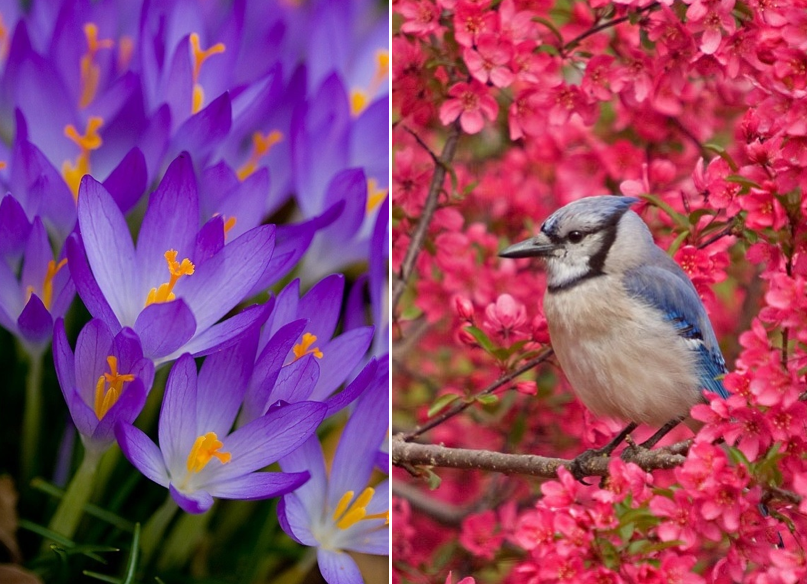
Blow, Breath of heaven, blow!  Blow through the land and over the waters.  Carry away death’s dark vapors and let life in.  Let every mountain, plain, and valley break forth in gladness.  Let the “wild warm air” of coming spring spark life in every nook and cranny.  Let the ceaseless waves of the seas and the rushing currents of rivers roar with renewed passion for life.  Let the clouds suckle earth’s waters and send rain from heaven to moisten the earth and let loose her flowering.  Let life, whole and vibrant, dazzle us anew.  Blow, sweet Breath of heaven, blow!  Blow through Your children and take us down to the bottom of our souls where You, O God, the Breath of all things, are present “deep within all that has life.”  We who have traversed icy winter’s dark domain yearn to feel your warmth and vitality course in us and all of life again.  We long for earth and sky’s vast array of bright colors to take away winter’s preponderance of grays and browns.  O Holy One, come; let us see You “in every emanation of Creation’s life.”  We give you glory and thanks for all that You are, for Your ever-lasting goodness and never-ending love, “for creatures stirring forth,” “for plant forms stretching and unfolding,” “for the stable earth and its solid rocks.”  O blessed Breath of heaven, arise and blow life afresh through Eden’s gates!  (Quoted phrases from SOUNDS OF THE ETERNAL by J. Philip Newell)

By the word of the LORD were the heavens made, their starry host by the breath of His mouth.  ~Psalm 33:6   ✝

**photos via Pinterest
299. Last weekend, there came a bitter cold snap, which did great damage to my garden…It is sad that Nature plays such tricks on us poor mortals, inviting us with sunny smiles to confide in her, and then, when we are entirely within her power, striking us to the heart. ~Edited and adapted excerpt from Nathaniel Hawthorne

Who loves a garden
Finds within his soul
Life’s whole,
He hears the anthem of the soil
While ingrates toil;
And sees beyond his little sphere
The waving fronds of heaven, clear.
~Louise Seymour Jones

Image

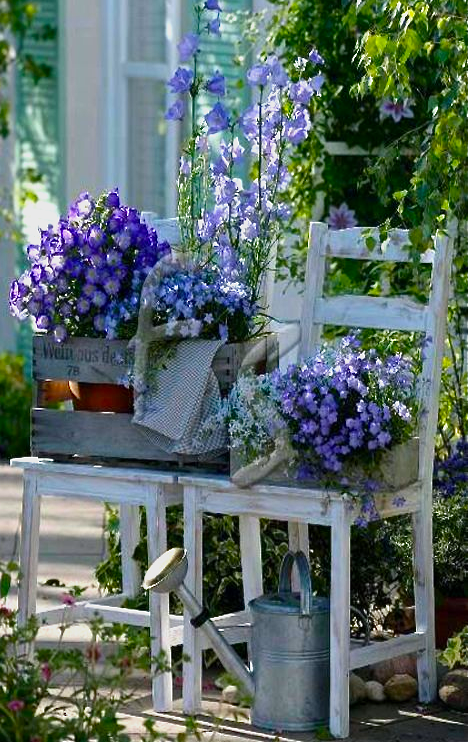
I’ve been trying to figure out today what it is about a garden that is so seductive and irresistible for me, but I’m still no closer to an answer than when I’ve pondered it before.  I just know that something in nature calls to me and touches me on a deep level, brings glad music to my heart, and feeds “life’s whole” within my soul.  That’s why the losses due to last weekend’s dirty “trick” have struck a grievous blow to my heart which in turn has sent me sinking down, down, down into what one writer has called winter’s “vale of grief.”  Normally I can shake things off pretty quickly, but in addition to that casualty the arthritis in my left knee and left foot have me hobbling around on a cane, unable to get outside and do things that need to be done in the garden, and that’s creating a bluer than blue, bluish “funk.”  Now after spending way too much time inside, stationary and feeling a bit sorry for myself, I’m STARVED!!!  Like a junkie, I need my “fix.”  I need to hear the “anthem of the soil.”  Moreover, I need to touch the earth and dig in the dirt.  I need to feel Eden’s beating heart, her rhythms.  I need to hear the birds singing over my head.  I need color.  I need to see things growing and to look upon flowery faces, even a wretched dandelion would do.  I need to feel the sun’s warmth on my back.  And as much as anything else I need to feel God’s palpable presence in my tiny corner of His sanctum sanctorum.

Alas, sadly, I’m afraid it will be sometime before all those needs are met.  So I dug around on Pinterest board’s trying to find the kinds of images that typically draw me into a garden’s web of magic and glory.  Since I have no way of knowing when Old Man Winter will return to his arctic cave nor when my body will stop betraying me, they and a a little garden poetry will have to suffice.

From there you will seek the Lord your God, and you will find him if you search after him with all your heart and soul.  ~Deuteronomy 4:29   ✝

297. Hand in hand, with fairy grace, will we sing, and bless this place. ~William Shakespeare, English poet and playwright

No child but must remember laying his head in the grass,
staring into the infinitesimal forest
and seeing it grow populous with fairy armies.
~Robert Louis Stevenson, Scottish poet

Image

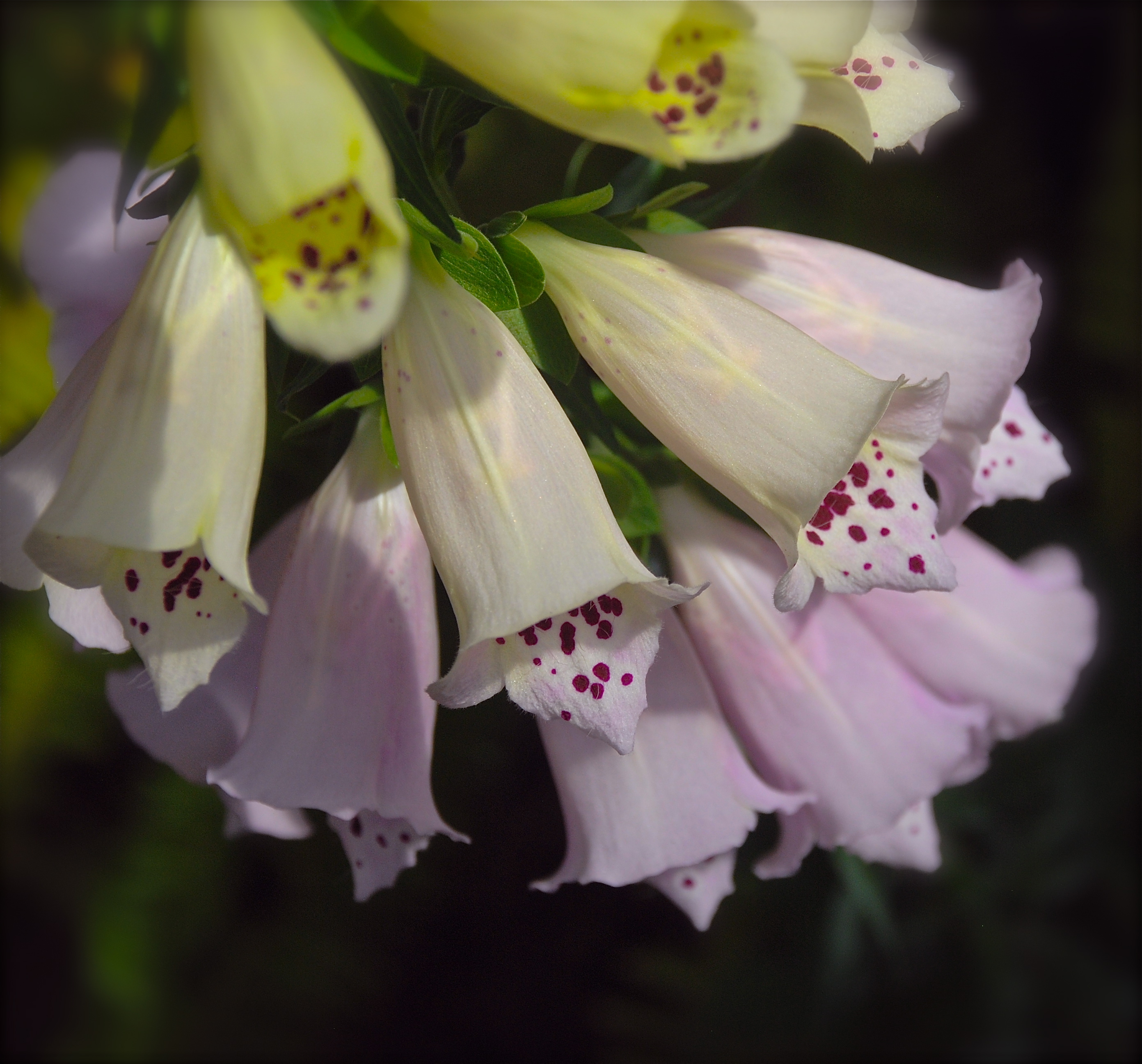
Digitalis, from the Latin Digitabulum, a thimble, derives its common name from the shape of its flowers that resemble the finger of a glove.  It’s a flower we call Foxglove, which delights to grow in deep hollows and woody dells.  However, it was originally called Folksglove because that’s where they, fairies or “good folk,” were thought to live.  Folksglove is one of the oldest names for Digitalis (Foxglove) and is mentioned in a list of plants as old as the time of Edward III.  The earliest known form of the word is the Anglo-Saxon foxes glofa (the glove of the fox, and the Norwegian name Revbielde that translates to Foxbell alludes to the Fox.  It is a name which may have come about from a northern legend about bad fairies who supposedly gave the blossoms of Digitalis to foxes to be put upon their toes so as to soften their tread when prowling amongst the roosts.

I adore Foxglove and believe no other flower in the garden lends itself better to stories of fairies and elves than it does.  Its dangling thimbles or gloves or bells or fingers or whatever one might call them look like enchanted, magical places where children would naturally look for the “wee folk” to lurk.  Nor is it surprising that there have been suppositions claiming the mottling in the flowers mark, like the spots on butterfly wings and on the tails of peacocks and pheasants, where elves have placed their fingers.  Though no longer a child, I have to agree in part with the writer Charles de Lint who penned, “We call them faerie.  We don’t believe in them.  Our loss.”  Sometimes, it does one a world of good to remember what it was like to be an imaginative child, full of awe and wonder and given to flights of fantasy.

Happy is he who still loves
something he loved in the nursery:
He has not been broken in two by time;
he is not two men, but one,
and he has saved not only his soul but his life.
~G. K. Chesterton, English writer, poet,
and lay theologian

If we opened our mind with enjoyment, we might
find tranquil pleasures spread about us on every side.
We might live with the angels that visit us on every sunbeam,
and sit with the fairies who wait on every flower.
~Samuel Smiles, Scottish author

May the Lord give you increase, both you and your children.  May you be blessed by the Lord, who made heaven and earth.  ~Psalm 115:14-15   ✝

295. Of all God’s gifts to the sighted man, color is the holiest, the most divine… ~John Ruskin

In the house of words was a table of colors.
They offered themselves in great fountains,
and each poet took the color he needed:
lemon yellow or sun yellow,
ocean blue or smoke blue,
crimson red, blood red, wine red.
~Eduardo Galeano

Image

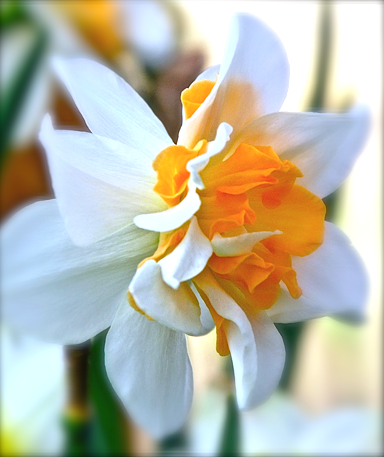
What a glorious tangerine and white dream is the daffodil in the photograph, and holiness indeed is written all over it!  As God speaks to mankind through the Bible and Creation, we can see that He values color, the intent of which seems, like all else, to be that its hallowed voice draw His children closer to Him.  Color appears first in holy writ in the opening pages of Genesis when God fathered the whiteness of light on day 1 of the Creation story.  Then on the second day the Lord created expanses to separate water from water, and both the sky and the reflection of the heavens in it are shades of blue.  On day 3 He created earth’s green vegetation.  Day 4 brought the placement of lights that governed the heavens, and day’s greater light, the sun, is yellow; up close pictures of the sun also show reds and oranges in its make up.  Fish and great sea monsters swam the seas and birds took flight on the fifth day, and whales and sharks have been seen as hallmarks of an ancient pagan idol symbolized by the color orange.  The sixth day brought the creation of man and animals; the name Adam means red and the blood that courses through the veins of man and beast alike is red.  Day 7, the Sabbath, was sanctified by God whose robes and glory are perennially symbolized by white, and later when atoning for man’s sins His son, Jesus, wore a purple robe.

“And to every beast of the earth, and to every bird of the air, and to everything that creeps on the earth, everything that has the breath of life, I have given every green plant for food.” And it was so.  God saw everything that he had made, and indeed, it was very good.  Genesis 1:30-31  ✝

293. I think that no matter how old or infirm I may become, I will always plant a large garden in the spring.  Who can resist the feelings of hope and joy that one gets from participating in nature’s rebirth? ~Edward Giobbi 

The flowers of late winter and spring
occupy places in our hearts
well out of proportion to their size.
~Gertrude S. Wister

Image

Small for sure on earth’s vast stage are the first flowers of late winter and early spring, but large is their scope.  They, like the day’s first sunlight fractures darkness in the physical world, shatter darkness int the spiritual world.  And when any light breaks spiritual darkness, joy and hope can be sparked and subsequently release from any imposed bondage the light of God which is at the heart of all He created.  Thus I believe it is by Divine intent and for sacred purposes that these flowers occupy places of disproportionate size in the human heart.  Humanity lives with dreadful darknesses in this fallen world, and it could be that the Lord purposely built into Creation’s fabric the repetition of such sparks to keep igniting anew the glow of His Light.  J. Philip Newell proclaims that the light of God “dapples through the whole of creation.”  He declares that it can be seen “within the brilliance of the morning sun and the whiteness of the moon at night and that it issues forth in all that grows from the ground and the life that shines from the eyes of any living creature.”  Thus like cracks in a dam weaken the structure so that flood waters at some point may no longer be able to be contained, crack after crack in spiritual darkness eventually lets in more and more of God’s holy light.  Hence when the fullness of His Light breaks through into the world and the human heart, there is the potential for amazing floods of grace and healing as well as salvation.

You, O LORD, keep my lamp burning; my God turns my darkness into light.  Psalm 18:28   ✝

292. The force of Spring – mysterious, fecund, powerful beyond measure. ~Michael Garofalo

Come, fill the cup, and in the fire of Spring
The Winter garment of repentance fling;
The bird of time has but a little way
To fly — and Lo! the bird is on the wing.
~Omar Khayyám

Image

In the rising of the morning sun God speaks to us of grace and new beginnings, and the fertility of the earth is a sign of how life wells up from within, from the dark unknown place of God.  ~J. Philip Newell

Come and see what God has done: He is awesome in his deeds among mortals.  ~Psalm 65:5   ✝

289. Wisdom consists of the anticipation of consequences. ~Norman Cousins

Image

Two Wolves – Cherokee Parable

An old Cherokee chief was teaching his grandson about life.
“A fight is going on inside me,” he said to the boy.
“It is a terrible fight and it is between two wolves.
One is evil – he is anger, envy, sorrow, regret, greed, arrogance, self-pity, guilt, resentment, inferiority, lies, false pride, superiority, self-doubt, and ego.”
He continued, “The other is good – he is joy, peace, love, hope, serenity, humility, kindness, benevolence, empathy, generosity, truth, compassion, and faith.
This same fight is going on inside you – and inside every other person, too.”

The grandson thought about it for a minute and then asked his grandfather,
“Which wolf will win?”
The old chief simply replied, “The one you feed.”

~Author Unknown

…for wisdom will come into your heart, and knowledge will be pleasant to your soul; …  Proverbs 2:10   ✝

287. Hope is some extraordinary spiritual grace that God gives us… ~Vincent McNabb

Sit by the edge of the dawn / and the sun will rise for you.
Sit by the edge of the night / and the stars will shine for you.
Sit by the edge of the stream / and the nightingale will sing for you.
Sit by the edge of silence / and God will speak to you.
~from an ancient Hindu text

Image

“The semi-colon tells you that there is still some question about the preceding full sentence; something needs to be added…It is almost a greater pleasure to come across a semicolon than a period.  The period tells you that that is that; if you didn’t get all the meaning you wanted or expected, you got all the writer intended to parcel our and now you have to move along.  But with a semicolon there you get a pleasant little feeling of expectancy there is more to come; read on; it will get clearer.”  ~Lewis Thomas, American doctor and essayist

I think of nature’s seasons as junctures followed by divinely positioned, albeit invisible, semi-colons because they impart “a pleasant little feeling of expectancy.”  There are always more of them to be had, and it is that expectancy of “more” that keeps me hopeful not only in nature’s seasons but also in the seasons of my life when what I see tries to delude me into thinking things won’t ever change or this is the end.  In the passage above from the old Hindu text the use of “slashes” and “ands” could instead have been replaced with semi-colons because there is something more that comes after each of the suggested occasions to sit and wait.  In the same way, the fact that gardens keep an unfaltering “punctuation of continuance” right in front of me is one of the reasons I’m so drawn to spend time in them.  I need endless expectancy that breeds hopefulness.

And you will have confidence, because there is hope; you will be protected and take your rest in safety.  ~Job 11:18   ✝

**Even the two mauve hellebores in the photo look a bit like a semi-colon if one uses his/her imagination.

286. Where flowers bloom so does hope. ~Lady Bird Johnson

Live each season as it passes
breathe the air, drink the drink,
taste the fruit, and resign yourself
to the influences of each.
~Henry David Thoreau

Image

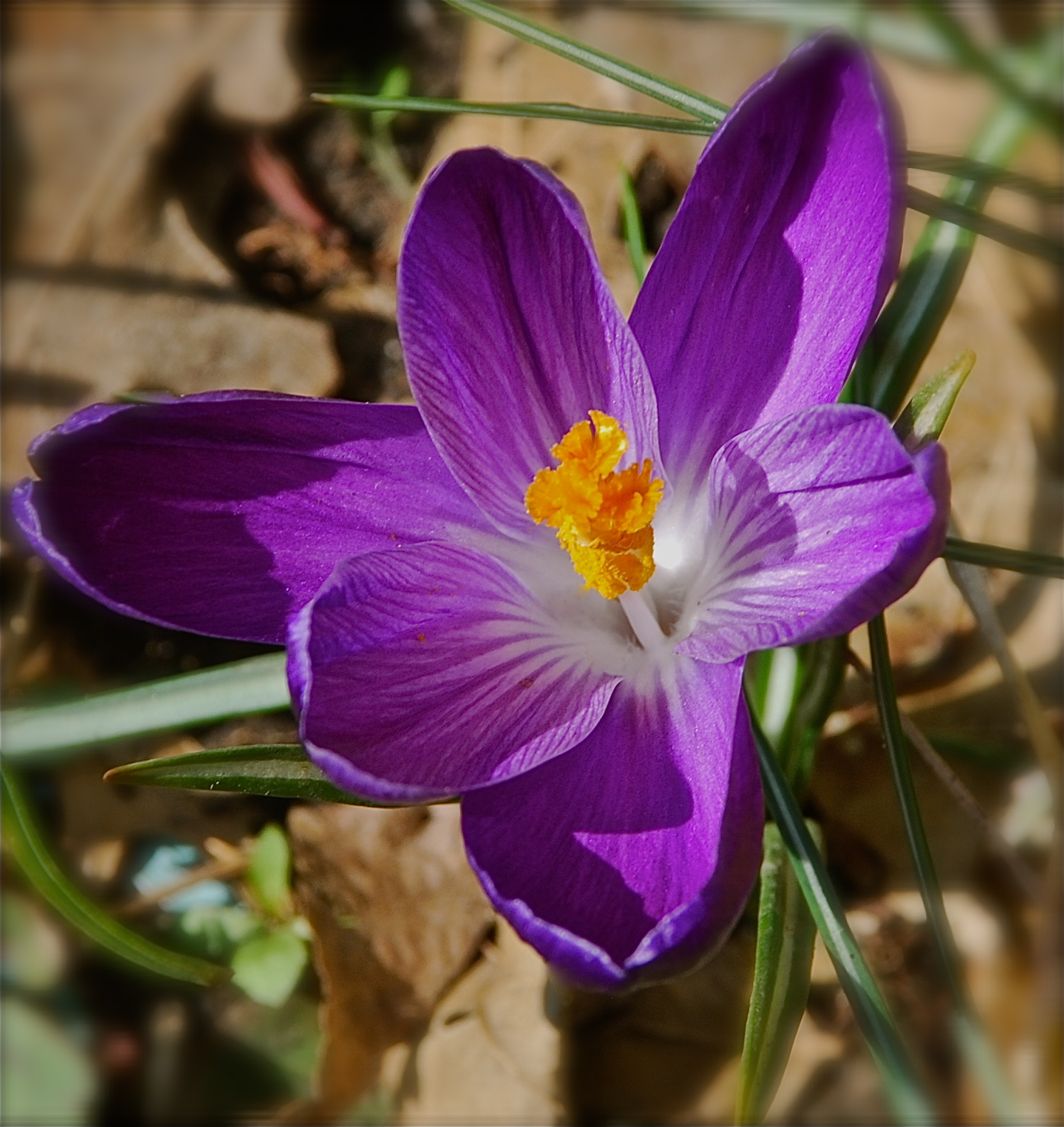
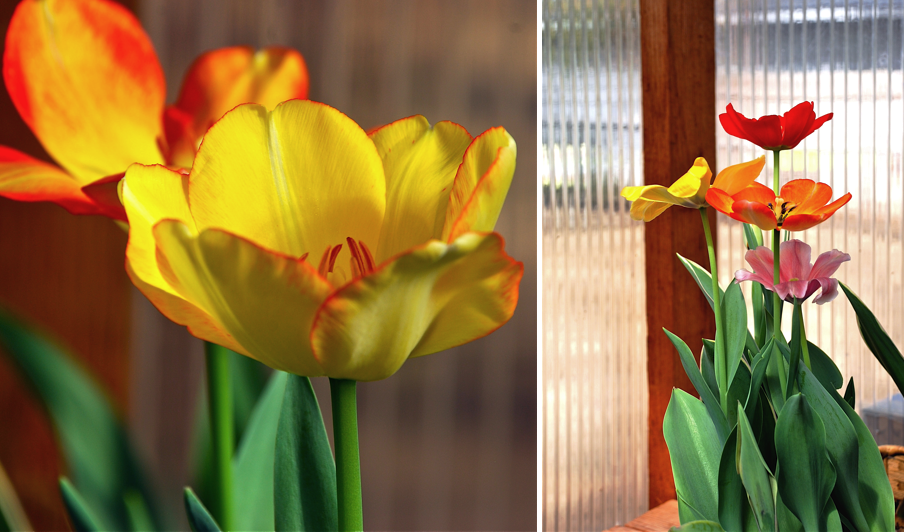
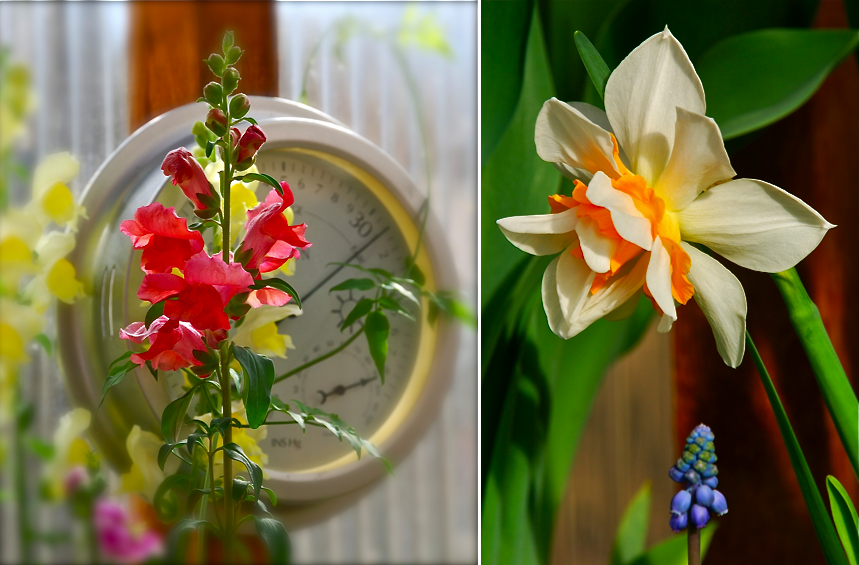
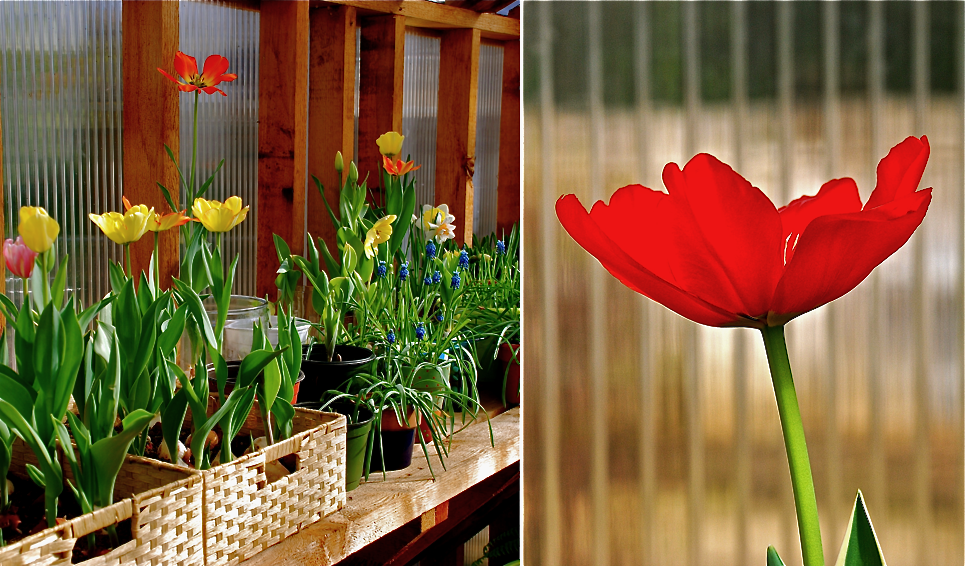
Smitten (v.) – affected suddenly and strongly with a specified feeling; affected mentally or morally with a sudden pang; impressed favorably; charmed; enamored.  I love the word smitten, I love being smitten, I look forward to being smitten, and on days like today I’m in desperate need of being smitten.  And what might the source of my “smittenness” be today?  It’s tulips and daffodils and hyacinths and crocus.  After years of planting bulbs in the ground to little or no avail, I’d resigned myself to being able to admire them until now only in books, magazines, and yards where others somehow have success with them.

Image

Nothing speaks of springtime louder or more clearly than flowering bulbs.  They are the epitome of spring’s opening opus, and now that my greenhouse is abloom with many of them, it feels like spring is close enough to reach out and touch.  Ah, spring, the season of increased sunlight, warmer temperatures, and the rebirth of fauna and flora, the season when the tilt of the earth relative to the sun is zero, the season which begins one month from today.

Image

For me drinking the drink, tasting the fruit, and resigning myself to the influence of each season as it passes is a way of life that inevitably brings me face to face with Yahweh and Son, the Holy One with whom I am beyond smitten.  Like Tennyson, I’m convinced that if one can understand what a flower is “root and all, and all in all, one should know what God and man is.”

O taste and see that the Lord is good; happy are those who take refuge in Him.  ~Psalm 34:8   ✝

285. We men of Earth have here the stuff of Paradise – we have enough! ~Edwin Markham

Image

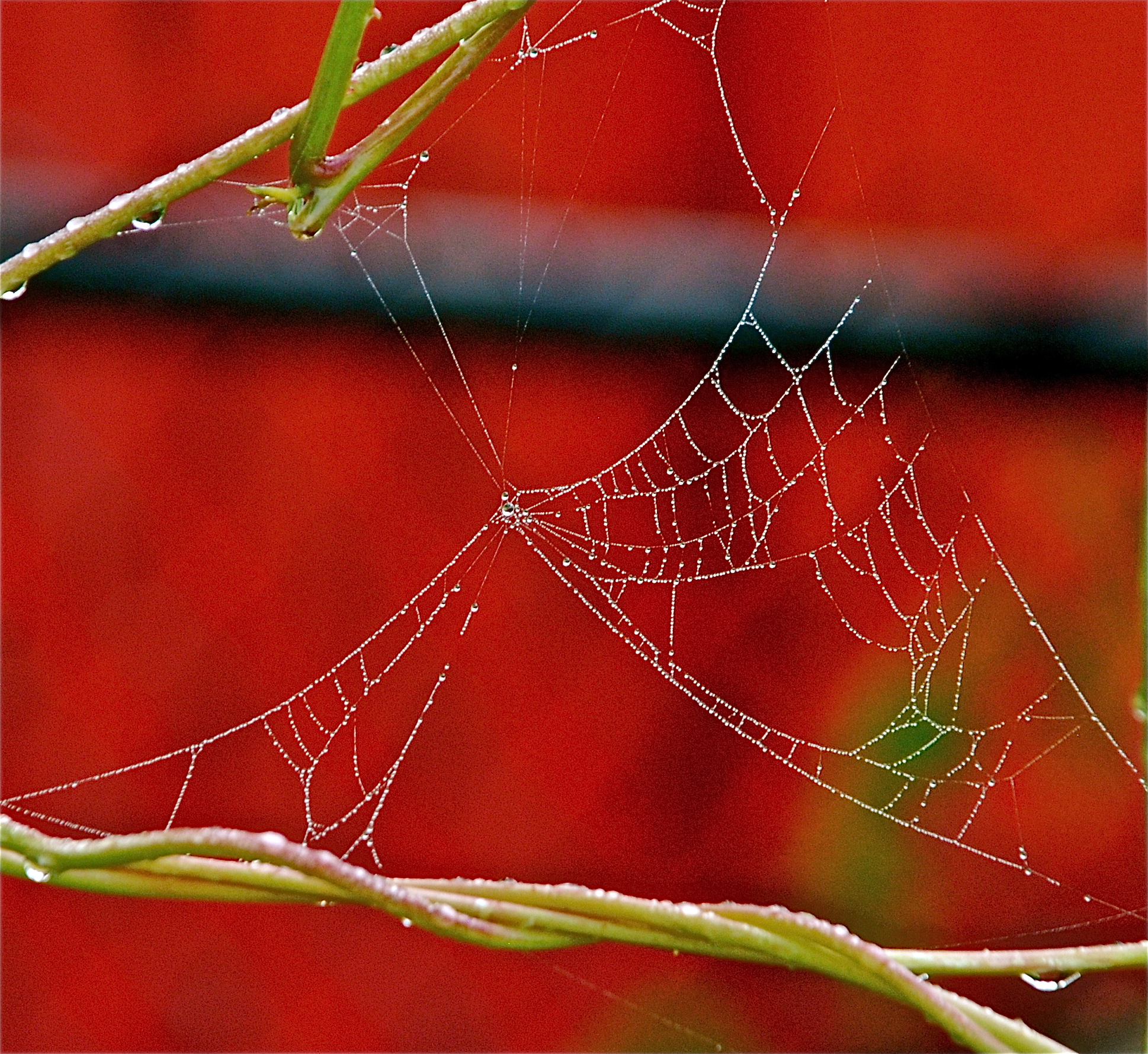
All things are connected.
Whatever befalls the earth
befalls the sons of the earth.
Man did not weave the web of life.
He is merely a strand in it.
Whatever he does to the web,
he does to himself.
~Chief Seattle

So let us not grow weary in doing what is right, for we will reap at harvest time, if we do not give up.  So then, whenever we have an opportunity, let us work for the good of all, and especially for those of the family of faith.  ~Galatians 6:9-10   ✝