Rambling Thoughts

This is a reblog from Annette’s Garden at: http://wp.me/p32RMi-cI
Image

In autumn, when the trees cry colourful leaves and the vibrant spirit of summer is only a memory, thoughts go on a ramble. Time for reflection and contemplation. A damp, heavy quietness settles on the garden. The work is done, we can sit back and watch. When I plant bulbs in the autumn, and there seem to be more and more each year, I always wonder how many more springtimes I will live to see. I don’t ask as a result of depression (I’m not a child of sadness!), but because I think of these bulbs that fill me with such happiness. First when I’m planting then later, when in the comfort of my armchair in front of the fire -longing in my eyes- they fill my head with fields of colour and scent and carry me through the season which I never came to love, although it has its beauty too. It must be the bulbs that fill me with wantonness and unreasonable hope. The expression “to be happy like a child” comes to my mind but kids are not happy and innocent like they used to be. If you’re faced with the first murder during breakfast and with Jingle Bells and plastic Santas climbing ridiculously into chimneys from September onwards how could you possibly hold on to that pure and carefree joy? As for myself, I find lots of happiness in the little treasures and secrets nature and garden hold for me. All the same, there’s something morbid about this question, and I admit that I never ask myself at other times of the year. How many summers or autumns will I live to see? No way. But maybe the reason for planting these crazy amounts of promising bulbs and corms lies in my hidden wish that the older I get the more spectacular spring ought to be. Recently I read a quote by Henry David Thoreau which follows me ever since: The mass of men lead lives of quiet desperation. Thoreau said this in the 19th century but it is still true. The reason for this lies in the continuous remoteness and alienation from nature which in its most dramatic case leads to people perceiving nature as an enemy or danger. Pristine nature has become rare and if it’s really wild, we meet it with fear and suspicion. Seeing and hearing have also become rare skills. We’re constantly exposed to noise, being lulled and deadened. Even the news are hammered into us to the sound of percussions so that there’s no risk of us coming to our senses or to be bored. Tranquility is out. A friend of mine told me about a visitor from Canada who switched on a tape each night at bedtime: She couldn’t bear the quiet, only with the constant noise was she able to sleep. Cathy at http://wordsandherbs.wordpress.com/ did a great post dealing with the subject of hearing a while ago, and I hope she will share the link once she reads this. To hear and I mean TO HEAR is by no means taken for granted anymore. There’s so much to hear when you listen to supposed quiet. Have you ever tried? The silence that makes you feel like you’re deaf has become rare. Where I live, in the middle of the woods, it can still happen. It descends like a comfortable blanket. No fear, no panic just peace. Some shake their heads asking how can you possibly live here? We shake our heads knowing that every explanation would fall into nothingness. The general rush and fear of missing out on something are so widespread that many cannot understand how satisfying it is to fill the basket with firewood to heat the house, to collect eggs from your hens and to tend the garden. To hear nothing and to work in the garden are today’s last luxuries. During our hikes we sometimes meet extreme mountainbikers rushing down steep slopes with fierce expression, or cool guys on rattling motorbikes, modern Marlborough-Cowboys. None of them knows the intriguing scents and sounds of the forest, sees the pink mushroom in the undergrowth, the tree creeper searching the bark for insects or hears the melancholic song of the robin. Kids don’t know anymore that milk comes from cows. A vegetarian friend of mine suggested recently that one could keep milking cows without letting them have calves. Once I watched children beating newly planted fruit trees with sticks until the bark had come off while their mother watched them proudly. Great to see kids fulfilling themselves. Nature is retreating more and more and can only be found where access is hard or impossible or where there’s nothing to exploit. Would we ask men their definition of nature – what would the answer be? I fear the answer a lot more than visitors the solitude of my wood. Why should men protect something they’re not aware of and don’t see, never mind appreciate? When man moves away from nature, he loses his roots, becomes depressed and unhappy. I could never be without my garden and nature, my sanity depends on them. I draw energy, courage and meaning out of them. Okay, some things don’t work out in the garden but I’m never disappointed and depressed. Still nothing fills me with more hope and optimism. A life of quiet desperation? That’ll never be an issue for someone who hasn’t lost touch with his/her roots.
191. Summer ends, and Autumn comes, and he who would have it otherwise would have high tide always and a full moon every night; and thus he would never know the rhythms that are at the heart of life. ~Hal Borland

The hush comes with the deepening of Autumn;
but it comes gradually.
Our ears are attuned to it, day by quieter day.
But even now, if one awakens in the deep darkness
of the small hours, one can hear it;
a foretaste of Winter silence.
~Hal Borland

Image

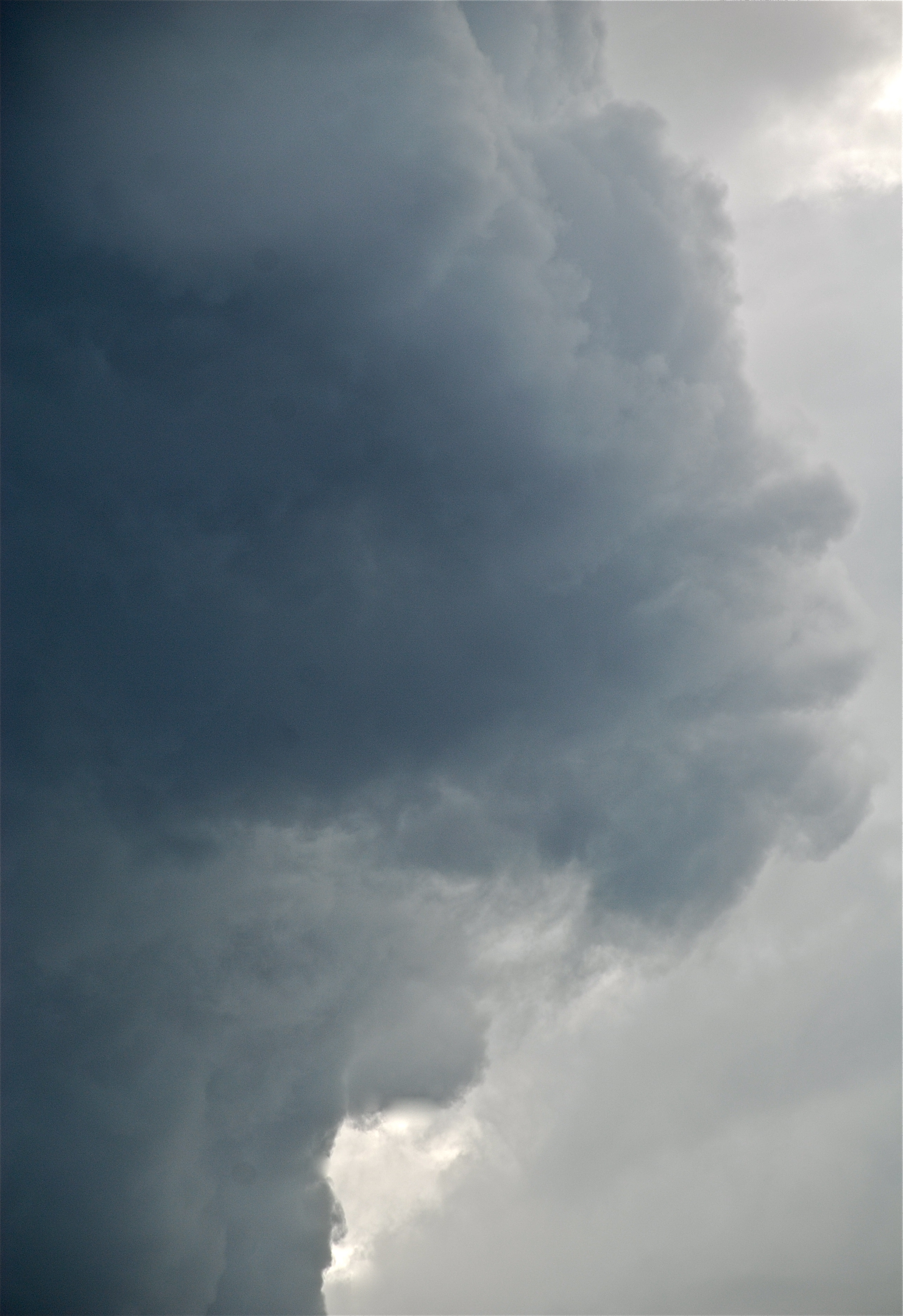
One day recently as we pulled out of the garage to go to lunch, we saw this, the clearly  defined, back edge of a line of thunderstorms.  While I was taking shots of the scene, it occurred to me that in a much slower progression that’s the way all of nature’s phenomena pass over the earth during the course of a year.  Sunny days come and go, hot and cold periods come and go, flowers come and go, fruitings and harvests come and go–in other words the Lord’s good provisions are always in a never-ending flux of comings and goings.  Autumn then, as Hal Borland suggests in another excerpt, is indeed a summing up of what’s happened throughout a year’s trip around the sun, and thankfully it only takes away what the gardener holds dear a little bit at a time.  We may not be too many steps away from winter, but given earth’s history of unfailing continuance neither are we too many steps away from spring.  So to recall an old familiar adage, all’s well that ends well, and autumn does indeed end a year splendidly well.

Give thanks to the LORD, for he is good.  His love endures forever.   ~Psalm 135:1   ✝

189. Every single story nature tells is gorgeous. ~Natalie Angier

How little note is taken of the deeds of Nature!
What paper publishes her reports?
Who publishes the sheet music of the winds,
or the written music of water written in river lines?
Who reports the works and ways or the clouds,
those wondrous creations coming into being
every day like freshly upheaved mountains?
And what record is kept of nature’s colors – the clothes she wears
– of her birds, her beasts – of her livestock?
~John Muir

Image

When life is lived close to nature, one sups at banquets the earth lays upon sacred plains and holy, high altars.  These moving, kaleidoscopic feasts are found in or on waters, woods, hills, mountains, meadows, fields, deserts, even rocky, jagged cliffs.  Therein or on the planet’s vistas and colors bedazzle the eyes; her shapes and textures fascinate the hands; her scents and fragrances thrill the nose; her rhythms and symphonies seduce the ears while through it all and all the while the human heart is comforted by God’s faithfulness and His divinely appointed seasons.  Simply put, under the sun, moon, and stars and in haunts where breezes blow, grasses grow, and waters flow the human spirit and the soul are nurtured while his life is sustained by the Creator’s grace and lavish spreads.

He (God) performs wonders that cannot be fathomed, miracles that cannot be counted.  ~Job 5:9  ✝

185. For the wisdom that fashioned the universe and can be read in earth’s dark depths and in heaven’s infinity of lights, thanks be to you, O God. ~John Philip Newell

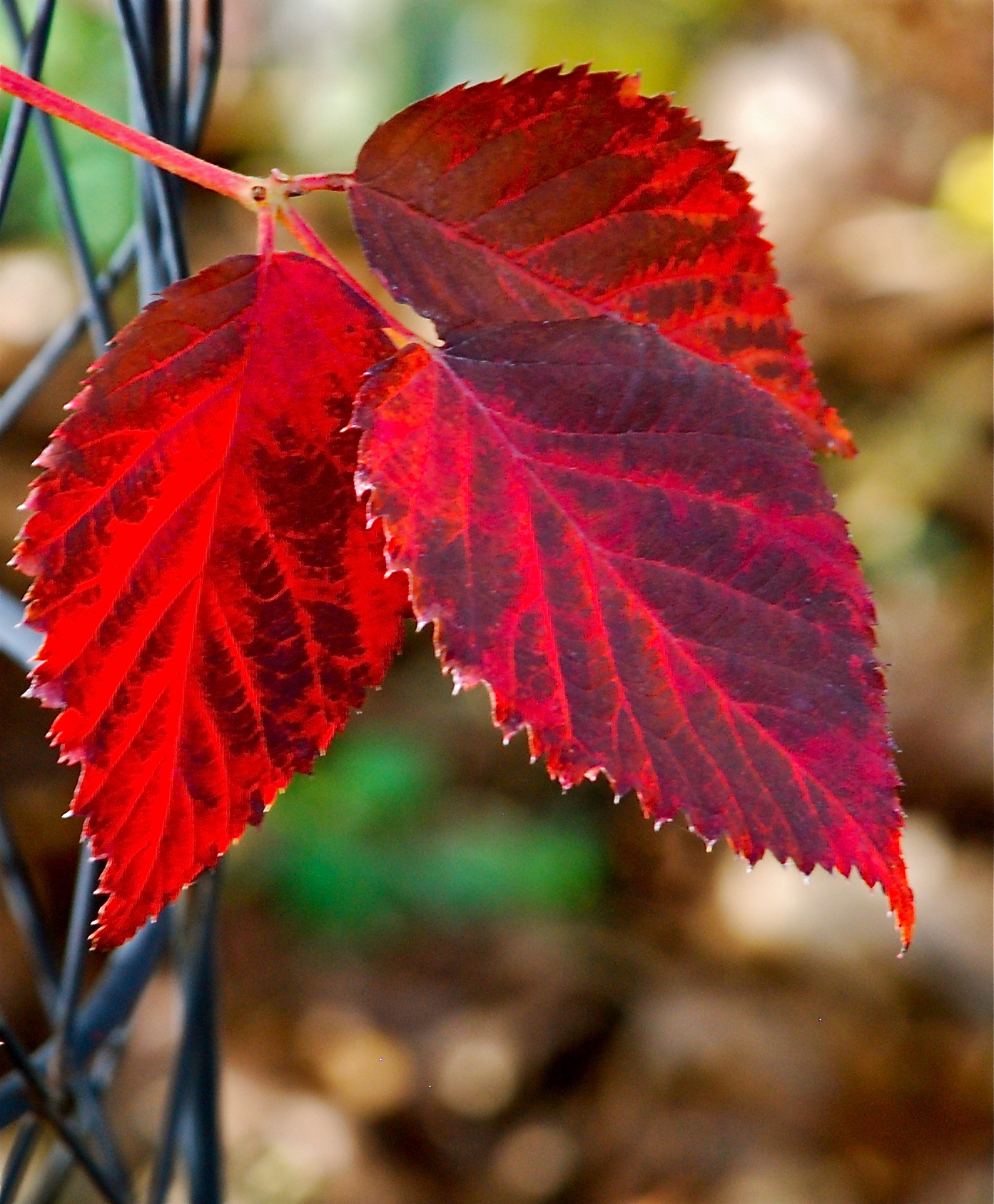
How silently they tumble down
And come to rest upon the ground
To lay a carpet, rich and rare,
Beneath the trees without a care,
Content to sleep, their work well done,
Colors gleaming in the sun.
-Elsie N. Brady, poet

Image

As Brady points out, when leaves “come to rest upon the ground,” it is a completion, but the work of fallen autumn leaves is far from done at that point.  As they “rest upon the ground,” besides being a warm blanket for what lies beneath them and a life-saving provision for the trees, they become food for a host of soil organisms that are vital to the overall health of ecosystems.  As time moves on and the leaves decompose, they restock the soil with nutrients and they make up a part of the spongy humus that absorbs and holds rainfall.  At last “with the arrival of warmth and spring, insects, bacteria, and fungi gear up!  Leaves are chewed and rotted, releasing nutrients for plant growth.”  So it is that with another round of plant growth, Creation and its inhabitants are guaranteed what they need to survive until the recycling process begins again the next fall.  How comforting it is to know that the Hand of the Almighty is always near!  For, you see, it was after a stroke threatened my life and wholeness a year ago yesterday that the Lord’s mighty hands performed the necessary miracles to grant me another year of health and life.

 He put a new song in my mouth, a hymn of praise to our God.  ~Psalm 40:3a  ✝

183. Why are there trees I never walk under but large and melodious thoughts descend upon me? ~Walt Whitman

And this our life,
exempt from public haunt,
finds tongues in trees,
books in running brooks,
sermons in stones,
and good in everything.
~William Shakespeare

Image

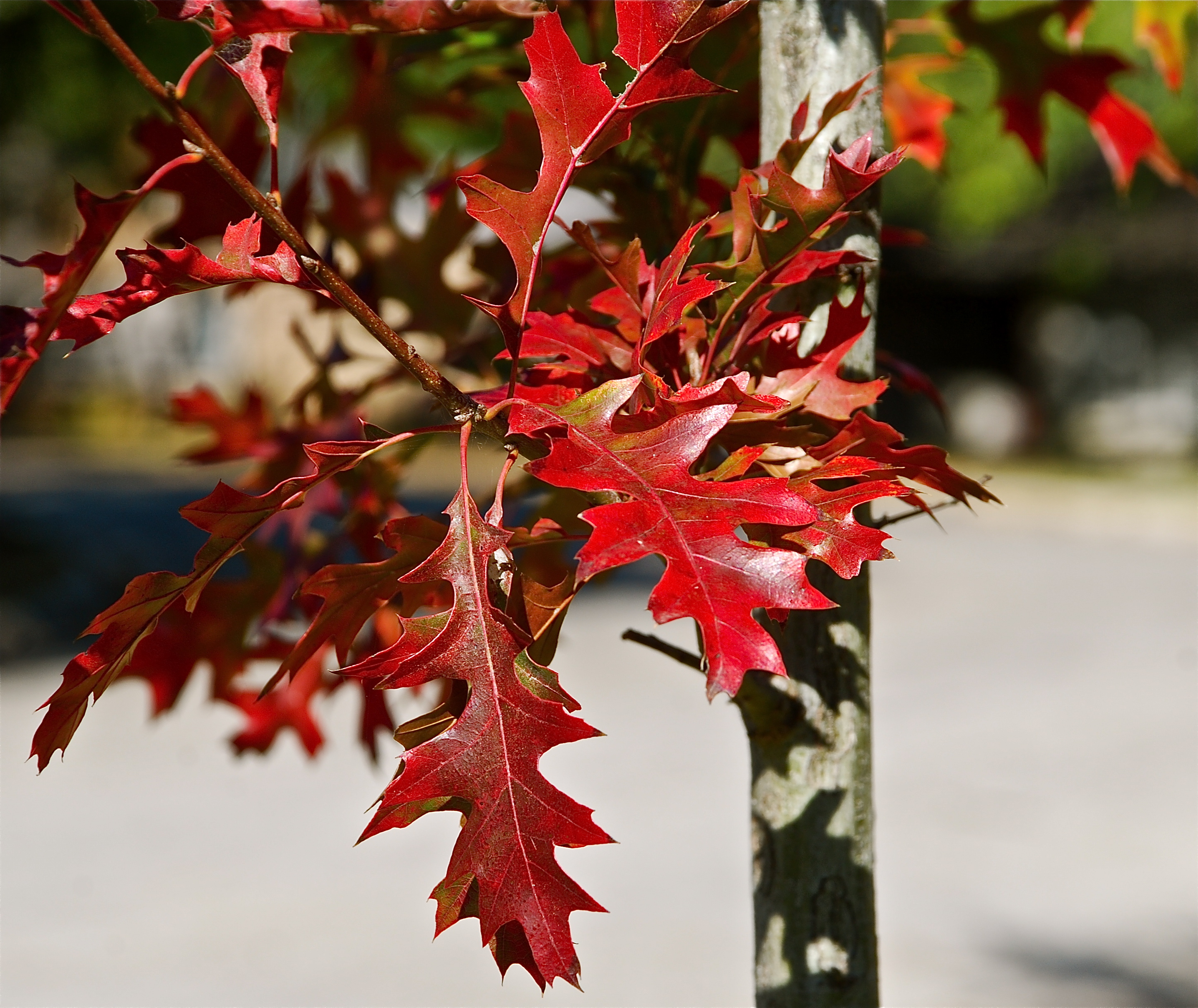
Standing beneath the Shumard Red Oak made me feel like I was standing in a temple of the Most High.  The breeze was ruffling its leaves, and they in turn were prompting sacred tongues to utter incantations of their divine purpose.  For though the leaves face eminent extinction and expulsion from the branches, in their dying they’ll fall and create warm blankets to cover the ground.  In so doing they will protect the life that lies beneath the surface during winter’s cold, cold days.  Even at the close of winter their goodness will not be at an end for as they deteriorate, the remaining bits and pieces will add nutrients to enhance the soil.  Thus goes the circle of life and the interdependency of all things.

God’s voice thunders in marvelous ways; He does great things beyond our understanding.  ~Job 37:5  ✝

181. How could such sweet and wholesome hours be reckoned but with herbs and flowers. ~Andrew Marvel

Natural object themselves
even when they make no claim to beauty,
excite the feelings, and occupy the imagination.
Nature pleases, attracts, delights,
merely because it’s nature.
~Karl Wilhelm Humboldt

Image

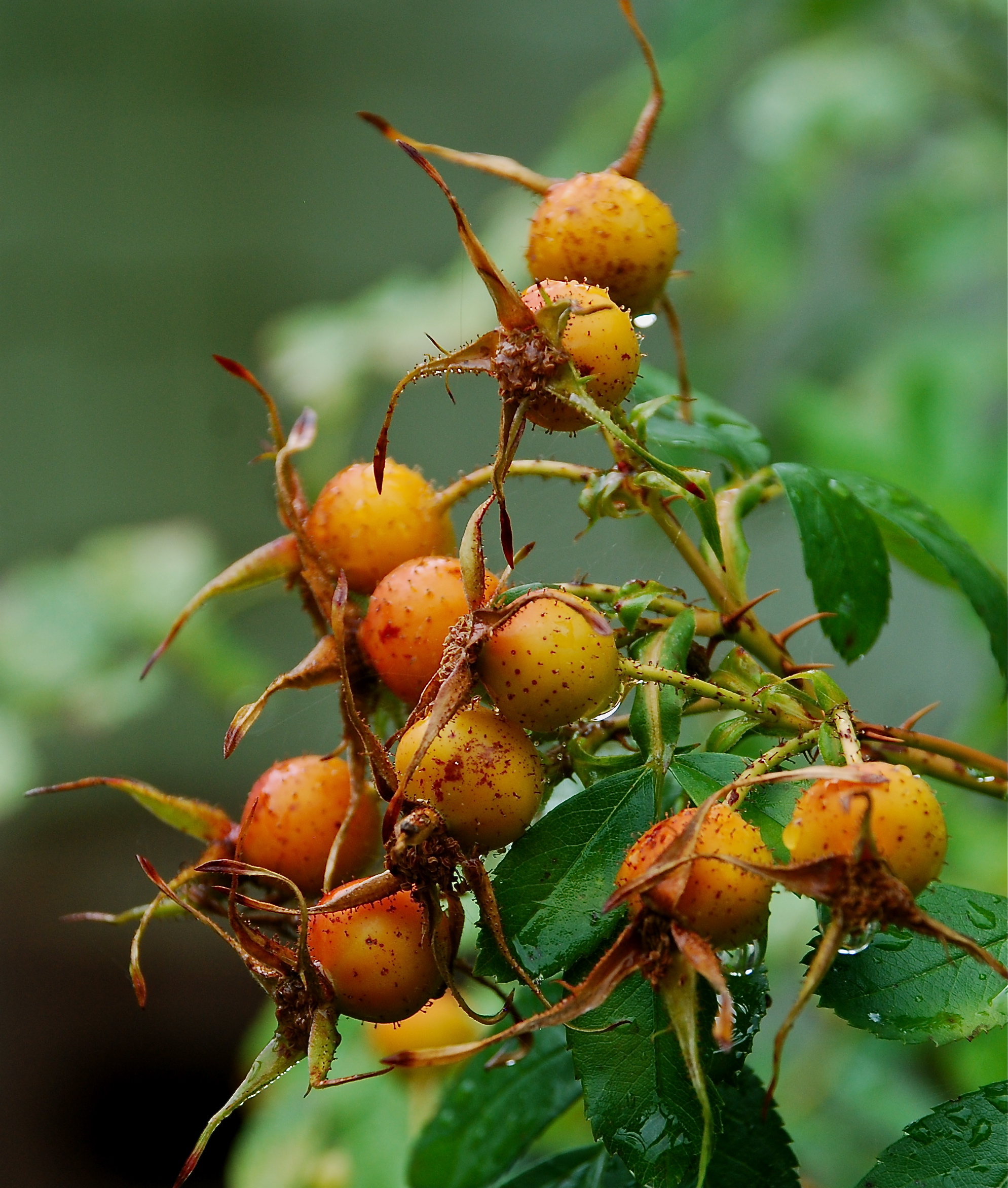
The most common attractions of the rose are the prettily colored flowers and the sweet to spicy fragrances.  On some roses there are also brightly colored hips that not only decorate bare canes in winter but also provide feasts for overwintering birds.  These hips are the pomaceous fruits of the rose, and they vary in size and shape and color.  Some of the first rosary beads were fashioned out of dried rose hips, and they have been used as well to make jellies, jam, marmalade, teas, soup, and medicinal compounds.  They also played an important role during World War II because they are very rich in Vitamin C.  It seems the people of Great Britain were encouraged to gather wild-grown rose hips to make a syrup for their children since German submarines were sinking commercial ships making it very difficult to import citrus fruits from the tropics.

Looking with expectancy for things that excite, I venture out into my gardens almost daily, weather permitting.  To that end I am seldom disappointed even on drippy days like this one.  Today’s find were some gold-orange-reddiish rose hips, and though they make no claim to great beauty, I was thrilled to see them once again.  After photographing them and beginning this post I began pondering what a difference for the better it might make if I greeted every new day’s living with the same attitude.  What an impact might it have on those around me if I met them filled with joy and expected the best from the encounter.  Once again I see how God’s Eden is not only a great sustainer but also an excellent teacher.

The seed will grow well, the vine will yield its fruit, the ground will produce crops, and the heavens will drop their dew.  ~Zechariah 8:12  ✝

178. All the flowers of all the tomorrows are in the seeds of today and yesterday. ~Chinese Proverb

In the garden the door is always open into the holy –
growth, birth, death.
Every flower holds the whole mystery in its short cycle,
and in the garden we are never far away from death,
fertilizing, good, creative death.
~May Sarton

Image

Every year the unseen becomes visible as new life explodes from quiet, dark, sustaining wombs.  Beneath the soil roots grow and above the surface tiny leaves yield proof of life.  Enlivening rains come, and the leaves grow.  Daylight hours lengthen, and they grow more.  Amid the leaves emerge buds, and they grow.  Buds burst into flowers, the flowers fade, and their petals fall.  Fruits, seed heads, or pods appear, and they ripen.  Fruits are harvested, seeds are spilled onto the soil, and buds are set inside woody canes or branches.  Then comes the time of rest, the discontinuance of the same, the different new genesis.  The beginnings, the middles, the ends–never an ending without a beginning–never a beginning without an ending, so goes the cyclic constancy of a garden.

The land produced vegetation; plants bearing seed according to its kinds and trees bearing fruit with seed in it according to their kinds.  And God saw that it was good.  ~Genesis 1:12  ✝

177. Music washes away from the soul the dust of everyday life. ~Berthold Auerbach

All deep things are song.
It seems somehow the very central essence of us, song;
as if all the rest were wrappages and hulls!
~Thomas Carlyle

Image

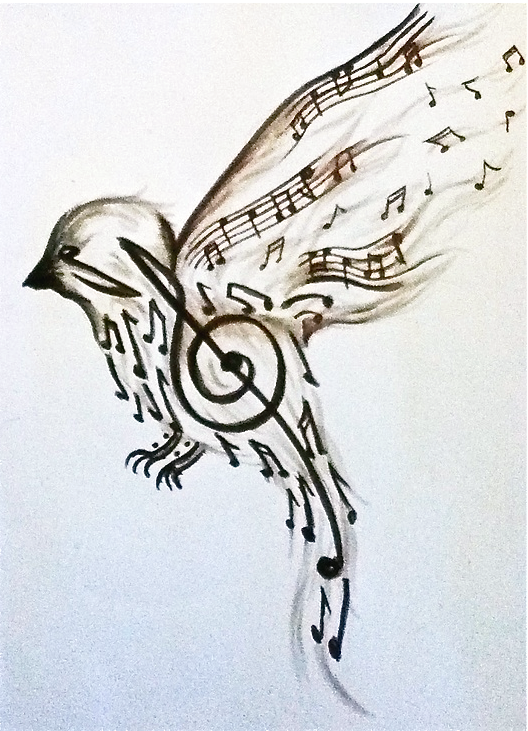
I loved teaching John Steinbeck’s novella, THE PEARL.  The main character, Kino, lives intimately connected, physically and spiritually, to the natural world, even more so than I do.  All through the story as he faces his instincts or any particularly powerful thing, he hears a song in his head, and these songs match whatever he’s feeling at the moment.  For example, when he experiences happiness with his wife and child, he hears the Song of the Family.  Or when the scorpion stings his child, he hears the Song of Evil.  These songs are familiar, ancient ones handed down from generation to generation.   Like his people and his ancestors Kino believes the songs give actual form to what he feels inside himself.  As Carlyle put it, he perceives that “all deep things are song.”  I realize not everyone grew up with the same cultural experiences that Kino had, but many of us do hum or sing songs we heard in childhood or familiar tunes we’ve listened to on the radio or TV over the years.  My experience has been that there is a very comforting element in the songs I hear in my head and/or sing, and in some way they do express “the very central essence” of who I am.

The whole earth is filled with awe at Your wonders; where morning dawns, where evening fades, You call forth songs of joy.  ~Psalm 65:8  ✝

174. The greatness of a nation and its moral progress can be judged by the way its animals are treated. ~Mahatma Ghandi

If all the beasts were gone,
men would die from a great loneliness of spirit,
for whatever happens to the beasts
also happens to the man.
All things are connected.
Whatever befalls the Earth befalls the sons of Earth.
~Chief Seattle of the Suquamish Tribe

Image

The creatures of earth, sea and sky came forth “out of the waters of God’s life.”   And their arrival was yet another manifestation of the visible from the invisible–another disclosure of the mystery of God.  In addition, “with the birth of the creatures there is the emergence of seeing, hearing, smelling, tasting, and touching.  The light of the sun and the whiteness of the moon can now be seen.  The wind blowing through the leaves of trees and the crashing of ocean waves can be heard.  The early morning fragrance of the earth can be smelled.  Its fruit can be tasted, and its textures touched,” writes J. Philip Newell.  It has even been said that if one wants to know the Creator, one of the ways to gain insight is to know His creatures, and I think that’s especially true when it comes to examining the sensory aspect of their coming.  For does not the ability to see, that the creatures brought, teach mankind to see with the eyes of the heart?  In the silences of humanity’s reality does not the ability to hear teach men to listen for the “echo of the spheres” and the still, small voice of God?  Do not the abilities to smell, taste, and touch help mortals meet their Savior, Jesus, through the holy sacrament of the Eucharist (Communion)?

And to all the beasts of the earth and all the birds in the sky and all the creatures that move along the ground–everything that has the breath of life in it–I give every green plant for food.”  And it was so.  ~Genesis 1:30

171. Nature is to be found in her entirety nowhere more than in her smallest creatures. ~Pliny the Elder (Roman Scholar)

She sat down in a weed patch, her elbows on her knees ,
and kept her eyes on the small mysterious world of the ground.
In the shade and sun of grass blade forests,
small living things had their metropolis.
~Nancy Price, Website writer and poet

Image

This writer is describing a kingdom that exists in probably every square foot of ground in any garden, and it is not a singular kingdom.  In and around blossoming things there’s yet another mysterious metropolis.  In it airborne living things yearn to “possess the sweet of every flower that blooms,” and so in that above-ground realm there really is a very simple equation: if there are no flowers there are no pollinators; if there are no pollinators there are no flowers.  One simply doesn’t exist without the other, at least for very long.  The hum or buzz of the pollinating agent and the flower’s blooming go hand in hand.   Together they dance the dance of life and commit their acts of love.  And so it is that different life forms as well as scripture “remind us that there are other voices, other rhythms, other strivings, and other fulfillments…”  How I’d love to hover over the petals of a rose, peer deep into its center, and then dive in to taste its “sweets” like the wasp on this bi-colored Scentimental rose.

God’s voice thunders in marvelous ways; he does great things beyond our understanding.  ~Job 37:5   ✝